

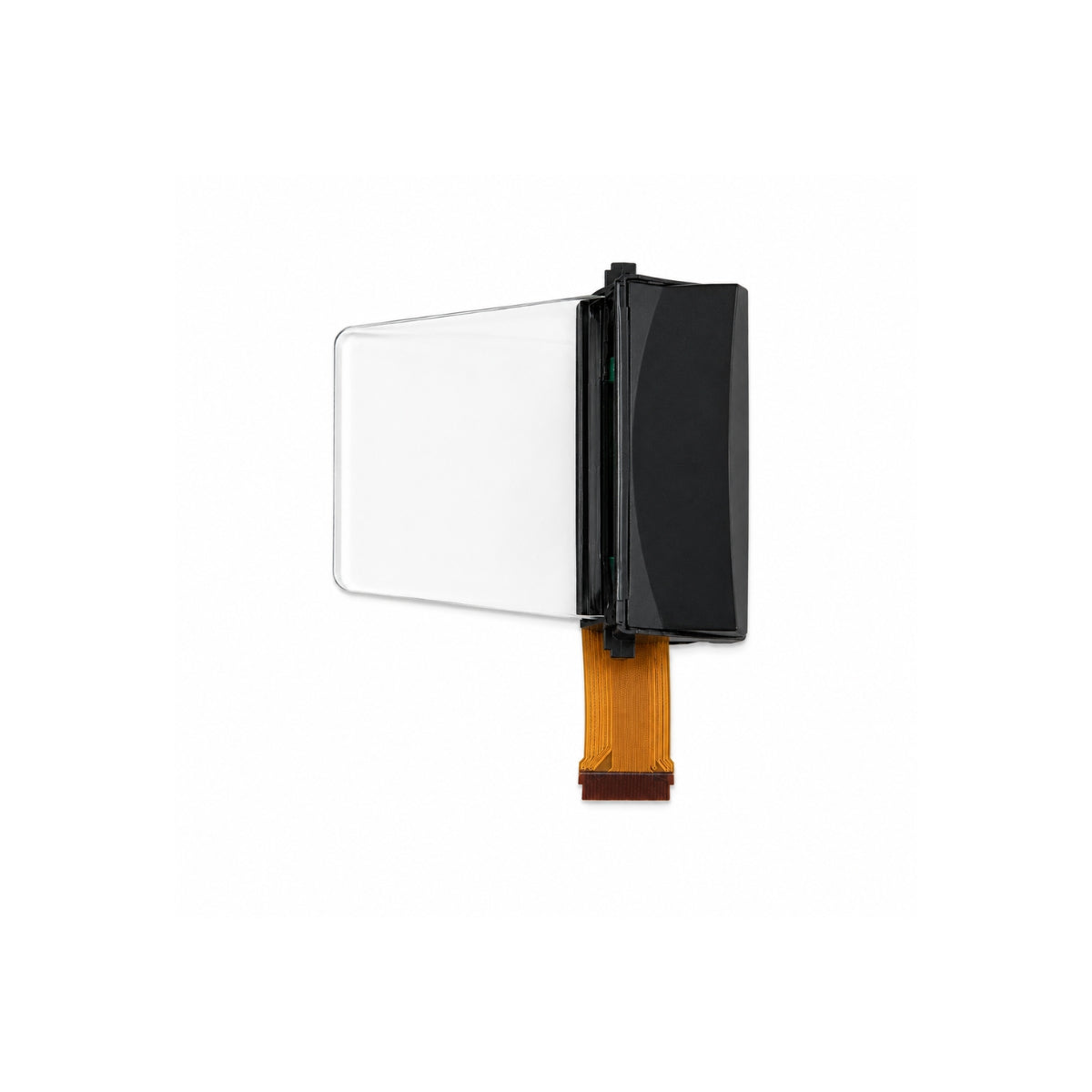
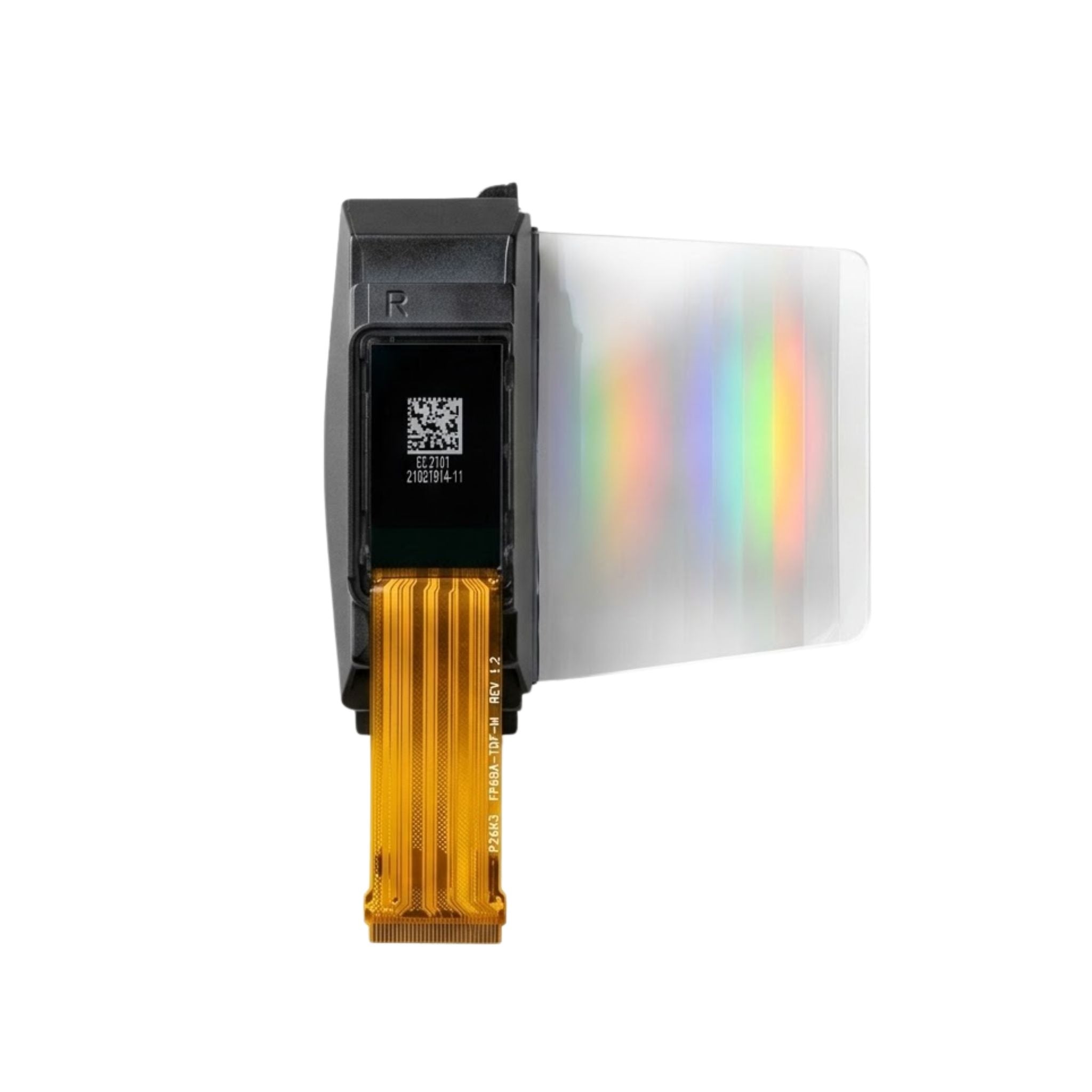


How to Choose the Right Adapter OLED/LCD Module | Key Specs, Performance & Suppliers
Selection requires matching I2C/SPI interfaces;
OLED features a 100,000:1 contrast ratio, LCD targets 500 nits brightness;
Confirm 3.3V/5V voltage compatibility;
Select ISO-certified suppliers that provide driver libraries.
Key Specs
Selection involves 3.3V logic compatibility and a resolution span from 128x64 to 1920x1080.
I2C rates reach 400kbps, SPI up to 50MHz, and MIPI supports multi-lane high-speed transmission.
OLED contrast ratio is 100,000:1, with current varying according to the pixel lighting ratio; LCD brightness reaches 1000 nits with a constant backlight current.
Modules must meet an operating temperature range of -20 to 70 degrees Celsius and adapt to drivers such as SSD1306 or ST7789.
Physical Communication Link
Low-resolution monochrome OLED modules typically use the I2C protocol, which operates at 100kbps in standard mode and can reach 400kbps in fast mode.
Since I2C only requires two signal lines—SDA (data) and SCL (clock)—it is very popular in small embedded devices with limited pin resources.
However, because I2C is an open-drain output structure, pull-up resistors must be connected to the bus, typically ranging from 2.2k to 4.7k ohms in 3.3V systems.
If the bus capacitance exceeds 400pF, the rising edge of the signal waveform slows down, leading to increased error rates during high-speed communication.
For a 128x64 resolution screen, refreshing one frame of data requires approximately 8192 bits.
At a 400kbps rate, the theoretical refresh limit is about 48 frames per second, but after accounting for protocol overhead and address bits, the actual frame rate usually stays between 20fps and 30fps.
In contrast, the SPI interface provides higher bandwidth, with clock frequencies typically running between 10MHz and 80MHz.
A common 4-wire SPI interface includes CS (Chip Select), SCLK (Clock), SDI (Data Input), and an additional DC (Data/Command Selection) pin.
The state of the DC pin determines whether the incoming byte is parsed by the driver chip (such as SSD1306 or ST7789) as a control command or display pixel data.
On a 240x320 resolution color LCD module, if the RGB565 format is used, the data volume for a single frame is as high as 153,600 bytes.
Using a 20MHz SPI clock, transmitting one frame takes approximately 0.06 seconds, supporting dynamic displays at about 15fps.
To further improve performance, some modules support Dual-SPI or Quad-SPI modes, transmitting more bits in a single clock cycle by increasing the number of data lines.
In PCB layout, SPI is a high-frequency signal. To prevent signal reflection and overshoot, matching resistors of 22 to 33 ohms are usually connected in series on the signal lines near the controller side.
“In high-speed data transmission, signal integrity is more important than pure frequency numbers. Ringing caused by impedance mismatch will directly prevent the driver IC from correctly locking the start bit.”
When the resolution increases to 720p or higher, the bandwidth of the Serial Peripheral Interface is no longer sufficient.
At this point, the MIPI DSI interface becomes the mainstream choice.
MIPI DSI uses differential signal transmission, consisting of one clock pair and one to four data pairs. Under the D-PHY V1.1 standard, the transmission rate per lane can reach 1.5Gbps.
For a 1080p, 60Hz refresh rate screen, the total bandwidth requirement typically exceeds 3Gbps due to the large amount of color data and synchronous blanking signals.
The MIPI interface supports Low Power (LP) and High Speed (HS) modes, maintaining the link connection with extremely low power consumption during standby.
Hardware design requirements are very strict; differential pairs must be strictly equal in length with errors controlled within 0.5mm, and differential impedance must be stable at 100 ohms.
In the industrial control field, parallel interfaces (MCU interfaces) still hold a place, especially the 8080 and 6800 bus protocols.
The 8080 interface includes Write Enable (WE), Read Enable (RE), Chip Select (CS), and an 8-bit or 16-bit data bus.
The advantage of this method is that the host controller can write data directly into the Graphic RAM (GRAM) via bus cycles without complex protocol encapsulation.
In 16-bit parallel mode, a single write cycle can complete the transmission of one pixel, making it ideal for dashboard applications requiring extremely fast local data updates.
The downside of this interface is the large consumption of GPIO pins; a 16-bit parallel port plus control lines often requires more than 20 pins, increasing PCB routing difficulty and host chip package size requirements.
For larger display solutions, such as industrial monitors over 15.6 inches, LVDS or eDP interfaces are used.
- LVDS Interface: Utilizes low-voltage differential signals to transmit image data through 4 or 8 pairs of differential lines.
- eDP Interface: Based on the DisplayPort protocol, it offers higher bandwidth and supports Panel Self-Refresh (PSR) technology. When displaying static images, the GPU can stop outputting signals while the module maintains the display using its own memory, thereby reducing overall power consumption.
- RGB Interface: Directly transmits HSYNC, VSYNC, and pixel clock (PCLK) signals. It lacks built-in video memory, requiring the host controller to output signals continuously, which is suitable for processors with dedicated LCD controllers.
Taking the common ST7789 as an example, there is typically a wait of at least 120 milliseconds from the hardware reset signal (RESET) being pulled high to sending the first initialization command to ensure the internal charge pump is stable.
When configuring I/O levels, if the host output is 5V logic while the display module only supports 3.3V, a direct connection will cause the internal ESD protection diodes of the driver IC to overheat or even break down.
In this case, a dedicated level-shifter chip (such as 74LVC245) or a resistor voltage divider network must be used to ensure logic level compatibility.
Simultaneously, to reduce high-frequency noise interference on the image, 0.1uF and 10uF ceramic capacitors must be placed next to the VDD and VCI power supply pins of the display module for decoupling.
Visual Parameter Comparison
Common 0.96-inch OLED modules typically have a resolution of 128x64 pixels, with a pixel pitch of approximately 0.15 mm to 0.17 mm.
For a 2.4-inch TFT LCD module, the resolution usually reaches 240x320, resulting in a significantly higher pixel density (PPI), which is suitable for displaying complex character sets and fine-line graphics.
When the screen size increases to over 5 inches, the resolution typically crosses into the 800x480 or even 1280x720 level.
In handheld device design, if the viewing distance is within 30 cm, it is recommended to maintain a pixel density above 200 PPI to eliminate noticeable jaggedness.
High pixel density not only places higher demands on the driver controller's RAM but also increases the difficulty of light transmission for the backlight unit, as smaller pixel aperture ratios hinder light passing through the liquid crystal layer.
| Visual Indicator Item | OLED Module Standard Data | LCD (IPS) Module Standard Data | Performance Difference Explanation |
|---|---|---|---|
| Static Contrast Ratio | 100,000:1 to 1,000,000:1 | 800:1 to 1,500:1 | OLED background is pure black; LCD has backlight leakage |
| Typical Brightness | 100 - 400 nits | 250 - 1000 nits | LCD is more readable under outdoor sunlight |
| Color Depth Level | 1-bit (Mono) or 24-bit (Color) | 16-bit (RGB565) or 18-bit (RGB666) | LCD is often limited by the controller's interface bandwidth |
| Response Time | Less than 0.01 ms | 10 ms - 35 ms | OLED has almost no ghosting; LCD has motion blur |
| Viewing Angle Coverage | Above 170 degrees | 160 - 178 degrees | IPS is close to OLED, but TN screens have very narrow angles |
In indoor environments, a brightness of 200 to 300 nits is sufficient for most application needs.
However, in strong light environments or semi-outdoor scenarios, the display module's brightness must be increased to over 500 nits.
LCD brightness performance mainly depends on the number and arrangement density of LED beads in the backlight panel.
To reach a sunlight-readable level of 1000 nits, backlight power consumption often accounts for over 80% of the entire module's power consumption.
OLED modules exhibit dynamic characteristics in brightness performance, usually measured by Average Picture Level (APL).
When the screen displays only a small amount of white text, local brightness can instantly soar to over 400 nits; but when displaying a full-screen white background, to protect the light-emitting layer and prevent overheating, the driver chip will automatically limit the current, reducing overall brightness to around 150 nits.
Most adaptive modules on the market use the RGB565 format, where red occupies 5 bits, green 6 bits, and blue 5 bits, displaying a total of 65,536 colors.
This configuration makes it difficult to see color banding on screens below 2.8 inches.
For more demanding medical imaging or high-end instruments, an interface solution supporting 24-bit true color is required.
Regarding color gamut, standard LCD modules typically cover 45% to 72% of the NTSC color gamut, while OLED modules can easily exceed 100% NTSC, showing more saturated and vivid colors.
However, overly saturated colors can sometimes cause visual fatigue; in industrial oscilloscopes or monitoring instruments, engineers often prefer LCDs with more stable color reproduction.
“In contrast measurements, the brightness of OLED black pixels is typically lower than 0.0005 nits. This physical characteristic ensures it does not produce a harsh background gray glow in nighttime environments, greatly enhancing character clarity in low-light conditions.”
Early TN-type LCD modules suffered from severe "color shift" and "grayscale inversion" phenomena; when viewed from the bottom up, the image colors would change drastically.
Modern IPS technology LCDs extend the viewing angle to around 178 degrees by changing the arrangement and rotation of liquid crystal molecules.
OLED modules, being a self-emissive technology, have each pixel as an independent light source. Their light distribution is naturally isotropic, thus maintaining consistent color and contrast at any angle.
When designing automotive dashboards or elevator displays, it is essential to ensure the selected module has a stable viewing angle of no less than 160 degrees in both horizontal and vertical directions.
| Technical Classification | Refresh Rate Support (Hz) | Color Gamut Range (NTSC) | Pixel Arrangement Structure | Ambient Light Reflectivity |
|---|---|---|---|---|
| Monochrome OLED | 60 - 120 | N/A | Passive Matrix (PMOLED) | Below 5% |
| Color OLED | 60 - 90 | 100% - 110% | Molecular Deposition/PenTile | Approx. 4% |
| Standard TFT | 30 - 60 | 45% - 65% | RGB Stripe Arrangement | 10% - 15% |
| Outdoor LCD | 60 | 72% | Enhanced RGB | Below 2% (with AR coating) |
The electro-optical response time of OLED is extremely short, basically at the microsecond level, making it very smooth when displaying scrolling subtitles or fast-changing waveforms.
Conversely, LCD response time is limited by the physical deflection speed of liquid crystal molecules.
In low-temperature environments, the liquid crystal becomes viscous, and response time can extend from 20 milliseconds at room temperature to over 100 milliseconds, leading to severe ghosting.
For outdoor equipment deployed in cold regions, choosing OLED or a dedicated industrial LCD with an integrated heating film is necessary to meet visual update requirements.
Power Current Distribution
Typically, a standard adapter module divides power into logic voltage (VDD or VDDIO) and driver voltage (VCI or VCC).
The logic part is mainly responsible for the digital circuits, registers, and interface communication with the main control board, with a voltage range usually between 1.65V and 3.3V.
For a TFT module with a resolution of 240x320, under a 20MHz SPI communication state, logic current fluctuations are usually between 1mA and 3mA.
Although this current is small, the high-frequency switching of digital signals generates high-frequency noise on the power line, necessitating a 0.1uF ceramic capacitor near the pins to suppress interference.
For OLED modules, current consumption is highly dynamic, depending primarily on the Average Picture Level (APL).
Since each pixel of an OLED is an active light-emitting diode, when displaying a full black screen (all pixels off), the panel's current consumption is almost zero, leaving only about 2mA of static maintenance current for the driver chip.
Once the screen displays a full white image—meaning all red, green, and blue sub-pixels are working at maximum brightness—the current surges rapidly.
Taking a common 1.3-inch color OLED as an example, at 100% APL (full white) and a brightness setting of 300 nits, the current on the driver voltage (usually 12V) can reach 50mA to 70mA.
The front-end 3.3V boost circuit (Boost Converter) needs to draw more than 200mA from the main power supply.
Designers can control the average operating current to about 15% to 20% of the full-brightness state by using a white-on-black scheme in the UI, which is crucial for low-power handheld devices.
| Power Rail Classification | Typical Voltage Value | Current Performance Characteristics | Load Fluctuation Cause |
|---|---|---|---|
| Digital Logic (VDD/VDDIO) | 1.8V - 3.3V | 0.5mA - 5mA | Comm frequency, register R/W frequency |
| Analog/Charge Pump (VCI) | 2.8V - 3.3V | 5mA - 15mA | Internal oscillator start, grayscale voltage gen |
| OLED Driver (VCC/VPP) | 7V - 15V | 2mA - 100mA | Pixel lighting ratio (APL), brightness setting |
| LCD Backlight (LEDA/LEDK) | 3.0V - 25V | 15mA - 120mA | LED bead quantity, PWM duty cycle |
“Stability in power design is not reflected in the magnitude of the steady-state current, but in whether the system can suppress voltage drops caused by dynamic load changes during drastic UI switching.”
The current consumed by the LCD panel itself for liquid crystal deflection and the driver IC is very constant and extremely low, usually between 5mA and 10mA.
However, the LCD's Backlight Unit (BLU) is the system's power hog.
A 3.5-inch LCD module typically contains 6 white LED beads. If driven in parallel, at a standard brightness of 20mA, the total current is constant at 120mA.
If driven in series, a boost driver is needed to provide about 19.2V high voltage, while the current remains at 20mA.
The current for LCD backlighting does not fluctuate with display content; as long as the backlight is on, the current is constant.
To save energy, a microcontroller's PWM signal is usually used to adjust the enable terminal of the backlight driver chip, reducing the average current by changing the duty cycle.
At a 50% brightness setting, the backlight current drops linearly to 60mA, but this adjustment method may cause screen flickering at low frequencies.
When the driver chip switches from a reset state to Display On, the internal charge pump starts working to establish a high-voltage environment for liquid crystal deflection or OLED light emission.
This instantaneous current pulse can reach 2 to 3 times the steady-state current, lasting for tens of microseconds to several milliseconds.
If the PCB traces are too thin or the host board's power supply capacity is insufficient, this current spike will cause the 3.3V voltage rail to drop momentarily below 2.5V, triggering a Brown-Out Reset (BOR) of the host chip.
The standard solution is to add a 10uF to 22uF tantalum capacitor or multi-layer ceramic capacitor (MLCC) at the module inlet and ensure the power trace width is no less than 10 mil.
In this mode, the driver chip shuts down the internal oscillator, DC-DC booster, and all output channels, retaining only basic register contents.
A high-performance driver chip (such as ILI9341 or SSD1306) should consume less than 10uA in deep sleep.
If the measured current is high, it is usually because control pins (such as CS, MOSI, SCLK) are in a floating state after the host enters sleep, causing leakage current at the display module's CMOS logic gates.
Configuring these IO pins to a stable high or low level via software usually resolves this abnormal power consumption issue.
Performance
OLED response is below 0.1 milliseconds, with a contrast ratio of up to 1,000,000:1, suitable for high-dynamic images.
LCD response is typically between 1 and 5 milliseconds, with a contrast ratio of about 1,500:1.
Regarding brightness, industrial LCDs can reach 2,000 nits, while OLEDs reach 1,200 nits.
Power consumption changes with APL (Average Pixel Level); OLED is more energy-efficient at low APL.
The MTBF (Mean Time Between Failures) for LCD is generally 50,000 hours.
Millisecond-Level Response
The response mechanism of OLED modules is built on the spontaneous light emission of organic light-emitting diodes under current; the electrical signal conversion process from pixel off to fully on can be completed in microseconds.
According to laboratory measurement data, the GtG response time for most adapter-grade OLEDs remains below 0.1 milliseconds.
The reason for this ultra-fast conversion is that there is no complex mechanical movement or molecular arrangement change inside; the combination speed of charge-hole pairs is almost unaffected by physical inertia.
At a 60Hz refresh rate, the dwell time for each frame is approximately 16.67 milliseconds, and 8.33 milliseconds at 120Hz.
Since the OLED response time is much smaller than the single-frame dwell time, the sharpness of image edges can be maintained above 90% during high-speed UI scrolling or high-frame-rate video playback, without visual ghosting or color overlap.
In contrast, the response performance of LCD modules is limited by the physical deflection speed of liquid crystal molecules.
When the driving voltage changes, liquid crystal molecules require a certain amount of physical time to rotate from one angle to another to change the light transmittance.
Mainstream IPS (In-Plane Switching) panels typically have a GtG time between 3 and 8 milliseconds at room temperature.
Although speed can be forced up using Overdrive technology, excessive voltage compensation can lead to "overshoot," creating white glowing edges on moving objects.
Specifically, a well-configured industrial LCD adapter has a Rise Time of about 2ms and a Fall Time of about 3ms at 25 degrees Celsius.
If the deflection time of the liquid crystal molecules exceeds the frame interval determined by the refresh rate (e.g., only 6.9ms at 144Hz), the residual image of the previous frame will be superimposed onto the next, forming visible motion blur.
Ambient temperature significantly interferes with LCD response. Because liquid crystal molecules are viscous, their movement speed drops sharply as the temperature decreases.
- At -20 degrees Celsius, the response time of an ordinary LCD will extend from 5ms to 50ms - 100ms.
- This delay causes severe image persistence when the screen starts at low temperatures, even making characters overlap and become unrecognizable.
- OLED modules, not relying on molecular rotation, have response time fluctuations typically less than 0.05ms within the range of -40 to 80 degrees Celsius, demonstrating extreme environmental adaptability.
When measuring dynamic clarity, MPRT (Moving Picture Response Time) must also be introduced in addition to GtG.
MPRT describes the duration of blur observed by the human eye.
Even if a panel's pixel switching speed is 0ms, because LCD uses a "Sample-and-Hold" display method, light continues to hit the eye throughout the frame cycle, creating a physiological sense of blur as the eye tracks moving objects.
To optimize this, some LCD adapters employ Black Frame Insertion (BFI) or backlight scanning, simulating pulse display by turning off the backlight.
This can reduce MPRT to 1ms, but at the cost of a 50% reduction in overall brightness and potential visible flicker at around 240Hz.
OLED can balance clarity and brightness through high-frequency PWM dimming (usually above 1920Hz).
In the data transmission link, the processing delay of the adapter controller is also counted towards the total response time.
- Signal transmission from SoC to Driver IC via MIPI or LVDS takes about 0.5ms.
- The Driver IC processes image algorithms and outputs voltage to pixels in about 1 to 2 clock cycles.
- OLED pixel switching is completed almost simultaneously with the signal arrival (< 0.1ms).
- LCD pixel switching requires additional physical deflection time (3 to 8ms).
For a 60fps display system, if the total link delay exceeds 32ms, the operator will feel a disconnect between the mouse or stylus movement and the screen display.
Using OLED modules can keep the total link delay within 20ms, while LCD solutions typically fluctuate between 30ms and 40ms.
In color conversion details, Black to White transitions are usually faster than grayscale transitions.
However, in LCD modules, the slowest transitions are often between specific grayscales, such as from 10% to 50% brightness, where the liquid crystal deflection is at its most awkward state, and the response time may surge to over 15ms.
This non-linear response requires complex Look-Up Tables (LUT) in the driver firmware for voltage compensation.
OLED response speed is almost consistent across all brightness levels with high linearity, ensuring that dynamic images in dark scenes maintain the same level of clarity as in bright scenes without trailing in deep backgrounds.
Brightness Performance
Standard office-grade LCD brightness is generally 250 to 350 nits, while adapter modules designed for industrial or outdoor environments can reach 1000 to 2000 nits by increasing LED density and optimizing light guide designs.
In contrast, OLED modules use self-emissive technology, and their brightness performance is non-linear, usually divided into Peak Brightness and Sustain Brightness.
Due to organic material heat dissipation limits, OLED peak brightness can reach over 1200 nits when displaying a 1% window area, but when displaying a 100% full white image (high APL), brightness typically drops to 200 to 400 nits due to the Automatic Brightness Limiter (ABL) mechanism to protect circuits and extend material life.
When displaying black, LCD modules still have trace amounts of light passing through liquid crystals and polarizers, resulting in a black level brightness of 0.1 to 0.5 nits.
Therefore, even high-performance IPS panels usually have a static contrast ratio between 1000:1 and 1500:1.
LCD adapters using Local Dimming technology can increase dynamic contrast to 100,000:1 by dividing the backlight into 576 or 1152 independent dimming zones.
OLED modules can completely cut off current when displaying black pixels, with black level brightness below 0.0005 nits, resulting in a contrast ratio defined as 1,000,000:1 or even infinite.
| Brightness Performance Dimension | Standard LCD Module | High-Bright Industrial LCD | Adapter-Grade OLED |
|---|---|---|---|
| Typical Full-Screen Brightness | 300 nits | 1500 nits | 400 nits |
| Small Window Peak Brightness | 350 nits | 1800 nits | 1200 nits (HDR) |
| Black Level Lower Limit | 0.3 nits | 0.5 nits | < 0.0005 nits |
| Contrast Ratio (Static) | 1000:1 | 1200:1 | 1,000,000:1 |
| Sunlight Readability | Fair | Excellent | Good (via contrast comp) |
Ambient light intensity in direct sunlight is approximately 10,000 to 30,000 Lux.
If a display module has a 5% reflectivity, in a 10,000 Lux environment, the reflected brightness on the screen surface is about 500 nits.
To ensure text is clearly legible, the content brightness must be much higher than the reflected brightness.
Generally, it is believed that in outdoor environments, LCD brightness needs to reach above 1000 nits, or reflectivity must be reduced to below 2% through Optical Bonding.
Although OLED modules have lower full-screen brightness, their extremely high contrast allows them to achieve visual clarity at 500 nits comparable to an 800-nit LCD in cloudy or shaded outdoor scenes, thanks to high color saturation and extremely low black level reflection.
LCD power consumption is mainly generated by the backlight strips and is almost independent of the displayed image content, being proportional only to the brightness setting.
For example, a 10-inch LCD module consumes about 2 watts at 300 nits, but power surges to over 6 watts at 1000 nits, causing significant heating issues.
OLED power consumption shows high content dependency, measured by APL. At 10% APL (mostly dark), OLED consumption might be only 30% of an LCD's.
However, at 100% APL (full white) with high brightness, OLED efficiency drops, and the energy consumed per unit of brightness is typically 20% to 50% higher than that of an LCD.
| APL Content Percentage | Scenario Description | OLED Power Coefficient | LCD Power Coeff (Fixed Brightness) |
|---|---|---|---|
| 10% APL | Dark Mode UI / Night Map | Low (approx. 0.2x) | Constant (1.0x) |
| 50% APL | Standard Web / Mixed Text-Image | Medium (approx. 0.6x) | Constant (1.0x) |
| 100% APL | Pure White Doc / Light Mode | High (approx. 1.2x) | Constant (1.0x) |
When increasing brightness, LCD modules often suffer from color wash-out due to color filter limitations.
OLED modules, by controlling current precision, can maintain 100% DCI-P3 wide color gamut coverage within the common 600 to 800 nits range, making images look vivid in bright environments.
For equipment requiring precise instrument images or video monitoring, OLED provides more accurate highlight detail reproduction without losing color gradients like ordinary LCDs at extreme brightness.
Power Consumption Comparison
In a 10.1-inch adapter solution, when the screen displays a full black background, the pixel drive circuits are inactive, and the current generated is only at the microampere level (leakage current), with panel power consumption typically below 0.1 watts.
In comparison, LCD module power consumption is mainly generated by the backlight system.
Regardless of whether the screen displays pure black or pure white, the backlight strips consume energy continuously according to the brightness setting.
For a similarly sized LCD module with brightness set at 350 nits, backlight power is basically fixed between 1.5 watts and 2.1 watts.
In dark mode interface tests, OLED shows energy performance far superior to LCD, reducing overall power consumption to one-fifth by decreasing unnecessary pixel emission.
OLED power consumption drops significantly as the number of light-emitting pixels decreases.
In a smart monitoring interface with 15% APL, the typical current consumption of an OLED module is about 85 mA.
When APL increases to 50% in mixed text-image scenes, the current increases to around 260 mA.
At 100% APL for full white document display, the OLED current requirement rises rapidly to over 650 mA, with power reaching 2.4 watts, exceeding the 1.9 watts fixed consumption of a comparable LCD module.
In full white backgrounds, LCD backlight efficiency is usually higher than OLED running at full power.
At 1080p resolution and 60Hz refresh rate, the power consumption of the logic part of the driver IC on the adapter board is about 180 to 260 milliwatts.
OLED driver ICs need built-in complex compensation algorithms and LUT operations to handle brightness and color deviations in organic materials, resulting in higher internal logic activity frequencies and typically a 15% to 20% increase in logic power compared to LCD driver ICs of the same specs.
The algorithmic complexity of the driver chip increases the static power base of OLED modules.
As the internal temperature of an OLED module rises from 25 to 45 degrees Celsius, the resistance characteristics of the organic material shift.
To maintain constant brightness output, the driver system usually compensates for current automatically, leading to a roughly 10% increase in power consumption.
While LCD LED backlighting also generates heat, its light emission efficiency is less affected by temperature fluctuations.
In pressure tests of industrial 1000-nit high-bright LCDs, the conversion efficiency of the backlight driver typically stays between 88% and 93%.
Using high-efficiency constant current control can effectively suppress unexpected power fluctuations due to temperature rise, which is very helpful for adapter solutions running in confined spaces.
Increased ambient temperature causes OLED to consume more power to maintain brightness.
From a power management integration perspective, OLED requires multiple sets of positive and negative bias outputs (e.g., +4.6V and -4.0V), which increases PMIC circuit conversion loss, with efficiency usually between 82% and 85%.
LCD LED backlighting uses a high-voltage boost scheme to lift battery voltage to around 20V to drive LED strings, with conversion efficiency reaching 91% in well-optimized cases.
When designing a 5000mAh battery-powered terminal, if the software system widely adopts dark themes, OLED modules can extend battery life from 11 hours to 15 hours.
Differences in power conversion circuit structures also affect system-level total energy performance.
Current intensity varies greatly when OLED modules display different colors because the light emission efficiency of red, green, and blue organic materials differs.
Usually, blue sub-pixels have lower efficiency; to achieve white balance, displaying blue content consumes more power.
At 100% brightness displaying a full blue screen, OLED power may be 35% higher than displaying a full red screen.
LCD modules do not have this limitation because the backlight beads always emit white light, and color filters are only responsible for blocking specific wavelengths.
Regardless of the color displayed, LCD backlight power remains constant.
Suppliers
In the global display module market, Samsung holds a 36% share, followed closely by LG.
Developers should look for an NTSC color gamut of over 85% and a contrast ratio of 5000:1 when selecting modules.
Tier-1 suppliers like BOE provide tens of millions of units annually, while Sony focuses on Micro-OLED.
Typically, the MOQ for custom adapters is 5,000 to 10,000 pieces, with a lead time for standard parts around 8 to 12 weeks.
Supply Capacity
Currently, globally, the production cycle for small and medium-sized display modules is usually maintained between 8 and 16 weeks.
For standard specs of 1.3 to 7-inch modules, choosing first-tier manufacturers like Samsung or LG typically requires an MOQ of over 50,000 pieces to order directly from the factory.
If project demand is between 1,000 and 5,000 pieces, stock is usually obtained through global electronic distributors like Arrow, Avnet, or Future Electronics.
These distributors have large automated warehouses in Singapore, the Netherlands, and the USA, providing 24 to 48-hour rapid shipping.
Most mainstream OLED modules are produced from Gen 6 lines, where each large glass sheet can be cut into hundreds of wearable or smartphone-sized units.
For LCD modules, many industrial products still run on Gen 3.5 or Gen 4 lines, as these older lines are better suited for small-batch, diverse order requirements.
Monthly production capacity is a reference indicator for supply stability; a mature Gen 6 factory has a monthly glass substrate input of about 30,000 to 45,000 sheets.
Such factories have stronger overflow handling capacity when market demand surges, making them less prone to extreme shortages lasting over 20 weeks.
Module supply involves not just the screen but also the matching Driver IC and Flexible Printed Circuit (FPC).
Driver IC lead times are currently volatile, usually between 12 and 20 weeks.
Mainstream suppliers like Novatek or Synaptics prioritize large customers with annual orders exceeding 100 million units.
For small to medium adapter projects, choosing a screen model with a non-mainstream driver chip may result in production halts because the module factory cannot secure the chips.
When evaluating suppliers, it is necessary to confirm they hold at least 2 to 3 months of strategic stock for driver chips.
- Standard Parts (Off-the-shelf): MOQ is usually 1 reel (approx. 500 - 1000 pcs). Shortest lead time, usually 1 - 2 weeks.
- Semi-custom: Includes modifying FPC routing, changing backlight brightness, or adding touch screen bonding. MOQ is usually 5,000 - 10,000 pcs. Production cycle increases by 4 - 6 weeks.
- Full-custom: Involves glass substrate rerouting or unconventional sizes. MOQ is often over 50,000 pcs. Early development cycle (NRE) takes 3 - 5 months.
Consumer electronics screens usually have a lifecycle of only 1 to 2 years; once new models are released, old modules enter the End of Life (EOL) stage. In contrast, LCD modules specifically for the embedded market can guarantee 5 to 7 years of continuous supply.
When signing supply agreements, a written EOL Advance Notice should be required, typically 6 to 12 months before discontinuation, providing a Last Time Buy opportunity.
A highly automated module assembly line typically controls its RMA rate within 0.3% to 0.5%.
Fluctuations in a supplier's yield will directly cause the actual delivered quantity to be lower than the ordered quantity.
During selection research, you can check the Reliability Test Reports provided by the supplier.
These reports usually include high and low temperature cycle tests from 60 to -20 degrees Celsius, 48-hour continuous aging tests, and vibration tests for automotive or industrial environments.
Logistics also affects arrival time; choosing international suppliers supporting FOB or DAP terms can reduce shipping risks.
Shipping from major production bases to Europe or America takes 4 to 6 weeks by sea, while air freight can compress this to 5 to 7 days.
Local FAE teams and spare parts warehouses are also vital for rapid iteration, providing troubleshooting within 24 hours for interface or display anomalies.
- Inventory Turnover: Quality suppliers maintain turnover at 30 to 45 days, ensuring material freshness and preventing aging of backlight modules in storage.
- Financial Status: Check annual reports or credit ratings. Manufacturers with steady cash flow better handle upstream raw material price fluctuations without cancelling low-price orders.
- Certification System: Must have ISO 9001. For automotive adapter projects, IATF 16949 is required, representing higher stability and lower component failure rates.
From a user operation perspective, establishing a 10% to 15% safety stock is a common way to handle supply fluctuations.
Especially with OLED, which iterates rapidly, different batches may have slight color consistency (Delta E) differences.
Locking in one production batch ensures completely uniform display effects across products, a common strategy in high-end medical devices or professional monitor industries, where 3 years of stock may be prepared upfront.
Technical Support Strength
First-class suppliers like Samsung or LG excel in technical document integrity, with datasheets typically spanning 150 to 200 pages.
These documents are not just spec sheets; they include microsecond-level Power-on and Power-off Sequence Diagrams, which are crucial for protecting Driver ICs from current shocks.
The response speed of Field Application Engineers (FAE) is another key metric.
In major tech hubs, top suppliers usually have local support teams.
For Level 1 faults like flickering, an FAE should provide initial advice within 24 hours.
For deeper signal integrity issues, suppliers should provide IBIS models or simulation data to assist in 100-ohm differential impedance control during PCB layout.
For complex software compatibility issues, supplier engineers may use remote desktop or on-site debugging to check if D-PHY signals meet specs, reducing driver debugging time by over 30%.
| Support Level | Response Time | Service Scope | Deliverables |
|---|---|---|---|
| Tier 1 | Within 24 hours | Global localized on-site | Full driver code, schematic review, EMI pre-test data |
| Tier 2 | 3 - 5 business days | Regional center remote | Standard specs, init scripts, reference designs |
| Tier 3 | Over 10 business days | Email only | Basic parameters, no code samples, no hardware review |
Mainstream suppliers maintain public GitHub repositories or technical forums, providing driver samples for the Linux kernel (DRM/KMS), Android HAL, and common RTOS (like FreeRTOS).
These samples are usually written in C, with clear structures for interrupt handling, sleep/wake flows, and backlight adjustment (PWM mapping).
For high-performance applications, suppliers provide docs for Display Stream Compression (DSC) to achieve 4K 60Hz over limited bandwidth.
| Technical Support Item | Detailed Description | Developer Benefit Data |
|---|---|---|
| Hardware Schematic Review | Check capacitor selection, charge pump, FPC grounding | Reduces EMI values by 15% |
| Driver Code Porting | Provide HAL libraries for specific MCUs (STM32, i.MX) | Shortens low-level lighting cycle by 10+ days |
| Brightness Consistency Calib | Provide white balance params and Delta E solutions | Ensures batch color difference < 3.0 |
| Reliability Validation Report | Includes 1000h high-temp/high-humid (60/90) tests | Reduces after-sales repair rate by 0.5% |
Since OLED requires multiple positive/negative voltages (+4.6V / -4.0V), suppliers will audit the developer's PMU design to ensure ripple noise is controlled within 50mV to avoid horizontal streaks.
Suppliers also provide engineering advice on FPC bending radii to prevent internal trace breakage during assembly.
During mass production prep (T0 stage), suppliers may send technicians to solve display anomalies caused by assembly processes, such as glass stress damage from frame extrusion, ensuring yields remain above 98.5%.
A complete support system uses the 8D Report Format for quality issues.
Suppliers use Scanning Electron Microscopy (SEM) to observe burn marks or X-ray to check IC gold ball solder joints.
Analysis reports are typically issued within 5 to 7 business days of sample receipt, detailing root causes and preventive measures.
| Validation Service Type | Test Standard Example | Delivery Time |
|---|---|---|
| EMC | CISPR 32 / FCC Part 15 | 2 weeks |
| Mechanical Life Test | 100,000+ bending or pressing cycles | 4 weeks |
| Extreme Env Storage | -40 to 85 degrees Celsius cycles | 3 weeks |
| Optical Performance Analysis | NTSC gamut, contrast, response time quantization | 3 business days |
Establishing long-term partnerships grants access to undisclosed resources, such as next-gen driver chip manuals before public release.
In the early project stages, suppliers can provide Engineering Samples (ES) for housing prototyping and initial software coding, usually 3 to 6 months before market release.
En lire plus

Customization requires first locking down the FPC shape and interface, with a prototyping cycle of about 15 days. During mass production, ACF thermal compression parameters are strictly controlled,...
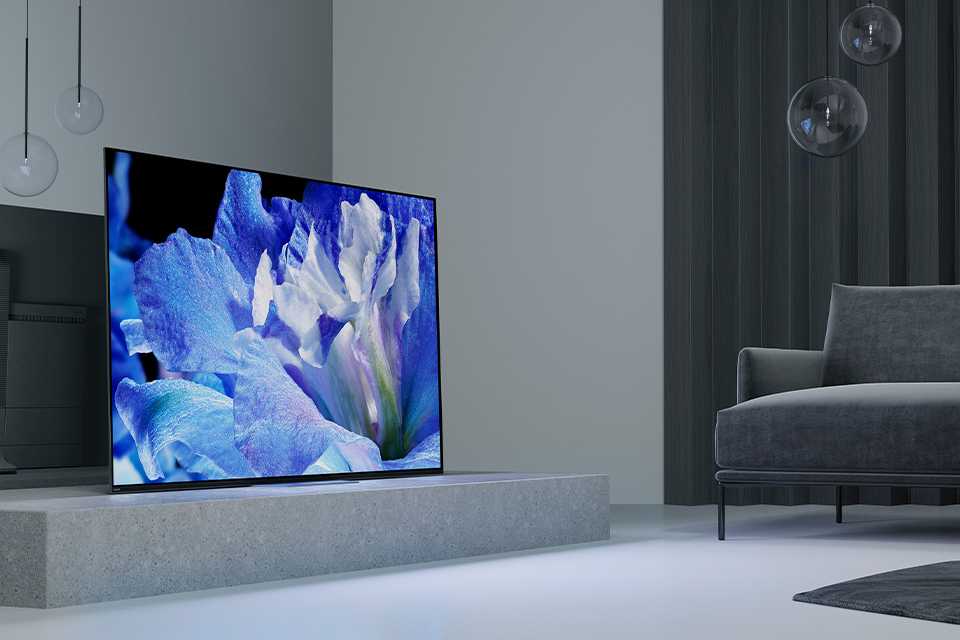
OLED relies on self-emission from organic layers, with a thickness of approximately 1mm. It features a 1,000,000:1 contrast ratio, a response time of <0.1ms, and a 178° viewing angle. The image ...
Laisser un commentaire
Ce site est protégé par hCaptcha, et la Politique de confidentialité et les Conditions de service de hCaptcha s’appliquent.