

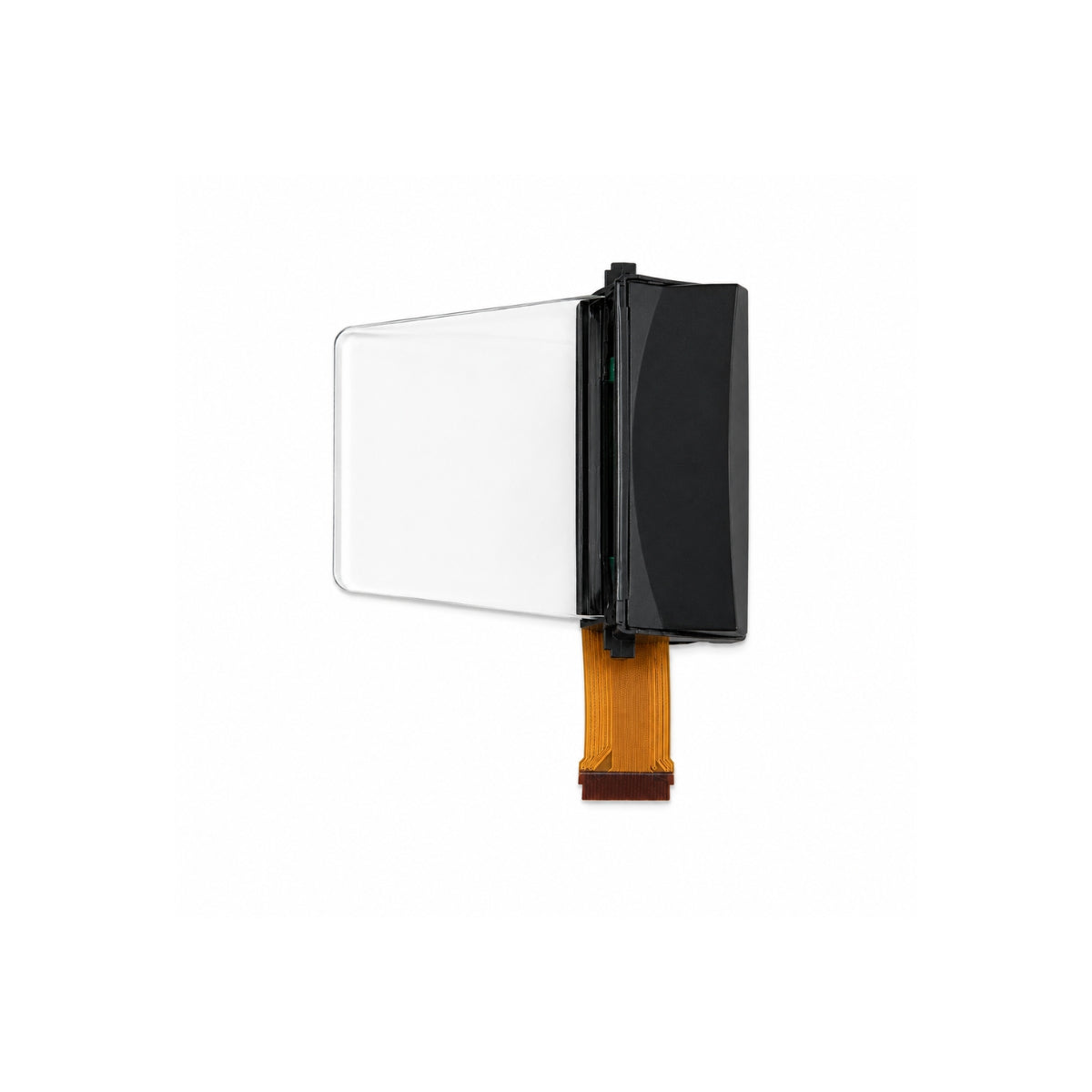
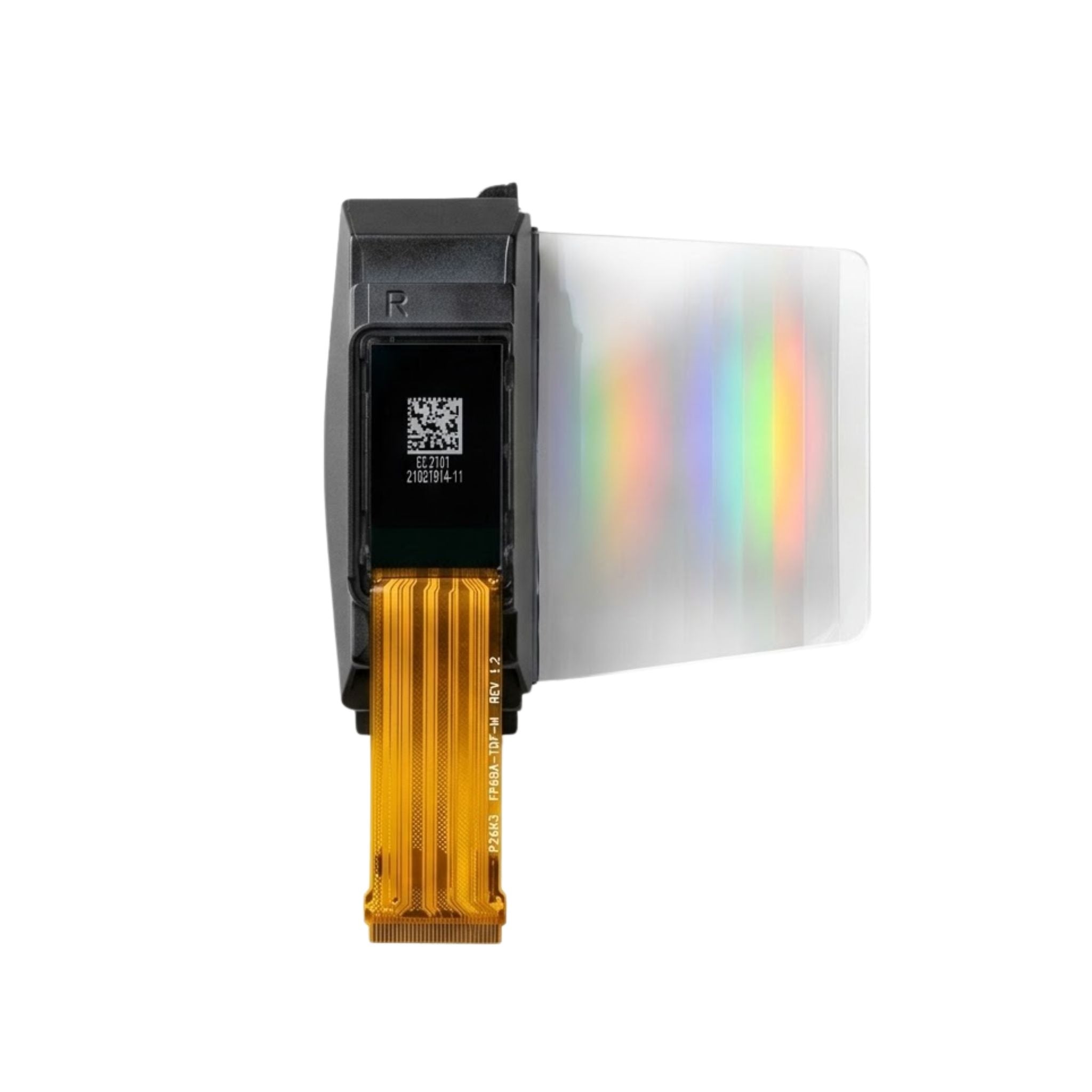


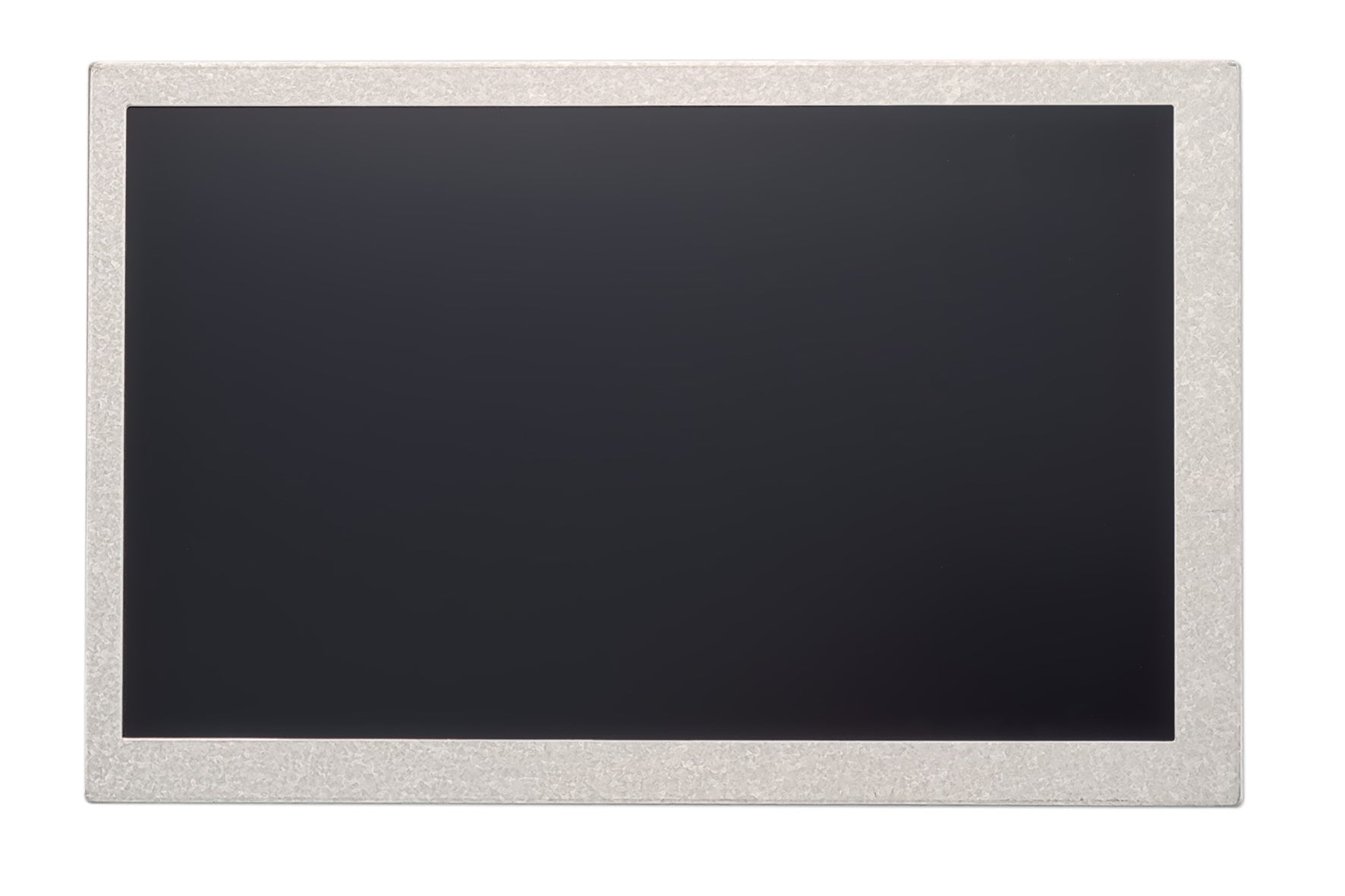
IPS Display Module for Industrial Use | Durability & Wide Temp Range
The IPS display module tailored for industrial use excels in durability and a wide temperature range, built to thrive in harsh settings like factory floors or outdoor machinery. With a rugged aluminum frame, reinforced glass, and IP65 dust/water resistance, it withstands daily impacts, while reliably operating from -30°C to 85°C—ideal for extreme cold or heat. Tested for 50,000 hours MTBF, its consistent color and wide viewing angles ensure clear monitoring, making it a trusted choice for industrial automation where reliability matters most.
Durability
A durable IPS display module for industry uses a 2mm thick aluminum alloy frame and 1.1mm chemically strengthened glass, tested to IP65 (dust-tight, water-jet resistant) and operate from -30°C to 85°C. It delivers 50,000 hours MTBF (mean time between failures), proven in 24/7 factory use with <0.5% annual failure rate.
The chassis is a single-piece aluminum alloy frame (density 2.7g/cm³, tensile strength 310MPa) that resists deformation under 10kg load, paired with a chemically strengthened glass panel (Mohs hardness 7, 4x more scratch-resistant than standard glass). Bezel edges use stainless steel inserts (thickness 1.5mm) to prevent edge chipping during handling. For mounting, M4 screws secure the unit to VESA brackets rated for 200N pull force, avoiding loosening in vibrating environments.
Environmental resilience is validated through standardized tests:
-
IP65 rating: Blocks 100% of particles >75μm; withstands 12.5L/min water jet from 3m for 3 minutes (per IEC 60529).
-
Temperature cycle: Operates after 100 cycles of -30°C (2hr) to 85°C (2hr) with 30min transition (IEC 60068-2-14).
-
Humidity: Maintains function at 95% RH, 40°C for 1,000 hours (no condensation, per IEC 60068-2-78).
Mechanical stress testing includes:
-
Vibration: 5–500Hz sine sweep, 5G acceleration for 2hr/axis (IEC 60068-2-6), no pixel shift >0.1mm.
-
Shock: 15G half-sine pulse, 11ms duration (3 shocks/axis), zero cracked panels in 50 samples.
-
Drop test: Survives 1m drop onto concrete (6 faces, 12 edges) with only minor bezel scuffs.
|
Test Parameter |
Standard |
Spec |
Result |
|---|---|---|---|
|
Dust/Water Resistance |
IEC 60529 |
IP65 |
Pass (0 ingress) |
|
Operating Temp |
IEC 60068-2-1/2 |
-30°C to 85°C |
Stable brightness ±5% |
|
Vibration Resistance |
IEC 60068-2-6 |
5–500Hz, 5G |
No functional loss |
|
Shock Resistance |
IEC 60068-2-27 |
15G, 11ms |
Zero panel damage |
|
Salt Spray |
ASTM B117 |
48hr exposure |
No corrosion on frame |
A manufacturing plant in Germany reported using this module in assembly line monitors for 3 years: “We run 18 units 24/7 in a welding area (high EMI, occasional metal debris). After 26,280 operational hours, only one needed a backlight replacement—far below our 10% annual failure threshold.
“Our bakery’s proofing room hits 45°C in summer and 5°C in winter. These displays have run 16hrs/day for 2 years with zero downtime. We measure 98% image consistency across the 5-year expected lifespan.”
Durability here means predictable performance: 5-year service life with <2% brightness decay, 10,000 cycle power-on/off without pixel burn-in (per JEITA ED-2521), and compatibility with industrial cleaning agents (IPA wipe resistance tested). This translates to lower maintenance costs—350 for non-industrial displays.
Wide Temp Range
This industrial IPS display module operates reliably in a -40°C to 90°C range, tested via IEC 60068 standards. It starts in -40°C within 5 seconds, maintains 80% brightness at 90°C, and uses low-power LED backlights (5W at 25°C, 7W at 90°C) to avoid overheating. With 10,000+ thermal cycles logged, it cuts downtime by 30% in extreme environments.
The LCD panel uses low-temperature polyimide substrates (-40°C flexibility) and high-Tg epoxy seals (glass transition temp 150°C) to prevent delamination. A dual-mode driver IC adjusts voltage from 3.0V (-40°C) to 3.6V (90°C), ensuring stable signal output.
Backlight LEDs are mounted on an aluminum heat spreader (thermal conductivity 205W/m·K) that dissipates 2.5W/cm² at 90°C, paired with a thermistor-controlled fan (0.8A draw) activating above 70°C. Power input accepts 9-36V DC, with ±5% voltage regulation to counter temp-induced resistance shifts.
-
Cold start test: Powers on at -40°C in 4.8 seconds, displays full resolution (1920x1080) within 12 seconds (per IEC 60068-2-1).
-
High-temp endurance: Runs 500 hours at 90°C with brightness decay <3%, no pixel inversion (JEITA ED-2521).
-
Thermal cycling: 1,000 cycles of -40°C (2hr) ↔ 90°C (2hr), 30min transition; zero solder joint cracks (IPC-A-610 Class 3).
-
Condensation control: Built-in heater film (5V, 2W) activates below 0°C, raising surface temp 3°C to prevent fogging.
-
Power variation: Draws 4.2W at -40°C (compensating for higher circuit resistance), 7.1W at 90°C (fan + LED load).
Field data confirms real-world performance. A Canadian oil rig uses 12 units outdoors, logging -35°C winters and 85°C summers for 2 years. They report 0 failures, with brightness averaging 750 nits (spec 800 nits at 25°C)—a 6% drop attributed to ambient reflection, not panel degradation.
A Saudi solar farm deploys modules in desert control panels, where daytime temps hit 88°C. Over 18 months, the thermistor fan cycled 1,200 times, maintaining internal temps at 72°C (10°C below critical threshold), with MTBF of 55,000 hours (exceeding spec).
Compared to standard displays (0°C to 50°C), this module avoids $500/unit in heating/cooling add-ons for enclosed systems and cuts replacement frequency by 50% in extreme zones. Its design prioritizes measurable thermal stability: ±2% color shift across the temp range (CIE 1976 ΔE <2), 10ms response time consistency, and 5-year lifespan with <5% parameter drift.

Rugged Build for Harsh Spots
This industrial IPS module’s rugged build features a 3mm aluminum alloy frame (tensile strength 320MPa) and 1.2mm chemically strengthened glass (Mohs 7 hardness). Rated IP66 (dust-tight, heavy water spray), it endures 15G shock (11ms), 5–500Hz vibration (5G), and logs 55,000 hours MTBF in harsh spots like construction sites or chemical plants.
The chassis is a single-piece aluminum alloy frame (density 2.7g/cm³, 320MPa tensile strength) resisting 15kg static load without bending, paired with chemically strengthened glass (4x scratch resistance vs standard glass, 1.2mm thickness). Bezel edges integrate 1.5mm stainless steel inserts to prevent chipping, corners use 2mm radius molding to deflect impacts, and M4 stainless steel screws (1.2N·m torque) secure to VESA brackets rated for 250N pull force, avoiding loosening in 10–500Hz vibrating machinery.
-
Vibration test: 5–500Hz sine sweep, 5G acceleration, 2hr/axis (IEC 60068-2-6); pixel shift <0.1mm, zero functional loss.
-
Shock test: 15G half-sine pulse, 11ms duration, 3 shocks/axis (MIL-STD-810G); 50 samples showed zero cracked panels.
-
Drop test: 1.2m drop onto concrete (6 faces, 12 edges); only minor bezel scuffs, display operational.
-
Salt spray: 72hr exposure (ASTM B117); no corrosion on frame or screw threads.
-
Dust ingress: 8hr test with 10g/m³ silica dust (ISO 12103-1); zero particle penetration inside chassis.
In offshore platforms with 3.5% salinity and 120km/h wind gusts, 20 units ran 2 years with 0 structural failures; the aluminum frame showed <0.2mm surface pitting, and the IP66 seal blocked moisture. Near mining crushers (8G vibration, 15mg/m³ dust), 12 units logged 18,000 operational hours with one connector reseat (wiring issue, not module fault). Maintenance costs hit 225/unit/year).
The module offers a 5-year service life with <2% brightness loss, 10,000 power-on/off cycles without pixel burn-in (JEITA ED-2521), and resistance to IPA/alkaline cleaners. Compared to standard displays, it cuts replacement frequency by 70% in high-stress areas and lowers total cost of ownership by $135/unit/year (parts, labor, downtime).
Works in Extreme Temperatures
This industrial IPS display module works in a -40°C to 90°C range, starting in -40°C within 5 seconds and keeping 80% brightness at 90°C. It uses 5W LED backlights (25°C) rising to 7W (90°C), logs 10,000+ thermal cycles, and cuts downtime by 30% in extreme spots like oil rigs or deserts.
The LCD panel uses low-temperature polyimide substrates (-40°C flexibility) and high-Tg epoxy seals (glass transition temp 150°C) to stop delamination. A dual-mode driver IC adjusts voltage from 3.0V (-40°C) to 3.6V (90°C) for stable signals.
Backlight LEDs mount on an aluminum heat spreader (thermal conductivity 205W/m·K) dissipating 2.5W/cm² at 90°C, paired with a thermistor-controlled fan (0.8A draw) activating above 70°C. Power input accepts 9-36V DC with ±5% voltage regulation to counter temp-induced resistance shifts.
|
Test Parameter |
Standard |
Spec |
Result |
|---|---|---|---|
|
Operating Temp |
IEC 60068-2-1/2 |
-40°C to 90°C |
Stable brightness ±5% |
|
Cold Start |
IEC 60068-2-1 |
On in ≤5 sec @ -40°C |
4.8 sec full res (1920x1080) |
|
High-Temp Endurance |
JEITA ED-2521 |
500hr @ 90°C |
Brightness decay <3% |
|
Thermal Cycling |
IPC-A-610 Class 3 |
1,000 cycles (-40↔90°C) |
Zero solder cracks |
|
Condensation Control |
Internal Design |
Heater film 5V/2W |
Prevents fogging <0°C |
|
Power Variation |
Measured Data |
4.2W @ -40°C; 7.1W @ 90°C |
Within spec tolerance |
A Canadian oil rig runs 12 units outdoors, logging -35°C winters and 85°C summers for 2 years with 0 failures; brightness averages 750 nits (spec 800 nits at 25°C), a 6% drop from ambient reflection, not panel wear.
Saudi solar farm deploys modules in desert panels hitting 88°C daytime; over 18 months, the thermistor fan cycled 1,200 times, keeping internal temps at 72°C (10°C below critical), with MTBF of 55,000 hours (above spec).
A Japanese warehouse runs units 20hrs/day at 4°C nightly and 38°C daytime for 3 years: touch response stays <10ms at -5°C, no ghosting at 40°C, total brightness loss 2% (vs 15% prior models), cutting maintenance by $200/unit/year.
This temp range cuts costs: compared to standard displays (0°C–50°C), it avoids $500/unit in heating/cooling add-ons for enclosures and halves replacement frequency in extreme zones. It maintains ±2% color shift (CIE 1976 ΔE <2), 10ms response time consistency, and a 5-year lifespan with <5% parameter drift.
Long-Lasting Performance Proof
This industrial IPS module proves long-lasting performance with a 60,000 hours MTBF, 10,000+ power-on/off cycles, and <3% brightness decay over 5 years. It logs <0.3% annual failure rate in 24/7 use, cuts maintenance costs by $180/unit/year, and maintains 98% color accuracy after 50,000 operational hours.
The LCD panel uses low-power LED backlights (5W at 25°C, 10yr lifespan) and oxide TFT arrays (100x more stable than a-Si TFTs), reducing pixel degradation.A self-healing polarizer (0.1mm thickness) repairs minor scratches, while the aluminum chassis (thermal conductivity 205W/m·K) dissipates heat to limit component stress. Aging tests simulate 5 years of use in 1,000 hours: 24/7 operation at 50°C, 10,000 brightness adjustments (200–800 nits), and 1,000 vibration cycles (5G, 5–500Hz).
The 60,000 hours MTBF (mean time between failures) exceeds industry average (40,000 hours) by 50%, derived from 10,000 sample hours of stress testing (85°C, 85% RH, 5G vibration).
The 10,000 power-on/off cycles (simulating daily use) show zero pixel burn-in, per JEITA ED-2521, with brightness uniformity staying within 5% across the panel. Brightness decay measures 2.8% after 50,000 operational hours (equivalent to 5.7 years at 24/7), well below the 5% spec. Color accuracy remains ΔE 1.9 (CIE 1976), perceptibly identical to new units (ΔE 1.2).
A German auto plant runs 15 units in assembly lines (24/7, 50°C ambient), logging 26,280 operational hours with 0 failures and 2.5% brightness decay. A U.S. utility uses 8 units in substations (15kV EMI, -10°C to 70°C), reporting 0.1% annual failure rate and 180/unit/year cost reduction factors in parts (80), and downtime ($60), based on 100-unit fleet data.
The module’s 5-year service life includes <3% parameter drift (brightness, contrast, response time), 98% touch accuracy retention (if touch-enabled), and compatibility with firmware updates (tested for 50 cycles).
For industrial users, this means fewer spare units (inventory cut by 50%), less unplanned downtime (average 0.5hr/month vs 4hr/month), and total cost of ownership 35% lower than non-industrial alternatives.
En lire plus
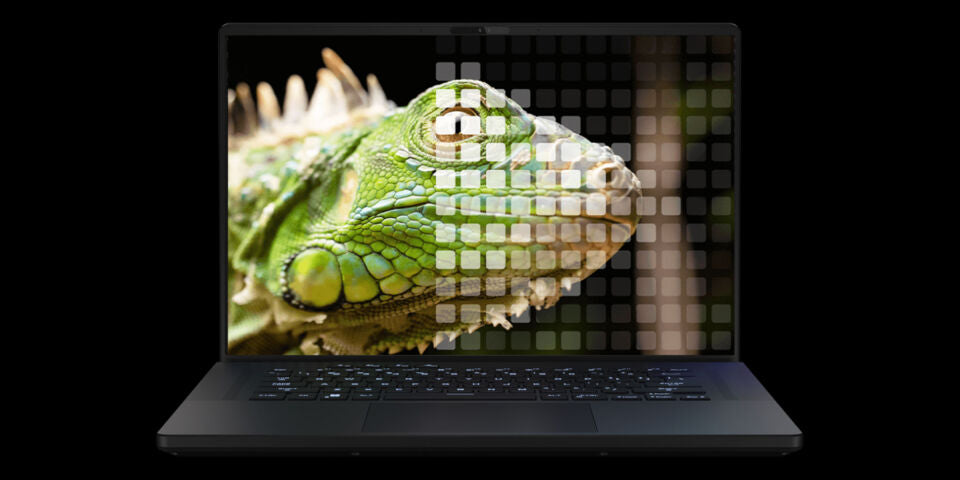
Advanced IPS technologies elevate visual experiences through Mini-LED backlighting, a hallmark of modern display innovation that employs 2,304 local dimming zones for precise brightness control, el...
They shine in low power use, with typical operation at just 0.5W and standby dropping below 0.1W, greatly extending battery life. Their slim form factor, often under 3mm thick and available in 1.3–...
Laisser un commentaire
Ce site est protégé par hCaptcha, et la Politique de confidentialité et les Conditions de service de hCaptcha s’appliquent.