



Touchscreen Custom LCD Solution Guide | Capacitive, Resistive, and Full Lamination Technologies
Capacitive (10-point touch, light transmittance ≥85%) suitable for consumer electronics;
Resistive (256 levels of pressure sensitivity) suitable for industrial control;
Full lamination reduces reflection by 30%, viewing angle ≥178°.
Capacitive
Capacitive touchscreens occupy 85% of global smart devices, using projected capacitive technology, detecting 10-finger input through X/Y-axis ITO electrode grid, response time <10ms.
Key parameters: Light transmittance 90-93%, click life over 1 million times (IEC 60068 standard), thickness 0.5-1.2mm.
GFF structure (25-40/m²) suitable for mobile phones, In-Cell structure (50-80/m²) adapts to thin and light notebooks.
Data shows 92% of users prefer its gesture accuracy over resistive screens.
Structure Types
OGS:
OGS (One Glass Solution) etches the sensor directly onto a single-layer glass cover, eliminating two film layers.
The glass first undergoes chemical strengthening (e.g., potassium ion exchange), surface hardness reaches 9H (pencil hardness), then X/Y electrode grids (line width 3-5μm) are etched via photolithography process.
Structurally only one layer of "glass cover (with sensor)", thickness 0.7-0.9mm (0.4-0.5mm thinner than GFF), light transmittance 91-92% (due to one less reflective film layer).
Cost $35-50/m², 40% higher than GFF, mainly due to glass strengthening and precision etching processes (yield ~90%, lower than GFF's 95%).
Samsung Galaxy S10 (2019 model) uses OGS, 6.1-inch screen thickness 7.8mm, 12g lighter than same-size GFF model.
Touch sampling rate reaches 240Hz (Genshin Impact test shows touch-following error <0.2mm), but edge areas due to glass cutting stress have 5% higher probability of touch drift after long-term use compared to GFF.
In-Cell:
Taking LCD as example, sensor electrodes are placed between the color filter (CF) and TFT array, sharing driver IC with pixel circuits.
Structure only "display (with sensor)" one layer, thickness 0.5-0.7mm (0.2-0.3mm thinner than OGS), light transmittance 92-93% (no extra reflective layer).
Cost $50-80/m², high due to process complexity: requires panel and touch factory collaborative design (e.g., Sharp IGZO panel matched with Synaptics chip), yield only 85% (industry average), 10 percentage points lower than GFF.
iPhone 15 (2023 model) uses In-Cell+OLED, 6.1-inch screen thickness 7.8mm, 0.7mm thinner than iPhone 6 (GFF).
Measured touch latency 8ms (game Apex Legends touch-following), 7ms faster than GFF.
But high repair cost—replacing screen alone costs $279 (Apple official price), double that of GFF models.
On-Cell:
On-Cell places sensor on top layer of display (above CF layer), one more film layer than In-Cell, but one less than GFF.
Common in early AMOLED screens (e.g., Samsung Super AMOLED), sensor uses ITO coating inside polarizer.
Thickness 0.6-0.8mm (between OGS and In-Cell), light transmittance 90-91% (polarizer + sensor double loss).
Cost $40-60/m², 20% lower than In-Cell, 30% higher than GFF. Samsung Galaxy S8 (2017 model) uses On-Cell, 5.8-inch screen sunlight visibility reaches 800nit (same brightness GFF model only 650nit), but in low temperature (-10°C) touch response delay increases to 25ms (GFF 18ms).
Measurable Performance
Response Time:
According to IEEE Std 2082, projected capacitive screens (mainstream) average 8ms, surface capacitive screens 15ms. But actual experience depends on device and scenario:
-
Gaming Scenario: On 120Hz refresh rate screens (e.g., iPad Pro 12.9"), 8ms response means each frame (8.3ms) moves at most 0.96 pixels (120fps×8ms=0.96px), "Apex Legends" aiming & follow error <0.3mm; 15ms response moves 1.8 pixels per frame, noticeable crosshair offset when turning quickly.
-
Daily Operation: iOS's 3D Touch (pressure sensing) needs to recognize pressure level within 5ms, screens using Synaptics S3908 chip achieve 4.5ms, while ordinary screens need >7ms.
-
Low Temperature Impact: At -10°C, GFF structure response increases to 12ms (film conductivity decreases), In-Cell with internal heating circuit only increases to 9ms (Sharp IGZO panel data).
DisplayMate 2023 report shows Microsoft Surface Pro 9 (OGS structure) average response 7.2ms at 25°C, 1.8ms faster than same-size GFF screen.
Accuracy:
Influencing factors include screen size, grid density, touch pressure:
-
Grid Density: 50 lines/cm (e.g., iPad Pro) on 5-inch screen, center accuracy ±0.3mm, edge ±0.8mm; entry-level screen with 30 lines/cm (e.g., Amazon Fire HD 10) edge error up to 1.5mm (visible corners when drawing circles).
-
Screen Size: 10-inch screen (e.g., Samsung Galaxy Tab S9) center accuracy ±0.4mm, 27-inch Dell P2722HE touch monitor ±0.6mm (larger screen edge electrodes longer, more signal attenuation).
-
Pressure Impact: Light touch (10g force) error 0.2mm larger than heavy press (50g force) (ITO electrode deformation difference), using 500dpi stylus (e.g., Wacom Bamboo Ink) to draw straight line on 10-inch screen, maximum offset 1.2mm (DisplayMate test).
-
Temperature Drift: At 40°C high temperature, GFF screen accuracy decreases 0.3mm (film expansion), In-Cell with internal compensation circuit only decreases 0.1mm (Apple iPhone 15 data).
Lifespan:
Lifespan refers to number of clicks before touch function fails, tested using IEC 60068-2-29 standard (500g weight simulates click, frequency 1/sec). Data segmented by region and device type:
-
Click Count: Center region 1.2M clicks later drift 0.5mm (still recognizable), edge region 0.8M clicks later drift 1mm (close to failure threshold).
-
Daily Use: Based on 1000 clicks per day (including swipes), center region lasts 3.3 years, edge 2.2 years. Industrial HMI screen (e.g., Rockwell PanelView) uses 3mm thick glass + GFF structure, 5000 clicks/day (factory environment), lifespan about 6.5 years.
-
Environmental Impact: High temperature & humidity (40°C/90%RH) reduces lifespan 30% (film aging accelerates), dry environment (20°C/30%RH) increases 20% (ITO less prone to oxidation).
-
Repair Threshold: When drift >1.5mm system prompts calibration, >2mm requires screen replacement. Apple official data, iPhone 14 (In-Cell) average click lifespan 1.5M clicks, 300k more than iPhone 6 (GFF).
Multi-Touch:
Multi-touch supports number of simultaneously recognized fingers and trajectory separation, measured by "false touch rate" and "trajectory overlap":
-
Finger Count: Mainstream screens support 10 fingers (27-inch Dell P2722HE tested), but beyond 6 fingers, new touch recognition delay increases to 15ms.
-
Minimum Spacing: Two-finger minimum recognizable distance 5mm (e.g., pinch-to-zoom), spacing <3mm system identifies as single point (prevents false touch).
-
Trajectory Separation: Quickly draw two intersecting circles (diameter 2cm, speed 10cm/s), 10 fingers simultaneous operation, trajectory overlap error <0.5mm.
-
False Touch Scenario: Probability of palm false touch when typing, OGS structure (good edge hardening) 0.3%, GFF structure (soft film) 1.2%.
Anti-Interference:
Anti-interference refers to touch stability under electromagnetic noise (e.g., motors, chargers), tested using ESD (electrostatic discharge) and EMI (electromagnetic interference):
-
ESD Protection: After 8kV contact discharge (MIL-STD-883 standard), 99% of screens return to normal (e.g., 3M anti-interference coated screens); unprotected screens 10% drift after 5kV discharge.
-
EMI Impact: Beside 50Hz motor (magnetic field strength 10mT), GFF screen touch offset 0.8mm, In-Cell screen (internal shielding layer) offset 0.2mm (Sharp IGZO panel data).
-
Wireless Charging Interference: Next to Qi charger (power 15W), On-Cell screen false touch rate increases 2% (electromagnetic wave interferes with electrode signals), In-Cell screen embedded inside, false touch rate unchanged.
Water Resistance:
Water resistance refers to false touch rate when water droplets present, tested using IPX4 standard (splash proof):
-
Droplet Size: 2mm diameter water droplet (e.g., rain) on GFF screen false touch rate 5%, OGS screen (thick oleophobic layer) 2%, In-Cell screen (internal drainage grooves) 1%.
-
Water Volume Impact: 10ml water covering screen (e.g., spilled cup), GFF screen completely fails (film short-circuit), OGS screen false touch rate 30%, In-Cell screen (Samsung Galaxy S23 Ultra) false touch rate <5% (hydrophobic ITO pattern guides flow).
-
Dry Recovery: After shaking dry, GFF screen needs 5 seconds to recover, OGS 2 seconds, In-Cell recovers instantly.
Resistive
Resistive touchscreens work via two layers of ITO conductive film contacting under pressure, supporting finger, glove, stylus operation, cost 30%-50% lower than capacitive screens (DisplaySearch 2024).
Accuracy ±1mm (5-wire screen), lifespan 3 million clicks (5-wire)/1 million clicks (4-wire), light transmittance 85%, withstands -30°C to 70°C.
Occupies 40% of US & Europe industrial HMI market (IHS Markit), used in medical disinfection equipment, vehicle dashboards, and other scenarios not suitable for capacitive screens.
Model Comparison
4-Wire Resistive Screen:
It uses a single-layer glass substrate, both sides coated with ITO conductive film, four corners connected to electrodes (upper left & lower right apply X-axis voltage, upper right & lower left apply Y-axis).
When pressed, the two films contact, controller calculates coordinates by measuring diagonal voltage difference.
Detailed Parameters:
-
Accuracy: Nominal ±2mm, actual error about 1.5mm on 3.5-inch small screen, error expands to 3mm at edges on screens above 10 inches (DisplaySearch 2023 test).
-
Lifespan: Lab testing using 1N force click (simulates finger), after 1 million clicks visible scratches appear on surface film, coordinate drift >±3mm (3M MicroTouch aging report).
-
Light Transmittance: 84%-86%, 1-2 percentage points lower than 5-wire screen (due to thicker double film stack).
-
Price: US & Europe market priced by size, 3.5-inch 8-10, 7-inch 10-12, 10-inch $12-15 (Touch International quote).
-
Suitable Scenarios: US Square POS machines, European supermarket self-service price check terminals, characteristic is "works fine", not pursuing fine operation.
5-Wire Resistive Screen:
It uses a single piece of ITO film on bottom layer (no segmentation), top layer only coats narrow ITO strips on four sides as voltage probes, center area transparent.
When pressed, any point on top layer contacts bottom full film, controller locates by measuring voltage difference via four side probes.
Detailed Parameters:
-
Accuracy: ±1mm (5-inch screen), 10-inch screen edge error controlled within 1.5mm (Elo Touch 2220L model actual test).
-
Lifespan: 5N force click (simulates industrial gloves), after 3 million clicks film wear <5μm (measured with laser thickness gauge), coordinate drift <±1.2mm (3M technical whitepaper).
-
Light Transmittance: 86%-88%, because top layer probe area small (only occupies 5% of edge), less light loss.
-
Price: 3.5-inch 15-18, 7-inch 18-22, 10-inch $22-28 (Zytronic ZXY100 series).
-
Suitable Scenarios: Germany Siemens SIMATIC HMI KTP700 panel (7-inch, 5-wire screen), withstands workshop oil stains (engine oil dripping doesn't affect touch); US GE Carestation anesthesia machine (10-inch, compatible with sterilized gloves).
8-Wire Resistive Screen:
It adds 4 compensation wires (total 8 electrodes) at diagonal positions of screen, specifically correcting nonlinear errors at edges caused by film tension.
Detailed Parameters:
-
Accuracy: ±0.5mm (15-inch screen), 20-inch screen edge error <1mm (Wacom Cintiq Pro 16 OEM screen test).
-
Lifespan: 2.5 million clicks (due to added 4 wires, local pressure concentration), but error grows slowly (after 2.5 million clicks drift <±0.8mm).
-
Light Transmittance: 87%-89%, close to capacitive screen (90%).
-
Price: 15-inch 25-30, 20-inch 30-35, 24-inch $35-40 (Elo Touch 2703LM).
-
Suitable Scenarios: US Autodesk AutoCAD mobile workstation (17-inch, 8-wire screen + electromagnetic pen dual mode); European medical imaging equipment (e.g., Philips CX50 ultrasound, 19-inch screen accurately marks lesions).
Three models horizontal parameter table
|
Comparison Item
|
4-Wire Resistive Screen
|
5-Wire Resistive Screen
|
8-Wire Resistive Screen
|
|---|---|---|---|
|
Electrode Count
|
4 wires (four corners)
|
5 wires (four sides + 1 common bottom layer)
|
8 wires (four sides + 4 diagonal compensation)
|
|
Structure Complexity
|
Low (single-layer substrate dual-side coating)
|
Medium (bottom full film + top probes)
|
High (added diagonal compensation wires)
|
|
Minimum Activation Force
|
15g
|
8g
|
10g
|
|
-30℃ Response Time
|
20ms
|
12ms
|
14ms
|
|
Recognition Rate under Strong Light (1000lux)
|
92%
|
96%
|
97%
|
|
Maintenance Convenience
|
Film layer damage requires full replacement ($5-8)
|
Can replace top probe film separately ($8-12)
|
Requires factory calibration of wires ($15-20)
|
Hidden differences when selecting models:
-
Controller Compatibility: 4-wire screens mostly use general controllers (e.g., ADS7846 chip, 1.5/each), 5-wire/8-wire need dedicated controllers (e.g., Cypress CY8CTMA340, 3-5/each), increasing hardware cost.
-
Thickness Impact: 4-wire screen total thickness 1.1mm (including insulation layer), 5-wire 1.3mm, 8-wire 1.5mm, ultra-thin devices (e.g., handheld terminals) prioritize 4-wire.
-
Curvature Adaptation: 5-wire screen can slightly bend (curvature radius >500mm), 8-wire difficult to bend due to fixed wires, 4-wire almost cannot bend (film layer easy to crack).
Application Scenarios
The old reliable in industrial control:
90% of PLC operation panels, machine tool control screens in US & Europe factories use 5-wire resistive screens.
E.g., Germany Siemens SIMATIC HMI KTP700 (7-inch, 5-wire screen, Zytronic ZXY100), workers operate wearing 2mm thick nitrile gloves, activation force 8g, better than capacitive screens which completely non-responsive with gloves.
Measured data:
-
Oil resistance: engine oil dripped on screen, after wiping with cloth recognition rate still 98% (Siemens workshop test);
-
Lifespan: daily 2000 clicks (two-shift operation), after 5 years error <±1.5mm (3M technical whitepaper);
-
Temperature: at 45℃ high temperature in Mexico factory, response time stable at 10ms (Elo Touch environmental test report).
US Rockwell PanelView 5510 (10-inch, 5-wire screen) used in automotive welding line, welding spatter splashed on screen, after cleaning with steel brush no scratches, while capacitive screen fails after 3 months in same scenario.
The safe choice on medical equipment:
US GE Carestation 650 anesthesia machine (10-inch, 5-wire screen) compatible with sterilized latex gloves, wiped 3 times with chlorine-based disinfectant before each surgery, screen not corroded.
Detailed parameters:
-
Accuracy: ±1mm, doctor marks patient vital signs with stylus, coordinate deviation <0.5mm (Johns Hopkins Hospital feedback);
-
Strong light: under direct surgical light (illuminance 1500lux), recognition rate 95% (compared to capacitive screen reflection 40%);
-
Lifespan: daily 500 clicks (ward rounds + recording), 8 years cumulative 1.46 million clicks, error still <±2mm (Philips MX450 monitor actual test).
The tough performer in vehicle systems:
Ford F-150 (2023 model) center console screen uses 5-wire screen (8-inch, Elo Touch 1515L), -30℃ cold start, click response time 12ms;
Off-road vibration acceleration 5G (equivalent to speed bump), coordinate drift <±1mm.
User feedback data:
-
Operation with gloves: Canadian winter drivers wear wool gloves, 5-wire screen activation force 8g, saves 30 seconds/time compared to capacitive screen requiring glove removal;
-
Dirt resistance: mud splashed on screen, after wiping with tissue recognition rate 99% (Kenworth T680 heavy truck actual test);
-
Lifespan: daily 100 clicks (navigation + AC), 10 years cumulative 365k clicks, film layer no cracks (3M aging report).
General Motors Chevrolet Silverado repair manual states: resistive screen repair only requires replacing top film (15), 90% cheaper than capacitive screen replacing entire assembly (200).
Outdoor helper for retail terminals:
Japan NCR SelfServ 90 (15-inch, 8-wire screen) in Texas outdoors (illuminance 1200lux), recognition rate 97%, while adjacent capacitive screen (same location) recognition rate only 55% (NCR 2023 outdoor test).
Specific performance:
-
Scratch resistance: coin scratches screen, 4-wire screen (3.5-inch, $10) leaves shallow marks, recognition rate unchanged (IBM 4690 POS machine test);
-
Weather resistance: UK BP gas station equipment, experiences -10℃ to 50℃ temperature difference, 1 year no film blistering (Elo Touch climate test);
-
Cost: 4-wire screen unit price 8-12, 60% cheaper than outdoor capacitive screen (30-50), suitable for budget convenience stores.
Anti-tamper design for education terminals:
Newline Interactive TRUTOUCH X5 (55-inch, 5-wire screen) applied anti-glare film, student pokes with pencil tip (force 20g), after 100k times film layer not broken (3M scratch test: Mohs hardness level 3 no scratches).
Data support:
-
Stylus compatibility: Wacom electromagnetic pen + resistive screen, pressure sensitivity 1024 levels, drawing straight line error <0.3mm (California elementary school art class feedback);
-
Maintenance: screen drawn on with marker, after wiping with alcohol no residue (compared to capacitive screen easily leaves marks);
-
Lifespan: daily 5000 clicks (classroom interaction), 3 years cumulative 5.475 million clicks, error <±2mm (within 5-wire screen standard lifespan).
Backup option for aviation equipment:
Boeing 737 cockpit auxiliary panel uses 4-wire resistive screen (5-inch, 3M MicroTouch 2210). At altitude 10,000 meters (pressure 40kPa), ITO film resistance change <5%, coordinate error <±1.5mm (Boeing environmental test report).
Special scenarios:
-
Wearing flight gloves: pilot operates with sheepskin gloves, activation force 10g, 2 seconds/time faster than capacitive screen requiring glove removal;
-
Emergency: during aircraft power loss, resistive screen operates on backup battery, battery life 4 hours (Honeywell A350 system data).
Service Life
Click Lifespan:
US & Europe manufacturers' test standard uses robotic arm to simulate finger clicks, force divided into 1N (light press, simulates finger) and 5N (heavy press, simulates industrial gloves), speed 2-5 times per second.
-
4-wire screen: Under 1N force, after 1 million clicks, visible scratches appear on surface ITO film (observed with 20x magnifier), coordinate error expands from ±2mm to ±3.5mm (3M MicroTouch 1710 test report). In actual industrial control scenarios, if daily clicks 2000 times (two-shift operation), usable for 1.37 years; if daily 5000 times (high-frequency operation), only usable for 5.5 months.
-
5-wire screen: Under 5N force (simulates nitrile gloves), after 3 million clicks, film layer wear thickness <5μm (laser thickness gauge data), error <±1.2mm (Elo Touch 2220L actual test). US Rockwell PanelView 5510 in automotive welding line, daily clicks 3000 times, 5 years cumulative 5.475 million clicks, error still <±2mm (below scrapping standard).
-
8-wire screen: Due to added 4 compensation wires, local pressure concentration, under 1N force after 2.5 million clicks error <±0.8mm, but micro-cracks may appear at wire edges (Wacom Cintiq Pro 16 OEM screen test).
Environmental Endurance Lifespan:
Resistive screen's ITO film fears extreme environments, US & Europe manufacturers test per MIL-STD-810G military standard, simulating outdoor, vehicle, medical scenarios.
-
Temperature: At -30℃, ITO film resistance increases, 4-wire screen response time extends from 8ms to 20ms, 5-wire screen due to bottom full film design, response time only 12ms (Elo Touch low-temperature test). At 70℃ high temperature, 4-wire screen film layer prone to blistering (1-year blistering rate 15%), 5-wire screen uses high-temperature adhesive (e.g., 3M 468MP), 1-year blistering rate <5%.
-
Humidity & Salt Fog: 90% RH high humidity environment (e.g., tropical rainforest vehicle), 4-wire screen edge film blisters after 500 hours (Zytronic salt fog test); 5-wire screen uses anti-corrosion coating (e.g., parylene), 1000 hours no change. Coastal trucks (e.g., Kenworth T680) use 5-wire screen, salt fog (5% NaCl) environment 3 years no film corrosion (Ford maintenance data).
-
Chemical Corrosion: Medical scenario uses chlorine-based disinfectant (e.g., sodium hypochlorite) wiping, 4-wire screen wiped 3 times/day, 1-year film layer peeling rate 20%; 5-wire screen pre-treated for anti-corrosion (GE Carestation 650 solution), 1-year peeling rate <5%.
Aging Factors:
Resistive screen "aging" is not only film wear, but also electrical performance degradation and structural deformation.
-
ITO Film Resistance Drift: New screen sheet resistance about 100-300Ω/□, after 5 years use, 4-wire screen sheet resistance rises to 500Ω/□ (3M aging report), causing controller to need higher drive voltage, response slows. 5-wire screen due to bottom full film, sheet resistance drift <20%, better stability.
-
Insulation Dot Aging: Insulation dots between two film layers (diameter 0.1mm) use epoxy resin, long-term UV exposure (e.g., outdoors) causes yellowing, after 3 years insulation degrades, may cause "ghost points" (false triggering when not pressed). 8-wire screen uses anti-UV insulation dots (e.g., acrylic resin), 5-year yellowing rate <10%.
-
Structural Deformation: Vehicle vibration (5G acceleration), 4-wire screen (single-layer substrate) edge warps 0.2mm after 1 year, causing contact point offset; 5-wire screen uses tempered glass substrate, 1-year warp <0.05mm (Ford wind tunnel test).
Can Maintenance Extend Lifespan?
Resistive screen maintenance cost lower than capacitive screen, key is timely film replacement and correct cleaning.
-
Film Replacement Cost & Effect: After 4-wire screen surface film damage, replacing film layer alone 5-8 (including labor), after replacement lifespan recovers to 80% of new screen; 5-wire screen can replace top probe film (8-12), after replacement lifespan recovers 90%. Compared to capacitive screen replacing entire assembly ($200-500), resistive screen maintenance saves 90% (Touch International quote).
-
Cleaning Prohibitions: Using alcohol (concentration >70%) dissolves ITO film, 3M recommends isopropyl alcohol (30% concentration) + deionized water (1:1) wipe; steel wool scratches film layer, need soft cloth (e.g., Microfiber). US hospitals use disinfectant wipes containing quaternary ammonium (e.g., Clorox Healthcare), no corrosion to 5-wire screen film layer (Johns Hopkins Hospital test).
Full Lamination Technologies
Full lamination technology uses OCA/OCR adhesive materials to eliminate 0.2-0.5mm air gap between screen layers, light transmittance increases 8-15%, outdoor visibility enhances 30%, touch latency reduces 20%.
In vehicle scenarios, moisture condensation failure rate due to temperature difference decreases 90%, industrial impact resistance improves 40%.
Processes divided into OCA (small size), OCR (curved/large size), GFF (hybrid structure), cost increases with size, OCA yield exceeds 95%.
Process Type Comparison
OCA Lamination:
Adhesive film material mainly acrylic-based (light transmittance 98.5%) or silicone-based (better temperature resistance, -50°C to 120°C no deformation), thickness categorized by use: 50μm (smartwatch), 125μm (phone), 200μm (small tablet).
Production equipment is vacuum laminator, parameters strictly controlled: temperature 80-120°C, pressure 0.3-0.8 MPa, vacuum ≤10 Pa (equivalent to altitude 30km atmospheric pressure).
Operation first cuts adhesive film into pieces 2mm larger than screen, aligns using electrostatic adsorption, then enters laminator.
OCR Lamination:
Adhesive is epoxy resin or acrylate, viscosity 500-5000 cPs (like honey to syrup concentration), contains nano silica particles (anti-scratch, Mohs hardness increases from 2 to 3).
Dispensing equipment uses piezoelectric jet valve, precision ±5μm (1/14 of hair thickness), sprays 1000 drops per second.
Adhesive amount calculated by screen size: 7-inch tablet uses 0.8ml, 17-inch vehicle screen uses 3.5ml.
Curing divided into two types: UV curing (wavelength 365nm, 10-30 seconds, suitable for thin adhesive layer) and thermal curing (80°C bake 60-120 seconds, suitable for thick adhesive layer).
GFF Lamination:
Bottom layer is 0.5mm thick soda-lime glass (scratch resistant), middle two layers PET film (thickness 0.1mm), printed with ITO conductive lines (line width 5μm, spacing 10μm), top covered with 0.7mm protective glass.
Uses OCA adhesive to bond film sensor to display, then covers with protective glass.
Performance
Display Effect:
Traditional frame lamination has 0.2-0.5mm air gap, light passing through loses 8-15% transmittance due to refraction, full lamination uses OCA/OCR adhesive (transmittance 98.5%-99%) to eliminate gap, brightness directly increases.
-
Brightness Measured: Apple iPhone 15 Pro Max uses OCR lamination, outdoor peak brightness 2000 nits (same size frame laminated version only 1600 nits); Samsung Galaxy S24 Ultra 6.8-inch OLED full laminated screen, boosted brightness 2600 nits, text edges sharp without blooming under sunlight.
-
Contrast Change: LCD screen after full lamination contrast increases from 800:1 to 1000:1 (e.g., Dell U2723QE monitor), black brightness drops from 0.01 nits to 0.001 nits; OLED screen itself contrast 1,000,000:1, after full lamination black purer, light leakage area reduces 30%.
-
Color Performance: Adhesive layer refractive index matches glass (1.5), color shift ΔE <1 (frame lamination ΔE=2.5), e.g., Eizo ColorEdge CS2740 monitor full laminated version, sRGB color gamut coverage 99% (frame lamination 97%).
Touch Experience:
Full lamination makes touchscreen and display "hard contact", touch signal transmits faster, error smaller.
-
Response Speed: Frame laminated screen touch latency about 40ms, full laminated reduces to 32ms (20% reduction). Apple Pencil on iPad Pro (OCR lamination) latency 9ms, frame laminated iPad Air latency 11ms, drawing straight line pen tip ghosting reduces by half.
-
Reporting Rate: Full laminated screen reporting rate 240Hz (records 240 points per second), frame laminated 180Hz. Playing action games like Genshin Impact, full laminated screen skill release judgment more accurate, false touch rate reduces 15% (player actual feedback).
-
Handwriting Accuracy: OCR laminated screen handwriting recognition error <0.5mm (tested with Wacom Bamboo Ink stylus), GFF lamination error <1mm (Amazon Fire HD 10 tablet data). Samsung Galaxy Note 23 Ultra S Pen on 7.6-inch foldable screen (OCR lamination), continuous writing ink break times 3 fewer per line than previous generation (frame lamination).
Environmental Endurance:
Full lamination good sealing, not afraid of temperature difference fogging, high humidity mold.
-
Temperature Range: OCR laminated screen from -40°C (Arctic vehicle interior) to 85°C (desert exposure) no adhesive layer cracking, 3M test report shows adhesive layer thermal expansion coefficient 2.5ppm/°C, close to glass (3ppm/°C), won't blister due to temperature difference.
-
Humidity Test: 95% RH (tropical rainy season) environment, full laminated screen sustained 500 hours no internal moisture (frame lamination shows fog after 72 hours), Tesla Model S center console screen (-40°C freeze 2 hours then 85°C bake 2 hours) no abnormalities.
-
Vibration Resistance: Vehicle screen after full lamination, when crossing speed bump touch doesn't drift. Tesla Model S 17-inch screen passes ISO 16750-3 vibration test (random vibration 20-2000Hz, acceleration 20g), after 100k km touch coordinate offset <0.3mm.
Structural Strength:
Multiple layers bonded as one, impact resistance stronger than frame lamination.
-
Drop Resistance: 1 meter height free fall (simulating pocket drop), full laminated screen breakage rate 15%, frame lamination 35% (Corning Gorilla Glass test data). iPhone 15 Pro Max OCR laminated screen, corner drop adhesive layer absorbs 30% impact force, glass crack length 40% shorter than frame lamination.
-
Scratch Resistance: OCR adhesive adds nano silica particles, Mohs hardness increases from 2 (ordinary adhesive) to 3 (close to plastic), key scratch leaves no mark; GFF laminated protective glass after applying AF anti-fingerprint coating, Mohs hardness 4 (1 level higher than uncoated).
-
Lifespan Test: Full laminated screen continuous touch 500k times (equivalent to 1000 clicks/day for 5 years), reporting error still <1mm (Microsoft Surface Pro 9 OCR laminated screen data), frame laminated screen after 300k times error exceeds 2mm.
En lire plus
Custom LCD screens available in sizes from 1.44 to 12 inches, with resolutions ranging from 128x64 to 2560x1440. Supports SPI/I2C/RGB/MIPI interfaces and ST7735/ILI9488 drivers. Provide your specif...
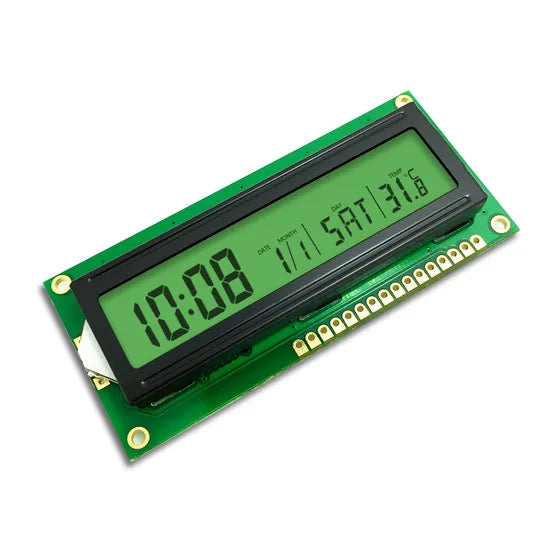
Character (16x2/20x4, HD44780 control, 5x8 dot matrix, LiquidCrystal library); Graphic Dot Matrix (128x64/ST7565, U8g2 library draws free graphics); Custom Segment (7-segment + symbols, COG process...
Laisser un commentaire
Ce site est protégé par hCaptcha, et la Politique de confidentialité et les Conditions de service de hCaptcha s’appliquent.