



What is an AMOLED Display? | How It Works, Benefits & Uses
AMOLED is a pixel self-emissive technology featuring an ultra-high contrast ratio of 1,000,000:1.
Black pixels do not emit light, making it more energy-efficient with more vibrant colors.
It responds extremely fast (<1ms) and has a thin, light structure, making it the preferred choice for flagship smartphones and smartwatches, significantly enhancing battery life and visual immersion.
How It Works
AMOLED screens emit light through millions of independent organic diodes.
Its response speed ranges between 0.01 and 0.1 milliseconds, brightness drops to 0 nits when displaying pure black, and static contrast easily exceeds 1,000,000:1.
Each pixel is controlled by an underlying Thin Film Transistor (TFT) for power input, supporting 10-bit color depth to present over 1.07 billion colors.
It eliminates the need for a traditional LCD backlight module, and the total panel thickness is typically less than 1 millimeter.
Pixel Self-Emission Principle
When an external voltage is applied across a pixel, electrical energy crosses a thin-film functional layer only about 100 to 500 nanometers thick, driving electrons and holes to converge at the emission center.
This process does not rely on any external light source; each sub-pixel is a tiny semiconductor light-emitting diode.
The anode at the bottom is usually composed of Indium Tin Oxide (ITO) with a high work function.
Its transparency allows light to exit, while the cathode at the top uses metallic materials such as aluminum or magnesium-silver alloy, utilizing high reflectivity to push light toward the observer.
According to calculations, this self-emission mechanism allows the display to reduce pixel power consumption to below 0.001 Watts when displaying black images, because the current is completely cut off and the organic molecules remain stationary.
The migration and recombination of charges within the organic layers are the foundation of light-emitting efficiency.
Holes are injected from the anode into the Hole Injection Layer (HIL), then pass through the Hole Transport Layer (HTL) to reach the Emissive Layer (EML).
Simultaneously, electrons start from the cathode, moving toward the same target through the Electron Injection Layer (EIL) and the Electron Transport Layer (ETL).
When electrons and holes meet and combine in the emissive layer, they form a high-energy physical state called an "exciton."
In the process of transitioning to a lower energy level, excitons release stored energy in the form of photons.
In this microscopic action, the level of Internal Quantum Efficiency (IQE) determines the electricity-to-light conversion ratio.
Traditional fluorescent materials primarily utilize singlet excitons, which account for 25%, while modern high-end panels commonly introduce phosphorescent materials or Thermally Activated Delayed Fluorescence (TADF) technology to capture the 75% triplet excitons, thereby raising theoretical light efficiency to nearly 100%.
Different colors of light depend on the energy gaps of the chemical molecules used in the organic emissive layer.
Red pixels correspond to lower energy, with emission wavelengths typically between 620 and 750 nanometers.
Green pixel wavelengths are concentrated between 495 and 570 nanometers, while blue pixels, due to their wide energy gaps, require higher voltage drive to excite short-wavelength light around 450 nanometers.
Since blue organic materials decay much faster than red or green materials, panel manufacturers often design the physical area of blue sub-pixels to be larger or balance lifespan and brightness consistency through adjusted PenTile diamond arrangements.
In practical measurements, this targeted physical arrangement optimization allows the screen to maintain accurate white balance even after 50,000 hours of continuous operation.
The response speed of AMOLED pixels demonstrates a significant physical advantage, usually in the range of 0.01 to 0.1 milliseconds, which is about 1000 times faster than traditional liquid crystal display technology.
This is because the photoelectric response of organic molecules is almost instantaneous, without the mechanical delay required for liquid crystal molecules to rotate.
When processing high-refresh-rate dynamic images at 120Hz or even 240Hz, each pixel can complete color switching within an extremely short time window, thereby eliminating motion blur.
Meanwhile, by precisely controlling the current intensity flowing through each pixel, the screen can achieve 1024 levels or higher grayscale subdivision, supporting 10-bit color depth—enough to display over 1.07 billion subtle color variations.
By removing the backlight layer and color filters, the total thickness of the AMOLED module is controlled within 0.6 millimeters.
This extreme physical structure not only reduces contrast loss caused by internal light reflections but also provides space for integrated under-display optical sensors.
When light passes through the gaps in the organic material to illuminate the fingerprint identification module, the self-emissive pixels themselves can act as the light source for the identification process.
In terms of brightness performance, by increasing the drive current density, the local peak brightness of modern panels can exceed 3000 nits.
Internal Construction
An AMOLED screen is not a single material but a highly complex physical stacking system, with a total thickness typically maintained between 0.5 mm and 0.8 mm.
The bottom foundation is composed of a flexible Polyimide (PI) substrate, which can withstand high-temperature processing exceeding 400 degrees Celsius and has a thickness of only 10 to 15 micrometers.
During the manufacturing process, technicians lay a thin-film transistor control layer on the substrate, which is the physical base that determines the screen's refresh rate and brightness.
Under each pixel, there are switching units made of Low-Temperature Polycrystalline Silicon (LTPS) or Oxide (LTPO), with electron mobility typically between 50 and 100 cm²/Vs, ensuring current can be switched on or off in less than 0.000001 seconds.
Above the control layer, the AMOLED construction enters the photoelectric conversion zone, which is meticulously stacked with multiple micron-scale and nano-scale materials:
- Reflective Anode Layer: About 150 nm thick, usually a sandwich structure with silver (Ag) between Indium Tin Oxide (ITO). The silver layer provides over 90% light reflectivity, ensuring light produced by the organic layers is directed upward, while ITO manages smooth charge injection.
- Hole Injection and Transport Layers: These functional layers are controlled at 10 to 30 nm thick. They regulate the speed of positive charges entering the emissive layer and prevent local heating caused by charge accumulation, directly extending screen life.
- Organic Emission Center Layer: This is where chemical materials are most densely used, containing Red, Green, and Blue emissive molecules. Blue emissive layers are typically thinner than red or green layers, but to compensate for shorter physical lifespan, the actual emissive area of blue sub-pixels is often 50% to 80% larger than green ones.
- Semi-transparent Cathode Layer: Formed from a mixture of magnesium (Mg) and silver (Ag), this layer is extremely thin, only 10 to 20 nm.
Traditional glass encapsulation has evolved into Thin Film Encapsulation (TFE), achieved by alternately stacking inorganic layers (such as silicon nitride or aluminum oxide) and organic buffer layers.
The inorganic layers, about 1 micrometer thick, block external moisture, with Water Vapor Transmission Rate (WVTR) strictly controlled below 0.000001 g/m²/day.
The organic layers are filled between inorganic layers to smooth out particle impurities and absorb internal stress, ensuring the screen does not delaminate or crack even at bending radii as small as 1 mm.
On the outermost layer of the display module, functional components for ambient light control are integrated:
- Circular Polarizer: About 100 to 150 micrometers thick. It includes a polarizer and a quarter-wave plate to intercept sunlight that enters the screen and reflects off metal layers. Without this layer, AMOLED screens would reflect like mirrors in sunlight, causing contrast loss.
- Touch Sensor Layer: Modern constructions often use On-Cell integration, depositing sensing electrodes directly onto the thin-film encapsulation layer. This saves extra sensing glass, allowing optical signals for fingerprint recognition to penetrate the display layer losslessly.
- Heat Dissipation Backplane: A synthetic graphite sheet about 30 micrometers thick is usually attached to the very bottom of the substrate, with a lateral thermal conductivity exceeding 1000 W/m·K, used to disperse heat generated by pixels to prevent burn-in.
In the activation control circuit of each pixel, a storage capacitor is equipped, typically with a capacity of 100 to 200 femtofarads (fF), to maintain voltage stability and prevent flickering.
In micro-arrangement, sub-pixel spacing is precisely calculated to achieve over 500 Pixels Per Inch (PPI).
This high construction density allows the screen to work at low voltages (typically 3 to 5 Volts) while providing sufficient brightness for all-day use.
This ultra-thin design without a backlight also provides the structural basis for various flexible display devices, allowing the screen-to-body ratio to break through the 90% physical limit.
Color Generation Method
Each sub-pixel receives different intensities of current to generate light of specific wavelengths, which then synthesizes tens of millions of hues visible to the human eye.
This emission process requires no physical filters; light is emitted directly by organic semiconductor materials with highly concentrated wavelength distributions, ensuring color purity.
In high-end display panels, color depth typically reaches 10-bit, meaning each color channel has 1024 brightness levels.
By multiplying the Red, Green, and Blue channels, the screen can generate over 1.07 billion color combinations, eliminating banding during sunset or shadow transitions.
| Sub-pixel Type | Typical Wavelength (nm) | EQE | Physical Emission Characteristics |
|---|---|---|---|
| Red Sub-pixel | 625 nm | 20% - 25% | Uses phosphorescent materials; energy consumption is in the middle range. |
| Green Sub-pixel | 530 nm | 25% - 30% | Phosphorescent materials have the highest efficiency; human vision is most sensitive to this. |
| Blue Sub-pixel | 460 nm | 5% - 10% | Mostly uses fluorescent materials; high excitation energy with lower efficiency. |
The industry widely adopts PenTile Diamond arrangements or similar irregular matrices, designed based on the physiological characteristics of the human visual system.
The human eye has the highest spatial resolution perception for green light; therefore, in the matrix, the number of green sub-pixels is usually twice that of red and blue.
Red and blue sub-pixels are distributed diagonally, with physical areas typically 60% to 80% larger than green sub-pixels.
This area difference balances the decay speed of different color materials; as blue organic molecules have a wide energy gap, they bear higher charge pressure at the same brightness.
Increasing their area reduces current density per unit area, delaying color shift.
"In color accuracy management, AMOLED relies on precise voltage control, with voltage changes for each grayscale increment typically less than 5 millivolts."
This fine power distribution allows the screen to perfectly cover 100% of the DCI-P3 wide color gamut.
Compared to the traditional sRGB standard, DCI-P3 increases coverage in red and green areas by about 25%, making the displayed image closer to real-world saturation.
When the system receives an image signal, the control chip converts digital signals from 0-255 (8-bit) or 0-1023 (10-bit) into analog voltages, regulating the carrier count flowing to the organic layers by adjusting TFT opening duration or voltage levels.
When displaying extremely low brightness (e.g., 1 nit), the system faces color shift challenges from leakage current.
Modern panels introduce dedicated compensation logic to ensure color accuracy (Delta E) remains below 1.0.
White point balance is achieved by adjusting the brightness ratios of Red, Green, and Blue.
Typically, standard white (D65) requires the green component to contribute about 60% to 70% of visual weight, red about 20%, and blue the rest.
When a user adjusts color temperature in settings, the control array instantly changes the current ratios of each channel.
To prevent green or purple tints at low brightness, integrated Look-Up Tables (LUT) store calibration parameters for different brightness levels, ensuring white balance offset does not exceed 0.005 coordinate units across the 10 to 2000 nit range.
"The Micro-cavity Effect is another physical means beyond electronics to improve color purity, using thickness adjustment between the organic layer and reflective electrodes to create resonance interference for specific wavelengths."
By precisely controlling the total thickness of the organic emissive layer to integer or half multiples of the corresponding color wavelength, light reflects back and forth between the cathode and anode.
Only light of specific wavelengths exits through the semi-transparent cover due to constructive interference.
This narrows the Full Width at Half Maximum (FWHM) of the emission spectrum, typically below 30 nm.
In dynamic color control, to solve color jitter caused by refresh rate switching, panels use LTPO variable-frequency display logic.
When the screen drops from 120Hz to 1Hz, the charging time for a single pixel changes significantly.
To maintain consistency, control circuits insert compensation pulses between frames.
This ensures that in static image display, even as the refresh frequency drops, the number of photons released by organic molecules remains constant, avoiding grayscale shift.
Additionally, by attaching a circular polarizer above the encapsulation layer, the system absorbs over 99% of ambient stray light, preventing external interference with the pure colors produced by organic materials, thus maintaining over 1,000,000:1 dynamic contrast in bright environments.
Benefits
AMOLED has become the display standard with a contrast ratio exceeding 1,000,000:1 and a 0.01 ms response time.
Its independent light-emitting units allow black brightness to drop to 0 nits, saving 30% to 50% power in Dark Mode compared to LCD.
The technology supports 100% DCI-P3 color gamut and over 2000 nits peak brightness, with panel thickness typically under 1 mm, forming the basis for ultra-thin and foldable devices.
Color Expression
At 4K resolution, approximately 8.29 million independent light-emitting units can completely cut off current when displaying black images.
At this time, the measured surface brightness is usually below 0.0005 nits, below the limit of human perception.
This prevents the grayish-white light leakage common in traditional LCDs. In lab tests, AMOLED contrast is usually labeled as one million to one or trending toward infinity.
Light and dark boundaries are clear in every frame, with no physical interference between lit and unlit pixels, allowing for finer grayscale transitions in shadows.
This physical mechanism ensures expressiveness in both high brightness and extreme darkness, greatly enhancing the stereoscopic feel of video images.
AMOLED screens easily cover 100% of the DCI-P3 color gamut, a wide gamut standard set by the Hollywood film industry.
In the CIE 1976 chromaticity diagram, its coverage area is over 25% wider than standard sRGB.
Red, green, and blue wavelength peaks are more concentrated with narrower half-widths, producing higher color purity.
This hardware-level pure emission allows for more saturated forest greens or deep-sea blues.
Professional mobile devices typically control Delta E below 1.0, ensuring high consistency with original files.
The panel supports 10-bit color depth, meaning each R, G, B sub-pixel can present 1024 brightness levels.
Combined, the screen can display 1.07 billion colors, a 64-fold increase over standard 8-bit panels.
In scenes like sunsets with complex color transitions, the sky appears smooth without banding.
1024-level grayscale control makes textures in dark scenes clearly discernible.
Every fine adjustment is accurately allocated via the driver IC, with voltage fluctuations controlled at the microvolt level, preserving original details in high-quality photos.
Peak brightness can instantly exceed 2000 nits, while maintaining high levels during full-screen white display.
Video streams complying with HDR10+ or Dolby Vision utilize local dimming advantages to make direct sunlight points dazzling while keeping shadows deep.
When viewing from wide angles, the organic structure reduces total reflectivity below 5%, minimizing ambient light interference.
Even at 170-degree tilts, color shift is extremely low, ensuring consistency across the screen and eliminating edge darkening.
Organic emissive materials are specially optimized to reduce energy release in the 415 to 455 nm high-energy short-wave blue light range.
This hardware-level spectral adjustment reduces visual strain during long-term use without causing the yellowish tint seen in software filters.
Improved efficiency reduces heat and extends the life of organic molecules.
Pixels are arranged in diamond or triangular layouts to increase the sub-pixel aperture ratio, making color mixing more uniform and pixels nearly invisible to the naked eye.
Power Efficiency
Unlike traditional LCDs that require an always-on backlight, AMOLED is self-emissive, with each pixel being an independently current-controlled light-emitting diode. This physical trait causes power consumption to vary significantly based on content.
When displaying pure black, organic diodes are completely cut off, resulting in 0 mW consumption.
In lab settings, a 6.7-inch device panel consumes nearly negligible power when set to all-black, with only the control chip maintaining a low standby current.
Measured data shows that at 100% APL (full white) and 500 nits, panel power can reach 1.5 to 2 Watts.
However, in Dark Mode with ~20% APL, power drops to 400 to 600 mW.
This linear correlation between power and brightness allows devices to adjust consumption based on content.
Since most modern apps have dark interfaces, users often see 20% to 40% battery life gains over traditional screens.
- Black Pixel State: Pixels are completely off when displaying black; no current flows, and power consumption drops to zero.
- Low-Voltage Operation: The turn-on voltage for organic layers is very low, typically 2 to 4 Volts.
- Sub-pixel Adjustment: R, G, B sub-pixels have different efficiencies; control circuits allocate current independently.
- High-Efficiency Materials: Using E6 or higher organic materials reduces power by ~15% at the same brightness.
- Local Current Control: Power is supplied only to specific areas, eliminating energy loss from internal scattering.
To further reduce power, modern panels introduce LTPO technology, which solves flickering at low refresh rates, allowing seamless adjustment between 1Hz and 120Hz.
For static photos or text, the refresh rate drops to 1Hz, with the chip sending signals only once per second, reducing power by over 80% compared to 60Hz.
This enables Always-On Display (AOD) features, consuming less than 1% battery per hour.
In material science, phosphorescent materials are key to efficiency.
Unlike early fluorescent materials, they convert nearly all current into light, reducing heat conversion. Panels run cooler with less thermal loss.
Modern materials provide a 25% efficiency boost over products from three years ago.
Organic molecular arrangements are precisely calculated to ensure light exits at direct angles, reducing reflection loss in the glass.
Advanced display controller ICs analyze image data at microsecond speeds to calculate the most power-efficient distribution.
During video playback, the system identifies dark areas and lowers their voltage, reducing overall power by about 10% through content-based optimization.
By removing multiple layers like brightness films and diffusers, energy utilization is more direct.
- Full White (100% APL): ~1800 mW, for outdoor reading.
- Mixed Mode (50% APL): ~900 mW, for web browsing.
- Dark Mode (15% APL): ~350 mW, the most power-efficient environment.
- Standby AOD (1Hz): Below 50 mW, lighting only essential pixels.
- Video Playback: Average ~700 mW, depending on brightness.
Because there's no full-screen backlight, AMOLED power management has spatial flexibility.
In multi-window tasks, inactive windows can be dimmed without affecting the main window's clarity.
This local control ensures every mAh is used where needed most.
As material life and control precision improve, power consumption per nit is decreasing annually.
Physical Form
After removing the bulky backlight module, light guide, and diffuser, the total layers are reduced from 7+ to about 3.
This simplified architecture keeps the module thickness between 0.6 mm and 0.9 mm, a ~70% reduction compared to LCD panels exceeding 2.5 mm.
In space-constrained mobile devices, every micron saved can add battery capacity; a 0.5 mm reduction can accommodate ~300 mAh more battery.
A 6.7-inch panel weighs less than 30 grams.
The Polyimide substrate is only 10 to 20 micrometers thick but is heat-resistant and tough, supporting complex transistor fabrication.
While traditional chips took up space at the bottom, COP allows the screen's bottom to fold behind the panel, hiding the driver chip.
This compresses the bottom bezel from 5 mm to under 2 mm, achieving higher screen-to-body ratios.
| Physical Specification | Traditional LCD | AMOLED Physical Form | Advantage |
|---|---|---|---|
| Layer Structure | Backlight, reflector, guide, double glass | TFE, emissive layer, single substrate | Structure simplified by 60%+ |
| Typical Thickness | 2.5 mm to 4.0 mm | 0.5 mm to 1.0 mm | Saves space for battery/cooling |
| Substrate Material | Rigid Soda-lime Glass | Flexible Polyimide (PI) | Supports bending, folding, scrolling |
| Packaging Process | COG (Chip on Glass) | COP (Chip on Plastic) | Greatly reduces bottom bezel width |
| Panel Weight | ~50g to 70g | ~20g to 30g | Reduces overall device weight |
Since the organic emissive layer consists of thin films and has no backlight blocking the path, the panel shows some transparency.
This allows optical fingerprint sensors to be placed underneath; light passes through the screen to the finger and reflects back in under 300 ms.
By adjusting sub-pixel gaps and electrode transparency, over 40% light transmittance can be achieved, allowing front cameras to be hidden under the display.
"The introduction of flexible Polyimide substrates has transformed displays from rigid parts into dynamic structures that fold like paper."
In foldables, AMOLED's resilience allows 200,000+ folds without failure—over 100 folds a day for five years.
The bending radius can be as small as 1.5 mm thanks to TFE (Thin Film Encapsulation), which is less than 10 micrometers thick.
Integrated touch (Y-OCTA) further thins the structure by lithographing sensors directly onto the TFE, removing adhesive layers, cutting costs, and improving outdoor visibility by 20% by reducing internal reflections.
Fast Response
Traditional LCDs rely on the mechanical rotation of molecules to control light, taking 1 to 5 ms even on high-end monitors.
AMOLED is a solid-state technology where pixel switching is driven by current pulses without physical displacement.
This keeps GtG response times between 0.01 ms and 0.1 ms, over a hundred times faster than the fastest LCDs.
In 120Hz content, each frame stays for ~8.33 ms.
Since AMOLED's response takes less than 1% of this cycle, it has ample time to keep images stable and clear.
While LCDs leave blurry shadows on moving objects in high-speed photography, AMOLED edges remain sharp and crisp.
High touch sampling rates (240Hz-360Hz) combined with microsecond response keep end-to-end latency below 20 ms.
| Display Technology | Typical GtG Response | Pixel Switching Principle | Motion Blur Degree |
|---|---|---|---|
| Standard LCD | 5ms - 10ms | Physical LC rotation | Obvious ghosting |
| High-end Gaming LCD | 1ms - 2ms | Overdrive voltage rotation | Slight residue |
| AMOLED | 0.01ms - 0.1ms | Organic Electroluminescence | Almost no ghosting |
Dynamic clarity depends not only on refresh rate but also on Motion Picture Response Time (MPRT).
AMOLED controls current pulses to achieve high dynamic clarity without continuous backlight illumination.
At 120Hz, AMOLED's dynamic resolution exceeds LCDs, preserving more texture on moving objects.
The LTPS technology in the drive scheme provides high-speed channels for electron migration, ensuring signal integrity even at 240Hz without voltage instability or color shift.
10-bit or 12-bit processing links distribute brightness data quickly for rich color levels in fast scenes.
| Performance Metric | Numerical Performance | User Perception |
|---|---|---|
| Touch Sampling Rate | 240Hz - 480Hz | Extremely responsive clicks/swipes |
| Inter-frame Delay | Below 1ms | Smooth transitions without breaks |
| Electron Mobility | >100 cm²/Vs | Fast signal processing, no blockage |
| Refresh Switching | 1Hz - 120Hz Instant | No flicker when switching scenes |
When game frame rates fluctuate, AMOLED can sync refresh rates in real-time to avoid tearing or stuttering within a single cycle.
High-frequency PWM dimming (1920Hz-3840Hz) reduces visual fatigue at low brightness.
Integrated touch and display layers eliminate transmission time losses.
For HDR video, AMOLED adjusts local brightness based on metadata without delay, providing natural lighting transitions.
Uses
Currently, AMOLED penetration in global smartphones has reached 52%, with an annual shipment of ~600 million units.
In wearables like the Apple Watch, it is near 100%.
Its power consumption is 30-40% lower than LCD, and its thickness is usually under 1 mm.
It supports variable refresh rates (1Hz to 120Hz), has over 1,000,000:1 contrast, and saves power through black pixels that don't emit light.
Mobile Communication Devices
Samsung Display's M14 materials improve luminous efficiency by 10% to 15% over the previous generation by optimizing molecular structures for R, G, B sub-pixels.
High-end phones like the iPhone 16 Pro maintain ~1000 nits manual max brightness but hit 1600 nits full-screen peak and 2000+ nits local peak in bright light.
By removing the 0.4 mm backlight and its components, the entire unit stays under 0.6 mm, freeing up space for 150-300 mAh more battery.
To solve lifespan issues, Tandem stacked structures vertically stack two emissive layers, halving the current density for each layer at the same brightness.
This extends life by 2 to 4 times and reduces static image burn-in.
LTPO backplanes combine LTPS speed with Oxide semiconductor's low leakage, allowing the screen to drop from 120Hz to 1Hz when static, cutting power by ~30%.
Regarding eye protection, high-frequency PWM dimming has risen from 240Hz to 1920Hz or even 3840Hz in flagships, easing eye strain at low brightness.
Organic materials can be tuned to shift harmful blue light peaks from 450 nm to 460 nm, filtering ~50% of high-energy blue light without the yellow tint of software filters.
Flagships achieve Delta E < 1 and 10-bit color depth (1.07 billion colors) for seamless transitions in sunsets and sea scenes.
Infinite contrast makes black truly 0 nits, allowing HDR dynamic ranges that surpass any portable display technology.
Flexibility from PI substrates enables COP packaging, where driver chips and cables fold behind the screen, reducing the chin to 1.5 mm or less for a symmetric bezel look.
Non-symmetrical sub-pixel arrangements like Diamond Pixel increase green sub-pixel counts and expand red/blue areas to counteract differential aging, maintaining white balance for 3+ years.
With 6th and 8.6th gen lines stabilizing at 80% yields, AMOLED is moving from flagships to $300 mid-range markets.
POL-less technologies will soon improve outdoor contrast further and cut power by another 20%.
Smart Wearable Products
Apple Watch Series 10's wide-angle OLED improves brightness by ~40% when viewed at a 40-degree angle, allowing runners or cyclists to see data with just a glance.
By removing backlights, thickness is compressed to 0.2-0.4 mm, freeing 10% more vertical space for haptic engines and sensors to sit closer to the skin.
Garmin Epix and Apple Watch Ultra 2 hit 1000 to 3000 nits respectively, keeping blood oxygen and maps legible in intense sunlight.
Modern high-end watches cover 100% DCI-P3 for saturated heart rate zones and icons.
AMOLED wearables save 25-40% power over LCD counterparts because watch UIs are mostly black.
Pixel Shifting algorithms prevent burn-in during Always-On mode by subtly moving sub-pixels.
Flexible PI substrates allow stable laser cutting for perfect circular screens like the Pixel Watch, maximizing screen-to-body ratios.
Semi-transparent structures allow infrared sensors for bio-data to penetrate with 15% better signal-to-noise ratios.
Ultra-fast response (<0.01ms) makes watch interactions fluid.
FMM (Fine Metal Mask) technology pushes pixel density to 326 or even 450+ PPI, making pixels invisible from 20 cm.
Over 250 million AMOLED panels enter the wearable market annually, growing at 10%.
Tandem structures will soon double brightness and cut power by 30% more.
Flexible AMOLED's resilience, paired with sapphire glass, meets MIL-STD-810H standards for ruggedness.
Integrated On-cell touch (240Hz) and hardware-level blue light filtering ensure responsive and safe usage for sleep monitoring.
TFE encapsulation allows stability even during 50m dives. Future Micro-OLEDs on silicon may hit 5000 nits and eliminate the screen-door effect entirely.
En lire plus
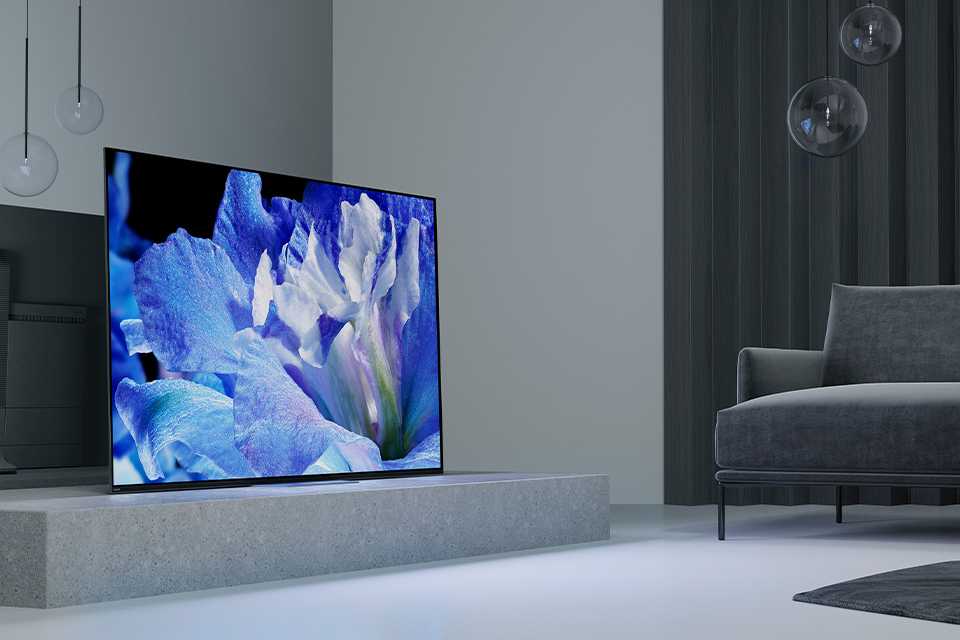
OLED relies on self-emission from organic layers, with a thickness of approximately 1mm. It features a 1,000,000:1 contrast ratio, a response time of <0.1ms, and a 178° viewing angle. The image ...
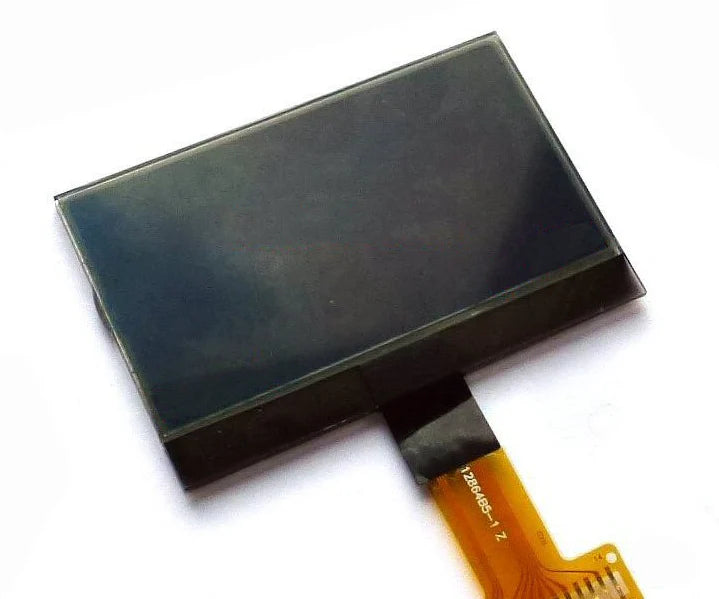
COG (Chip-On-Glass) technology utilizes Anisotropic Conductive Film (ACF) to directly bond driver ICs onto the LCD glass substrate through thermal ultrasonic or heat-pressure processes. The core of...
Laisser un commentaire
Ce site est protégé par hCaptcha, et la Politique de confidentialité et les Conditions de service de hCaptcha s’appliquent.