

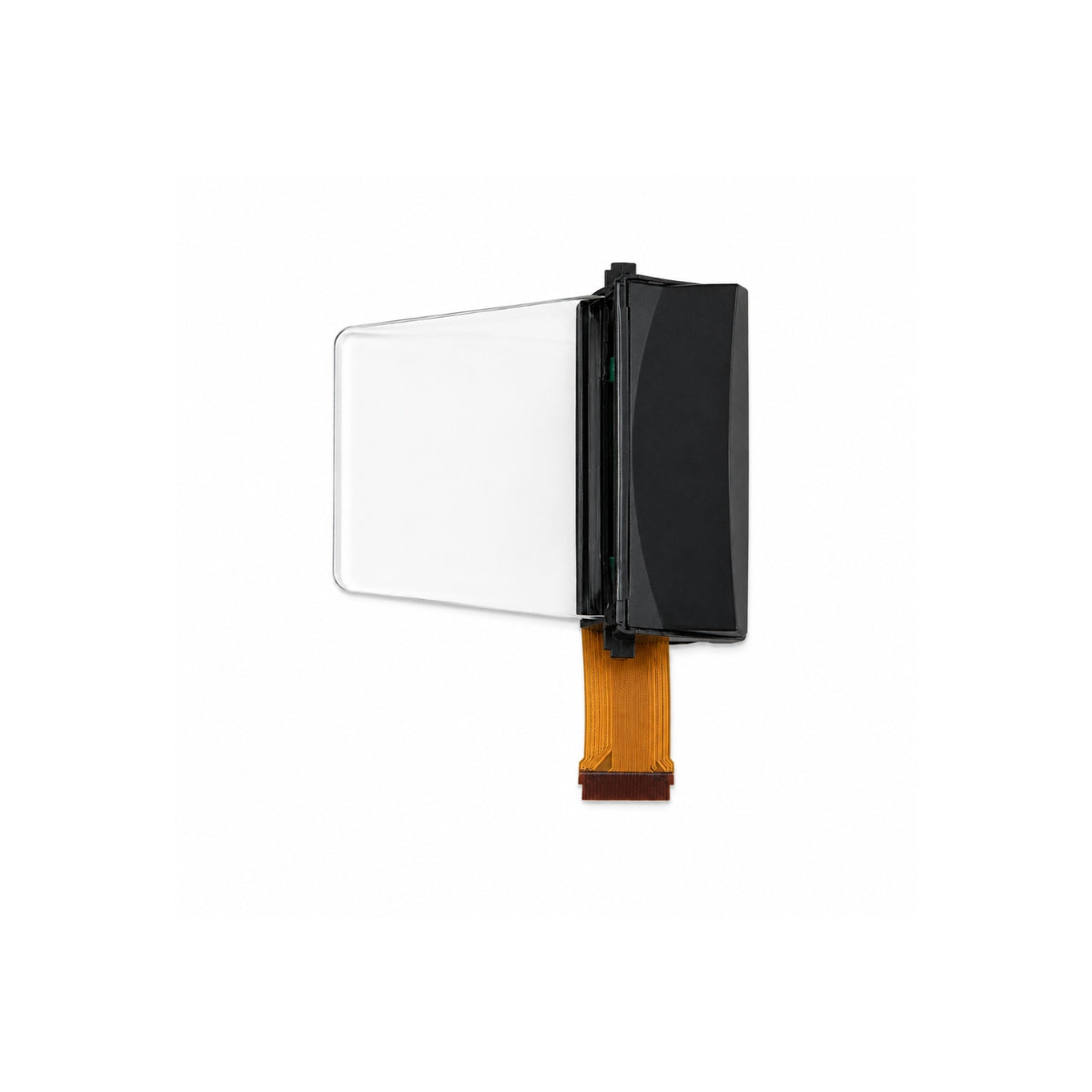
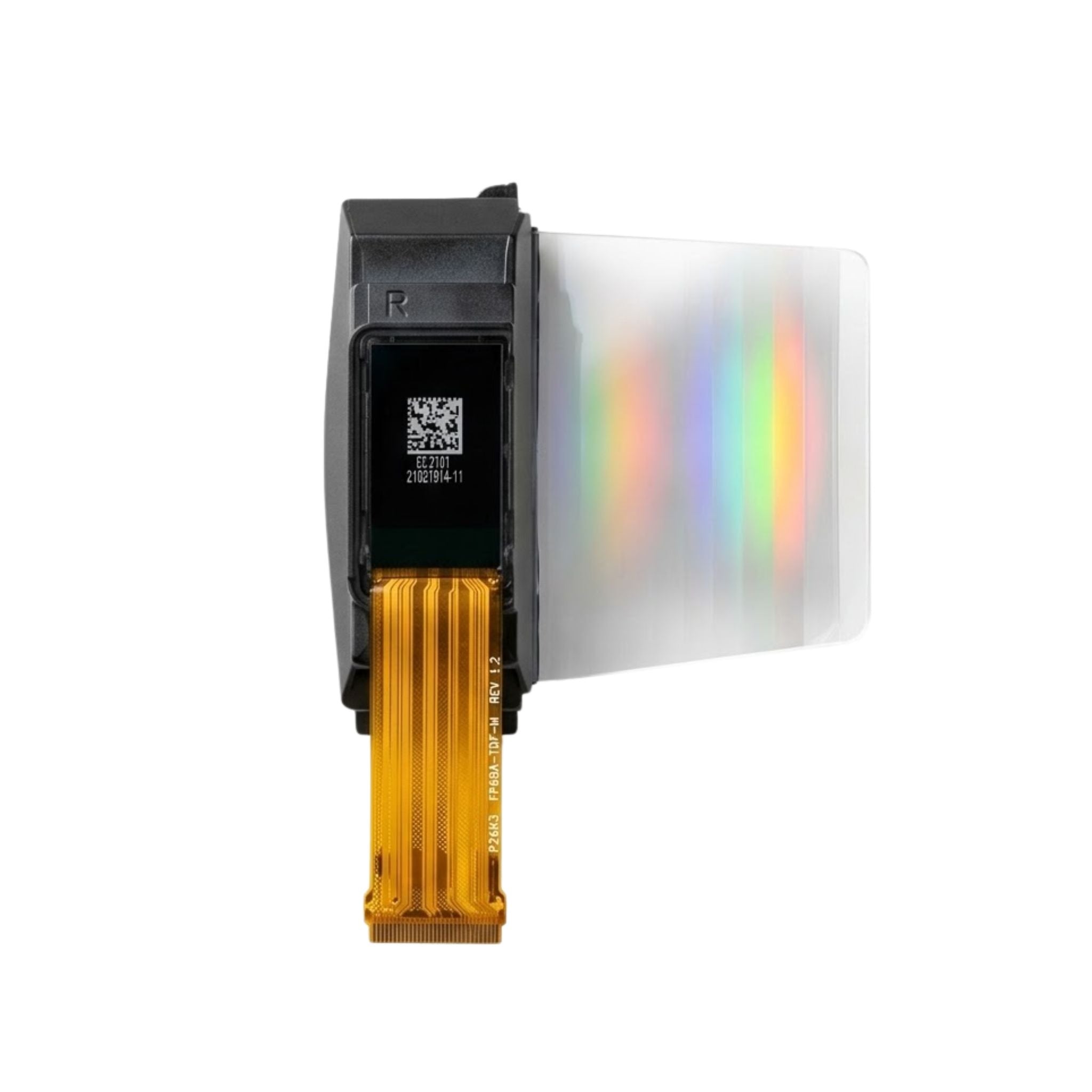


Why choose an IPS screen for mobile devices
An IPS screen suits a handheld device because in-plane switching keeps tone, colour and contrast far steadier as the panel tilts than the older twisted-nematic mode does. That matters when a phone sits in a car mount, is passed across a table, or is watched by two people at once. The trade-offs are lower light transmission, tighter process control and a higher unit price.
How in-plane switching changes the off-axis view
In a twisted-nematic cell the molecules rotate out of the substrate plane, so the effective birefringence the light meets depends on the direction it travels through the layer. Tilt the panel and grey levels shift, contrast falls away in one direction, and the darkest tones brighten first. In-plane switching keeps the molecules rotating within the plane of the glass, so the optical path changes far less as the eye moves off centre and a given drive voltage produces much the same luminance from the side as from the front.[1]
The familiar 178-degree figure is often misread. It is not the angle at which the picture disappears; it is the angle at which contrast has fallen to a defined low ratio, commonly ten to one, measured on a stated test pattern. Two panels quoting the same number can look very different in a hand, because one may hold midtone separation much further out than the other.

Colour shift and gamma
Stability is relative, not absolute. Light still crosses the liquid crystal obliquely when the eye moves off centre, and that longer slanted path alters retardance, so a white patch drifts slightly towards blue or yellow while midtones compress or open up. Compensation films added above and below the cell are what keep that drift small on a good panel; a cheap cell with thin or absent compensation can still show grey-level inversion at steep angles.
This is why wide viewing angle is a joint result of the electrode geometry and the optical film stack, not a property of the switching mode alone. When you compare two IPS modules, ask for the measured colour shift at a few angles rather than a single angle rating.
Daylight readability is a stack problem
Two unrelated numbers decide whether a screen works outdoors: how much light the panel emits and how much ambient light it throws back at the user. Luminance is normally quoted for a full-white field after warm-up at a stated drive condition; a figure taken from a small window on a dark background, or a peak that holds for seconds, says little about sustained readability on a map at noon.
Reflected light is set by the cover glass, the front polariser surface and every internal interface. An anti-reflective coating, a matte finish or an index-matched bond between layers can do more for contrast in sunlight than an extra few tens of nits of backlight, and it costs far less power. High-brightness backlights raise current, heat and LED count together, so they need thermal headroom in the enclosure and a driver rated for the extra load.
Touch, cover glass and the mechanical stack
On-cell and in-cell touch place the sensor inside the display stack, while one-glass-solution designs pattern it on the cover glass. Each choice changes thickness, border width, optical clarity and repairability, so the touch layer belongs in the cost and readability discussion from the start.
An air gap between display and cover glass adds two reflecting surfaces and a little parallax, which shows up as haze under strong light and as a slight offset between fingertip and cursor. Optical bonding with a clear adhesive removes those interfaces and lifts sunlight contrast, at the price of harder rework. A thicker chemically strengthened window or a plastic lens also attenuates the touch signal, so the controller needs more sensitivity headroom.
The power question
In-plane switching is not automatically the low-power option. Because the electrodes sit on one substrate and the aperture ratio is lower, the cell typically transmits less of the backlight than a twisted-nematic cell of the same generation, so reaching the same luminance often takes more backlight power. Real savings come from the rest of the system: LED efficacy, light-guide design, brightness-enhancement films, and the way the driver dims.
Many modules dim by pulse-width modulation at low brightness and move to DC or a hybrid scheme higher up the range. If flicker sensitivity matters for the product, ask for the modulation depth and frequency at the brightness levels users will actually run, rather than a single number measured at full output.
Motion and response
Early in-plane panels were slower than twisted-nematic parts, and that reputation has outlived the generation that earned it. Present-day response depends on the liquid crystal mixture, cell gap, drive scheme, overdrive and refresh rate. A grey-to-grey figure means little unless the start and end levels, the panel temperature and the measurement threshold are stated, so compare vendors on identical conditions or ask for a timing chart.
Where IPS is the wrong choice
If the product shows static text and runs from a coin cell, an e-paper or reflective cell will beat any backlit panel on runtime. If it is read in direct sun with no shade and no room for a bright backlight, a transflective design is worth the cost. If the only constraint is the lowest possible price at small size, twisted nematic still wins. None of these is a defect of IPS; they are different jobs.
What to write into the specification
A workable IPS module brief covers the points below, and each one should carry the condition under which it is measured.
- Size and resolution, with pixel density and the active area you need to fit.
- Luminance for a full-white field after warm-up, plus the dimming range and method.
- Contrast and colour shift measured to a stated method and at stated angles, not just a headline ratio.
- Colour: gamut, white point and the tolerance you will accept after calibration.
- Interface: MIPI DSI, RGB parallel, SPI or LVDS, with clock rate, frame rate and colour depth given together, because a serial bus that is fast enough at one depth is short of bandwidth at another.
- Environment: operating and storage temperature, humidity, vibration, and whether the liquid crystal mixture is specified for the low end of that range.
- Touch and window: sensor type, controller, cover glass thickness, bonding method and surface treatment.
Matched collections are a practical starting point when you need a known-good baseline: IPS display modules for the wide-angle case, TFT display modules where cost and brightness dominate, and industrial displays when the temperature range or service life is the hard constraint.
Summing up
Choose IPS when the screen will be seen from the side, shared, mounted at an angle or handled while walking, and when colour consistency across the panel matters more than the last few percent of backlight efficiency. Specify the measurement conditions, bond the stack, and treat viewing angle and brightness as stack outcomes rather than panel slogans.
References
- ISO 9241-307:2008 — Ergonomics of human-system interaction — Part 307: Analysis and compliance test methods for electronic visual displays. International Organization for Standardization. https://www.iso.org/standard/40102.html
En lire plus
Typically, IPS displays have a lifespan of around 30,000 to 50,000 hours of active use, translating to roughly 10 to 17 years with daily 8-hour usage.
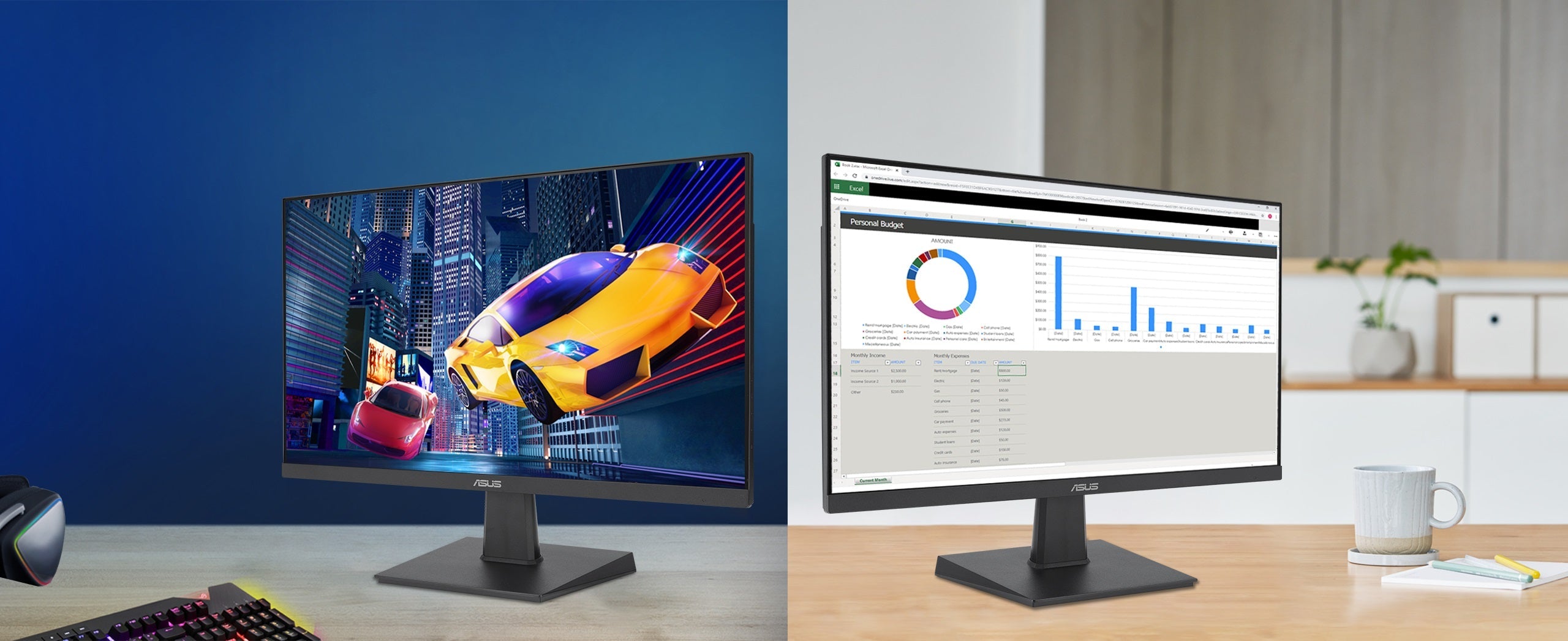
An IPS (In-Plane Switching) display is a LCD technology where liquid crystals align horizontally and rotate within their plane to control light.
Laisser un commentaire
Ce site est protégé par hCaptcha, et la Politique de confidentialité et les Conditions de service de hCaptcha s’appliquent.