

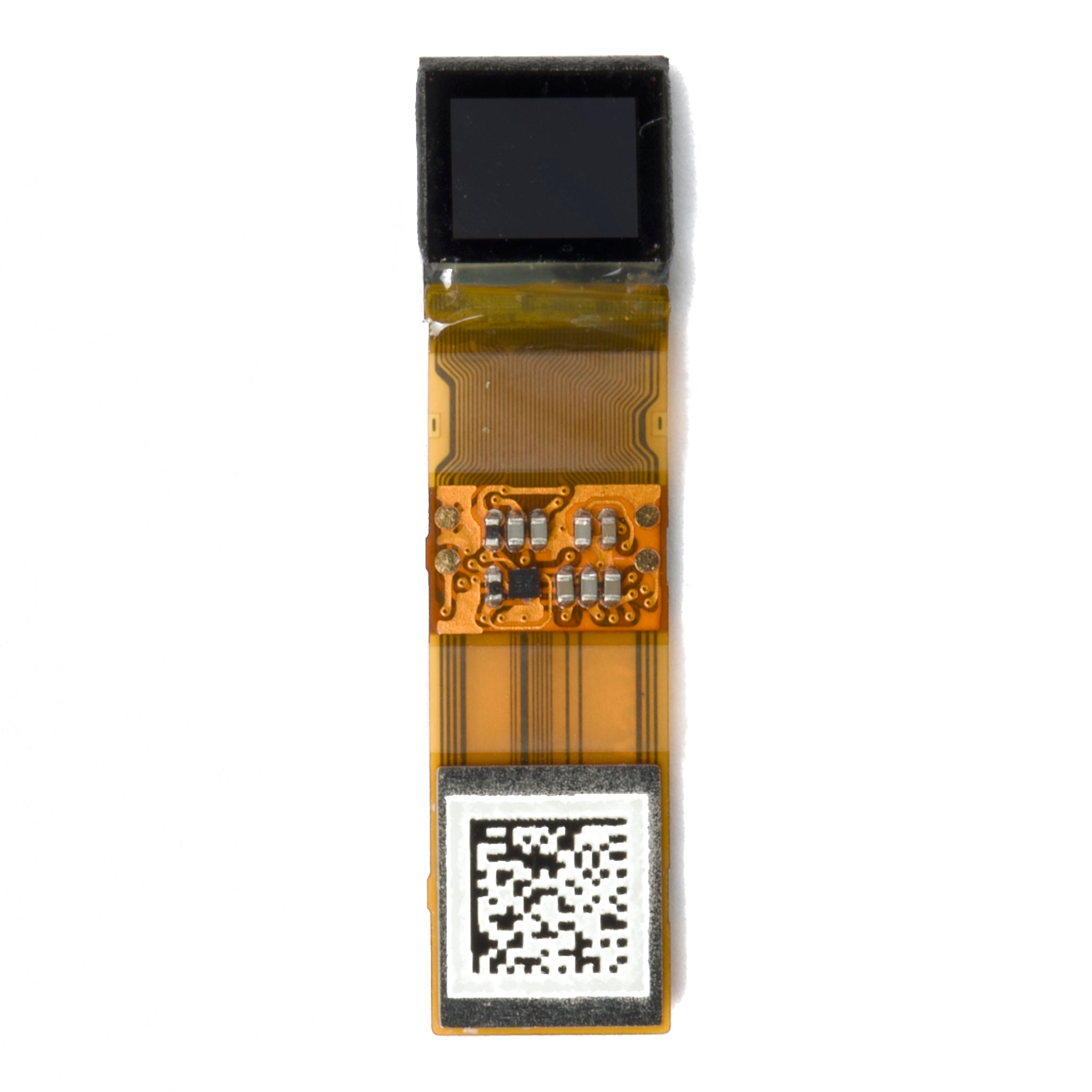
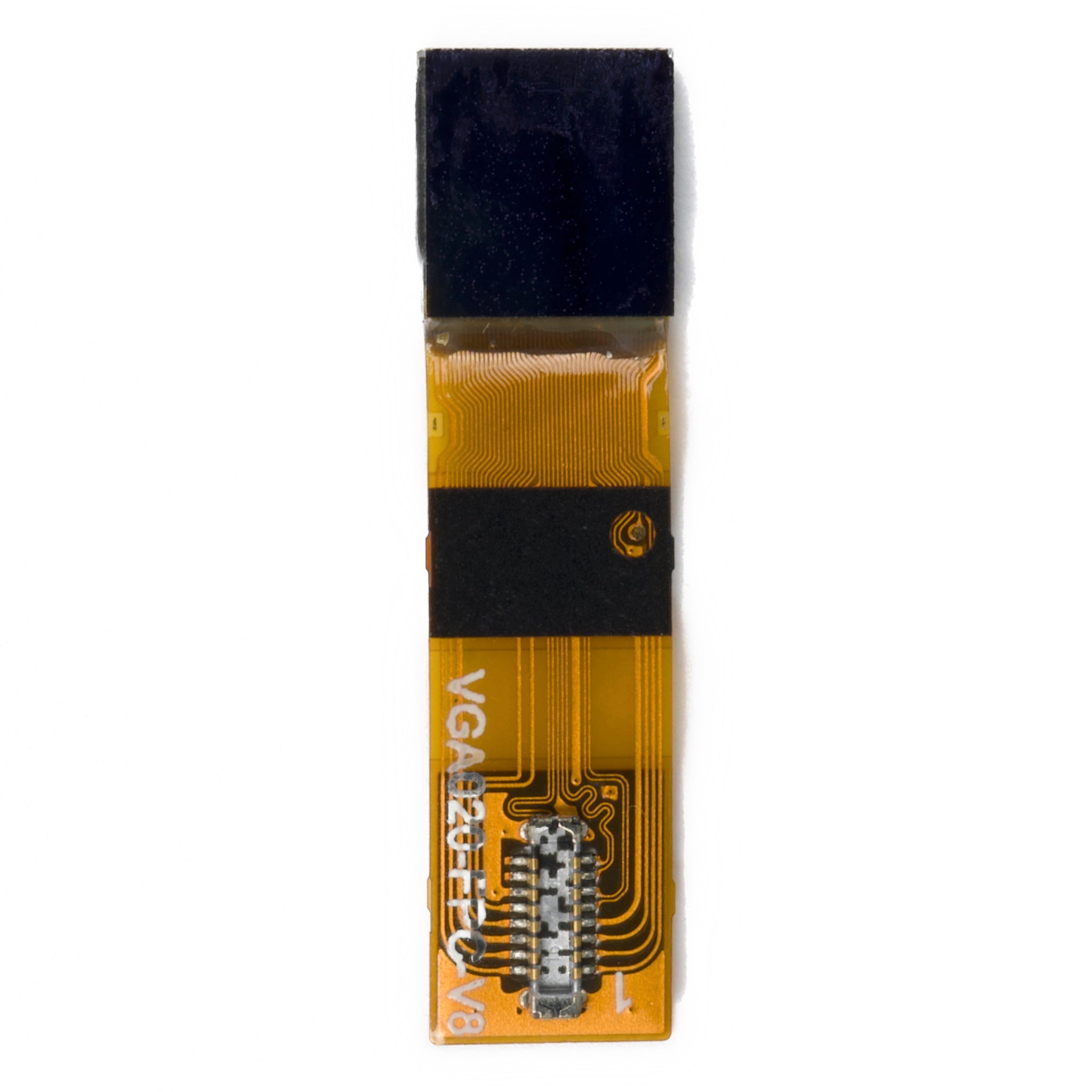
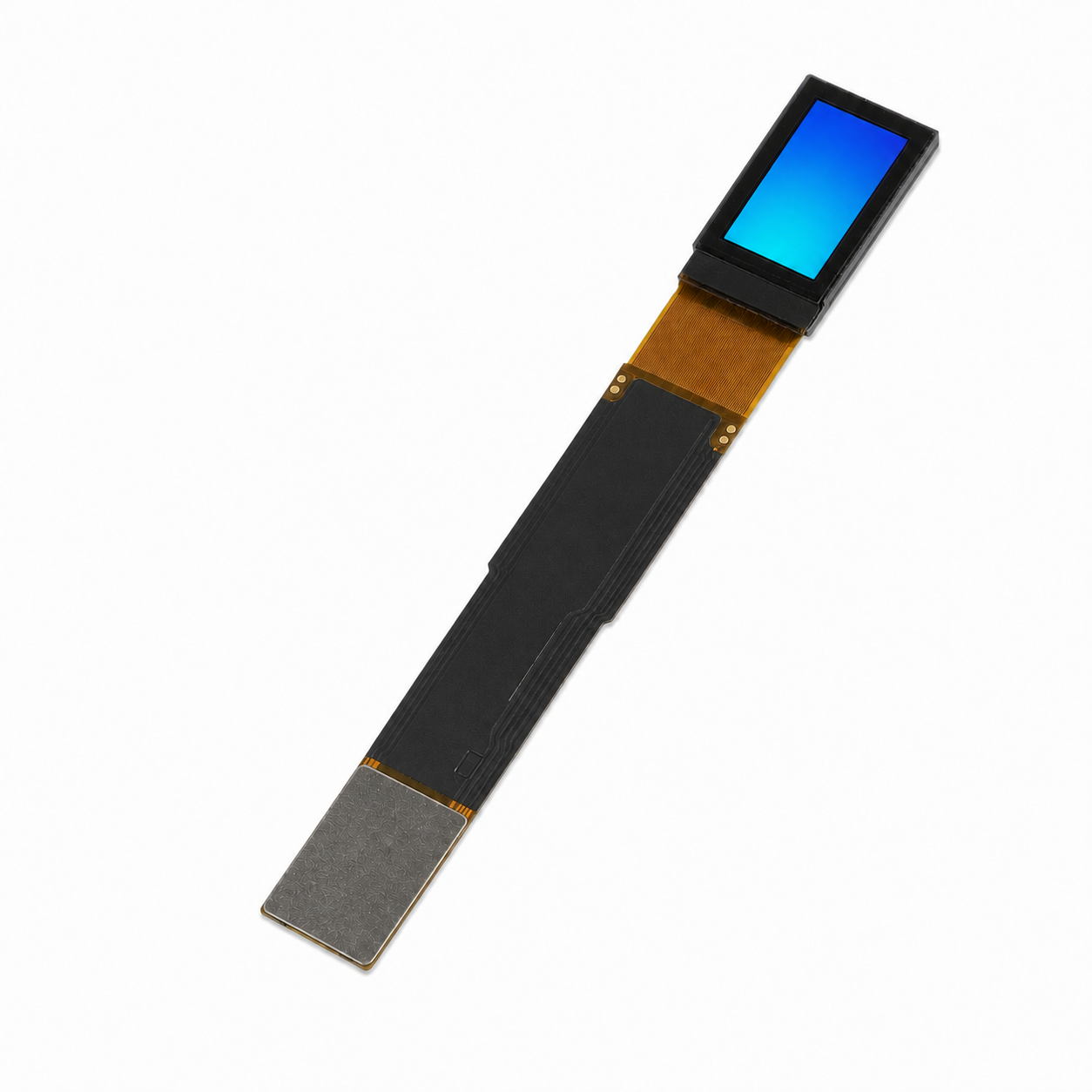
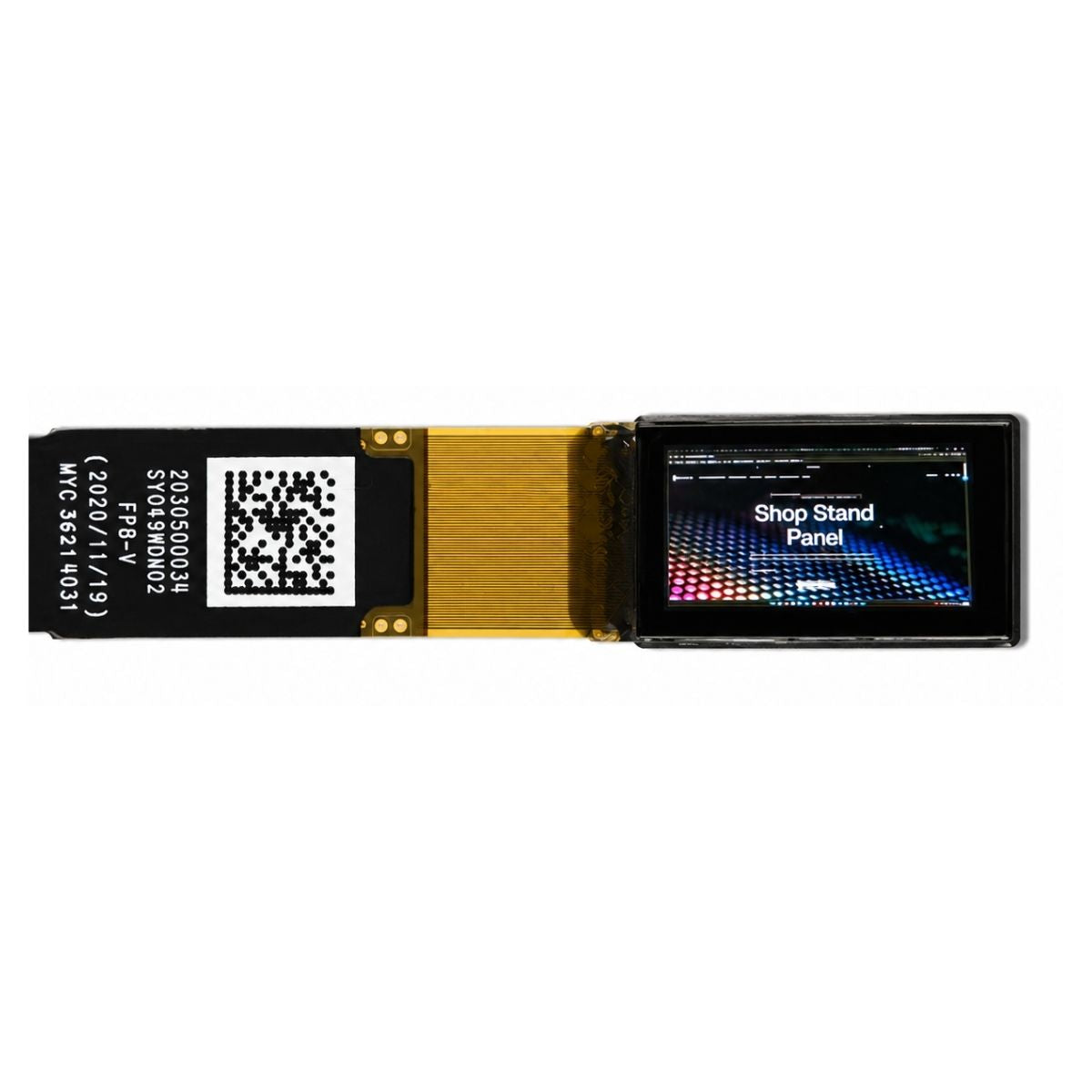


COG LCD Modules | Custom Designs, Fast Prototyping & Mass Production
Customization requires first locking down the FPC shape and interface, with a prototyping cycle of about 15 days.
During mass production, ACF thermal compression parameters are strictly controlled, and a 500-hour reliability test is executed to ensure connection stability.
Custom Designs
We support fully customized FPC (Flexible Printed Circuit) shape and interface definitions.
Typically, with a one-time Non-Recurring Engineering (NRE) fee of only $300 to $800, we can complete the process from drawing confirmation to First Article delivery within 12 to 15 working days.
The scope of customization covers high-brightness backlight upgrades of over 1000 nits, wide-temperature glass selection from -30°C to +80°C, and optical bonding of cover glass with thicknesses ranging from 0.7mm to 3mm, ensuring the module can pass ESD 8kV static tests and industrial-grade vibration standards.
FPC Modification
Standard COG FPC designs usually employ a Double-Sided structure based on Polyimide (PI) substrate, with a total thickness generally controlled between 0.12mm and 0.15mm.
During the customization process, we first focus on the selection of substrate and copper foil type.
For static bending applications, we use Electrolytic Copper (ED Copper) to optimize conductivity;
However, for scenarios requiring dynamic bending, such as flip-phone devices or sliding structures, Rolled Annealed Copper (RA Copper) must be selected. Its crystal lattice structure can withstand over 100,000 dynamic bends without fracturing, with a bending radius as small as R2.0mm.
Regarding the stack-up structure, a typical configuration consists of a 12.5µm PI base film combined with an 18µm (0.5oz) copper foil layer, with a Coverlay thickness of typically 25µm.
To adapt to more compact internal spaces, we can further compress the overall FPC thickness to 0.08mm by adjusting the adhesive thickness, though this usually increases material costs by about 15%.
For the optimization of signal transmission and routing layout, custom design allows us to resolve main board routing dilemmas at the FPC level.
If your MCU interface pin sequence does not match the standard COG glass pin definition, there is no need to drill vias or perform complex routing on the main board.
Utilizing the double-layer routing capability of the FPC, we can implement signal crossing and reordering within the flexible board through Vias, adjusting the pin sequence to a state that is completely straight-through with your MCU layout.
This design can significantly reduce the EMI radiation loop area on the main board.
In terms of routing technology, we support high-precision etching with a minimum Line/Space (L/S) of 0.05mm/0.05mm, ensuring that all necessary control signals and power lines can pass through even in the width-restricted Neck Area of the FPC.
For high-frequency signal lines using serial interfaces like SPI or I2C, we introduce Ground Shielding in the FPC layout or adopt Differential Pair routing, strictly controlling line impedance at 50Ω or 90Ω (±10%) to prevent display corruption or flickering caused by signal reflection.
In terms of component integration, a significant direction for FPC customization is the application of SMT (Surface Mount Technology).
Standard COG modules often require external circuits to provide boost capacitors (for internal DC-DC charge pumps) or backlight current-limiting resistors.
Through customization, we can directly mount these passive components in 0402 or 0201 packages onto the FPC.
For example, typical driver ICs like ST7567 or UC1701 usually require 4 to 5 1.0µm ceramic capacitors to stabilize the V1 to V5 LCD driving voltages.
Moving these capacitors to the FPC not only saves you 10mm² to 20mm² of PCB space on the main board but also shortens the path of the charge pump loop, reducing ripple noise.
To support these components and enhance mechanical strength in the insertion area, we laminate a Stiffener on the back of the FPC.
For areas inserted into ZIF connectors, 0.2mm or 0.3mm thick PI stiffeners or FR4 fiberglass stiffeners are typically used to ensure thickness tolerance is controlled within ±0.03mm, meeting the contact force requirements of connector terminals;
In areas requiring buttons or extreme flatness, Stainless Steel (SUS304) stiffeners can be selected.
Electromagnetic Compatibility (EMI) and Electrostatic Discharge (ESD) protection are also technical details that cannot be ignored in FPC customization.
For industrial control or medical environments with strict anti-interference requirements, ordinary copper foil grid grounding may not be sufficient to shield noise.
We offer solutions using Silver Paste Printing or laminating EMI Shielding Film.
This shielding layer typically covers the entire signal layer of the FPC and connects to the ground plane through vias. The surface resistivity can be as low as 0.1Ω/sq, effectively attenuating radiation interference in the 30MHz to 1GHz frequency band.
Simultaneously, to prevent static electricity from breaking down the driver IC, we can design Spark Gaps on the FPC traces or reserve pads for TVS Diodes.
For the treatment of connector fingers (Gold Fingers), the standard process uses Electroless Nickel Immersion Gold (ENIG) with a gold thickness of 1u" to 3u". However, in high salt spray or high humidity environments, it is recommended to upgrade to Hard Gold Plating, increasing gold thickness to 10u" or 20u" to pass 48-hour salt spray tests and ensure contact reliability after multiple insertions.
In addition to common ZIF (Zero Insertion Force) connections, we widely support custom designs for Hot-Bar (Thermal Compression Soldering) processes.
For Hot-Bar interfaces, FPC pads are pre-tinned or designed with special Through-holes to allow solder climbing, enhancing soldering pull force, typically requiring a peel strength of over 500gf/cm.
Backlight Brightness Adjustment
For standard brightness products, ordinary optical-grade acrylic resin with a thickness of 2.0mm to 2.5mm is typically used;
In high-brightness custom solutions, we select PMMA (Polymethyl Methacrylate) raw materials with a transmittance exceeding 92% and use Laser Dotting or V-Cut microstructure processes to replace traditional screen-printed dots.
This process more precisely controls the total reflection path of light inside the light guide plate, guiding the light emitted by side-entry LEDs more uniformly to the front, increasing light utilization efficiency from the standard 60% to over 85%.
For ultra-thin design requirements, we can process ultra-thin LGPs with a thickness of only 0.3mm, while ensuring light Uniformity is maintained above 80% (based on 9-point or 13-point testing methods), avoiding obvious Hot Spots or dark areas at the screen edges.
To increase brightness without significantly increasing power consumption, we introduce Brightness Enhancement Films (BEF/Prism Sheet) in custom solutions.
A single prism sheet can concentrate scattered light within a vertical viewing angle of ±30°, typically bringing an axial brightness gain of 40% to 60%.
For high-end applications readable in sunlight (Sunlight Readable), we adopt a Crossed BEF structure, placing two prism sheets with their microstructures perpendicular (90 degrees) to each other.
This further compresses and converges light energy, increasing center brightness by 100% to 120%.
In extreme lighting environments, we can also integrate DBEF (Dual Brightness Enhancement Film), which utilizes the polarization properties of light to recycle light loss absorbed by the bottom polarizer, adding an extra 30% brightness output.
Standard COG backlights often use side-emitting LEDs in 3014 or 0603 packages, with a luminous flux of about 6-8 lumens per unit.
In custom designs, we upgrade to high-efficacy 4014 or 2835 package specifications, where the luminous flux per unit can reach 24-28 lumens.
We strictly screen the LED's Color Coordinates (CIE coordinates) and Brightness Binning according to specific customer requirements for the white point, typically controlling the color temperature between 6500K and 10000K and color tolerance within 3 SDCM, ensuring highly consistent display colors between products of the same and different batches.
Regarding driver circuit matching, we offer flexible Series-Parallel configurations.
Standard 3.0V voltage driving may be limited by current carrying capacity. We can switch to high-voltage low-current schemes like 3-Series (9.6V) or 4-Series (12.8V) to reduce line loss and lower the current load on FPC copper foil.
This is particularly important for battery-powered handheld devices, as it allows for 1% to 100% flicker-free linear brightness adjustment in conjunction with PWM (Pulse Width Modulation) dimming signals.
| Component Type | Standard Configuration | High Brightness Custom Config | Expected Gain/Characteristics |
|---|---|---|---|
| Light Source (LED) | 3014 Side-View (20mA) | 4014 High Efficacy (60mA) | Single LED lumen increase 300% |
| Light Guide Plate (LGP) | Mold Injection / Screen Printed Dots | Optical Grade PMMA / Laser Dotting | Light guide efficiency increase 25% |
| Bottom Reflector | Ordinary PET Reflector | ESR (Enhanced Specular Reflector) | Reflectivity > 98% |
| Optical Film Stack | 1 Diffuser + 0 Prism | 1 Diffuser + 2 Crossed Prisms (V+H) | Axial brightness gain > 100% |
| Polarizer Matching | Transmissive | Transflective | Enhances display using ambient light |
| Heat Dissipation | Plastic Frame | Aluminum PCB (MCPCB) + Metal Backplate | Lowers junction temp, extends lifespan |
As brightness increases, the heat generated by LEDs multiplies. If the Junction Temperature (Tj) exceeds 85°C, LED light decay accelerates significantly, leading to screen yellowing or rapid brightness drop.
In ultra-high brightness designs over 1000 nits, we no longer use ordinary FR4 fiberglass boards as the LED strip substrate. Instead, we switch to Metal Core PCBs (Aluminum Substrate) and redesign the backlight Housing to be or integrate a Stainless Steel/Aluminum Alloy backplate.
Using thermally conductive double-sided tape to conduct heat generated by LEDs directly to the entire backlight metal backplate for passive cooling ensures that even under overdrive currents of 60mA or even 80mA, the junction temperature remains within a safe range.
Based on this rigorous thermal design, our custom backlight modules promise a working life of 50,000 hours. Even in wide-temperature cycle testing from -20°C to +70°C, optical failures such as LGP deformation or film wrinkling will not occur.
Touch Cover Integration
For industrial, medical, or outdoor applications, standard Soda-lime Glass often fails to meet impact resistance requirements, so we use Aluminosilicate Glass as the primary choice for customization.
By placing the glass in a Potassium Nitrate molten salt bath at 400°C for ion exchange treatment, the Compressive Stress (CS) layer created by replacing sodium ions with potassium ions can exceed 700 MPa, with a Depth of Layer (DOL) reaching over 30µm.
This chemical strengthening process allows even cover plates with thicknesses of 0.7mm or 1.1mm to withstand impact tests of a 500g steel ball dropped from a height of 130cm, achieving IK07 or higher impact protection ratings.
For scenarios requiring extreme protection, we can increase the cover thickness to 3.0mm or even 6.0mm, combined with firmware algorithm adjustments of the touch IC to ensure high-sensitivity touch response remains under thick glass coverage.
“The Optical Bonding process uses Liquid Optical Clear Resin (OCR) or Optical Clear Adhesive (OCA) with a refractive index of about 1.5 to fill the gap between the touch screen and the LCD surface, completely eliminating the air layer and reducing the panel's light reflectivity under direct sunlight from 13.5% to below 0.2%.”
Our customized full lamination service utilizes high-precision vacuum lamination machines to laminate in a vacuum environment of -90kPa, followed by curing with 3000mJ/cm² of UV energy.
This process not only improves light transmission but also increases the display module's contrast by 300%, making the screen look deeper and clearer.
Additionally, the OCA adhesive layer has excellent shock-absorbing properties, effectively absorbing mechanical impact on the LCD screen from the outside and preventing fragments from splashing if the glass breaks.
For specialized displays that cannot undergo high-temperature processes, we offer room-temperature curing organic silicone water gel solutions, ensuring low shrinkage (less than 0.1%) during bonding to avoid stress-induced Mura (display unevenness).
When customizing AG (Anti-Glare) glass, we discard low-cost sprayed AG and adopt Chemical Etching processes to directly modify the microscopic topography of the glass surface.
By controlling etching depth and roughness, we precisely control Gloss at 50GU, 70GU, or 95GU.
For medical imaging or military displays, AR (Anti-Reflective) treatment is essential.
We use magnetron sputtering or vacuum evaporation technology to deposit multi-layer nano-scale metal oxide films on the glass surface, utilizing light interference principles to reduce single-side reflectivity to below 0.5%, allowing overall glass transmittance to exceed 98%.
To address fingerprint oil issues left by touch, AF (Anti-Fingerprint) treatment uses vacuum vapor deposition to plate a fluoride coating, maintaining the water contact angle of the glass surface above 110° and a friction coefficient less than 0.03.
This ensures smooth finger sliding and easy cleaning, and the coating can withstand steel wool abrasion tests over 3000 times.
“Another dimension of industrial-grade touch integration is Electromagnetic Compatibility and Environmental Adaptability, which requires the Touch IC's Signal-to-Noise Ratio (SNR) to be optimized to 10:1 or better for specific power noise environments.”
We can customize the Sensor's FPC exit position (Side-exit or Top-exit) according to the overall device structure and adjust the Pitch value of the ITO pattern to match finger contact areas of different sizes.
For glove operation requirements (such as nitrile gloves or leather gloves up to 5mm thick), we adjust the IC's drive voltage (Tx) and reception gain (Rx) and enable a hybrid scanning mode combining mutual capacitance and self-capacitance, ensuring accurate coordinate recognition without direct skin contact.
For devices used in rain or humid environments, we embed water mist suppression algorithms in the firmware to prevent Ghost Touch caused by water droplets and support wet hand operation.
All custom touch modules must pass Contact Discharge ±8kV and Air Discharge ±15kV ESD tests, as well as 20V/m field strength radiation immunity tests before leaving the factory, ensuring no touch failure or crashes occur in complex industrial electromagnetic environments.
Regarding appearance customization, we provide CNC precision carving, including 2.5D edge chamfering, Step holes, and irregular shape cutting.
The Optical Density (OD value) of the black bezel ink is greater than 3.0, perfectly masking internal circuits, and semi-transparent ink can be used to create "Dead-front aesthetic" hidden LED indicator windows.
Fast Prototyping
To meet urgent demands during the verification phase, we utilize existing stock of LCD glass masters (Open Cell), modifying only the FPC cable and Backlight components to compress the delivery cycle of custom samples to 7 to 10 working days.
Compared to the 4 to 6 weeks required to open a full set of new molds, this semi-custom solution can save more than 80% of NRE fees.
We support rerouting of interface definitions such as SPI, I2C, MCU, and can quickly adjust LED series-parallel methods to achieve outdoor high-brightness standards of over 800 nits, ensuring structural and electrical verification in the EVT stage proceed synchronously.
Existing Glass Selection
Open Cell refers to semi-finished glass that has completed Thin Film Transistor (TFT) array preparation, Color Filter (CF) lamination, and liquid crystal filling, but has not yet undergone polarizer attachment and driver IC bonding.
We stock over 200,000 pieces of industrial-grade Open Cells in various specifications in our warehouse, covering the mainstream size range from 0.96 inches to 10.1 inches.
Directly selecting these mass-production verified glass masters completely avoids the process of creating Photolithography Masks (Photo-masks).
Typically, developing an LCD glass with a brand-new resolution or size requires producing 5 to 7 layers of photolithography masks. This involves not only NRE mold fees of $50,000 to $80,000 but also a lead time of 45 to 60 days.
In contrast, choosing existing glass options allows us to immediately enter the backend processes, controlling physical sample production time within 72 hours.
For monochrome COG modules, our inventory mainly focuses on FSTN and DFSTN technologies, which are most widely used in industrial instrumentation.
FSTN glass typically uses driving conditions of 1/65 Duty and 1/9 Bias, providing a clear black-and-white display effect with a contrast ratio usually above 15:1.
Existing standard dot matrix resolutions include 128x64 (Effective AA area typically 55mm x 27mm or similar ratio), 192x64, and 240x128.
The ITO (Indium Tin Oxide) pin pitch of these glasses is usually designed as 0.8mm or 1.0mm, adaptable to Zebra strips or heat-seal FPCs.
For applications requiring extreme operating temperatures, we stock glass with special liquid crystal formulas whose Clearing Point is higher than 100°C, ensuring liquid crystal molecules do not freeze or transition to an isotropic state at ambient temperatures from -30°C to 80°C, with response times remaining within 300ms even at low temperatures.
In the color TFT field, existing glass selections are divided into two main categories: TN (Twisted Nematic) and IPS (In-Plane Switching).
TN panel inventory targets cost-sensitive projects, with common resolutions of 128x160 (1.77 inch), 240x320 (2.4/2.8 inch), and 320x480 (3.5 inch).
When selecting TN glass, engineers must pay attention to the Grayscale Inversion viewing angle direction. Our stock is usually clearly marked as 6:00 or 12:00 viewing angle, which determines the screen's best observation angle.
For example, a 6:00 viewing angle TN screen is suitable for handheld devices (viewed from above), while a 12:00 viewing angle screen is suitable for automotive heads-up displays.
The transmittance of TN glass is typically between 4.5% and 5.5%, achieving 350 nits brightness with ordinary LED backlights.
For high-end medical or outdoor handheld terminals, we recommend using IPS or FFS technology glass from our inventory.
Liquid crystal molecules in this type of glass rotate within the plane, solving the viewing angle limitation of TN screens and providing a full viewing range of 80/80/80/80 degrees (Up/Down/Left/Right), with contrast ratios typically as high as 800:1 or 1000:1.
Standard IPS glass inventory covers 800x480 (4.3/5.0/7.0 inch), 1024x600 (7.0 inch), and 720x1280 (5.0 inch HD).
The aperture ratio of IPS glass is relatively low, with transmittance generally between 3.0% and 4.0%, so in the prototype design stage, it often needs to be paired with a higher brightness backlight scheme to achieve outdoor visibility.
These IPS glasses are designed with standard MIPI DSI (2-lane or 4-lane) or RGB (16/18/24-bit) interface pins, capable of directly adapting to mainstream MCUs like STM32, NXP i.MX.
Each Open Cell has a specific sized Ledge area reserved at the edge of the glass substrate from the beginning of its design for placing the Driver IC.
The metal trace (Bump Pad) layout in this area is fixed.
For example, for a 2.4-inch glass designed to work with a Sitronix ST7789V controller, the number, pitch (usually 15um - 20um), and arrangement of pins on its Ledge are strictly strictly matched.
If a different model IC is substituted, effective bonding via ACF (Anisotropic Conductive Film) is impossible because the IC's Bump Map is inconsistent.
To meet some special interface needs, our glass selection also includes some large-sized glass supporting Source/Gate driver separation.
This type of glass has no integrated RAM and requires the main controller chip to provide continuous refresh signals (Video Mode).
In small size selections (under 4.0 inches), the vast majority of glass-compatible ICs have built-in GRAM (Graphics RAM), supporting MCU 8080/6800 parallel port or SPI/I2C serial port operations, which greatly reduces the bandwidth pressure on the prototype's main controller.
We provide detailed Block Diagrams for every stock glass, clearly marking the Source and Gate channel counts (e.g., 320 RGB x 240) and recommended Vcom voltage settings (usually between -1.0V to -2.5V).
FPC Interface Revision
Since the pin definition and physical location of the LCD Driver IC are fixed, FPC revision becomes the fastest and lowest-cost method to achieve electrical compatibility.
We use Double-Sided Adhesiveless Rolled Annealed Copper processes to make prototype FPCs.
Compared to traditional electrolytic copper, this material can withstand over 10,000 folds in dynamic bending tests without breaking.
Standard prototype FPC stack-up structures typically contain 12.5um or 25um Polyimide (PI) substrate layers, 12um to 18um copper foil layers, and 12.5um Coverlay.
In compact devices where thickness must be controlled, we can keep the total FPC thickness within 0.08mm while maintaining sufficient electrical insulation performance.
LCD Driver ICs (such as ST7789, ILI9341, ST7701) usually support multiple interface modes, including MCU 8-bit/16-bit parallel interface, 3-wire/4-wire SPI, RGB interface, and MIPI DSI.
The selection of these modes is often hardware-fixed via the high/low level status of the IM (Interface Mode) pins on the IC.
In the prototyping stage, we force the module's communication protocol setting by reserving jumper resistors (0R) on the FPC traces or directly connecting IM pins to VDD/GND.
For example, the same 2.8-inch TFT glass can be made into a version supporting MCU 8080 interface for instrumentation or a version supporting 3-wire SPI + RGB interface for video playback devices by modifying the FPC traces.
For high-speed signal transmission, especially MIPI DSI interfaces, we strictly follow Differential Pair routing rules during FPC layout, controlling differential impedance within 100 ohm +/- 10% and ensuring positive and negative signal line length matching errors are less than 0.1mm to prevent screen artifacts or electromagnetic interference caused by high-frequency signal timing Skew.
Besides signal routing, component integration on the FPC is another focus of prototype design.
To simplify customer motherboard design, we support direct SMT (Surface Mount Technology) processing on the FPC, mounting capacitors, resistors, and even LED driver chips.
The Charge Pump circuit inside the Driver IC requires specific external capacitors (usually 1uF or 4.7uF, packaged as 0402 or 0201) to generate Gate drive voltages like VGH (+15V) and VGL (-10V).
In standard FPC products, these capacitors might be omitted to save costs, requiring the motherboard to provide relevant voltages.
In fast prototyping services, we recommend placing these boost capacitors directly on the FPC near the LCD Bonding Area.
For projects requiring backlight driving, we can even integrate constant current source driver chips on the FPC, requiring only a 3.3V or 5V power supply and PWM dimming signal from the motherboard to light up the backlight.
| Parameter Item | Technical Specification | Description |
|---|---|---|
| Min Line Width/Space | 0.05mm / 0.05mm | Suitable for high-density BGA or COG fan-out areas. |
| Gold Finger Process | Immersion Gold (ENIG) | Gold thickness 1u" - 3u", Nickel thickness 100u" - 200u", strong oxidation resistance. |
| Stiffener Material | PI / FR4 / Steel Sheet | PI for increasing insertion thickness; Steel sheet for backside flatness support. |
| Via Type | Through-hole / Blind Via | Min mechanical drill diameter 0.15mm, pad diameter 0.35mm. |
| Impedance Control | Single-ended 50Ω / Diff 90Ω-100Ω | For high-speed signals like USB, MIPI, LVDS. |
| EMI Shielding | Silver Paste / Copper Foil / Absorber | Covers FPC surface, grounded, passes EMI testing. |
To adapt to different Connectors, we can arbitrarily adjust the Pitch of the Gold Fingers, covering common specifications from 0.3mm to 1.0mm.
If your motherboard space is extremely limited and cannot accommodate a ZIF connector, we offer Hot-Bar specific FPC designs.
By pre-tinning the gold fingers and creating alignment holes, we support soldering the FPC directly onto the motherboard PCB. The height of this connection method is only about 0.2mm.
For irregularly shaped structures like wearable devices, the FPC shape does not have to be rectangular.
We can use laser cutters to create complex contours like L-shape, U-shape, or even S-shape, and design the Stiffener positions to avoid structural interference with batteries, motors, etc.
Stiffener materials are usually PI, FR4, or Stainless Steel sheets. FR4 stiffeners are commonly used to increase the gold finger area thickness to 0.3mm to fit ZIF sockets, while Stainless Steel sheets are used for heat dissipation in the backlight LED area.
Brightness and Backlight Customization
Standard COG module backlight designs usually target indoor office environments, with brightness maintained between 250 and 350 nits.
However, for prototype verification of outdoor handhelds, vehicle instrumentation, or medical devices, this brightness is often far from sufficient.
We provide deep customization services based on existing Light Guide Plate (LGP) molds.
By changing light source components and optimizing optical film stacks, we can achieve a wide brightness adjustment range of 500 to 1500 nits without changing the backlight's physical shape (typically 2.0mm to 3.5mm thick).
This process does not require opening expensive new LGP injection molds, and the closed loop from optical simulation to sample assembly can be completed in just 5 to 7 working days.
The choice of light source is the starting point for backlight efficiency. We stock various specifications of Edge-lit LED packages, including 0603 (1608 Metric), 3014, and high-power 4014 specs.
For high-brightness demands, we use Nichia or Toyoda Gosei LED chips with luminous efficacy as high as 140 lm/W to 160 lm/W.
Within the limited space on the light entry side of the backlight, we can increase luminous flux by increasing the LED arrangement density.
For example, on the short side (approx. 50mm wide) of a 3.5-inch module, a standard design might only accommodate 6 LEDs. In high-brightness customization, we can use a high-density FPC carrier to increase the LED count to 8 to 10, improving thermal pad design to handle the increased heat load.
Simultaneously, LED Color Temperature (CCT) is a customizable option, selectable from warm 3000K to cool white 10000K, which is particularly important for medical diagnostic screens requiring specific White Balance.
"Fine-tuning the Optical Film Stack is the 'magic' for increasing brightness, capable of boosting axial brightness by 60% to 100% without increasing power consumption."
Above the light guide plate, we control the light exit angle and uniformity by adjusting the combination of optical films.
Standard configuration is usually Diffuser + BEF x 1.
To achieve sunlight-readable high-brightness effects, we upgrade to a Double Crossed BEF structure.
BEF uses micro-prism structures to recycle large-angle divergent light and refocus it to the normal direction. This orthogonal superposition can increase center brightness by 2.3 times.
For ultra-high-end prototype requirements, we also introduce DBEF films.
DBEF is a reflective polarizer that allows light consistent with the bottom polarizer's polarization direction to pass through while reflecting light that would otherwise be absorbed back into the light guide plate for recycling.
The addition of this single component typically brings a direct brightness gain of 30% to 40% and effectively lowers the module surface temperature.
Circuit drive matching is an aspect of backlight customization that cannot be ignored.
The connection method of LEDs determines the required driving voltage and current.
We flexibly configure the Series-Parallel topology of LEDs according to the capability of the customer's motherboard power rail. Common configurations include:
- 3SXP (3 Series, X Parallel): Drive voltage approx. 9.0V - 9.6V, suitable for motherboards with boost circuits; current increases with the number of parallel branches.
- X Series Only: Suitable for high voltage drive (e.g., 19V - 32V), ensures exactly consistent current for every LED, offering the best brightness uniformity.
- Parallel Only: Drive voltage 3.0V - 3.2V, can be driven directly by lithium batteries, but requires attention to current balancing resistor configuration for each branch.
To extend LED life under high-brightness conditions (typically defined as the time for brightness to decay to 50% of the initial value), we introduce Aluminum Core PCB or large-area immersion gold copper foil as heat sinks in the FPC design.
When single LED current exceeds 20mA, this thermal design can control Junction Temperature below 80°C, ensuring a working life of 30,000 to 50,000 hours.
For outdoor equipment requiring 24/7 operation, we can also provide PWM dimming frequency recommendations to avoid human eye perception of flicker or beat frequency interference with camera shutters.
Mass Production
Relying on 6 fully automated COG (Chip-On-Glass) bonding lines, our monthly standard capacity stabilizes in the 800,000 to 1.2 million pieces range.
The entire production process executes ISO 9001:2015 and IATF 16949 management standards, combined with online AOI systems to control the Defective Parts Per Million (DPPM) of finished products to below 500.
We have established a 12-week rolling inventory forecast mechanism for mainstream driver ICs like Sitronix or UC.
Even during semiconductor supply shortage cycles, we can maintain a standard Lead Time of 4 to 6 weeks. All modules leaving the factory pass -20°C to 70°C wide-temperature operation verification.
Production Line Configuration Specifications
All COG liquid crystal module manufacturing activities are conducted in a strictly controlled environment.
The workshop design standard follows ISO 14644-1 Class 1000 (ISO 6) level, while in the critical IC Bonding and FPC lamination areas, cleanliness is upgraded to Class 100 (ISO 5) standard by installing FFUs (Fan Filter Units).
To maintain this environmental metric, the HVAC system runs 24/7, maintaining positive indoor pressure between 10 and 15 Pascals to prevent unfiltered external air from backflowing.
The temperature and humidity control system employs closed-loop feedback regulation, keeping temperature constant at 23°C ± 1°C and relative humidity at 50% ± 5%.
This extremely narrow humidity tolerance band is physically necessary to prevent static accumulation (humidity too low) and inhibit moisture absorption aging of ACF conductive glue (humidity too high).
The Electrostatic Discharge (ESD) control network covers the entire factory.
Floors use dissipative PVC material with ground resistance controlled between 1.0 x 10^5 to 1.0 x 10^9 Ohms.
Ionizers are deployed at every glass transfer node, requiring static Decay Time to be less than 2 seconds and residual voltage within ±50V to protect the ultra-thin gate oxide layer of driver ICs from electrical breakdown damage.
Regarding glass substrate pre-treatment, we are equipped with a four-stage ultrasonic cleaning line using Ultra-Pure Water (DI Water) with resistivity greater than 18 MΩ·cm.
The first and second tanks add weak alkaline detergent to remove organic residues, while the third and fourth tanks are pure water rinses, with water temperature heated to 45°C - 50°C to enhance the cavitation effect.
After cleaning, the glass enters the Plasma treatment station, using plasma generated by a mixture of Argon (Ar) and Oxygen (O2) gases to bombard the ITO surface.
This process can increase the Dyne Level of the glass surface from 32 dynes/cm to over 50 dynes/cm.
High surface energy directly enhances the chemical bonding force between the Anisotropic Conductive Film (ACF) and the glass substrate, preventing peeling after long-term use.
The ACF Attacher uses a pre-lamination mode, with head temperature set to 60°C - 80°C, pressure 1 - 2 MPa, and hold time 1 - 2 seconds.
The equipment's built-in high-precision cutting tool controls ACF tape length error to within ±0.1 mm, ensuring the tape completely covers the pin area without overflowing into the Visual Area (VA).
The core COG bonding process employs Japanese high-precision fully automatic bonding machines. The equipment is based on a Vision System that captures Mark points on the glass and Bump positions on the IC.
Our equipment alignment accuracy spec is ±3 µm, which is a hard requirement for handling high-density driver ICs with pin Pitch less than 40 µm.
The thermal compression flatness of the Bonding Head is calibrated via laser interferometer, with error controlled within 2 µm, ensuring consistent indentation depth at both ends of long strip ICs.
- Thermal Profile Setting: To cope with the difference in Coefficient of Thermal Expansion (CTE) between glass and silicon, we use multi-stage pulse heating or constant temperature heating schemes. Typical process temperature is set between 180°C and 210°C, depending on ACF resin characteristics.
- Pressure Distribution: Pressure applied to the IC is calculated based on total bump area, typically set at 60 to 80 MPa. This pressure is sufficient to crush the Conductive Particles in the ACF, causing elastic deformation and piercing the oxide layer on the bump surface to form a stable Ohmic contact.
- Cooling and Curing: Before pressure release, the bonding head maintains pressure and activates cooling airflow to rapidly drop the temperature below the ACF Glass Transition Temperature (Tg), usually to around 160°C, before lifting the head. This locks the internal stress of the cured resin and prevents rebound.
Considering the moisture absorption and expansion characteristics of FPC substrates (usually Polyimide PI), all FPCs must be baked in an 80°C oven for 2 hours before going on the line.
The FOG bonding machine uses Pulse Heat, utilizing thermocouples for real-time head temperature feedback.
For 0.5 mm standard pitch FPC, compression temperature is set to 250°C - 280°C (instantaneous peak), pressure 2 - 4 MPa, time 3 - 5 seconds.
Since FPC is flexible, we place a quartz or high-hardness ceramic support table under the head to prevent substrate deformation during pressure transmission.
Before the start of every shift, technicians must perform a Peel Strength Test, requiring the peel strength of a 10mm wide FPC to be greater than 600 gf/cm, and the fracture mode must be cohesive failure within the adhesive layer or interface failure, not ITO coating detachment.
Reliability Testing
We execute an ORT (Ongoing Reliability Test) mechanism, randomly sampling 0.4% to 1% of samples from weekly production batches to perform a series of destructive experiments based on international standards like MIL-STD-810G and JEDEC JESD22.
All test data is directly entered into the quality management database.
If any Critical or Major level failure occurs, the system automatically freezes the shipment process for that batch (Shipment Hold) until an 8D Report analysis and rectification are completed.
Environmental Stress Screening (ESS) is our primary method for verifying material stability.
Addressing the viscosity characteristics of LCD liquid crystal fluid at low temperatures and phase change risks at high temperatures, we set rigorous high/low-temperature operation and storage tests.
- High Temperature High Humidity Bias Test (THB): This is the harshest test for ACF conductive glue aging and ITO corrosion. Samples operate dynamically with Vop (Operating Voltage) applied in an environmental chamber at 60°C ± 2°C and 90% ± 3% RH relative humidity for 500 hours. Criteria require current consumption (Idd) change rate not to exceed 10% of the initial value, and no corrosion black spots wider than 1/4 of the trace width observed under a microscope. The increase in ACF connection resistance must not cause a drive voltage drop exceeding 0.5V, preventing display contrast reduction due to impedance rise.
- Thermal Shock Test: Used to verify shear stress generated by mismatched Coefficients of Thermal Expansion (CTE) of different materials (glass, silicon, glue, FPC) in COG bonding. Test conditions are dual-chamber liquid or air shock, -40°C (hold 30 mins) to 85°C (hold 30 mins), with transition time less than 10 seconds, for 100 cycles.
Vibration tests are conducted on an electromagnetic vibration table, with parameters covering transport standard ASTM D4169.
Scanning frequency range 10 Hz to 55 Hz, amplitude 1.5 mm (peak-to-peak), sweep time for each axis (X, Y, Z) is 2 hours, followed by random vibration testing from 55 Hz to 500 Hz with Power Spectral Density (PSD) set to 0.01 g²/Hz.
Drop tests involve fixing the packaged module on a 100g fixture and dropping it freely from a height of 100 cm onto a concrete floor (covered with 3mm rubber sheet), executing a total of 10 drops across 6 faces and 4 corners.
Criteria require not only no glass breakage but also no micro-cracks in the LCD Sealant, preventing liquid crystal leakage or bubble generation confirmed by re-testing after 24 hours.
Regarding electrostatic sensitivity, we use ESD simulators to perform discharge tests on module Pins and Surfaces. Following IEC 61000-4-2 standards:
| Test Model | Voltage Level | Interval | Counts | Criteria |
|---|---|---|---|---|
| Human Body Model (HBM) | ± 2000 V | 1 sec | 10 times (+/- each) | Class B: Auto-recover after interference removal |
| Machine Model (MM) | ± 200 V | 1 sec | 10 times (+/- each) | Class B: Normal function after reset |
| Air Discharge | ± 8000 V | 1 sec | 10 points on glass surface | No breakdown, no display anomaly |
| Contact Discharge | ± 4000 V | 1 sec | On FPC Ground | No Latch-up |
For flip-type or applications requiring bending installation, FPC Bending Tests are executed.
The FPC is fixed on a cylindrical probe with R = 1.0 mm or R = 2.0 mm, loaded with a 200g weight, and subjected to 180-degree reciprocating bending.
Standard FPCs are required to withstand over 5,000 cycles with conduction resistance change less than 10%.
For Dynamic Bending FPCs, the requirement is over 100,000 cycles.
Simultaneously, Gold Finger insertion/extraction tests are performed with standard ZIF connectors.
After 50 cycles, the gold plating on the fingers must not expose the underlying nickel, and contact resistance must be below 50 mΩ.
Optical performance stability is also monitored during aging. Backlight Half-life tests are conducted under constant current drive at room temperature 25°C for 1,000 hours.
LED brightness decay is required not to exceed 15% of the initial value, and color coordinate (x, y) drift must be less than 0.01.
The Contrast Ratio and Response Time of the LCD itself must change by less than 20% after high-temperature operation tests.
For automotive-grade products, an additional 1000-hour Sunlight Readability Test (Light Resistance) is required, using metal halide lamps to simulate solar spectrum irradiation at an intensity of 1120 W/m², ensuring the Polarizer does not yellow or delaminate with bubbles.
Weiterlesen

The COG process utilizes Anisotropic Conductive Film (ACF) under thermal compression at approximately 200°C to directly bond the driver IC to the glass substrate. It achieves vertical conduction by...

Selection requires matching I2C/SPI interfaces; OLED features a 100,000:1 contrast ratio, LCD targets 500 nits brightness; Confirm 3.3V/5V voltage compatibility; Select ISO-certified suppliers that...
Hinterlasse einen Kommentar
Diese Website ist durch hCaptcha geschützt und es gelten die allgemeinen Geschäftsbedingungen und Datenschutzbestimmungen von hCaptcha.