



Custom Flexible AMOLED Displays | Wearables, Round Screens, Driver Board Solutions
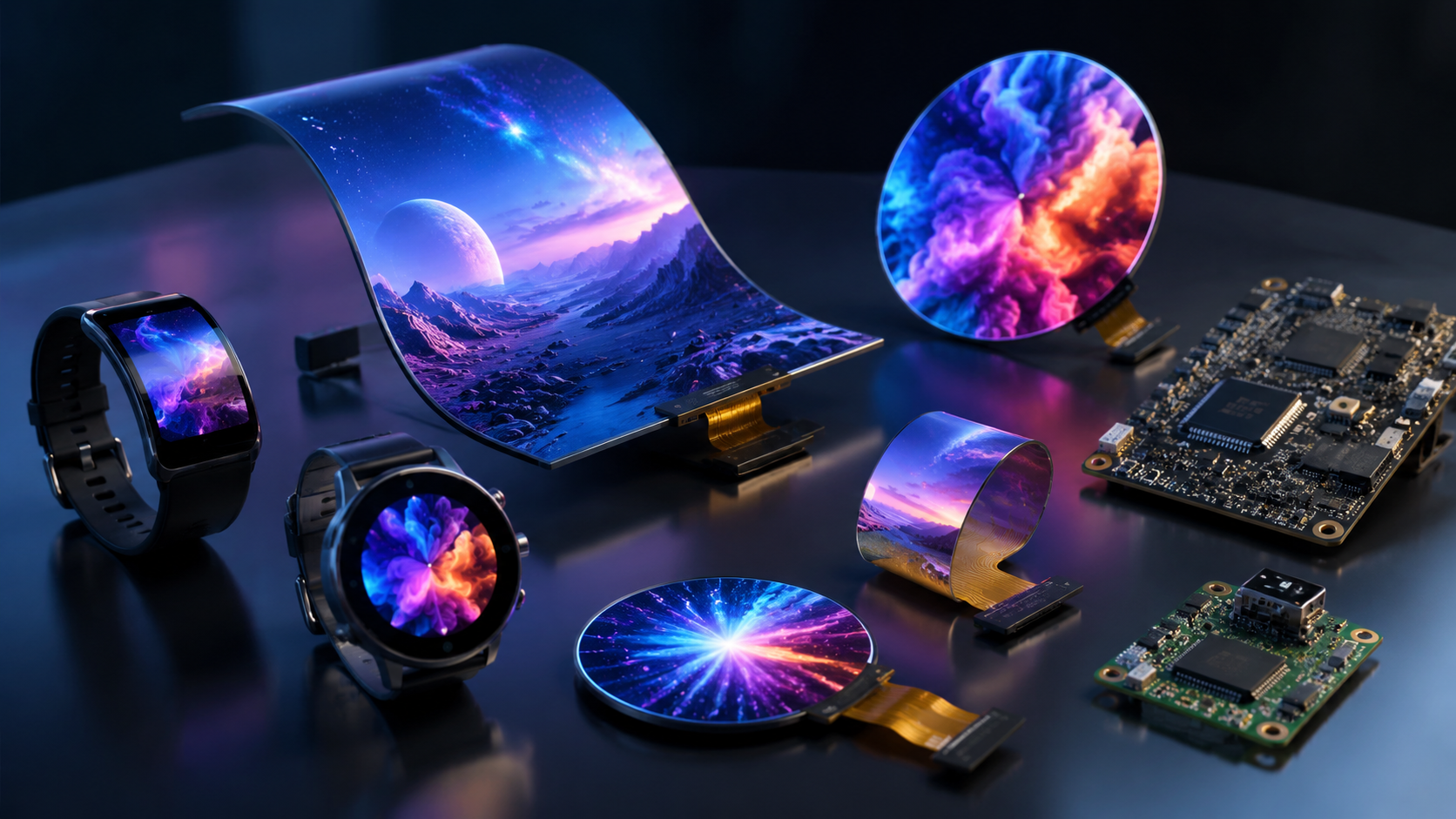
Wearable AMOLED customization hinges on three engineering challenges that cannot be glossed over—fitting the display to a curved wrist surface, designing for a round watch face, and matching the driver board signal to the panel's native interface; IDC data shows AMOLED penetration in smartwatches reached 89% in 2024, yet fewer than 40% of custom wearable display projects reach mass production without at least one major re-spin, and most failures trace directly to these three gaps being underestimated at the project start.

Clarify Product Requirements
Device Type
Smartwatches, fitness bands, AR glasses, and TWS earphone cases are the four dominant wearable AMOLED categories. According to IDC's 2024 global wearables tracker, smartwatches account for 52% of total shipments, fitness bands at 28%, with the remaining 20% split across AR and other form factors. Each category demands fundamentally different AMOLED specifications, and applying one category's specs to another almost always ends badly. A smartwatch round or rectangular display needs 300-600nit brightness and 326-454PPI, with outdoor scenarios pushing peak brightness above 1000nit; a fitness band display is typically a narrow rectangle around 300×150 pixels, where power consumption is so critical that the driver IC must support partial refresh at under 5mW average; AR glasses require microdisplays exceeding 2000nit to remain legible through a see-through optical path.
I once worked with a client who took a 1.1-inch AMOLED spec sheet designed for a fitness band and tried to apply it directly to a smartwatch project—the resulting prototype showed visible horizontal banding on dark screens, with color accuracy ΔE exceeding 5, and the end-user complaint rate hit 18% within the first month of sales. The root cause was straightforward: smartwatches need higher driving current and more complex gamma calibration than bands, and the band's driver IC was fundamentally incapable of those corrections. Different device types also have completely different module structures—a smartwatch needs a precise gap tolerance between the display and the housing, a fitness band requires ultra-thin bonding, and AR glasses demand a micro RGB pixel arrangement for brightness—clarifying the device type must come first, before any panel selection.
Screen Shape
Curved OLED has become the standard for premium smartwatches. The industry measures curvature using a radius figure—2000R means the screen bends along an arc with a 2000mm radius, where a smaller number indicates a tighter bend. Mainstream wearable curved displays fall between 500R and 3000R, and 500R panels carry the highest screen-to-body ratio but also the highest price, with a 1.9-inch 500R curved AMOLED costing roughly 35-45% more per unit than an equivalent flat 3000R product.
Rectangular AMOLED cutting utilization on a standard substrate runs 72-78%, while non-rectangular shapes like elliptical or blade-shaped cutouts can drop to as low as 55% utilization—driving per-unit cost up substantially. Screen shape also determines TSP sensor routing direction: curved screens need the touch IC to run arc compensation algorithms that a straight-screen design does not, adding roughly $0.8-1.5 to the touch IC BOM cost per unit.
Size Requirements
Wearable AMOLED sizes cluster between 1.0 and 2.0 inches, with 1.9 inches (resolution 410×502, 330PPI) being the smartwatch sweet spot. Samsung Display's LTPS AMOLED roadmap notes this size achieves the highest glass cutting utilization on Gen-6 substrates, keeping yield loss under 8%, whereas custom non-standard sizes like 1.78 or 1.47 inches push yield loss to 12-15%, directly impacting BOM cost. Resolution is not automatically better—pixel count increases drive driving power consumption up approximately 18% for every 20% increase in resolution, and with smartwatch batteries typically at 300-500mAh, high resolution must be paired with a low-power driver IC and partial-refresh algorithms to maintain acceptable battery life. Panel thickness for wearables spans 0.2T to 0.5T TFT glass—0.2T is flexible but less impact-resistant, 0.5T is more robust, and the choice is dictated by the product's mechanical envelope, not by thickness alone.
| Spec | Smartwatch | Fitness Band | AR Glasses |
|---|---|---|---|
| Screen Size | 1.3-2.0 inches | 0.8-1.5 inches | 0.5-1.0 inches |
| Resolution | 360×360 to 484×484 | 152×152 to 300×150 | 640×400 to 1920×1080 |
| Brightness | 300-600nit (peak 1000nit) | 200-400nit | Above 2000nit |
| Power | Full-color refresh <50mW | Partial refresh <5mW | Full-color <200mW |
Standard sizes like 1.78 and 1.47 inches cost 10-15% less per unit than custom sizes due to higher cutting utilization, but may sacrifice screen-to-body ratio; custom 1.9-inch specs can improve band screen-to-body ratio by roughly 12% at a cost premium—this trade-off depends on the product's retail pricing strategy, not on an absolute technical preference.
Confirm Customization Capabilities
Flexible Structure
OLED flexibility class directly determines whether a display can be non-rectangular-cut or utilize conformal bonding. The industry classification divides flexibility into three tiers: Bendable (radius > 5mm), Foldable (radius 1-5mm), and Rollable (radius < 1mm). Over 90% of wearable AMOLED shipments fall into the Bendable tier, with Foldable primarily in dual-screen foldable phones and Rollable still in the concept stage with no mature wearable product in the market. Flexibility class is set by the panel's TFT backplane material: LTPS (Low-Temperature Polycrystalline Silicon) TFT has excellent mechanical properties but requires laser crystallization, while IGZO (Indium Gallium Zinc Oxide) TFT has better leakage characteristics but lower mobility than LTPS—the cost gap between these two technical routes in wearables runs roughly 8-12%.
Rigid OLED (MOP or GLASS substrate) remains the dominant choice for fitness bands and mid-range smartwatches—costing 20-30% less than flexible alternatives and offering more stable optical performance under high ambient light; flexible OLED becomes mandatory only when the product design requires conformal bonding (radius < 1000R). The two key reliability metrics for flexible structures are Folding Count and radius recovery rate—industry standard for foldable phones requires zero black spots in the OLED emissive layer after 200,000 folding cycles, with wearable products setting a lower bar of 50,000+ cycles as the minimum acceptance threshold.
Round Screen Design
The core pixel layout difference between round and rectangular AMOLED is fundamental. Rectangular screens use a uniform grid pixel arrangement (such as standard RGB stripe or PenTile layouts) with even pixel density throughout; round screens must apply wedge-shaped pixel trimming at the circumference to fully cover the circular area, which reduces pixel density around the perimeter by approximately 15-22% compared to the center—a physical limitation that directly causes Corner Darkening, the most commonly user-complained display defect on round smartwatches.
Round screen circuit routing is also more complex than rectangular—the driver IC needs arc routing (Arc Routing), consuming approximately 8-12% more board area than equivalent straight routing, which adds roughly $1.2-2.0 to the per-unit driver IC cost; arc routing also creates additional IR Drop (voltage drop) that makes perimeter brightness approximately 5-8% lower than the center, requiring Demura (luminance uniformity correction) algorithms to compensate. Panel manufacturers charge an additional NRE fee (Mask Open Fee) for designing round AMOLED—based on projects I have reviewed, round AMOLED NRE typically runs 30-50% higher than equivalent-area rectangular products, and this cost must be confirmed and assigned during the sample phase.
Driver Board Solution
MIPI-DSI holds 85% of the wearable AMOLED interface market. The driver board converts the application processor's video signal into the OLED panel's native driving timing. For wearables, three interface types dominate: MIPI-DSI (preferred for mobile, lowest power consumption), LVDS (legacy but strong interference resistance), and TTL/RGB (occasionally seen only in ultra-low-cost bands); selecting the wrong interface type causes signal incompatibility that ranges from image artifacts to panel burnout in severe cases. Driver IC selection must simultaneously match the OLED panel's gamma curve and the manufacturer's in-cell driving architecture—these parameters come from the panel manufacturer's data sheet, and incompatible IC choices can result in color accuracy ΔE > 3 or abnormal refresh rate behavior.
Evaluate Partnership Details
Sample Testing
The prototype phase is the first technical validation gate in any custom AMOLED project. Industry standard NRE fees range from $3,000 to $8,000, with lead times of 2-4 weeks. The sample phase must cover optical testing (brightness, color coordinates, uniformity, gamma curve), electrical testing (power consumption, ESD protection), and mechanical testing (bonding strength, folding endurance) across at least 12 inspection items, and any single failure requires re-sampling with additional cost. Sample quantities typically run 30-100 units—I recommend a minimum of 50 units for the first build, because fewer cannot cover the process tolerance range (typically ±10%), and discovering a problem during mass production when tooling changes cost 3-5× the sample phase budget has ended projects I have been involved with.
Mass Production Capacity
A panel manufacturer's mass production capacity directly determines whether your project can be delivered on schedule. The three primary dimensions are monthly capacity, yield rate, and process maturity. Leading manufacturers like Samsung Display, BOE, and Visionox offer wearable AMOLED monthly capacities ranging from 5,000 to 500,000 units, where higher capacity reduces per-unit cost but increases scheduling lead time; smaller manufacturers offer better flexibility but may have less process consistency. The industry yield benchmark is >97%—below this threshold, more than 3 units per 100 require scrap or downgrading, and those costs pass directly to the customer. After sample approval, the yield ramp-up period from pilot to stable mass production typically runs 4-8 weeks—during this phase, yield climbs from the sample-level 80-85% to the target 97%+, and customers typically absorb the excess material loss on PP (Pre-Production) builds; ramp-up duration correlates strongly with the manufacturer's process maturity, and choosing a manufacturer with prior wearable AMOLED mass production experience can substantially shorten this phase.
Technical Support
Panel manufacturer technical support is a make-or-break variable in custom projects. Reputable manufacturers typically bundle display optical tuning guidance, driver IC firmware porting support, and reliability test standard consultation into the NRE fee—a total value ranging from $5,000 to $30,000 that can save far more in debugging time than it costs. I recommend requiring FAE (Field Application Engineer) access from the panel manufacturer before project kickoff—at minimum, 2-person-days of on-site support during the sample phase and 2-3 person-days per week during production ramp, remote or on-site—this investment consistently shrinks project timelines by 30-40% in programs I have reviewed.
I once encountered a situation where a panel manufacturer unilaterally changed a photolithography process parameter during mass production without notifying the customer—the result was a display uniformity defect that required recalling 3,000 smartwatches at a total cost exceeding $800,000. This outcome was entirely preventable with an ECN (Engineering Change Notification) clause requiring manufacturers to provide written notice at least 14 days before any process change takes effect, with the customer's right to reject affected lots—so this single contractual clause is worth negotiating hard on.
- IDC's 2024 Global Wearables Tracker places smartwatches at 52% of total wearable shipments and fitness bands at 28%—different categories have fundamentally different requirements for brightness, resolution, and power consumption, and display specifications must start from the device category rather than being copied across product types.
- Samsung Display's LTPS AMOLED roadmap indicates that 1.9-inch specifications on Gen-6 substrates achieve the highest glass cutting utilization, keeping yield loss under 8%—non-standard custom sizes typically see yield loss increase by 4-7 percentage points, directly impacting BOM cost.
- MIPI-DSI has captured over 85% of the wearable AMOLED interface market—bandwidth exceeding 1Gbps supports lossless 1080p at 60Hz with approximately 40% lower power consumption than LVDS, making it the standard choice for smart watch displays.
- Panel manufacturer technical support bundled into the NRE—valued at $5,000 to $30,000—typically reduces the debugging cycle by 30-40% and shrinks yield ramp duration by 2-3 weeks; this investment should never be treated as optional in a custom AMOLED project budget.
Wearable AMOLED customization is not simply selecting a display panel—device type definition, screen shape and curvature, dimensional specification, driver board interface matching, sample validation, and production ramp each represent independent engineering gates, and skipping any one of them is how projects derail; the three minimum conditions for a successful custom AMOLED project are a manufacturer with proven wearable AMOLED mass production experience, a project team backed by manufacturer FAE support, and a clear ECN change notification agreement in writing.
Weiterlesen
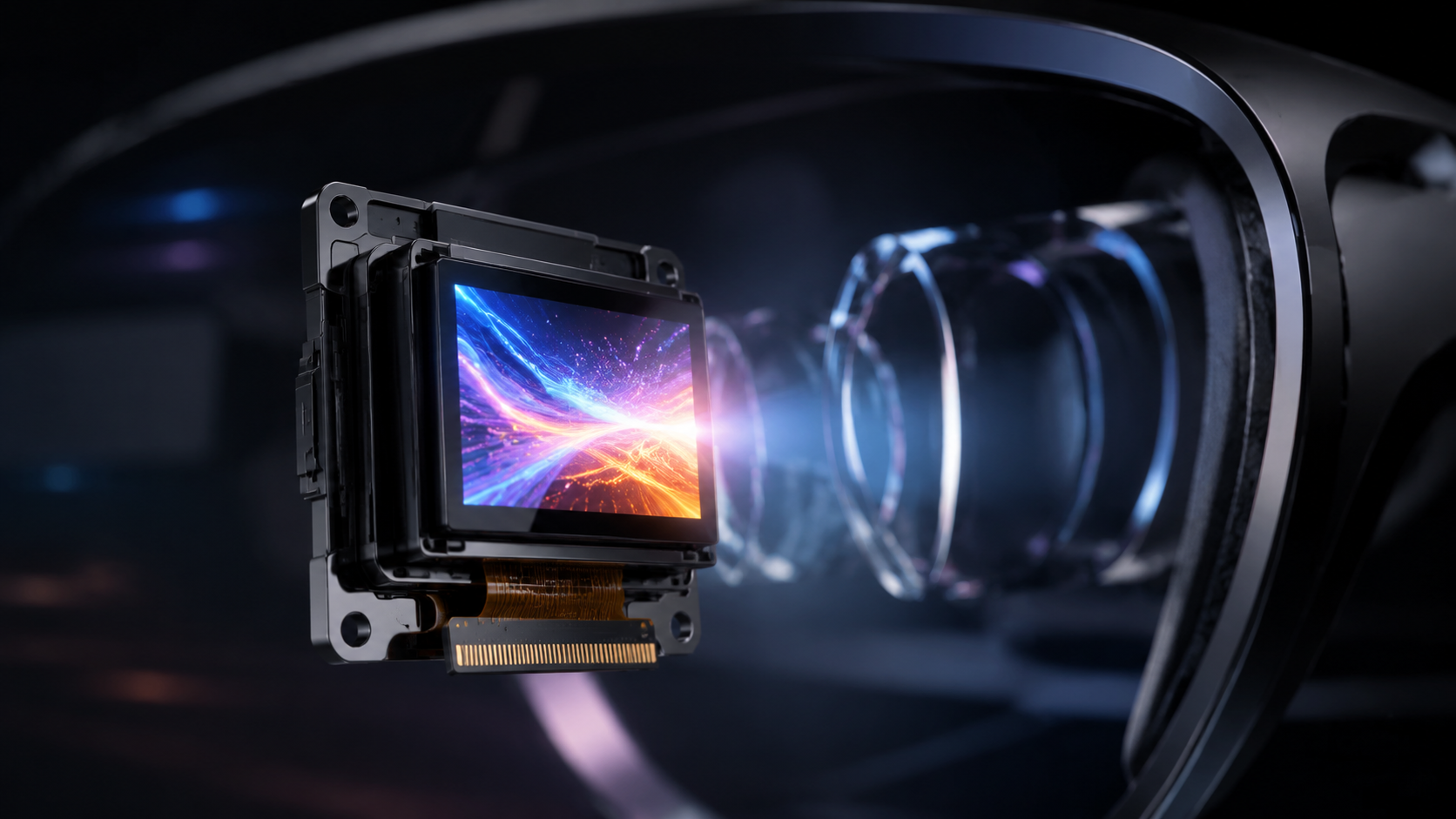
Sony ECX350F pushed peak Micro OLED brightness to 10000 nits in September 2024 — a 0.44-inch module delivering 1920×1200 resolution at 5000ppi pixel density, 5.1µm pixel pitch, 100% sRGB gamut, a...
According to the IHS Markit Industrial Display Market Report, the compound annual growth rate (CAGR) for industrial TFT LCD modules operating in extreme environments reached 11.2%, with sunlight-re...
Hinterlasse einen Kommentar
Diese Website ist durch hCaptcha geschützt und es gelten die allgemeinen Geschäftsbedingungen und Datenschutzbestimmungen von hCaptcha.