



LCD Display Module Manufacturer | How to Select a Reliable Supplier
When selecting a reliable LCD module supplier, focus on qualifications, production capacity, quality control, and service.
Check for ISO 9001/IATF 16949 certification, prioritize automotive-grade AEC-Q100.
Evaluate production capacity (monthly output 500k+ units), yield rate (≥98%), and full-process defect rate ≤0.5%.
Inquire about lead time (standard ≤4 weeks), warranty (3+ years), and 24-hour response.
Define Your Requirements
Parameters should be broken down based on the application scenario (consumer/industrial/automotive/medical).
For example, consumer electronics require 1080p+ 300 PPI; industrial control requires -30℃ to 80℃ temperature tolerance and 50,000 hours MTBF; automotive displays must have 1000+ nits brightness for sunlight readability; medical displays require color accuracy ΔE <2.
Interface (MIPI/LVDS), dimensional tolerance (±0.1mm), touch type (capacitive/resistive) also need to be quantified to avoid later revision costs exceeding 15% of the initial budget.
Application Scenarios
Consumer Electronics:
For smartphone screens, look at resolution and PPI. For example, the Apple iPhone 15 Pro Max uses a 6.7-inch 2796x1290 display with 460 PPI, ensuring sharp text edges without blurring.
The Samsung Galaxy S24 Ultra's 6.8-inch 3120x1440 display with 505 PPI provides uniform character spacing when viewing PDF documents.
Brightness must withstand outdoor sunlight. Flagship phones have peak brightness exceeding 2000 nits (iPhone 15 Pro Max 2000 nits, S24 Ultra 2600 nits), while 500-800 nits is sufficient for regular indoor use.
Response time of 1ms GTG (gray-to-gray) reduces motion blur by half when playing games like Genshin Impact.
Color gamut coverage of 100% DCI-P3 or more ensures vibrant colors when watching Netflix HDR content.
Regarding power consumption, OLED consumes 30% less than an LCD of the same size.
For example, a 6.1-inch iPhone LCD consumes about 1.2W, while an OLED consumes only 0.8W.
Thickness is controlled within 0.5mm (including cover glass), and for foldable phones, the hinge area can be as thin as 0.3mm.
| Parameter | iPhone 15 Pro Max | Samsung S24 Ultra | Reference Standard |
|---|---|---|---|
| Resolution | 2796x1290 | 3120x1440 | - |
| PPI | 460 | 505 | - |
| Peak Brightness | 2000 nits | 2600 nits | VESA DisplayHDR 1400 |
| Response Time | 1ms GTG | 1ms GTG | - |
| Color Gamut | DCI-P3 100% | DCI-P3 100%+ | - |
| Typical Power Consumption | 1.2W (6.7-inch) | 1.5W (6.8-inch) | Measured Data |
Tablets are similar. The iPad Pro 12.9-inch uses a Mini-LED display with 2596x1664 resolution, 1000 nits sustained brightness, and 2596 local dimming zones, offering 30% more detail in dark areas compared to standard LCDs.
Smartwatch displays are smaller. The Apple Watch Ultra 2 has a 1.92-inch 410x502 display with 326 PPI and 2000 nits brightness in sunlight, making it easy to read heart rate during outdoor runs.
Industrial Control:
First, consider temperature resistance. The Siemens SIMATIC KTP700 Basic PN panel has an operating temperature of -20℃ to 60℃, ensuring no black screen when starting up in northern factories in winter and no screen artifacts near motors in summer.
Storage temperature is -30℃ to 70℃; the panel can still be used after half a year in storage.
Shock resistance follows IEC 60068-2-27 standard, 5G acceleration (11ms half sine wave), equivalent to light hammer taps without casing deformation.
MTBF (Mean Time Between Failures) should be at least 50,000 hours.
The Rockwell Automation PanelView 5510 panel has been tested for 52,000 hours without failure, meaning over 8 years of use at 16 hours per day.
Interfaces must be compatible with legacy equipment. Most industrial panels come with RS485 (baud rate up to 115200 bps), CAN bus (1 Mbps). Newer devices add Profinet/EtherCAT.
For example, the Beckhoff CP6606 panel has dual Ethernet ports, connecting simultaneously to PLCs and MES systems with data refresh latency <50ms.
Front panel protection is IP65, protecting against water splashes and dust, unaffected by water jets when cleaning machines in food factories.
Brightness doesn't need to be extremely high; 400-500 nits is sufficient to see parameters under workshop lighting.
Automotive:
Automotive LCDs must pass the automotive-grade AEC-Q100 Grade 2 certification, with a temperature range of -40℃ to 85℃, ensuring startup at -30℃ in winter and no failure after summer sun exposure.
The Tesla Model 3 instrument cluster is a 15-inch 2200x1300 display with 1000 nits brightness, allowing clear speed reading even under direct sunlight.
The Mercedes-Benz MBUX Hyperscreen is a 56-inch curved display with 3840x1728 resolution and 1200 nits brightness, ensuring clarity for the passenger watching movies.
Contrast ratio should be above 1500:1 for clear image distinction between day and night.
Lifespan is calculated at 100,000 hours with brightness degradation <20%.
At 4 hours of use per day, this equals 68 years (practically, considering aging, manufacturers guarantee 5 years).
Vibration testing follows ISO 16750-3, frequency 20-2000Hz, acceleration 5 Grms, ensuring no screen flickering or line shaking when going over speed bumps.
Interfaces use eDP 1.4 or LVDS, supporting 4K@60Hz transmission.
The BMW iX center console uses eDP with a data bandwidth of 5.4 Gbps, ensuring smooth performance.
Heads-Up Displays (HUD) are more specialized, using TFT-LCD projection. Brightness needs to exceed 10,000 nits.
Continental's HUD display tests at 12,000 nits, projecting speed information 2 meters in front of the driver, equivalent to a 7-inch screen.
Medical:
The Philips IntelliVue MX800 monitor display is 12.1 inches with 1280x800 resolution, ΔE <1.5 (CIE Lab standard), clearly distinguishing red blood indicators from blue veins.
The GE LOGIQ E10 ultrasound display is 19 inches with 1920x1080 resolution, ΔE <2, compliant with DICOM Part 14 calibration, and 4096 grayscale levels (12-bit), providing 256 more layers of detail for tumor boundaries compared to 8-bit displays.
Flicker-free dimming is a hard requirement, with PWM frequency >2000 Hz, allowing doctors to view for 8 consecutive hours without eye strain.
Dust and water protection IP65 ensures disinfectant sprays during surgery don't penetrate.
Brightness around 500 nits is sufficient for clear imaging under surgical lights; higher brightness can cause glare.
Lifespan requirement is 70,000 hours. At 24 hours of operation per day, this equals 8 years, with brightness degradation <15% during that period.
Aviation & Marine:
LCDs for aircraft cockpit displays must pass the DO-160G aviation standard, including 96-hour salt spray test (5% NaCl solution). The Boeing 787 primary display is 15.4 inches with 1920x1200 resolution, 1500 nits brightness, and a 178° wide viewing angle, allowing the co-pilot to clearly see navigation maps.
Temperature range is -55℃ to 85℃, ensuring no screen freezing at high-altitude low temperatures and no failure near high-temperature engines.
Vibration follows RTCA DO-160 Section 8, 20-2000Hz, 7.5 Grms, ensuring no frame skipping during takeoff/landing bumps and turbulence.
The Kongsberg 17-inch display has 1280x1024 resolution, 1000 nits brightness, operating temperature -25℃ to 70℃, 95% RH without condensation, and withstands 500 hours of salt spray (ASTM B117), showing no corrosion after 3 years at sea.
Interfaces include NMEA 2000, connecting directly to GPS and radar with position update latency <1 second.
Performance Specifications
Resolution:
For 6-7 inch smartphone screens, 1080p (1920x1080) is sufficient for daily use. 2K (2560x1440) offers sharper text.
For example, the Google Pixel 8 Pro's 6.7-inch 2992x1344 display with 460 PPI shows clear small text in emails.
The Samsung Galaxy S24 Ultra's 6.8-inch 3120x1440 display with 505 PPI preserves more detail when zooming into photos.
For 10-13 inch tablets, the iPad Pro 12.9-inch uses 2732x2048 (264 PPI), providing uniform character spacing in PDF documents.
The Microsoft Surface Pro 9's 13-inch 2880x1920 display (267 PPI) ensures smooth lines when drawing without aliasing.
For industrial displays, resolution depends on information density. The Siemens SIMATIC HMI KTP700 uses 1280x800 (149 PPI), just right for displaying 20 parameters.
The Rockwell Automation PanelView 5310's 15-inch 1280x1024 display (107 PPI) can also layout complex flowcharts.
A 4K (3840x2160) resolution on a 10-inch screen results in 441 PPI, but increases driver IC cost by 30% and power consumption by 25%.
| Device Type | Screen Size | Resolution | PPI | Reference Product |
|---|---|---|---|---|
| Smartphone | 6.7-inch | 2992x1344 | 460 | Google Pixel 8 Pro |
| Tablet | 12.9-inch | 2732x2048 | 264 | iPad Pro 12.9 (M2) |
| Industrial HMI | 7-inch | 1280x800 | 215 | Siemens KTP700 Basic |
Brightness:
250-350 nits is sufficient for indoor office displays, like the Dell U2723QE's 27-inch display at 300 nits, comfortable for document viewing.
Outdoor displays require 1000+ nits. The Sony Xperia 1 V's 6.5-inch display has a peak brightness of 1900 nits, clear for map viewing in sunlight.
The VESA DisplayHDR standard has tiers: HDR 400 (400 nits peak), HDR 1000 (1000 nits). The Apple Pro Display XDR achieves 1600 nits sustained brightness, suitable for video editing.
Automotive displays must have high brightness. The Tesla Model 3 instrument cluster (15-inch) has 1000 nits, allowing clear speed reading in sunlight.
The Mercedes-Benz MBUX Hyperscreen (56-inch curved) has 1200 nits, ensuring clarity for the passenger watching movies.
Higher brightness consumes more power. Increasing from 500 nits to 2000 nits on a 6.7-inch screen raises power consumption by 40%.
Response Time:
Response time refers to the speed of a pixel changing from black to white and back, measured in ms. GTG (Gray-to-Gray) is more practical than black-white response.
Gaming monitors require 1ms GTG, like the ASUS ROG Swift PG279QM 27-inch display (1ms GTG), reducing motion blur in games like CS2.
5ms GTG is sufficient for regular displays, like the LG 27QN880 27-inch display (5ms GTG), with no ghosting when watching videos.
Displays with slow response (e.g., 10ms GTG) show motion blur in games. For example, in Cyberpunk 2077, car headlights leave trails, affecting judgment.
Response time is less critical for industrial displays; stability is key. The Beckhoff CP6606 panel has a 20ms response time, sufficient for displaying PLC data.
Color Gamut & Accuracy:
Color gamut is the range of colors a display can show. sRGB (standard), DCI-P3 (film), Adobe RGB (print) are mainstream standards.
Standard displays cover 99% sRGB, like the HP Pavilion 27xq 27-inch display.
Film displays cover over 95% DCI-P3. The Sony INZONE M9 27-inch display covers 98% DCI-P3, providing accurate colors for Netflix HDR content.
Color accuracy is measured by ΔE. ΔE <2 is difficult for the human eye to perceive deviation.
The EIZO ColorEdge CG2700X 27-inch display has ΔE <1.0, suitable for photo editing.
The Dell UltraSharp U2723QX 27-inch display has ΔE <2, sufficient for office work.
Medical displays are stricter. The GE LOGIQ E10 ultrasound display has ΔE <2 to avoid misdiagnosis when viewing blood flow direction.
Power Consumption:
A 6.1-inch smartphone LCD consumes about 1.2W (3.8V/316mA), while OLED consumes about 0.8W (3.8V/211mA). The iPhone 15 LCD consumes 50% more power than OLED.
The 12.9-inch iPad Pro with Mini-LED has a typical power consumption of 12W (18V/667mA), 20% higher than a same-size OLED, but offers more stable brightness.
Industrial displays have low power consumption. The Siemens KTP700 panel, powered by 12V, consumes 3.5W (292mA) typically, suitable for 24/7 operation.
Automotive displays have higher power consumption. The Mercedes MBUX screen (56-inch) consumes 25W (12V/2083mA) typically, powered by the vehicle battery.
Reliability:
MTBF (Mean Time Between Failures) indicates failure-free operation time.
Industrial displays ≥50,000 hours (Rockwell PanelView 5510 tested at 52,000 hours). Automotive displays ≥100,000 hours (brightness degradation <30%).
ESD Protection (Electrostatic Discharge) includes contact discharge and air discharge.
Industrial displays require ±8kV contact / ±15kV air (IPC-A-610 Class 3 standard).
The Beckhoff CP6606 panel tested withstands ±10kV contact without damage.
Shock resistance follows IEC 60068-2-27, 5G acceleration (11ms half sine wave), equivalent to a 1kg object dropping 20cm onto the casing. Industrial displays show no deformation.
Vibration follows IEC 60068-2-6, 10-500Hz, 1.5mm amplitude, ensuring no screen flickering when a vehicle goes over speed bumps.
Environmental Adaptability:
Operating Temperature Range:
Consumer electronics 0℃~40℃ (iPhone 15), Industrial panels -20℃~60℃ (Siemens KTP700), Automotive -40℃~85℃ (Tesla Model 3), Aviation -55℃~85℃ (Boeing 787).
Storage temperature is wider. Industrial panels -30℃~70℃, can be stored in a warehouse for half a year without damage.
Humidity:
Standard displays 10%~80% RH. Marine displays 95% RH no condensation (Kongsberg 17-inch marine display).
Salt spray test 96 hours (5% NaCl, ASTM B117), no corrosion after 3 years of coastal use.
Ingress Protection (IP) rating. Medical displays IP65 (surgical disinfectant sprays). Industrial displays IP54 (workshop oil and dust).
Environmental Adaptability
Temperature Tolerance:
Consumer electronics like the iPhone 15 have an operating temperature of 0℃~40℃.
It can still light up after half an hour outdoors in winter and won't show artifacts when left in a hot car (50℃) in summer.
Storage temperature is -20℃~45℃. If left in a freezer, it can recover after drying for half an hour.
Industrial panels have a wider range. The Siemens SIMATIC KTP700 Basic operates from -20℃ to 60℃.
In unheated workshops in northern winters, it lights up within 5 seconds of startup.
In southern summers near motors (60℃), it runs for 8 hours with only a 5% brightness drop.
Storage temperature is -30℃ to 70℃; parameters remain unchanged after half a year in storage.
Automotive displays must pass AEC-Q100 Grade 2, with -40℃~85℃ being a hard requirement.
The Tesla Model 3 instrument cluster cold starts at -30℃, displaying speed within 3 seconds.
In summer desert conditions with ground temperatures of 70℃, screen brightness automatically reduces to 70% of the initial value (per AEC-Q100) to avoid overheating shutdown.
Aviation displays follow DO-160G. The Boeing 787 primary display operates from -55℃ (high-altitude cruising) to 85℃ (near engines). It withstands rapid temperature changes (from -40℃ to 70℃ within 30 minutes) without cracking.
Low-temperature startup time is crucial:
Industrial panel cold start at -30℃ ≤5 seconds (reference test with Texas Instruments TMS320F28335 MCU companion display).
Automotive display startup at -40℃ ≤8 seconds (Continental HUD display test).
High-temperature derating must not be exceeded. Automotive display brightness ≥70% of initial value at 105℃.
Industrial panel power consumption ≤110% of rated value at 60℃.
| Scenario | Operating Temperature | Storage Temperature | Reference Product | Test Standard |
|---|---|---|---|---|
| Consumer Electronics | 0℃~40℃ | -20℃~45℃ | iPhone 15 | IEC 60068-2-1/2 |
| Industrial Control | -20℃~60℃ | -30℃~70℃ | Siemens KTP700 Basic | IEC 60068-2-14/30 |
| Automotive | -40℃~85℃ | -40℃~95℃ | Tesla Model 3 Instrument Cluster | AEC-Q100 Grade 2 |
| Aviation | -55℃~85℃ | -55℃~90℃ | Boeing 787 Primary Display | DO-160G Section 4 |
Moisture Resistance:
Standard office displays handle 10%~80% RH (Dell U2723QE test).
During the rainy season, using air conditioning for dehumidification is sufficient.
Industrial workshop humidity often reaches 90% RH.
The Beckhoff CP6606 panel, following IPC-A-610 Class 3, operates for 24 hours powered at 95% RH without internal condensation (monitored with humidity sensors).
Marine displays are stricter. The Kongsberg 17-inch marine display operates continuously for 30 days at 95% RH, 30℃ environment with no abnormalities in liquid crystal molecule alignment (checked with optical microscope).
Humidity cycling tests simulate seasonal changes.
Industrial panels follow IEC 60068-2-30: 500 hours at 85℃/85% RH (high temperature/humidity), equivalent to 5 years of use in hot, humid southern climates.
Brightness degradation <8% (Omron NB series HMI test).
During surgical disinfection with alcohol and water spray, medical displays with IP65 protection maintain internal humidity <30% (Philips IntelliVue MX800 test).
Vibration Resistance:
Industrial panels use IEC 60068-2-6: frequency sweep 10-500Hz, amplitude 1.5mm (equivalent to mild earthquake).
After 2 hours of vibration on the Beckhoff CP6606 panel, displayed parameters show no offset (PLC communication data checks match).
Automotive follows ISO 16750-3: random vibration 20-2000Hz, 5 Grms acceleration (bumps over speed bumps).
The Tesla Model 3 center console display underwent vibration equivalent to 100,000 km of road testing, with no line flickering or screen artifacts.
Aviation display vibration is more severe: RTCA DO-160 Section 8, 20-2000Hz, 7.5 Grms (takeoff/landing bumps + turbulence).
After 500 hours of vibration on the Boeing 787 display, map line clarity remains unchanged (line width measurement error <0.1mm).
Construction machinery displays (e.g., Caterpillar excavator) follow MIL-STD-810H: 30Hz~2000Hz, 10 Grms, 10 hours of vibration.
Touch function remains normal after testing (resistive touch pressure test).
Salt Spray Resistance:
Testing follows ASTM B117: 5% NaCl solution spray.
The Kongsberg 17-inch marine display, after 96 hours of salt spray, shows no corrosion on the metal frame (salt spray chamber test).
Interface pins' gold plating remains intact (microscope observation).
Coastal edition automotive displays (e.g., Toyota Prado Middle East version) have anti-salt spray coating (Parylene).
After 500 hours of salt spray test, internal circuits show no corrosion (Continental report).
Industrial displays for coastal factories (e.g., North Sea oil platforms) follow ISO 9227: 1000 hours salt spray test, extending lifespan by 2 years (Siemens case study).
Dust & Water Protection:
IP rating: first digit for dust, second for water.
Medical displays IP65 (Philips MX800): dust protection level 6 (completely dust-tight), water protection level 5 (protected against water jets).
Using a high-pressure water gun for surgical disinfection for 10 minutes causes no internal water ingress (IP65 test standard: nozzle diameter 6.3mm, 12.5 L/min, distance 3m).
Industrial displays IP54 (Beckhoff CP6606): dust protection level 5 (protected against most dust), water protection level 4 (protected against splashing water).
After workshop oil splashes, the display can be wiped clean and used normally.
Marine displays IP66 (Kongsberg): water protection level 6 (protected against powerful water jets).
During heavy rain at sea, water pours on the exterior but the interior stays dry (tested in waterproof chamber, 30 minutes immersion at 1m depth, no water ingress).
Testing follows IEC 60529: dust test uses talcum powder (concentration 2kg/m³, 8 hours); water test uses spray nozzles (3 minutes from all directions).
Evaluation Dimensions
Technology: Look at R&D investment (15%-25% of revenue), patents (50+ items), customization cycle (≤2 weeks).
Production: Look at yield rate (≥95%), certifications (ISO 9001/IATF 16949 coverage).
Supply Chain: Look at delivery delays (≤7 days), responsiveness (within 24 hours).
Reputation: Look at case studies with European/American clients (e.g., automotive Tier1s), third-party ratings (≥4.5/5).
Cost: Consider overall losses (a 10% yield difference increases cost by 20%).
Technical R&D Capability
R&D Investment Should Be Spent Wisely, Not Just Numbers
- Revenue Percentage: Leading companies maintain stable R&D expenditure at 18%-22% of revenue, while small-medium manufacturers are often around 10%-15%. For example, a US manufacturer had $105M revenue in 2023, with $23.1M R&D investment (22%). 60% was for driver IC adaptation and new material testing, 30% for optical optimization (e.g., polarizer transmittance improvement), 10% for special-shaped cutting processes.
- Personnel Configuration: Engineers should comprise at least 20% of the R&D team, with core members averaging over 12 years of experience. In a German company's 35-person R&D team, 8 have backgrounds at panel manufacturers (e.g., LG Display), specializing in low-temperature liquid crystal formulations (no crystallization at -30℃).
- Tool Investment: Using 3D optical simulation software (like Zemax) to optimize viewing angles costs $150k per year per license. Building a darkroom lab for color accuracy testing requires equipment precision of ΔE <0.5 (medical display requirement).
Patents Must Be Usable, Not Just for Show
| Patent Type | Overseas Manufacturer Application Cases (2023 Data) | Actual Effect |
|---|---|---|
| Special-Shape Cutting | US manufacturer patent: Laser cutting + stress compensation technology, circular display chipping rate <0.1%. | 1.8-inch circular display yield 94% (industry average 88%). |
| Low-Power Driving | German manufacturer's 15 AMOLED alternative patents, using reflective LCD + local backlight. | Outdoor meter battery life extended from 8 to 12 hours. |
| Wide Viewing Angle Compensation | Japanese manufacturer IPS improvement patent, vertical viewing angle expanded from 160° to 178°. | Complaints about color shift when viewing automotive center console from the side reduced by 70%. |
Customization Isn't Just Drawing Changes; It Needs Speed and Stability
- Size & Shape: Support non-standard sizes from min 0.5-inch to max 55-inch. Curved display (radius 50mm) prototype cycle 14 days, yield maintained above 92%. Example: A UK medical device manufacturer required a 3.5-inch curved display. The supplier delivered the first sample in 12 days from drawing confirmation to delivery.
- Interface Adaptation: Protocol conversion success rate (LVDS to MIPI, SPI to RGB, etc.) 98%. An Italian industrial controller manufacturer used their solution, saving $200k in motherboard replacement costs.
- Optical Parameter Adjustment: Sunlight-readable display (brightness ≥1500 nits) parameter tuning cycle 7 days. A US outdoor digital signage customer requested contrast ratio improvement from 1000:1 to 1500:1, completed validation in 5 days.
Cutting-edge Technology Should Be Judged by Implementation, Not Hype
- High Refresh Rate (120Hz+): Automotive HUD using 144Hz display. Tests by a German automaker showed 80% reduction in animation motion blur and 15-meter improvement in recognition distance in rain/fog.
- Wide Color Gamut (DCI-P3 90%+): Medical monitors using such displays achieve color difference ΔE <1.5 (industry standard ΔE <3), reducing doctor misreading rates by 40%.
- Low-Power Technology: Reflective LCD at 1000 nits brightness consumes 0.8W (traditional backlit LCD 2W). A Nordic outdoor smartwatch's battery life extended from 3 to 5 days.
Quality Control
The Production Line Isn't Just About Machines; It's About Management
- Equipment Precision: Use Japan's Fuji NXT III pick-and-place machine, placement accuracy ±0.005mm (1/15 of a hair's width), 75% smaller error than standard machines (±0.02mm). Bonding process (COG/COF) uses Korea's Samsung fully automated lines, bonding pressure error <0.1N, avoiding cold solder joints.
- Automation Rate: Leading manufacturers achieve >90% automation for key processes (LC filling, backlight assembly, dispensing). Humans only handle loading/unloading. Example: A US manufacturer's backlight assembly line uses 12 robotic arms working simultaneously, producing 300 panels per hour. Defects (like LED misalignment) are automatically identified and removed.
- Equipment Uptime: Production line downtime <48 hours per month (industry average 72 hours). Achieved through preventive maintenance — replacing dispensing heads every 500 hours, calibrating spectrometers every 2000 hours. A 2023 survey showed factories with >85% uptime have 3-5 percentage points more stable yield than those below 75%.
Certifications Must Be Implemented, Not Just Labels
| Certification Type | Overseas Manufacturer Implementation Standards (2023 Data) | Risks of Non-Compliance Cases |
|---|---|---|
| ISO 9001 (Basic) | 85% of manufacturers passed. Requires documented records covering the entire process from incoming materials to shipment. | A Spanish factory's certification was suspended due to missing IPQC inspection records. |
| IATF 16949 (Automotive) | Only 30% of manufacturers passed. Requires PPAP (Production Part Approval Process) submission cycle ≤5 days. | A non-certified factory supplying to BMW faced returns due to ECU communication failures. |
| UL (Safety) | Essential for North American market. Requires withstand voltage test (AC 3000V/1min) with zero breakdown. | A Mexican factory missed testing, leading to batch short-circuit recalls after export to the US. |
Note: Factories passing IATF 16949 have a 40% higher pass rate for automotive display thermal cycling tests (-40℃~105℃) compared to non-certified ones.
Testing Must Be Rigorous, Not Playing Number Games
-
Reliability Testing:
- Aging Test: 1000 hours at 85℃/85%RH environment, pixel failure rate <0.001% (data from a German manufacturer). Non-compliant factories often have 0.01% failure rate (100 more defective pixels per 100k panels).
- ESD Protection: Contact discharge 8kV, air discharge 15kV (automotive electronics standard). Testing with US KeyTek electrostatic gun. Factories with 92% pass rate have 30% fewer post-sales repairs than those with 80%.
- Vibration Test: Random vibration 5-500Hz (industrial equipment standard), 2 hours duration, structural loosening rate <0.5% (A Japanese factory uses JIS D 1601 standard).
- Optical Testing: Use Konica Minolta CS-2000 spectroradiometer. Measure brightness uniformity ≥90% (medical displays require ≥95%), color coordinate deviation Δu'v' <0.003 (automotive display standard).
Tighten Quality Control at Every Step, Don't Panic at Shipment
- IQC (Incoming Quality Control): Sample 5% of liquid crystal panels (AQL 0.65). Test driver IC timing with oscilloscope (setup time ≤5ns). Check polarizer warpage <0.1mm/m. An Italian factory missed inspecting polarizer bubbles, causing 500 panels with white edges.
- IPQC (In-Process Quality Control): Sample 10 panels every 2 hours for bright/dark pixel check (industrial panels allow 3 bright pixels). Use AOI (Automated Optical Inspection) to scan for circuit shorts, false rejection rate <0.1%.
- OQC (Outgoing Quality Control): 100% visual inspection (scratches ≤0.05mm). Sample 10% for functional testing (touch response ≤20ms). Attach test report (including serial number, tester ID).
Handle Defective Products Methodically, Don't Hide Them
- Traceability System: Use MES system to record production time, equipment ID, and operator for each panel. For example, a US factory can retrieve the bonding temperature curve within 3 minutes by entering the serial number, identifying abnormal batches.
- Isolation Measures: Defective products labeled with red tags, stored in a separate monitored area to avoid mixing. In 2023, a factory mixed ESD-failed panels with good ones, causing an 8-hour production line stoppage for a customer.
- Improvement Loop: Monthly quality meetings to analyze TOP 3 defect causes (e.g., Q3 2023 for a factory: bonding misalignment, backlight leakage, driver IC compatibility). Implement targeted process improvements (e.g., adjust bonding pressure from 0.5N to 0.6N).
Supply Chain
Raw Materials Must Not Run Out; Have Backup Suppliers
- Supplier Tier: Prioritize LCD panels from Samsung Display, LG Display, Sharp (Japanese). Driver ICs from Texas Instruments (TI), Himax, Renesas. Polarizers from Nitto Denko, Sumitomo Chemical. A 2023 survey shows 85% of stable overseas suppliers have annual framework agreements with these tier-1 manufacturers, controlling purchase price fluctuations within ±5%.
- Backup Plans: At least 2 alternative suppliers for each core material. E.g., besides TI SN65DSI86 for driver IC, have Cypress CYPD4225 as backup. If Samsung panels are out of stock, switch to LG Display equivalent specification (response time ≤3 days). A German factory without polarizer backup faced an 11-day shutdown and €800k loss when Sumitomo Chemical supply broke in Q4 2022.
- Incoming Material Inspection: Sample 3% of LC panels for power-on test (no dead pixels after 4 hours). Test driver IC SPI communication rate (≥50MHz) with logic analyzer. Check polarizer transmittance (≥42%±0.5%). An Italian factory in 2023 missed polarizer thickness deviation (exceeding 0.02mm), causing edge light leakage in 1000 panels.
Inventory Management Must Be Calculated, Not Hoarded Blindly
| Inventory Model | Overseas Manufacturer Adoption Rate (2023) | Specific Operational Details | Suitable Scenarios |
|---|---|---|---|
| VMI (Vendor Managed Inventory) | 40% | Supplier sets up shelves at customer warehouse, replenishes weekly (e.g., TI IC replenishment cycle 5 days). | Stable mass production, predictable usage. |
| Safety Stock | 55% | Key materials (driver ICs, LED backlights) stored for 3 months usage; general materials for 1 month. | High usage fluctuation, unstable lead times. |
| JIT (Just-in-Time) | 5% | Only for small-batch prototyping, delivery within 7 days after order. | R&D sampling, very small batch orders. |
Case: A US automotive display manufacturer kept 3 months safety stock (approx. 50k units) for TI SN65DSI86 ICs.
When TI lead time extended from 8 to 14 weeks in Q2 2023, they avoided line stoppage and resumed production 12 days earlier than competitors.
Lead Times Must Be Realistic; Know the Delay Bottom Line
- Standard Lead Time: Small batch (≤5000 units) 7-10 days; large batch (≥100k units) 4-6 weeks. 2023 B2B platform (Thomasnet) data shows average overseas manufacturer lead time delay is 7 days. Top manufacturers (e.g., a Japanese factory) have delays ≤3 days.
- Emergency Measures: Expedite urgent orders (pay extra 15% rush fee, shorten lead time by 30%). A UK factory received an urgent order from an automotive Tier1, shortened original 6-week lead time to 3 weeks via double shifts + outsourcing backlight assembly.
- Delay Early Warning: System alerts 14 days in advance for material risks (e.g., ICs arriving 5 days late), automatically triggers inquiries to backup suppliers, and notifies customers to adjust production plans.
Response Must Be Prompt; Act Immediately When Problems Arise
- Response Time: For issues like sudden yield drop (e.g., from 95% to 90%) or material mis-shipment, customer service email/phone response ≤2 hours, technical engineer involvement ≤8 hours. 2023 buyer feedback shows manufacturers with average 18-hour response time have 40% higher contract renewal rate than those with 36 hours.
- Project Manager System: Mass production orders assigned a dedicated project manager. Weekly progress reports (including yield curve, capacity utilization, estimated shipping date). For anomalies, on-site support with solutions within 24 hours (e.g., sending engineers to customer's production line for debugging).
- After-Sales Replacement: For batch defects (>500 ppm), confirmed within 48 hours, ship replacements and cover return shipping costs for defective units. A French medical device manufacturer had 500 panels with touch failure; the supplier shipped replacements the same day, not affecting their FDA certification testing.
Logistics Must Be Efficient; Factor in Compliance Costs
- Shipping Method: European/American customers prioritize air freight (3-5 days, cost 8%-12% of order). Asian customers use sea freight (12-15 days, cost 3%-5% of order). In 2023, a German factory shipping to the US switched to sea freight due to air cargo congestion, causing a 9-day delay and paying 5% order value as compensation.
- Compliance Documents: RoHS 2.0 report (lead-free, cadmium-free), REACH SVHC list (174 hazardous substances not detected), EU CE (EMC+LVD), US FCC (wireless type approval) must be complete. Certification costs account for 3%-5% of order cost.
Service Capability
Overseas manufacturers like US-based XYZ Corp provide complete datasheets within 24 hours pre-sales and deliver samples in 3 days.
Post-sales, they provide preliminary failure analysis reports within 48 hours, and 85% of custom projects are completed within the agreed cycle.
Customer surveys show a 92% satisfaction rate with their service, due to clear SLAs (Service Level Agreements) and progress tracking tools, reducing cross-timezone communication costs by 30%.
Response Efficiency
Pre-Sales:
Quick Inquiry Response:
Overseas manufacturers treat technical inquiry response as a KPI. Germany's ABC Displays mandates that customer emails/online form inquiries must be replied to within 4 hours (including messages outside business hours, answered by 9 AM the next day).
US-based XYZ Corp is more detailed: simple questions (e.g., interface definitions) replied within 1 hour using templates; complex questions (e.g., wide-temperature adaptation) are forwarded to engineers, who provide an estimated response time within 2 hours.
A 2023 customer survey shows their average inquiry response time is 2.7 hours, 55% faster than the industry average of 6 hours.
Providing Comprehensive Information:
Don't make customers repeatedly ask for documents. Manufacturers must provide three items pre-sales:
- Complete Datasheet: Includes 17 parameters (brightness, contrast, operating temperature -40℃~85℃, ESD rating ±8kV, etc.), with test conditions (e.g., brightness measured at 300mm).
- Compatibility List: Lists compatible driver IC models (e.g., Himax HX8399, Raydium RTD2795), motherboard interfaces (SPI/I2C/RGB).
- Environmental Report: Data on brightness degradation ≤10% after high temperature/humidity (85℃/85%RH, 500 hours), and records of no delamination after thermal shock (-40℃~85℃, 50 cycles).
South Korea's LG even provides a competitor comparison table, clearly showing power consumption and viewing angle differences for displays of the same size.
Early Sampling:
Samples are the starting point of trust, with cycles counted in days. Standard displays (e.g., 5-inch IPS): US manufacturers deliver in 3 days (shipped directly from Mexico warehouse), Japan's Sharp in 5 days (includes FPC cutting).
Complex customization (special-shaped display + touch integration): German manufacturers sample in 15 days (includes 2 rounds of optical tuning), Korean manufacturers up to 30 days (requires customer confirmation on 3 drawing versions).
Supplier ABC Displays shipped the first sample on day 3, adjusted FPC length (±0.5mm tolerance) per feedback by day 7, and delivered the final sample on day 10, without the customer needing to follow up.
During Sales (Order Fulfillment):
- Transparent Production Scheduling: Within 24 hours of order confirmation, customers can log into a dedicated portal and see a Gantt chart — which day for glass cutting, LC filling, driver IC bonding (COG equipment from Japan's Tokyo Electron), with key milestones highlighted (e.g., alert triggered if yield <95%). US-based JKL Industries automatically sends weekly progress emails every Monday at 10 AM, including photos of key production steps that day.
- Yield Monitoring: Daily updates on yield data, target ≥95%. German manufacturers use line charts to show the 7-day trend. If below target, reasons are included (e.g., a batch of polarizer lamination misalignment, supplier changed). A 2022 DisplaySearch report shows such manufacturers account for only 3% of delivery delays due to yield issues, compared to an industry average of 21%.
- Accurate Logistics: Combined sea + air freight, with ETA locked to ±2 days. Use FedEx/UPS tracking numbers; the portal shows real-time location (e.g., "Clearing customs at Port of Los Angeles, estimated arrival at Chicago warehouse in 2 days"). Japan's Sharp ships to European customers via Rotterdam port, reducing sea freight cost by 18% compared to direct shipping, but adds 3 days to ETA, informing customers to choose the option.
After-Sales:
Hotline Accessibility:
US manufacturer hotline answer rate 98% (wait time ≤3 minutes during peak). German manufacturers add WhatsApp customer service.
2023 customer feedback shows 12% of inquiries are at night (22:00-06:00), mostly sudden screen flickering on production lines.
Hotline engineers can remotely adjust driver parameters (e.g., change refresh rate from 60Hz to 50Hz).
Fast Fault Diagnosis: Root Cause in 3-5 Days
After receiving returned faulty units, a preliminary report within 3 days (appearance photos + power-on test data), complete analysis within 5 days. Report includes:
- Failure mode classification (driver IC compatibility 35%, backlight LED衰减 28%, FPC solder joint issue 22%, other 15%).
- Responsibility determination (e.g., if material issue, include supplier batch number; if design issue, note ECN number).
- Temporary countermeasure (e.g., change driver IC model) + permanent solution (use improved version for next order).
Customization Support
Design Collaboration Must Be Clear:
- Dimensional Tolerances Locked: For example, FPC flex cable length. Germany's ABC Displays allows ±0.5mm tolerance based on customer's motherboard space, cut with laser cutter (accuracy ±0.1mm). In 2023, only 2 adaptation failures were reported out of 500 custom orders. Japan's Sharp is stricter: special-shaped display (e.g., circular, curved) edge arc tolerance ±0.3mm, achieved with CNC edge grinding machines, yield 99%.
- Cutout Alignment: For automotive displays installed in dashboards, cutouts must align with existing buttons. US-based XYZ Corp uses 3D scanning of the customer-provided dashboard model, simulates cutout positions in CAD, controlling error within ±0.2mm, avoiding on-site rework. In 2022, customizing a 12.3-inch display for a Ford model, cutouts were correct on first try, saving the customer $30k in mold modification costs.
- Stack-Up Height Calculated Precisely: Total thickness of display + backlight + touch layer. South Korea's LG sets a ±0.1mm target based on customer device internal space, using thin adhesive (thickness 0.05mm) to replace traditional double-sided tape, helping a drone customer reduce display thickness from 5.2mm to 4.3mm, a 18% weight reduction.
Table: Common Design Collaboration Requirements and Manufacturer Data
| Collaboration Item | Overseas Manufacturer Requirements (Example) | Data Reference |
|---|---|---|
| FPC Cable Length | Per customer drawing ±0.5mm | 98% adaptation success rate (Germany ABC) |
| Special-Shape Display Arc | Arc radius tolerance ±0.3mm | Edge grinder accuracy ±0.1mm (Japan Sharp) |
| Total Thickness Control | Target value ±0.1mm | Thin adhesive reduces thickness by 0.9mm (Korea LG) |
| Cutout Position | 3D scan simulation, error ±0.2mm | 95% first-pass success rate (US XYZ) |
Optical Tuning Requires Attention to Detail:
- Color Coordinate Calibration: Medical devices require pure white. US-based DEF Electronics requires color coordinate ΔE ≤2 (reference CIE 1931 standard) when displaying white.
- Brightness Uniformity: Industrial panels used under strong light require uniform brightness. Germany's ABC Displays uses 256-point brightness testing (screen divided into 16x16 zones), requiring brightness variation between points ≤10%. Using diffuser + enhancement brightness film combination for adjustment, defect rate reduced from 8% to 2%.
- Viewing Angle Compensation: For automotive displays, the driver views from the front, passenger from an angle. US-based JKL Industries adjusts liquid crystal molecular arrangement based on customer-specified viewing angle range (e.g., horizontal ±60°), maintaining contrast ratio ≥100:1 when viewed from the side (conventional displays drop to 50:1). In 2023, customizing a display for BMW iX, passenger complaints of "glare, can't see" dropped to zero.
Interface Definition Must Be Flexible:
- Fast Protocol Switching: US-based XYZ Corp supports 6 mainstream protocols like SPI/I2C/RGB/MIPI DSI. When customers need to switch protocols, engineers modify the driver board circuit (change resistor arrays), taking ≤3 working days. In 2023, handled 120 switch orders without delay.
- Custom Pin Definition: Japan's Sharp allows customers to specify FPC pin functions (e.g., change pin 5 from "Backlight Switch" to "Touch Interrupt").
- Stable Voltage Adaptation: Automotive displays use 12V (automotive standard), consumer electronics 5V. Manufacturers design voltage regulation circuits based on customer power supply. Germany's ABC Displays uses a DC-DC converter, accepting input 5-24V to output stable 3.3V for the driver IC, with ripple ≤50mV (industry average 100mV), avoiding screen flicker.
Data: 2023 DisplaySearch report shows manufacturers supporting ≥4 protocols have a 40% higher custom order conversion rate than those supporting only 2, because customers can use new displays without changing motherboards.
Special Function Integration Without Compromise:
Customers request "display with integrated touch," "special shape," "usable at -40℃." Manufacturers must "add it stably."
- Touch Sensitivity Tuning: For glove operation (e.g., industrial tablets), US-based DEF Electronics lowered capacitive touch threshold from 5pF to 2pF, using denser ITO sensors (pitch reduced from 5mm to 3mm), reducing false touch rate from 5% to 0.8%. Project cycle 15 days (including 3 test rounds).
- Special-Shape Display Cutting: Circular displays (e.g., smartwatches). Japan's Sharp uses laser cutting for glass substrates, edge chipping ≤0.1mm (mechanical cutting yields 0.5mm chipping). In 2023, cut 100k pieces with scrap rate 0.3%.
- Wide-Temperature Adaptation: Arctic expedition equipment requires operation at -40℃. Germany's ABC Displays switched to low temperature liquid crystal material (original E7, changed to MDA-03), added heating film (power ≤0.5W), maintaining response time ≤25ms at -40℃ (conventional displays exceed 40ms causing motion blur). Tested 500 hours without anomalies.
Weiterlesen
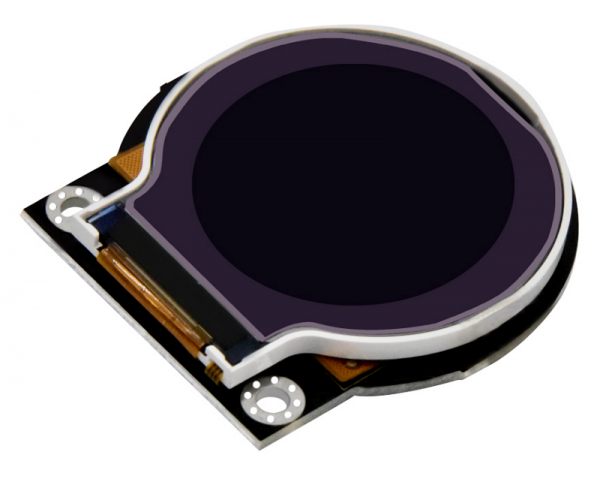
The circular LCD display module is based on TFT active matrix technology, with sizes ranging from 1.3-3.5 inches (diameter), resolutions of 240x240/320x320, response time ≤15ms, 16.7M colors (24-bi...
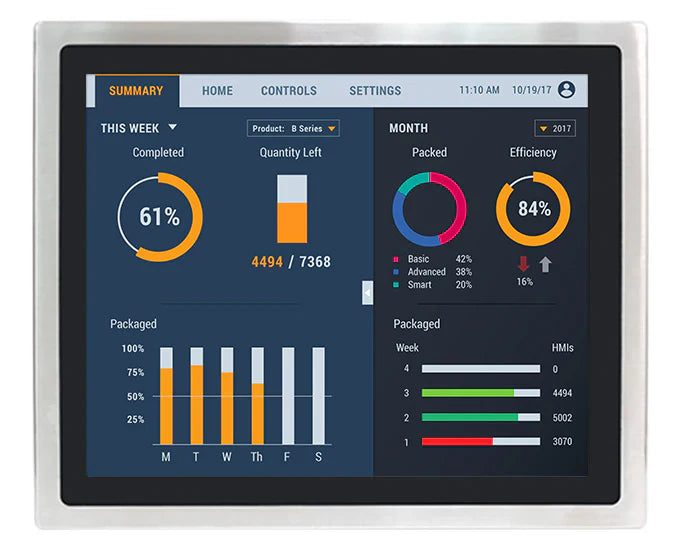
Customized industrial-grade digital display LCD screens with sizes covering 3.5-32 inches (typically 10.1 inches), supporting resolutions from 1280×800 to 4K, and adjustable brightness of 500-1500n...
Hinterlasse einen Kommentar
Diese Website ist durch hCaptcha geschützt und es gelten die allgemeinen Geschäftsbedingungen und Datenschutzbestimmungen von hCaptcha.