

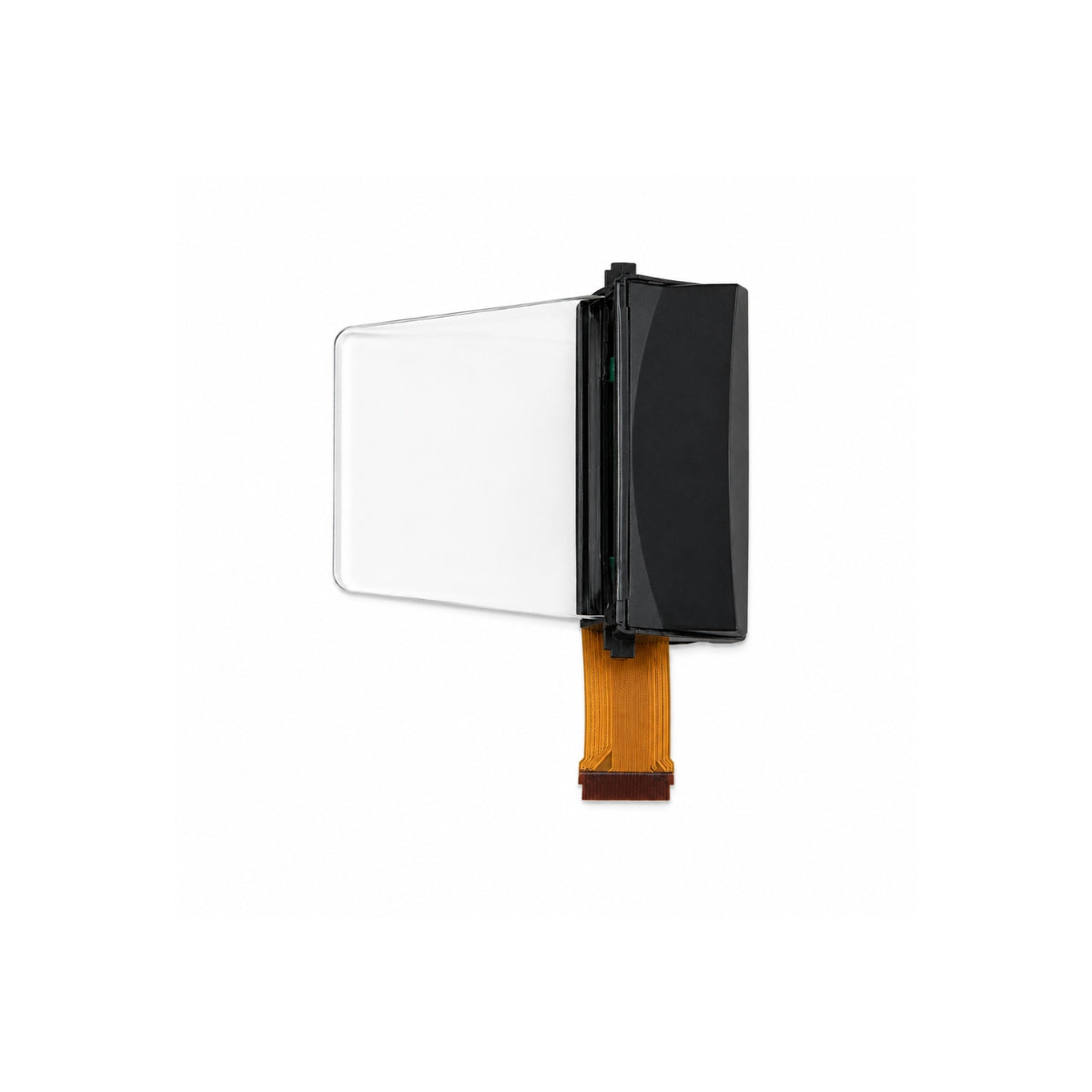
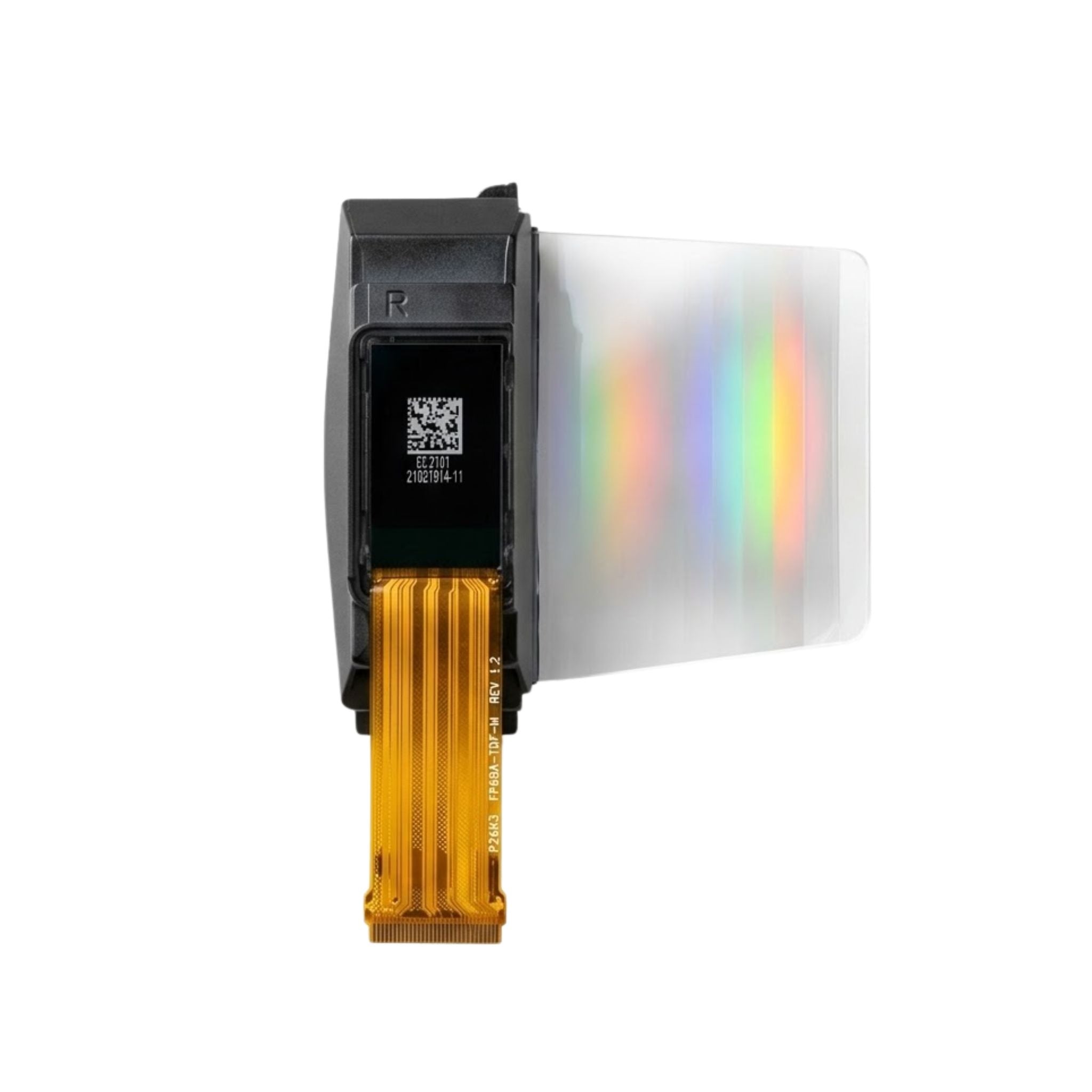


What is an IPS display
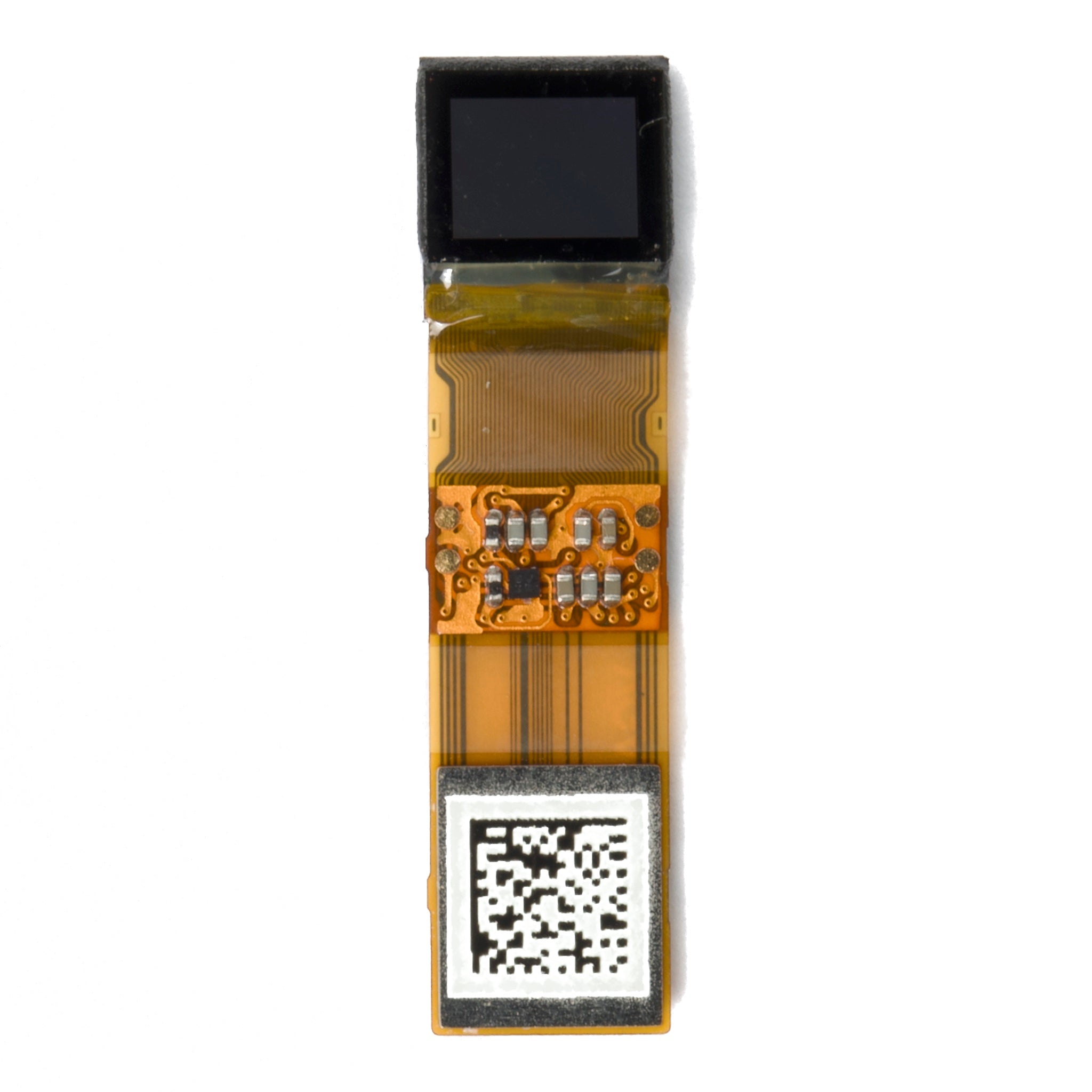
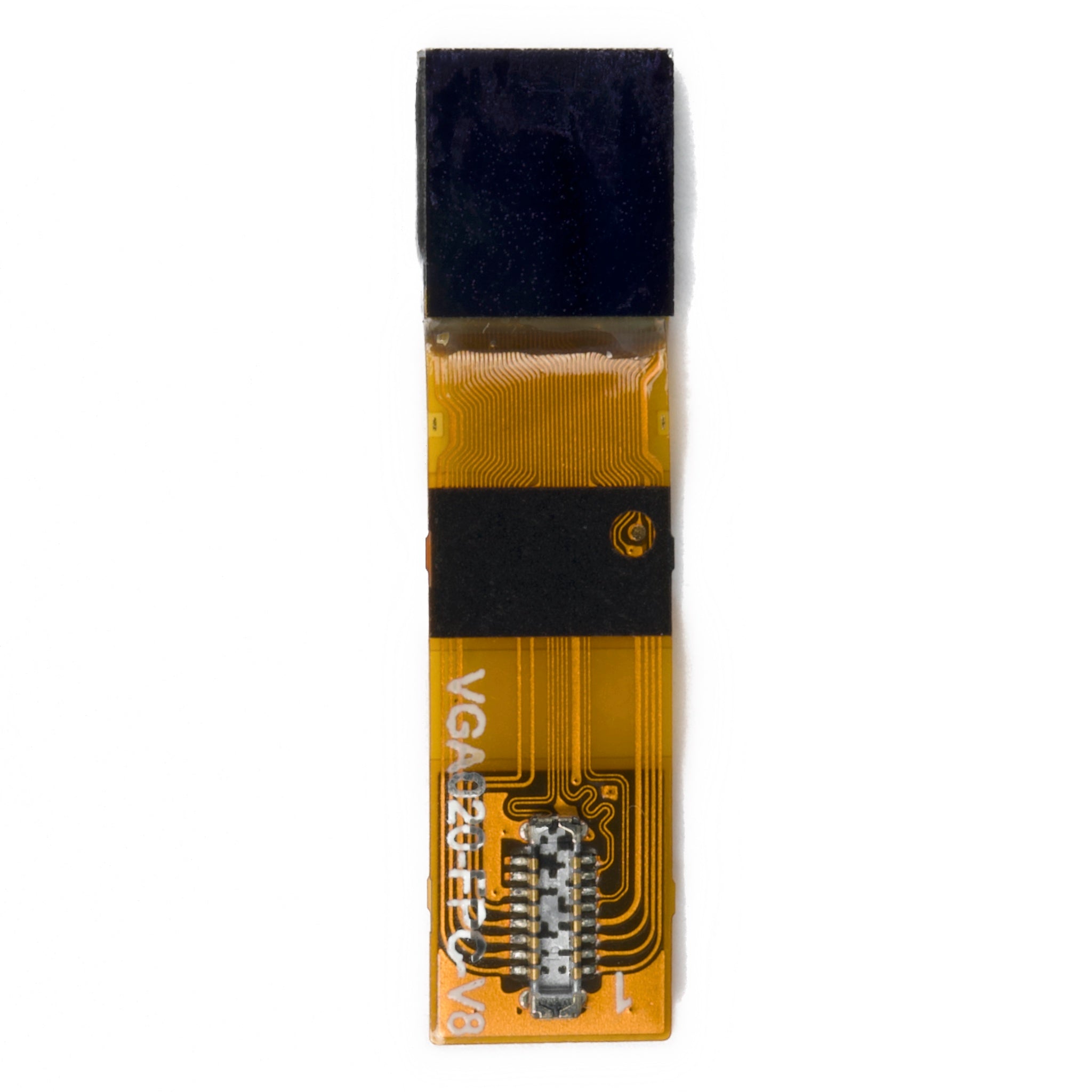
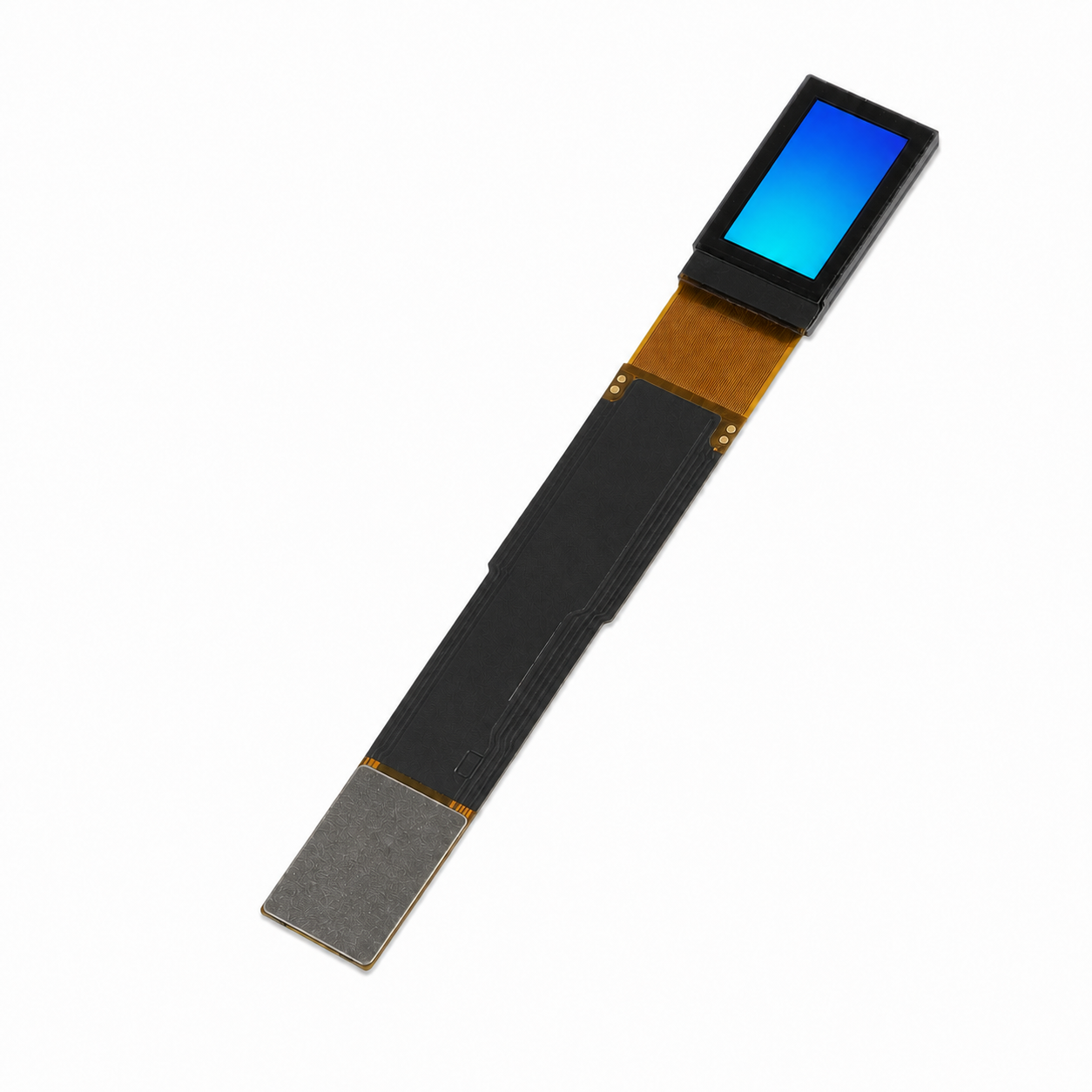
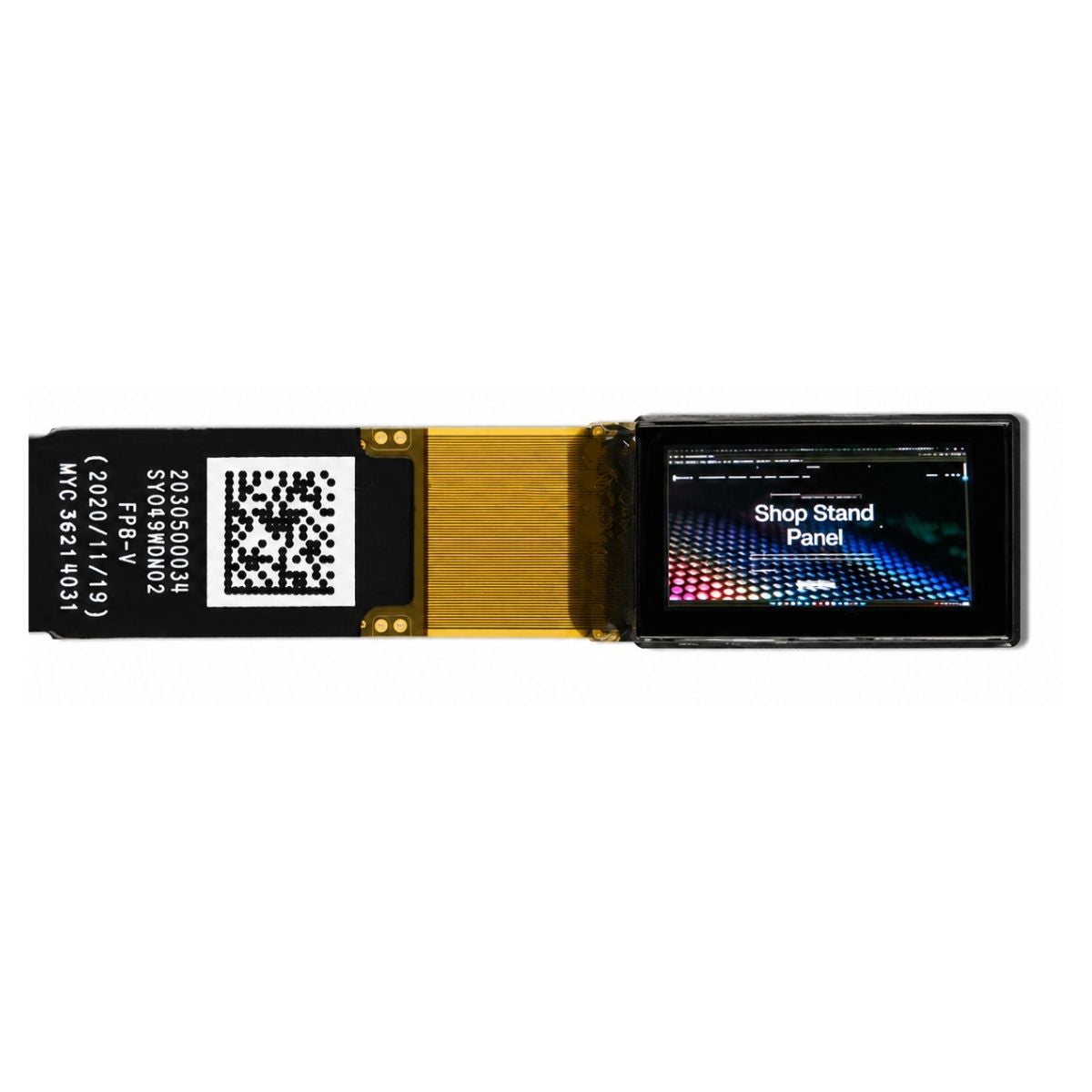
An IPS (In-Plane Switching) display is an LCD panel whose liquid crystals rotate parallel to the glass substrate instead of twisting toward it. The horizontal switching keeps the polarisation state stable across a wide angle, which produces consistent colour and contrast from almost any viewing position — the reason IPS is standard in instruments, medical readers and handheld products where the screen is rarely read head-on.
How IPS switching differs from TN
A twisted-nematic panel works by twisting the light path between two crossed polarisers. The twist only holds over a narrow angular range, so colour and contrast collapse as the viewer moves off-axis. IPS places both the pixel and common electrodes on the same substrate and drives the crystals sideways, in the plane of the glass — the structure first worked out at the Fraunhofer Institute in 1990 and later commercialised by Hitachi and NEC[1].
That arrangement needs a wider transistor and a bigger storage capacitor inside each pixel. Because both electrodes sit on one surface, the early designs described in the literature needed two thin-film transistors per pixel, and that arrangement cut transmittance; modern panel structures and drive schemes vary[1]. A weaker aperture ratio means an IPS module of the same size and brightness needs a stronger backlight than a TN equivalent — which is where the reputation for higher power consumption comes from, not from the liquid crystal itself. Fringe fields between the interdigitated electrodes complicate the switching geometry further and add to response time[1].
The compensation is that IPS holds its grey levels. On a TN panel the same grey value drifts toward blue or yellow depending on where the eye sits. On IPS the shift stays small enough that a half-tone on one side of the screen still matches the same half-tone on the other.
IPS variants worth knowing
"IPS" is a family name, not one pixel design. Three variants appear most often in module datasheets:
- Standard IPS — the classic horizontal-switching structure. Still the most common in industrial and instrumentation modules, where production stability matters more than maximum colour gamut.
- FFS (Fringe Field Switching) — an IPS derivative using a transparent common electrode with narrow slits. FFS raises transmittance and is the usual choice in small, high-resolution panels such as round smartwatch and handheld displays.
- AH-IPS, PLS and similar trade names — manufacturer-specific implementations that improve transmittance or response. The behaviour is IPS-like; the exact numbers depend on the panel maker, not on the label.
Two modules both described as IPS can differ substantially in contrast, response and power. The datasheet values matter more than the marketing name attached to them.
IPS compared with other panel types
The comparison reflects typical module-level behaviour rather than the best figures from flagship monitors. Values vary with size, resolution, backlight design and drive electronics; the measurement basis for luminance, contrast and uniformity is defined in ISO 9241-307[2].
| Property | IPS | TN | VA | AMOLED |
|---|---|---|---|---|
| Viewing angle | Wide, up to 178° with limited colour shift | Narrow, colour inverts off-axis | Good on-axis, visible shift at steep angles | Very wide, close to 180° |
| Contrast | Moderate, typically around 1000:1 | Low to moderate | High, often 3000:1 and above | Very high, effectively infinite black |
| Response time | 4–8 ms grey-to-grey on well-tuned panels | Fastest of the LCD types | Slower transitions, visible smear in dark scenes | Sub-millisecond |
| Power draw | Higher than TN at equal brightness | Lowest | Similar to IPS | Lower at low brightness, higher on bright content |
| Lifetime behaviour | Stable, no burn-in mechanism | Stable | Stable | Brightness decays unevenly, static UI risks burn-in |
| Typical fit | Instruments, handhelds, outdoor-readable modules | Cost-driven fixed-view products | TVs and large monitors | Wearables, premium portables |
How IPS behaves in sunlight and at high brightness
Viewing-angle stability and sunlight readability are related problems. A TN panel viewed off-axis loses contrast; the same panel in direct sunlight loses contrast even at zero degrees, because reflected ambient light competes with the image.
A high-brightness IPS module rated at 1000 nits or more keeps the image legible outdoors, and because the wide-angle structure does not trade contrast for brightness as sharply, the corners of the panel do not wash out the way they do on TN designs. The remaining limit is reflection off the cover glass, which is handled by anti-glare or anti-reflective treatment rather than by the panel itself.
Where IPS makes the difference in small modules
On a phone or a laptop the panel is read from one seat, so a narrower-angle panel can pass. Three situations are different:

- Benchtop instruments. The operator leans in, steps back, and reads from the far side of the bench. Grey levels that drift with angle turn a stable reading into a subjective one.
- Control panels and handhelds. The screen is often mounted at an angle or held off-centre. Wide-angle stability keeps status indicators unambiguous in peripheral vision.
- Multi-person use. Medical and laboratory equipment is frequently reviewed by two people at once. A panel that only looks correct from one position forces everyone else to move.
What to check when specifying an IPS module
Six parameters decide whether a given module fits the product:
- Interface. SPI and MCU suit low-resolution panels driven by small microcontrollers; RGB, MIPI and LVDS become necessary once resolution or refresh rate rises.
- Brightness class. Indoor products work at 300–500 nits. Outdoor and sunlight-readable designs need high-brightness backlights, and the contrast specification has to be read at the same brightness.
- Touch integration. On-cell and capacitive assemblies change the stack height, the cover-glass bonding and the driver requirements. Confirm the touch stack before the mechanical design freezes.
- Operating temperature. Industrial modules are commonly specified from −20 °C to +70 °C, and the brightness figure quoted at 25 °C may not hold at the extremes.
- Viewing-angle definition. A "178°" claim means little without the contrast ratio at that angle. Ask for the measured contrast at 85° off-axis, in both directions.
- Backlight lifetime. LED backlights are rated to a brightness half-life, not to failure. A 30,000-hour rating at 50% of initial brightness is a different commitment from 50,000 hours at 70%.
Reading an IPS datasheet without being misled
Three conventions in display datasheets cause most of the misunderstandings in sourcing. The measurement basis for all three is defined in ISO 9241-307, which standardises how display luminance, contrast and uniformity are tested and reported[2].
Contrast is measured at a defined brightness. A 1000:1 figure quoted at 200 nits does not survive being pushed to 1000 nits, because the black level rises faster than the white level. When comparing modules for an outdoor product, compare contrast at the brightness the product will actually run.
Brightness is quoted as typical, not minimum. A 500-nit typical rating permits a meaningful spread across production. If the product's readability depends on a brightness floor, the minimum figure is the one that matters.
Response time is quoted for a specific transition. The 4–8 ms band usually refers to grey-to-grey on the fastest transitions. Full black-to-white and low-grey transitions can be several times slower, which is what a dark-scene smear actually looks like.
Common misconceptions
IPS is not automatically more colour-accurate. Colour error depends on the backlight spectrum, the colour filter and the factory calibration. A calibrated TN panel can beat an uncalibrated IPS panel on measured colour difference.
IPS glow is not a defect. The slight brightening at the corners of a dark screen, seen at an angle, comes from the pixel structure itself. It appears on most IPS panels and only matters when the product displays dark content in a dark room.
Slower IPS response is a design consequence, not a law. Drive electronics and overdrive do most of the work. Small IPS modules used for static interfaces are not limited by response at all; the panel only starts to matter when content moves.
Where IPS sits in the display range
IPS is one family inside LCD. Products that need a wider colour gamut or true black are better served by AMOLED modules, which remove the backlight entirely. Products that need general-purpose colour at lower cost can use TFT LCD modules in the same sizes without the wide-angle requirement. Round, square and bar-shaped IPS panels from 0.85″ to 12.1″, including high-brightness versions, are listed in the IPS display collection.
An IPS display is the right default when the screen is viewed from varying positions and colour consistency matters. Confirm the interface, the brightness class and the measured off-axis contrast before committing, and treat the IPS label as the start of the specification rather than the whole of it.
References
- Hilsum, C. (2010). Flat-panel electronic displays: a triumph of physics, chemistry and engineering. Philosophical Transactions of the Royal Society A, 368(1914), 1027–1082. https://doi.org/10.1098/rsta.2009.0247
- ISO 9241-307:2008 — Ergonomics of human-system interaction — Part 307: Analysis and compliance test methods for electronic visual displays. International Organization for Standardization. https://www.iso.org/standard/40102.html
Weiterlesen

TFT, a subset of LCD, often outperforms basic LCD types like TN panels: IPS TFT (used in iPhones) offers 178° viewing angles and 1000:1 contrast, vs TN’s 160° and lower contrast. Its active matrix ...
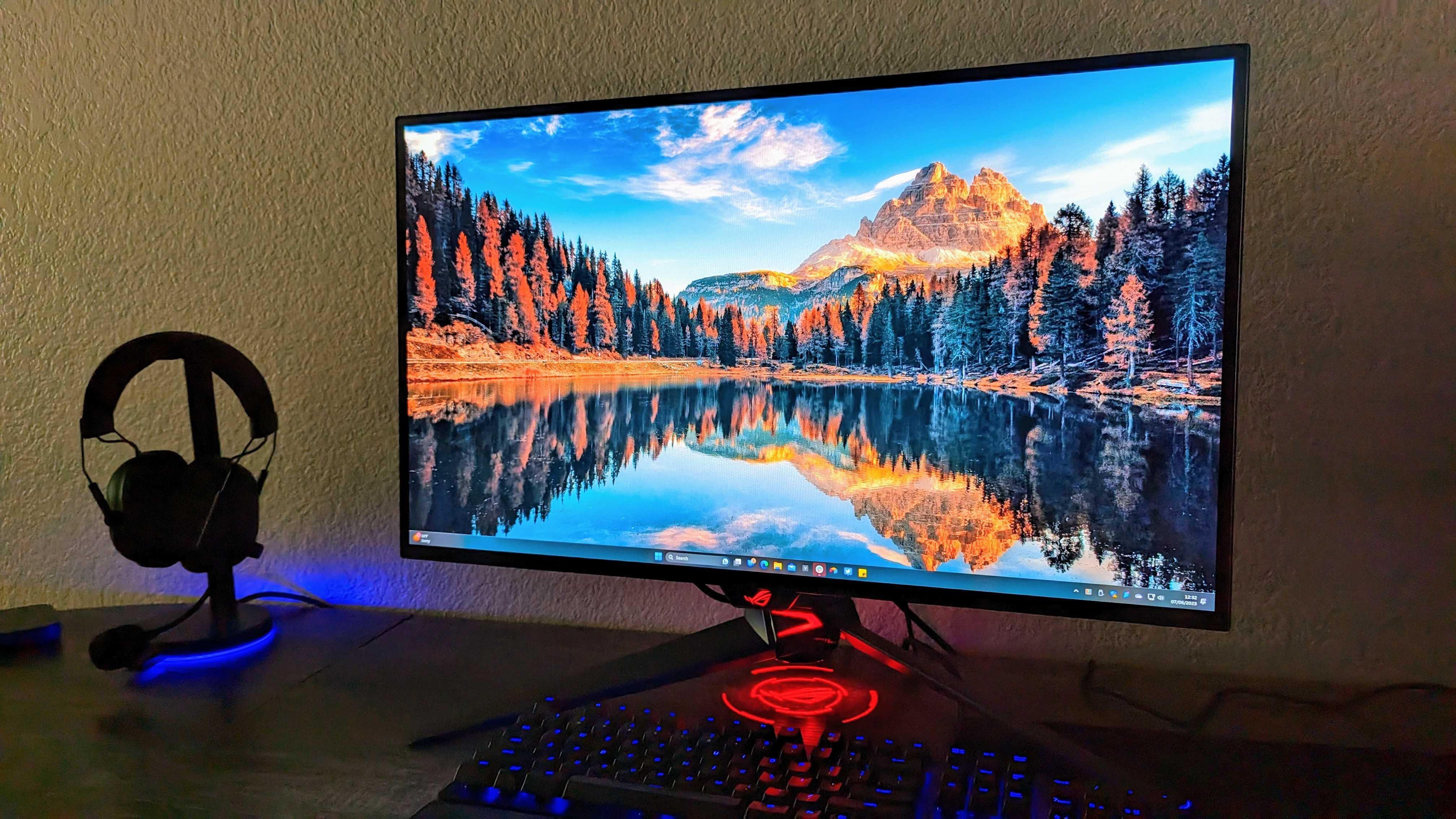
When comparing IPS vs OLED for eye comfort, IPS panels are generally better due to stable brightness and no flicker, while OLED’s high contrast.
Hinterlasse einen Kommentar
Diese Website ist durch hCaptcha geschützt und es gelten die allgemeinen Geschäftsbedingungen und Datenschutzbestimmungen von hCaptcha.