



Why IPS Displays Are Used in Medical Devices
Medical devices use IPS panels because clinical images are usually read by more than one person, from more than one position. In-plane switching keeps brightness, colour and gamma closer to their on-axis values as the viewing angle widens, and it avoids the strong grayscale inversion that twisted-nematic panels produce off-axis. That stability is what makes a shared screen trustworthy.
The viewing angle problem in a clinical room
A monitor is bought for one viewer and used by three. A radiologist sits square to the screen, a nurse stands to the left taking notes, a technician leans in from the right. If the display's transfer curve changes with angle, those three people are not looking at the same image, and only one is seeing the image the calibration was performed for.
The mechanism is geometric. In a twisted-nematic cell the molecules rotate out of the substrate plane, so the effective birefringence along the viewer's line of sight changes with the angle. The result is a gamma curve that tilts, contrast that falls, and at large angles a point where dark greys render brighter than mid greys, so structure inside a shadow disappears. In an in-plane switching cell the molecules stay roughly parallel to the substrate and rotate within that plane, which keeps the optical path far less dependent on where the viewer stands.[2]
Wide viewing angle is still a system property rather than a property of the switching mode alone. Light travelling at an angle passes through more liquid crystal and hits the polarizers obliquely, which increases leakage in the dark state. Compensation films flatten that off-axis response, and a panel without good compensation can claim a wide angle and still look poor at 60°. IPS reduces the problem; it does not remove it.
Grayscale stability is the clinical requirement
Most diagnostic work happens in greyscale, and the differences that matter are small. DICOM PS3.14 defines a Grayscale Standard Display Function, a perceptual linearisation mapping pixel values onto luminance so that equal digital steps look like equal brightness steps to an observer. A display is calibrated to that curve at a known viewing position and luminance range.
If the gamma curve shifts twenty degrees off-axis, the mapping no longer holds. Steps that should be just noticeable become invisible, and steps that should be sub-threshold become visible. A low-contrast lesion near the edge of a shared screen can then look like uniform tissue to the person standing at the side, even though the same region is obvious to the person sitting in front. The pixel values are identical; the rendering is not.
Bit depth compounds this: an eight-bit pipeline gives 256 levels per channel where a ten-bit pipeline gives 1,024, and the coarser quantisation produces banding that can be mistaken for anatomical structure.
Viewing-angle behaviour and luminance uniformity are defined by measurement procedure rather than by a marketing phrase, which is why a bare claim of 178° tells a device designer very little.[1] What matters is the criterion: the angle at which contrast falls to a stated ratio, the angle at which ΔE exceeds a stated value, and the geometry used to establish both.

Colour where colour carries the diagnosis
Dermatology, endoscopy and pathology use colour as evidence rather than decoration. A slightly desaturated red or a hue rotation toward orange changes how tissue is described. IPS does not make a panel colour-accurate on its own — accuracy comes from the backlight spectrum, the colour filter transmission and the calibration applied on top — but it keeps whatever accuracy exists from collapsing as the viewer moves.
The practical specification is a number: maximum ΔE against a reference patch set, measured after calibration at more than one angle. A ΔE of 2 on-axis and a ΔE of 6 at 45° describes a display that is accurate for one person and approximate for everyone else.
Where IPS is not the automatic answer
Native contrast is IPS's weakest optical property. Because the dark state depends on how completely the polarizers block light through the cell, IPS panels typically produce a more modest contrast ratio than vertical-alignment panels, and no backlight brightness can change that, since raising luminance raises white and black together. In a darkened reading room showing predominantly dark images, a good VA panel can therefore look deeper. IPS still dominates shared clinical review because the VA advantage in black level falls away quickly off-axis, while the IPS advantage in angle stability holds across the whole group. If a device is genuinely single-viewer, permanently dark and contrast-critical, VA deserves consideration. If several people look at it, the trade usually goes the other way.
Touch, gloves, and the cover glass stack
Many medical devices pair the display with a projected-capacitive sensor behind a cover glass, and the front stack changes the optical result. An air gap between cover glass and panel adds two reflecting surfaces, reducing contrast and creating a faint double image at oblique angles; optical bonding removes them at the cost of a harder rework path. The touch layer, cover glass and panel should be characterised as one assembly rather than specified separately and assumed to add up.
Gloved operation is a controller-tuning question. A capacitive sensor responds to the change in capacitance a finger produces, and a nitrile glove attenuates that change, so a controller tuned for bare fingers may need higher gain or a different threshold. Wet gloves shift the baseline too, so the firmware needs a re-baselining strategy.
The burn-in question
Clinical interfaces are static: a vital-signs layout, a waveform header, a persistent toolbar, the same pixels lit for months. Emissive displays age differentially under that load, because subpixels that work harder lose efficiency faster, and the retained pattern is permanent. LCDs do not work that way, since the light comes from a shared backlight and the cell only modulates it. A liquid crystal cell can still develop image sticking when a persistent DC component accumulates from insufficient inversion, but that usually fades after the panel is powered down or shows uniform content.
Service life and luminance headroom
A medical device may stay in service for seven to ten years, and its calibration has an upper luminance bound. As the backlight ages, peak luminance falls; once it drops below what the calibration target requires, the display can no longer meet its own specification. That makes initial luminance a service-life decision rather than a brightness decision. Specify more headroom than the clinical task needs at day one, so that end-of-life luminance still clears the target.
Uniformity degrades on the same schedule, and unevenly. A nine-point measurement taken when the unit is new says little about year five, so ask for a derating curve and a backlight life figure at a stated temperature.
What IPS does not fix
- Calibration. An IPS panel is not calibrated out of the box; it needs a target, a measuring device and a documented procedure.
- Ambient light. Reflections and veiling glare live in the front stack and the room. A matte treatment or an anti-reflective coating addresses them; the panel does not.
- Cleanability and safety. Chemical resistance, sealing, electrical safety and EMC are enclosure and system-level properties, not panel properties.
- Constancy testing. A display not re-measured after installation is only assumed to be accurate.
Specifications to put on the RFQ
For a custom module, the useful specification set is short and specific: luminance with its measurement conditions; contrast measured both on-axis and at a stated off-axis angle; maximum ΔE after calibration at two angles; gamma or GSDF conformance; a nine-point uniformity figure with the percentage and the measurement method; the viewing angle defined by a contrast criterion rather than by a round number; backlight life at a stated temperature and drive current; and the operating temperature and humidity envelope, stated as condensing or non-condensing.
Suppliers who answer those eight items with conditions attached can usually hold them across production lots. Our IPS display modules and the wider industrial display range are specified this way, and the same questions apply to any TFT panel under consideration for a regulated device.
IPS earns its place in medical devices for one reason: it keeps a calibrated image stable while several people look at it. Specify the angle, the temperature and the end point alongside the number, and the choice becomes an engineering decision.
References
- ISO 9241-307:2008 — Ergonomics of human-system interaction — Part 307: Analysis and compliance test methods for electronic visual displays. International Organization for Standardization. https://www.iso.org/standard/40102.html
- Hilsum, C. (2010). Flat-panel electronic displays: a triumph of physics, chemistry and engineering. Philosophical Transactions of the Royal Society A, 368(1914), 1027–1082. https://doi.org/10.1098/rsta.2009.0247
Weiterlesen
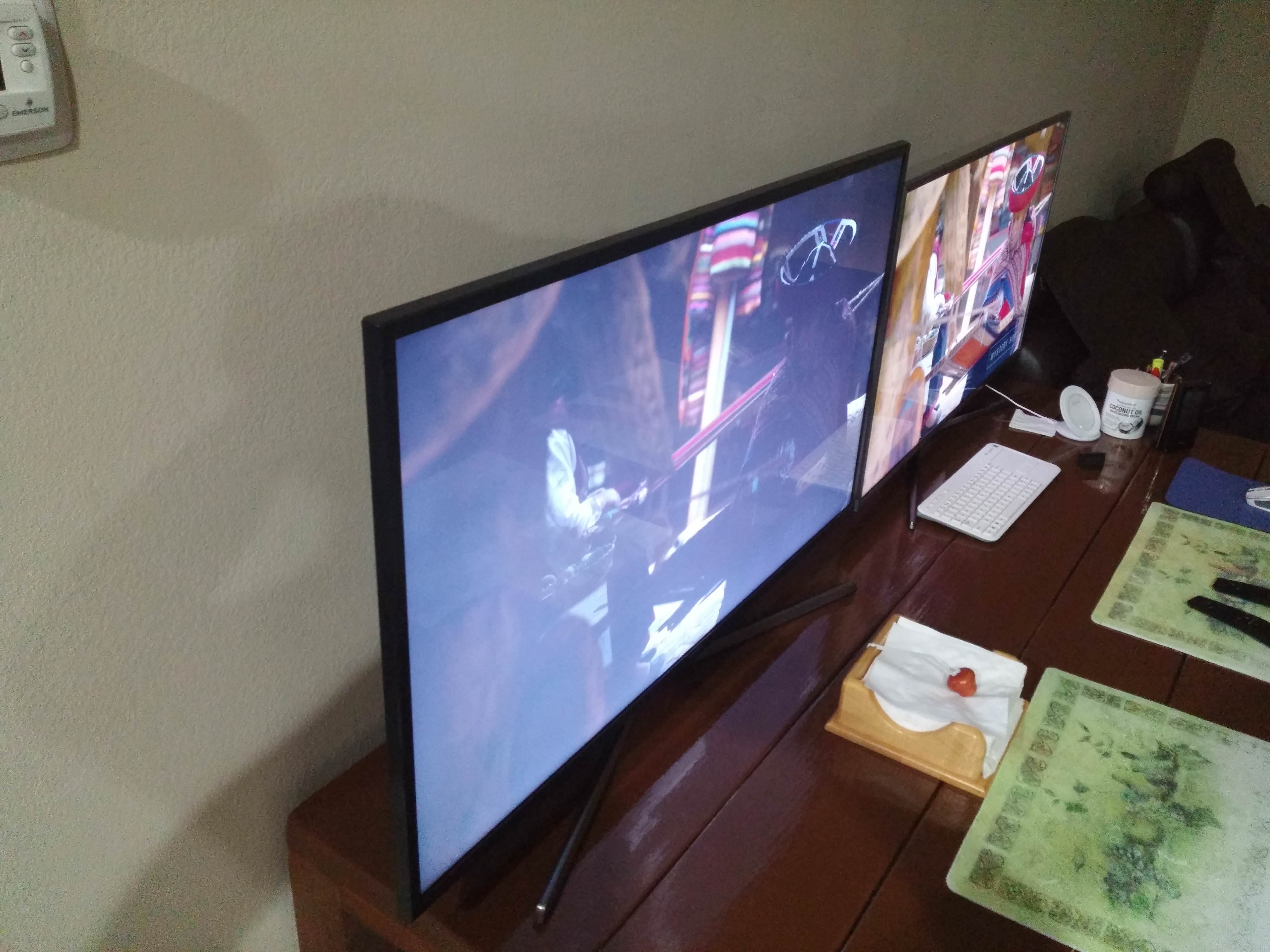
IPS displays usually have a contrast ratio of about 1000:1 , while VA panels often deliver 3000:1 to 5000:1 (some high-end ones even higher), meaning VA.
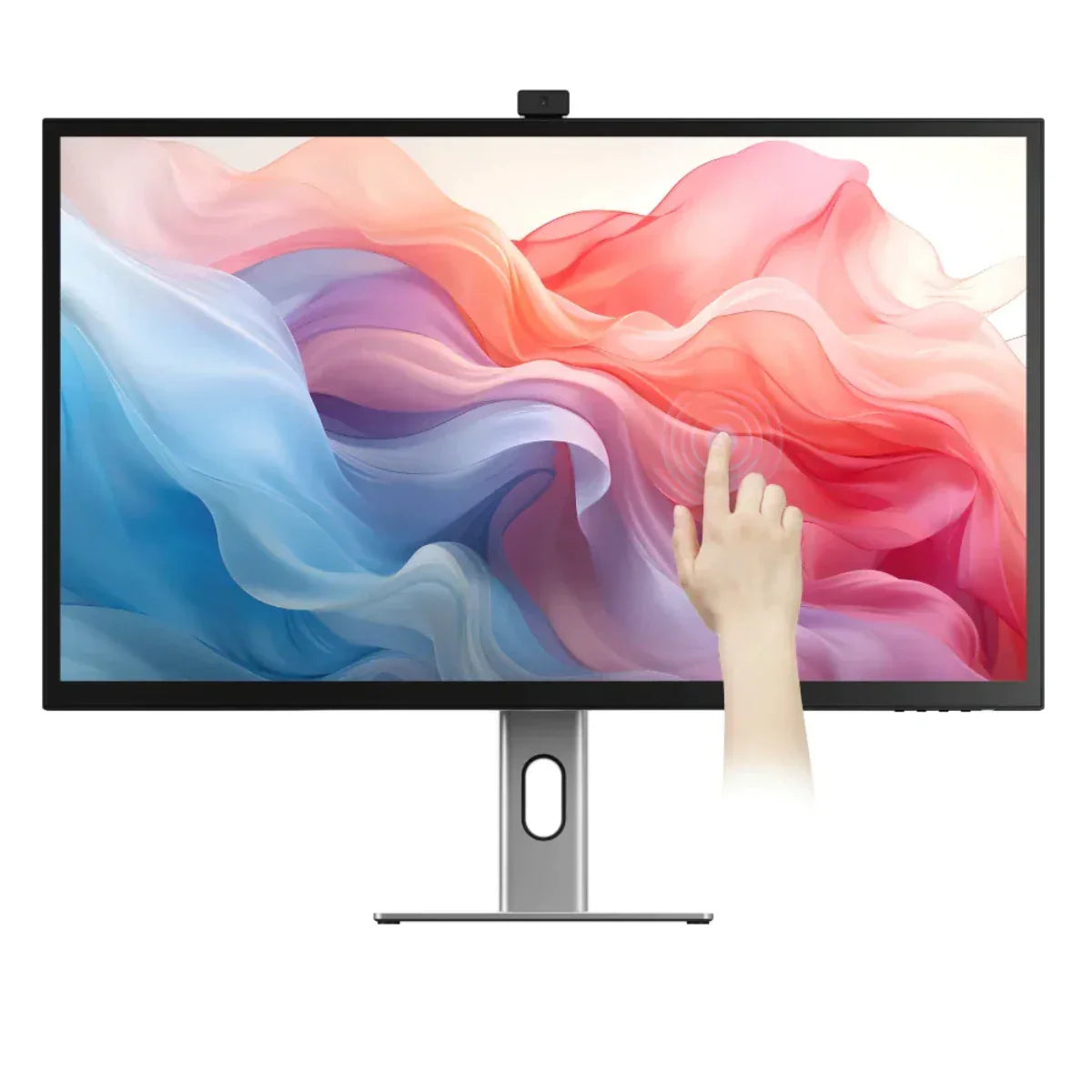
When wholesaling IPS touch screens, focus on four key specs: aim for 1920x1080 (Full HD) resolution for crisp visuals, a responsive ≤8ms touch response.
Hinterlasse einen Kommentar
Diese Website ist durch hCaptcha geschützt und es gelten die allgemeinen Geschäftsbedingungen und Datenschutzbestimmungen von hCaptcha.