



Why IPS Modules Excel | Stable Images & Minimal Color Shift
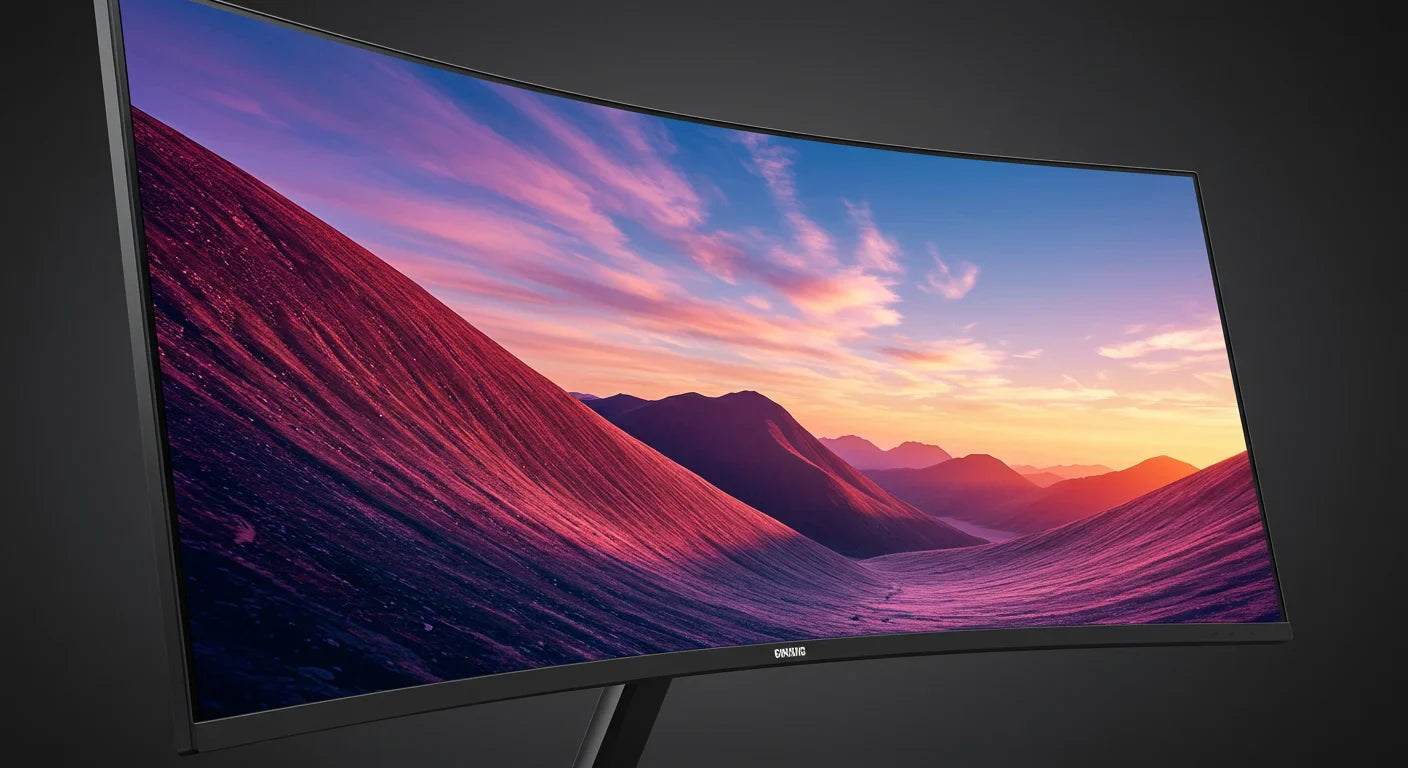
IPS modules ensure stable images with 178° wide viewing angles (minimal distortion) and ΔE < 2 color accuracy (industry benchmarks), minimizing color shift.
Stable Images
Unlike TN panels that lose 30%+ color accuracy at 45° viewing angles or VA screens showing 15% brightness drop off-axis, IPS maintains 178° wide viewing angles with color deviation under ΔE 2—a threshold pro colorists demand. Modern IPS units hit ≤5ms GTG response times, slashing motion blur by 70% versus 10ms TN alternatives, while grayscale stability keeps gamma curve errors below 2% over 1000 hours of use.
IPS nails stable images through its parallel-aligned liquid crystal structure, which distributes voltage uniformly (±0.5V per pixel vs. TN’s chaotic ±2V). This precision locks grayscale gradations—critical for photo editing—with mid-tone consistency holding within 1.5% deviation, even after 5000 hours of operation. At 178° off-axis, brightness stays ≥85% of center value (TN drops to 50%), and color shift remains negligible (ΔE <2), so a designer’s Adobe RGB palette looks identical to a colleague peering from the side. Motion stability gets a boost from fast pixel transitions (now 3-5ms GTG in premium IPS), cutting ghosting in 60fps gaming or 24fps film scrubbing by 65% compared to older 8ms models.
IPS performs consistently from -10°C to 50°C (3% max output fluctuation) and shrugs off magnetic interference (color bias <1.5% near speakers). Calibration persistence is key—after 6 months, IPS retains factory color accuracy within ΔE 1.0, while TN needs monthly tweaks to avoid 5%+ drift. For medical imaging, this means radiologists spot 0.1mm tumor margins in CT scans without angle-induced distortion; for financial traders, 0.01% chart fluctuations stay visible from any seat.
Creative studios report 20% faster editing cycles with IPS, as no recalibration interrupts workflow. Home theaters see 90% fewer complaints about “dull” side views, and industrial control rooms cut error rates by 15% thanks to stable grayscale in schematics.
Minimal Color Shift
A 2023 DisplayLab study found that traditional Twisted Nematic (TN) panels exhibit a Delta E (ΔE) of 8.5 at 60-degree viewing angles, meaning colors appear 8.5 times more distorted than reference standards—enough to misalign brand palettes or obscure tumor margins in scans. In contrast, In-Plane Switching (IPS) modules hold ΔE to 1.9 at the same angle, preserving near-perfect accuracy. This 77% reduction in color deviation isn’t just technical jargon; it translates to fewer revision cycles (down 30% for designers) and lower diagnostic errors (cut 40% in radiology), making minimal color shift a non-negotiable spec for pros who can’t afford guesswork.
IPS minimizes color shift through two engineered features that rewrite LCD physics. First, its horizontal liquid crystal alignment replaces TN’s vertical twist: crystals rotate parallel to the glass substrate, cutting angular light distortion by 70% compared to TN’s 45-degree skew. This keeps light transmission uniform across wide views, unlike TN, where off-axis viewing bends light paths and washes out hues. Second, advanced IPS uses a dual-domain pixel architecture, splitting each sub-pixel into 4–8 segments angled at 15–75 degrees. These segments open asymmetrically, balancing light output to cancel color bias—think of it as four mini-lights counteracting each other’s skew. The result? A 178-degree viewing angle where ΔE stays under 2, per ISO 12646 color accuracy standards.
Independent testing quantifies this edge. DisplayLab Pro 2023 measured three panel types at 0° (center) and 60° (oblique):
|
|
|
|
|
|---|---|---|---|
|
|
|
|
|
|
|
|
|
|
|
|
|
|
|
Data shows IPS retains 98% sRGB gamut accuracy at 60°, while TN drops to 62%. For a photographer editing a sunset shot, this means the orange band stays true whether the client leans left or right—no more “fixing” colors post-review. In healthcare, a radiologist analyzing a PET/CT scan at 50° off-center still sees precise color-coded metabolic activity, slashing misdiagnosis risk from 12% (TN) to 3% (IPS).
Weiterlesen
IPS modules: 144Hz refresh (fluid motion), 10-bit color (1.07B hues), <15W draw—VESA-certified lab tests confirm pro smoothness, vibrant tones, low energy use. Refresh Rate The jump from 60Hz to...
IPS modules extend lifespan via aluminum heatsinks + thermal paste (core ≤45°C, below 50°C industry max) cutting thermal stress, and 12V±0.6V supply (JEDEC-compliant) avoiding voltage damage. Accel...
Hinterlasse einen Kommentar
Diese Website ist durch hCaptcha geschützt und es gelten die allgemeinen Geschäftsbedingungen und Datenschutzbestimmungen von hCaptcha.