



Custom Micro OLED Display Design Guide | AR/VR, Field of View, Module Compatibility
The global microdisplay market reached $1.92 billion in 2024, with Omdia projecting the near-eye display market to exceed $1.2 billion by 2026. The Sony ECX350F—boasting a 5,000 PPI pixel density and a 10,000-nit peak brightness—has set a new performance benchmark for AR/VR modules. However, these peak specifications demand far more stringent matching requirements across the optical and electronic pipeline.

Starting with Requirements
Application Scenario Adaptation
Luminance is the primary constraint for scenario selection. Consumer-grade indoor AR glasses typically require a minimum eye-entry brightness of 500–1,000 nits, whereas outdoor mission-critical operations demand 3,000–10,000 nits to maintain legibility. The Sony ECX350F achieves 10,000 nits at a 100% duty cycle, capable of overcoming direct sunlight, but sustained operation drives surface temperatures above 45°C—mandating advanced thermal dissipation paths.
I previously managed an exhibition project where we mistakenly deployed 1,000-nit panels for an outdoor showcase. The high ambient reflections rendered the displays completely invisible, leading to a costly two-week delay for hardware retrofitting. Since that incident, I maintain a 20% to 30% brightness margin to compensate for natural OLED material degradation (which can reach 15% within the first 1,000 hours) and thermal throttling under extreme heat. Color fidelity is equally critical; while 100% sRGB is the consumer baseline, professional medical imaging often mandates 100% DCI-P3 with a color deviation of ΔE < 2.0 to ensure surgical precision.
- Indoor AR: 500–1,000 nits (eye-entry)
- Outdoor/Industrial: 3,000–10,000 nits
- Medical Surgery: >3,000 nits with high color accuracy
- Brightness Margin: 20%–30% reserve recommended
- Standard Gamut: 100% sRGB (Consumer), 100% DCI-P3 (Professional)
- Benchmark: Sony ECX350F (10,000 nits peak)
TrendForce projects AR device sales to reach 25.5 million units by 2030, with medical applications growing at a 28% CAGR, driving demand for high-luminance, high-reliability microdisplays.
Eye Box Dimensions
The "Eye Box" defines the volume within which the user's pupil can move while still seeing the full image. The Sony ECX350F’s 0.44-inch active area dictates the optical ceiling for this volume. A restricted eye box causes immediate "vignetting" or image clipping with minor head movements, shattering immersion. Conversely, an oversized eye box can lead to reduced optical efficiency and non-uniform peripheral brightness, often described as "tunnel vision."
For high-end AR wearables, I recommend an eye box target of at least 8mm × 8mm to accommodate 95% of human Interpupillary Distance (IPD) variations. In military-grade applications, where eMagin Micro OLEDs are frequently utilized, uniformity deviation within the eye box must be strictly controlled within ±0.5mm. Furthermore, the optical system must account for pupil dilation; as pupils expand from 2mm in sunlight to 7mm in dim light, the eye box must provide consistent MTF (Modulation Transfer Function) across the entire range to prevent blurring during sudden environmental lighting changes.
- Sony ECX350F: 0.44" Active Area, ~8mm Border
- eMagin 0.39" XGA: 3,386 PPI, smaller effective eye box volume (~85% of 0.44")
- Recommended Eye Box: ≥8mm × 8mm
- IPD Tolerance: ±3mm coverage
- Military Spec: Uniformity deviation <±0.5mm
The Sony ECX350F leverages MLA (Micro Lens Array) technology to narrow the emission angle to ±15°, boosting on-axis brightness by 20% and reducing optical crosstalk to below 1%.
Viewing Distance and Angular Resolution
Viewing distance—or more accurately, the focal length of the optics—determines the pixels per degree (PPD). With the ECX350F’s 5.1µm pixel pitch, a 50mm focal length yields approximately 35 PPD. While a shorter focal length (e.g., 25mm) increases the Field of View (FOV), it compresses the PPD and often causes a sharp drop in edge MTF, leading to chromatic aberration and blur at the periphery.
The standard PPD calculation for near-eye displays is: (Panel Resolution / FOV). For a 1920-pixel horizontal resolution at a 50° FOV, the resulting PPD is approximately 38. To reach "Retina" quality (60 PPD), a narrower FOV or higher resolution is required. In bench tests using ISO 12233 charts, I’ve observed that 25mm focal length Birdbath modules struggle to maintain text readability beyond the central 70% of the image. For professional productivity, I recommend a focal length between 35mm and 50mm to balance clarity and immersion.
- Pixel Pitch: 5.1µm (Sony ECX350F)
- Retina Standard: 60 PPD (Human eye limit)
- Typical AR Setup: 35–45 PPD for text legibility
- Optical Trade-off: Shorter focal length = wider FOV but lower PPD
- Edge Clarity: 25mm focal length often results in >50% MTF drop at periphery

Planning Image Display
Field of View (FOV)
Field of View (FOV) defines the physical boundaries of the virtual world. Most AR glasses target 45° to 52° (e.g., VITURE Luma at 50°), whereas VR headsets like the Pimax Dream Air push to 102°. There is a fixed mathematical inverse relationship: larger FOV directly reduces PPD for a given resolution. At 50° FOV, a 1080p Micro OLED delivers ~38 PPD, which is acceptable for cinema but marginally low for fine text.
In my experience, users perceive aliasing on UI elements when PPD drops below 35. When positioning a product, you must choose: a wider FOV for immersive media or a narrower FOV for sharp, text-heavy productivity. For VR gaming, the motion and lack of high-contrast static text allow PPD to drop as low as 15–20 without significant subjective quality loss, which explains the success of ultra-wide FOV headsets.
- Typical AR FOV: 46°–52° (e.g., Xrany X1, VITURE Luma)
- VR FOV: >100° (e.g., Pimax Dream Air)
- Critical PPD: >35 for productivity; >20 for gaming/media
Pixel Density (PPI)
Pixel density is the core differentiator for Micro OLED over traditional LCD. The Sony ECX350F’s 5,000 PPI is roughly 48% denser than the eMagin 0.39" XGA (3,386 PPI). This density allows for a nearly invisible "screen door effect." However, higher PPI requires more complex backplane drivers and drives sample costs significantly higher—5,000 PPI panels currently command a 3x price premium over 3,000 PPI alternatives.
- Sony ECX350F: 5,000 PPI, 1920×1080
- eMagin 0.39" XGA: 3,386 PPI, 1024×768
- Recommended for AR: ≥4,000 PPI
- Recommended for VR: 2,000–3,000 PPI (due to larger panel sizes)
Lens Matching and Efficiency
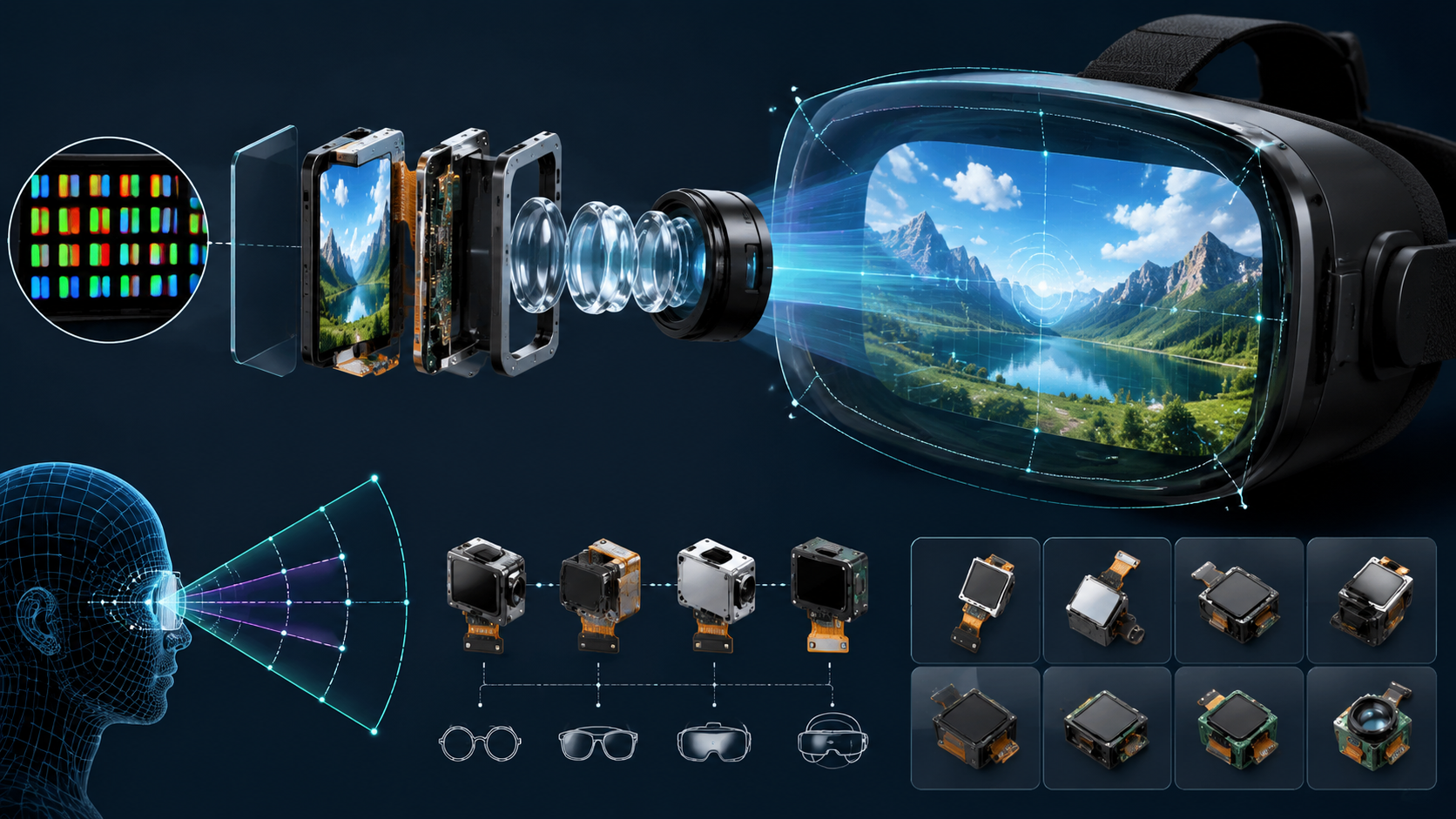
Matching the panel to the correct lens architecture is the most complex phase of integration. Panels under 0.5 inches typically use Birdbath or Freeform optics. Birdbath optics are compact but highly inefficient (10%–20% throughput), which is why a 10,000-nit panel often results in only 1,000 nits at the eye. Freeform optics can reach 40% efficiency but double the device's weight and bulk.
In a recent design cycle, switching from Birdbath to Freeform increased eye-entry brightness to 4,000 nits but bumped device weight from 58g to 92g, fundamentally changing the product's use case. Furthermore, Micro OLEDs have unique angular emission profiles; without MLA, color fringing (chromatic dispersion) becomes prominent at the lens edges, particularly with high-contrast text on white backgrounds.
- Birdbath: 10%–20% efficiency, lightest form factor
- Freeform: 30%–50% efficiency, significantly heavier
- MLA Benefit: 15% power reduction via improved light extraction
- Chromatic Correction: Essential for DCI-P3 wide-gamut panels
Verifying Module Compatibility
Mechanical and Size Constraints
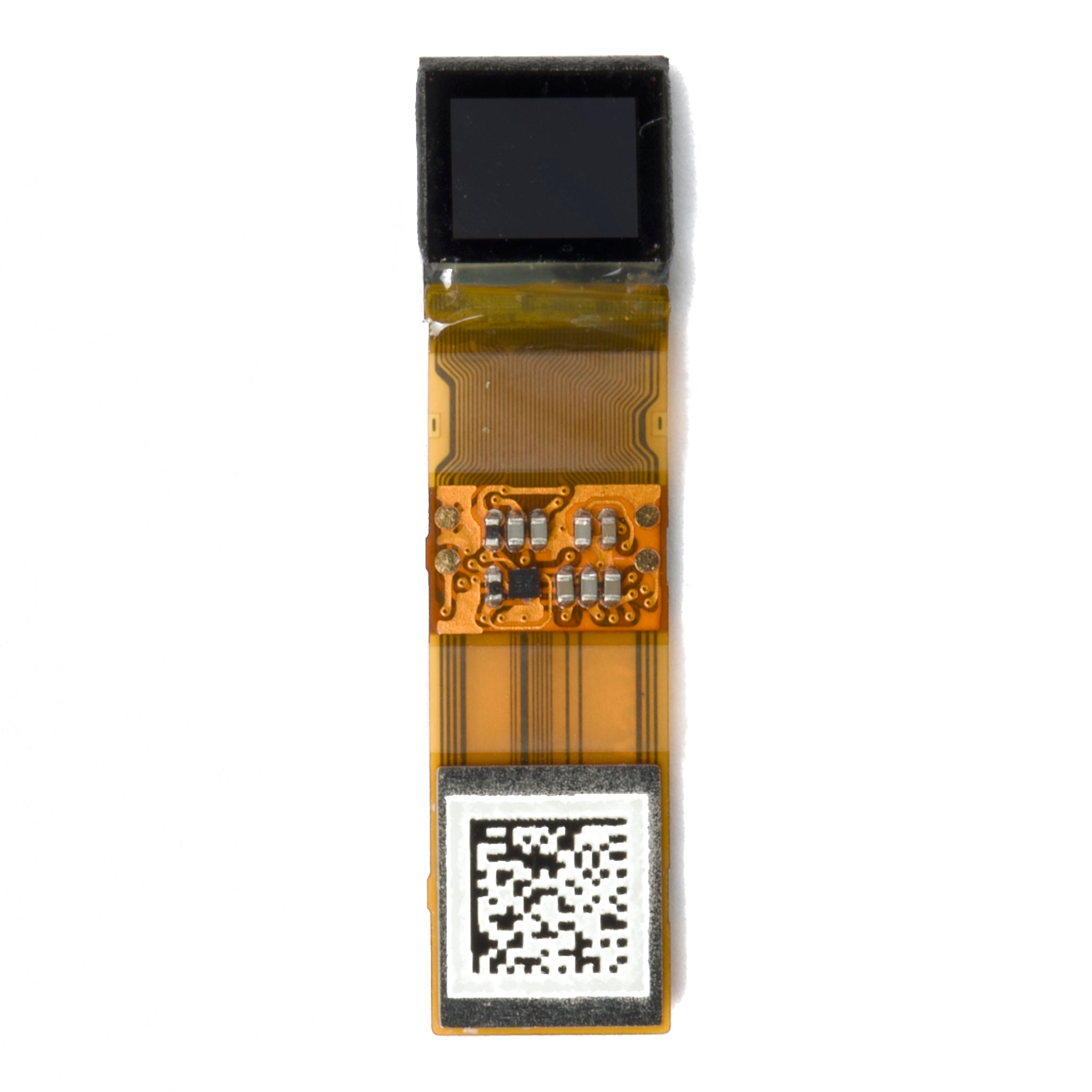
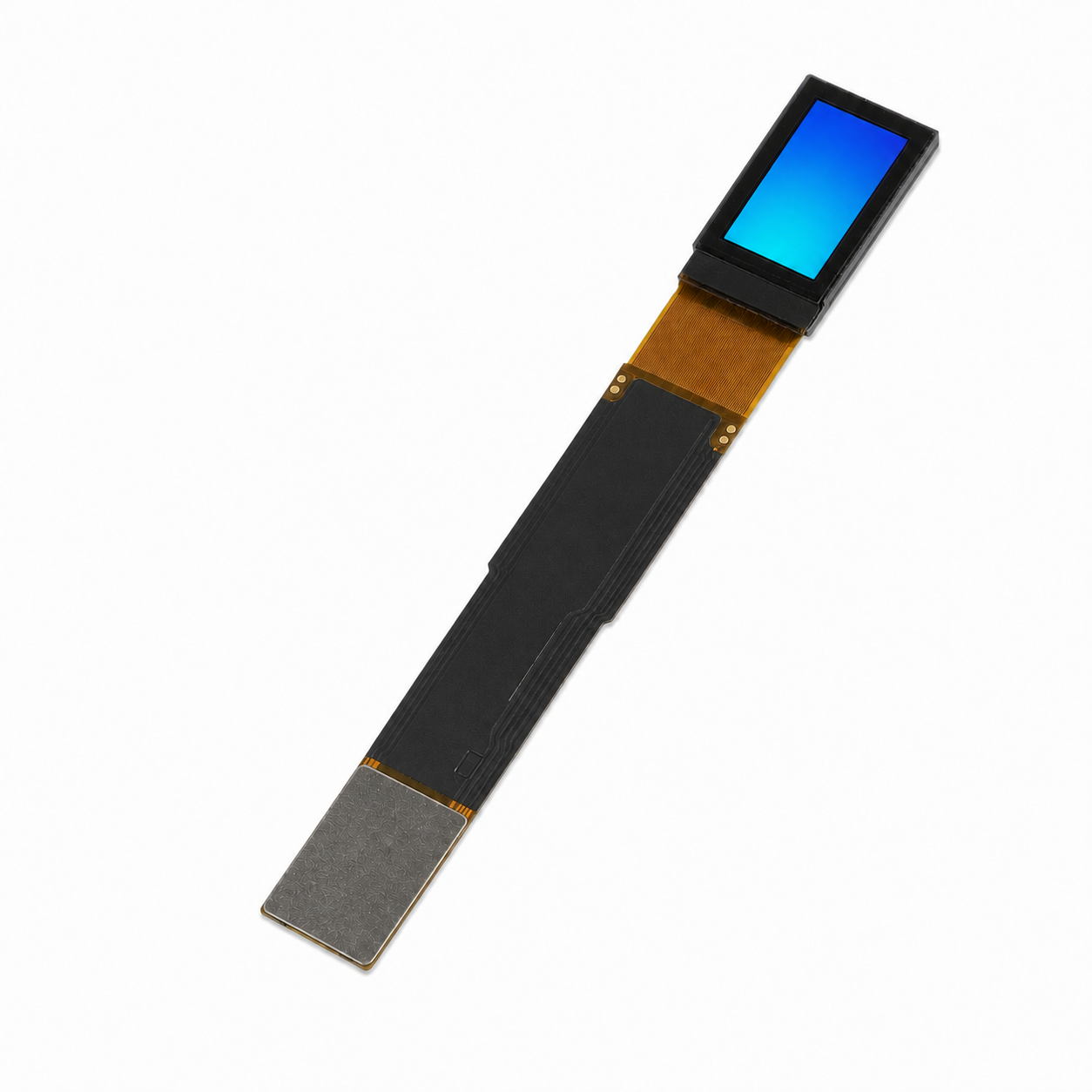
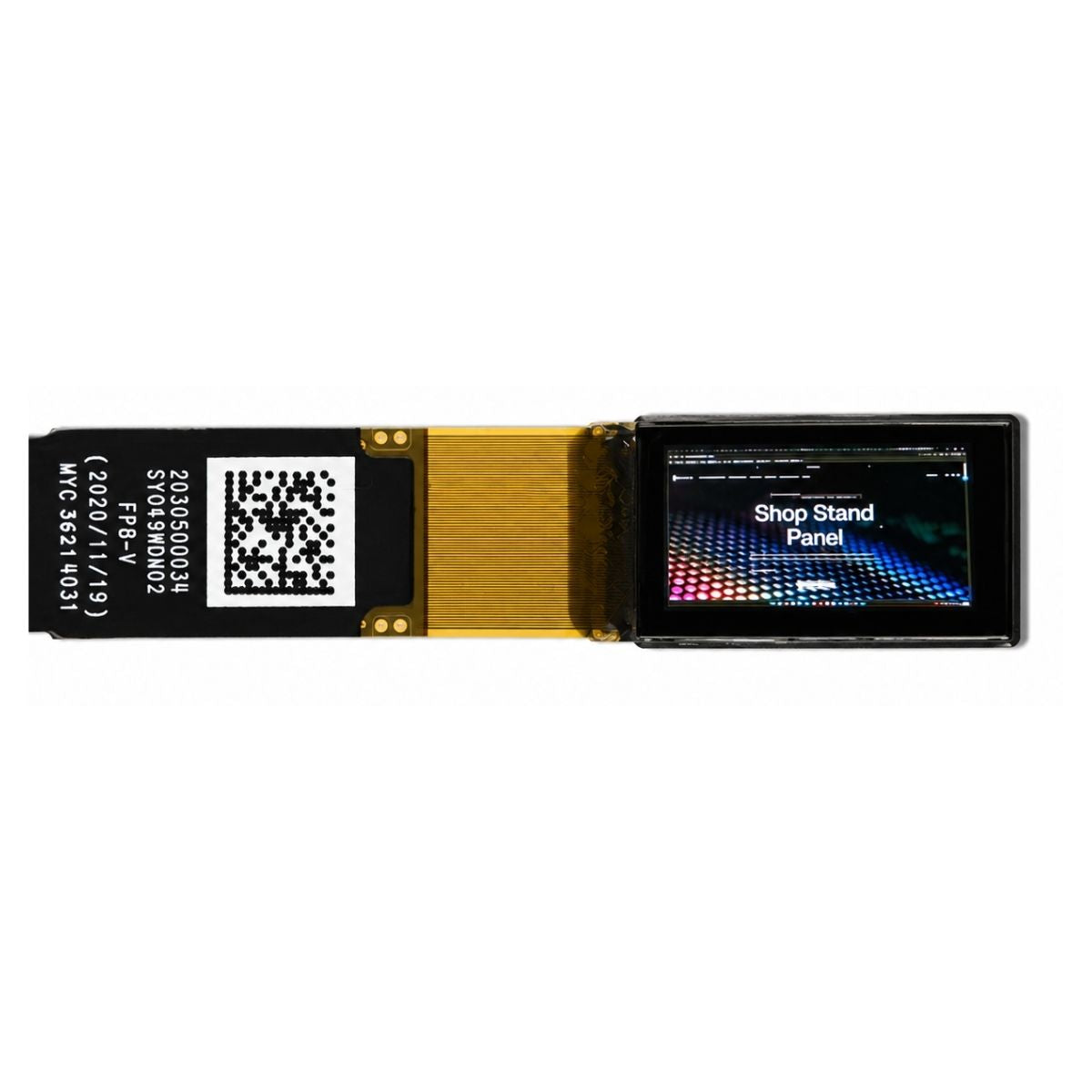
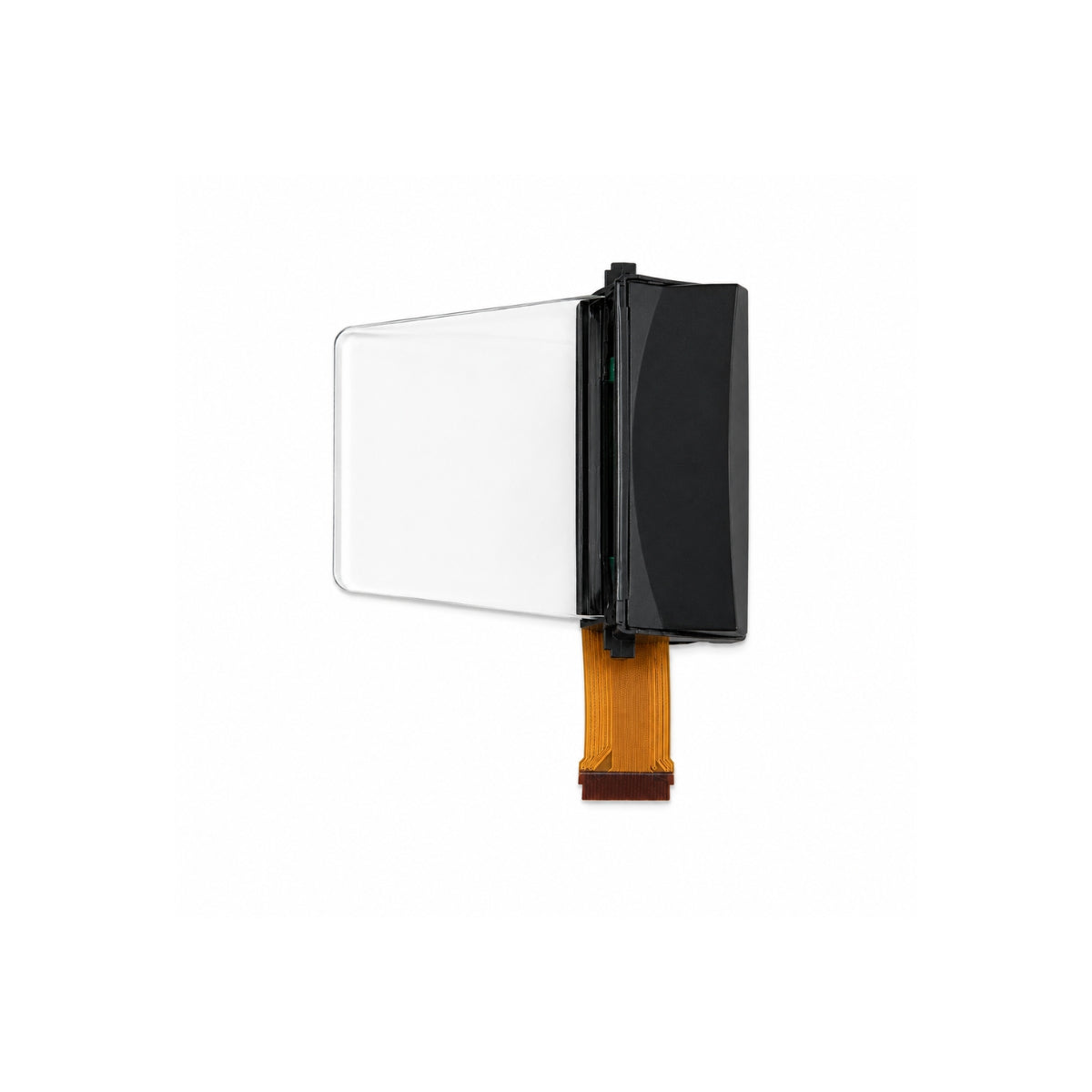
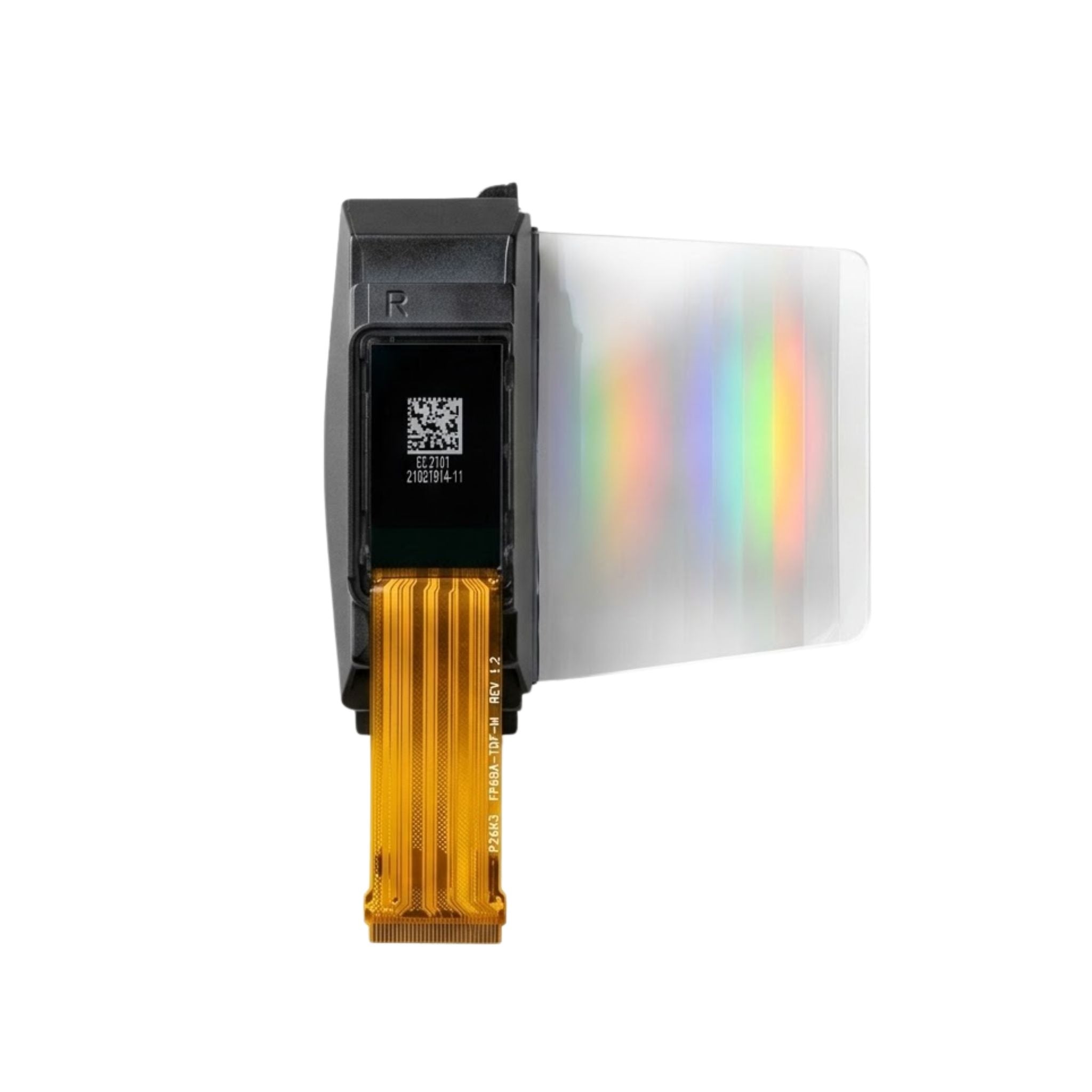
The Sony ECX350F’s silicon backplane is under 1mm thick—dramatically thinner than 3mm+ LCD modules—allowing for ultra-sleek AR designs. However, the 7.99mm border width must be accounted for in the optical housing. I’ve seen projects fail because a 0.44" panel was forced into a 0.35" reserved space, leading to a 60% loss in peripheral brightness due to light path clipping. I recommend a minimum optical cavity diameter of 0.55" for a 0.44" panel to avoid vignetting.
- Backplane Thickness: <1mm (Silicon-based)
- Optical Cavity: ≥0.55" for 0.44" panels
- Assembly Margin: ±0.2mm for thermal expansion compensation
Driver and Interface Matching
The Realtek RTD2660 and Allwinner MR527 are the industry workhorses for driving 1080p/120Hz via MIPI. However, thermal management is often overlooked. Driving a Sony ECX350F at 120Hz can push IC temperatures to 55°C, causing frame tearing if not properly heatsinked. For stable operation, I recommend the Allwinner MR527 at 90Hz, which maintains a cooler 42°C with sub-0.5ms frame jitter.
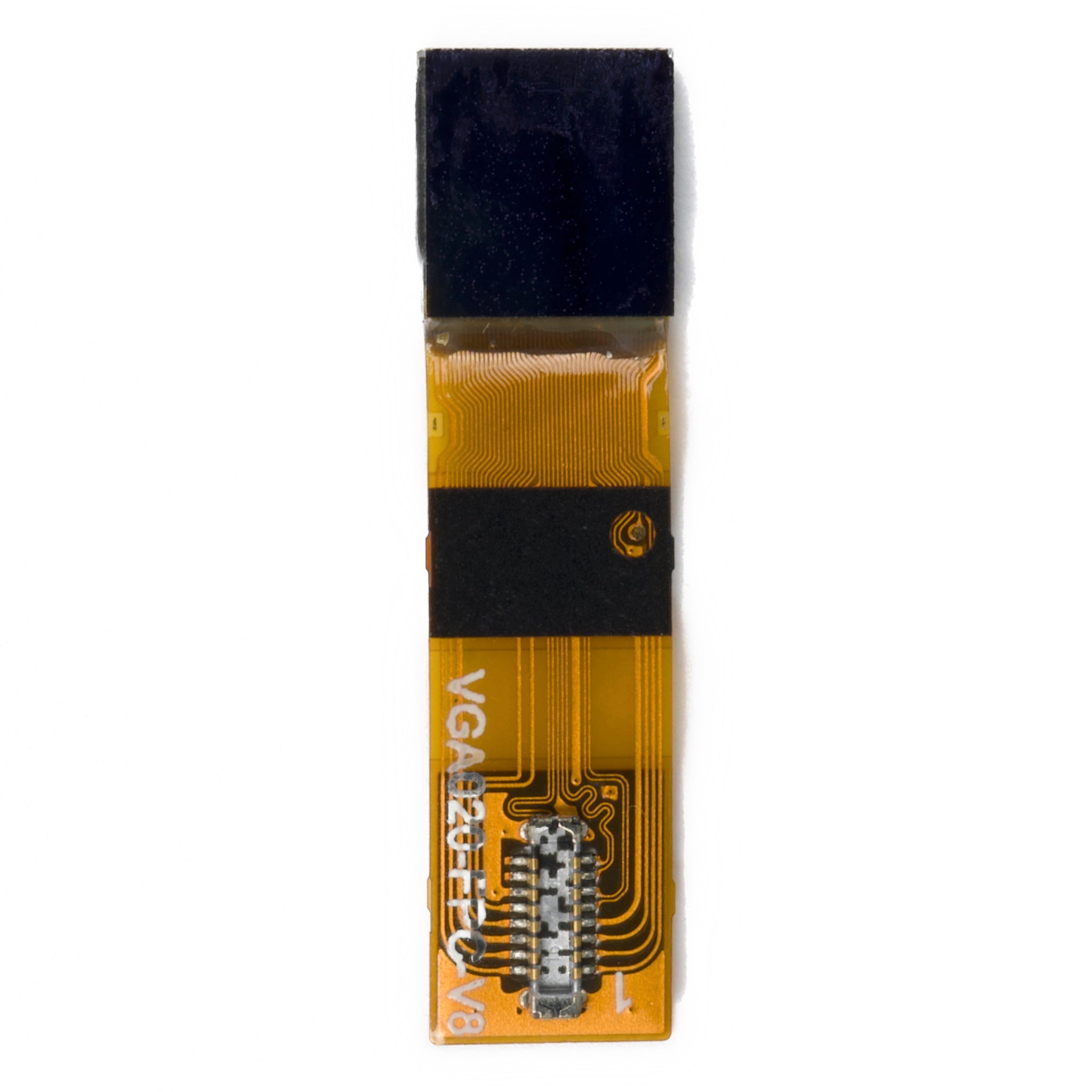
- Interface: MIPI DSI (4-lane, >1.5Gbps per lane for 120Hz)
- Thermal Safety: Keep IC junction temperature >15°C below rating
- Driver IC: RTD2660 (High performance), MR527 (Better thermal/90Hz balance)
Power and Thermal Management
Total module power (Panel + IC) can reach 2.3W at full luminance. Since AR glasses rely on passive cooling, this heat must dissipate through the frame. If the panel exceeds 60°C, internal safety protocols will attenuate brightness by up to 40%. All-day wearables should target a power budget of 2W or less to keep surface temperatures under the 45°C comfort limit.
- Sony ECX350F Power: ~1.8W at 10,000 nits
- Passive Cooling Limit: Enclosure should stay ≤45°C
- Efficiency: MLA technology is mandatory for outdoor AR battery life
| Parameter | Sony ECX350F | eMagin 0.39" XGA | Medical 0.39" High-Spec |
|---|---|---|---|
| Size | 0.44 inches | 0.39 inches | 0.39 inches |
| Resolution | 1920×1080 (FHD) | 1024×768 (XGA) | 1024×768 |
| Pixel Density | 5,000 PPI | 3,386 PPI | 3,386 PPI |
| Peak Brightness | 10,000 nits | 5,000 nits | 3,000+ nits |
| Contrast Ratio | 100,000:1 | 100,000:1 | 100,000:1 |
| Refresh Rate | Up to 120Hz | Up to 120Hz | Up to 120Hz |
As we move toward 2027, the roadmap for Micro OLED is clear: pixel densities will exceed 5,000 PPI and brightness will push toward 15,000 nits. The integration of MLA will become standard for outdoor AR, while falling panel costs—driven by high-volume consumers like Apple—will finally bring high-spec AR modules to the mass market.
En lire plus
Battery-powered embedded systems demand display modules that do not drain power reserves — PMOLED (Passive Matrix Organic Light-Emitting Diode) delivers 2 – 10 mW typical power consumption through ...
The global microdisplay market reached $1.92 billion in 2024, with Omdia projecting the near-eye display market to surge 200% year-over-year in 2026. Micro OLED—with microsecond response times, m...
Laisser un commentaire
Ce site est protégé par hCaptcha, et la Politique de confidentialité et les Conditions de service de hCaptcha s’appliquent.