



OLEDOS Micro Display Manufacturer | Wearable Optics, Brightness, Mini Size
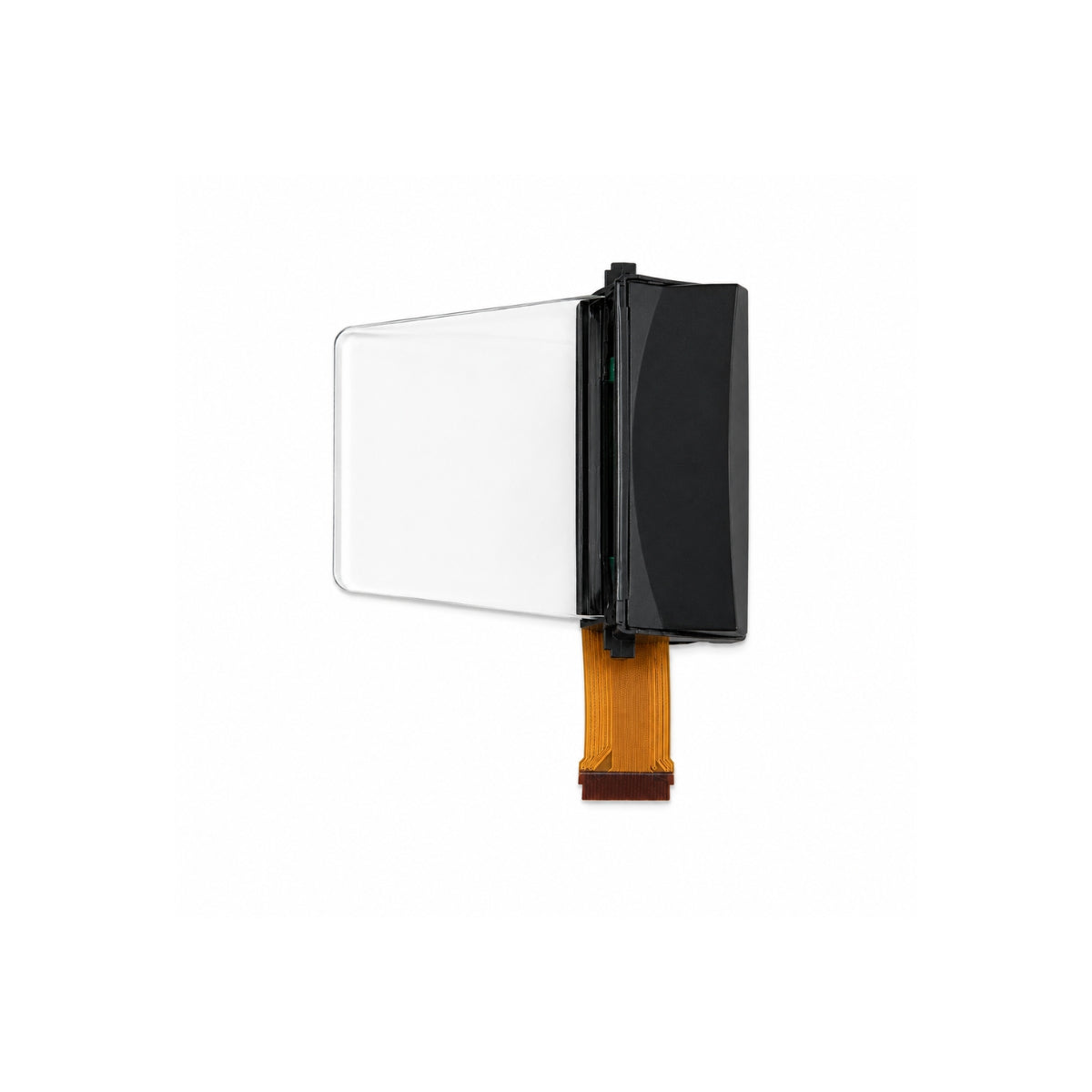
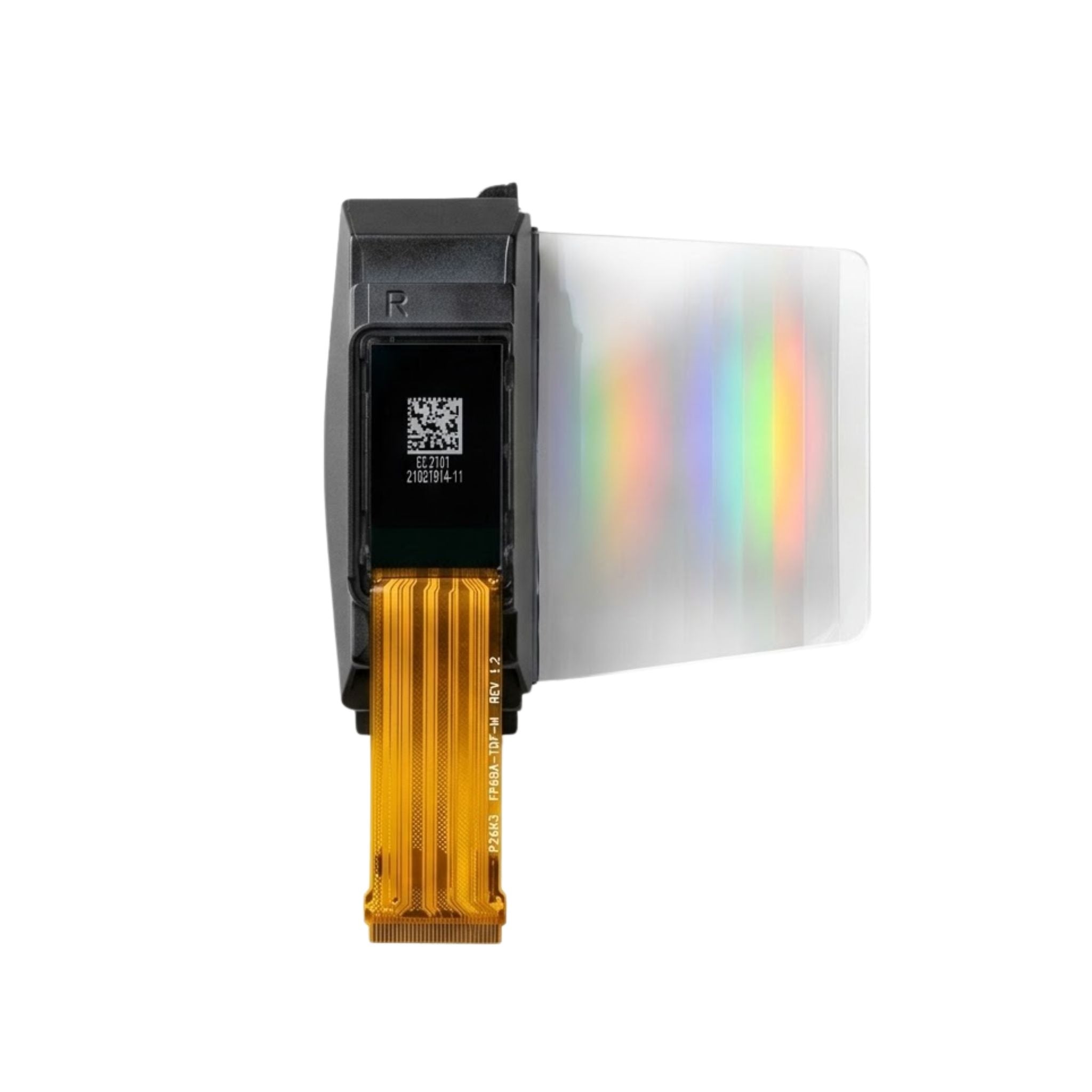
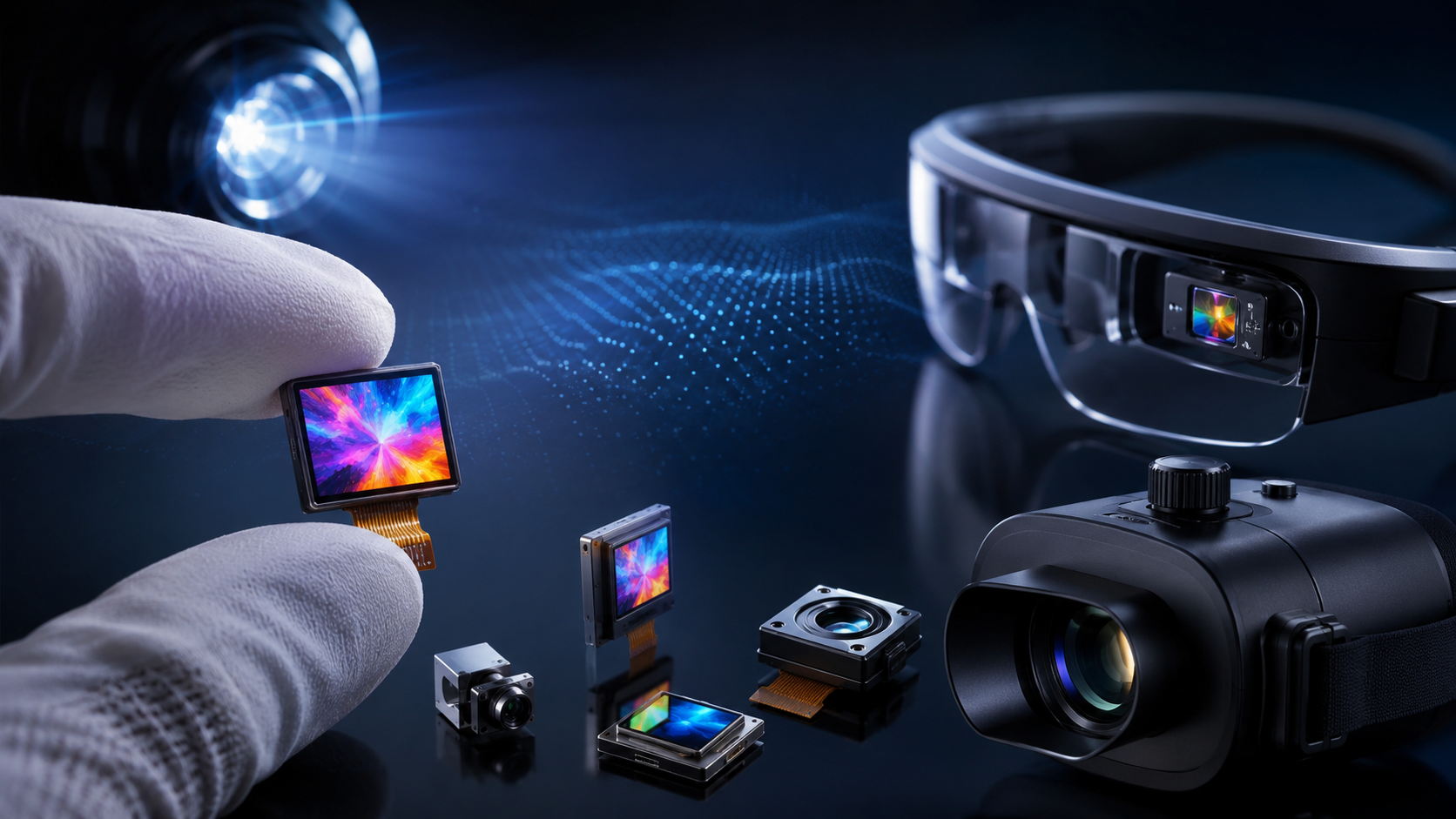
The rapid development of smart glasses, AR headsets, MR devices, and other near-eye optical products is reshaping the microdisplay market. OLEDOS, also known as OLED on Silicon or Micro OLED, has become one of the most important display technologies for compact near-eye systems because it combines high pixel density, fast response, high contrast, and a compact self-emissive structure. Displaymodule provides Micro OLED display modules and integration support for AR/VR, EVF, industrial, medical, and wearable optical projects.

Know OLEDOS
Basic Meaning
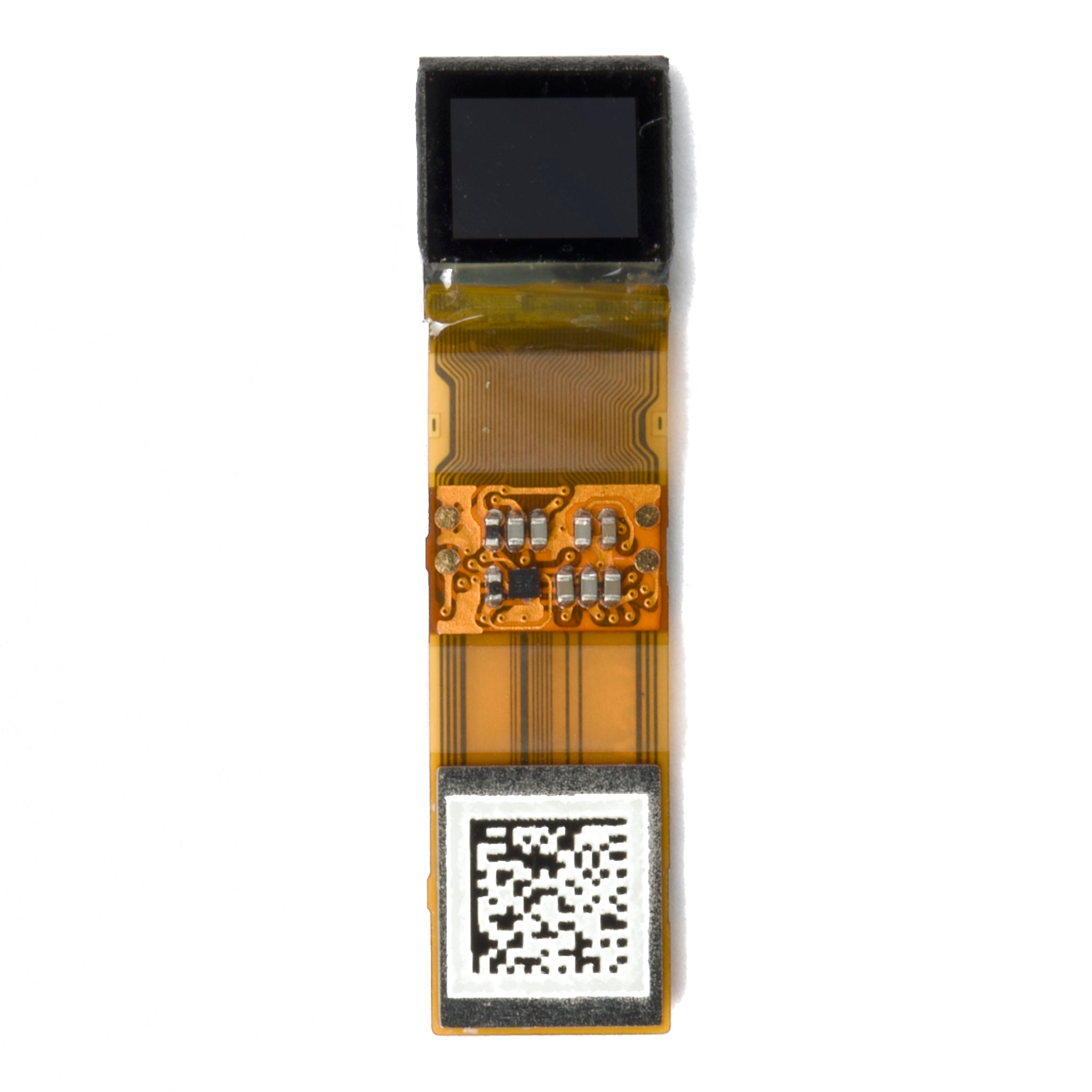
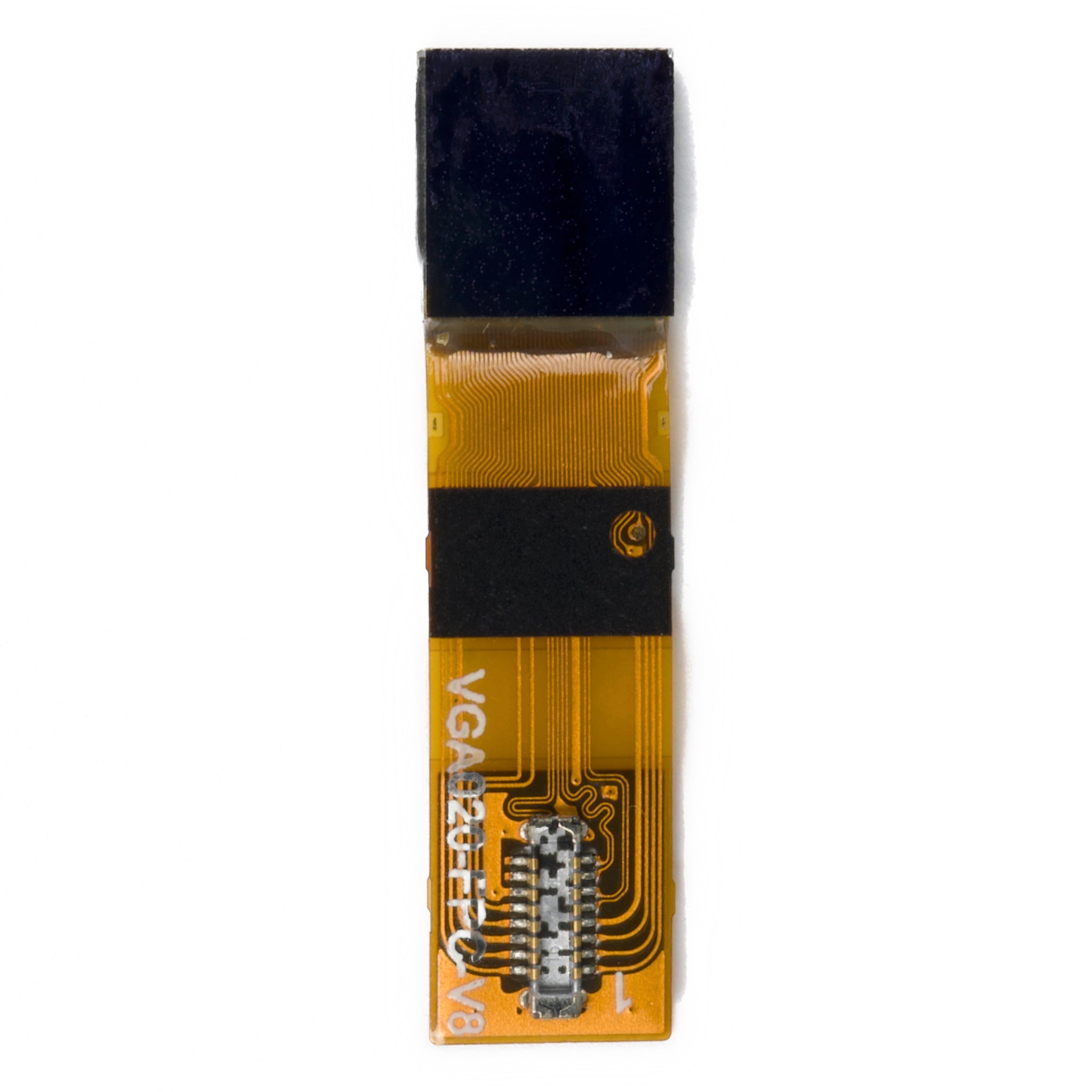
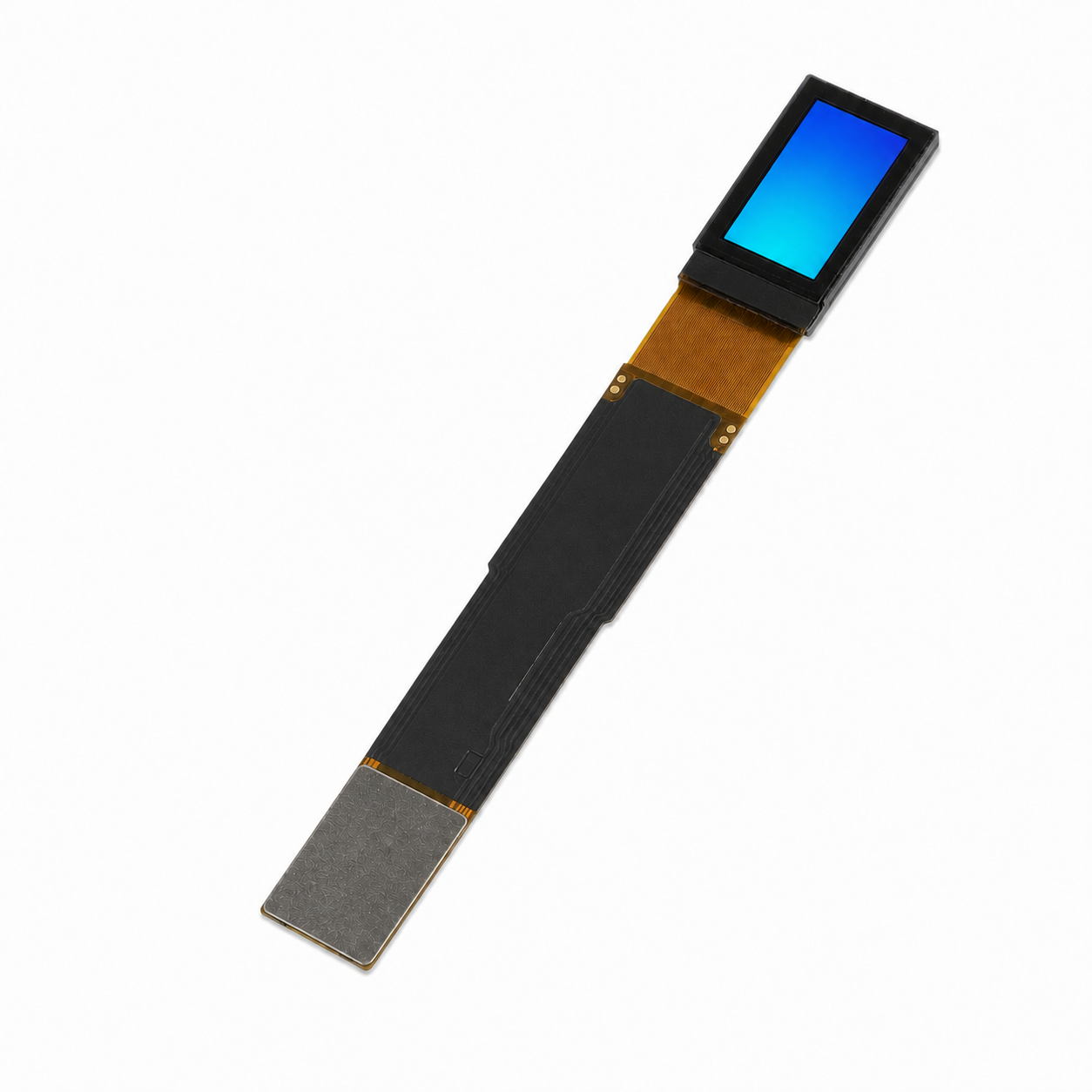
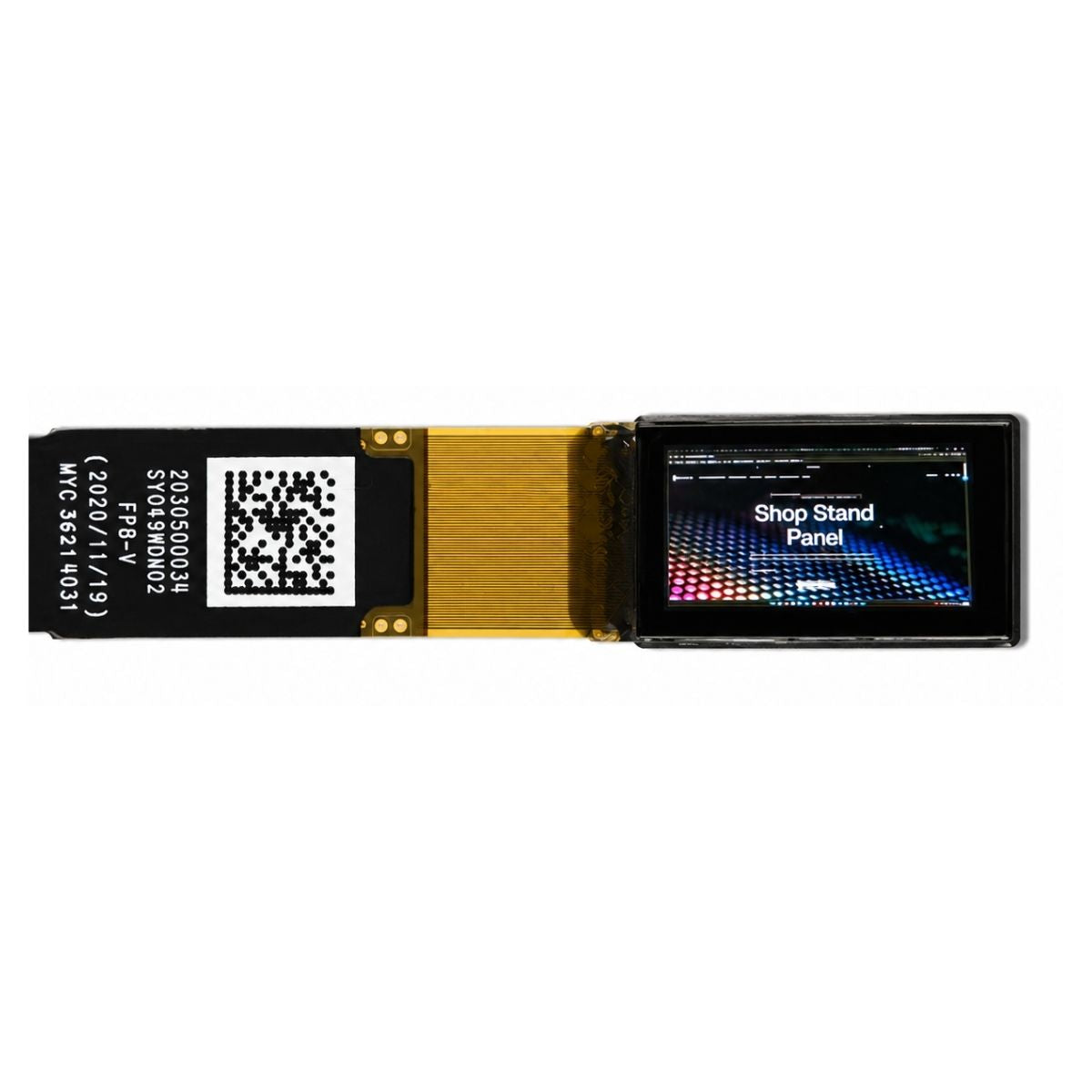
OLEDOS (OLED on Silicon) is a microdisplay technology that integrates OLED emissive layers onto a single-crystal silicon CMOS driver backplane. Unlike conventional AMOLED displays that use glass or plastic substrates, OLEDOS uses a silicon wafer as both the pixel circuit carrier and the physical support for the OLED emissive structure. This architecture enables very small pixel pitch, high pixel density, and compact display modules suitable for near-eye optical systems.
The key technical parameters of OLEDOS are mainly determined by pixel pitch, active area, resolution, drive circuit design, OLED stack structure, and package reliability. For example, a 1.03-inch OLEDOS display with 2560×2560 resolution corresponds to approximately 3515 PPI, with a pixel pitch of about 7.2 μm. This illustrates why resolution, diagonal size, pixel pitch, and PPI must always be specified together to avoid misleading comparisons.
Most commercial OLEDOS products use either white OLED with color filter architecture or supplier-specific OLED stack designs. RGB direct patterning and advanced light extraction structures are important development directions, but they require difficult process control, tight alignment accuracy, and high yield management. MicroLens Array (MLA), tandem OLED structures, improved OLED materials, and optimized pixel geometry are commonly discussed approaches for improving brightness, efficiency, and lifetime.
- Substrate: Single-crystal silicon CMOS backplane, instead of glass or plastic
- Pixel density: commonly above 2000 PPI for high-end near-eye applications
- Response time: typically in the microsecond to sub-millisecond range, depending on measurement method
- Contrast: high native contrast because OLEDOS is self-emissive and can achieve deep black levels
The fundamental difference between OLEDOS and LCoS or DLP microdisplay technologies is that OLEDOS is self-emissive, while LCoS and DLP generally require external illumination systems. This gives OLEDOS advantages in black level, contrast, module compactness, and optical simplicity. However, final system performance still depends on brightness, lifetime, power consumption, optical efficiency, thermal design, and display driver architecture.
Industry research indicates that demand for OLEDOS microdisplays in AR, VR, and MR near-eye devices is expected to grow strongly through 2030. For procurement teams, this means OLEDOS should be evaluated not only as a display component, but also as part of a long-term near-eye display platform strategy.
Wearable Fit
Wearable optical devices place stricter requirements on displays than most conventional consumer electronics. A display module used in smart glasses or AR/MR headsets must work within severe constraints of volume, weight, power consumption, thermal comfort, brightness, resolution, and latency. A specification that looks acceptable at the panel level may still fail once it is integrated into the optical engine and worn close to the user's face.
OLEDOS is well suited to wearable applications because it does not require a backlight module and can achieve high pixel density in a small active area. This enables compact optical engines and helps reduce the size of near-eye devices. Compared with reflective display architectures that require external illumination, OLEDOS can simplify the optical path and improve black-level performance, although the actual advantage depends on the final optical architecture.
For wearable design, weight and heat are just as important as brightness and resolution. OLEDOS power consumption varies significantly with brightness, resolution, refresh rate, image content, driving mode, and optical efficiency. Therefore, procurement teams should evaluate both panel-level power and full optical-engine power, especially for battery-powered smart glasses.
- Module thickness: should be evaluated together with optical engine structure and mechanical mounting
- Module weight: important for smart glasses, especially products targeting all-day or long-session wear
- Optical compatibility: Birdbath, freeform, waveguide, prism, and custom near-eye optics may require different display characteristics
- Thermal design: heat spreading, housing material, skin-proximate temperature, and long-session comfort should be validated
Displaymodule supports Micro OLED module selection, interface matching, mechanical integration, and optical-engine design discussions for wearable display projects. For customer-specific projects, key design items may include FPC shape, connector position, brightness tuning, power sequencing, thermal path, optical alignment tolerance, and display-driver configuration.
For smart glasses and AR/MR headsets, the value of a Micro OLED module is not limited to its datasheet. The real engineering value lies in whether the display, optics, mechanics, firmware, and thermal design can work together inside a compact wearable product.
Main Uses
OLEDOS microdisplays are used in a wide range of near-eye and compact imaging applications, including AR glasses, VR/MR headsets, EVFs, industrial viewers, medical imaging systems, simulation devices, night-vision-compatible displays, and compact optical instruments. The common requirement across these applications is the need to generate a high-quality image from a very small display area.
Consumer AR glasses are one of the most visible application areas for OLEDOS. Products such as XREAL Air series and similar lightweight display glasses show why Micro OLED has become an important option for compact entertainment and productivity eyewear. These products often use Micro OLED panels with Birdbath or related optical systems to generate a large virtual image from a small display module.
Industrial and professional applications usually require stricter reliability conditions than consumer products. Requirements may include wider operating temperature range, vibration resistance, long operating hours, stable brightness, sealed mechanical design, and repeatable optical performance. Because OLED materials are sensitive to heat, oxygen, and moisture, lifetime and package reliability should be verified using clear test conditions rather than broad claims.
- Consumer AR glasses: compact optical engines, high pixel density, and high perceived image quality
- VR/MR headsets: high resolution, high refresh rate, low latency, and wide color performance
- Industrial viewers: reliability, stable supply, long lifecycle support, and robust mechanical design
- Medical and professional imaging: color consistency, grayscale control, low latency, and documentation quality
- EVF and camera systems: fast response, high contrast, optical consistency, and low-latency viewfinding
OLEDOS may also be considered for automotive AR-HUD and helmet-mounted display applications, but these use cases can impose very high brightness, lifetime, and environmental reliability requirements. For applications requiring extremely high luminance under strong ambient light, LEDoS and other microdisplay technologies may also need to be evaluated as alternative or complementary solutions.
OLEDOS is a strong candidate for many near-eye display applications, but it is not automatically the best choice for every product. The correct technology choice depends on optical architecture, brightness target, lifetime requirement, power budget, cost, and supply-chain maturity.
Check Key Needs
Clear Image
Image clarity in near-eye displays is different from clarity on ordinary monitors. In near-eye systems, perceived sharpness depends on pixel density, PPD (pixels per degree), optical magnification, lens quality, MTF, eye-box design, distortion, brightness uniformity, color uniformity, and display-driver behavior. PPI alone is not enough to determine final viewing quality.
PPD is often more meaningful than PPI for near-eye systems because it describes how many pixels are delivered per degree of the user's field of view. A display with high PPI may still deliver limited perceived sharpness if the optics are poorly designed, the field of view is wide, the lens MTF is low, or the eye box is not well controlled.
MTF (Modulation Transfer Function) is an important optical metric because it describes how well an optical system preserves contrast at different spatial frequencies. In practical procurement, buyers should request measured MTF curves, including center and edge positions, rather than relying only on nominal resolution. MTF should be evaluated at the module or optical-engine level whenever possible.
Grayscale control is also important. OLED brightness is current-driven and can show nonlinear behavior, especially in low-gray regions. Poor gamma correction may cause banding, crushed shadows, or unstable dark details. For professional applications, suppliers should provide gamma calibration data, grayscale tracking data, color-coordinate data, and luminance-uniformity reports.
| Metric | What It Indicates | Procurement Focus |
|---|---|---|
| PPI | Pixel density of the display panel | Must be checked together with diagonal size and resolution |
| PPD | Angular resolution perceived by the user | Depends on display resolution and optical field of view |
| MTF | Optical sharpness and contrast transfer | Should be measured at center and edge positions |
| Gamma Accuracy | Grayscale reproduction quality | Important for dark detail and banding control |
| Uniformity | Brightness and color consistency | Should be validated across the active area and eye box |
Procurement teams evaluating image quality should request optical measurement data, display-driver documentation, sample inspection criteria, and acceptance limits for pixel defects, mura, luminance uniformity, color uniformity, and grayscale behavior. This is especially important for near-eye products because small display defects can be magnified by the optical system.
A professional near-eye display specification should include resolution, active area, diagonal size, pixel pitch, PPI, brightness, contrast, color gamut, refresh rate, interface, power consumption, operating temperature, storage temperature, pixel-defect criteria, optical alignment tolerance, and reliability test conditions.
Bright View
Brightness is one of the most critical and most easily misunderstood parameters in near-eye display design. A high bare-panel brightness value does not automatically mean the user will see a bright image. The effective brightness at the eye depends on display luminance, optical efficiency, lens or waveguide loss, eye-box design, ambient light, and background reflectance.
For example, Birdbath optical systems may have relatively low optical efficiency, so a display with high panel brightness may still deliver much lower brightness to the eye after optical losses. For outdoor or high-ambient-light use, buyers should evaluate the complete optical chain from display output to final perceived image brightness.
OLEDOS brightness can be improved through OLED material optimization, tandem OLED structures, MLA light extraction, pixel aperture optimization, and improved thermal design. However, higher brightness usually increases stress on the OLED stack and may reduce lifetime if not properly managed. Therefore, brightness claims should always be reviewed together with lifetime, temperature, duty cycle, and image-content assumptions.
- Bare-panel brightness: useful for comparing display modules, but not enough for system evaluation
- Eye-box brightness: more meaningful for final user experience
- Optical efficiency: critical for Birdbath, waveguide, prism, and freeform systems
- Lifetime trade-off: high brightness may accelerate OLED degradation depending on drive conditions
- Thermal design: essential for maintaining stable brightness and user comfort
Procurement teams should be cautious when suppliers only provide peak brightness without specifying measurement conditions. Useful brightness data should include test temperature, duty cycle, image pattern, color point, measurement geometry, driving condition, and expected lifetime target.
For near-eye display projects, brightness should be evaluated as a system-level optical budget. The relevant question is not only "how bright is the panel," but "how much usable brightness reaches the user's eye under the target operating environment."
Mini Size
Size is a major design bottleneck for smart glasses and other wearable optical devices. The display size affects optical path length, lens size, housing thickness, weight distribution, and industrial design. OLEDOS is attractive because it can deliver high resolution in a small active area, helping reduce the size of the optical engine.
However, smaller display size is not always automatically better. A smaller active area may require stronger optical magnification, which can increase distortion, reduce eye-box tolerance, or make optical alignment more difficult. Therefore, the optimal OLEDOS size should be selected based on field of view, eye relief, eye-box target, brightness, optical efficiency, and mechanical envelope.
Displaymodule supports Micro OLED module selection and customization discussions across different size, resolution, interface, and mechanical requirements. For custom projects, practical design items may include display diagonal, active area, FPC routing, connector type, mounting structure, optical center tolerance, module thickness, and thermal interface design.
- Common diagonal range: selected according to optical architecture and field-of-view target
- Pixel pitch: must be evaluated together with resolution, PPI, active area, and optical magnification
- Mechanical design: connector position, FPC shape, housing thickness, and mounting tolerance matter
- Optical design: display size affects lens design, eye relief, eye box, and perceived image quality
Miniaturization is one of the main drivers of wearable display development. For smart glasses, every millimeter of module thickness and every gram of system weight can affect comfort, appearance, and long-session usability. A qualified supplier should be able to help buyers balance display size, brightness, resolution, optical complexity, cost, and manufacturability.
Apple Vision Pro uses a high-resolution Micro OLED display system with 23 million total pixels and a 7.5 μm pixel pitch, showing the importance of Micro OLED in advanced near-eye devices. However, lightweight smart glasses usually require smaller display modules and different optical trade-offs than full-size MR headsets.
Choose a Maker
Real Experience
OLEDOS microdisplay projects require expertise across OLED materials, CMOS backplane design, micro-optics, display driving, color science, packaging, reliability testing, and system integration. A supplier's value should therefore be evaluated not only by product listings, but also by engineering support, documentation quality, sample consistency, and long-term project support.
For procurement teams, the first step is to distinguish between a true OLEDOS wafer-level manufacturer, a module integrator, a display distributor, and a solution provider. These roles can all be useful, but they provide different levels of control over process, customization, quality, and supply continuity. Buyers should ask what the supplier directly controls and what is sourced from upstream partners.
A capable Micro OLED supplier or integration partner should be able to provide clear answers on display selection, interface timing, power sequencing, optical compatibility, brightness tuning, thermal design, and reliability validation. The supplier should also be able to support troubleshooting during sample testing, pilot production, and mass-production transfer.
- Technical scope: panel sourcing, module integration, optical support, driver board, firmware, or full custom solution
- Documentation: datasheet, mechanical drawing, interface timing, power sequence, test report, and quality criteria
- Engineering support: optical, electrical, mechanical, firmware, and reliability guidance
- Quality control: pixel-defect inspection, luminance uniformity, color uniformity, burn-in, and traceability
A practical supplier evaluation method is to provide a real optical-engine requirement and ask the supplier to recommend display size, brightness, interface, resolution, and thermal design considerations. Strong suppliers should explain the trade-offs rather than simply quote a datasheet value.
For Micro OLED projects, real experience is demonstrated through engineering problem-solving, repeatable sample quality, clear documentation, and honest discussion of trade-offs among brightness, lifetime, power, cost, and optical design.
Custom Help
OLEDOS customization can involve display size, resolution, brightness, interface, FPC design, connector position, driver board, gamma setting, color calibration, mechanical structure, thermal path, and optical alignment. The level of customization should be matched to the maturity of the customer's product design and the expected production volume.
Basic customization may include interface adaptation, brightness tuning, connector selection, FPC length, or mechanical mounting adjustment. Deeper customization may involve optical-engine co-design, color calibration, customized driver settings, special reliability requirements, or application-specific module packaging. For advanced projects, early supplier involvement can help reduce redesign risk.
Color management is especially important for near-eye systems because small differences in color coordinate, grayscale behavior, and brightness uniformity can become more noticeable after optical magnification. Professional applications may require module-level calibration, gamma tuning, color-coordinate measurement, and batch-to-batch consistency control.
- Interface customization: MIPI DSI, LVDS, RGB, HDMI board, or customer-specific control board
- Mechanical customization: FPC shape, connector position, bracket, housing, and mounting tolerance
- Optical support: brightness budget, optical center, display active area, eye-box compatibility, and alignment tolerance
- Firmware and calibration: gamma, brightness control, color correction, standby mode, and power sequencing
- Reliability support: temperature, humidity, vibration, aging, and customer-defined validation plans
The best customization partners are not those that promise every specification immediately, but those that can identify feasibility limits early. For example, increasing brightness may affect lifetime and thermal design; reducing module size may increase optical difficulty; expanding color gamut may affect efficiency or cost. These trade-offs should be discussed before the design is locked.
For custom Micro OLED module projects, the most valuable supplier input often appears before sampling: feasibility analysis, optical-electrical trade-off review, risk identification, and early cost-down suggestions.
Steady Supply
Stable supply is a critical issue for OLEDOS projects because near-eye products often have longer development cycles than ordinary consumer electronics accessories. Once a display module is designed into the optical, mechanical, electrical, and firmware architecture, changing suppliers can require redesign, revalidation, and new qualification work.
OLEDOS supply-chain stability depends on multiple upstream elements, including CMOS backplanes, OLED materials, encapsulation materials, color filters or patterning processes, driver ICs, FPCs, connectors, optical components, and module assembly capacity. Any single-source component can become a risk for long-lifecycle products.
Procurement teams should request clear information about lead time, lifecycle status, product-change notification process, end-of-life policy, last-time-buy options, quality traceability, and alternative material strategy. For industrial, medical, and professional products, these supply-chain controls may be just as important as display performance.
- Supply continuity: lead time, lifecycle status, and production capacity
- Change control: PCN process, material-change approval, and requalification rules
- Quality traceability: batch records, inspection reports, and defect tracking
- Lifecycle support: EOL notice, last-time-buy options, and compatible replacement planning
- Compliance: RoHS, REACH, conflict minerals, and customer-specific material declarations where applicable
For OLEDOS modules, material and process changes may affect brightness, color, lifetime, reliability, and optical compatibility. Buyers should therefore define change-control requirements contractually, especially for long-term projects or products already in mass production.
A stable Micro OLED supplier should provide not only samples and quotations, but also lifecycle planning, quality documentation, material compliance information, and a transparent process for managing technical or supply-chain changes.
OLEDOS microdisplays are an important enabling technology for modern near-eye display systems. Their high pixel density, self-emissive structure, fast response, high contrast, and compact form factor make them highly suitable for smart glasses, AR/MR headsets, EVFs, and professional optical devices. For wearable optics brands, selecting the right Micro OLED supplier is not only a component-purchasing decision, but also a system-level engineering decision involving optics, electronics, mechanics, firmware, reliability, and long-term supply support.
En lire plus
Round AMOLED displays are widely used in smart watches and wearable devices, especially products that follow a traditional watch-style design. Compared with LCD solutions, AMOLED technology uses se...
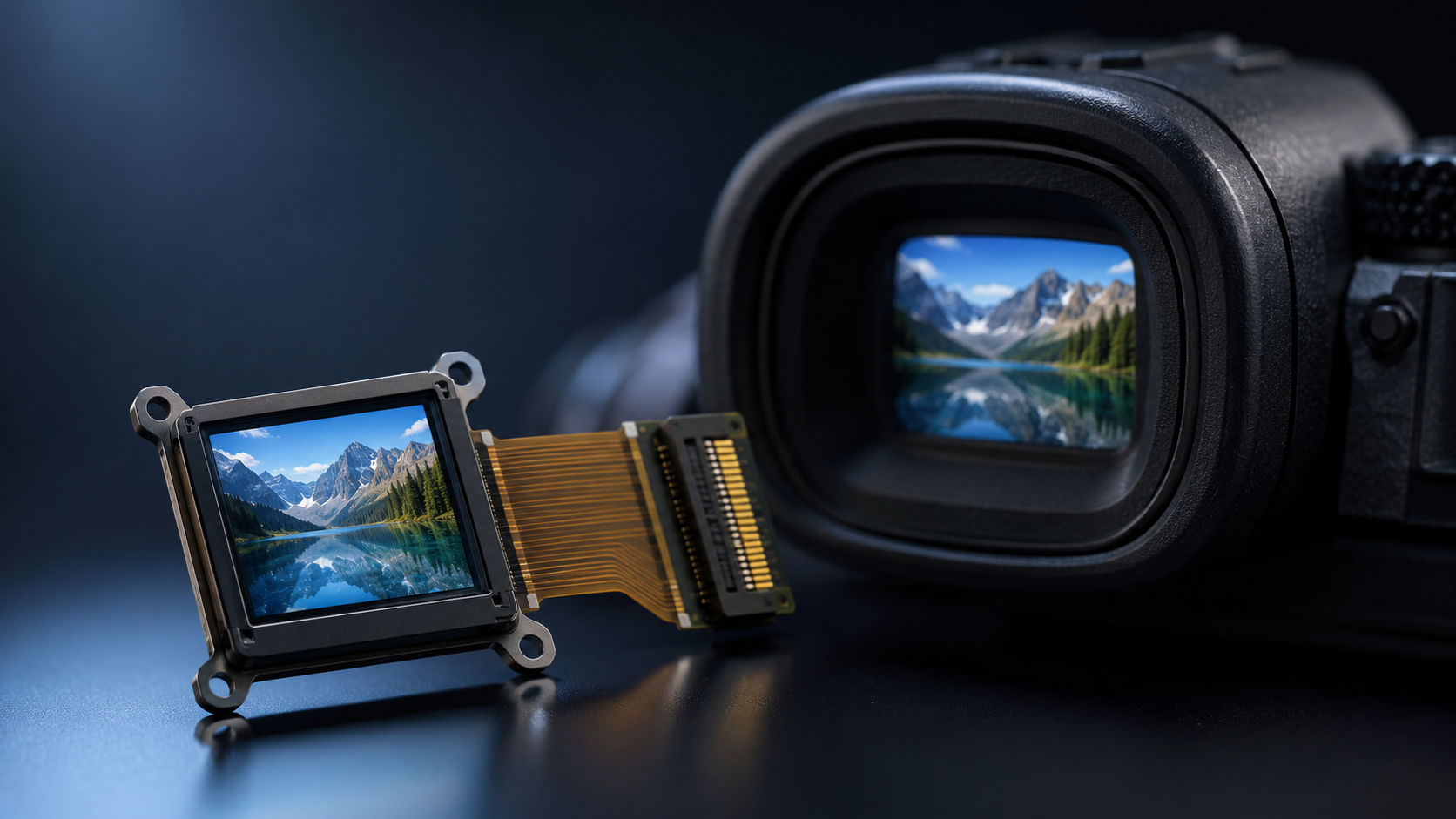
EVF viewfinders demand a display that can combine high pixel density, fast response, low latency, and a compact optical form factor. Among currently commercialized near-eye display technologies, Mi...
Laisser un commentaire
Ce site est protégé par hCaptcha, et la Politique de confidentialité et les Conditions de service de hCaptcha s’appliquent.