



Can IPS Modules Work Outdoors Effectively
Yes — with the caveat that brightness alone does not make a display readable outdoors. What decides readability is the contrast the eye receives, and in daylight that contrast is set as much by reflected light as by the panel's own output. An IPS module can work in direct sun, but only when brightness, reflection control and thermal derating are designed together.
What "outdoors" actually demands
Indoors, the light coming off the screen is far stronger than anything reflected from the room, so the displayed contrast is close to the panel's native contrast. Outdoors, ambient light adds a reflected component to both the white and the black state. As reflection rises, the black level climbs toward the white level and the perceived contrast collapses — even though the panel itself has not changed.
This is why an outdoor specification cannot be reduced to a nits figure. A 1000-nit panel behind a highly reflective cover glass can be less legible than a 700-nit panel with optical bonding and an anti-reflective coating.
Brightness and contrast under ambient light
The relationship is straightforward. Perceived luminance in the white state is display luminance plus reflected luminance; in the black state it is black luminance plus the same reflected luminance. Contrast is the ratio of the two sums. Because the reflected term is added to both, contrast falls as ambient light rises no matter how bright the backlight is.
The practical reading: raising brightness buys legibility until reflection starts to dominate, then returns diminish quickly. Past that point the useful investment is reflection control, not more backlight current — which also avoids the heat and power penalties of pushing brightness higher.
Reflections come from three places
The outer surface. Bare glass reflects several percent of incident light. Anti-glare treatment scatters that reflection so it appears as a diffuse haze rather than a mirror image; anti-reflective coating reduces its magnitude. Both help; they trade off differently against sharpness and cost.
The internal interfaces. An air gap between the touch sensor, the cover glass and the LCD adds two more reflective boundaries. Optical bonding with an index-matched adhesive removes them, which is usually the single largest improvement available to an outdoor module.
The panel's own structure. Diffusers and polarisers scatter some light back out. This is a property of the module and cannot be designed away at the enclosure level; it is one reason two modules of the same brightness can read very differently outdoors.
Choosing between glare, reflection and bonding
The three fixes are not interchangeable, and the right combination depends on what the product shows.
Anti-glare turns a mirror reflection into a diffuse glow by roughening the surface at a microscopic scale. It works well for equipment in the field, where the problem is a bright sky reflected across the screen. The cost is a slight softening of fine detail, because the surface scatters the image light as well as the reflection.
Anti-reflective coating reduces the amplitude of the reflection without scattering it, so it preserves sharpness. It is the better choice for fine text, dense graphics and products where the display itself must look high-contrast. Coatings are usually applied to the cover glass before bonding and cannot be added afterwards.
Optical bonding removes the internal air gaps between the cover glass, the touch sensor and the LCD. It delivers the largest single improvement in outdoor readability because it eliminates two reflective interfaces and the internal haze they create. It also improves impact resistance and removes the risk of condensation between layers.
Where the budget allows only one, bonding usually returns more legibility per unit of cost than brighter backlights. Where the product already has a bonded stack, anti-glare on the outer surface addresses what remains.
Temperature changes the numbers
A module in direct sun inside a sealed enclosure sits well above ambient air temperature. Two effects follow. Brightness falls as LED junction temperature rises, so the 1000 nits measured on the bench may not be available at noon. And liquid crystal response slows at low temperature, so a display specified for a cold climate needs its cold-start behaviour checked, not just its hot-end derating.
Ask for the derating curve — luminance against ambient temperature, and response against temperature — rather than a single room-temperature figure.
Sealing belongs to the enclosure
An IPS module has no IP rating of its own. Ingress protection applies to the finished assembly: the housing, the gasket, the cable gland and the window bonding. A module described as suitable for outdoor equipment is a panel and backlight assembly; the IP65 or IP67 rating on the product datasheet refers to the enclosure the module was designed into.
This distinction matters during sourcing. A supplier can provide a module with a wide temperature range, high brightness and optical bonding; only the product designer can decide how that module is sealed, drained and ventilated inside the housing.
When a different panel type fits better
Sunlight readability has alternatives worth weighing. Reflective and transflective LCDs use ambient light instead of fighting it, which makes them very legible in sun and very efficient — at the cost of colour saturation and indoor performance. High-brightness IPS remains the usual choice where colour matters and the product must also work indoors or at night, because it can dim down while a purely reflective panel cannot brighten up in the dark.
For equipment that lives outdoors permanently and shows simple status information, a transflective design can be the better engineering choice. For instruments that move between environments, a high-brightness IPS module with optical bonding covers both cases.
How to evaluate an outdoor candidate
Bench measurements under a desk lamp do not predict outdoor behaviour. Two practical checks do most of the work: take the sample outside on a bright day and photograph it at fixed exposure next to a reference, then repeat with the screen showing a dark interface. What to look for is whether dark-coloured elements survive the reflection — a black panel that turns grey has no usable contrast left, whatever the datasheet says.
The second check is thermal: run the module at full brightness in a closed box at the expected ambient temperature for an hour, then measure luminance again. The drop between the start and the end of that hour is the number the product will live with. The standard basis for luminance and contrast measurement is ISO 9241-307[1].
What to specify
- Luminance and contrast measured with the intended cover-glass treatment, not bare.
- Whether the module is optically bonded, and whether the bonding is included or a separate process.
- Derating curves for luminance and response against temperature.
- Reflectance of the finished front surface, if the supplier can provide it.
- The IP rating of the enclosure, stated separately from the module specification.
High-brightness IPS modules with wide temperature ranges are listed in the industrial display range; high-brightness IPS formats from 0.85″ to 12.1″ are in the IPS display collection.

IPS modules can work outdoors when brightness, reflection control and thermal derating are specified together. Treat the IP rating as a property of the enclosure, ask for derating curves rather than single figures, and evaluate the candidate in real daylight before committing to a production order.
References
- ISO 9241-307:2008 — Ergonomics of human-system interaction — Part 307: Analysis and compliance test methods for electronic visual displays. International Organization for Standardization. https://www.iso.org/standard/40102.html
더 읽기
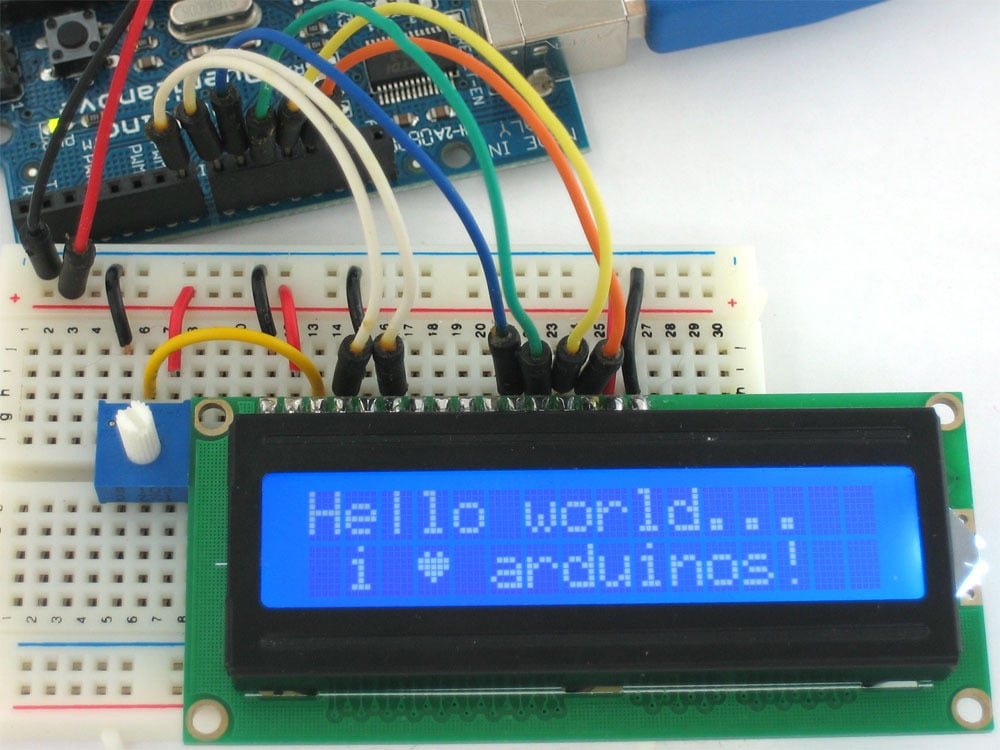
Upgrading from a basic character LCD (commonly 16x2, single-color, using HD44780) to a graphic LCD involves boosting resolution (e.g., 128x64 pixels) for.
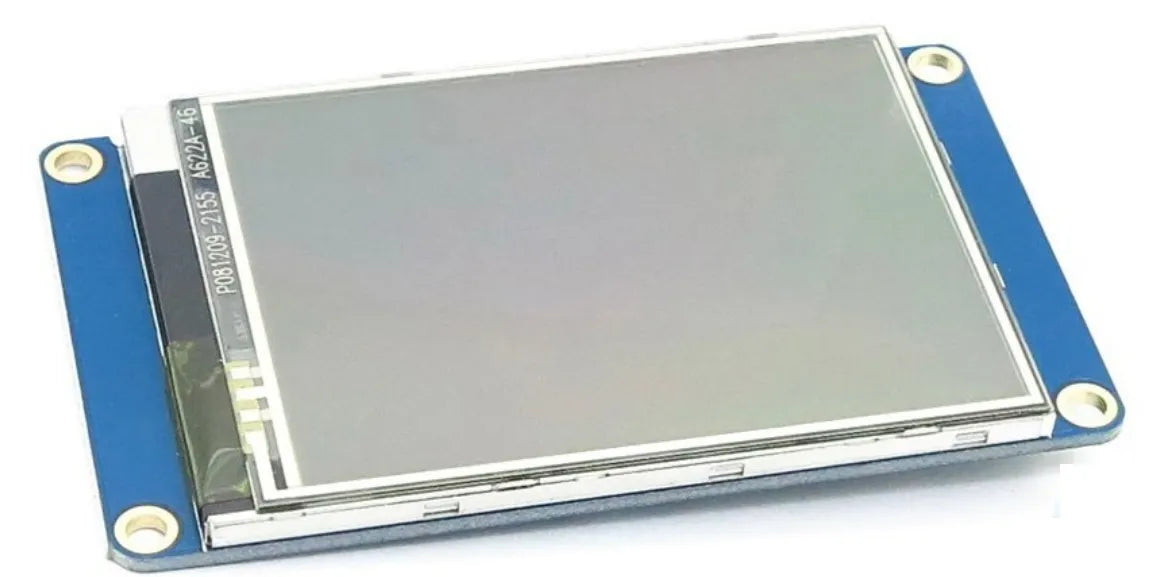
To program NexPCB display modules effortlessly, leverage their NexCode IDE —a beginner-friendly tool with drag-and-drop blocks and auto-generated code.
댓글 남기기
이 사이트는 hCaptcha에 의해 보호되며, hCaptcha의 개인 정보 보호 정책 과 서비스 약관 이 적용됩니다.