



Quick Contact, 24h Response
Product recommendations, specifications, technical support, bulk pricing, and lead times—any question can start with one simple and quick inquiry.

AR/XR Module Selection & Integration FAQ
Answers to common questions from engineers evaluating AR/XR optical architectures, display modules, driver boards, mechanical integration, and production supply. Need model-specific confirmation? Send us your target optical specifications, host platform, mechanical envelope, quantity, and project schedule.
Select Waveguide, Birdbath, Pancake, or another architecture against the actual system priorities: optical see-through, field of view, brightness, transmittance, eyebox, eye relief, image quality, module volume, weight, and cost. Provide the use environment and mechanical envelope so the trade-offs can be reviewed at module level rather than by a single headline specification.
Define measurable requirements for field of view, resolution, eyebox, eye relief, virtual-image distance, brightness, transmittance, distortion, image uniformity, and any diopter or alignment tolerance relevant to the application. Confirm the measurement conditions and acceptable range for each item before samples are evaluated.
Provide the indoor or outdoor lighting condition, required visibility of the environment, target image contrast, brightness at the eye, and minimum acceptable transmittance. Panel brightness alone is not sufficient because optical efficiency and architecture strongly affect the final image; evaluation should use the complete module under representative lighting.
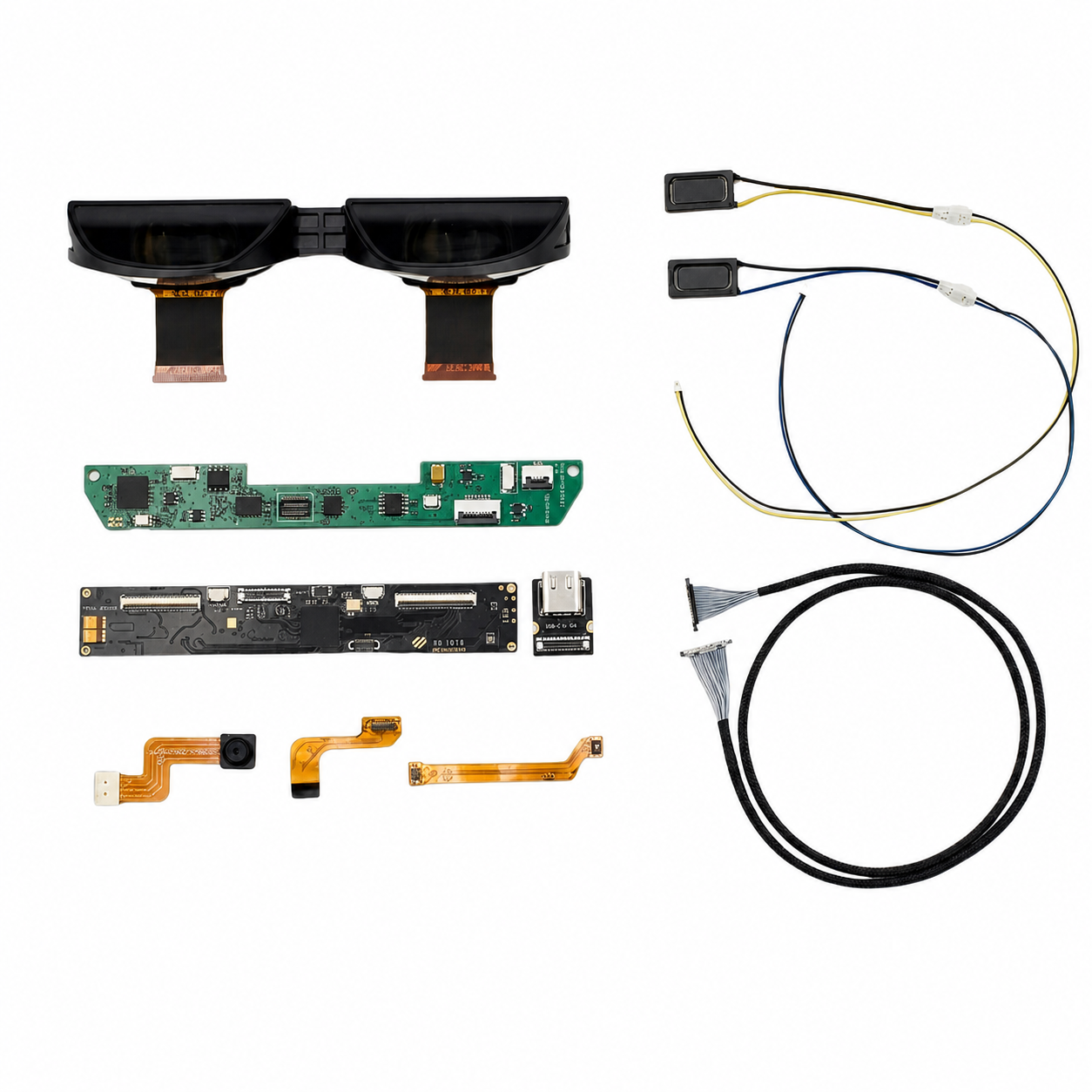
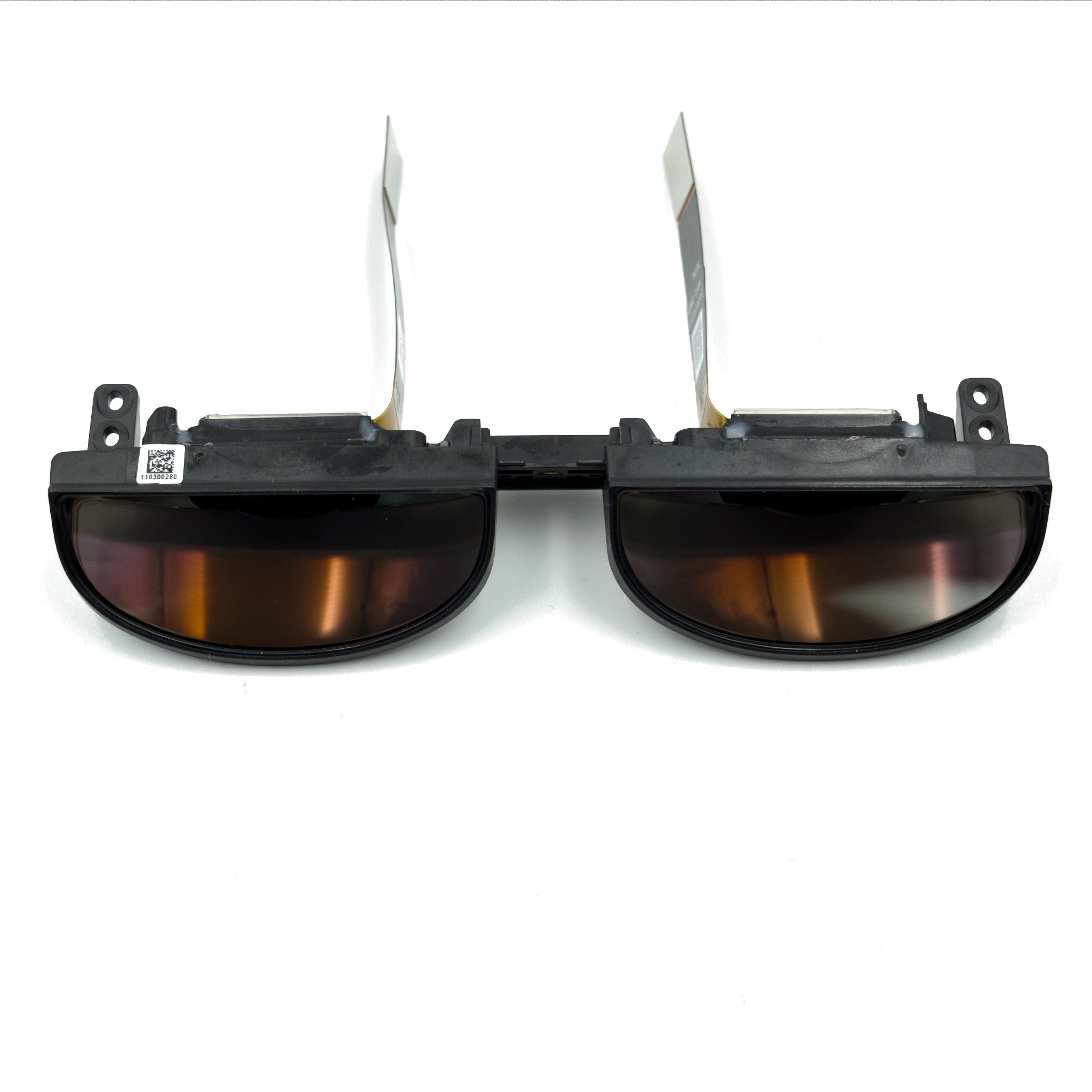
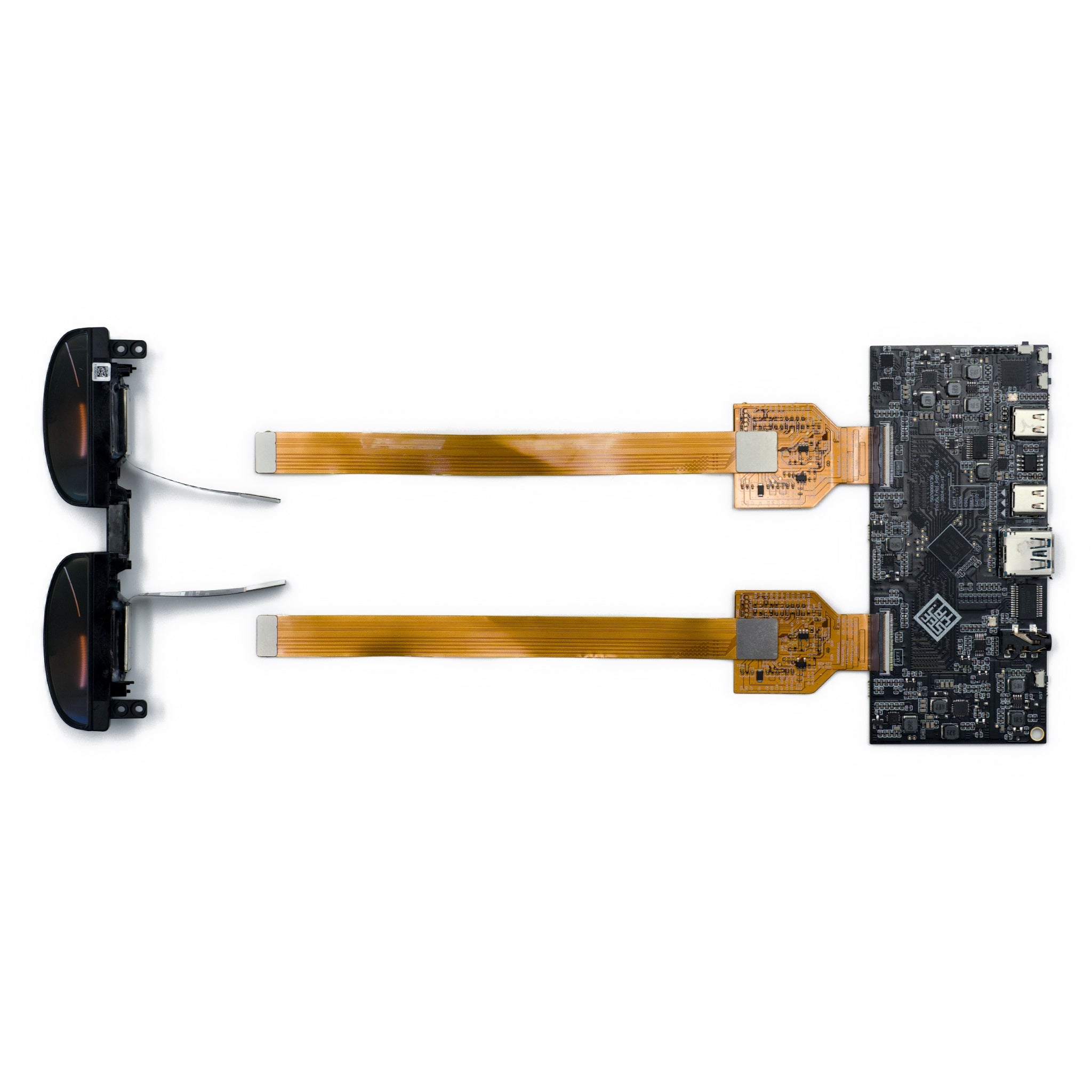
Request a configuration-level BOM that identifies the display, optical module, driver or adapter board, FPCs, cables, mechanical parts, power accessories, firmware, and available documents. Also confirm whether the quotation is for a complete evaluation set or only one subsystem, and list the host, enclosure, power supply, sensors, or other parts that remain the buyer’s responsibility.
Provide the host model and operating system, physical output connector, video protocol, maximum resolution and refresh rate, power capability, cable direction, and required monocular or binocular image mode. DisplayModule should confirm the complete display-module, driver-board, cable, and firmware combination rather than approving the optical module in isolation.
Obtain the latest CAD and drawing package, then verify optical-axis location, eyebox and eye-relief position, mounting datums, alignment tolerances, connector access, cable bend space, heat dissipation, assembly stress, and serviceability. Environmental protection such as sealing, dust resistance, or pressure resistance must be designed and validated separately unless it is explicitly included in the module specification.
Create a sample acceptance plan covering image quality, optical performance, host compatibility, startup behavior, power, thermal performance, mechanical fit, cable reliability, and operation under representative ambient conditions. Record the module, board, firmware, and document revisions used in the test so any production configuration can be matched to the approved sample.
Provide the target optical specifications, display and host interface, mechanical envelope, industrial-design constraints, environmental requirements, prototype quantity, annual volume, compliance needs, schedule, and division of design responsibilities. DisplayModule can then evaluate technical feasibility, customization scope, MOQ, NRE, sample plan, lead time, and production path.