



Custom OLED Displays: 6 Trends in Wholesale Markets
Six shifts matter to anyone buying custom OLED displays wholesale: PMOLED keeps the small-size niche, AMOLED capacity is reaching industrial and medical sizes, flexible parts are moving from demonstrators into specifications, lifetime claims are being tested rather than quoted, buyers are consolidating on fewer sizes, and suppliers are being asked for finished modules instead of bare panels. Each changes what belongs in a request for quotation.
Reading market numbers carefully
Published growth rates for this market differ widely between sources because they count different things — panels, modules, area, revenue — and because much of the volume sits inside captive supply that rarely reaches a broker. A figure such as a percentage growth in wholesale OLED orders is only useful if the definition, the base year and the geography travel with it.
What a buyer can verify is closer to home: which sizes a supplier will actually quote, at what quantity, with what lead time, and with what commitment on availability. Those four answers describe the market you are buying from more accurately than any forecast.
PMOLED keeps the small-size niche
Passive-matrix OLED holds the low end because it does not need a transistor array per pixel. Below roughly three inches, with modest resolution and a limited number of rows, a PMOLED module is often the cheapest way to get an emissive display into an instrument, a wearable or a handheld meter.
The trade-off is structural rather than commercial. In a passive matrix each row is driven for one line time out of the frame, so the current needed to reach a given brightness rises with the row count, and lifetime falls with current density; active-matrix addressing exists precisely to put a switch at each pixel and hold its state for the whole frame[2]. That is why PMOLED catalogues concentrate on small diagonal sizes and why a request for a large PMOLED at high brightness gets answered with a warning rather than a price.
For wholesale buyers the practical consequence is that PMOLED sourcing rewards standardisation. Character and small graphic formats with an established driver and a stocked glass layout are available on short lead times; a bespoke layout is not.
AMOLED reaches industrial sizes
Active-matrix OLED volume has been built on phone and watch lines, and the sizes those lines produce well now appear in industrial and medical products: round formats for instruments, small rectangles for handheld diagnostics, and higher-resolution panels where an LCD's backlight would be the bulk of the power budget.
What has changed for buyers is availability at modest quantity. Sizes that were effectively reserved for consumer programmes a few years ago can now be quoted in the low thousands, with a driver IC that is documented and a flex that can be re-pinned. The constraint that remains is supply continuity: consumer lines move quickly, and a panel that is available this year may be gone from the line the year after.
That makes the end-of-life question part of the first conversation, not the last. Suppliers who handle AMOLED routinely can say which part numbers carry allocation risk and whether a pin-compatible alternative exists.
Flexible parts move into specifications
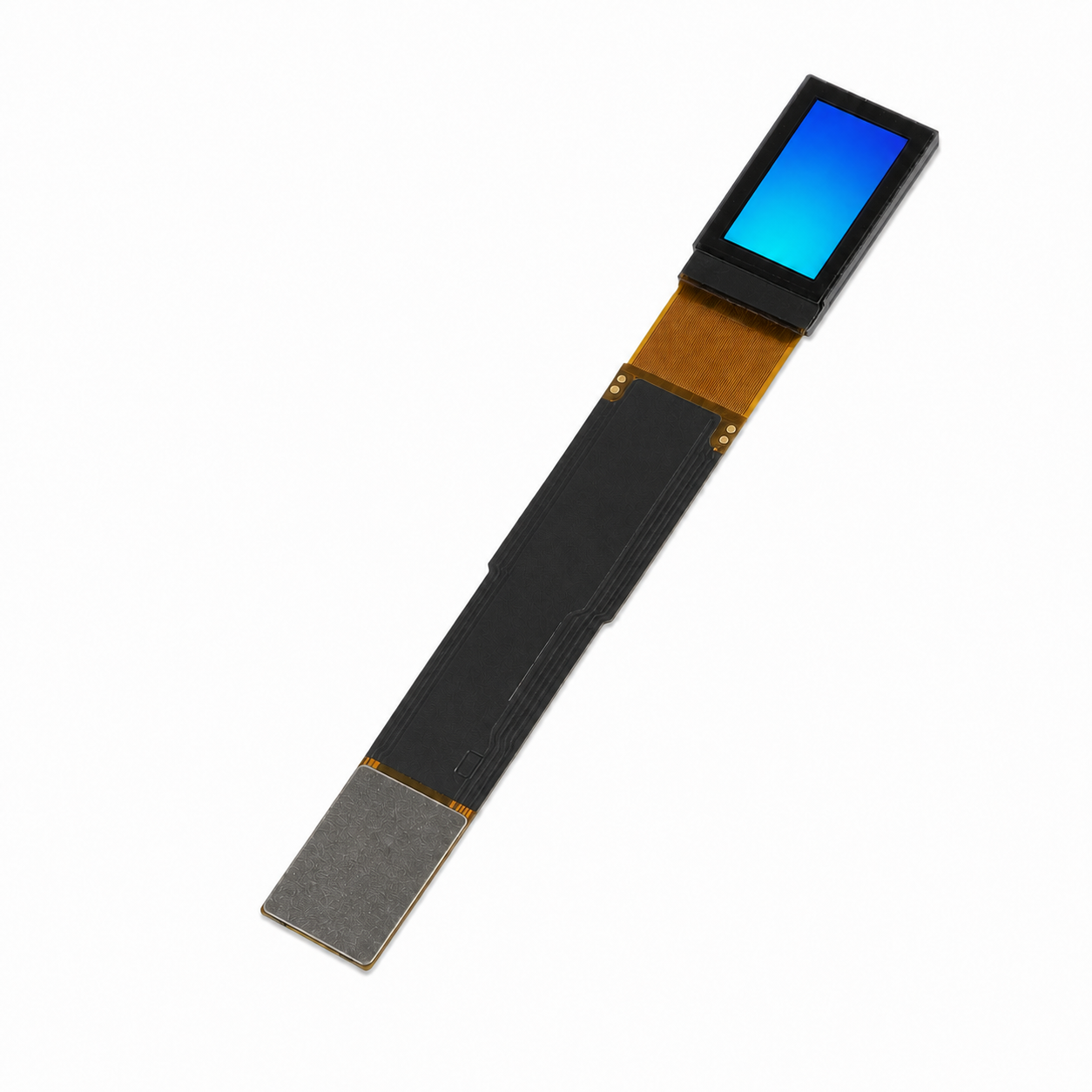
Curved and flexible OLED modules have moved from trade-show demonstrators into real specifications, mostly where the display has to follow a surface: a curved instrument face, a wearable with a fixed wrist curvature, a console that has to wrap a housing radius.
Two numbers decide whether a flexible part is a real option: the bend radius the module survives in the installed state, and the number of cycles it survives at that radius in the handling the product will actually see. Both are meaningless without their test conditions — radius, cycle rate, temperature, and whether the bend is static or repeated. A supplier who quotes a bend radius without those conditions is quoting a headline.
Because a flexible module is usually bonded to a carrier in the final product, the mechanical interface between module and housing matters as much as the panel. Ask for the installed-state radius and the adhesive or clip method that achieves it, not just the panel's own limit.
Lifetime claims get tested
OLED luminance falls as the emissive layers age, and the rate depends on the current density needed to hold a given brightness. A lifetime figure therefore means nothing without three companions: the initial luminance it is measured from, the fraction of that luminance still available at end of life, and the temperature and drive conditions during the test — all of it read under a stated measurement geometry, which is what the ISO 9241-307 procedures define[1].
The useful form of the claim is a curve or a pair of figures — time to a defined fraction of initial luminance at a stated brightness and temperature. Buyers who compare on that basis discover quickly that a brightness increase often costs lifetime in a way the catalogue did not mention.
This is also where incoming inspection earns its cost. A batch can pass a functional check and still show line defects, mura or dead pixels once it has been run at temperature for a few hours; comparing against a retained reference unit is what turns a vague complaint into a specification argument.

Buyers consolidate on fewer sizes
Panel makers concentrate capacity on the sizes that sell in volume, and glass economics punish small runs of unusual formats. The effect on wholesale buying is that bespoke sizes are getting more expensive relative to standard ones, and tooling is a larger share of the first order.
Consolidation is not only a cost response. Each additional size in a product family carries its own incoming inspection, its own spares and its own end-of-life risk. Buyers who can standardise on two or three diagonal sizes across a range of products reduce all three at once.
The practical question at quotation stage is which sizes the supplier keeps on the shelf or in continuous production, and which would be a custom glass run. The difference in lead time is usually larger than the difference in unit price.
Modules instead of panels
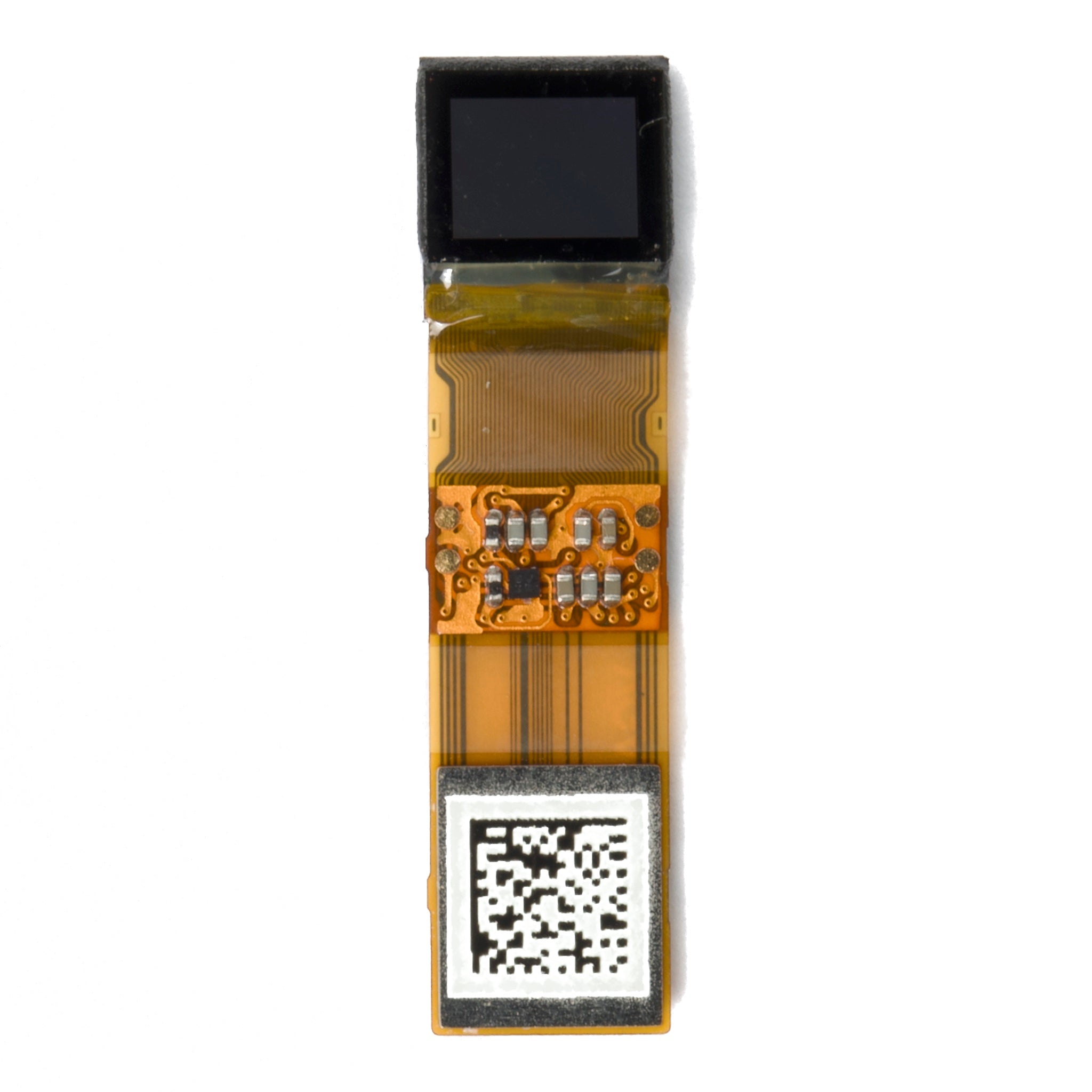
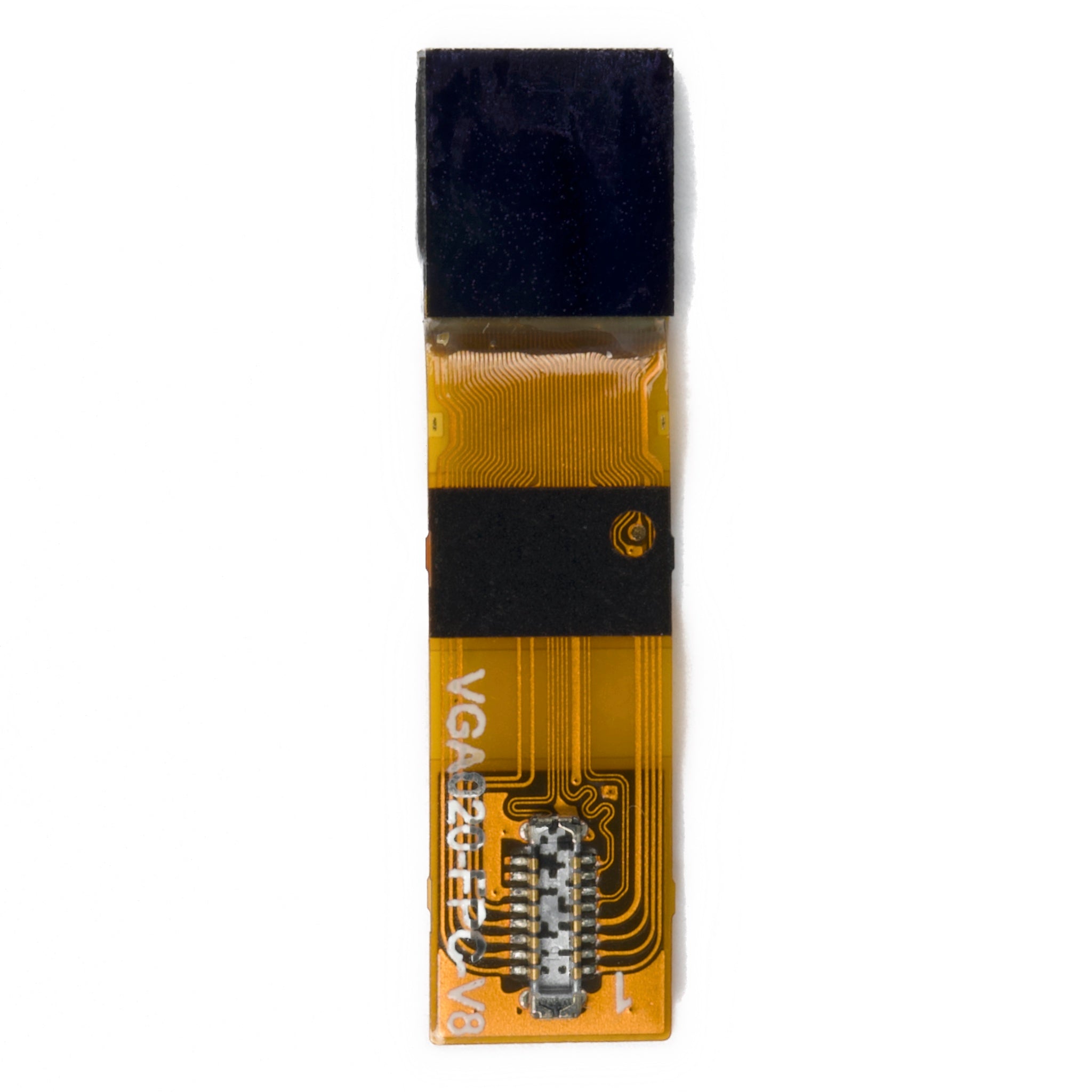
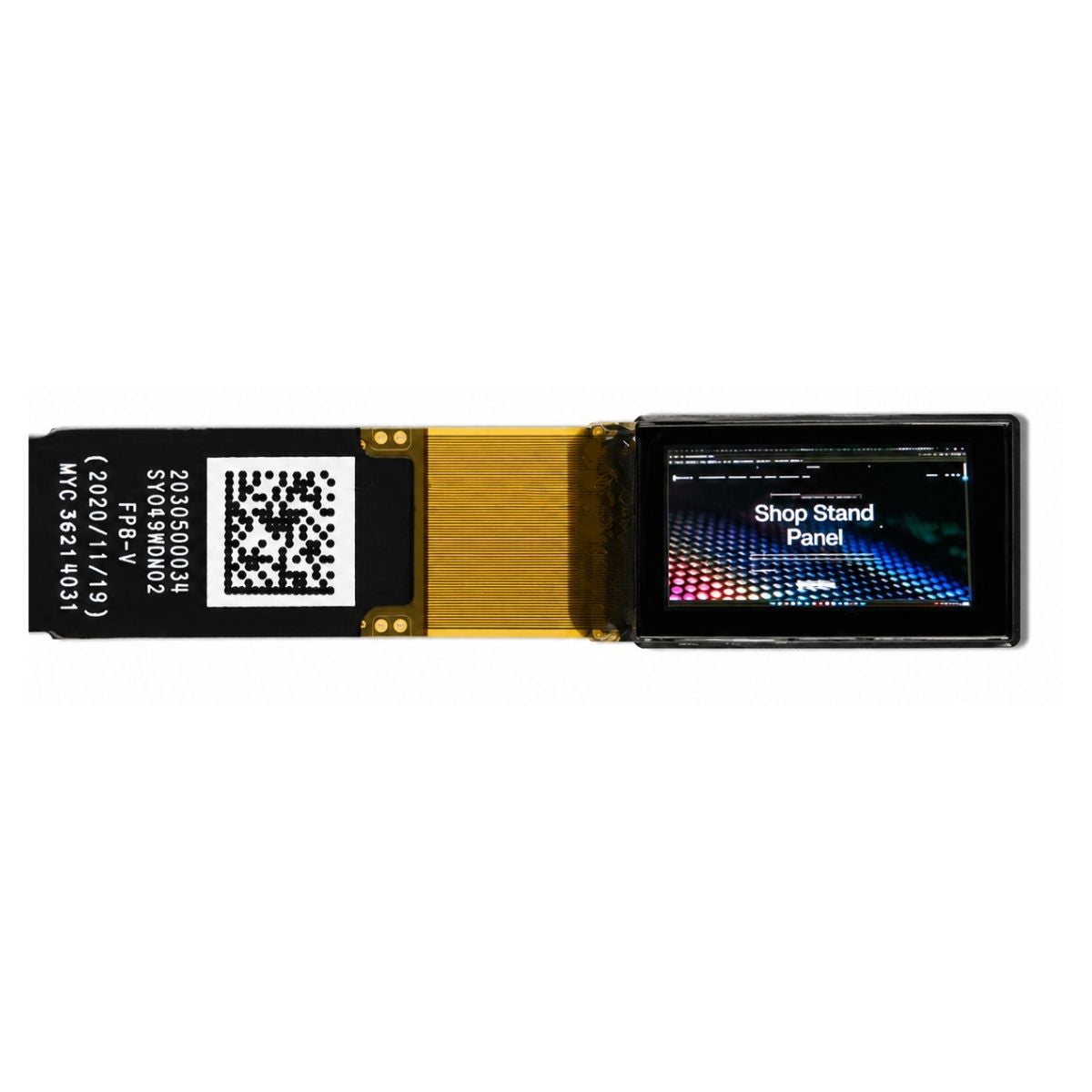
The clearest change in wholesale requests is scope. Buyers increasingly ask for a module rather than a panel: OLED glass with its driver bonded, a flex with a defined pinout, a controller with a documented initialization, sometimes a cover glass with an anti-reflective treatment, sometimes a touch sensor laminated on top.
The reason is integration cost. A bare panel pushes bonding, flex design, driver selection and test onto the buyer, and each of those needs equipment and know-how that most product companies do not keep in-house. A module moves that work to the supplier who already has the bonder.
It also moves the specification burden. A module quote is only comparable when the scope is itemised — panel, driver, flex, cover glass, touch, test level, packaging — because two suppliers quoting "an OLED module" can be describing very different assemblies.
What the trends mean for a buyer
Three conclusions follow. Standardise where the product allows it, because custom sizes are becoming the expensive path. Ask for lifetime and bend figures with their test conditions, because the headline version cannot be compared. And scope the quotation line by line, because the module is now the unit of purchase and the module is not one thing.
Module families are grouped by technology in the OLED collection, with the PMOLED range covering the small instrument formats and the AMOLED range covering the higher-resolution and round formats.
None of these trends makes OLED the right answer for every product. They change what a buyer should ask, and the questions — measured lifetime at a stated brightness, availability in years, itemised module scope — are the same ones that separate a reliable supplier from an optimistic one.
References
- ISO 9241-307:2008 — Ergonomics of human-system interaction — Part 307: Analysis and compliance test methods for electronic visual displays. International Organization for Standardization. https://www.iso.org/standard/40102.html
- Hilsum, C. (2010). Flat-panel electronic displays: a triumph of physics, chemistry and engineering. Philosophical Transactions of the Royal Society A, 368(1914), 1027–1082. https://doi.org/10.1098/rsta.2009.0247
더 읽기
IPS and LCD differ in key aspects: LCD is a broad tech using liquid crystals, while IPS is an LCD subtype optimizing angles/color. IPS offers wider.
For IPS display quality assurance, five key viewing angle tests include contrast retention (≥85% at 60°) , color accuracy (ΔE <3 at 45°) , brightness.
댓글 남기기
이 사이트는 hCaptcha에 의해 보호되며, hCaptcha의 개인 정보 보호 정책 과 서비스 약관 이 적용됩니다.