

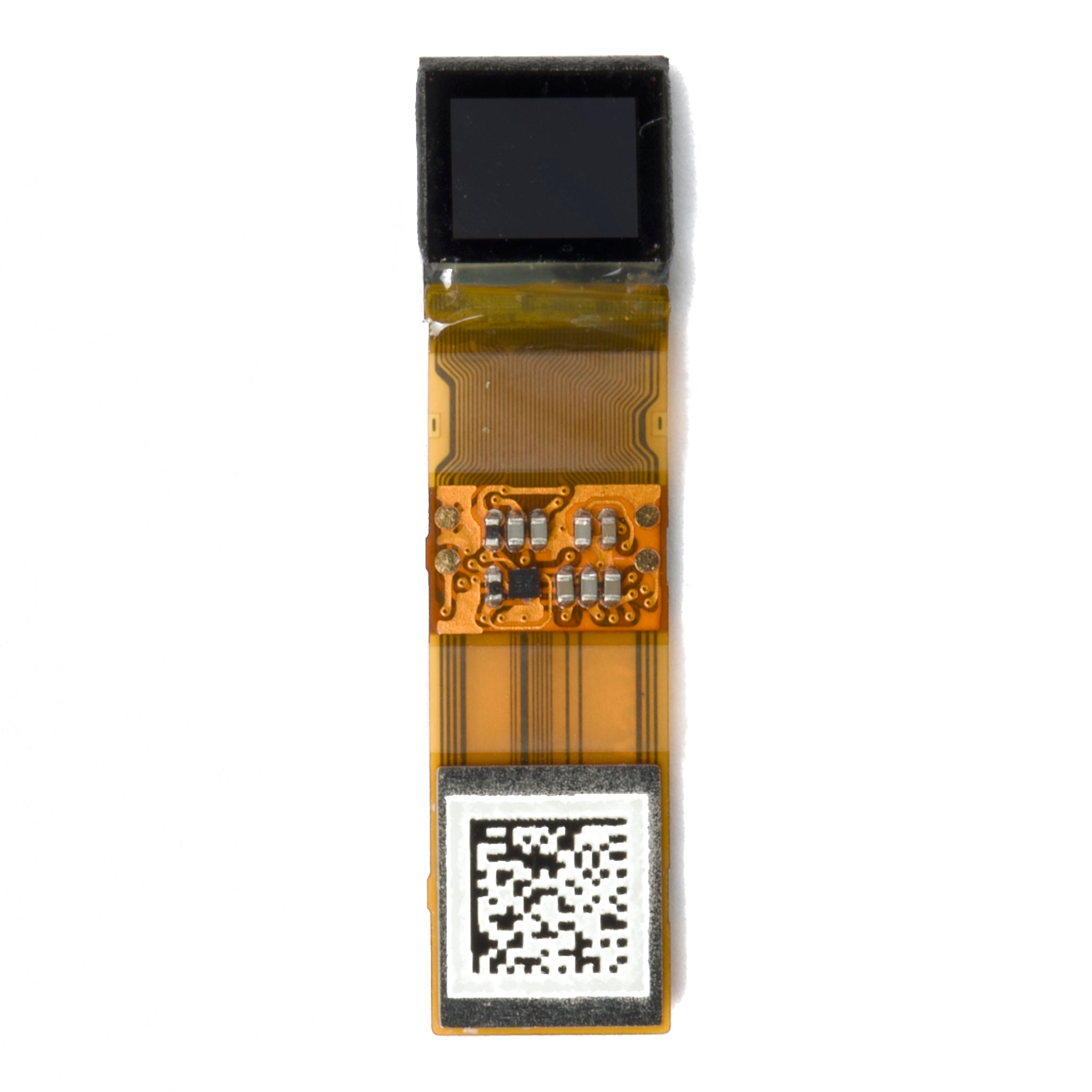
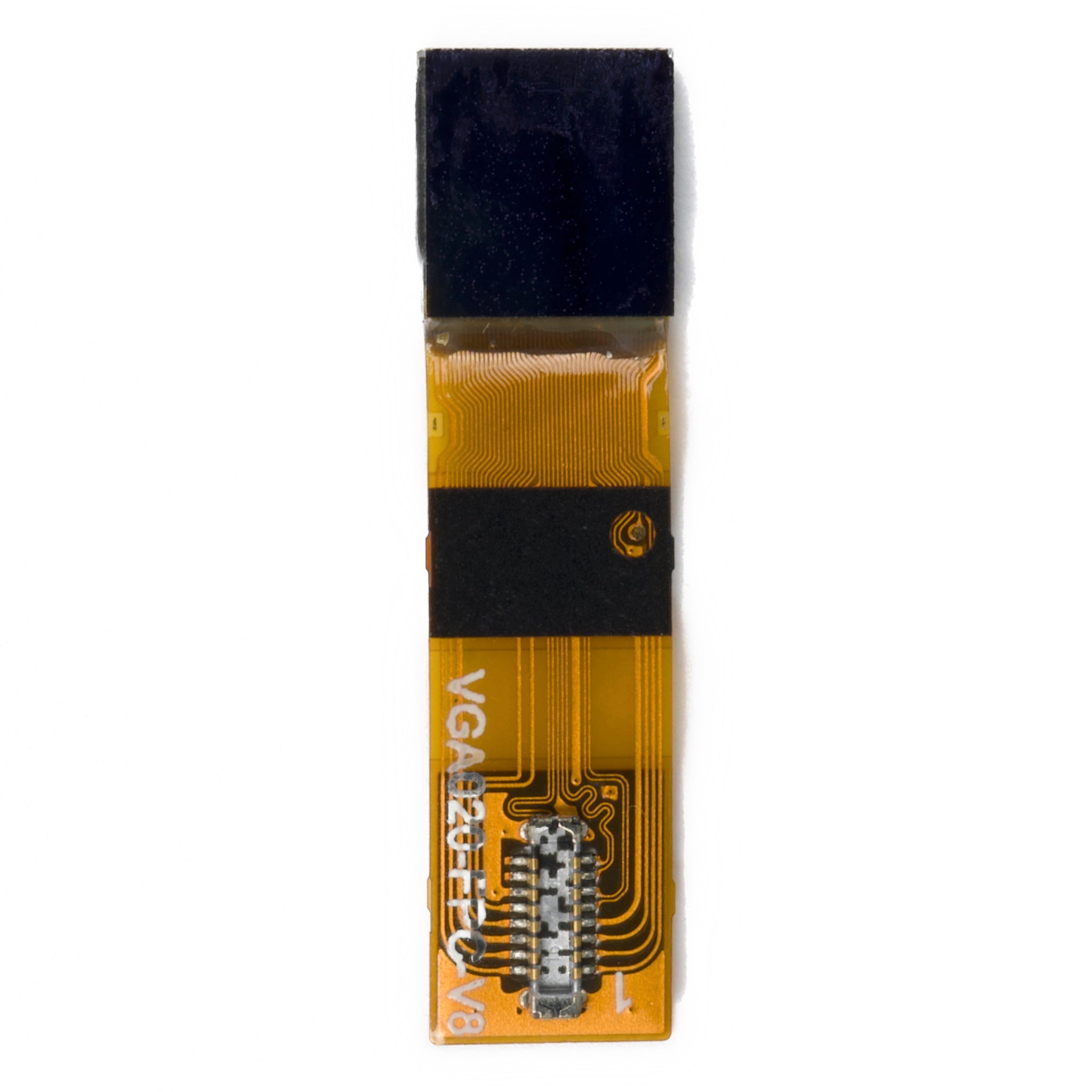
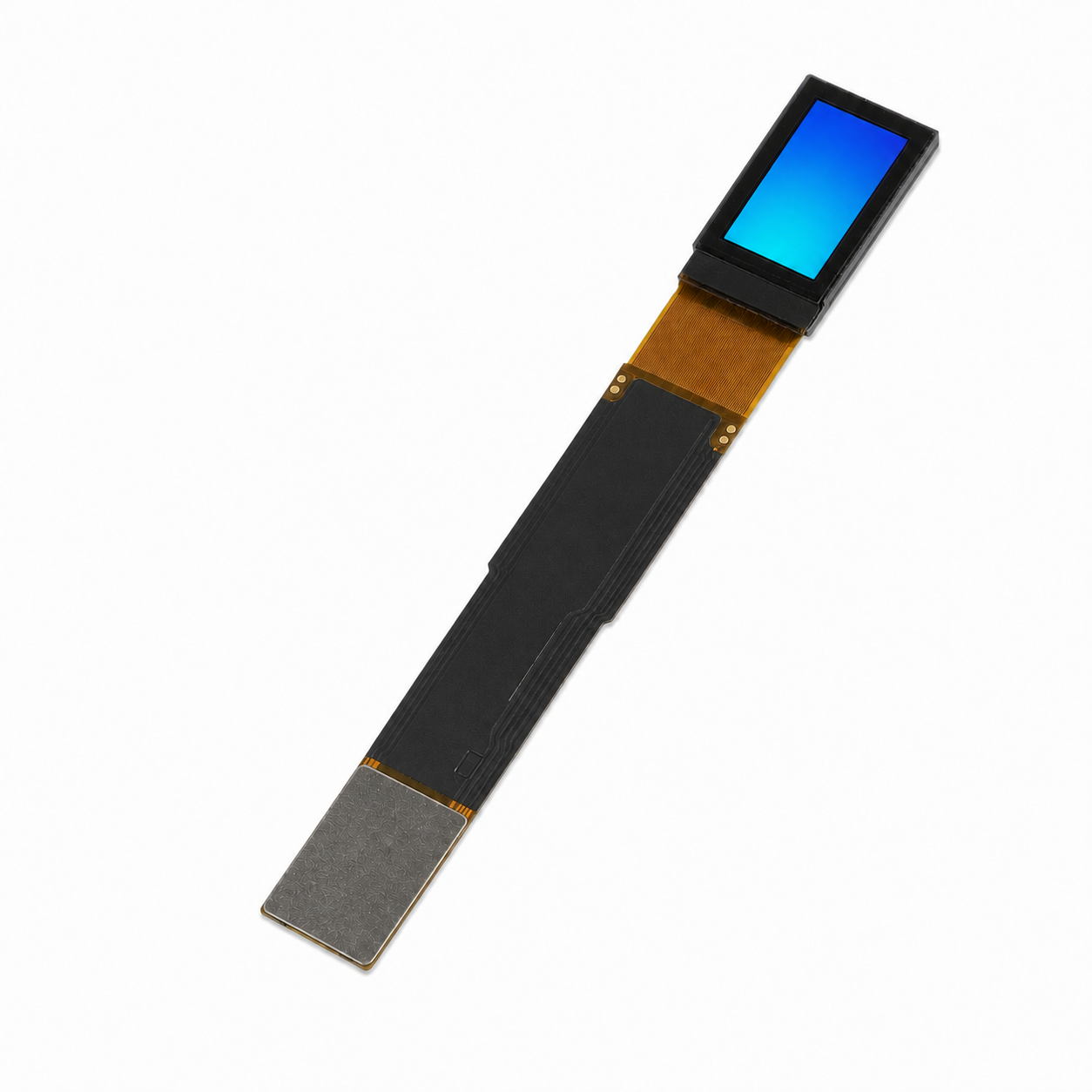
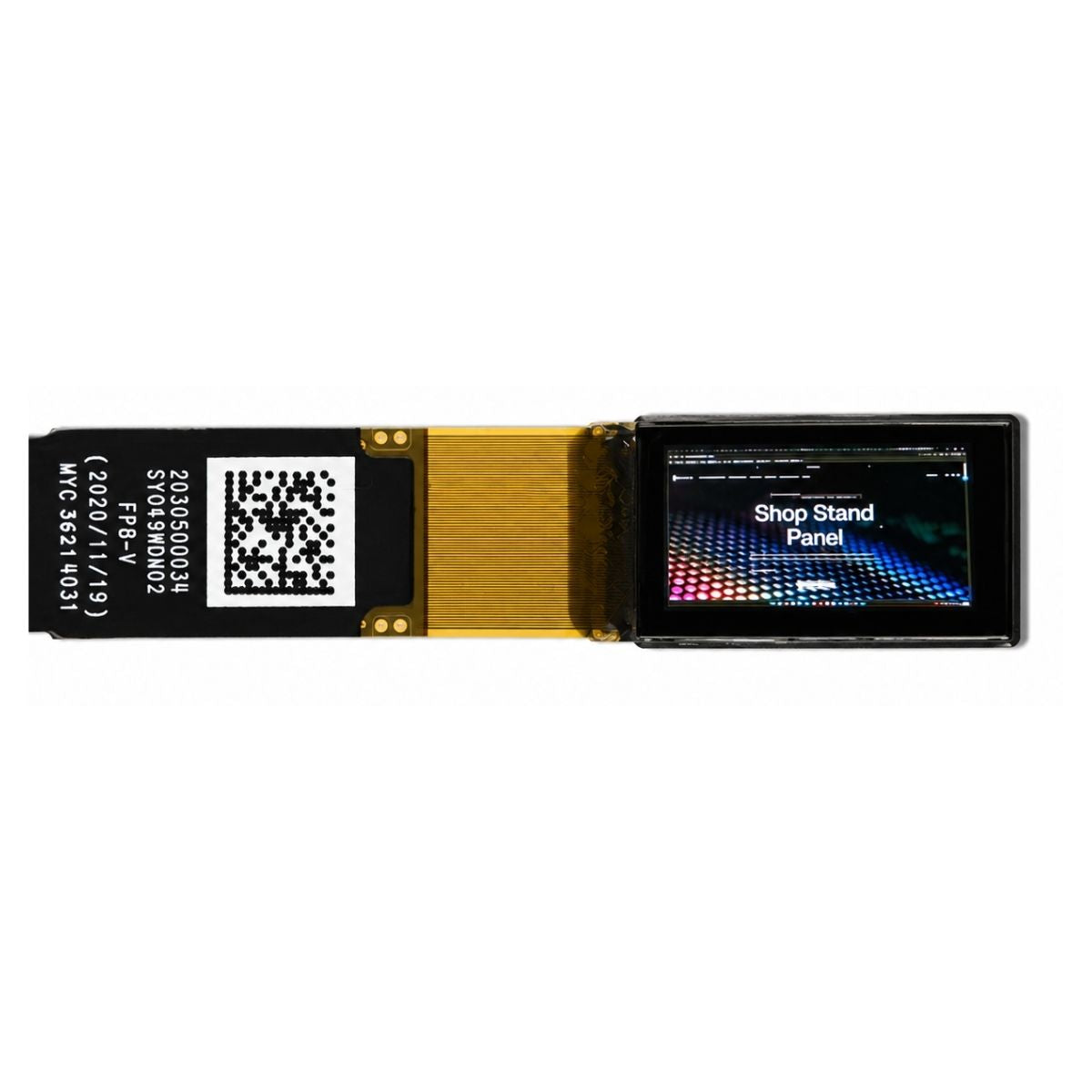
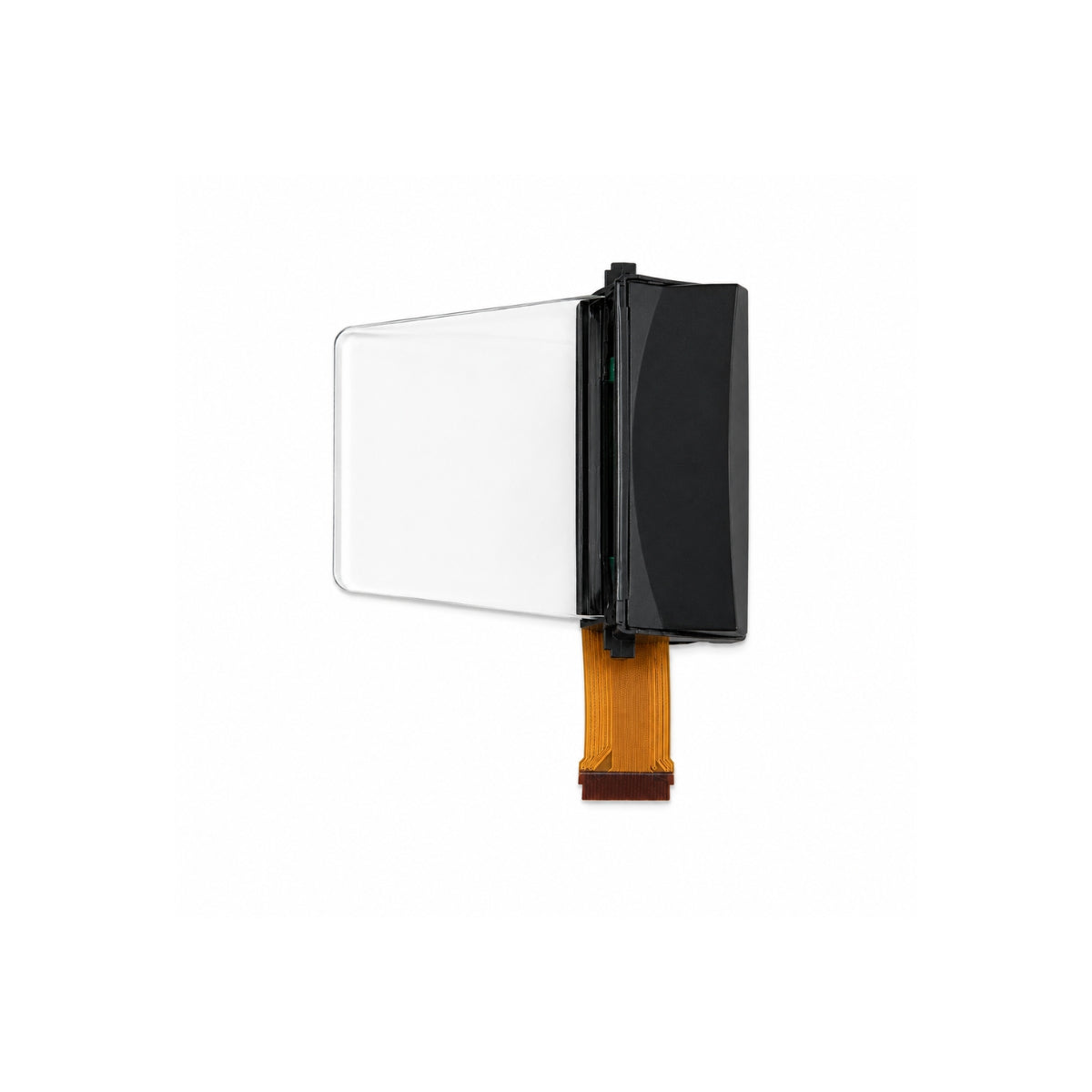
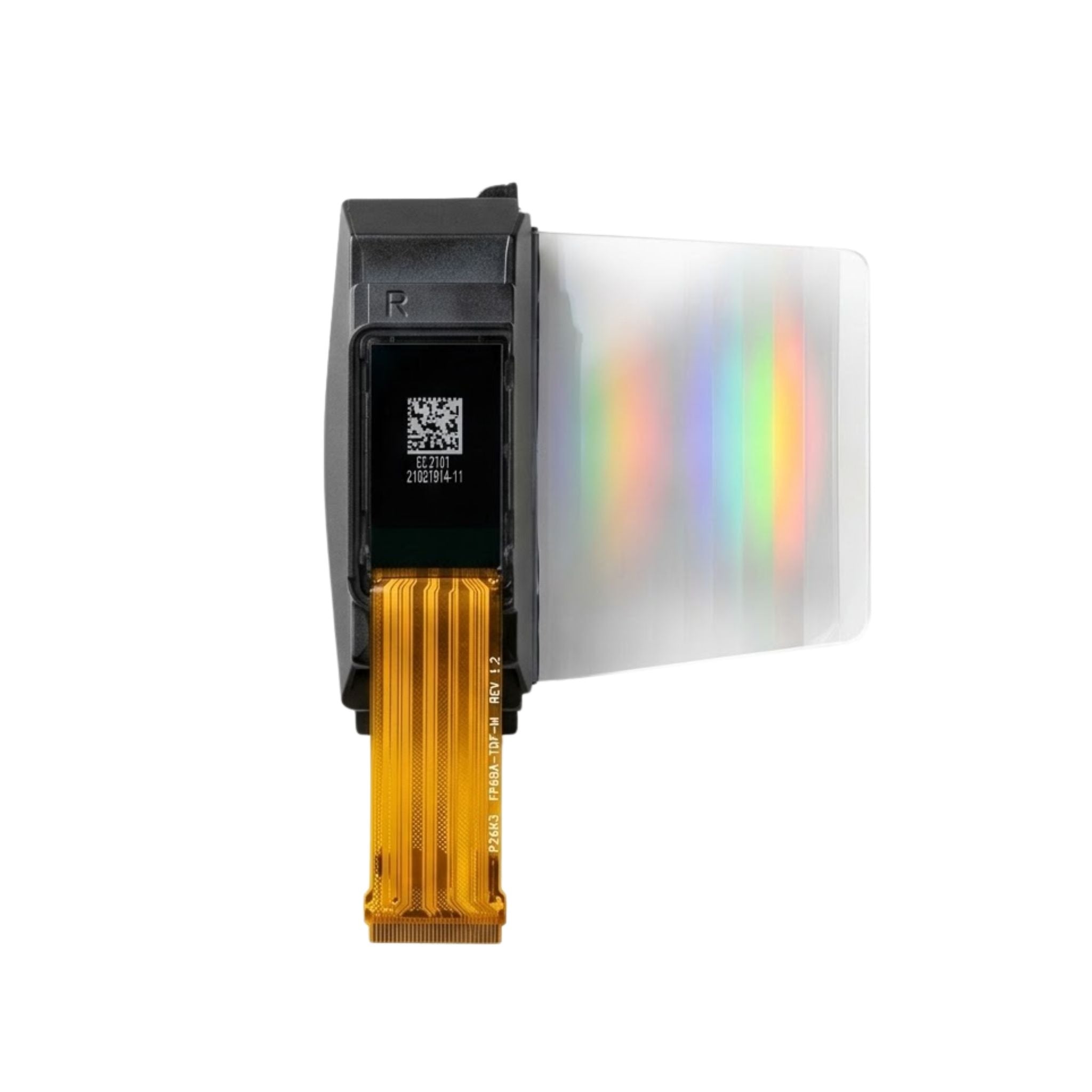


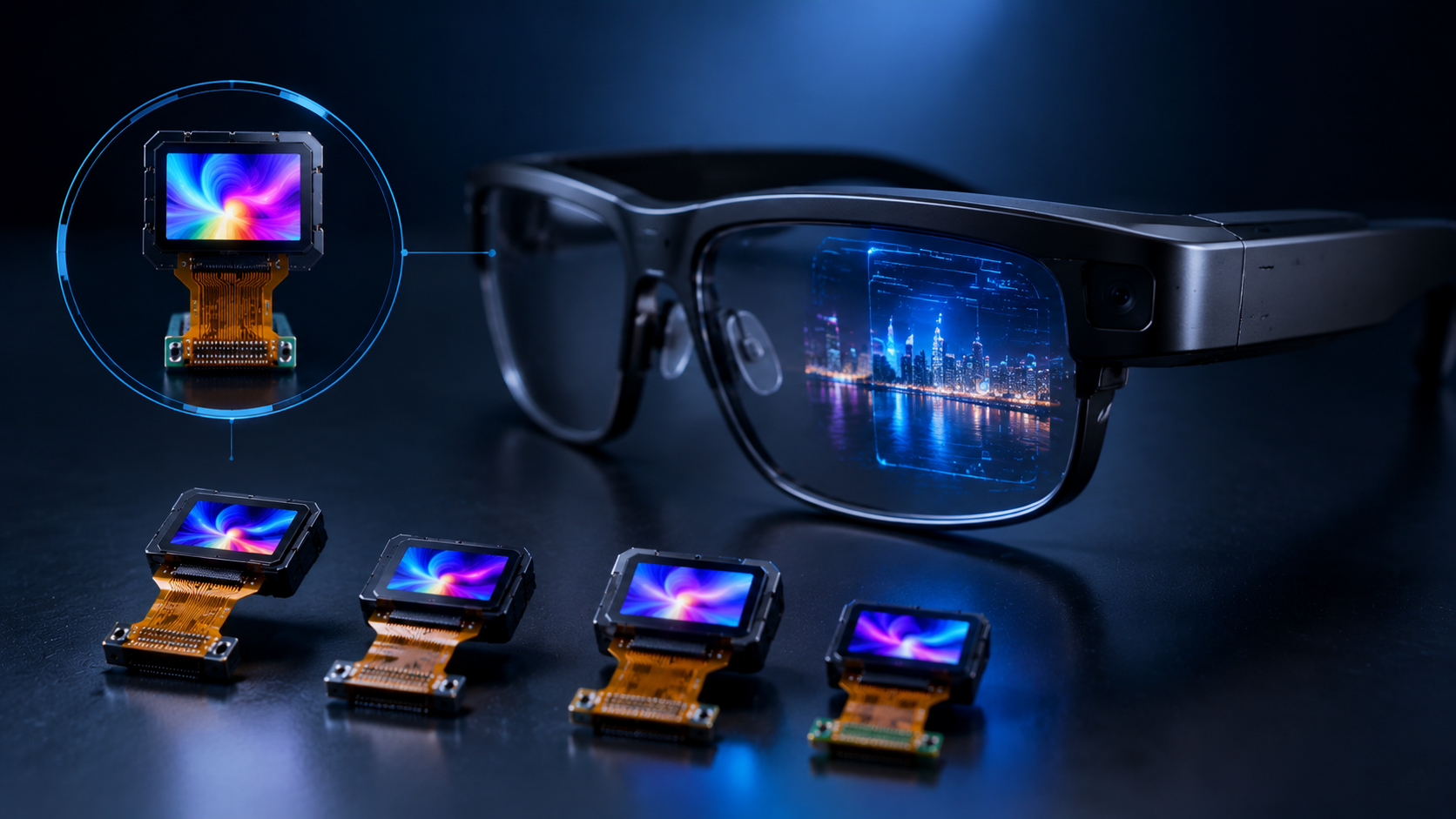
Micro OLED, also known as OLED-on-silicon or OLEDoS, is a high-density microdisplay technology used in electronic viewfinders, wearable display glasses, AR/VR optical engines, scopes and other compact near-eye systems. Its key advantages are high pixel density, high contrast, fast response and small module size. However, it should not be described as the only or universally dominant smart-glasses display technology. LCoS and LEDoS/MicroLED are also important alternatives, especially where optical architecture, brightness, cost or lifetime requirements differ.
This article explains the fundamentals of Micro OLED display modules, their main application areas and the practical trade-offs involved in module selection.

Basics
What Is Micro OLED?
OLED stands for Organic Light-Emitting Diode. Unlike LCD-based displays, OLED pixels emit light directly and do not require a backlight. This self-emissive structure enables high contrast, fast response and excellent black levels. In Micro OLED, the OLED emitting layers are fabricated on a silicon CMOS backplane instead of a large glass or flexible display substrate. The silicon backplane allows very small pixel pitches and integrated driving circuits, making Micro OLED suitable for sub-inch near-eye display modules.
Commercial OLED microdisplays can reach pixel densities around 4,000 to 5,000 PPI, depending on panel size and pixel pitch. For example, some latest OLED microdisplay products have reached approximately 5,000 PPI, with very high luminance and contrast specifications under defined driving conditions. This shows why Micro OLED is attractive for AR glasses and other compact optical systems.
One common misunderstanding is that Micro OLED always means a pure RGB OLED structure without color filters. In practice, commercial OLED microdisplays may use different OLED stack designs, color-filter structures, microlens arrays and compensation circuits. Therefore, the most important definition of Micro OLED is the combination of OLED emission with a silicon CMOS backplane and microdisplay-scale pixel density.
| Technology | Core Principle | Main Advantages | Main Limitations | Typical Applications |
|---|---|---|---|---|
| Micro OLED / OLEDoS | Self-emissive OLED layers on a silicon CMOS backplane | High pixel density, high contrast, fast response, compact module size | Brightness, thermal design and lifetime must be carefully managed | Camera EVF, AR/VR display engines, FPV viewers, scopes, wearable display glasses |
| LCoS | Reflective liquid-crystal modulator on silicon with external illumination | High resolution, mature supply chain, flexible optical-engine design | Requires illumination and polarization optics; system contrast and efficiency depend on the full optical path | AR glasses, projectors, HUDs, spatial light modulation |
| LEDoS / MicroLED | MicroLED emitters integrated on silicon | High brightness potential, inorganic-emitter lifetime, strong outdoor potential | Full-color integration, yield and mass production remain difficult | Future AR light engines, high-brightness near-eye displays |
Resolution and Pixel Density
For near-eye displays, resolution should not be judged only by the panel pixel count. A more useful metric is PPD, or pixels per degree. A simple approximation is:
PPD ≈ horizontal pixel count ÷ horizontal field of view
For example, a 1920-pixel-wide display used across a 46-degree horizontal field of view provides about 42 PPD. A 3840-pixel-wide display used across a 50-degree horizontal field of view provides about 77 PPD, assuming the full pixel width is used by the optical system. In real products, effective PPD may be lower because of optical cropping, image warping, binocular overlap, distortion correction and rendering scale.
The often-quoted “60 PPD retinal resolution” target should be treated as an engineering guideline rather than an absolute biological limit. Human visual perception depends on contrast, color, viewing distance, eccentricity, eye movement and content type. General video and gaming can look acceptable at lower PPD, while fine text, CAD, medical imaging and professional viewfinders benefit from higher PPD.
- Entry wearable display glasses: usually use 1080p-class displays per eye and can deliver acceptable clarity for video and general UI.
- Premium near-eye displays: use higher resolution, narrower effective FOV or improved optics to increase perceived sharpness.
- Professional EVF and optical instruments: require high dot count, strong contrast and carefully designed magnification to reduce visible pixel structure.
Brightness and Contrast
Brightness is one of the most important selection factors for AR and smart glasses. However, panel brightness, optical-engine brightness and eye-side brightness are not the same thing. A Micro OLED panel may be specified at several thousand nits, but the brightness reaching the eye depends on lenses, coatings, combiner efficiency, birdbath optics, waveguides and other optical losses.
For wearable display glasses used mainly as a virtual monitor, eye-side brightness of several hundred nits may be enough for indoor and shaded environments. For see-through outdoor AR, the requirement is much harder because the virtual image must compete with ambient light. In that case, the final system brightness and perceived contrast matter more than the bare panel number.
Contrast is another major advantage of Micro OLED. Since OLED is self-emissive, black pixels can be close to off, enabling very high native contrast. This is valuable for EVFs, night scenes, video content and AR overlays. In see-through AR systems, however, perceived contrast also depends heavily on ambient light and combiner design.
| Specification | Meaning | Selection Advice |
|---|---|---|
| Peak brightness | Maximum luminance under defined test conditions | Useful for comparison, but should not be treated as continuous real-world output unless the test condition matches the use case. |
| Sustained brightness | Brightness that can be maintained under thermal and lifetime limits | More important for navigation, industrial AR and long-duration use. |
| Eye-side brightness | Brightness perceived after the complete optical system | The most important value for user experience and should be measured in the final module. |
| Contrast ratio | Ratio between white and black output under defined conditions | Micro OLED can perform very well, but perceived contrast decreases in bright ambient environments. |
Applications
Smart Glasses and AR Glasses
Micro OLED is widely used in wearable display glasses and some AR/VR optical engines, but not all smart glasses use Micro OLED. The market includes display-free AI glasses, monocular display glasses, binocular wearable display glasses, LCoS-based systems, Micro OLED systems and experimental MicroLED systems.
Display-oriented products such as XREAL Air-series glasses and RayNeo Air-series glasses use Micro OLED displays for 1080p-class visual output, high refresh rates and a virtual large-screen experience. These products are often used for video, gaming, screen mirroring and productivity. They should not be confused with full spatial AR headsets that perform advanced scene understanding and persistent 3D overlay.
Meta Ray-Ban Display is a useful example of why product descriptions must be precise. It is a smart-glasses product with a built-in display in the right lens, designed for notifications, messaging, navigation, captions and AI interaction. It is not the same type of product as binocular 1080p-per-eye Micro OLED display glasses. Therefore, it is inaccurate to describe all Ray-Ban Meta products as binocular Micro OLED AR glasses.
- Consumer wearable display glasses: prioritize light weight, comfort, low power, 1080p-class clarity and enough brightness for indoor or shaded use.
- Outdoor AR glasses: require higher system brightness, efficient combiners, thermal control and careful battery management.
- Industrial AR headsets: prioritize durability, readable overlays, PPE compatibility, field reliability and long operating time.
- Monocular display glasses: usually focus on notifications, translation, captions, navigation and quick contextual information.
- Binocular display glasses: often use Micro OLED with birdbath-style optics for media and virtual-screen use.
Electronic Viewfinders
EVF, or electronic viewfinder, is one of the most established application fields for Micro OLED. Photographers and videographers expect an EVF to provide accurate framing, strong contrast, fast response and fine detail without obvious pixel structure. Micro OLED fits this use case well because it offers high contrast, fast response and compact size.
EVF specifications must be written carefully. Camera makers often describe EVF resolution in “dots,” and this should not be incorrectly converted into panel pixel resolution. For example, Sony Alpha 7S III uses an approximately 9.44-million-dot OLED electronic viewfinder with 0.90× magnification and a 41-degree diagonal field of view. Fujifilm X100VI uses a hybrid optical/electronic viewfinder; its EVF is a 0.5-inch OLED color viewfinder with approximately 3.69 million dots, 0.66× magnification and about 32-degree diagonal angle of view. These products should not be described as having the same EVF specification.
- Professional mirrorless camera EVF: high dot count, high magnification, fast refresh and accurate color are key.
- Cinema camera EVF: requires low latency, high refresh, HDR workflow support and professional color management.
- FPV and drone viewing: prioritizes low latency, stable operation, compact size and sufficient brightness.
- Medical and inspection optics: require high contrast, accurate color, reliability and system-level regulatory compliance.
Wearable Secondary Displays and Portable Viewing
Micro OLED is suitable for near-eye wearable displays, not for ordinary 4-to-7-inch portable monitors in the conventional sense. A genuine Micro OLED panel is usually a sub-inch or near-inch microdisplay that is enlarged through optics to create a virtual image. By contrast, many portable OLED monitors and smartphone-size OLED screens use AMOLED panels on glass or flexible substrates, not OLED-on-silicon microdisplays.
Therefore, a 7-inch “OLED portable display” should not automatically be called a Micro OLED product. If a product has a 6-to-7-inch visible screen and a pixel density similar to a smartphone display, it is almost certainly a conventional AMOLED display rather than a silicon-backplane Micro OLED. True Micro OLED is usually hidden inside an optical engine and viewed through lenses.
For product positioning, this distinction is important. Micro OLED is excellent when the goal is a compact optical engine for glasses, EVFs, scopes or headset displays. For a physical handheld monitor, AMOLED is usually the more practical technology because it is made in larger panel formats and benefits from mature smartphone and tablet supply chains.
Selection Challenges
Power Consumption
Power consumption is one of the main barriers for Micro OLED in lightweight AR glasses. The display module must share the battery budget with sensors, wireless communication, cameras, audio, processors and thermal management. The higher the required brightness, the harder it becomes to maintain acceptable battery life and surface temperature.
The correct way to select brightness is to start from the user requirement rather than the highest number on a datasheet. First define the use case: indoor media viewing, outdoor navigation, industrial inspection, EVF, FPV or medical viewing. Then estimate the eye-side brightness and contrast requirement. Only after that should the panel brightness and optical efficiency be selected.
- Improve optical efficiency: better lens transmission, combiner efficiency and alignment can reduce the panel brightness required for the same perceived image.
- Use adaptive brightness: brightness should follow ambient light and displayed content rather than staying at peak output.
- Use adaptive refresh where possible: lower refresh rates for static UI can reduce system power.
- Optimize UI design: OLED power depends strongly on brightness and image content, so dark UI and reduced white area can help battery life.
- Control thermal rise: sustained high luminance can increase temperature and accelerate aging.
Lifespan and Burn-In
Micro OLED uses organic emissive materials, so luminance decay and color shift must be considered. Blue emission generally ages faster than red and green, which can cause color balance to drift over time. High brightness, high temperature and high average picture level can accelerate degradation.
Lifetime specifications must be compared under the same test conditions. Terms such as LT95, LT97 and LT50 refer to the time required for brightness to fall to a defined percentage of initial luminance, but the result depends on initial brightness, temperature, duty cycle, image content and measurement method. A lifetime value measured at moderate brightness should not be assumed to apply to continuous peak-brightness outdoor operation.
- Use realistic duty cycles: outdoor AR does not usually require all pixels at peak brightness all the time.
- Limit static high-brightness UI: persistent icons, white panels and fixed status bars increase burn-in risk.
- Apply compensation: pixel compensation, color calibration and aging compensation can extend usable product life.
- Control temperature: thermal design is part of display lifetime design.
- Run accelerated aging tests: validation should use expected brightness, duty cycle and ambient temperature.
Cost
Micro OLED modules are usually more expensive than many LCoS-based alternatives. The cost difference comes from the silicon backplane, OLED deposition process, small high-density pixel structures, driver integration, packaging, optical alignment and supplier capacity. Cost also depends on resolution, brightness, volume, yield, interface requirements and customization level.
It is better to evaluate cost at the optical-engine level rather than only at the bare-panel level. A lower-cost panel may become expensive if it requires complex illumination, bulky optics, calibration or additional thermal design. Conversely, a higher-cost Micro OLED panel may reduce mechanical complexity in a compact EVF or wearable display engine.
- Panel cost: affected by silicon backplane size, resolution, pixel pitch, wafer process and yield.
- Optical cost: affected by lenses, waveguides, birdbath combiners, coatings, alignment and packaging.
- Driver and interface cost: affected by refresh rate, bandwidth, MIPI/LVDS interface, DSC support and calibration functions.
- System cost: affected by power, thermal design, housing, battery size and reliability requirements.
Practical Selection Checklist
| Question | Why It Matters | Recommended Action |
|---|---|---|
| Is the product an EVF, wearable display, true AR headset or simple AI glasses? | Different products require different display architectures. | Define the product category before selecting panel resolution or brightness. |
| What eye-side brightness is required? | Panel brightness alone does not predict user readability. | Measure brightness after the complete optical system. |
| What PPD is required for the content? | Video, text, CAD and medical images have different clarity requirements. | Calculate PPD using effective FOV and effective rendered pixels. |
| How long must the device run? | Brightness and refresh rate strongly affect battery life. | Set a power budget before choosing peak brightness. |
| Will the product display static UI? | Static bright UI increases OLED aging and burn-in risk. | Use UI dimming, pixel shifting and compensation. |
| Is the display specification based on peak or sustained output? | Peak lab values may not match continuous real-world operation. | Request sustained-brightness, duty-cycle and thermal data from the supplier. |
Conclusion
Micro OLED is one of the strongest display choices for compact near-eye systems because it combines high pixel density, high contrast, fast response and small module size. It is especially well suited to camera EVFs, FPV viewers, wearable display glasses and selected AR/VR optical engines. At the same time, it should not be described as the universal solution for all smart glasses. LCoS and MicroLED/LEDoS remain important alternatives, and the best choice depends on brightness, optical architecture, power budget, lifetime, cost and product category.
For Micro OLED module selection, focus on three practical metrics: effective PPD after optics, sustained eye-side brightness and total system power under real use conditions. These are more reliable than judging a module only by peak nits, raw resolution or marketing claims.
댓글 남기기
이 사이트는 hCaptcha에 의해 보호되며, hCaptcha의 개인 정보 보호 정책 과 서비스 약관 이 적용됩니다.