



Round AMOLED Display Supplier | Smart Watch, Touch Panel, Custom Cover Glass
Round AMOLED displays are widely used in smart watches and wearable devices, especially products that follow a traditional watch-style design. Compared with LCD solutions, AMOLED technology uses self-emissive pixels and does not require a separate backlight, enabling high contrast, slim module structure, and efficient Always-On Display designs when combined with suitable driving methods. This article introduces round AMOLED display technology from three practical engineering perspectives: smart watch integration, touch panel performance, and custom cover glass solutions.

Smart Watch
Round Shape
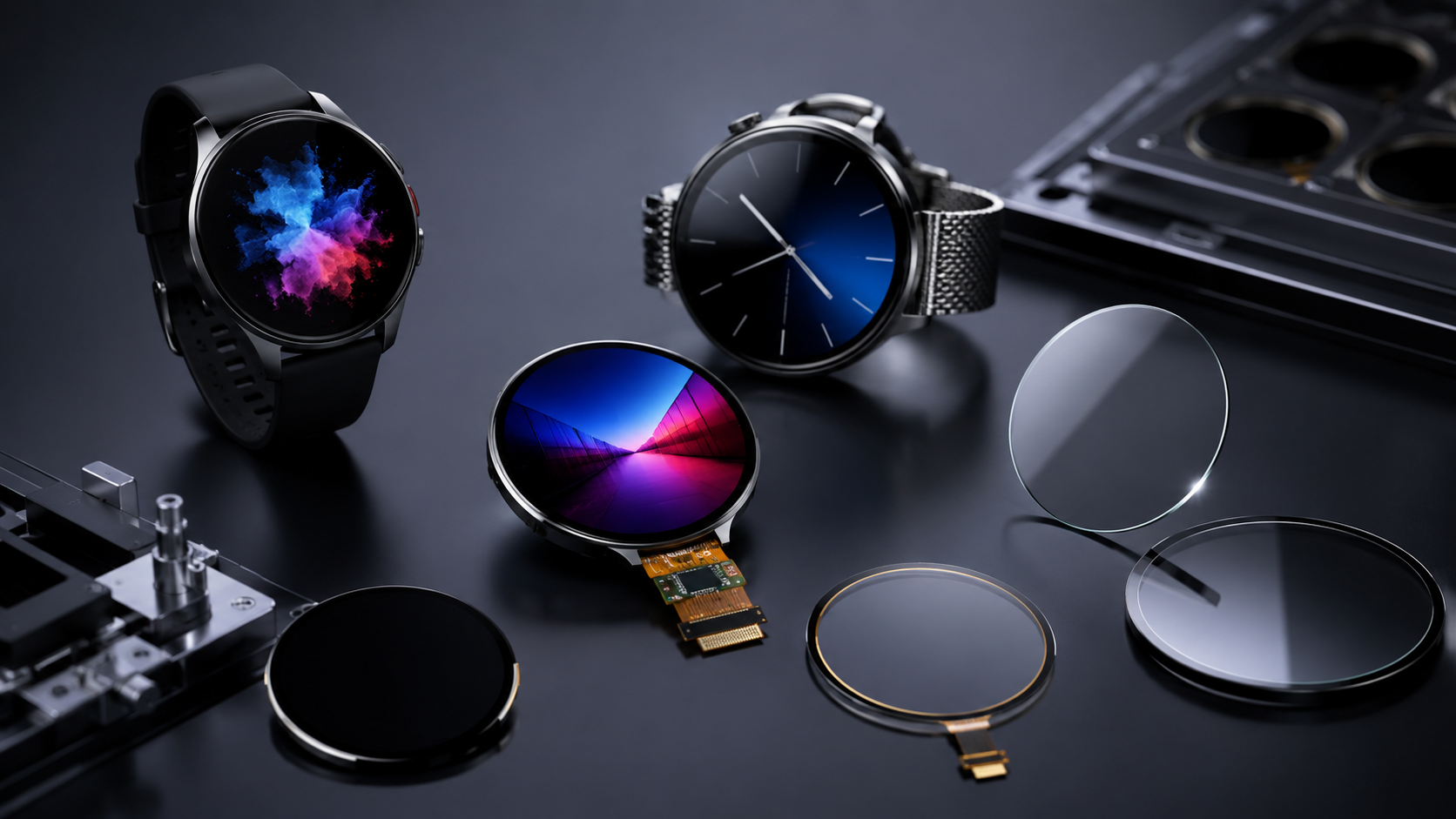
Round AMOLED displays are commonly selected for smart watches that aim to preserve the visual language of traditional analog watches. A circular active area matches the watch dial more naturally than a rectangular screen and allows watch faces, fitness rings, compass layouts, and circular UI elements to be presented with better visual balance. In actual product design, the display should not be specified by the watch case size alone. Engineers usually confirm active area diameter, resolution, cover glass outline, module thickness, FPC position, and mechanical clearance together.
Although the visible area is circular, the AMOLED pixel array is still based on a matrix-driven TFT backplane. The circular shape is achieved through active-area design, edge layout treatment, black matrix design, and mechanical outline processing. Special attention is required near the circular boundary, where incomplete edge pixels, compensation layout, and viewing-area masking can affect perceived uniformity. For this reason, high-quality round AMOLED modules should be evaluated not only by resolution and brightness, but also by edge display quality, mura level, pixel defect criteria, and center-to-edge luminance consistency.
The mechanical outline of a round display module also affects final device reliability. Edge chipping, burrs, glass stress, and dimensional deviation may influence bonding quality and sealing performance in the final watch assembly. However, IP68 or 10ATM water resistance is a complete-device validation item, not a display-panel-only specification. A display supplier can support waterproof design through stable outline tolerance, edge inspection, adhesive compatibility, and cover glass matching, but the final waterproof rating must be verified after the display, housing, gasket, adhesive, and mechanical structure are assembled together.
- Key module parameters: active area, outline diameter, resolution, thickness, FPC direction, and interface
- Edge quality items: chip-out, burr, stress mark, black border consistency, and bonding area condition
- Display quality items: mura, pixel defects, luminance uniformity, color consistency, and edge brightness
- Water resistance note: IP68 or 10ATM should be validated at complete-device level
Screen Fit
Screen Fit describes the physical compatibility between the round AMOLED module, cover glass, touch structure, adhesive layer, waterproof gasket, and watch housing. A good mechanical fit reduces visible gaps, improves appearance, supports sealing reliability, and helps prevent stress concentration during temperature cycling, drop impact, and long-term wearing. Instead of using a single universal assembly gap value, the correct design should be determined by the full tolerance chain of the watch case, display module, adhesive thickness, gasket compression, and cover glass outline.
Full lamination is widely used in premium wearable displays because it bonds the AMOLED panel, touch sensor, and cover glass into a compact optical stack. Compared with an air-gap structure, full lamination reduces internal reflection, improves visual clarity, and provides a more direct touch feel. The actual optical improvement depends on cover glass reflectance, adhesive refractive index, coating design, display brightness, and final module structure. For outdoor smart watches, full lamination is usually combined with anti-reflective or anti-fingerprint cover glass treatment to improve readability under strong ambient light.
Waterproof adaptation requires careful coordination between the display module and the final product structure. Gasket material, groove dimension, adhesive bond line, housing flatness, and cover glass pressure distribution all affect sealing performance. The compression ratio of a waterproof ring should be designed according to material properties, target water resistance level, operating temperature, and aging requirements. Over-compression may accelerate elastomer fatigue, while insufficient compression may reduce sealing reliability. Therefore, display samples should be checked together with the customer’s mechanical drawings before mass production.
- Recommended checks: tolerance stack-up, bonding area, gasket position, cover glass outline, and housing flatness
- Full lamination benefits: lower internal reflection, improved touch feel, and thinner optical stack
- Waterproof design factors: gasket material, compression ratio, groove tolerance, adhesive thickness, and final assembly pressure
- Reliability validation: temperature cycling, humidity storage, drop test, sweat resistance, and complete-device waterproof test
Clear View
Clear View refers to display readability under different ambient lighting conditions, including indoor use, low-light use, and outdoor sunlight exposure. AMOLED pixels emit light individually, allowing deep black performance and high contrast when pixels are turned off. For smart watch applications, outdoor visibility depends on peak brightness, reflectance of the cover glass, display color performance, ambient-light sensing strategy, and automatic brightness control. Current flagship watches may use displays with peak brightness levels in the range of several thousand nits, but the exact value depends on product design, test pattern, temperature, and brightness duration.
Anti-reflection treatment is an important method for improving outdoor readability. A plain glass surface reflects part of the incoming ambient light, which reduces contrast under sunlight. Anti-reflective coating, low-reflectance glass, or optical surface treatment can reduce reflected light and improve perceived contrast. However, reflectance values should always be specified with measurement wavelength range, incident angle, coating stack, and surface condition. For engineering procurement, it is safer to request a supplier test report rather than relying on a general reflectance claim.
For smart watch AMOLED displays, color and image quality should be evaluated by practical display metrics instead of TV-style HDR claims. Most smart watches focus on UI readability, color consistency, power efficiency, and outdoor brightness rather than HDR10 or Dolby Vision playback certification. Since AMOLED is self-emissive, each pixel can be independently controlled, enabling deep black backgrounds and high contrast UI elements without LCD-style backlight local dimming. Display evaluation should therefore include luminance, color gamut, white point, gamma, viewing angle, APL behavior, and brightness stability under defined test conditions.
- Outdoor visibility factors: peak brightness, cover glass reflectance, APL, ambient-light strategy, and thermal control
- Optical treatment options: AR coating, AF coating, AG surface, low-reflectance glass, and full lamination
- Image quality checks: luminance, color gamut, white point, gamma, mura, and viewing angle
- Engineering note: HDR10, Dolby Vision, and local dimming should not be treated as standard smart watch display requirements
Touch Panel
Touch Feel
Touch Feel describes the user’s perceived experience when tapping, swiping, scrolling, and operating the smart watch screen. It is affected by the touch sensor structure, cover glass thickness, lamination quality, surface coating, touch controller algorithm, and system response. For wearable displays, On-Cell and In-Cell touch structures can help reduce total module thickness compared with traditional add-on touch designs. The actual stack design depends on panel architecture, supplier capability, optical requirements, and cost target.
The surface of the cover glass also has a direct impact on touch feel. Anti-fingerprint coating can reduce oil adhesion and make the surface easier to clean. A low-friction surface improves finger sliding during continuous gestures such as map browsing, menu scrolling, and sports data review. However, coating performance should be verified by water contact angle, oil resistance, abrasion resistance, and aging tests. Initial coating performance alone is not enough; the supplier should also provide durability data after rubbing, cleaning, sweat exposure, and environmental aging.
Touch accuracy is especially important for small round displays because the active area is limited and UI elements are compact. Touch linearity, edge response, false-touch rejection, and signal-to-noise ratio should be evaluated across the full active area, including the circular boundary. In-Cell and On-Cell structures may face electromagnetic interference from display driving signals, so touch performance should be tested at different brightness levels, refresh rates, charger states, and environmental conditions.
- Touch structure options: add-on, On-Cell, and In-Cell touch solutions
- Surface coating checks: water contact angle, oil resistance, friction, abrasion, and cleaning durability
- Touch performance checks: linearity, edge response, false touch, SNR, and multi-touch stability
- System-level tests: charging state, wet surface, sweat exposure, low temperature, and high brightness operation
Fast Response
AMOLED pixels generally respond much faster than LCD pixels, which helps reduce motion blur and improve perceived interface responsiveness. For smart watches, the main value of fast pixel response is not high-speed video playback, but smooth UI transitions, clear notification animation, rapid wake-up behavior, and stable Always-On Display operation. Actual response performance should be evaluated together with the display driver IC, refresh strategy, system animation design, and touch latency.
Always-On Display is one of the most important use cases for AMOLED smart watches. Because black pixels can be turned off and static UI elements can be displayed with reduced refresh requirements, AMOLED can support low-power watch faces when paired with suitable backplane and driver design. LTPO OLED technology can further support variable refresh operation in some premium devices. However, AOD power consumption cannot be described by a fixed saving percentage. It depends on brightness, displayed area, refresh rate, ambient light, UI color, driver IC, battery capacity, and system power management.
Wake-up performance should also be evaluated at complete-device level. When the user raises the wrist, the accelerometer, processor, display driver, touch controller, and AMOLED panel must work together to bring the screen from low-power state to readable brightness. Display suppliers can optimize panel response and driver timing, but the final wake-up experience depends on the full hardware and software system.
- AMOLED advantage: fast pixel response and reduced motion blur compared with LCD-based solutions
- AOD power factors: refresh rate, UI area, brightness, image content, driver design, and ambient-light strategy
- Wake-up factors: sensor detection, system latency, driver timing, brightness ramp, and animation design
- Procurement note: request response data under defined gray-level transition and test conditions
Easy Control
Easy Control refers to how naturally and reliably users can operate the watch through touch gestures. A round smart watch display must support common operations such as tap, swipe, long press, drag, and scroll within a compact active area. Touch reporting rate, touch controller algorithm, UI design, and system latency all affect gesture smoothness. A higher reporting rate can improve tracking of fast finger movement, but it should not be presented as a universal industry standard unless confirmed by the specific touch controller specification.
Wet-hand operation is a major challenge for wearable touch panels. Sweat, rain, and water droplets may change the capacitive signal and cause false touches or missed touches. Touch controller algorithms can improve performance by filtering water noise, identifying abnormal capacitance patterns, and adjusting sensitivity. However, wet-touch performance varies with water film thickness, droplet distribution, grounding condition, finger size, and cover glass coating. Therefore, it should be validated with customer-defined test conditions rather than described with a universal accuracy percentage.
Glove touch is another important requirement for sports, outdoor, and winter-use smart watches. Since gloves increase the distance and dielectric layer between the finger and the sensor, capacitive touch signals become weaker. Glove support usually requires higher sensitivity settings, optimized controller firmware, and suitable UI design. Different glove materials such as cotton, wool, leather, and synthetic sports fabrics may produce different results, so glove touch should be verified using the target user scenario and material samples.
- Gesture requirements: tap, swipe, long press, scroll, drag, and edge operation
- Touch controller checks: report rate, latency, SNR, water rejection, and false-touch suppression
- Wet-touch validation: water droplets, sweat, rain simulation, and cleaning condition
- Glove-touch validation: target glove material, thickness, humidity, temperature, and UI sensitivity
Custom Cover Glass
Glass Shape
Glass Shape describes the outline, curvature, edge profile, and mechanical structure of the protective cover glass used above the round AMOLED display. Smart watch cover glass must match the display active area, black border, watch case design, bonding structure, and sealing requirement. Common configurations include flat glass, 2.5D glass with polished curved edges, and 3D glass with a more continuous curved surface. The right choice depends on product positioning, impact resistance, appearance, thickness target, and manufacturing cost.
2.5D glass is widely used because it offers a smooth edge transition and relatively mature manufacturing process. 3D glass can provide a more integrated visual appearance, especially for premium watch designs, but it requires more careful control of forming accuracy, surface stress, coating uniformity, and assembly tolerance. Hot forming, CNC machining, polishing, chemical strengthening, and coating processes may all be involved depending on the design.
Edge treatment is critical for both user comfort and reliability. Sharp edges, micro-cracks, poor polishing, or uneven chamfers may reduce drop resistance and create stress concentration during assembly. For wearable products, the cover glass edge should be inspected together with the housing contact area and adhesive bonding region. If the customer requires side holes, sensor windows, speaker openings, or special notches, dimensional control and local stress management become more important.
- Glass shape options: flat, 2.5D, 3D, round, special outline, and sensor-window design
- Process options: CNC cutting, polishing, hot forming, chemical strengthening, printing, and coating
- Edge quality checks: chamfer, polishing, micro-crack, chip-out, stress mark, and bonding area
- Design note: 3D cover glass requires stronger control of curvature, coating uniformity, and assembly tolerance
Surface Finish
Surface Finish covers the mechanical, optical, and tactile treatments applied to the smart watch cover glass. The most common treatments include chemical strengthening, anti-fingerprint coating, anti-reflection coating, anti-glare surface treatment, decorative printing, and in some high-end products, sapphire crystal cover material. The correct surface finish should be selected according to the target use case, such as outdoor sports, fashion wearables, children’s watches, senior-care watches, or industrial wearable terminals.
Chemical strengthening improves impact and scratch resistance by creating compressive stress near the glass surface. Its effectiveness depends on glass material, ion-exchange process, surface compressive stress, depth of layer, edge quality, and final cover glass thickness. For engineering evaluation, suppliers should provide strengthening data and reliability test results instead of only using general terms such as “hardened glass” or “high strength glass.”
Anti-fingerprint coating improves cleaning performance and touch comfort by reducing water and oil adhesion. Anti-reflective treatment improves visibility under strong light by reducing surface reflection. Anti-glare treatment diffuses reflected light and can reduce mirror-like glare, but it may also affect image sharpness and perceived color saturation. Sapphire crystal offers excellent scratch resistance, but it has different cost, processing, optical, and coating considerations compared with chemically strengthened glass. AF or AR treatment may still be applied to sapphire depending on the process and product design, so it should not be described as impossible.
- Common treatments: chemical strengthening, AF coating, AR coating, AG surface, printing, and polishing
- Glass material options: aluminosilicate glass, chemically strengthened glass, and sapphire crystal
- Coating checks: contact angle, reflectance, haze, abrasion resistance, adhesion, and aging performance
- Reliability checks: drop test, steel ball impact, scratch test, sweat resistance, cleaning resistance, and thermal cycling
Custom Size
Custom Size refers to cover glass and display module development for specific smart watch designs. Different products may require different active area diameters, cover glass outlines, black border widths, sensor windows, hole positions, FPC directions, module thicknesses, and bonding structures. A professional supplier should review the customer’s ID drawing, MD drawing, optical requirements, touch structure, and reliability target before confirming feasibility.
For custom cover glass, hole position, window shape, printing alignment, and outline tolerance directly affect final assembly quality. Ambient light sensors, optical sensors, microphones, side buttons, and decorative openings must be aligned with the watch housing and internal components. Excessive deviation may reduce sensor performance, cause visual asymmetry, or create assembly interference. Therefore, the supplier should define inspection methods, key control dimensions, and acceptable tolerance levels before sample production.
The custom development process normally includes design review, drawing confirmation, tooling or process preparation, prototype production, sample inspection, pilot run, reliability validation, and mass production approval. For complex 3D glass or special-shaped modules, early prototype yield may be lower than standard products because forming, polishing, coating, and printing parameters require adjustment. To reduce development risk, customers should confirm critical dimensions, cosmetic criteria, reliability requirements, and inspection standards before mass production.
- Custom parameters: active area, outline size, black border, thickness, hole position, printing area, and FPC direction
- Engineering review: ID drawing, MD drawing, optical stack, bonding method, gasket design, and sensor layout
- Sample validation: dimension, appearance, optical performance, touch performance, coating durability, and assembly fit
- Mass production control: incoming inspection, process yield, cosmetic criteria, reliability test, and change management
Key Parameters to Confirm Before Sampling
Before ordering round AMOLED display samples, customers should confirm the key technical and mechanical parameters with the supplier. This reduces the risk of mismatch during assembly and helps both sides align display performance, touch behavior, cover glass structure, and reliability expectations.
- Display: active area, resolution, pixel density, brightness, color performance, interface, refresh rate, and viewing angle
- Touch: touch structure, controller IC, report rate, wet-touch support, glove-touch support, and firmware tuning method
- Cover glass: material, thickness, shape, edge treatment, printing, AR/AF/AG coating, and strengthening condition
- Mechanical: outline tolerance, bonding area, FPC direction, connector type, gasket clearance, and housing compatibility
- Reliability: operating temperature, storage temperature, humidity, drop, vibration, sweat resistance, coating abrasion, and waterproof validation
- Quality control: pixel defect criteria, mura criteria, cosmetic standard, inspection method, packaging, PCN policy, and EOL support
Round AMOLED display technology provides an effective solution for many smart watch and wearable product designs. Its main advantages include self-emissive image quality, compact module structure, high contrast, good Always-On Display potential, and flexible integration with touch panels and custom cover glass. For professional projects, however, display performance should be confirmed through project-specific drawings, datasheets, optical test reports, touch validation, and complete-device reliability testing. A qualified round AMOLED display supplier should support customers from design review and sample development to pilot production and mass production quality control.
더 읽기
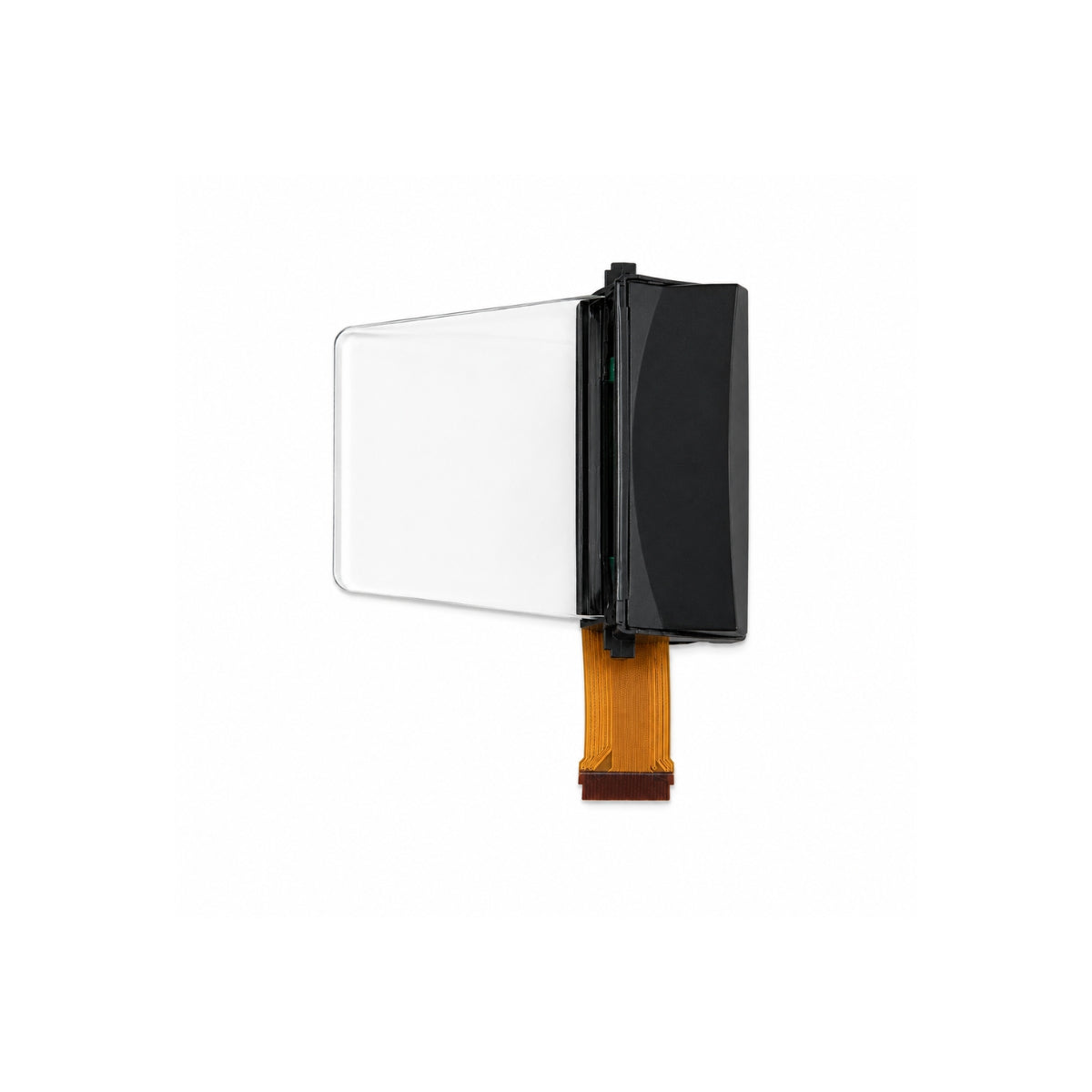
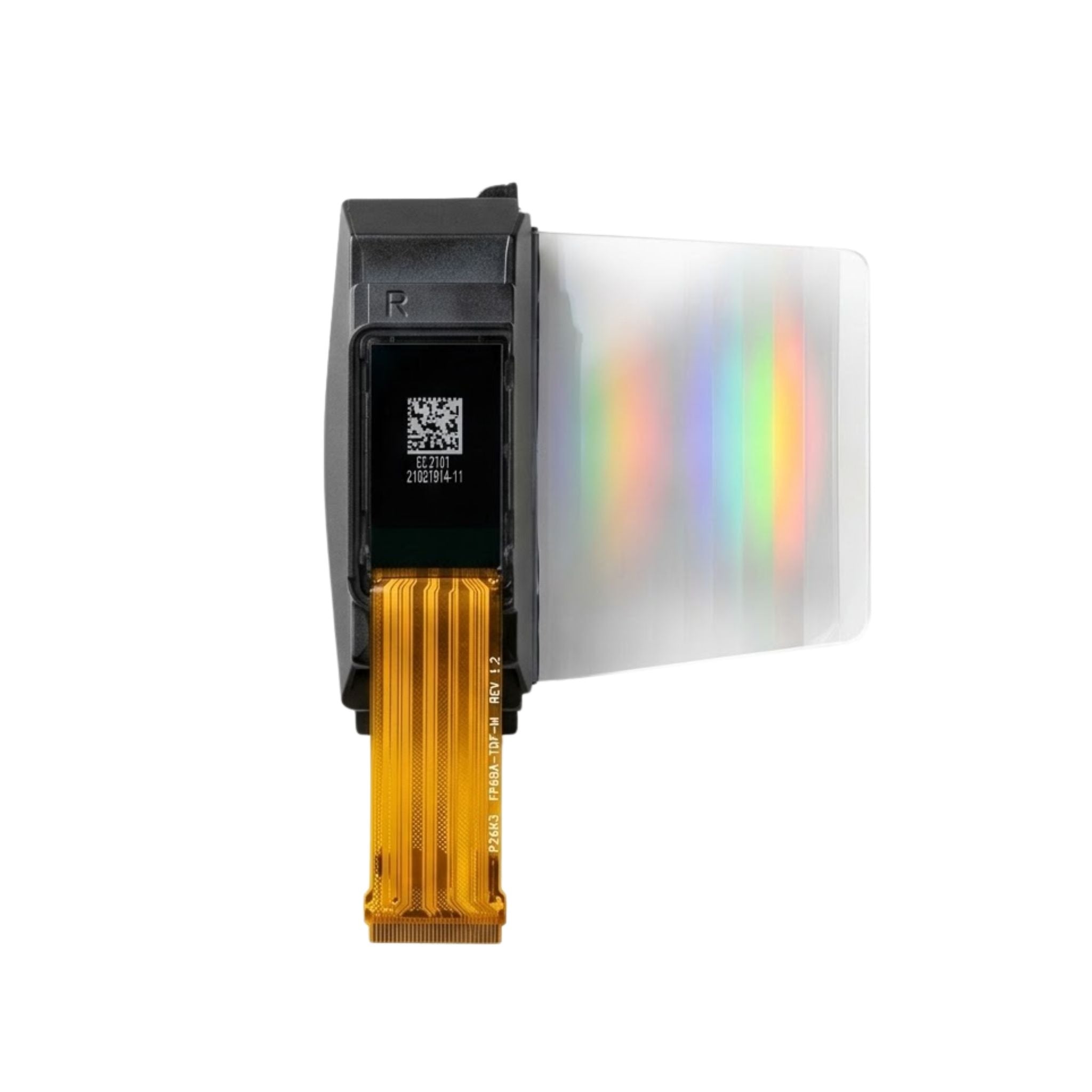
Sony launched the ECX350F micro OLED display microdisplay module, compressing pixel pitch to 5.1 micrometers while delivering an unprecedented peak brightness of 10,000 nits — setting a new benchma...
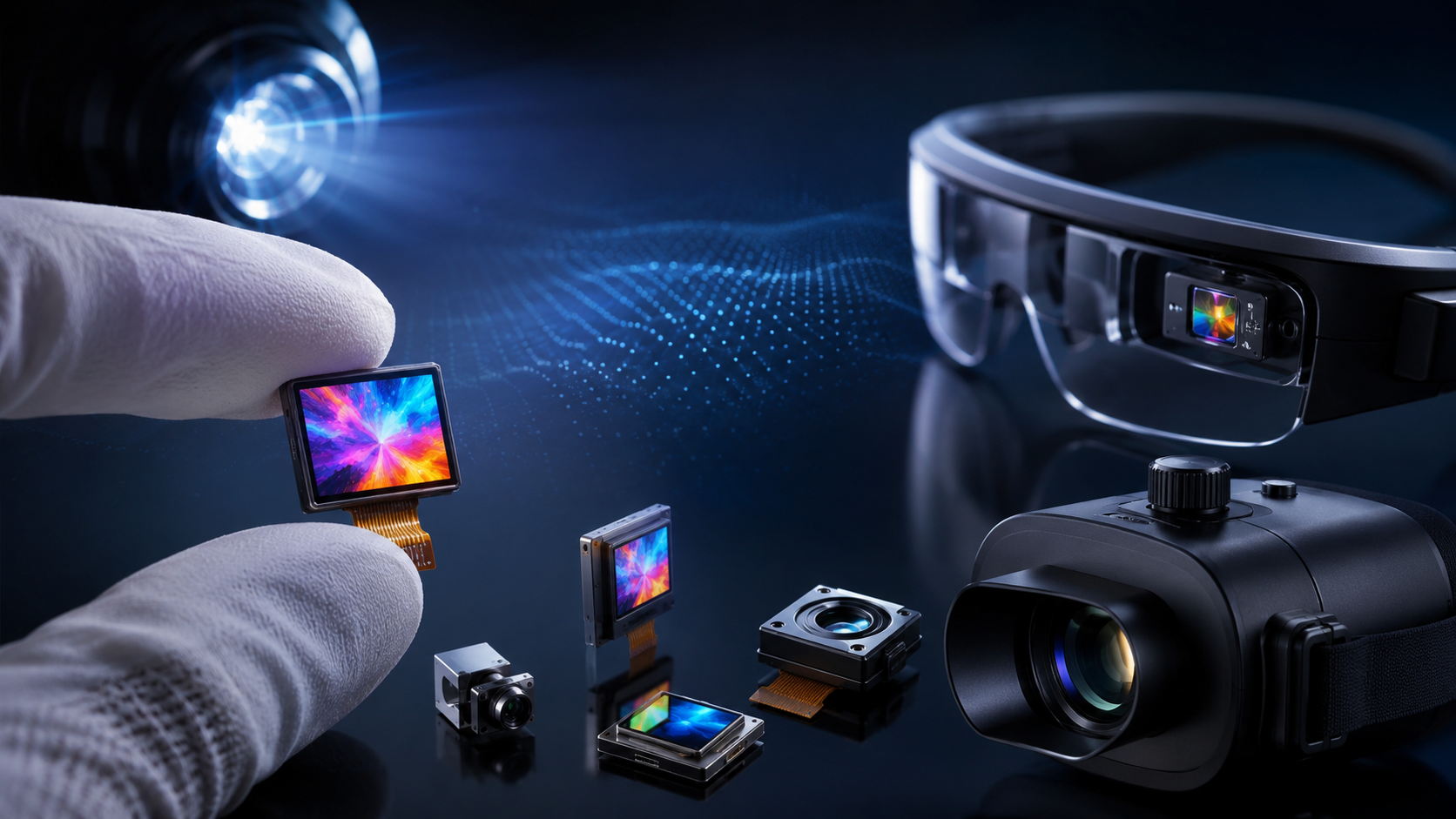
The rapid development of smart glasses, AR headsets, MR devices, and other near-eye optical products is reshaping the microdisplay market. OLEDOS, also known as OLED on Silicon or Micro OLED, has b...
댓글 남기기
이 사이트는 hCaptcha에 의해 보호되며, hCaptcha의 개인 정보 보호 정책 과 서비스 약관 이 적용됩니다.