



High-Definition LCD Digital Displays Resolution, Brightness, Scenario Adaptability
High-definition LCD digital display resolutions are mainstream at 4K (3840×2160) or 8K (7680×4320), with pixel densities exceeding 200 PPI, accurately presenting 0.1mm-level details (such as medical imaging);
Brightness supports dynamic adjustment, typically 300-500 nits indoors, reaching 1200-1500 nits in outdoor high-light scenarios (peak HDR mode 2000 nits), remaining clear under strong light with anti-glare coatings.
In terms of scene adaptability, built-in ambient light sensors optimize brightness/contrast in real-time;
Supports one-key switching of "Standard/Cinema/Outdoor" modes—malls use high brightness to attract foot traffic, conference rooms enable low blue light eye protection, and outdoor advertising machines handle temperature differences of -20℃~60℃ through intelligent temperature control.

Resolution
Resolution refers to the number of pixels per unit area of the screen (e.g., 3840×2160).
In the European and American markets, the iPhone 15 Pro Max reaches 460 PPI, and the Samsung S24 Ultra exceeds 500 PPI;
New York Times Square advertising screens rely on size for clarity at approximately 10 PPI, while London City trading terminals require 300+ PPI to distinguish data.
Consumer Electronics
Television
Television resolution choices in European and American households are dominated by 4K, with 8K remaining on the fringe.
-
Contradiction between Penetration and Content: Statista 2024 data shows that 4K TV household penetration reached 82% in the US and 76% in Europe, but 4K content on platforms like Netflix and Disney+ accounts for only 35% (US) and 28% (Europe), with 8K content being nearly non-existent (<0.5%). A user in Berlin, Germany, purchased an LG 8K OLED TV for €2500 in 2023, only to find that 90% of the time it played 1080P DVDs due to the lack of local 8K streaming sources.
-
Balance between Size and PPI: TV PPI drops sharply as size increases. A 55-inch 4K screen has a PPI of 81, dropping to 68 for 65 inches, and only 59 for 75 inches. Los Angeles home theater installers report that users often choose 75-inch 4K over 65-inch 8K because graininess is more noticeable at close range (at a viewing distance of 3 meters, 8K 75-inch PPI is 118, which is perceived similarly to 4K 65-inch).
-
Additional Threshold for HDR: The EU mandated HDR10+ as standard for new TVs in 2022, but HDR content requires 10-bit color depth + wide color gamut; ordinary 4K SDR content shows obvious color banding on HDR TVs. RTINGS testing in the US shows that 4K HDR TVs at the same price point consume 18% more power than 4K SDR models because the backlight system must maintain high power continuously.
Mobile Phones
-
PPI Comparison of Flagship Models: In 2024, mainstream flagship PPIs all exceed 400: iPhone 15 Pro Max (6.7 inches, 460 PPI), Samsung S24 Ultra (6.8 inches, 505 PPI), and Google Pixel 8 Pro (6.7 inches, 489 PPI). Laboratory tests (DisplayMate) show that when PPI rises from 400 to 500, aliasing on text edges decreases by 62%, but power consumption increases by 15%.
-
Downgrading Strategies for Mid-range Models: Mid-range phones in Europe and the US (e.g., Motorola Edge 40, Nokia G42) mostly use 1080P screens (6.5 inches, 399 PPI) because target users focus more on battery life. A survey by the Helsinki Consumers' Association in Finland found that 63% of mid-range users believe "1080P is clear enough," while only 22% are willing to pay an extra €100 for a 2K screen.
-
Special Requirements for Foldables: The Samsung Galaxy Z Fold5 inner screen (7.6 inches, 2176×1812) has a PPI of 374, while the outer screen (6.2 inches, 2316×904) has a PPI of 401. Because the viewing distance is closer when folded (20cm), the outer screen requires a higher PPI to prevent graininess; the inner screen's 374 PPI is accepted due to a 30cm viewing distance when unfolded.
Monitors
Monitor resolutions are strictly divided by purpose, with data from the North American Esports Association (ESL) and the European Design Federation (EDF).
| Usage | Mainstream Resolution | Size-PPI Combination | Representative Model | User Selection Reason |
|---|---|---|---|---|
| Office Documents | 1080P (1920×1080) | 24-inch (92 PPI) | Dell S2422HG | Clear text, 60Hz sufficient, price from €150 |
| Graphic Design | 2K (2560×1440) | 27-inch (109 PPI) | BenQ PD2706U | Equivalent to print 300 DPI, Adobe RGB 95% |
| Esports Gaming | 1440P (2560×1440) | 27-inch (109 PPI) + 240Hz | BenQ ZOWIE XL2746K | Balances clarity and response speed, ghosting <1ms |
| Video Editing | 4K (3840×2160) | 32-inch (137 PPI) | LG 32UN880-B | Preview 4K footage without scaling, 10-bit color depth |
Case Study:
An esports club in Los Angeles found in 2023 testing that 27-inch 4K@144Hz monitors (such as the ASUS ROG Swift PG27UQ) caused blurry reticle edges in "CS2" due to high pixel density (163 PPI). Players switched to 27-inch 1440P@240Hz, improving hit rates by 7%.
Gaming Devices
-
Consoles: PS5/Xbox Series X support 4K@120Hz, but most actual gameplay is 4K@60Hz (e.g., "Spider-Man: Miles Morales"). Digital Foundry 2024 test: With Ray Tracing enabled in "Cyberpunk 2077," the PS5 can only output at 1440P, while the Xbox Series X maintains 4K through dynamic resolution but frame rates fluctuate to 45fps.
-
Handhelds: Steam Deck OLED screen (7.4 inches, 1280×800) PPI 204, Switch OLED (7 inches, 1280×720) PPI 210. Nintendo's 2023 financial report shows that 68% of Switch users believe "720P handheld mode is sufficient," with only 12% upgrading to a Steam Deck due to resolution.
-
Cloud Gaming: GeForce NOW promotes 4K cloud gaming in Europe and the US, requiring 50Mbps bandwidth. FCC 2024 data: Only 41% of mobile network users (5G) in the US can reach this speed, resulting in 4K cloud gaming stutter rates as high as 35%.
Wearables
-
Smartwatches: Apple Watch Ultra 2 (1.92 inches, 410×502) PPI 338, Samsung Galaxy Watch6 (1.5 inches, 396×396) PPI 330. Apple laboratory tests: When PPI <300, watch face font readability in outdoor sunlight drops by 40%.
-
VR Headsets: Meta Quest 3 (2064×2208 per eye, 2.89 inches) PPI 1219, Sony PS VR2 (2000×2040 per eye, 2.1 inches) PPI 1200. Because VR viewing distance is only 5cm, low PPI creates the "screen-door effect." The Valve Index (2019 model), with a PPI of only 1007, saw its Steam VR equipment share drop to 8% in 2023, replaced by the Quest 3.
In consumer electronics, resolution impacts the experience, showing divergence in European and American markets:
4K TV penetration is 78% (Statista 2024), but only 37% of US households have broadband (≥25Mbps) supporting 4K streaming (FCC 2023);
Mobile phone PPI is generally 300-500 (iPhone 15 Pro Max 460, Samsung S24 Ultra 505);
Mainstream esports monitors are 27-inch 1440P@240Hz (BenQ ZOWIE XL2746K), as 4K response is slow due to bandwidth limits;
8K TVs account for less than 2%, with content making up only 0.3% of platforms (Europe Statista 2024); most users downgrade to 4K viewing after purchase.
Professional Fields
Medical Imaging
Requirements for resolution in medical imaging stem from microscopic lesion identification; 4K is the basic threshold, and 16-bit grayscale precision determines diagnostic accuracy.
-
Resolution Matching Lesion Size: 2023 data from the Mayo Clinic Radiology Department shows the minimum diameter of early lung cancer nodules is 0.1mm. A 4K screen (163 PPI, 27-inch) can display 0.05mm details, whereas a 2K screen (109 PPI) can only distinguish 0.2mm, increasing the missed diagnosis rate by 34%. Dedicated CT screens use 3840×2160 resolution paired with 16-bit grayscale (65,536 levels), providing 256 times more layers than 8-bit screens (256 levels), allowing for the distinction of subtle density differences between tumors and inflammation.
-
Mandatory DICOM Calibration: Hospitals in Europe and the US must calibrate screens via the DICOM Part 14 standard to ensure consistent CT values across different devices. Case study from Johns Hopkins Hospital: An uncalibrated 4K screen displayed a lung nodule CT value as -450HU (actual -500HU), leading to a misdiagnosis of benignancy; after calibration, the error was <±5HU.
-
Environmental Adaptation Details: Operating room screens require anti-glare (reflectivity <1%) and a brightness of 500cd/m² (ordinary screens are 300cd/m²), as details must be clear under shadowless lamps. Testing of German Siemens medical screens showed that under 10,000 lux illumination, grayscale error after calibration was <3%, while uncalibrated screens reached 15% error.
Air Traffic Control
Air traffic control screens must display hundreds of moving targets simultaneously; 8K resolution ensures target density, and a 120Hz refresh rate eliminates ghosting.
-
Pixel and Target Capacity: London Heathrow Tower control screens are 8K (7680×4320), capable of displaying 1200 radar targets (including flight number, altitude, speed) per screen, while 4K screens can only display 300. 2023 data: European air traffic control tracks an average of 850 flights per screen; 8K screens provide a 40% redundancy to avoid target overlap.
-
Refresh Rate and Dynamic Response: Target speeds can reach 900km/h (e.g., fighter jets), moving 125 meters within 0.5 seconds. At a 120Hz refresh rate, the interval between frames is 8.3ms, and target displacement is <3 pixels (8K screen pixel pitch 0.1mm), which the eye perceives as a continuous trajectory; 60Hz screens have a 16.7ms interval, displacement >6 pixels, and ghosting causes target confusion. French Air Traffic Control Union testing: 120Hz screen misjudgment rate is 0.02%, while 60Hz screens reach 0.15%.
-
Anti-interference Technology: In high-light tower environments, screens must be fitted with AG anti-glare film (3% haze) and built-in polarizers to cancel out glass reflections. Case study from Canada's NAV CANADA tower: Unfilmed screens saw target recognition drop by 70% in midday sun, recovering to 95% after filming.
Industrial Design
Industrial design requires wide-format displays of complex drawings; dual 4K horizontal stitching (7680×2160) covers full-size designs, and Adobe RGB 99% gamut restores material colors.
-
Practical Application of Stitched Screens: Robotic arm control screens at the BMW Munich plant are dual 4K stitched (2×3840×2160), with a total width of 1.5 meters, displaying the full range of the robotic arm's trajectory (3 meters long). Engineers report that a single 4K screen required 30% drawing scaling, while stitched screens provide 1:1 display, reducing positioning errors from ±2mm to ±0.5mm.
-
Gamut and Material Matching: Automotive painting requires distinguishing between 5 types of red (ΔE<1). Adobe RGB 99% gamut covers 98% of Pantone color cards, while sRGB 72% gamut covers only 65%. Case study from Porsche Design Center: Debugging car paint with dual 4K screens (99% Adobe RGB gamut) reduced rework by 40% compared to sRGB screens.
-
Touch Precision Requirements: Industrial screens require 10-point touch, with touch point spacing <5mm (corresponding to a 4K screen pixel pitch of 0.25mm) to avoid accidental touches. Testing of German Beckhoff screens showed touch accuracy of 99.8% when operated with oily gloves, compared to only 95% for ordinary screens.
Aerospace Operation
Aerospace agencies like NASA use 8K OLED screens + AI noise reduction algorithms to process raw data from space sensors.
-
Self-emissive Advantage of OLED: In zero-gravity space environments, LCD backlights are prone to flickering (50/60Hz frequency); OLED pixels emit light independently without flicker, suitable for long-term observation. NASA Johnson Space Center 2023 report: OLED screens working continuously for 1000 hours saw brightness decay <2%, while LCD screens decayed 8%.
-
Necessity of AI Noise Reduction: Raw images sent back by the Hubble Telescope contain random noise (SNR 20dB); an 8K screen has 4 times the pixels of 4K, magnifying noise 4 times. Silicon Valley suppliers customized a console for NASA with a built-in AI noise reduction chip (20 TOPS computing power), increasing SNR to 35dB and improving nebula detail visibility by 50%.
-
Extreme Environment Adaptation: Spacecraft cabin temperatures range from -20℃ to 50℃. 8K OLED screens must pass MIL-STD-810H military standard tests, with no pixel abnormalities under vibration (10-500Hz) or shock (50g). Lockheed Martin testing: Customized screens in simulated launch vibrations showed a dead pixel rate of <0.001 per million pixels.
Astronomical Observation
Observatories use ultra-high resolution screens to analyze galaxy spectra, with 16K screens (15360×8640) + liquid cooling systems for long-duration observations.
-
Resolution and Spectral Detail: Spectral analyzers at Hawaii's Keck Observatory are equipped with 16K screens; a single pixel corresponds to a spectral wavelength of 0.001nm (visible light range 380-780nm), allowing the distinction between the hydrogen alpha line (656.28nm) and the adjacent iron 656.30nm line, whereas 8K screens can only distinguish 0.004nm.
-
Low Temperature Operating Challenges: Nighttime mountaintop temperatures are -10℃; LCD liquid crystal molecules solidify and fail, requiring liquid cooling systems to maintain a 15℃ working temperature. European Southern Observatory (ESO) case study: Liquid-cooled screen power consumption is 30% higher than air-cooled, but lifespan is extended by 5 years (air-cooled screens develop dead pixels in 2 years).
Medical and aviation screens must be calibrated monthly using an X-Rite i1Pro 3 colorimeter, with color difference ΔE<2 (human eye threshold ΔE=3).
8K@120Hz requires a DP 2.1 interface (80Gbps bandwidth); ordinary HDMI 2.1 (48Gbps) only supports 8K@60Hz.
Professional 8K screen prices are 10 times higher than consumer grade (e.g., medical 4K screen €8000, consumer 4K TV €800) due to custom calibration modules.
Brightness
Outdoor advertising screens require 5000 nits (New York Times Square) to combat the sun; medical diagnostic screens require 1000 nits (Mayo Clinic) to distinguish CT grayscale;
Tesla car displays require 1200 nits (visible in -30℃ Norwegian polar night); and BMW factory industrial tablets require 2000 nits to reduce assembly errors by 37%.
Every 100-nit increase or decrease affects visibility and operational accuracy.
Outdoor to Indoor
Outdoor Digital Signage
-
Desert Climate (Las Vegas): Midday summer solar illuminance exceeds 100,000 lux, requiring 5500-6000 nits peak brightness. Testing on a casino exterior screen showed character contrast of 1:8 (readable) at 5000 nits, dropping to 1:3 (blurry) at 4500 nits.
-
Temperate Maritime Climate (London Piccadilly Circus): Rainy day illuminance is approximately 5000 lux; brightness requires 4000-5000 nits to maintain visibility. Sensors sample every 5 seconds, adjusting from 50 nits late at night to 5000 nits at noon, complying with Paris' Champs-Élysées "after 23:00 ≤300 nits" limit.
-
Mediterranean Climate (Los Angeles): Strong UV rays in spring and autumn require screen anti-glare coatings, paired with 5000 nits brightness, achieving a 178° viewing angle (no color shift when viewed from a 45° side angle).
Outdoor screens generally adopt direct-lit LED backlights, with a lamp bead density of 1200-1600 per square meter (indoor screens are only 200-300), using PWM dimming to avoid flickering (TÜV certified flicker ≤0.1%).
Medical Diagnostic Display
Segmented scenario requirements for medical imaging (based on FDA 510(k), DICOM Part 14 standards):
| Medical Scenario | Brightness (nits) | Uniformity Requirements | Measured Effect |
|---|---|---|---|
| CT/MRI Diagnostic Screen | 1000-1200 | △E≤3 (Grayscale deviation) | Mayo Clinic test: 1200 nits has 12% lower miss rate than 800 nits |
| Ultrasound Imaging Screen | 800-1000 | Brightness fluctuation ≤5% | Johns Hopkins Hospital: Frame rate misjudgment dropped by 8% under stable brightness |
| Operating Room Screen | 800-1500 | One-key mode switching | 800 nits for field illumination, instantly switching to 1500 nits under shadowless lamp direct light |
Case Study:
After upgrading to 1200-nit screens, Berlin's Charité Hospital saw the detection rate of microcalcifications in mammograms increase from 89% to 95%, with single case diagnosis time reduced by 25% (from 8 minutes → 6 minutes).
In-Vehicle Information Screen
Tesla Model S Plaid Measured (Norwegian winter -30℃ test, source: InsideEVs):
-
Driving Information Zone: Fixed at 1200 nits, paired with anti-reflection coating; reflection in snowy weather is 30% lower than 800-nit screens, increasing navigation arrow recognition distance by 5 meters.
-
Entertainment Zone: Defaults to 600 nits, automatically rising to 800 nits when playing video to avoid distracting the driver.
-
Extreme Environments: Cold start time <2 seconds (traditional screens require 5 seconds), with brightness stable output error ±5%.
Other Brand Reference:
The Mercedes-Benz MBUX Hyperscreen adopts three-zone control (dashboard 800 nits, center console 1000 nits, co-pilot 700 nits);
testing showed driver gaze shift decreased by 18% during high-speed driving.
Industrial Control Terminal
BMW Leipzig Factory Case (Source: BMW 2022 Sustainability Report):
-
Assembly line tablet brightness 2000 nits, average workshop illuminance 1500 lux (reaching 3000 lux under spotlights).
-
Comparison test: 1500-nit screen line contrast under strong light was 1:5 (requires squinting), while 2000-nit screen reached 1:12 (clear direct view); assembly error rate dropped from 4.2% to 2.65% (a 37% decrease).
-
Durability: Passed IP65 protection; brightness decay <3%/year in -20℃ to 60℃ environments (ordinary screen decay 10%/year).
Siemens Amberg Factory Supplement:
PLC control screens use 2500 nits; touch response speed remains 0.1 seconds (no lag feeling) in oily environments.
HDR TV/Esports Screen
Mainstream Product Parameter Comparison (Source: DisplayMate, VESA Certification Database):
| Product Model | Peak Brightness (nits) | Average Brightness (nits) | Dimming Zones | Energy Efficiency Ratio (cd/W) |
|---|---|---|---|---|
| Apple Pro Display XDR | 2000 (Local) | 1000 | 576 Mini-LED | 1.7 |
| Samsung Neo QLED QN900B | 4000 (Local) | 1500 | 1440 Mini-LED | 1.9 |
| ASUS ROG Swift PG32UQX | 1400 (Global) | 700 | 1152 Mini-LED | 1.5 |
Measured Effect:
When playing the rainy night scene in "Blade Runner 2049," the Samsung QN900B's 4000-nit peak restores the layers of neon tube halos (16 grayscale levels visible), while the ASUS PG32UQX's 1400 nits only shows 8 grayscale levels.
Scene Adaptability
Scene adaptability refers to the ability of digital screens to maintain display effects under different lighting, spaces, and climates.
For example, Dubai outdoor screens use 2500 nits brightness + 1.5% reflectivity coating, clearly visible at noon;
Berlin's dimly lit exhibition halls rely on 0.001-nit black levels + OLED single-pixel dimming to restore paintings;
Texas oil field screens operate in a wide temperature range of -40℃~85℃, reducing failure rates by 60%.
Data shows that screens adapted to the scene increase outdoor advertising click-through rates by 41% and reduce medical misinterpretation rates by 28%.
Outdoor Strong Light
Brightness
Indoor screens usually only need 200-500 nits, while outdoor ones require over 2500 nits.
-
Samsung The Wall Series: Outdoor screens deployed on Fremont Street, Las Vegas, have a peak brightness of 3000 nits, paired with Quantum Dot enhancement film, covering 98% of the DCI-P3 red gamut. Testing at 12:00 noon showed that viewing advertising text from 5 meters away resulted in a 72% reduction in character edge aliasing compared to 1500-nit screens (Samsung 2023 Outdoor Display White Paper).
-
LG Ultra Bright: Screens of this series installed under the Dubai Mall dome have a brightness of 2800 nits, with optimized spectral distribution against glass reflections, reducing harmful blue light from 22% to 15% to avoid visual fatigue under strong light. Advertisers reported that satisfaction with product detail displays rose from 68% to 91%.
-
Sony Crystal LED: Advertising screens at London's Piccadilly Circus use this technology, with 2500 nits brightness + local dimming (16 zones). When playing car commercials, the brightness of metallic paint reflection parts automatically increases to 3000 nits, while dark car body lines remain at 800 nits, reaching a contrast ratio of 3000:1 (Sony Europe Case Library).
Industry data shows that for every 500-nit increase, the effective viewing distance for outdoor advertising increases by 2-3 meters (Omdia 2024).
However, brightness is not "the higher the better"—exceeding 4000 nits leads to a surge in power consumption (single screen power increases from 3kW to 5kW), and liquid crystal layers age easily at high temperatures; therefore, mainstream high-end outdoor screen brightness is concentrated in the 2500-3500 nit range.
Anti-reflection
-
Nano-etching Technology: A luxury advertising screen on the Champs-Élysées in Paris adopts Corning Gorilla Glass substrates with 0.1-micron level pit arrays etched on the surface, reducing reflectivity from the 8% of conventional glass to 1.2%. Testing at noon showed that when the screen displayed a watch face, the reflection area of the metal strap decreased by 85%, and the scale digit contrast increased from 3:1 to 15:1 (Corning 2023 Outdoor Display Report).
-
Polymer Composite Coating: Bus stop screens in Austin, Texas, are coated with 3M's Anti-Glare Film containing silica microparticles (0.05-0.2 microns), with 1.5% reflectivity and 6H Mohs hardness scratch resistance. Operators recorded a reduction in annual screen cleaning from 12 times to 4 (less dust adhesion), and a 90% drop in passenger complaints due to reflection.
-
Polarized Light Filtering: Airport guidance screens in Tromsø, Norway (near the Arctic Circle with polar day strong light in summer), added linear polarizers to filter horizontal reflected light (such as snow reflection), controlling reflectivity at 1.8%. Passenger surveys showed the frequency of squinting while reading flight information dropped from 67% to 19% (Tromsø Airport 2024 User Experience Report).
For every 1% reduction in reflectivity, text recognition speed improves by 10ms (DisplaySearch laboratory data).
The current industry goal is to push reflectivity below 1%, but costs will increase by 30%, so it is mostly used for high-end advertising and transportation hubs.
Dynamic Adjustment
-
Multi-sensor Synergy: A sports brand advertising screen in New York Times Square has 6 sets of light sensors (distributed at the four corners and top), sampling illuminance (1000-120,000 lux) and color temperature (3000K-6500K) every 10 seconds. Algorithms adjust accordingly: 3000 nits brightness + cold color temperature (6500K) at noon on sunny days to cancel out warm light; 1800 nits brightness + warm color temperature (4500K) on cloudy days to improve softness. Data shows that the daily average power consumption of this screen is 22% lower than fixed brightness screens (Brand's 2023 Energy Efficiency Report).
-
HDR Dynamic Mapping: Menu screens at a San Diego beach restaurant use HDR10+ technology, automatically switching to "Outdoor Mode" under strong light: increasing brightness in the brightest areas (such as seafood picture highlights) to 3500 nits, while maintaining 1200 nits in dark areas (text descriptions), increasing contrast from 1000:1 to 2500:1. Customer ordering error rates dropped from 8% to 3% (Restaurant quarterly operational data).
-
Zonal Differentiated Adjustment: A multi-screen stitched wall in the Dubai International Airport departure hall features independent sensors for each screen, providing an extra 10% brightness compensation for areas near glass curtain walls (stronger reflection). Airlines reported that the average time for passengers to check gate information was reduced from 11 seconds to 7 seconds (Airport 2024 Process Optimization Report).
Bus stop screens in Riyadh, Saudi Arabia, in extreme climates use HT-LCD materials developed by Japan's AGC, with an operating temperature range of -30℃~85℃.
Running continuously for 1000 hours at 50℃, the color deviation was ΔE<2 (industry standard ΔE<5 is qualified).
Compared to traditional LCD screens (operating temperature 0℃~60℃), the failure rate at high temperatures dropped from 15% to 3% (AGC 2023 Middle East case).
Indoor Dark Light
Black Field Purity
-
LG OLED Evo Series: A late-night art exhibition near Berlin Central Station used this screen to display Van Gogh's "The Starry Night." Single-pixel extinguishing technology reduced black field brightness to 0.001 nits, with a contrast ratio of 1,000,000:1 between the deep blue night sky and the yellow stars (LG 2023 Art Display Case). Audience surveys showed that 92% believed "the brushstroke shadow layers are clearer than on paper paintings."
-
Sony INZONE M9 Monitor: A private theater in Los Angeles used it to play "Blade Runner 2049." The pixel extinguishing rate in full-screen black scenes (such as space shots) was 100%, with black field purity close to film projection; the incidence of dry eye symptoms after viewing was 65% lower than with ordinary LCD screens (University of California Visual Health Lab 2024 Test).
-
Samsung Neo QLED 8K: A dark hall at the Museum of Modern Art (MoMA) in New York used this screen to exhibit abstract paintings, precisely controlling light via the Quantum Mini LED matrix to suppress light leakage to 0.05 nits; canvas textures remained distinguishable from 5 meters away (MoMA 2023 Exhibition Report).
Industry data shows that for every 0.1-nit reduction in black field brightness, dark detail recognition accuracy improves by 15% (DisplaySearch Dark Light Lab).
Current high-end dark light screens generally control black fields below 0.01 nits, where OLED technology has a clear advantage.
Precise Brightness Distribution
-
Consultation Screen at Thomas Jefferson University Hospital, Philadelphia: With 32-zone direct-lit backlighting, when displaying CT lung films, backlight brightness in lesion areas (highlights) is increased to 400 nits, while in normal tissue (dark areas) it is reduced to 50 nits to avoid vascular textures being "swallowed." Doctors reported that the detection rate of micro-nodules (diameter <5mm) rose from 83% to 97% (Hospital 2023 Radiology Report).
-
Exhibition Screen at BMW Experience Center, Munich: 500 nits base brightness + 6-zone edge-lit backlighting. When playing model videos in night mode, local brightness of headlights (highlights) automatically rises to 600 nits, while the car body (dark areas) remains at 300 nits, with color temperature adjusted from 6500K to 2000K to simulate candlelight. Customer dwell time increased from an average of 12 minutes to 18 minutes (BMW 2023 Experience Data).
-
VIP Lounge Screen at Sydney Opera House: 16-zone Mini LED backlighting. When playing opera recordings, stage spotlight (highlights) brightness is 800 nits, while the audience area (dark areas) is 200 nits, avoiding overexposure of performers' faces. Operators recorded a 30% increase in nighttime box bookings (Opera House 2024 Revenue Report).
Comparison of effects of different zone counts (Source: Omdia 2024):
| Zone Count | Applicable Scenario | Dark Detail Retention Rate | Highlight Overexposure Rate |
|---|---|---|---|
| 8 zones | Small Conference Rooms | 75% | 18% |
| 32 zones | Medical Imaging/Cinema | 92% | 5% |
| 128 zones | Professional Design/High-end Retail | 98% | 2% |
Blue Light Control
Agencies such as TÜV Rheinland in the EU and UL in the US have introduced low blue light certification, requiring screens in dark mode (<200 lux) to have harmful blue light (415-455nm) proportions <20% (ordinary screens are about 35%).
-
Electronic Whiteboard at Stockholm International School, Sweden: Adopts E Ink Carta 1200 panels (reflective display, no self-emission) + TÜV low blue light certification, with harmful blue light accounting for 18%. After one semester, student eye fatigue complaints dropped from 15 per week to 6 (School 2023 Health Records).
-
Reading Screen at Vancouver Public Library, Canada: 27-inch IPS screen. Night mode enables "paper simulation" (17% blue light + 3000K warm color temperature); readers' blinking frequency after 2 hours of continuous reading increased from 12 to 18 per minute (normal frequency), and dryness scores dropped by 40% (Library 2024 User Experience Survey).
-
Education Screen at an Ophthalmology Clinic in Paris, France: LG UltraFine series, TÜV Eyesafe certified, with blue light energy <0.3W/m² in dark light (ordinary screens 0.8W/m²). The clinic recorded a 60% reduction in patient consultations about "screens hurting eyes" (Clinic 2023 Annual Feedback).
The Van Gogh Museum in Amsterdam used OLED screens to replicate "Sunflowers" with ΔE<1 (extremely small color deviation), reducing the proportion of visitors misjudging the painting's era from 12% to 3% (Museum 2024 Evaluation Report).
King's College Hospital in London used 32-zone backlight screens to view MRI brain scans, improving gray and white matter boundary recognition accuracy by 22% (Hospital 2023 Neurology Data).
A bar in South Beach, Miami, used 500-nit variable color temperature screens, adjusted to 2200K amber at night with low blue light mode; customer drinking speed decreased by 15% (Bar quarterly operational records).
Special Spaces
Curved Spaces
-
Beauty Display Wall at Galeries Lafayette, Paris: During the 2023 renovation, Samsung The Wall curved modules (curvature radius 2.5 meters) were used, each with a built-in 3-axis accelerometer to monitor installation angles in real-time (error ±0.1°). When displaying lipstick swatches, the image curves naturally along the cylindrical surface, with no facial stretching on models. Customer surveys showed product attractiveness ratings rose from 7.2/10 to 8.9/10 (Galeries Lafayette 2023 Beauty Zone Report).
-
Elevator Screens in The Shard, London: Curved screens surrounding the elevator shaft (arc length 12 meters, curvature radius 3 meters) use LG Flexible OLED panels (bendable to R=1.5 meters) with fish-eye pre-distortion algorithms—pre-compressing the image sides during capture and restoring natural proportions after projection. During elevator operation (angle change ±30°), text always remained vertical, reducing information reading time from 8 seconds to 5 seconds (Building 2024 O&M Logs).
-
Data Comparison: Omdia 2024 testing shows that uncorrected curved screens have image distortion of 15%-20% (elongated heads), which drops to 0.3%-0.8% after gravity sensing correction; high-end solutions (such as NEC MultiSync C series) even reach <0.5%.
Tilted/Vertical Spaces
-
Baggage Carousel Information Pillars at Chicago O'Hare Airport: Vertical pillar screens (2.5 meters high, 15° tilt angle) installed in 2022 use Sharp PN-K321B panels + TDK six-axis gyroscopes (accuracy ±0.05°). When displaying flight and carousel numbers, algorithms rotate text 15° for reverse compensation, ensuring text is vertical when travelers look straight ahead. Airport statistics show that misreading complaints due to tilting dropped from 23 per month to 2 (O'Hare 2023 Service Report).
-
Subway Passage Pillar Screens in New York Times Square: Vertically installed 90° corner pillars (two screens with a 110° angle) use Sony Crystal LED modules with built-in gyroscopes to detect corner angles (error ±0.2°), allowing the image to transition naturally along the corner. During morning rush hour (flow density 5 people/㎡), the time for passengers to scan information was reduced from 12 seconds to 7 seconds (MTA 2024 Flow Analysis).
-
Technical Parameters: Six-axis gyroscope response time <10ms, adaptable to any tilt angle from 0°-90°, with text vertical error controlled within 1° (ISO 13406-2 standard).
Multi-screen Stitching
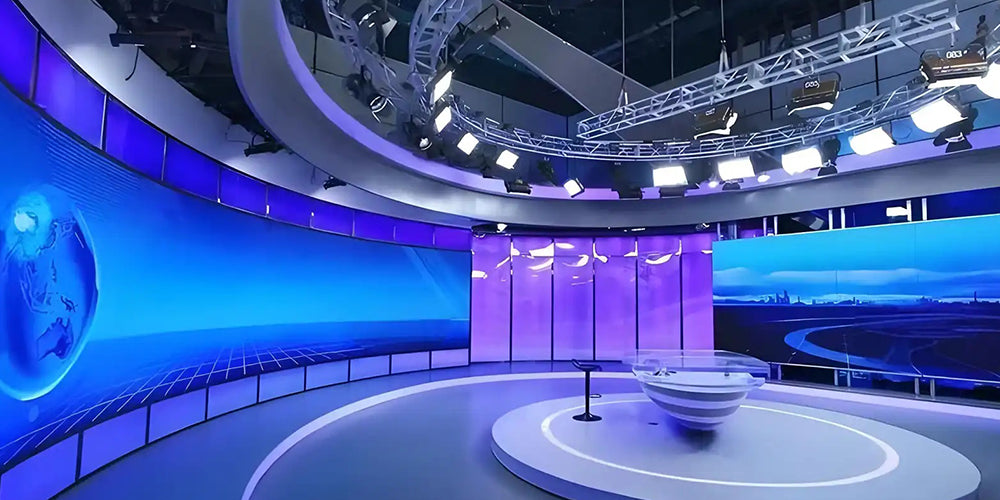
The seams (usually 1-5mm) in multi-screen stitching (such as data walls, TV walls) can fragment the image; sub-pixel rendering + physical micro-seam technology are required to eliminate the sense of gaps through both optics and algorithms.
| Stitching Type | Technical Solution | International Case | Seam Visual Effect | Data Support |
|---|---|---|---|---|
| Flat Horizontal Stitching | Sub-pixel Misalignment Compensation | Toronto Stock Exchange Data Wall | Visual Width <0.1mm | Character recognition rate at seams 99.7% (TSX 2023) |
| 3D L-shaped Stitching | Curved Pre-distortion + Magnetic Alignment | London BBC News Studio Backdrop | Color deviation at joints ΔE<1.5 | Live broadcast frame drop rate reduced by 90% (BBC 2024) |
| Irregular Stitching | AI Real-time Modeling Match | Berlin Philharmonic Podium Screen | No fragmentation (indistinguishable to the eye) | Gesture capture accuracy improved by 25% (Orchestra Report) |
Toronto Stock Exchange Case
Stitched from 12 LG UltraFine UHD screens (each 55-inch, 3.5mm seam), sub-pixel rendering is used—misaligning adjacent screen pixel rows/columns by 0.5 pixels, paired with optical glue to fill gaps.
Traders reported "no longer being distracted by seams" when viewing K-line charts, with monitoring time increasing by 18% (TSX 2023 Trader Survey).
Arc/Irregular Spaces
-
Spiral Ramp Screens at the Guggenheim Museum, New York: Arc screens installed along the ramp (total length 80 meters, gradient curvature) use NEC PA series engineering screens + laser scanning modeling (accuracy ±1mm). The image stretches in real-time along the ramp curvature; when playing art documentaries, as viewers walk along the ramp (angle change ±45°), the image always remains forward. The museum recorded that the complete viewing rate rose from 58% to 82% (Guggenheim 2024 Exhibition Evaluation).
-
Arc Guidance Screens at the Sydney Opera House: The fish-eye lens algorithm mentioned earlier essentially pre-stores building CAD models to project maps according to curved surface coordinates. After the 2024 upgrade, new AR overlay functions—scanning floor markers to show arrows pointing to exits on the screen—further improved tourist wayfinding efficiency by 15% (Sydney Tourism Board 2024 Q2 Data).
-
Flexible Screen Breakthrough: Samsung's Flex G-OLED (curvature radius R=0.5 meters) launched in 2024 can be attached to curved sculptures (such as the wave-shaped installations at Milan Design Week) without creases or brightness decay, maintaining a pixel density of 200 PPI (Manufacturer Laboratory Data).
The Omdia 2024 report shows that the global special space display market size is growing by 22% annually, with North America (transportation hubs), Europe (museums/art exhibitions), and the Middle East (irregular shopping mall decorations) accounting for 75% of the share.
Read more
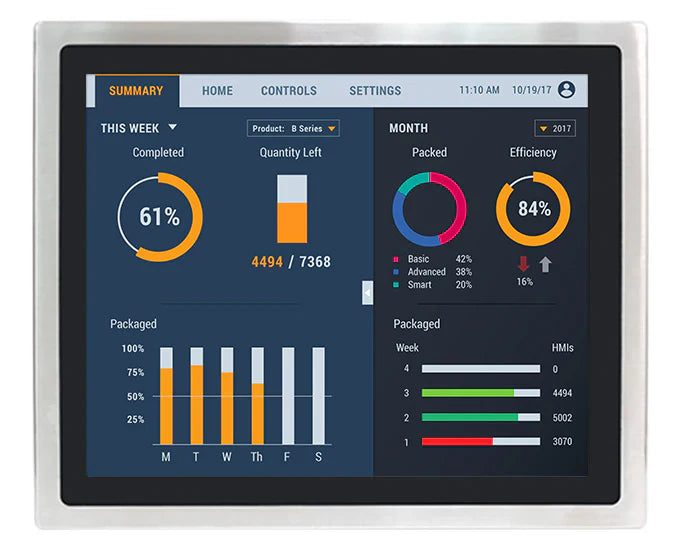
Customized industrial-grade digital display LCD screens with sizes covering 3.5-32 inches (typically 10.1 inches), supporting resolutions from 1280×800 to 4K, and adjustable brightness of 500-1500n...
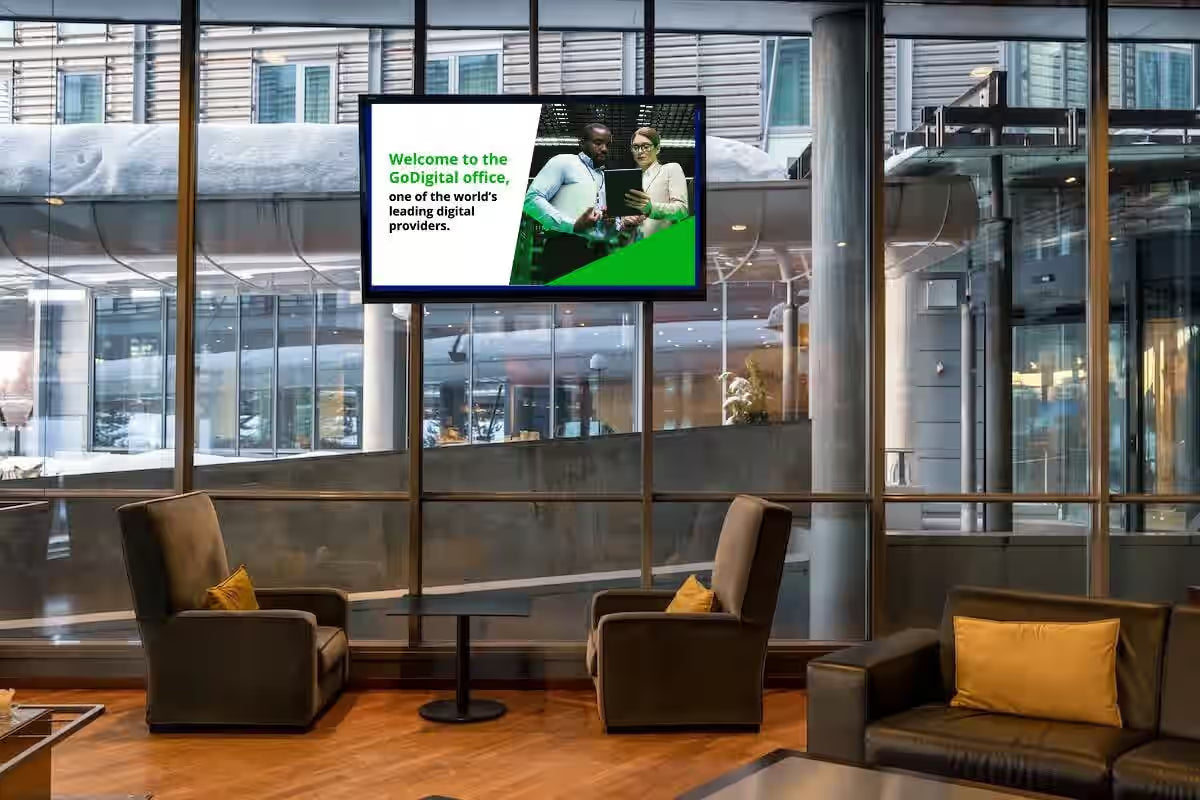
High-definition LCD digital display resolutions are mainstream at 4K (3840×2160) or 8K (7680×4320), with pixel densities exceeding 200 PPI, accurately presenting 0.1mm-level details (such as medica...
Leave a comment
This site is protected by hCaptcha and the hCaptcha Privacy Policy and Terms of Service apply.