



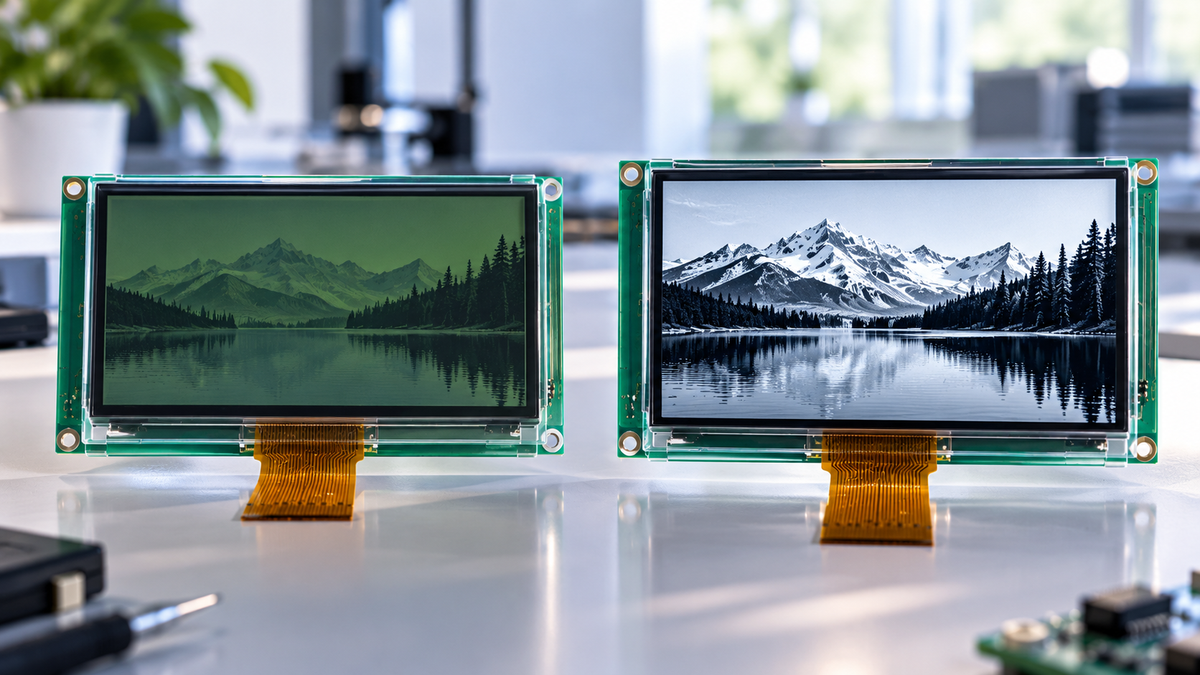
FSTN earns its premium when contrast is the thing limiting the read. Three cases qualify on their own. You drive 1/16 duty or higher and adjacent segments have to stay separated. The operating flo...
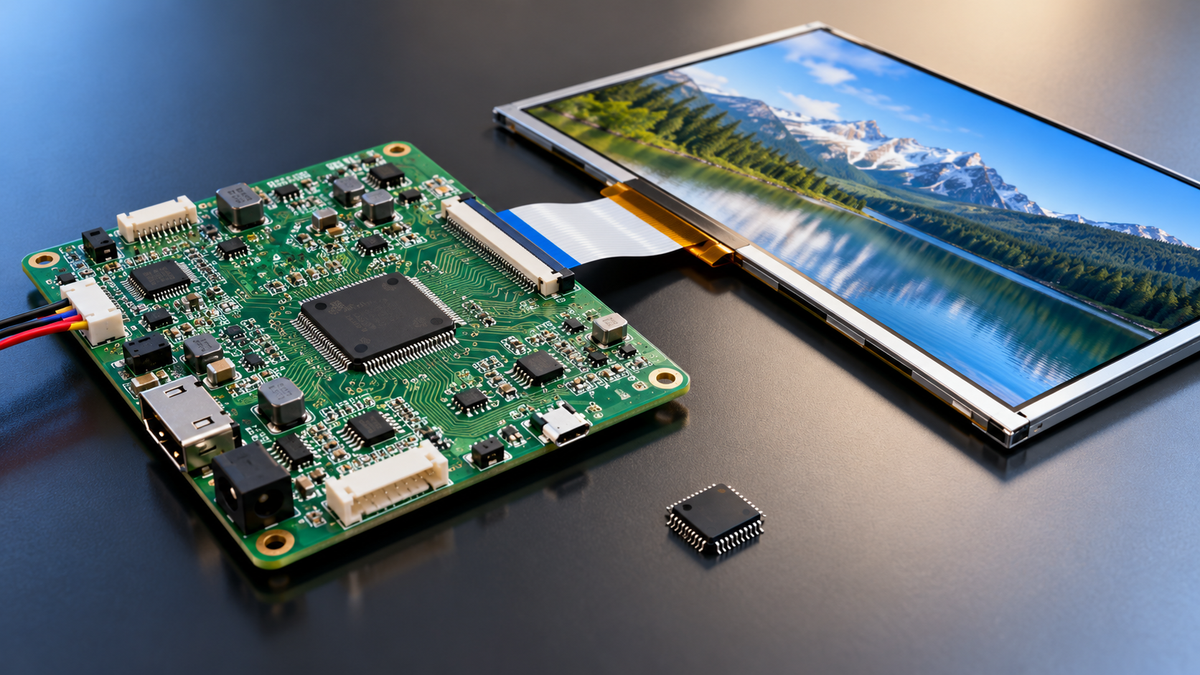
A display driver IC and a controller board are not two parts competing for the same slot. The driver IC writes pixel voltage onto the glass, and the panel maker bonds it there before the module sh...
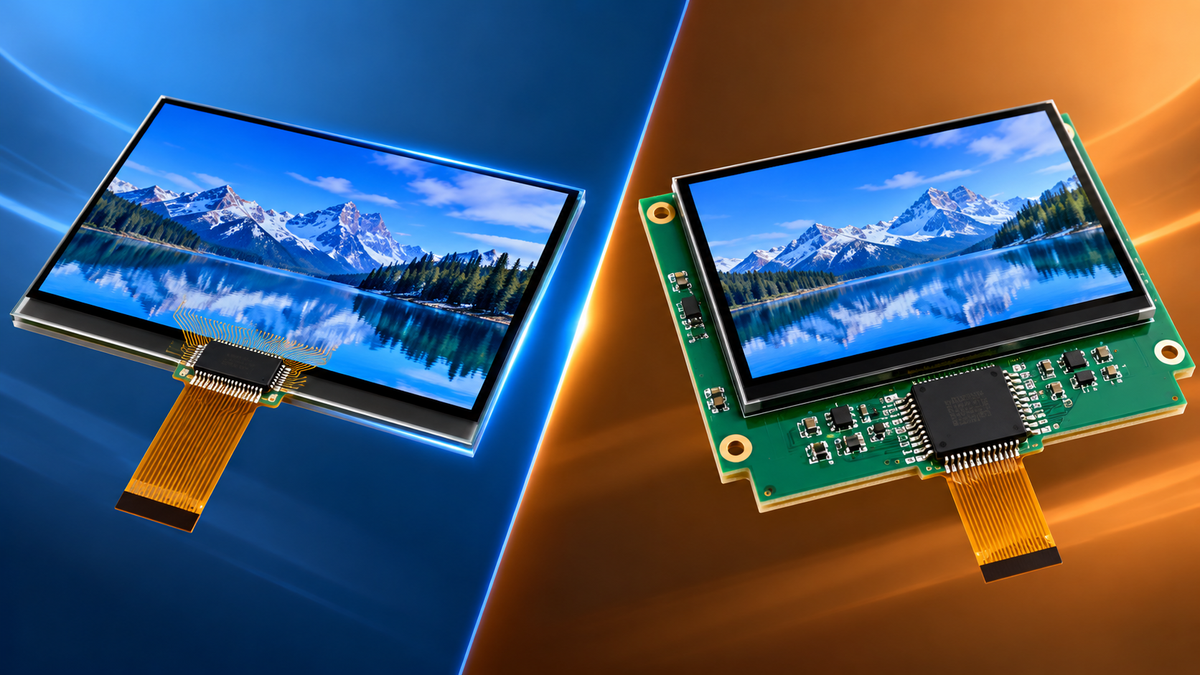
COG goes thinner in both directions: 6.0 mm against 13.6 mm on the same 128×64 dot count, and 400 lines along a glass edge at the finest strip pitch against 200 at the coarsest. COB is the one you...
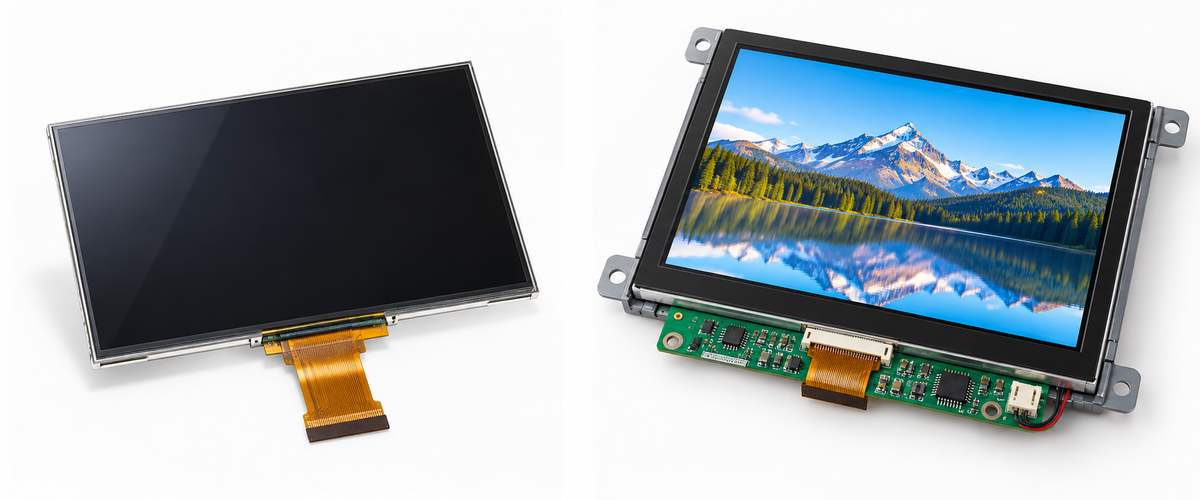
An LCD panel quote usually covers the basic display assembly. An LCD module can include quite a bit more: the backlight, driver IC, FPC, frame, touch hardware, cover glass, bonding, and sometimes ...
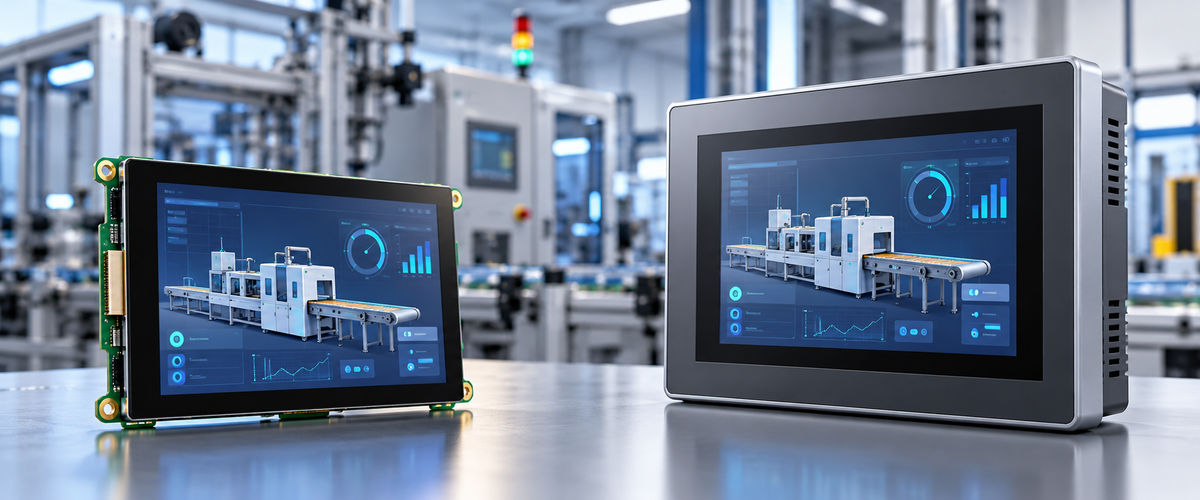
For a PLC-based machine that needs quick integration and easy field replacement, a complete HMI panel is usually the simpler route. If the equipment already has its own processor and the display n...
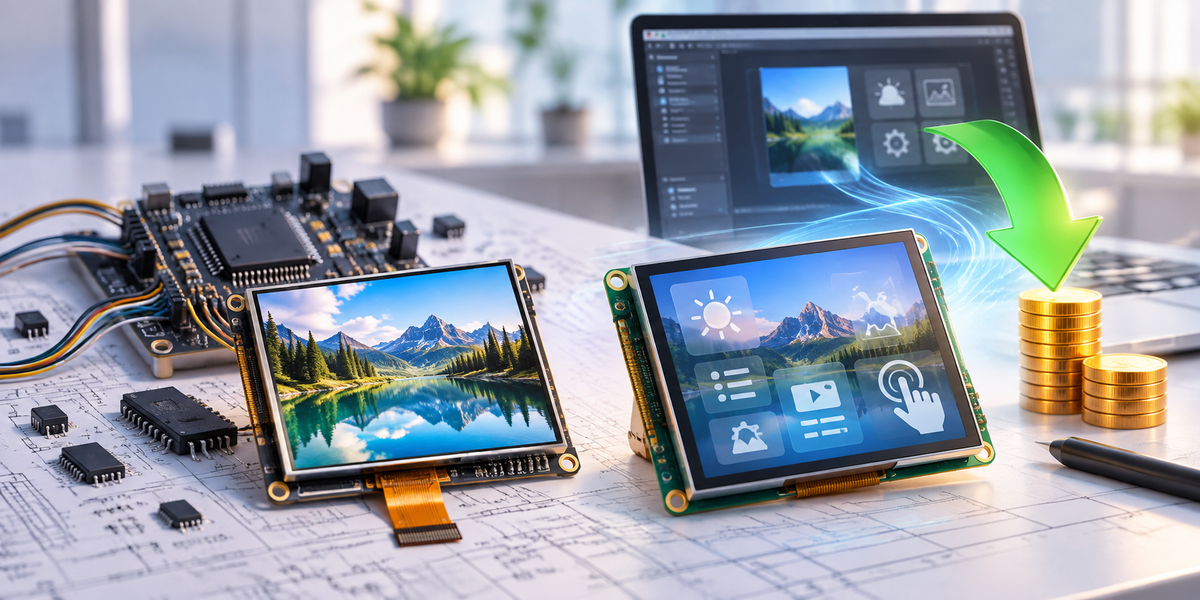
A Smart TFT can save development work when it takes framebuffer storage, graphics rendering, touch processing, or GUI tasks away from the host. A standard TFT can be cheaper when the host already ...
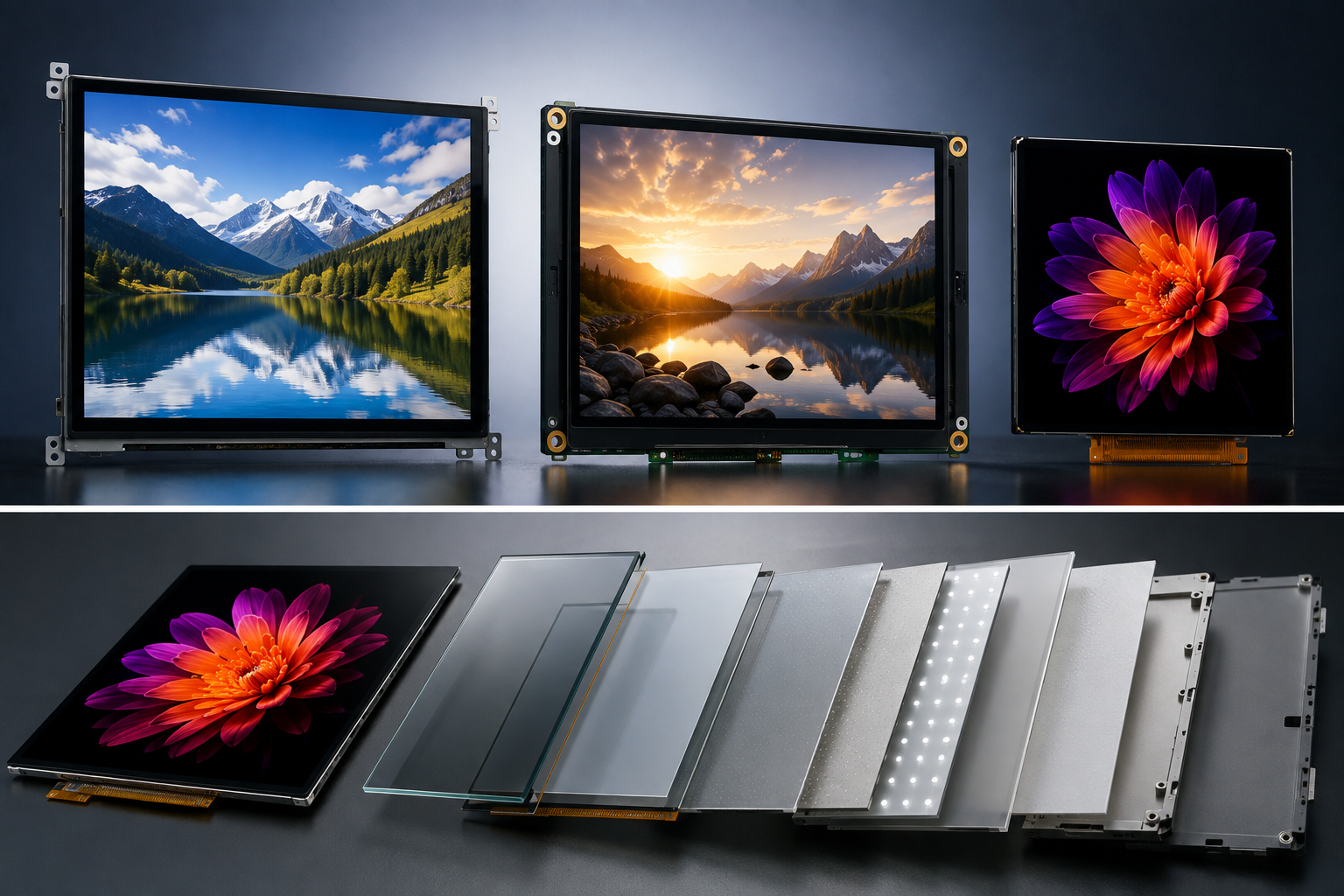
For most OEM projects, IPS is the safer place to start when a screen will stay on for long hours, show a mostly fixed interface, or be viewed from different angles. VA makes more sense when stronge...
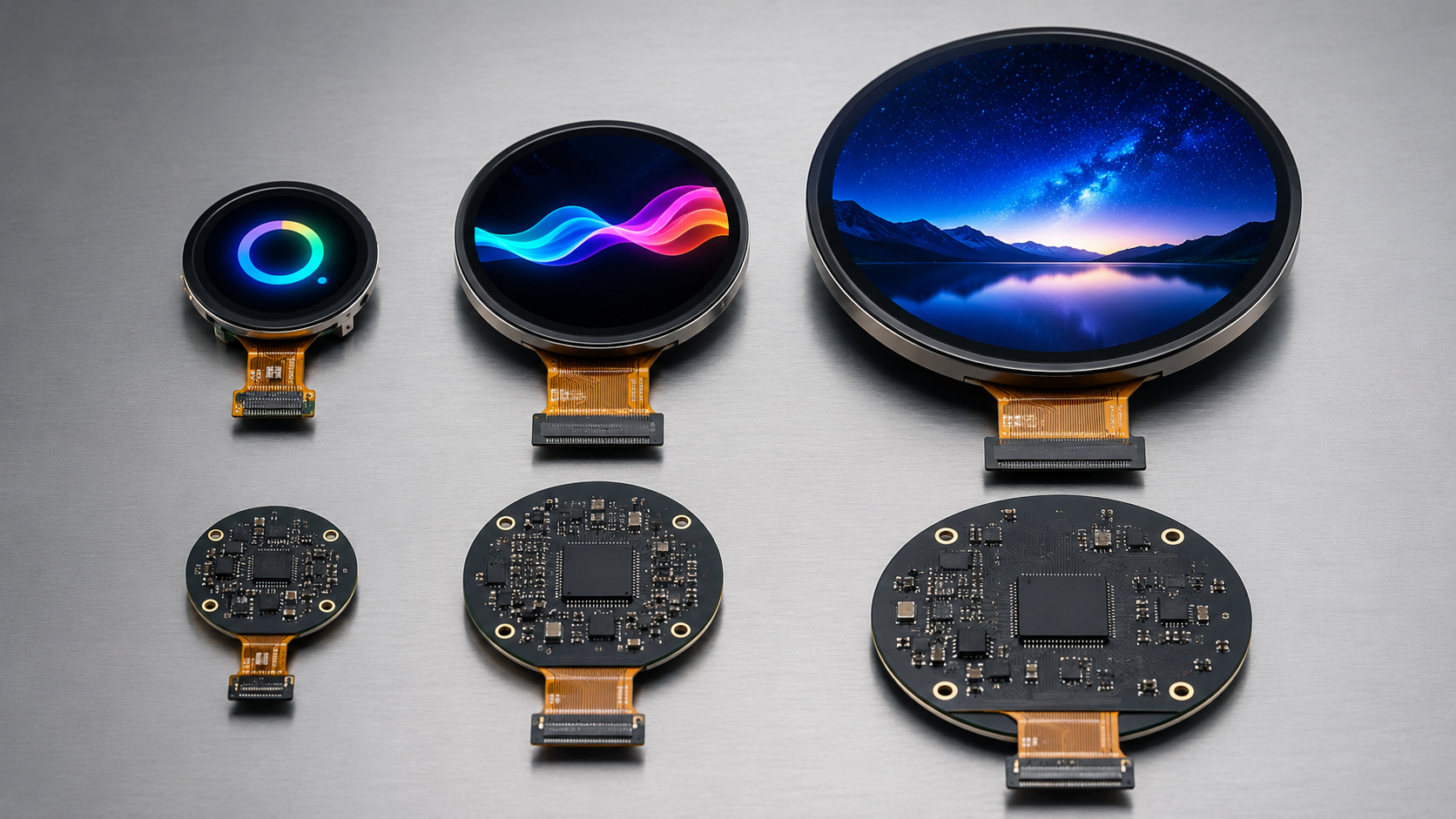
For industrial use, select a round OLED in this order: mechanical fit, readable UI, optical performance, interface bandwidth, RAM, power, lifetime, environment, and supply control. A 240 × 240 RGB...
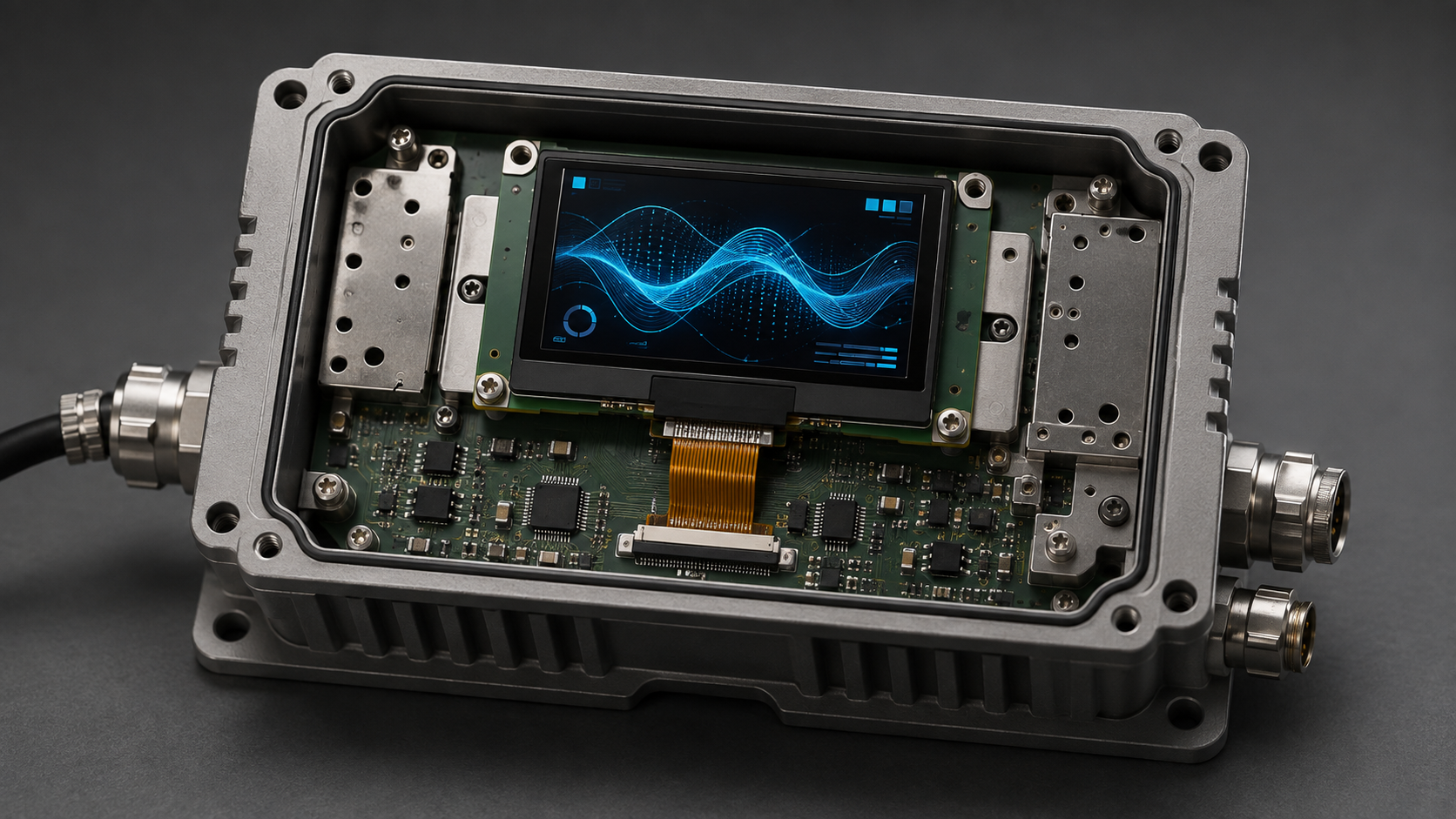
Set the connector coordinates from fixed datums, measure power and signals at the module end, and test cold startup, EMI, ESD and vibration with the final enclosure. For a 128 × 64 monochrome PMOL...