



OLED Display in Automotive | Dashboard, HUD & Ambient Lighting
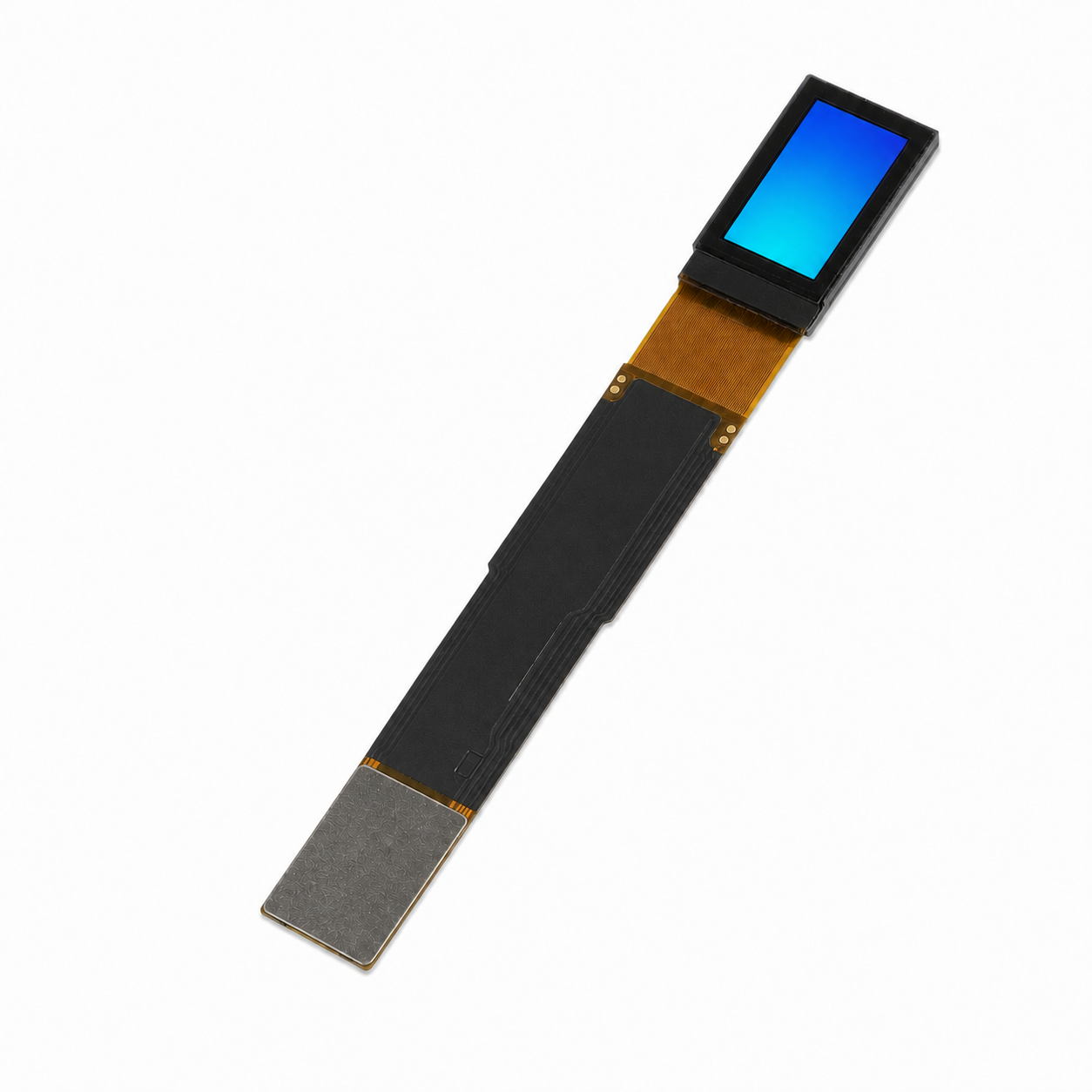
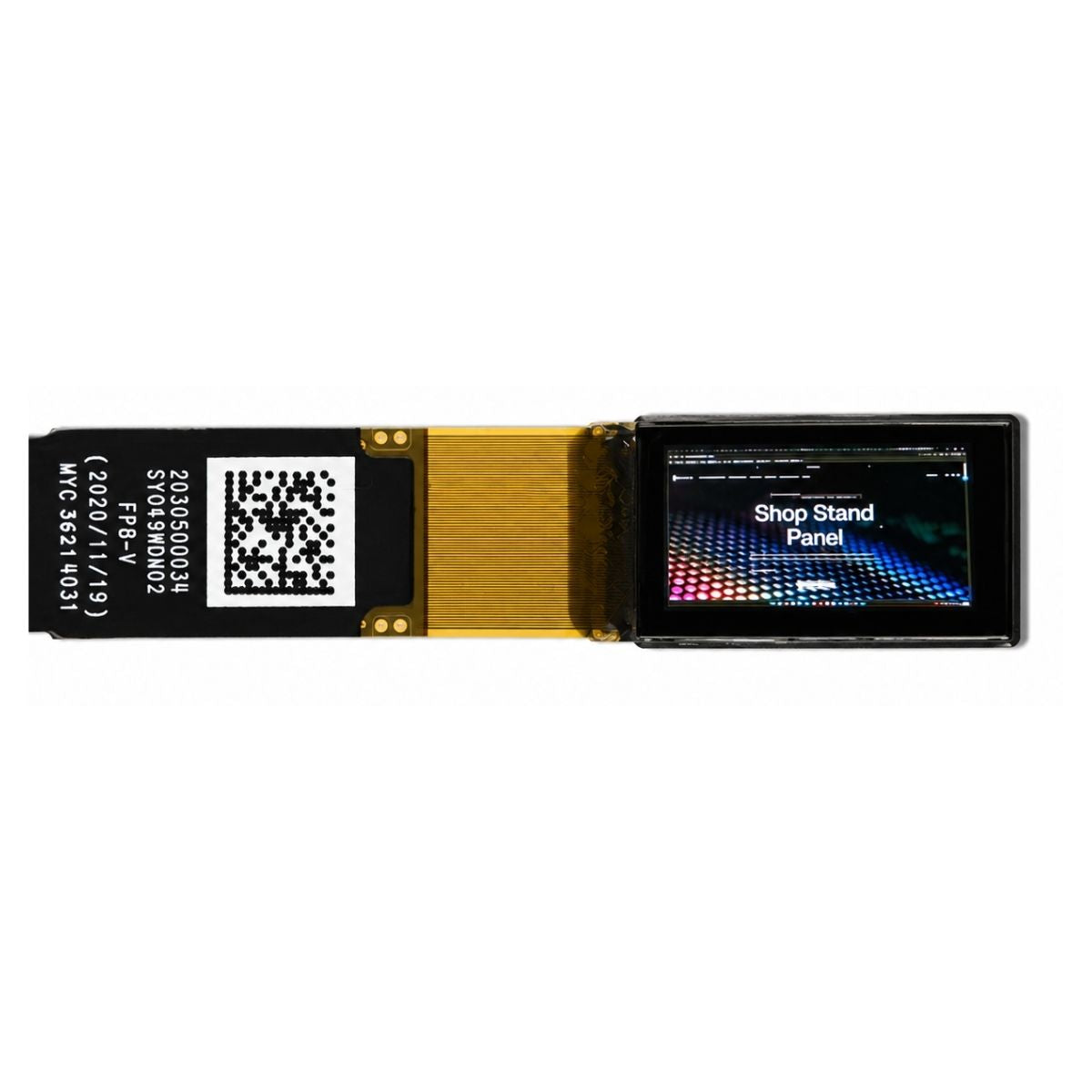
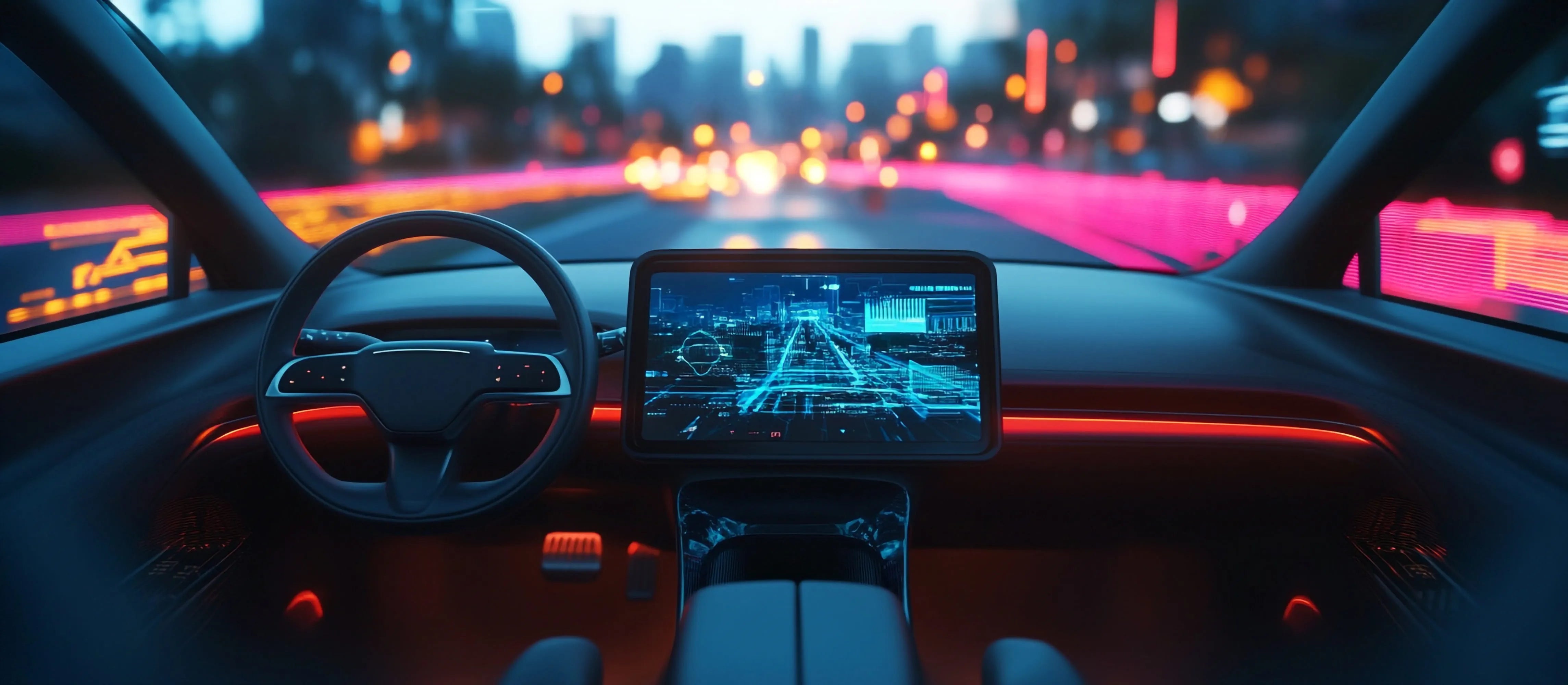
Automotive OLED utilizes flexible substrates to bond with curved dashboards, meeting automotive-grade temperature resistance standards of -40°C to 105°C.
HUDs employ Transparent OLED (transmittance over 40%) combined with brightness exceeding 1000 nits to resist strong light interference.
Ambient lighting achieves dynamic zoning through pixel-level light control and must be integrated with reinforced Thin Film Encapsulation (TFE) processes to strictly prevent interior moisture from eroding organic materials causing failure.
Dashboard
To meet stringent automotive-grade standards, the new generation of OLED adopts Two-Stack Tandem structure technology, boosting screen brightness to over 1000 nits while extending lifespan by 4 times, effectively solving the risk of Burn-in.
With an ultra-high contrast ratio of 1,000,000:1 and a response speed of <1ms, OLED instrument clusters can provide "Absolute Black" that LCDs cannot achieve, completely eliminating background light interference during night driving.
Currently, Samsung Display and LG Display occupy over 90% of the global automotive OLED market share, pioneering mass production in flagship models such as the Cadillac Escalade and Mercedes-Benz EQS.
Visual Ergonomics
How absolute black improves night reaction speed
In low-light environments (< 1 lux) such as at night or in tunnels, human pupils dilate to capture more light, putting the visual system into "scotopic adaptation" mode.
- LCD Light Leakage Interference: Traditional LCD screens rely on LED beads behind them for light. Even when displaying a full black image, the backlight layer remains on. Light passes through liquid crystal molecules, causing a surface brightness of about 0.1 to 0.5 nits.
- OLED Pixel-Level Shut-off: Each red, green, and blue sub-pixel on an OLED panel is an independent light source. When displaying black, the pixel cuts off the current completely, and brightness drops directly to 0 nits.
- Contrast and Cognitive Efficiency: This "True Black" creates a contrast ratio exceeding 1,000,000:1. High-contrast text (such as white speed numbers on a pure black background) significantly shortens the eye's focus time. Experimental data shows that in night driving scenarios, high-contrast displays can shorten a driver's cognitive reaction time by 10% - 15%, which translates to a braking distance advantage of several meters in emergency braking scenarios.
No motion blur even at -40°C
Liquid Crystal material is essentially a fluid, and its viscosity is extremely sensitive to temperature. This is one of the biggest physical challenges facing automotive-grade displays.
- Physical Hysteresis at Low Temperatures: When the ambient temperature drops to -20°C or -30°C (common winter mornings in high latitudes), the physical rotation resistance of liquid crystal molecules increases dramatically. The Gray-to-Gray (GtG) response time of ordinary IPS LCDs surges from 15ms at room temperature to 100ms - 200ms.
- OLED Solid-State Electronic Transition: The principle of OLED light emission is based on electron transitions between energy levels in organic materials, a process almost unaffected by temperature. Even in extreme low-temperature chamber tests at -40°C, OLED pixel response time remains stable at <1ms (usually around 0.05ms).
Handling screen reflection under direct sunlight
The worst operating condition for car screens is not darkness, but strong direct sunlight (illuminance up to 100,000 lux). If the screen isn't bright enough or reflections are too severe, the image becomes "washed out" and invisible.
- Ambient Contrast Ratio (ACR): Simply stacking brightness (e.g., boosting to 2000 nits) brings high heat and power consumption. OLED's strategy is to improve "Ambient Contrast Ratio" by lowering reflectivity.
- Circular Polarizer Extinction Principle: OLED panel structures usually integrate a layer of Circular Polarizer. Non-polarized sunlight entering from the outside becomes circularly polarized after passing through the polarizer. When it hits the metal electrodes at the bottom of the panel and reflects back, its rotation direction flips, preventing it from passing through the polarizer again to exit. This physical property suppresses the surface reflectivity of OLED panels to 1.1% - 1.5%.
- Maintaining Color Saturation: According to the Helmholtz-Kohlrausch effect, the human eye perceives high-saturation colors as brighter. LCDs often appear washed out (color gamut coverage drops) under high brightness, while OLEDs, relying on the high color purity of self-emission, can maintain >90% DCI-P3 color gamut even under strong light.
Colors must not change when viewed from the side
Modern smart cockpits emphasize "shared experiences," where the co-pilot or rear passengers often need to check information on the center console or even the instrument cluster.
- Gamma Shift: Ordinary VA or IPS liquid crystal screens experience Gamma curve drift when the viewing angle exceeds 30 degrees, leading to washed-out images or color distortion.
- Lambertian Emitter: OLED is close to an ideal Lambertian light source, emitting light uniformly in all directions. At a 45-degree deflection angle, OLED brightness decay is usually less than 20%, and color difference (Delta E) is controlled within 2.0.
Impact of blue light spectrum on melatonin
Long-duration night driving easily leads to fatigue, and high-energy blue light in the screen spectrum is one of the triggers.
- Spectral Distribution Difference: The white backlight of typical automotive LCDs is generated by blue LEDs (peak at 445-450nm) exciting yellow phosphors.
- Wavelength Customization of Organic Materials: OLEDs can precisely control the peak of the emission spectrum by adjusting the chemical composition of the organic light-emitting materials. New generation automotive-grade OLED materials shift the blue light peak to 460nm - 470nm. Without changing the screen color temperature (not turning yellow) and without relying on software filters, this reduces harmful blue light radiation energy by about 30% - 40%, meeting the TUV Rheinland Eye Comfort certification standards, reducing the visual burden of long-distance night driving from the hardware level.
Tandem OLED
Why go through the trouble of stacking two emitting layers
To make the screen reach 800 nits brightness in sunlight, the Current Density must be pushed very high.
- Fatigue of Organic Materials: The emitting layer of OLED consists of organic molecules. The higher the current, the greater the Electrical Stress on the molecules, and the decay rate rises exponentially. A single-layer structure in automotive high-brightness mode might only last 2,000 to 3,000 hours before brightness attenuation or burn-in occurs.
- The Art of Load Sharing: The Tandem structure adds a Charge Generation Layer (CGL) between two RGB emitting units.
- Data Conversion: To achieve the same 800 nits brightness, each layer in a double-layer Tandem structure only needs to bear 50% of the current density. Current test data shows that the LT95 lifespan (time for brightness to decay to 95%) of Tandem OLED under automotive conditions has exceeded 30,000 hours.
The connecting layer that is only a few nanometers thick
Stacking two layers of light-emitting materials is not easy; there must be a "conversion plug" in the middle, which is the CGL (Charge Generation Layer).
- Tunneling Effect of PN Junction: CGL usually consists of a layer of N-type material (N-CGL) and a layer of P-type material (P-CGL). When voltage is applied, electrons and holes are generated at the CGL interface through the quantum tunneling effect, and then injected into the emitting units near the anode and cathode respectively.
- Precision Challenge: The thickness of this connecting layer is usually only 5nm to 10nm. If the thickness control is uneven, it will lead to unbalanced voltage distribution between the two emitting units, causing severe Color Shift.
- Voltage Cost: There is no free lunch. The cost of the Tandem structure is increased driving voltage. The driving voltage of a single-layer OLED is about 10V, while a double-layer Tandem requires 20V or even higher.
How to solve the "lagging behind" problem of blue light materials
Among the three primary colors of red, green, and blue, blue organic materials (Blue Host & Dopant) have the highest photon energy and the most unstable chemical bonds, making them the "short board" that dies first in OLED panels.
- Bucket Effect: The lifespan of a screen depends on the color that fails first. As long as the blue pixels decay, the screen turns yellow.
- Hybrid Stacking Strategy: The Tandem structure allows engineers to play with "permutations and combinations." In some high-end automotive panel schemes (such as LG Display's solution), the first layer may use longer-life blue fluorescent materials, and the second layer uses high-efficiency blue phosphorescent or TADF (Thermally Activated Delayed Fluorescence) materials. Or simply by double-layer blue stacking, the total light-emitting area of blue pixels is doubled, thereby minimizing the load on blue pixels while maintaining constant brightness.
How bright can it really get under the sun
The car's center console and dashboard are often exposed to direct sunlight without any shading, and ambient illuminance can instantly soar to 100,000 lux. If the screen brightness is not enough, it looks like a black patch.
- Hard Brightness Metrics: Consumer OLED laptops typically have a global brightness of 400-600 nits. Automotive-grade Tandem OLED starts at 800 nits, and the most advanced models currently in mass production (such as those applied in Genesis or Audi concept cars) can stably output 1,200 nits globally, with local peak brightness even touching 2,000 nits.
- Luminous Efficacy: You might worry that being so bright consumes a lot of power. In fact, because the Tandem structure operates in a high-efficiency zone with low current density (OLED material efficiency drops as current increases, known as the Roll-off effect), Tandem OLED saves 30% to 40% power compared to forcing a single layer to overclock to produce the same brightness.
Form Factor Reshaping
Why replace the glass substrate with plastic liquid
P-OLED does not use ready-made plastic sheets but uses a liquid Polyimide (PI).
- Coating and Peeling Process: During manufacturing, the factory first coats yellow liquid PI on a mother glass carrier and cures it at high temperature into a film only 10 microns (µm) thick. Then, TFT circuits and OLED luminescent materials are evaporated on top. ly, using Laser Lift-Off (LLO) technology, a high-energy UV laser beam irradiates the back of the glass, instantly vaporizing the adhesive layer between the glass and the PI film, allowing the flexible film to be peeled off intact.
- Drastic Reduction in Thickness and Weight: The thickness of traditional LCD glass substrates is usually around 0.5mm, and with the backlight module, the entire screen module thickness often exceeds 10mm. P-OLED panels themselves are only 0.2mm - 0.3mm thick, and the weight is about 30% of an LCD of the same size.
- Space Dividend: For designs like the Mercedes-Benz EQS that cover the entire dashboard, using LCD would encroach on a large amount of front cabin space due to weight and thickness, forcing a layout redesign of air conditioning ducts and airbags. The ultra-thin nature of P-OLED frees up precious 3-5cm depth space for huge HUD optical groups and more complex HVAC ducts.
Screens curved like waves
Designers are starting to pursue "Multi-axis Bending".
- Engineering Meaning of R Value: The curvature of a curved screen is represented by the radius of curvature R (e.g., R2000 represents an arc with a radius of 2000mm). In the Cadillac Escalade's 38-inch OLED assembly, the screen is not a simple arc but uses composite curvature. The instrument area directly in front of the driver uses a micro-curved surface of R4000 to ensure the image does not deform when viewed head-on; while the part extending to the center control gradually transitions to R2000, bringing the furthest touch buttons within the driver's reach.
- S-Shape and V-Shape Design: Existing technology allows for sharp bends of R800 or even smaller. This makes S-Curve displays possible—a single continuous screen that is concave in the instrument area to surround the driver and convex in the passenger area to provide a better viewing angle.
-
Cold Forming: To protect the fragile OLED film, the surface must be covered with Cover Glass. Traditional 3D glass needs to be heated to 800°C for molding, which easily produces optical distortion. Now car manufacturers tend to use Cold Forming technology, using special chemically strengthened glass to bond it to a curved frame via mechanical force at room temperature.

How black borders became narrow or even disappeared
In the LCD era, a wide "chin" had to be left at the bottom of the screen to place Driver ICs and Flexible Printed Circuits (FPC), which is why many car screens have borders wide enough to land an aircraft carrier.
- COP Packaging Technology: Flexible OLED borrows the COP (Chip on Plastic) packaging technology from smartphones. Because the substrate is soft, engineers can directly fold the part of the substrate connecting the circuit and driver chip backward by 180 degrees to the back of the screen.
- Bezel Data: This operation directly eliminates the bottom bezel restriction. Current mass production processes can compress the bottom bezel to 2mm - 3mm, and side bezels even narrower.
This film is actually safer in a crash
Car interiors have an uncompromising metric: Head Impact Protection. When a vehicle is involved in a severe collision and the occupant's head strikes the dashboard, the screen must not shatter into sharp projectiles that cause injury.
- Fragility of Glass: Traditional LCD glass substrates produce sharp shards when they break. Although there is an anti-explosion film on the surface, the risk of rigid rupture of the internal structure remains.
- Unbreakable Characteristic: The matrix of P-OLED is plastic, which is inherently tough. Under severe impact, it will undergo plastic deformation or denting rather than brittle fracture.
- Avoiding Secondary Injury: According to Euro NCAP crash test data, panels using flexible OLED usually have better HIC (Head Injury Criterion) values than rigid glass panels in simulated head impact experiments.
It's just a piece of wood when not in use
In pursuit of Minimalism, designers want screens to be "invisible" when not working; this is Shy Tech.
- Extremely Low Reflectivity and Optical Bonding: To achieve "disappearing when off," the screen surface must be pure black. OLED's own True Black characteristic is the foundation. Using OCA (Optically Clear Adhesive) full lamination technology, the OLED panel is directly bonded beneath a decorative panel with 5% - 15% light transmittance.
- Material Camouflage: These decorative panels can be imitation wood grain, fabric, or brushed metal textures. When the OLED is off, ambient light is reflected by the top layer's texture, and to the naked eye, it looks like an ordinary wood trim panel.
- Brightness Required for Penetration: When information needs to be displayed, the OLED's high brightness penetrates this semi-transparent material. Since the top material blocks 80% - 90% of the light, the underlying OLED must have extremely high native brightness (usually >1500 nits) to ensure the penetrated image remains clearly visible.
HUD
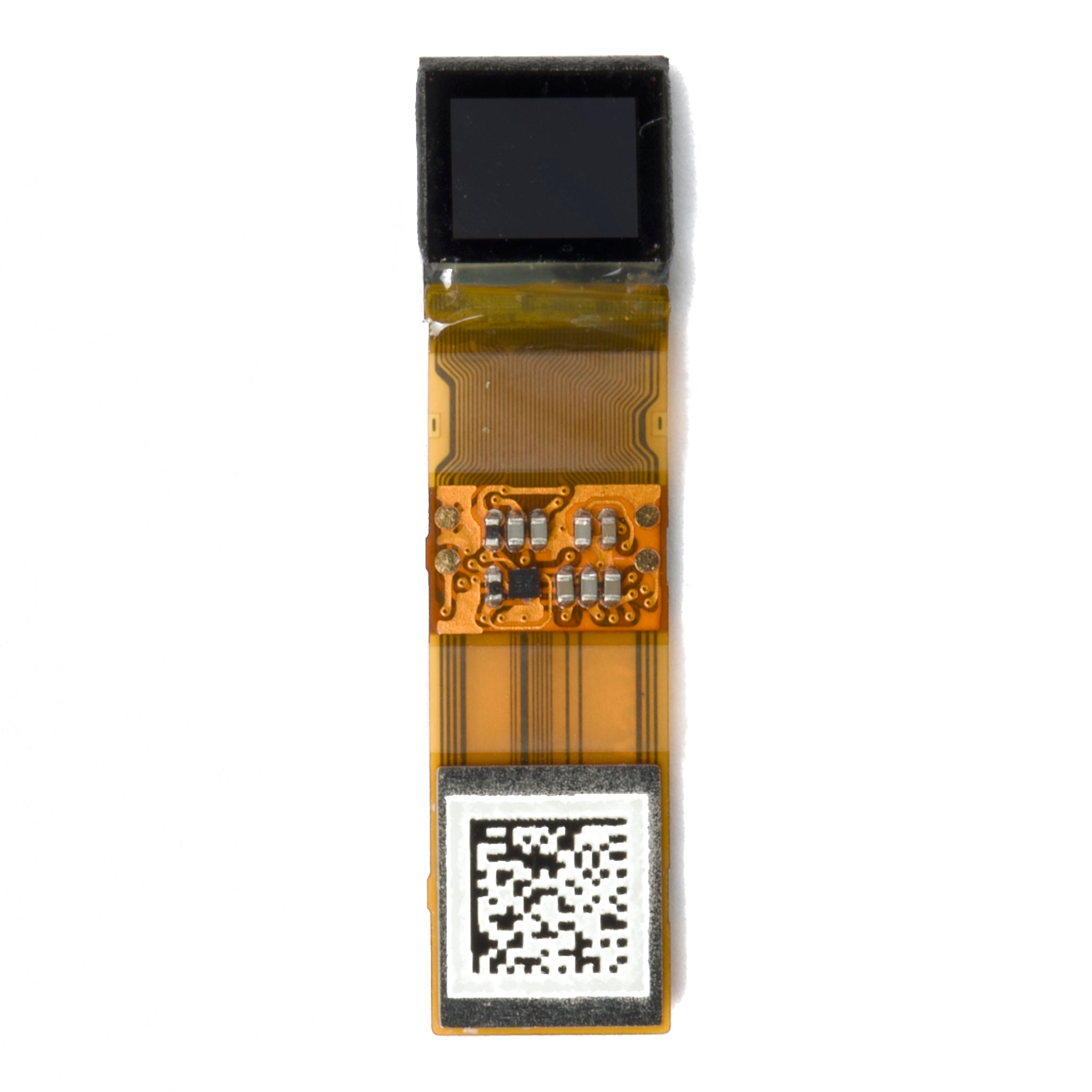
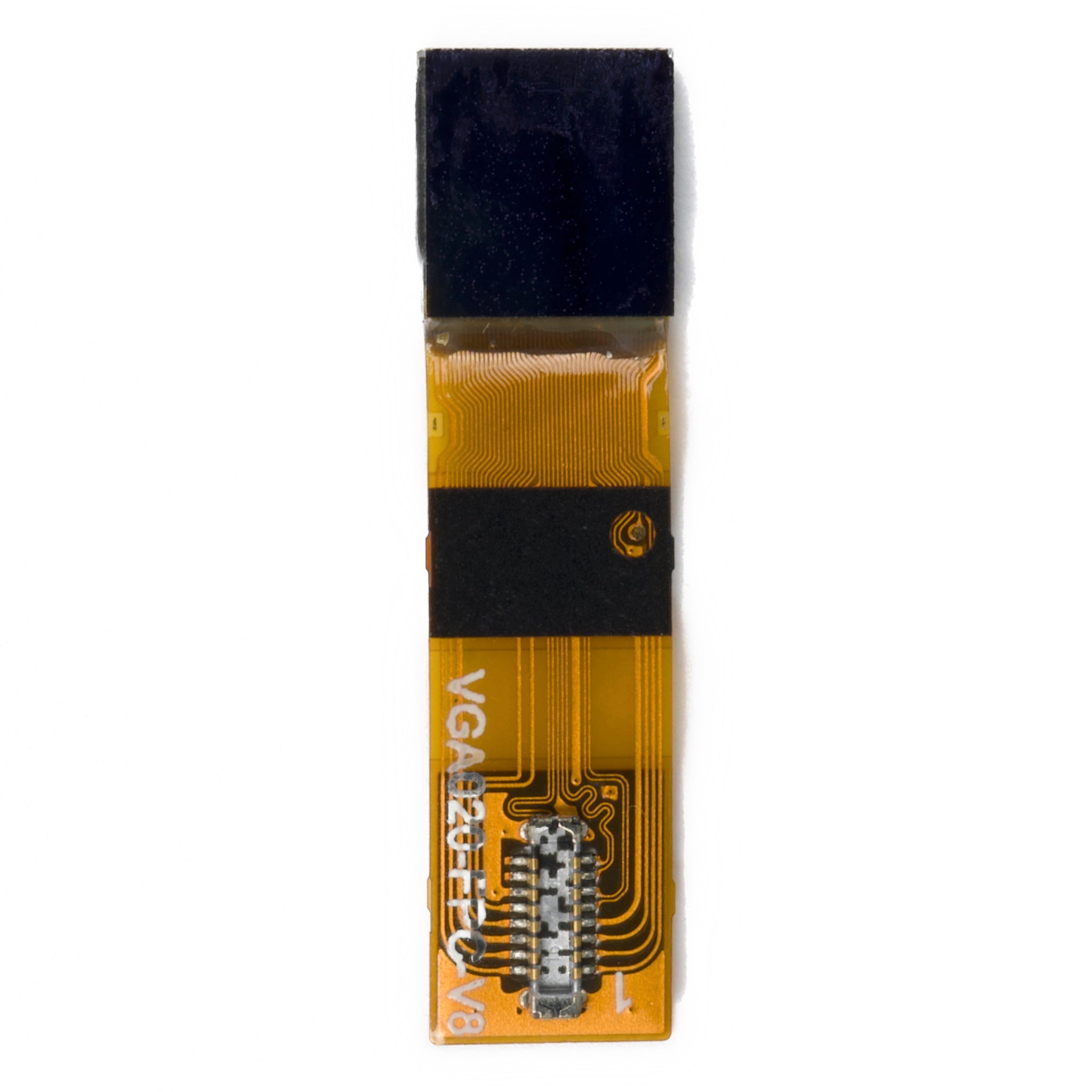
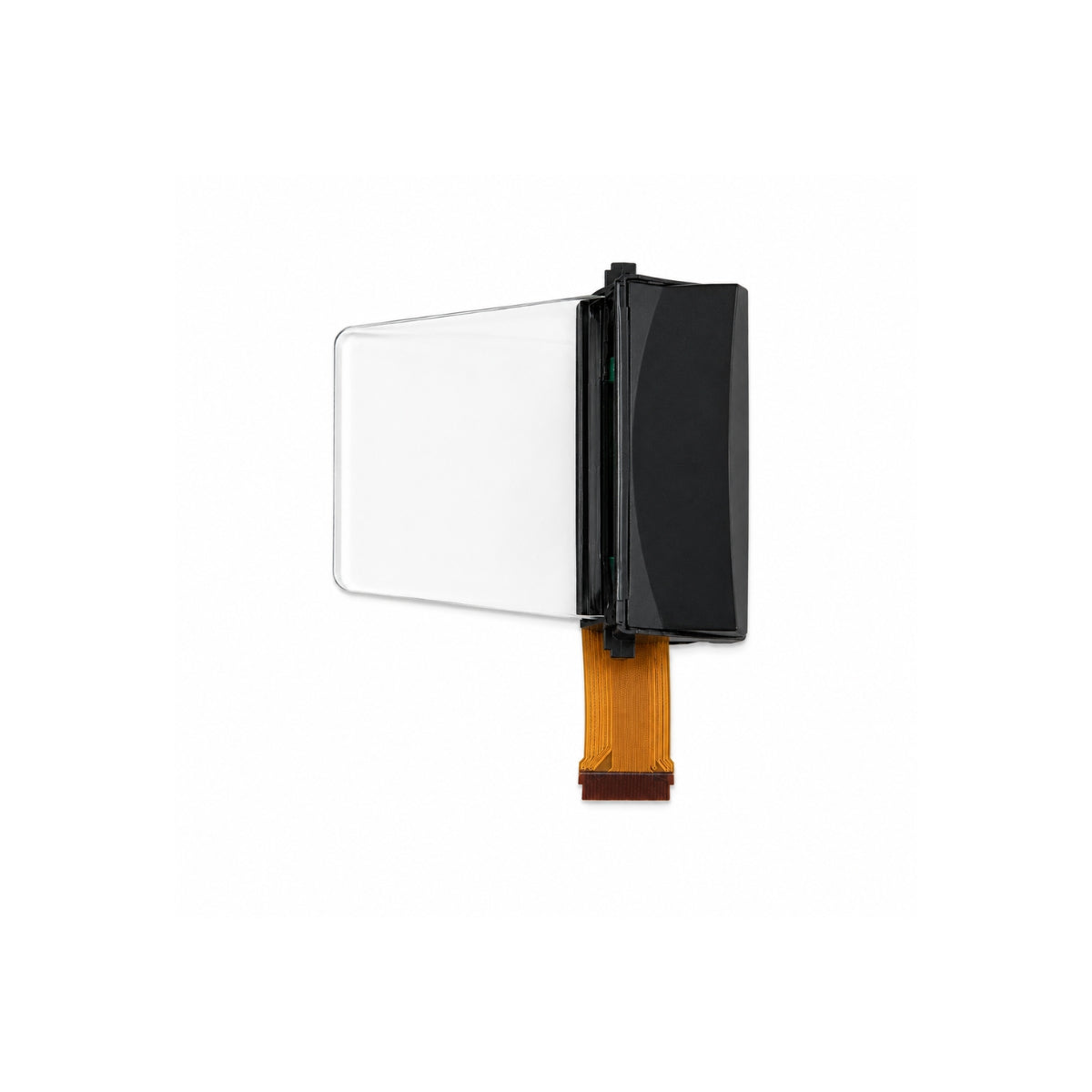
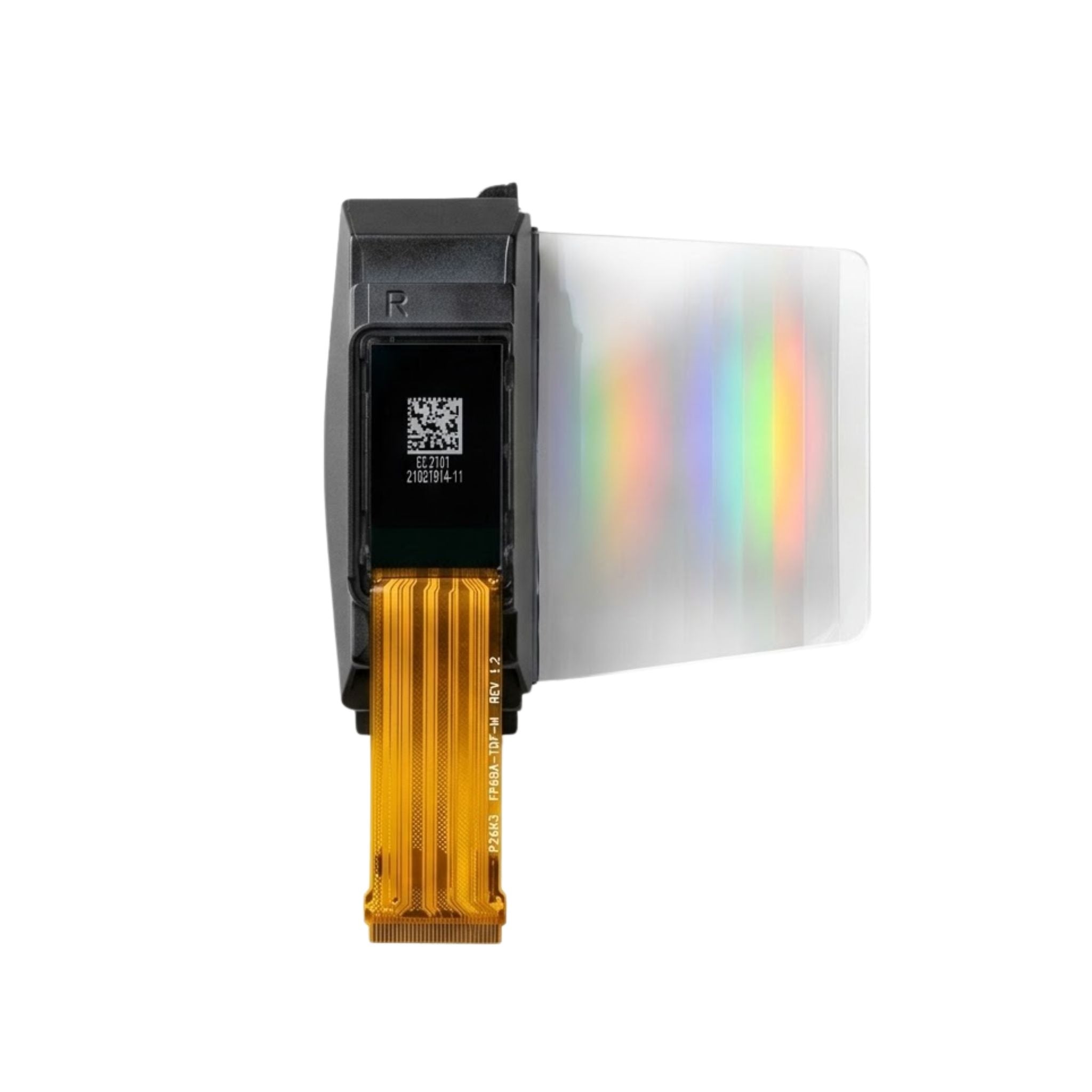
Data shows that Micro-OLED PGU can provide a contrast ratio of >100,000:1 and a response speed of <0.01ms.
This not only solves the motion blur problem of AR-HUD (Augmented Reality Head-Up Display) during high-speed movement but also reduces the volume of the optical engine by 30%-50%.
As Tandem OLED technology pushes brightness to automotive-grade standards (>1000 nits), OLED has become the preferred light source for next-generation compact, wide-field-of-view HUDs.
Saying Goodbye to the "Postcard Effect"
LCD backlight simply can't be turned off
LCD is a "passive light emitting" technology that must rely on a backlight source (Backlight Unit, BLU) to work.
In traditional automotive LCD PGUs, the backlight source usually consists of a high-brightness LED array, with brightness often needing to reach 10,000 nits or higher to ensure that the image projected onto the windshield is strong enough to combat midday glare after passing through layers of optical refraction.
The problem is that the Liquid Crystal Layer acts like a shutter; even if voltage is applied to fully deflect the liquid crystal molecules to the "closed" state (i.e., displaying black), it cannot block 100% of the light penetration.
- Light Leakage Data: The aperture ratio and polarizer efficiency of ordinary automotive-grade TN or IPS liquid crystal panels determine that there is still 0.1% to 0.3% light leakage in the "black" state.
- Calculation Result: If the backlight brightness is 10,000 nits, even in the fully black state, about 10 nits to 30 nits of brightness will penetrate through.
- Visual Presentation: This results in the HUD projection area not being transparent, but a rectangular background box emitting a faint gray light. This rectangular box is stuck "dead" on the windshield, completely destroying the depth-of-field illusion that AR-HUD tries to create of "images blending onto the road."
That gray box is an eyesore at night
In night or tunnel driving scenarios, the perception mode of the human eye switches from "Photopic Vision" to "Scotopic Vision," where retinal rod cells are more than 1,000 times more sensitive to light than during the day.
Ambient light brightness is usually lower than 1 nit or even 0.01 nit.
- Contrast Disaster: At this time, the 0.5 nit to 1 nit background gray light leaked by the LCD PGU (brightness entering the eye after attenuation by the HUD optical path) looks as glaring as a searchlight to the human eye.
- Signal-to-Noise Ratio (SNR): The brightness ratio (i.e., contrast) between effective navigation information (such as white arrows) and background gray light is usually only 1000:1 to 1500:1 on LCDs.
- Interference Test: Relevant research by SAE (Society of Automotive Engineers) indicates that when HUD background brightness exceeds ambient brightness by 20%, the driver's pupils are forced to constrict, leading to a decline in the ability to identify dark obstacles on the road (such as pedestrians in dark clothes) and prolonging reaction time by 0.3s - 0.5s.
Mini-LED can't solve the problem completely either
To solve LCD light leakage, the industry tried Mini-LED Local Dimming technology.
But in HUD scenarios, this is not only ineffective but counterproductive, producing a severe "Halo Effect":
- Zones are too rough: HUD content usually consists of fine lines of numbers, text, or arrows. The backlight zone size of Mini-LED (usually millimeter level) is far larger than the pixel size of LCD (micron level).
- Spillover: When the system wants to display a tiny "100km/h" icon, it has to light up an entire backlight area behind and around the icon.
- Result: The driver sees a cloud of blurred light fog wrapped around the numbers. Although the large area background is black, the "dirty spots" around the information points still exist, and as the numbers move, this cloud of light fog jumps around on the windshield, causing more severe visual interference than a pure gray background.
OLED pixels control their own switches
Micro-OLED (Silicon-based OLED) completely ends the above physical problems because it has no backlight layer. Each pixel is an independent micro bulb (self-emitting diode).
- Absolute Black: When a black background needs to be displayed, the OLED drive circuit directly cuts off the current to that pixel point. Electrons and holes no longer recombine, and photon production is 0.
- Infinite Contrast: Mathematically, brightness/0 = ∞. But in engineering measurements, using high-precision luminance meters (such as Konica Minolta CA-410) in a dark room, OLED HUD contrast readings usually show as Over Range or are labeled as >100,000:1.
- Transparent Illusion: Since the background brightness is 0 nits, no light is projected onto the non-information areas of the windshield. Whether day or night, the driver only sees suspended numbers and cannot perceive the physical boundaries of the screen at all.
Lighting up only 5% of pixels saves more power
HUD display content has extremely high Sparsity. Unlike playing video on the center screen, effective pixels displayed on the HUD (speed, navigation lines, ADAS warnings) usually only account for 2% to 5% of the entire screen area, with the remaining 95% being black background.
- LCD Energy Logic: To illuminate these 5% of pixels, the LCD's backlight module must run at full power (Global Dimming), and 90% - 95% of the light is absorbed by polarizers and color filters and converted into heat as it passes through the liquid crystal layer.
- OLED Energy Logic: OLED adopts a "Pixel-Level Power" mechanism. Black background pixels consume no current. Displaying 5% content consumes only about 5% of the theoretical maximum power.
- Thermal Management Dividend: Under the same perceived brightness, the power consumption of an OLED PGU is usually only 40% - 50% of that of an LCD PGU.
Zero Tolerance for AR-HUD Latency
The picture simply can't catch up with car speed
In AR-HUD (Augmented Reality Head-Up Display) scenarios, latency is not just about stuttering images, but leads to serious "Spatial Positioning Drift" (Registration Error).
The logic of AR-HUD is to "nail" virtual symbols to physical coordinates in the real world.
This involves a physics and math problem: the vehicle is moving at high speed.
- Speed Conversion: When a vehicle travels at 120 km/h on a highway, the speed is about 33.3 meters/second.
- Displacement Calculation: If the total display system latency (from sensor perception to light entering the human eye) reaches 100ms (0.1 seconds), the vehicle has already moved forward 3.33 meters during this time.
- Visual Misalignment: The driver will see the navigation arrow not at the intersection, but lagging 3.33 meters behind the intersection. This phenomenon is called "Jitter" or "Swimming Effect".
Your brain thinks you are poisoned
This conflict between vision and the vestibular system is the culprit causing "AR Simulator Sickness".
The human eye's Vestibulo-Ocular Reflex (VOR) system is extremely sensitive; it requires that visual feedback must be synchronized with the acceleration felt by the inner ear.
- 20ms Threshold: The academic community (such as studies by NASA and SAE) generally believes that to fool the human brain and achieve an immersive AR experience, the total Motion-to-Photon (MTP) latency must be controlled within 20ms.
- Cognitive Dissonance: Once latency exceeds this threshold, the brain receives conflicting signals (eyes say didn't turn, ears say turned). According to evolutionary logic, the brain interprets this sensory confusion as "neurotoxicity" or "hallucination," and thus attempts to expel "toxins" from the body by inducing nausea (vomiting).
Liquid crystal molecules freeze and can't move in cold weather
LCD relies on voltage to drive the physical rotation of liquid crystal molecules to change the polarization direction of light, which is a mechanical motion process involving fluid dynamics.
- Viscosity Coefficient: Liquid crystal is essentially a fluid. At room temperature (25°C), the Black-to-White response time of automotive-grade LCDs is usually between 15ms - 25ms.
- Low Temperature Paralysis: Cars must pass the -40°C cold start test. In low-temperature environments, the viscosity of liquid crystal materials rises exponentially. Even with heaters installed, in the first few minutes of startup, LCD response time may skyrocket to 200ms - 500ms.
- Trailing Phenomenon: On the HUD screen, this manifests as dynamic icons dragging long "ghosts" behind them. For example, when the number "100" changes, the old number hasn't disappeared before the new number overlays it, causing the reading to blur into a mess.
The speed of electron flow
The light emission principle of Micro-OLED (Silicon-based OLED) is carrier injection into organic semiconductor materials causing light emission. This is electron movement at the quantum level and does not involve any physical movement of molecules.
| Response Characteristic | Automotive Grade TFT-LCD | Micro-OLED | Performance Multiplier |
|---|---|---|---|
| Physical Mechanism | Molecular Mechanical Rotation (Fluid) | Electronic Energy Level Transition (Solid) | - |
| Room Temp Response Time | 15,000 µs (15ms) | < 10 µs (0.01ms) | 1500 times faster |
| -30°C Response Time | > 200,000 µs (Severe Smearing) | < 10 µs (No Change) | 20000 times faster |
| Refresh Rate Cap | Typically 60Hz - 90Hz | 120Hz - 240Hz | 2 times+ |
OLED response time is in microseconds (μs), three orders of magnitude faster than LCD.
Whether in the extreme heat of Turpan or the extreme cold of Alaska, OLED pixels can complete brightness switching the instant the command is issued, and the performance curve is almost a straight line, completely unaffected by temperature.
Leaving a time window for computing power
In a complete AR-HUD system, total latency (MTP Latency) consists of four parts:
- Sensor Capture (Camera/LiDAR exposure and reading).
- SoC Computing (Perception fusion, coordinate transformation, rendering).
- Data Transmission (SerDes video signal transmission).
- Screen Display (Pixel response).
This is a zero-sum game. If the total budget is only 20ms:
- LCD Solution: The screen itself eats up 15ms or even more. The time left for the SoC to perform algorithmic calculations is less than 5ms. This forces engineers to reduce algorithm precision or use extremely expensive high-computing power chips to compress calculation time.
- OLED Solution: Screen response takes only 0.01ms, which is negligible. This leaves a complete 19ms+ time window for the SoC.
The "Slimming" Action of PGU
The dashboard really can't fit anymore
In modern Vehicle Engineering design, the space inside the dashboard is called "Prime Real Estate".
It not only has to accommodate huge HVAC (Heating, Ventilation, and Air Conditioning) ducts, steering columns, and airbag assemblies, but also fit increasingly large center console hosts.
- Volume Red Line: For traditional W-HUD (Windshield Head-Up Display), OEMs usually give a volume budget of 3L - 5L.
- AR-HUD Embarrassment: When demand upgrades to AR-HUD (Augmented Reality Head-Up Display), in order to achieve a FOV of 10° x 5° or larger, whether it is TFT-LCD or DLP technology solutions, the physical volume of the optical system often swells to 12L - 15L.
- Interference Conflict: This volume is unacceptable for most compact Sedans and even some SUVs.
Why traditional optical engines are so bulky
To understand why Micro-OLED can slim down, one must first understand why traditional PGUs (Picture Generation Units) are "fat".
-
TFT-LCD's "Layer Cake" Structure:
LCD PGU is like a complex hamburger. The bottom layer is a high-power LED array, covered with a Diffuser, Brightness Enhancement Film (BEF), double-layer Polarizers, and the LCD Panel.- Optical Path Length: To ensure uniform backlighting, a mixing distance of 20mm - 30mm must be kept between the LED beads and the LCD panel. This physical space is dead weight and cannot be compressed.
- Panel Size: The pixel density (PPI) of automotive LCDs is usually only 100 - 200 PPI. To achieve high-definition resolution (e.g., 1280x640), the panel size needs to be at least 1.8 inches - 3.1 inches.
-
DLP's "Twisting" Light Path:
Although DLP (Digital Light Processing) chips are small, they require extremely complex light path folding.- Architecture Redundancy: The DLP system includes a light source, illumination lens group, TIR prism (Total Internal Reflection prism), and DMD chip.
- Space Waste: This complex optical architecture leads to PGUs often having irregular shapes, making it difficult to efficiently use the square remaining space inside the dashboard, resulting in extremely low Packing Efficiency during actual installation.
Silicon-based chips build screens into wafers
The slimming effect brought by Micro-OLED (Silicon-based OLED) is a structural subversion. It's not making the screen thinner, but making the screen into a semiconductor chip.
- PPI Explosion: Micro-OLED builds the driving backplane directly on a single-crystal silicon wafer. This allows its pixel density to easily reach 3000 PPI - 4000 PPI.
- Size Comparison: For the same 1920x1080 resolution, LCD needs a 3.1-inch panel, while Micro-OLED only needs a 0.71-inch chip.
- Optical Magnification Effect: The Source Image area is reduced by 90%. In optical design laws, the smaller the source object, the proportionally smaller the optical lenses and curved mirrors required to achieve the same projection distance (VID) and field of view (FOV).
- Data Measurement: According to reference designs from suppliers (such as Sony or BOE), based on 0.7-inch Micro-OLED AR-HUD prototypes, their total volume can be compressed to between 7L - 9L. Compared to DLP solutions with the same parameters (usually >12L), the volume is reduced by 30% - 40%.
Throwing away fans and heat sinks
Volume is not just a matter of light paths, but also the fault of the Thermal Management System.
- LCD's "Barbecue Mode": As mentioned earlier, LCD light efficiency is extremely low (<5%). To obtain sufficient eye brightness, the backlight source often has to run wildly at 20W - 30W.
- Heat Dissipation Burden: To prevent liquid crystal materials from failing (blackening) at high temperatures, LCD HUDs must be equipped with huge aluminum Heat Sinks or even active cooling fans.
- OLED's "Coolness": Micro-OLED is self-emitting and only lights up effective pixels. When displaying standard HUD interfaces (mostly black), its average power consumption is usually between 1W - 3W.
- Structural Simplification: Extremely low heat generation means Micro-OLED PGUs usually only need passive cooling through the metal casing, requiring no fan, and the size of the heat sink can also shrink significantly.
Transparent OLED
Burying the screen in the glass
Transparent OLED (T-OLED) completely changes the definition of HUD: it is no longer "projecting" an image, but giving the glass itself display capabilities.
Traditional projection HUDs (W-HUD or AR-HUD) are essentially a projector placed in a deep pit in the dashboard, which must "throw" the image onto the windshield through three or four optical refractions.
- Physical Form: T-OLED does not require any optical path distance. It is just a thin laminate.
- Integration Method: Engineers can laminate the T-OLED panel directly between two layers of windshield glass (Laminated into the windshield), or design it as a standalone glass piece rising from the dashboard (Combiner).
- Thickness Data: The thickness of the entire display component is usually between 1mm - 2mm. In contrast, traditional AR-HUD optical engines (PGU + lens group) typically occupy 200mm - 300mm of depth space vertically.
How light passes through
The reason T-OLED is transparent is not that the materials used are all transparent, but because it uses a unique "Venetian blind" pixel structure.
Under a microscopic microscope, each Sub-pixel of T-OLED is divided into two areas:
- Emissive Area: This is filled with OLED organic luminescent materials, responsible for displaying images. This part is opaque.
- Transparent Area: There is nothing here, just a pure glass substrate, responsible for letting background light pass through.
- Transmittance Data: Currently, the latest generation of 55-inch T-OLED panels mass-produced by LG Display have an overall transmittance of about 40% - 45%.
- LCD Can't Do It: It is extremely difficult for traditional LCD screens to be transparent. Because LCDs must rely on two layers of Polarizers to work, just these two sheets will physically block more than 50% of the light. Coupled with Color Filters and the liquid crystal layer, the transmittance of ordinary LCDs can hardly exceed 10% - 15%, looking like a very dark pair of sunglasses, which cannot be used for car windshields at all.
- Visual Effect: With 40% transmittance, when the driver looks at the road through the screen, the field of view brightness only drops slightly, similar to wearing a pair of light-colored driving sunglasses, fully meeting the EU ECE R43 safety standard regarding driving vision.
Throwing away the expensive wedge film
Projection HUDs face an expensive and troublesome problem called "Ghosting".
When HUD light is projected, it reflects once on the outer glass surface and again on the inner glass surface. This causes the driver to see two slightly offset images.
- Traditional Solution: To eliminate ghosting, car manufacturers must procure a specially made Wedge PVB Film. The cross-section of this film is trapezoidal (thick top, thin bottom), and the angle accuracy must be controlled at the 0.5 milliradian (mrad) level to force the two reflected images to coincide.
- Cost penalty: This wedge glass is extremely expensive, and separate molds need to be customized for different car models and different windshield curvatures. It significantly drives up the BOM (Bill of Materials) cost of the HUD system.
- T-OLED Solution: T-OLED is a self-emitting light source, and light enters the human eye directly from the screen without involving any glass reflection. Therefore, it is naturally ghost-free.
Black means completely transparent
In the display logic of T-OLED, "black" has a special physical meaning.
- Color Definition: For T-OLED, displaying black = pixel off = transparent.
- AR Fusion: When the screen displays a black background, what the driver sees is the glass itself with the highest light transmittance. This feature makes T-OLED very suitable for AR applications.
-
Contrast Challenge and Solution: Early T-OLEDs had poor contrast under strong light (because the background was too bright). Current solutions involve installing an Electrochromic Layer or adjustable dimmer (SPD) behind the panel.
- Dynamic Shading: When direct sunlight causes the screen content to be unclear, the system automatically lowers the transparency of the panel (darkens it) to act as a black background board, thereby instantly boosting image contrast to ensure information is clearly readable.
Side windows can also become screens
Since T-OLED does not require bulky optical path structures, its application scenarios have spilled over from the windshield to side windows and sunroofs.
- Sightseeing Mode: In concept cars demonstrated by Hyundai Mobis, rear side windows integrate T-OLED panels. When the vehicle passes a famous landmark, the name, historical introduction, or rating data of the landmark will automatically pop up on the glass, just like Iron Man's helmet interface.
- Privacy Shielding: When information does not need to be displayed, by controlling the pixel arrangement or an additional dimming layer, this screen can instantly turn into opaque black or a frosted texture, acting as Privacy Glass.
- Interaction Revolution: Data is no longer limited to the dashboard but can emerge on any piece of glass anytime, anywhere, according to the passenger's line of sight.
Ambient Lighting
Thanks to OLED (Organic Light Emitting Diode) technology, the thickness of light source components has been compressed to below 1mm (e.g., OLEDWorks' Atala series is only 0.88mm), and absolutely uniform surface emission can be achieved on curved surfaces without any light guide plates or heat sinks.
Data shows that the global in-car ambient lighting market is expanding rapidly at a Compound Annual Growth Rate (CAGR) of 13.1%, and is expected to exceed 13.8 billion USD by 2033.
Functional Lighting
Flashing red before getting off
When you park on the side of the road and your hand just touches the door handle to open the door, if the side-rear radar scans a bicycle or electric scooter rushing towards you at a speed of 20km/h, the OLED light strip on the door trim will intervene immediately.
- Visual Reaction Speed: Although auditory alarms (beeping) are useful, the human brain needs time to process sound signals. However, high-intensity red stroboscopic light (620-630nm wavelength) at the edge of the visual field can utilize the human peripheral vision instinct. Studies show that this strong visual stimulus can compress reaction time to within 0.5 seconds, making your hand instinctively pull back.
- Directional Guidance: With old-fashioned sound alarms, you might not know if the danger is on the left or right. But OLED light strips are embedded in specific doors; where the red light is on, that's where you can't open. This Spatial Correspondence is extremely intuitive and doesn't require the brain to process and judge.
When the car drives itself, the lights tell you what it's thinking
As L3 autonomous driving (such as Mercedes-Benz's Drive Pilot) begins to hit the road, the biggest problem with Human-Machine Co-driving is trust.
The SAE J3134 standard recommends using Turquoise/Cyan as the status color for autonomous driving systems because this color does not exist in traffic lights and will not be confused.
- Take-Over Request (TOR): When the autonomous driving system cannot handle complex road conditions ahead (such as road construction or heavy rain) and needs you to take over the steering wheel, the OLED light strip will display a dynamic process fading from cyan to red.
- Heartbeat Light Effect: The light strip simulates the frequency of a human heartbeat (about 60-70 times/minute) for extremely slight brightness breathing.
Knowing where to turn without looking at the map
OLED ambient lights lay navigation instructions on top of the dashboard through Dynamic Sweeping.
| Navigation Instruction | Light Dynamic Performance | Advantage |
|---|---|---|
| Turn Left/Right | Light flows quickly from the center of the dashboard to the left or right, like flowing water. | Direction can be perceived using peripheral vision without taking eyes off the road. |
| Distance to Intersection | The lit length of the light strip represents the proximity to the intersection. The closer the distance, the shorter the lit strip, until it extinguishes completely. | Essentially a progress bar concept, intuitively showing "how many meters left". |
| Blind Spot Assist | When changing lanes, if there is a car in the blind spot, the light on the corresponding side stays solid yellow. | Complements the blind spot of the rearview mirror. |
This design is called Peripheral Information Display.
Experimental data shows that using ambient light navigation reduces the driver's Eyes-off-road time by an average of 25%.
Charging progress visible at a glance from outside the car
Usually, you have to take out your phone to open an App or get close to the dashboard to look.
Because OLED components are extremely thin, they can be fitted to the edge of the dashboard near the windshield. When the vehicle is plugged into the charging gun:
- SOC (State of Charge) Visualization: The entire continuous light strip turns into a huge green progress bar.
- Long-Distance Recognition: Because of OLED's high contrast and surface emission characteristics, even if you are drinking coffee 10 meters away outside the car, just by glancing at the car window, you can master the charging progress based on the length of the lit light strip (e.g., half lit means 50%), without unlocking the vehicle at all.
It reacts when you speak or press a button
But the biggest shortcoming of touch screens is Lack of Feedback.
OLED ambient lighting acts as a "second feedback channel":
- Voice Assistant Linkage: When you shout "Hey, Volkswagen" or a similar wake word, the light strip in front of the passenger seat will light up and fluctuate with the pitch of your voice.
- Temperature Adjustment Feedback: In designs like the BMW Interaction Bar, if you slide the touch bar to increase the temperature, a stream of warm (orange-red) light flows across the strip immediately; lowering the temperature results in a cold (ice blue) light flow.
Flexibility and Reliability
How to bend without breaking?
Current automotive flexible OLEDs replace that layer of hard glass with Polyimide (PI).
- Radius of Curvature: This is a hard metric for measuring "how much it can bend." Current automotive-grade standards can achieve R = 150mm or even smaller.
- Design Freedom: Because of this R value, designers no longer need to make the dashboard a flat brick. They can design S-Curve or Concave & Convex surfaces.
- Physical Thickness: After removing the glass, the thickness of the entire panel can be compressed to between 0.2mm - 0.4mm. This is more than half as thin as your credit card (about 0.76mm).
Will it break in the summer sun?
If a phone can't handle the heat, it just crashes and restarts; if a car dashboard goes black on the highway due to overheating, lives are at stake.
The industry-standard AEC-Q100 places hellish temperature requirements on chips and display components:
| Test Item | Temperature Range / Condition | OLED Technology Solution |
|---|---|---|
| Operating Temp | -40°C to +85°C | Uses a specially formulated organic luminescent material recipe to ensure organic materials do not crystallize at minus 40 degrees and current can still pass through smoothly. |
| Storage Temp | -40°C to +105°C | This simulates extreme scenarios where vehicles are parked outdoors in the Arizona desert in summer. Interior temperatures easily exceed 80 degrees, and OLED must ensure materials do not decompose or bubble. |
| High Temp High Humidity (THB) | 85°C / 85% Humidity | Run continuously for 1000 hours or more. This is to simulate tropical rainforest climates to test whether the screen interior will short-circuit due to moisture. |
Lifespan Issue:
Car manufacturers require screens to last at least 10 to 15 years, or cumulatively light up for 30,000 to 50,000 hours. To meet the standard, two main "killer moves" are used:
-
Two-Stack Tandem Structure:
Ordinary phone OLEDs have only one light-emitting layer. Automotive-grade OLEDs stack two light-emitting layers in series.- Principle: To achieve the same brightness (e.g., 800 nits), each layer in the dual-layer structure only needs to exert half the effort. Current density is reduced, and the aging rate of organic materials drops exponentially.
- Data: This structure increases component lifespan by about 4 times compared to single-layer structures, while reducing energy consumption by 30%.
-
Deuterium Technology:
This is a Nobel Prize-level material improvement. Engineers replaced ordinary hydrogen atoms (Hydrogen) in blue light-emitting materials with the isotope Deuterium.- Effect: Deuterium chemical bonds are stronger and harder to break by high energy.
Mechanical Strength:
Everyone might think that the thicker the screen, the stronger it is, but in terms of vibration resistance, it is exactly the opposite.
Traditional LCD screens have a very heavy Backlight Unit behind them, containing light guide plates, brightness enhancement films, and LED bead arrays.
When the car goes over speed bumps or drives on bumpy roads, this heavy backlight module generates a large inertial force, which easily shakes loose ribbon cables or cracks the liquid crystal layer.
- OLED Advantage: Because it is self-emitting, it does not need a backlight module. The whole structure is just a thin film. The lighter the mass, the smaller the inertia.
- Vibration Test: Automotive-grade tests require withstanding 50g of Mechanical Shock and continuous Random Vibration. Since OLED has no suspended complex mechanical structures, its performance against high-frequency vehicle vibration is actually much more reliable than structurally complex LCDs.
Anti-UV Capability
OLED Polarizers and surface treatment layers must undergo special anti-UV treatment.
- Test Standard: Usually follows the DIN 75220 standard for Solar Load testing.
- Process: Uses metal halide lamps to simulate strong light of 1000 W/m², while controlling the surface temperature at around 110°C, continuously irradiating for 240 hours or even longer.
Weiterlesen
The cost of OLED modules increases non-linearly with size; 65-inch large screens have a unit price far higher than mobile phone screens due to significant cutting losses. High resolution (>400 P...
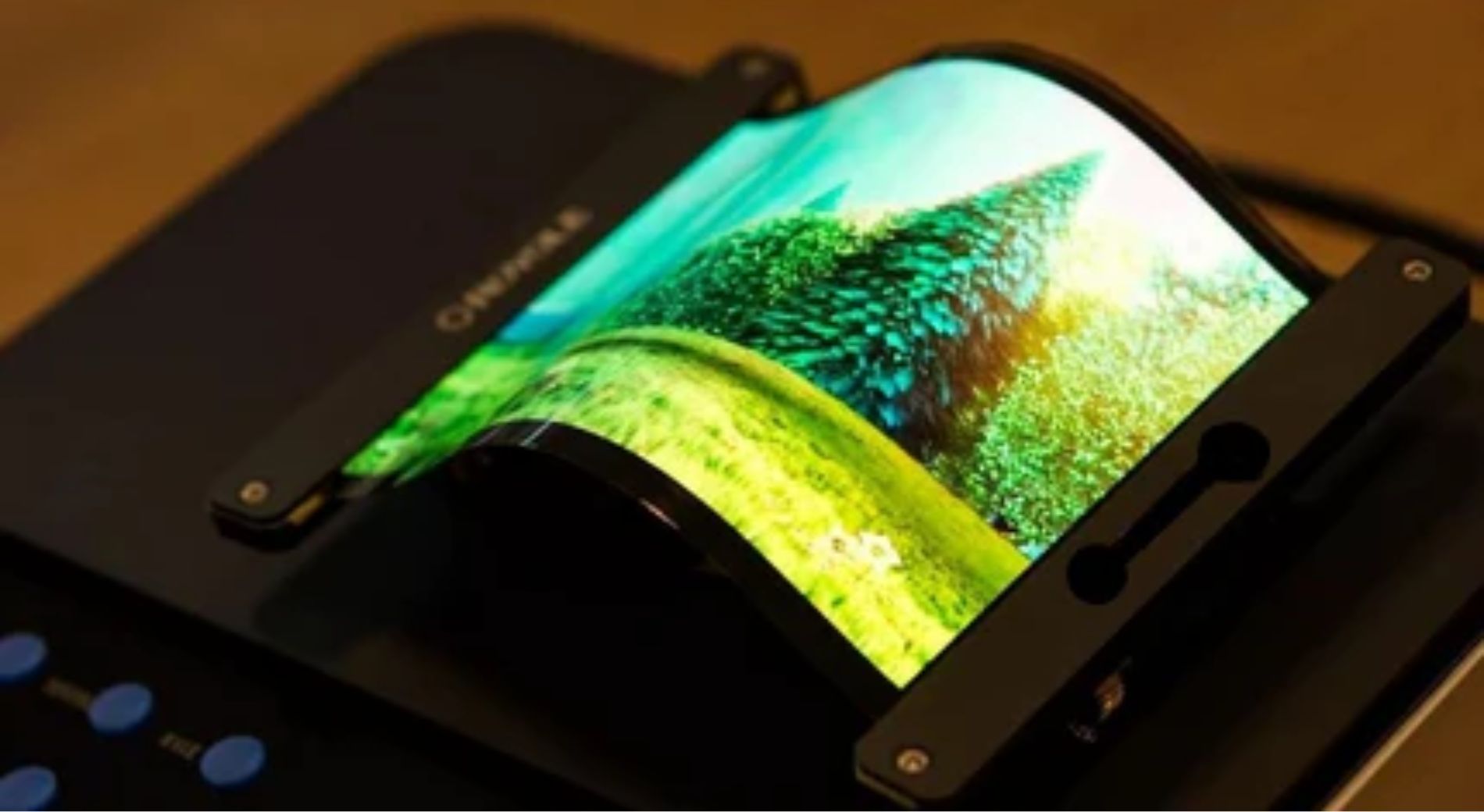
Consumer Electronics Dominates high-end smartphones (e.g., iPhone 15 Pro, 6.1-inch OLED, 500 nits brightness, 98% DCI-P3 color gamut) and TVs (LG C3, 55-inch, peak 2000 nits, million-level contrast...
Hinterlasse einen Kommentar
Diese Website ist durch hCaptcha geschützt und es gelten die allgemeinen Geschäftsbedingungen und Datenschutzbestimmungen von hCaptcha.