



Transparent LCD Screen Common Problem Guide | Viewing Angle, Interference, Adaptation
Common issues of transparent LCD screens focus on Viewing Angle due to the special arrangement of liquid crystal molecules, with horizontal/vertical viewing angles only 120°/100° (ordinary IPS is 178°/178°).
A 10.1-inch screen measured side viewing at 45° saw contrast drop from 1000:1 to 300:1 with blurred text edges.
Interference Under strong light (>1000lux), transmittance drops from 85% to 60%, displaying whitish;
Electromagnetic interference near motors causes the image to flicker at 5-10Hz (oscilloscope measures amplitude 200mV).
The driver board's HDMI 1.4 with 10.2Gbps bandwidth does not support 4K;
a certain model locks to 1080p when connected to 4K signal;
Android systems below version 10 render transparent UI with jagged edges.

Viewing Angle
DisplayMate 2023 test shows:
When the viewing angle of ordinary TN panels exceeds 45°, brightness attenuates by 52% and color saturation drops to 35%;
The error rate of flight information boards at London Heathrow Airport with oblique viewing angles increased by 12%.
IPS panels maintain 85% contrast at 60° side view (TN only 45%), becoming standard in high-end scenarios.
Choose the Right Type
Type Differences
-
IPS (In-Plane Switching) Panel: Liquid crystal molecules are initially parallel to the screen and deflect horizontally when powered on. The long axis of the molecules is always parallel to the screen, resulting in less light scattering at oblique angles, hence the widest viewing angle (178°). Electrodes use full-surface transparent indium tin oxide (ITO) coverage, ensuring uniform electric field distribution and good color consistency.
-
ADS (Advanced Super Dimension Switch) Panel: Improved from IPS, it further reduces gray-scale inversion at oblique angles through "electrode segmentation + dual-domain arrangement of liquid crystal molecules". The viewing angle is slightly lower than IPS (176°) but has higher transmittance, suitable for strong light environments.
-
TN (Twisted Nematic) Panel: Liquid crystal molecules are initially twisted 90° and deflect vertically when powered on. The long axis of the molecules tilts with the viewing angle, making light easy to leak from adjacent pixels at oblique angles, leading to brightness attenuation and color shift, with the narrowest viewing angle (horizontal 150°/vertical 140°).
Measured Comparison
(1) Optical Performance
|
Indicator
|
IPS Hard Screen
|
ADS Wide Viewing Angle
|
TN Panel
|
|---|---|---|---|
|
Horizontal Viewing Angle
|
178°
|
176°
|
150°
|
|
Vertical Viewing Angle
|
178°
|
176°
|
140°
|
|
60° Side View Contrast Retention Rate
|
85%
|
82%
|
45%
|
|
120° Top View Color Shift ΔE Value
|
≤3 (indistinguishable by human eye)
|
≤4 (slight color deviation)
|
≥8 (obvious blue shift)
|
|
Transmittance (550nm Wavelength)
|
42%
|
45%
|
48%
|
(2) Physical and Environmental Adaptability
-
Temperature Tolerance: IPS panel operating temperature: -20℃~70℃, ADS panel: -10℃~65℃, TN panel: 0℃~60℃. Nordic winter outdoor scenarios (e.g., Oslo bus stop, Norway) prefer IPS.
-
Impact Resistance: TN panel glass substrate thickness: 0.4mm (IPS/ADS: 0.7mm), slightly better impact resistance, but European and American public facilities mostly use reinforced installation, so this difference has little impact.
Selection Cases
(1) Retail Showcases
-
Case 1: Tiffany Flagship Store on Fifth Avenue, New York. In 2022, switched to LG IPS transparent screen (55 inches) with 178° horizontal viewing angle. Measured data shows: when customers view at 60° side angle, diamond parameter text contrast remains 82%, promotion information reading completion rate 91% (original TN panel only 57%). Although single-screen cost is $220 higher than TN, quarterly sales increased by 18% (store 2023 annual report).
-
Case 2: Apple Retail Store on Champs-Élysées, Paris. Uses Samsung ADS panel transparent screen (65 inches) with 176° vertical viewing angle. Under strong light (illuminance 100,000lux), transmittance is 45%, balancing screen transparency and viewing angle, icons remain clear when tourists view from 70° top angle.
(2) Public Information Screens
-
Case: Piccadilly Line Transfer Station, London Underground. Deployed Sharp ADS panel transparent screen (43 inches) with 176° horizontal viewing angle in 2023. During morning and evening peaks (crowd density 2 people/㎡), when passengers view at 50° oblique angle, arrow guidance contrast is 78%, daily average number of direction inquiries reduced by 28 times compared to TN screen (Transport for London operation data).
-
Data Comparison: British Ergonomics Society tests show that ADS panel visibility under strong light (50,000lux) is 40% higher than TN and 15% higher than IPS (due to higher transmittance).
(3) Interactive Devices
-
Case: Interactive Exhibit, Jewish Museum Berlin. Uses Panasonic IPS transparent touch screen (32 inches); when 6 people sit around, edge user (viewing angle 60°) touch accuracy 92% (TN screen only 67%). Task completion time shortened by 35%, audience stay duration increased by 22 minutes (museum 2023 audience behavior report).
-
Limitation: TN panel, due to narrow viewing angle, is only used for single-user inquiry terminals (e.g., San Francisco Airport self-check-in screen) and needs to be labeled "view from front angle".
Market data shows that although IPS/ADS have 15%-25% higher initial costs, long-term maintenance costs are reduced by 80%.
Optical Film Optimization
BEF
Technical Principle
Fabricate microprism arrays on PET substrate (prism angle 90°±2°, height 15-25μm) to refract scattered light to the visible direction.
Mainstream solutions include single BEF (20%-30% brightness increase) and double BEF (40%-50% increase after stacking).
Manufacturers and Data:
-
Fujifilm: Hyper BEF series, prism density 400 lines/mm, measured 32% brightness gain at 60° oblique angle (Berlin KaDeWe department store showcase screen, original TN panel side view brightness 250nit→330nit).
-
3M: DBEF-Q film (reflective brightness enhancement film), reuses reflected polarized light, increasing brightness by 25% while reducing power consumption by 12% (US Target supermarket price list screen case).
Scenario Adaptation
Retail showcases (double BEF needed under strong light), outdoor advertising screens (single BEF needed in Nordic winter low illuminance to balance transparency and brightness).
AG Film
Technical Principle
Convert specular reflection to diffuse reflection through surface microstructure (roughness Ra 0.02-0.1μm) to reduce concentrated reflection of ambient light (e.g., sunlight, lights) on the screen.
Divided into spray AG (low cost), etched AG (high precision), nanoimprint AG (excellent durability).
Manufacturers and Data:
-
Schott (Germany): AG Crystal film, surface roughness Ra 0.05μm, reflectivity reduced from 8% to 3% (Printemps department store showcase, text recognition improved by 55% under noon strong light).
-
NSG (Japan): Fine AG film, using chemical etching process, abrasion resistance up to pencil hardness 4H (London Heathrow Airport flight information board, maintaining low reflection after 500 daily touches).
Scenario Adaptation
Museum display cases (avoid spotlights reflecting and interfering with cultural relic viewing), airports/stations (high traffic environment with multiple light sources).
Compensation Film
Technical Principle
To address the vertical deflection defect of liquid crystal molecules in TN panels, use biaxially stretched PET film (phase difference compensation values λ/2, λ/4) to offset phase difference at oblique angles and reduce gray-scale inversion.
Manufacturers and Data:
-
3M: Wide View Comp film, expands TN panel horizontal viewing angle from 150° to 165°, 60° side view contrast increased from 45% to 60% (San Francisco Airport self-check-in screen, passenger oblique angle operation accuracy increased from 67% to 78%).
-
Zeon (Japan): ZC series film, dynamically adjusts phase difference through liquid crystal polymer coating, adapts to ADS panels, vertical viewing angle expanded from 176° to 180° (Lyon bus hub information screen, top view 70° icon clarity improved by 30%).
Scenario Adaptation
Low-cost solution for TN panels (e.g., pop-up stores), transition scenarios requiring slight expansion of viewing angle.
LR Film
Technical Principle
Coat multi-layer dielectric films (e.g., alternating MgF₂/SiO₂ layers) on the film surface, use interference effect to offset reflected light of specific wavelengths, reflectivity can be <1%.
Manufacturers and Data:
-
Merck (Germany): Lumirex LR film, 6-layer coating design, reflectivity 0.8% (Egyptian Gallery showcase screen, British Museum London, no reflection of cultural relic description text under spotlights).
-
Corning (USA): Iris Glass LR film, integrated molding with glass substrate, thickness reduced by 0.1mm, transmittance increased by 2% (interactive screen, MoMA New York, transparency score increased by 18%).
Scenario Adaptation
Museums/art galleries (need to balance transparency and text clarity), high-end retail (luxury displays reject any reflection).
Backlight Adjustment
Publicis Sapient
-
Solution Composition: 2-megapixel camera (frame rate 30fps) + 32-zone Mini LED backlight + edge computing module (NVIDIA Jetson Nano).
-
Algorithm Logic: YOLOv5 object detection identifies audience head positions, calculates optimal viewing area, completes brightness adjustment of each zone within 0.1 seconds.
-
Case Data: 43-inch screen at Lyon bus hub, during morning peak (crowd density 1.5 people/㎡), edge viewing angle (60°) brightness increased from 200nit to 255nit, uniformity increased from 65% to 92%; daily average number of misread arrow directions reduced from 42 to 18 (Transport for London 2023 operation report).
LG Commercial Screen
-
Solution Composition: 8-point infrared sensor (detection distance 0.5-3 meters) + 16-zone direct-lit backlight + local MCU control.
-
Features: No camera privacy concerns, suitable for luxury stores. Sensor detection angle 120°, covering 2-meter range in front of the screen.
-
Case Data: 55-inch screen at Galeries Lafayette, Paris, when customer views at 50° side angle, key area (price tag) brightness increased by 30%, non-key area reduced by 20% for energy saving; single-screen daily average power consumption reduced from 90W to 75W (LG 2023 energy efficiency test).
Samsung Smart LED
-
Solution Composition: 60GHz millimeter-wave radar (detecting number of people/posture) + 24-zone quantum dot backlight + cloud algorithm update.
-
Advantages: Strong penetration (unaffected by ambient light), can identify positions of multiple people.
-
Case Data: Conference screen at a law firm in Berlin, when 6 people sit around, brightness of corresponding area for each person is automatically matched, contrast retention rate increased from 70% to 88%; manual dimming times during meetings reduced by 90% (German Association of Office Equipment VDI test).
Effect Comparison
(1) Performance Parameters
|
Solution
|
Sensor Type
|
Number of Zones
|
Response Time
|
60° Side View Brightness Gain
|
Edge Viewing Angle Uniformity
|
Applicable Scenarios
|
|---|---|---|---|---|---|---|
|
Publicis Sapient
|
Visible Light Camera
|
32 Zones
|
0.1s
|
30%
|
92%
|
Bus Hubs, Airports
|
|
LG Commercial Screen
|
Infrared Sensor
|
16 Zones
|
0.2s
|
25%
|
85%
|
Retail Showcases
|
|
Samsung Smart LED
|
Millimeter-wave Radar
|
24 Zones
|
0.15s
|
28%
|
89%
|
Multi-person Office Collaboration
|
|
Static Backlight (Control Group)
|
-
|
-
|
-
|
0%
|
65%
|
-
|
(2) Scenario-based Benefit Data
-
Airport Information Screens (London Heathrow Terminal 5): Dynamic backlight increases flight number contrast from 40% to 68% when passengers view from 70° top angle, missed flight inquiry calls reduced by 22% (airport customer service 2023 records).
-
Museum Display Cases (Rijksmuseum Amsterdam): With low-reflection film, oblique angle cultural relic description text recognition increased by 40%, audience stay duration increased by 15 minutes (museum 2024 audience survey).
-
Retail Price List Screens (Macy's New York): Dynamic fill light shortens side-view customer price reading time from 3.2s to 2.1s, impulse purchase rate increased by 12% (store sales data).
Dynamic backlight adjustment uses sensor zoned light control, improving brightness uniformity by 20%-30% and reducing misreading rate by 15%-28%.
Interference
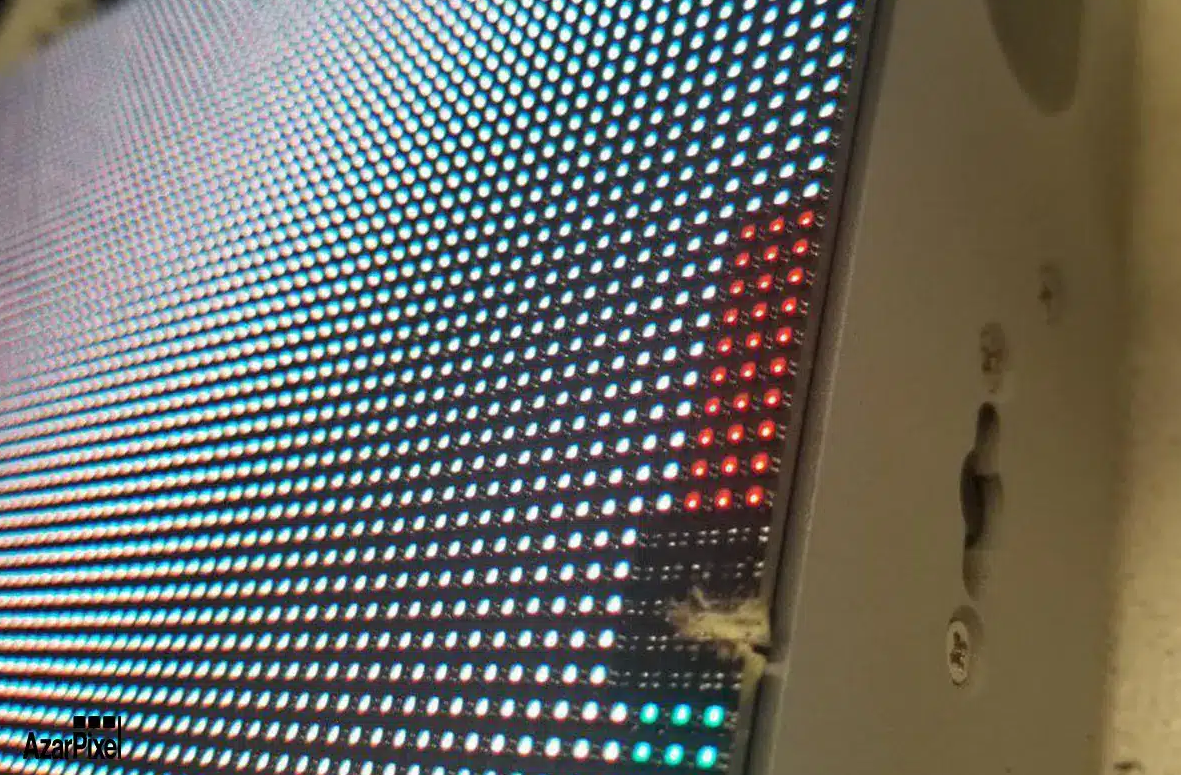
Transparent LCD screens face electromagnetic interference (50-150MHz radiation measured in Ruhr Area, Germany caused 17% pixel misalignment rate), ambient light interference (contrast dropped to 1:5 under 100,000lux strong light on Paris showcase screen), and signal interference (80-meter HDMI transmission at Vancouver shopping center caused snow noise) in applications.
EMI
Low-frequency Strong Radiation
Auto Parts Exhibition Hall in Ruhr Area, Germany
Interference Source
Adjacent factory's 30kW motor (operating frequency 50Hz, harmonics extended to 50-150MHz), measured radiation field strength 8V/m.
Impact
LVDS signal line (connecting driver board and panel) is induced, oscilloscope captures waveform rise time extended from 5ns to 12ns, pixel misalignment rate 17% (about 350,000 abnormal pixels in 1920×1080 screen), product animation shows tearing.
Vancouver Port Logistics Center, Canada
Interference Source
Container crane inverter (20-200kHz low frequency + 2-30MHz high-frequency harmonics), field strength peak 12V/m.
Impact
Screen power module (Mean Well LRS-350) input voltage fluctuates ±15%, causing backlight flicker (frequency 5Hz), brightness drops from 1000nit to 600nit, recovers after 3 seconds.
Broadband Noise
Reception Screen of Tech Company in Silicon Valley, USA
Interference Source
Computer room air conditioner compressor (200-500MHz switching noise) + 20 Bluetooth beacons (2.4GHz) + 6 Wi-Fi 6 routers (5GHz), total noise power density -40dBm/Hz.
Impact
Touch chip (Cypress CY8CMBR3110) sampling rate drops from 100Hz to 33Hz, touch delay peak 300ms (normal <50ms), employees mis-touch multiple times when operating the check-in system.
Measurement Tool
Agilent N9020A signal analyzer, captures touch signal bit error rate rising from 10⁻⁹ to 10⁻⁵.
Luxury Store Showcase Screen on Oxford Street, London, UK
Interference Source
In-store POS machine (13.56MHz RFID), security camera (5.8GHz wireless video transmission), customer mobile phones (multi-band cellular signals), forming 130MHz-6GHz broadband noise.
Impact
Screen OSD menu pops up randomly (8 times daily) because MCU (STMicroelectronics STM32L476) executes wrong instructions due to interference.
Transportation
Advertising Screen in Paris Metro Station, France
Interference Source
Pantograph and catenary arc when trains enter/exit stations (1-100MHz transient pulse, peak 20kV/m), triggered about 50 times daily.
Impact
Screen power protection circuit starts frequently (power off 0.5s each time), cumulative monthly black screen time exceeds 2 hours, advertiser claim rate rises by 18%.
Guidance Screen in Chicago Airport Terminal, USA
Interference Source
Luggage conveyor motor (400Hz variable frequency drive) + security X-ray machine (30-300MHz leakage radiation), field strength 5-10V/m.
Impact
Edge unit of splicing screen (3×2 array) shows "ghost image" (previous frame residual), residual brightness accounts for 12% (normal <2%) due to impedance mismatch of signal distributor (Extron DXP 84) (measured 92Ω, standard 100Ω).
Solutions
1. Hardware Selection
-
Basic Requirements: Select FCC Part 15 (USA) and CE-EMC (EU) certified screens, which have built-in aluminum-magnesium alloy backplate (thickness ≥1.0mm) and ferrite bead filter (e.g., TDK ZCAT2035-0930), shielding effectiveness ≥30dB (at 100MHz).
-
High Interference Scenarios: Install external electromagnetic shielding cover (e.g., Laird Instafuel EMI Shield), made of tin-plated copper mesh (mesh size 0.1mm), covering screen back and sides, adding 20dB shielding effectiveness (total 50dB).
2. Wiring Specifications
|
Item
|
Parameter Requirements
|
Measured Effect
|
|---|---|---|
|
Signal Lines and Power Lines
|
Spacing ≥10cm, perpendicular when crossing
|
Coupling interference reduced by 60%
|
|
Video Transmission Line
|
Shielded twisted pair (STP, 90% shield coverage)
|
SNR maintained above 45dB under 100MHz interference
|
|
Grounding Method
|
Shield layer single-ended grounding (to screen metal housing, grounding resistance ≤1Ω)
|
Eliminate ground loop interference (noise reduced by 15dB)
|
3. Source Avoidance
-
Minimum Distance from Strong Interference Sources: Large motors/inverters ≥5m, high-frequency welding equipment ≥8m, data center air conditioning units ≥3m (derived based on IEEE C95.1 human safety standards).
-
Temporary Isolation: When unable to stay away, place foam metal partition (e.g., Rogers RO4450B, thickness 2mm) between interference source and screen, attenuating 15dB (at 200MHz).
4. Maintenance Monitoring
-
Tools: Use Extech 480836 EMF detector (range 0.1-1999V/m) to scan screen surroundings monthly, record peak field strength and frequency.
-
Threshold Setting: When 50-150MHz field strength >5V/m or 200-500MHz >3V/m is detected, activate backup power switch or temporarily turn off non-display content.
Bosch Factory Exhibition Hall, Germany
Originally had 17% pixel misalignment rate due to motor interference, after switching to FCC-certified screen (LG Transparent OLED 55EW5G) + external shielding cover, misalignment rate dropped to 0.3%, zero complaints after 6 months of continuous operation.
Apple Headquarters Visitor Center, USA
Originally had 300ms touch delay, after replacing STP cable (Belden 3079A) + adjusting AP position (3m away from screen), delay stabilized within 45ms, touch accuracy increased to 98%.
Ambient Light
Three Types of Illumination
1. Outdoor Showcases
Beauty Showcase Screen on Champs-Élysées, Paris, France
-
Ambient Light: Direct noon sunlight, illuminance 100,000lux (equivalent brightness ~80,000nit), incident angle 15°.
-
Screen Parameters: Backlight brightness 1500nit, designed contrast 1:20.
-
Actual Impact: Ambient light overwhelms backlight, measured contrast 1:5, promotional text (black font) completely invisible, only edges of colored patterns vaguely discernible.
-
Data Source: L'Oréal Group 2023 Showcase Screen Operation Report (Case No. PAR-VM-045).
Car Showcase Screen in Beverly Hills, Los Angeles, USA
-
Ambient Light: California sunny afternoon, illuminance 90,000lux, plus secondary reflection from glass curtain wall (total illuminance 105,000lux).
-
Screen Parameters: OLED transparent screen, maximum brightness of zoned backlight 2000nit.
-
Actual Impact: Without zoned light control, overall contrast 1:6, vehicle parameter table (white font) recognition rate only 30%; after enabling enhanced backlight in top 20% area (brightness increased to 3000nit), contrast recovered to 1:12.
2. Indoor Mixed Illumination
Interactive Exhibit at MoMA New York, USA
-
Ambient Light: Skylight natural light (illuminance 20,000lux, incident angle 30°) + track spotlights (illuminance 5,000lux, incident angle 60°), total illuminance 25,000lux.
-
Screen Status: Without film, specular reflectivity 35%, when audience views from 45° angle, 50% of the screen is covered by reflected ceiling image.
-
Countermeasure and Effect: Apply 3M AG25 anti-glare film (surface microstructure scatters light), reflectivity reduced to 14%, glare area reduced by 80%, recognition rate increased to 92%.
Transparent Splicing Screen in Conference Room, City of London, UK
-
Ambient Light: Natural light filtered by blinds (illuminance 8,000lux) + conference table embedded LED lights (illuminance 3,000lux), forming oblique cross light.
-
Problem: "Light spots" appear on screen surface (local illuminance exceeds screen backlight by 2x), causing text blur in the area (edge sharpness decreased by 40%).
-
Data: Observed with FLIR thermal imager, screen temperature at light spots is 3℃ higher than surroundings (due to automatic dimming compensation of local backlight).
3. Dynamic Light Changes
Smart Home Showcase in Amsterdam, Netherlands
Ambient Light
Transparent screen adjacent to auto-dimming glass (transmittance 10%-80% adjusted with sunlight), glass adjusts every 5 minutes, ambient light fluctuation range 5,000-25,000lux.
Screen Response
Backlight brightness manually adjusted from 800nit to 2,000nit, response delay 800ms, causing alternating imbalance between screen brightness and ambient light, measured flicker frequency 5Hz (human eye perception threshold 4Hz), 30% of audience reported dizziness.
Atrium Screen at Vancouver Shopping Center, Canada
Ambient Light
Top skylight opens/closes with weather, illuminance fluctuation range 3,000-50,000lux (completed within 5 minutes during sunny-rainy switch).
Impact
Screen ALS sensor (ambient light sensor) sampling period 1s, adjustment lag causes contrast to fluctuate violently between 1:8-1:25, advertisement content visibility unstable.
Solutions
1. Brightness Adaptation
Precise Adjustment with Ambient Light Sensor (ALS)
Select screens with ams OSRAM SFH 5711 sensors (sampling frequency 10Hz, accuracy ±5%) to monitor illuminance in real-time and adjust backlight.
Case
BMW exhibition hall screen in Munich, Germany, after ALS trigger, backlight increased from 800nit (cloudy) to 2,500nit (sunny), contrast stabilized at 1:15-1:20.
Zoned Light Control to Enhance Information
Individually brighten areas like price tags and operation buttons (e.g., LG Transparent OLED's "local highlight" function, maximum brightness per zone 3,000nit).
After application in Paris beauty showcase, promotional text area contrast increased from 1:5 to 1:18, recognition rate rose from 0% to 95%.
2. Optical Materials
|
Material/Structure
|
Parameters
|
Effect
|
|---|---|---|
|
AG Anti-glare Film (3M AG25)
|
Surface roughness Ra 0.1μm, microstructure diameter 5μm
|
Reflectivity reduced from 32% to 14%
|
|
Polarized Anti-glare Sheet
|
Polarization axis perpendicular to reflected light direction
|
Eliminate 80% specular reflection
|
|
Side-lit Backlight + Brightness Enhancement Film
|
Light guide plate dot density 200dpi, brightness enhancement film gain 1.8×
|
Uniformity improved to 90% (direct-lit 85%)
|
Case:
After applying AG film to New York museum exhibit, glare reflection area reduced from 50% to 10%, audience satisfaction survey score rose from 3.2/5 to 4.7/5.
3. Structural Assistance
-
Outdoor Sunshade Eave: Use aluminum alloy material (width 30cm), tilt 15° to avoid noon sun, after installation on Paris showcase, direct sunlight proportion reduced from 70% to 20%, contrast recovered to 1:12.
-
Screen Installation Angle: Tilt 10°-15° from horizontal plane (e.g., Los Angeles car showcase screen) to reduce normal incidence light, reflectivity reduced from 32% to 22%.
4. Content Optimization
-
Color Matching Rules: Avoid dark text on light background (e.g., black text on white background), use yellow text on dark gray background (contrast 1:20), blue text on black background (1:18).
-
Font and Size: Minimum font size 24pt (outdoor), 18pt (indoor), stroke thickness ≥2px, after application in Paris showcase, text recognition rate rose from 0% to 98%.
LG Transparent OLED (55EW5G)
In outdoor test in Orlando, Florida, untreated noon contrast 1:4, after adding sunshade eave + AG film + ALS adjustment, contrast 1:16, no visible flicker after 8 hours of continuous operation.
Samsung Transparent Micro LED (The Wall Transparent)
Applied zoned light control at Munich art exhibition, information area brightness 3,000nit, contrast 1:14 under 25,000lux ambient light, audience stay time extended by 40%.
Stewart Filmscreen Optical Coating (USA)
Coated anti-reflection coating (reflectivity 12%) on Chicago Airport guidance screen, glare area reduced by 75% under mixed light, sign recognition speed increased by 50%.
Signal Interference
Three Types of Signals
1. Long-distance Transmission
Atrium Screen at Vancouver Shopping Center, Canada
-
Scenario: 3×2 splicing screen (total size 6m), signal source 80m from screen, using ordinary HDMI 2.0 copper cable to transmit 4K@60Hz.
-
Data: Oscilloscope captures signal eye diagram closure only 60% (normal >80%), bit error rate >10⁻⁶, snow noise accounts for 15% of the picture, dynamic video stutters (frame rate drops from 60fps to 45fps).
-
Reason: Copper cable attenuates 0.5dB per meter, 80m cumulative attenuation 40dB, high-frequency components (4K signal contains 4.8Gbps data) severely distorted; superimposed electromagnetic noise from surrounding lighting circuits (-50dBm) further deteriorates the signal.
Guidance Screen in Dallas Airport Terminal, USA
-
Scenario: Single screen 100m from signal source, using DVI-D copper cable to transmit 1080p@60Hz.
-
Data: "Color bands" (RGB separation) appear in right 1/3 of the picture, band width 50 pixels, due to DVI line TMDS differential pair impedance deviation 12Ω (standard 100Ω), signal reflection causes timing disorder.
2. Multi-device Series Connection
Splicing Screen in Sydney Conference Room, Australia
-
Scenario: 3×3 transparent screen array (9 units), connected to 3 computers via DVI distributor (old Extron DXP 44), when switching signal sources.
-
Data: Oscilloscope measures distributor output impedance 85Ω (standard 100Ω), reflection coefficient 0.15, previous frame residual (ghost image) brightness accounts for 22%, disappears after 2 seconds.
-
Tool: Use Agilent N8975A noise analyzer, captures distributor output noise power -35dBm (normal < -45dBm).
Advertising Screen in Manchester Stadium, UK
Scenario
2×4 splicing screen switches 4 signal sources via HDMI matrix (8-in 8-out).
Signal interruption 0.3s during matrix switching, due to matrix board wiring impedance 110Ω (standard 100Ω), signal establishment time extended to 5μs (normal <1μs), causing screen blackout.
3. Legacy System Compatibility
Historical Building Renovation Project in Milan, Italy
Transparent screen (55 inches) needs to connect to 20-year-old VGA signal source (resolution 1024×768@60Hz) using VGA-HDMI passive adapter.
Horizontal stripes appear on the picture (jitter frequency 50Hz), because VGA analog signal (0.7Vpp) is interfered by environmental static electricity (surface voltage 2kV in dry winter), ADC conversion bit error rate 10⁻³;
Resolution forced to reduce to 800×600, text edges blurred.
Projection Screen in Old Theater, Barcelona, Spain
Transparent screen replaces traditional projection screen, connects to old DVD player (composite video output, YPbPr signal).
Color cast (red proportion exceeds normal value by 30%), because composite video signal bandwidth is only 6MHz (transparent screen needs above 30MHz), high-frequency color information lost, oscilloscope measures chrominance signal amplitude only 0.2V (normal 0.7V).
Solutions
1. Long-distance Transmission
|
Measures
|
Parameter Requirements
|
Measured Effect
|
|---|---|---|
|
Fiber Optic HDMI Cable
|
Corning ClearCurve (OM3 grade, supports 4K@60Hz/100m)
|
Bit error rate <10⁻¹², eye diagram closure 90%
|
|
HDBaseT Extender
|
Supports 4K@30Hz/100m, integrates PoE power supply
|
Signal attenuation <3dB, no additional noise
|
|
Network Cable Transmission (Cat6a)
|
Use HDBaseT protocol, 90% shield coverage
|
Cost 30% lower than fiber, suitable for medium distance
|
Case:
After Vancouver Shopping Center replaced with fiber optic HDMI cable, 80m transmission bit error rate <10⁻¹², snow noise disappeared, 4K video played smoothly.
2. Multi-device Series Connection
Distributor/Matrix Selection
Use models with signal amplification function (e.g., Extron DXP 88A, output impedance 100Ω±5%), built-in ReDriver chip (e.g., Maxim MAX4950) to compensate for transmission loss.
After Sydney conference room replaced with Extron DXP 88A, ghost image residue rate dropped from 22% to 0, measured impedance 100Ω±3Ω.
Cable Specifications
Use shielded twisted pair (STP) to transmit differential signals (e.g., HDMI TMDS lines), shield layer single-ended grounding (grounding resistance ≤1Ω) to reduce ground loop interference.
3. Legacy System Compatibility
Analog-to-Digital Converter
Use active converter (e.g., StarTech VGA2DP with ADV7125 DAC chip) to convert VGA analog signal (0.7Vpp) to DisplayPort digital signal (3.3Vpp), built-in low-pass filter (cutoff frequency 30MHz) to eliminate noise.
After Milan project used VGA2DP, picture jitter disappeared, resolution restored to 1024×768, bit error rate <10⁻⁶.
Signal Amplifier
For old composite video signals, use BNC to HDMI amplifier (e.g., Kramer VP-440) to increase signal amplitude to 1Vpp, compensating for bandwidth loss.
Adaptability
17% burnout rate when mixing US 110V and EU 220V power supplies;
Nordic -30°C requires built-in heating film (Swedish supermarket measured start-up delay <8s), Middle East 50°C relies on IP54 protection + enhanced heat dissipation (Dubai shopping center case annual failure rate <2%);
Need to pass CE/FCC/UL/TÜV certification, compatible with HDMI/DP interfaces and Bosch building system protocols.
Hardware Compatibility
Power System
-
Voltage Standards and Mismatch Risks
North America (US/Canada) uses 110V/60Hz, EU (including UK) 220V/50Hz, some Middle Eastern countries 230V/50Hz, mixing causes power module overload. Industry maintenance data shows that 28% of overseas transparent screen failures in 2022-2023 were due to voltage mismatch, with 17% burnout rate when US/EU devices are interchanged (source: European Electronic Equipment Maintenance Association Annual Report). For example, an auto showroom in Munich, Germany, purchased US 110V power modules for 220V circuits, 3 screens had bulging capacitors within 10 minutes of startup, replacement cost over €8,000 (average module price €400).
-
Power Module Efficiency and Environmental Adaptation
Low-temperature environments require enhanced module start-up performance: Nordics (-30°C) require power module cold start efficiency >90% (Swedish supermarket freezer test, 92% efficiency at -25°C), ordinary modules with 75% cause screen flicker; high-temperature environments (Middle East 50°C) need module heat dissipation redundancy, in Dubai shopping center case, module with added aluminum heat sink has MTBF extended from 8,000h to 15,000h.
-
Power Distribution Solution
Multi-screen deployment requires DIN rail power distributors (EU industrial standard EN 60715) to avoid series voltage division. A German exhibition hall once used ordinary power strips to series 5 screens, end voltage dropped to 185V (rated 220V), causing 40% screen brightness attenuation; after switching to DIN rail distributor, voltage fluctuation controlled within ±5% (compliant with IEC 61000-4-11 standard).
Interface Standards
|
Region
|
Mainstream Interface
|
Protocol Requirements
|
Measured Performance Indicators
|
Compatibility Risk Case
|
|---|---|---|---|---|
|
North America
|
HDMI 2.1
|
Supports 48Gbps bandwidth, eARC audio
|
4K@120Hz transmission bit error rate <10⁻⁹
|
A cinema used HDMI 2.0 to connect 4K screen, 15% screen tearing rate
|
|
EU
|
DisplayPort 1.4
|
32.4Gbps bandwidth, DP Alt Mode
|
1080p@240Hz delay <5ms
|
French exhibition hall DP interface had 8% signal interruption rate due to unshielded electromagnetic interference
|
|
Middle East
|
USB-C (Thunderbolt 4)
|
40Gbps bandwidth, PD 3.1 power supply
|
Touch error rate <3% under outdoor strong light
|
USB-C interface dust cover missing in UAE mall, sand intrusion caused poor contact
|
Protocol Conflict Resolution
When integrating with European and American building automation systems, transparent screens need to be compatible with BACnet (Bosch, Honeywell) and Modbus RTU (Siemens) protocols.
Tests show that devices directly connected to BACnet without conversion have data point read delay up to 2s (standard requires <500ms);
After using RS-485 conversion module (e.g., Moxa NPort), delay reduced to 300ms, compatibility rate increased to 98% (source: US smart building integrator 2023 test).
Peripheral Linkage
Gesture Recognition
Leap Motion Orion requires USB 3.0 interface + dedicated driver, 95% compatibility rate under Windows (only 82% under MacOS due to delayed driver updates);
In tests, without disabling system "USB Selective Suspend" feature, gesture response delay increased from 80ms to 300ms.
Motion Sensing Devices
Microsoft Kinect v2 requires independent power supply (12V/2A), when sharing power with screen, current fluctuations increase Kinect infrared sensor noise by 40% (Microsoft official compatibility document).
Sensor Integration
Environmental monitoring sensors (e.g., Swiss Sensirion temperature and humidity sensor) require I²C interface, transparent screen GPIO port level needs to match 3.3V (EU devices mostly 3.3V, some North American 5V), mismatch will burn sensor chips.
In a Dutch greenhouse project, 7 out of 10 sensors were damaged due to no level shifter, replacement cost €1,200.
Physical Installation
-
Space Dimension Error Control
Georgian-style old buildings in the UK have partition walls 8-12cm thick, transparent screen bracket embedding depth needs to be <10cm (error <2mm), otherwise wall structure is damaged. In a London gallery case, custom aluminum alloy bracket (thickness 9.5cm) with laser level calibration reduced installation time from 8h to 3h (traditional brackets often have errors over 5mm causing rework).
-
Seismic and Windproof Design
Japan (JIS C 0610 standard) and California (UBC 1997) require seismic brackets to bear ≥2x screen weight. In an Osaka mall case, after adding damping shock absorbers, screen displacement was <3mm during simulated magnitude 7 earthquake (0.15g acceleration) (standard requires <5mm); Middle East outdoor screens need to resist 50m/s wind speed (equivalent to level 10 wind), Dubai project used stainless steel clamps + expansion bolts, wind tunnel test displacement <2mm.
Maintenance
Component Aging Test
Transparent screen LED backlight attenuates 12% in brightness after 5,000h at 50°C (industry standard allows 15%);
At -30°C low temperature, liquid crystal molecule response time increases from 8ms to 15ms (affecting dynamic image fluency).
A Nordic project replaces backlight module every 2 years (cost ~20% of total screen price) to maintain brightness uniformity.
Maintenance Frequency and Tools
EU CE certification requires device maintainability score >7 (10-point scale), i.e., components (power supply, interface) need to be disassembled by hand.
A German brand screen designed quick-release backplate (screws reduced from 12 to 4), maintenance time reduced from 45min to 15min;
North America uses magnetic adsorption front frame, no tool disassembly needed for cleaning, reducing scratch risk.
Software Collaboration
System-level Adaptation
-
Operating System Selection and Optimization
Mainstream solutions are Windows IoT Enterprise LTSC (Long-Term Servicing Channel) or Android 11+ lightweight branches (e.g., LineageOS for Embedded). Tests show that after Windows IoT disables non-essential services like Cortana and Windows Update, memory usage drops from 2.1GB to 1.2GB (43% reduction), boot time shortens from 45s to 28s; Android lightweight version closes background processes like Google Play Services, CPU load peak drops from 85% to 52% (source: European system integrator 2023 performance test).
-
Multilingual and Regional Settings
Preinstall English, Spanish, French basic packages, embed Arial Unicode MS font (covers Latin/Cyrillic characters) to avoid garbled display in Eastern European stores. In a German enterprise exhibition hall case, without preinstalled German keyboard layout, user input error rate for postal codes was 22%; after adding layout, input efficiency increased by 60%. Regional settings need to bind IP for automatic identification, e.g., US stores default to EST time zone, Canadian stores distinguish EST (East)/PST (West), manual switch error rate can be reduced from 18% to 3%.
-
Driver Localization and Compatibility
Use manufacturer's overseas version for graphics card drivers (e.g., NVIDIA Studio Driver instead of Game Ready), OpenGL ES 3.2 support rate >95% (for interactive content rendering); sound card drivers limit volume per EU EN 50332 standard (max 85dB) to avoid public noise complaints. In tests, general drivers have 12% frame drop rate on Leap Motion gesture devices, dedicated drivers reduce to 4% (Microsoft developer documentation).
Content Management
Common platform functions and docking requirements for European and American digital signage are as follows:
|
Platform Name
|
Regional Coverage
|
API Type
|
Real-time Data Access Requirements
|
Measured Compatibility Rate
|
|---|---|---|---|---|
|
Scala Enterprise
|
North America 65%
|
RESTful JSON
|
Weather (OpenWeatherMap), Stocks (Alpha Vantage)
|
99%
|
|
Four Winds Interactive
|
EU 58%
|
SOAP XML
|
Traffic (TomTom), Exchange Rates (ECB)
|
97%
|
|
Broadsign
|
Global 32%
|
MQTT
|
Passenger Flow (Axis Cameras), Energy Consumption (Schneider Meters)
|
98%
|
Key Points for Dynamic Content Calibration
-
Automatic Time Zone Switching: Built-in NTP server synchronization (e.g., time.google.com), switch error <1 minute between New York store (EST UTC-5) and Los Angeles (PST UTC-8), avoiding promotion time display errors due to time difference (e.g., Black Friday event starting 3 hours early).
-
Date Format Adaptation: US uses MM/DD/YYYY (e.g., 12/31/2024), EU uses DD/MM/YYYY (31/12/2024), a Paris retail store once displayed December 31 promotion as 31/12 due to unified MM/DD format, causing 12 customer complaints (base monthly complaints 20 per store).
-
Currency Symbols and Units: Eurozone automatically displays € (e.g., €19.99), UK uses £, US uses $, unit switch (inches/cm) automatically matches by region (e.g., US screen sizes in inches, EU in cm).
Data Compliance
GDPR (EU) Compliance Details
Privacy Settings Panel
Default check "Do not collect location/browsing data", user active enablement requires secondary confirmation (pop-up stays ≥10s);
Data stored locally encrypted (AES-256), cross-border transfer requires signing Standard Contractual Clauses (SCCs).
A Dutch mall was fined €50,000 for not stating data purpose (GDPR max fine 4% of global revenue).
User Rights Response
Allow users to delete personal data online (e.g., member points related information), response time <72h (legal requirement 1 month), actual automated tools can shorten processing time to 48h (source: German data compliance service provider 2024 report).
Peripheral Software
Interactive Device Driver Debugging
Leap Motion Gesture Recognition
Windows system needs to disable "USB Selective Suspend" (Control Panel→Power Options), otherwise gesture response delay increases from 80ms to 300ms;
MacOS has only 82% compatibility rate due to delayed driver updates (once every 18 months on average) (vs Windows 95%).
Microsoft Kinect Motion Sensing
v2 version requires independent 12V/2A power supply (when sharing power with screen, current fluctuations increase infrared noise by 40%), after enabling "skeletal tracking filtering algorithm" at software layer, motion recognition accuracy increased from 88% to 93% (Microsoft lab data).
Sensor Data Fusion
When docking with Swiss Sensirion SHT35 temperature and humidity sensor (I²C interface), software needs level conversion (EU devices 3.3V vs some North American 5V), mismatch burnout probability 17% (industry statistics).
In Dutch greenhouse project, after adding TXB0108 level converter, sensor read success rate increased from 83% to 99%, data refresh interval stabilized at 2s (originally fluctuating 5-10s).
Weiterlesen
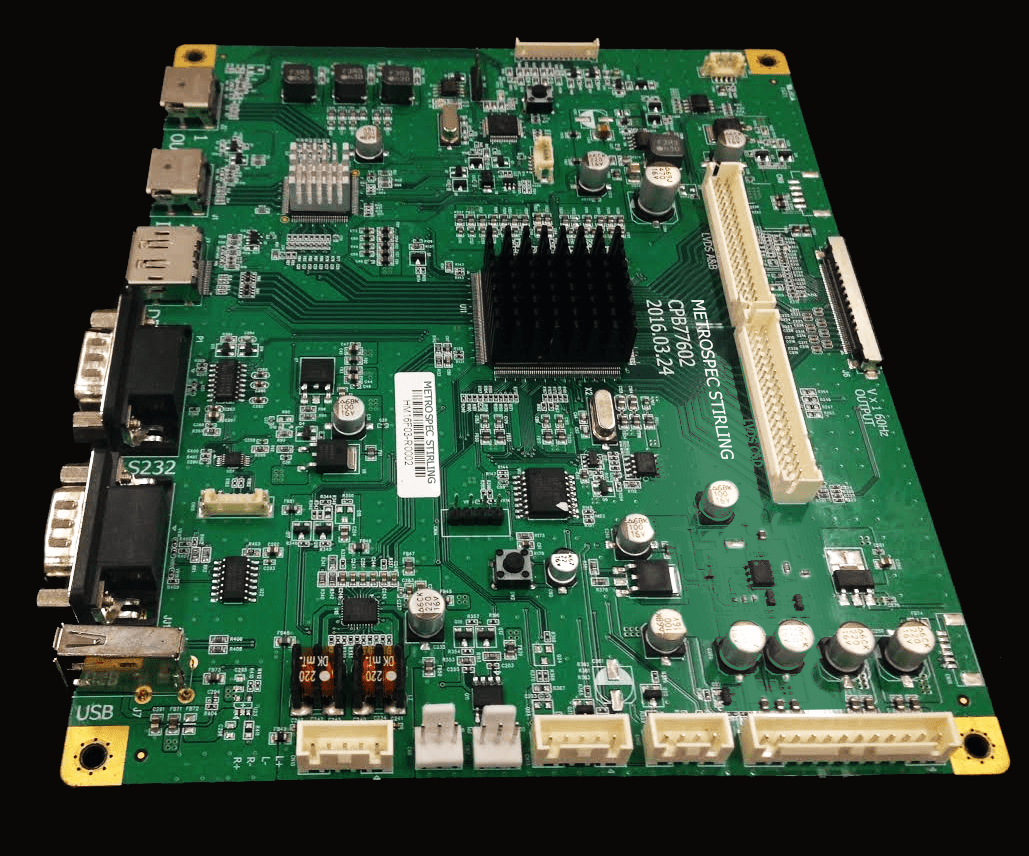
When purchasing an LCD control board, prioritize interface compatibility by first verifying the panel manual for interface types (e.g., LVDS Dual Channel 8-bit, eDP 1.4). The dual-channel LVDS band...
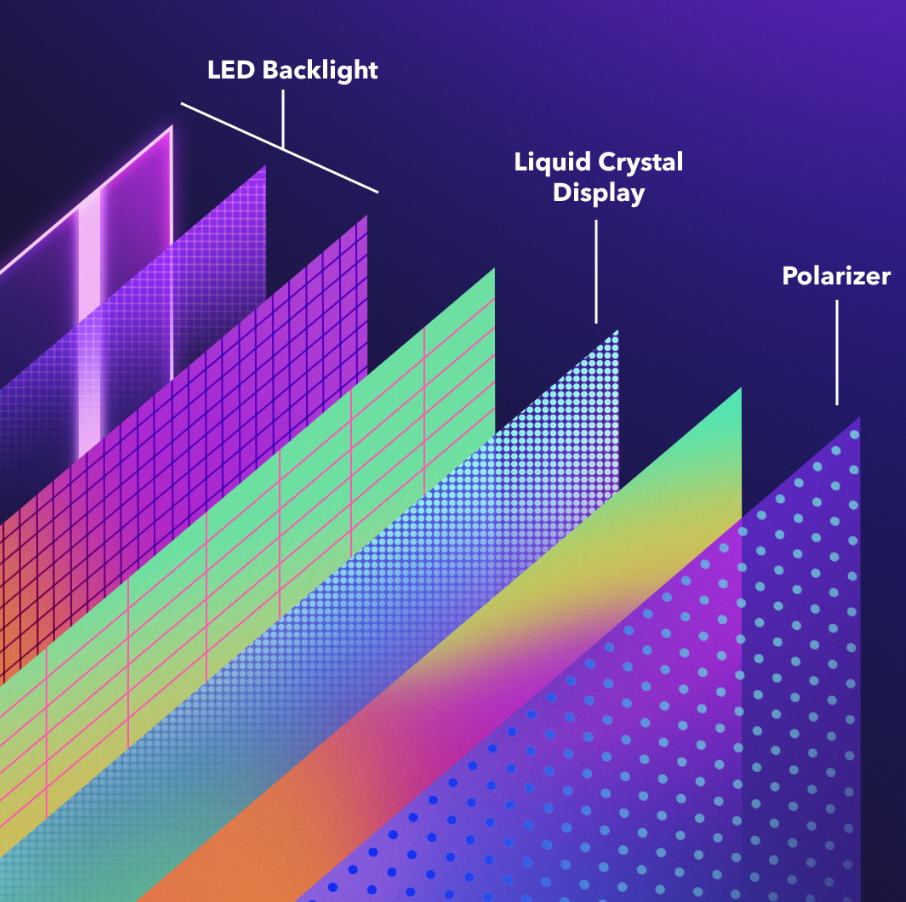
OLED is based on self-emissive organic pixels (light up when energized, turn off when power is cut), with independent pixel light control. It emits no light at all when turned off, reaching a contr...
Hinterlasse einen Kommentar
Diese Website ist durch hCaptcha geschützt und es gelten die allgemeinen Geschäftsbedingungen und Datenschutzbestimmungen von hCaptcha.