

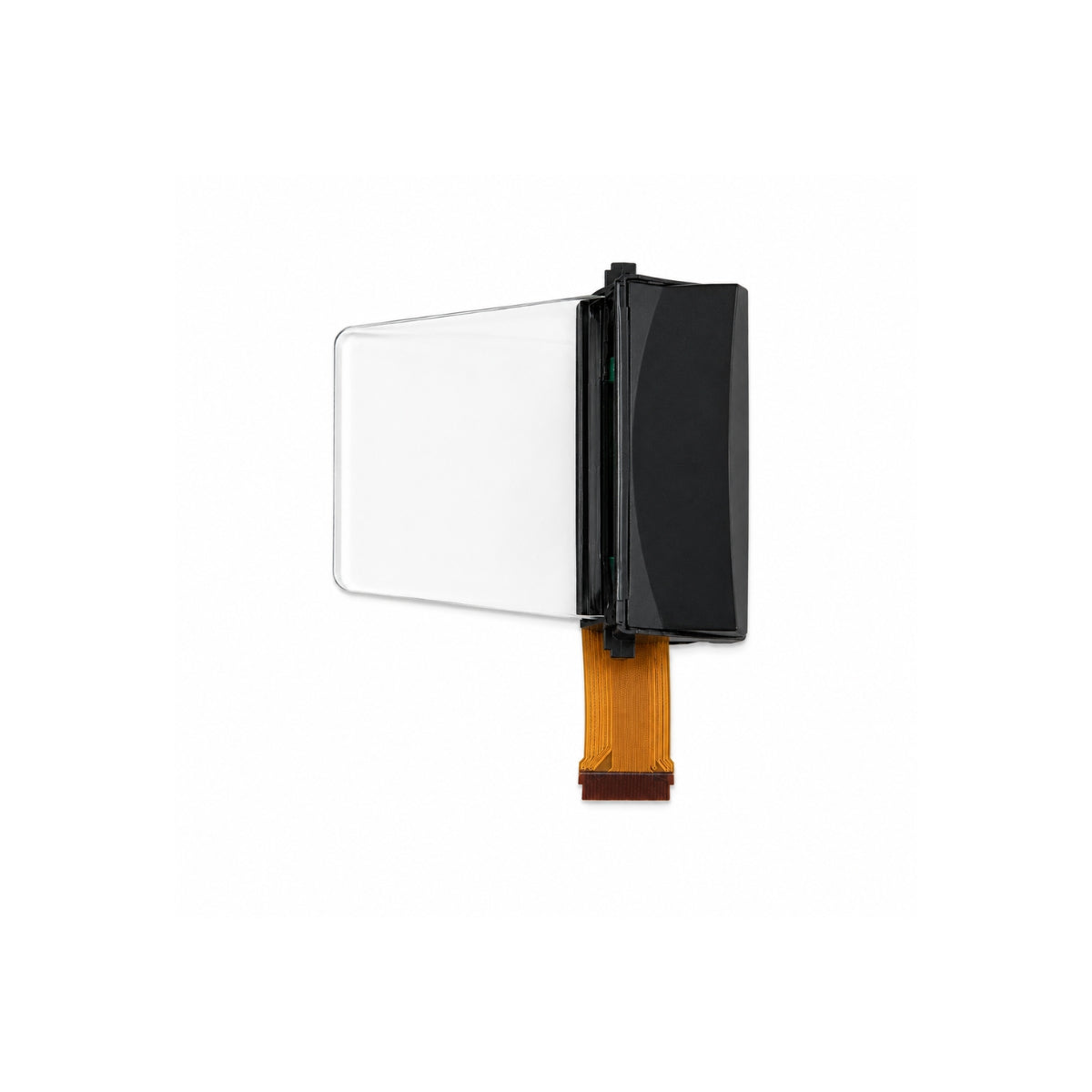
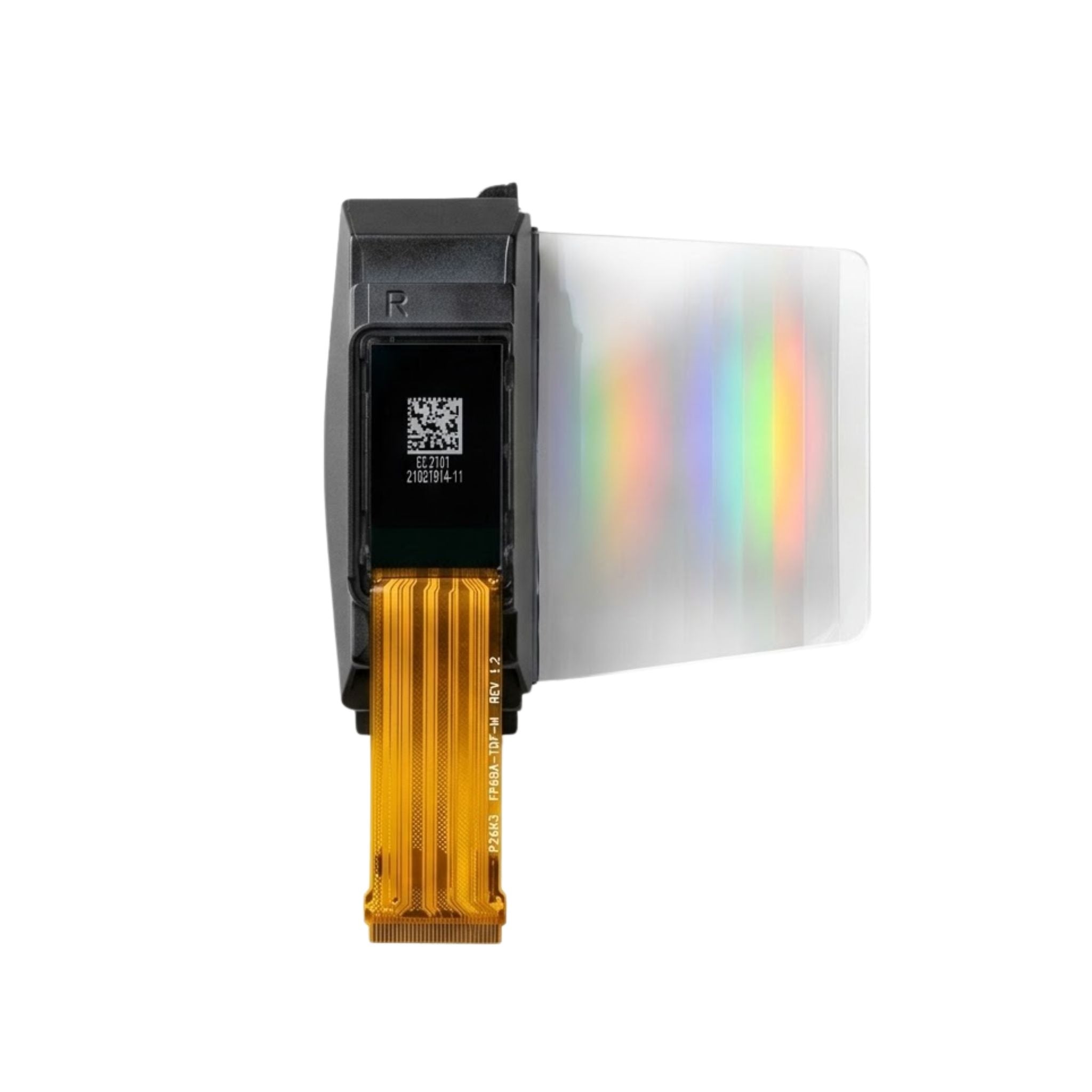


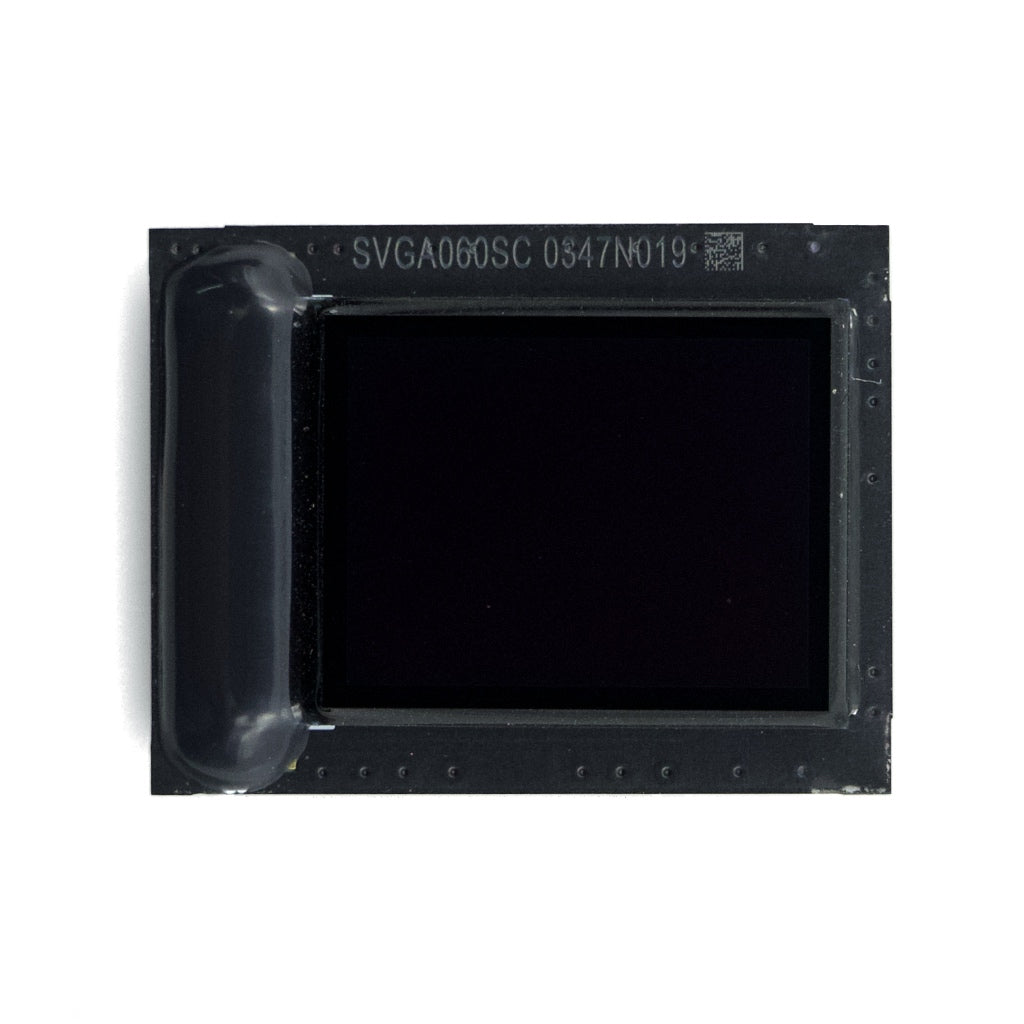
0.60” AMOLED Microdisplay 800×600 SVGA – Silicon-Based Near-Eye Display for AR/VR, EVF & Optical Systems
- 💹 Enjoy a 20% discount for orders over 500
- 📉 A 15% discount is available for orders ranging from 200 to 499
- 🎁 A 10% discount is available for orders ranging from 50 to 199
- 🎁 A 5% discount is available when ordering 10-49
Interested in customizing this product? Get in touch with us.
Order samples, immediate delivery.
Factory bulk lead time: 3 weeks.
0.60” AMOLED Microdisplay 800×600 SVGA – Silicon-Based Near-Eye Display for AR/VR, EVF & Optical Systems
- 💹 Enjoy a 20% discount for orders over 500
- 📉 A 15% discount is available for orders ranging from 200 to 499
- 🎁 A 10% discount is available for orders ranging from 50 to 199
- 🎁 A 5% discount is available when ordering 10-49
Resources & Downloads
0.60" AMOLED Microdisplay 800×600 SVGA for Near-Eye Optical Systems
The DMRXO0060SVNB is a 0.60-inch silicon-based active AMOLED microdisplay for compact near-eye display designs. According to the official datasheet, this SVGA microdisplay uses top-emission silicon-based active OLED technology on a 0.18 µm CMOS process and integrates the digital video interface, driver circuits, gamma control, display window control, I²C logic, temperature sensor and test pattern functions.
It supports ITU-R BT.601/656 digital video input and multiple 8-bit, 16-bit and 24-bit input formats, including RGB, YCbCr and mono signal modes. The product is intended for AR / VR viewing systems, electronic viewfinders, head-mounted displays and compact optical instruments that require a small active area, SVGA resolution and wide operating temperature range.
Quick Engineering Snapshot
Key integration details are summarized here for quick review before checking the full datasheet.
Verified Technical Specifications
The following parameters are based on the DMRXO0060SVNB product page and the official DisplayModule datasheet V1.0.0. Optical and electrical values should be reviewed together with the datasheet test conditions before prototype design-in.
| Parameter | Verified Specification |
|---|---|
| SKU | DMRXO0060SVNB |
| Product Type | Silicon-based active AMOLED microdisplay |
| OLED Technology | Top-emission silicon-based active OLED technology |
| CMOS Process | 0.18 µm CMOS technology |
| Diagonal Size | 0.60 inch |
| Resolution | 800 × 600 SVGA |
| Active Pixel Array | 800 × 3 × 604 sub-pixel array; display resolution is 800 × 600 |
| Driver Circuit Units | 804 × 3 × 604 |
| Pixel Size | 15 µm × 15 µm |
| Pixel Array | RGB vertical stripe |
| View Area | 12.06 × 9.06 mm / 0.60-inch diagonal |
| Structure Size | 19.8 × 15.2 × 4.6 mm |
| Net Weight | 1.7 g |
| Gray Level | 256 levels |
| Refresh Rate | 25 Hz to 85 Hz |
| Contrast Ratio | >10000:1 |
| Typical Luminance | Full color: 200 cd/m²; mono white: 500 cd/m²; mono green: 10000 cd/m² |
| Luminance Uniformity | >90%, typical 95% |
| Color Gamut / Color Area | 70% to 88% NTSC, typical 80% |
| Digital Video Interface | Compatible with ITU-R BT.601/656; accepts 8-bit, 16-bit and 24-bit digital video input |
| Supported Input Formats | 16-bit YCbCr 4:2:2, 24-bit YCbCr 4:4:4, 8-bit mono, 24-bit RGB888 and 8-bit YCbCr 4:2:2 |
| Control Interface | I²C serial interface, recommended communication rate 100 kHz to 400 kHz |
| Digital Logic Level | Digital logic pins follow the 1.8 V logic level standard. The datasheet lists VI/O as typical 1.8 V and maximum 3.3 V; I/O voltage selection should be confirmed against the final host design and ADDRSET configuration. |
| Digital Core Supply | VDD 1.8 V DC; rated operating range 1.74 V to 2.3 V; DC characteristic range 1.75 V to 1.85 V |
| OLED Array Supply | VCC 5.0 V DC; rated operating range 4.8 V to 5.5 V; DC characteristic range 4.8 V to 5.2 V |
| Supply Current | IVDD typical 32 mA, maximum 40 mA; IVCC typical 50 mA, maximum 150 mA |
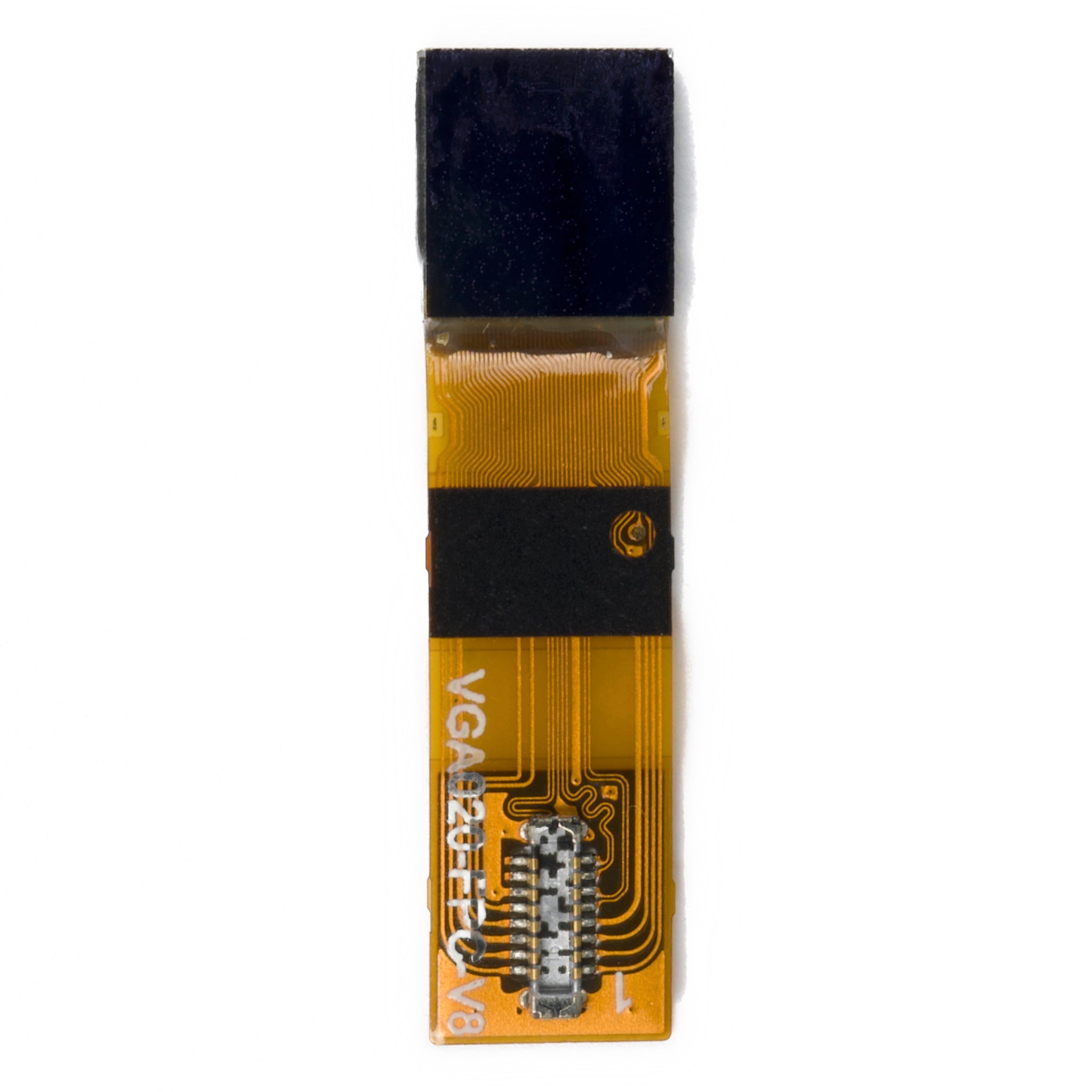
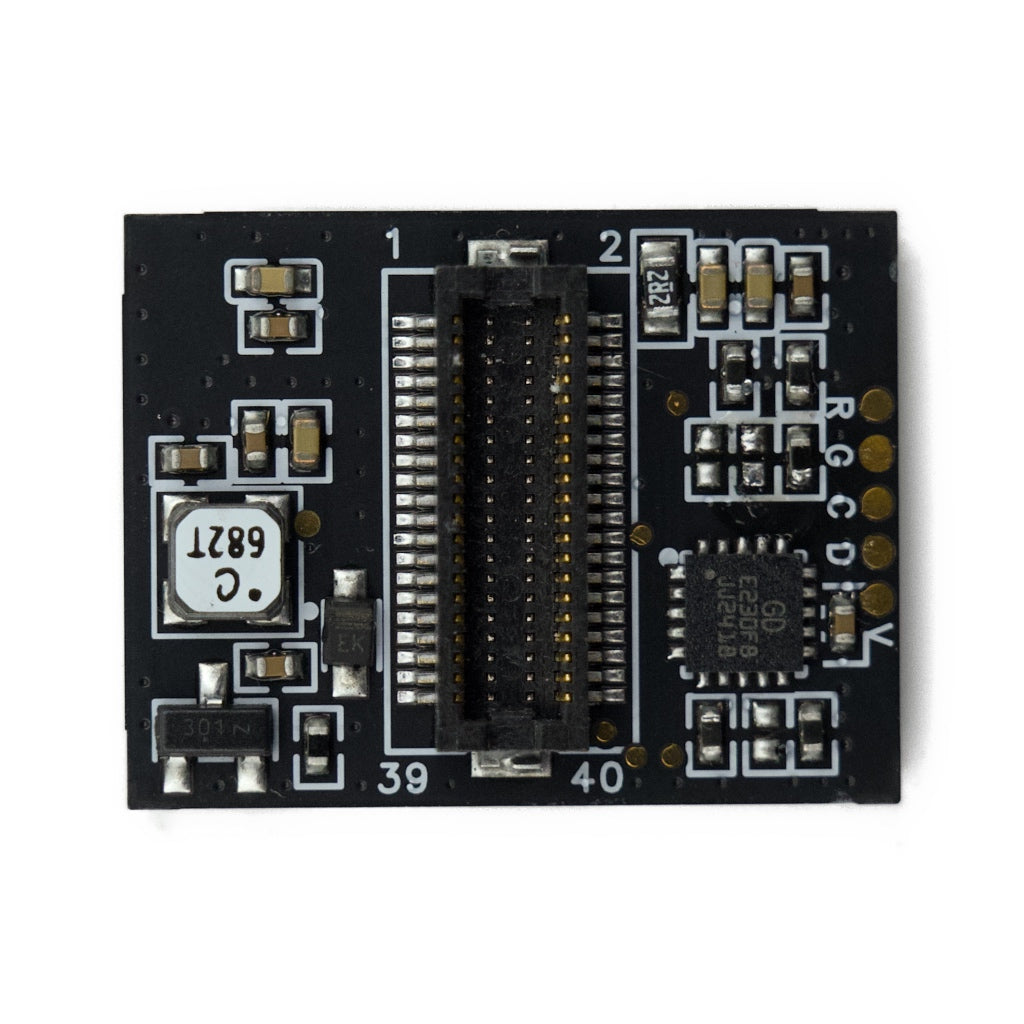
| Connector | Hirose DF12NB(3.0)-40DP-0.5V(51), 40-pin connector |
| Operating Temperature | -40°C to +65°C |
| Storage Temperature | -55°C to +90°C |
| Operating Humidity | ≤85% RH, no condensation |
| Lifetime | Full color: 20000 h at 200 cd/m²; mono white: 20000 h at 500 cd/m²; mono green: 20000 h at 5000 cd/m² |
| Touch Configuration | Touch panel and touch controller IC are not specified in the provided datasheet. Confirm any touch-related configuration with DisplayModule before ordering. |
The datasheet lists color, mono white and mono green optical configurations. Confirm the exact emission version and order configuration with DisplayModule before purchasing samples or planning production.
Design Information for B2B Integration
This microdisplay is intended to be integrated with an optical system rather than used as a direct-view display. The datasheet recommends an eyepiece smaller than 13× based on the 15 µm pixel size, and provides video timing, register, electrical and mechanical details for system bring-up.
Optical Performance
The datasheet lists >10000:1 contrast, >90% luminance uniformity and typical 80% NTSC color area under specified test conditions. Typical brightness values depend on color configuration.
On-Chip Functions
The integrated functions include signal format selection, brightness adjustment, system power control, horizontal and vertical scan direction, temperature reading and test pattern selection through registers.
Module Structure
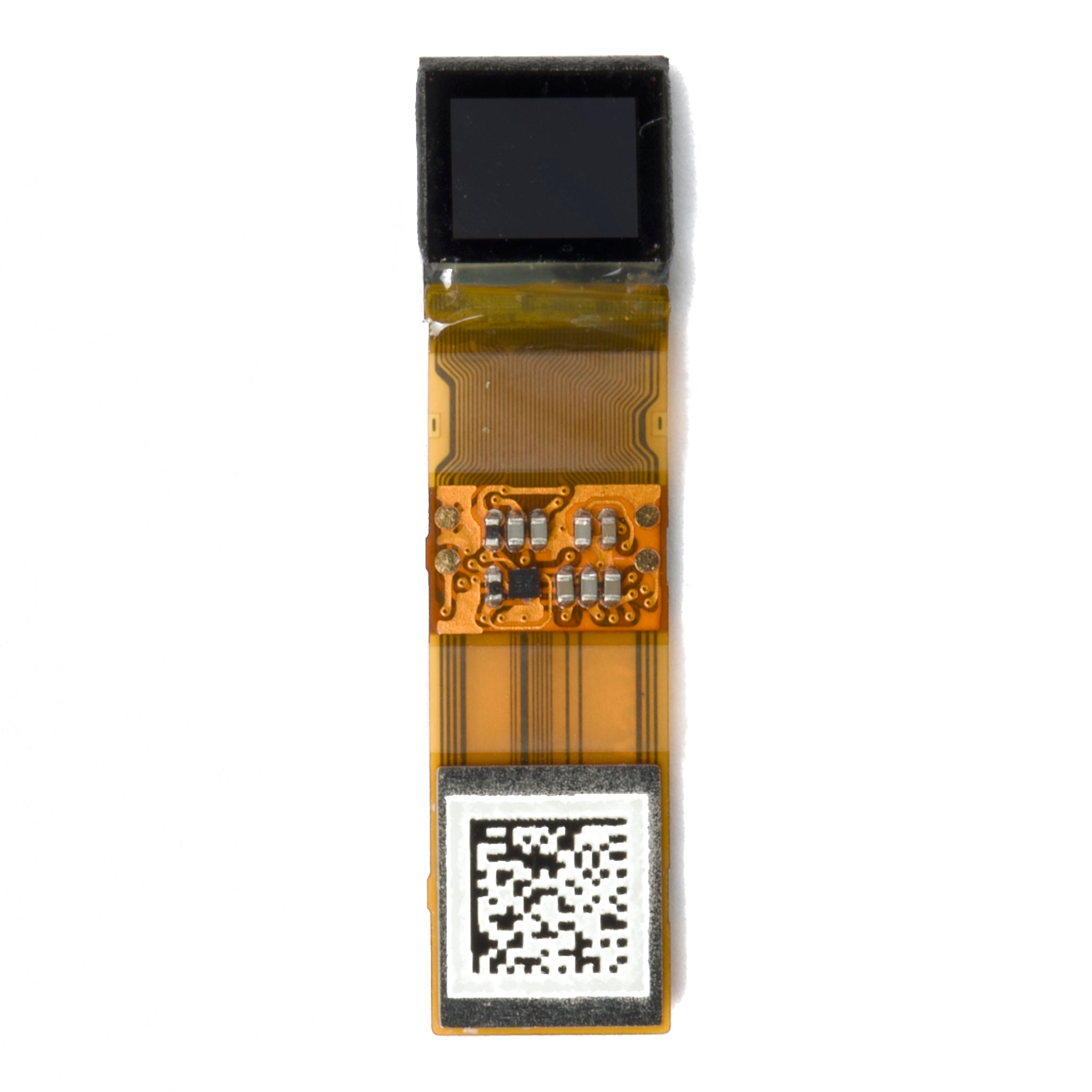
The module structure size is 19.8 × 15.2 × 4.6 mm, with a 12.06 × 9.06 mm view area and approximately 1.7 g net weight.
Digital Video and Control Interface
The electrical interface uses a 40-pin Hirose connector. The datasheet identifies the interface pins for VDD, VCC, GND, SCL, SDA, reset, address selection, HSYNC, VSYNC, DE, PCLK and DATA[23:0] digital video signals.
- Parallel digital video input supports RGB, YCbCr and mono signal formats selected by register.
- I²C is used for test pattern selection, brightness adjustment, gamma correction and temperature reading.
- SDA and SCL require pull-up resistors to the power supply according to the datasheet note.
- The datasheet recommends checking signal integrity and anti-interference measures for long-distance I²C communication.
Connector and Timing Notes
Reliability and Environmental Review
The datasheet provides operating and storage ranges for design review before sample evaluation. Absolute maximum ratings and operating conditions should not be exceeded, as doing so may affect product lifetime and reliability.
- Operating temperature: -40°C to +65°C.
- Storage temperature: -55°C to +90°C.
- Operating humidity: ≤85% RH without condensation.
- Brightness temperature compensation is enabled by default according to the datasheet.
Power Consumption Reference
The datasheet power consumption test condition is +25°C ±2°C with an all-white test screen.
Where This Microdisplay Can Be Used
DMRXO0060SVNB is a component for near-eye optical systems. Final image quality depends on the optical path, eyepiece design, driving settings, thermal design and mechanical alignment used by the customer.
AR / VR Optical Engines
SVGA resolution and a compact 0.60-inch view area make this display suitable for prototype and product development of near-eye optical modules.
Electronic Viewfinders
The self-emissive AMOLED structure, high contrast and digital video input support camera EVF, thermal viewer and compact viewing system designs.
Head-Mounted Displays
The wide operating temperature range and register-controlled mirror, position and brightness functions support integration into compact HMD products.
Optical Instruments
The small module size and low weight can help reduce space requirements in portable inspection, measurement and viewing instruments.
System Evaluation
Built-in test patterns such as color bar, grayscale, stripes, black, white, red, green and blue support display bring-up and optical alignment checks.
Not a Direct-View Display
This product is designed for use with an optical system. Confirm optical magnification, mechanical fit and electrical initialization before ordering.
Items to Confirm Before Ordering
Before sample purchase or project design-in, review the datasheet and confirm the details below with DisplayModule to match your optical, electrical and mechanical design requirements.
Display Configuration
Confirm whether your project requires full color, mono white or mono green configuration, because the datasheet lists different luminance and lifetime conditions for each configuration.
Power and Timing
Confirm your host can provide the required VDD, VCC, PCLK, reset and I²C sequence. PCLK must be stable before Reset is pulled up.
Connector Matching
Check the 40-pin Hirose connector, matching connector recommendation and available board space against your PCB and mechanical design.
Optical Design
Confirm eyepiece magnification, field of view, focus adjustment, image orientation and mechanical alignment with your optical engineer.
Touch and Cover Lens
Touch panel, cover glass and touch controller IC are not specified in the provided datasheet. Confirm these requirements before ordering.
Samples and Lead Time
Check current sample availability, bulk lead time and any customization requirement directly with DisplayModule before placing a production order.
Common Questions
Does this product include a touch panel?
The provided datasheet does not specify a touch panel or touch controller IC. Touch-related pins or touch specifications may be listed in other project documents, but the exact touch configuration should be confirmed with DisplayModule before ordering.
Which video input formats are supported?
The datasheet lists ITU-R BT.601/656 compatibility and supports 16-bit YCbCr 4:2:2, 24-bit YCbCr 4:4:4, 8-bit mono, 24-bit RGB888 and 8-bit YCbCr 4:2:2 signal modes.
What is the typical brightness?
Typical luminance is 200 cd/m² for full color, 500 cd/m² for mono white and 10000 cd/m² for mono green under the datasheet test conditions.
What should be checked during power-on?
The datasheet sequence is 1.8 V / 5 V → PCLK → Reset → I²C → Open Display, and PCLK should be stable before Reset is pulled up.
Can the image orientation be adjusted?
Yes. The datasheet lists horizontal and vertical mirror display support through register control.
What lifetime value should be used for design review?
Use the datasheet lifetime conditions: 20000 h at 200 cd/m² for full color, 20000 h at 500 cd/m² for mono white and 20000 h at 5000 cd/m² for mono green.
Download OfficialDatasheet
Use the official datasheet to review dimensions, connector details, video timing, electrical characteristics, optical data, register functions and integration requirements before sample evaluation.
Download Official Datasheet