



How to Choose an LCD Display Module | Types, Applications & Specifications
To choose an LCD module, first define requirements: size (e.g., 2.4"), resolution (e.g., 320x240), and interface (SPI for simplicity, MIPI for speed). Check operating temperature (-20°C to 70°C for consumer use) and brightness (250 nits indoors).
Types
Facing screens ranging from under 2 inches for wearable devices to over 15.6 inches for industrial HMIs, an incorrect selection can lead to a cost increase of 30% or project delays.
The decision starts with the technology type: TN screens offer response times as fast as 1ms but have narrow viewing angles;
IPS technology provides ultra-wide viewing angles of 178 degrees and accurate color, but power consumption requires additional consideration;
VA screens can achieve high static contrast ratios above 3000:1.
Furthermore, outdoor applications require a brightness of no less than 1000 nits, while devices prioritizing battery life may turn to transflective screens to eliminate the dependency on the backlight.
Technology
Thin-Film Transistor (TFT):
The key to achieving high-resolution, high-speed full-color display is the TFT (Thin-Film Transistor) array. You can imagine it as a circuit integrated with millions of microscopic switches on a glass substrate.
-
Active Control: Each sub-pixel (red, green, blue) corresponds to a TFT switch. When the scan signal arrives, the TFT turns on, writing the data voltage to the pixel capacitor; after the TFT turns off, the capacitor can maintain this voltage until the next frame refresh, thus keeping the image stable and solving the crosstalk and ghosting issues of early passive matrix displays.
-
Material Evolution: The active layer material of the TFT determines the performance ceiling. Amorphous Silicon (a-Si) has the lowest cost and is the choice for most consumer electronics, but its low electron mobility (about 0.5 cm²/V·s) limits higher resolutions and refresh rates. Low-Temperature Polycrystalline Silicon (LTPS) has higher electron mobility (over 50 cm²/V·s), allowing peripheral drive circuits to be integrated onto the glass, resulting in narrower screen bezels and lower power consumption, commonly used in high-end smartphones. Metal Oxide (such as IGZO) mobility is between the two (about 10 cm²/V·s), but it has extremely low leakage current, enabling ultra-low refresh rates (e.g., 1Hz) for significant energy savings, making it ideal for high-end tablets and laptop screens.
Different Implementation Paths for Wide Viewing Angle Technology
The main defect of TN technology is its narrow viewing angle. To address this, wide viewing angle technologies like IPS and VA were developed, each with distinct physical principles.
-
IPS Technology: The core of IPS is that the liquid crystal molecules always rotate within a plane parallel to the substrates. Even when voltage is applied, the molecules only deflect within the same plane and do not tilt up significantly. This mechanism fundamentally ensures that the phase delay experienced by light changes very little from most viewing angles, thereby achieving ultra-wide 178-degree viewing angles and excellent color stability. IPS technology itself has iterated, for example, the original IPS from Hitachi, and subsequent improvements like Super-IPS (S-IPS) further enhanced response time and color reproduction, as well as AH-IPS led by LG, and FFS (Fringe Field Switching) technology commonly used in Apple devices, which improves light transmittance and viewing angle uniformity by optimizing the electric field distribution.
-
VA Technology: In VA technology, the liquid crystal molecules are aligned perpendicular to the substrates when no voltage is applied. When voltage is applied, the molecules tilt at a certain angle. The improvement in viewing angle capability relies on adding special polymer structures inside the panel, such as raised "domain" structures, which divide a single pixel into multiple sub-areas with different tilt directions of the liquid crystal molecules. When viewed from different angles, the brightness changes of these sub-areas compensate for each other, resulting in a more uniform overall visual experience and a viewing angle widened to over 160 degrees. The innate vertical alignment of the VA mode allows it to completely block light when no voltage is applied, which is the physical basis for its ability to achieve ultra-high static contrast ratios of 3000:1 or even 6000:1.
Backlight System and Color Management
Liquid crystals do not emit light themselves; the optical quality of the backlight module directly determines the final brightness, uniformity, and color gamut.
-
LED Arrangement: Early backlights used CCFL, now completely replaced by LEDs. LED backlights mainly come in two types: edge-lit and direct-lit. Edge-lit places LED light bars on the edges of the panel, using a Light Guide Plate (LGP) to evenly diffuse light across the entire screen. The advantage is that it allows for very thin screens, but it has weak local brightness and contrast control capability. Direct-lit evenly arranges LED chips behind the panel, enabling Full Array Local Dimming (FALD). By independently controlling hundreds or even thousands of backlight zones, it can completely turn off the backlight in corresponding areas when displaying black, significantly improving contrast and reducing the halo effect. It is the preferred choice for high-end TVs, but the disadvantage is a thicker body.
-
Quantum Dot Technology: To expand the color gamut, high-end display modules use quantum dot materials. Typically, blue LED light sources are used to excite quantum dots (such as Indium Phosphide, InP, or Cadmium Selenide, CdSe) encapsulated in an optical film. The excited quantum dots emit red and green light with high purity and concentrated wavelengths, which then mix with some of the transmitted blue light to form white light. This method can easily cover over 95% of the DCI-P3 cinema color gamut, with color saturation far superior to traditional white LED backlights combined with color filters.
Touch Integration Technology
Touch functionality has become a standard feature of display modules. Its technical principles are divided into resistive and capacitive.
-
Resistive Touchscreen: Consists of a flexible upper conductive film (usually ITO-coated PET) and a rigid lower conductive substrate (ITO glass), separated by tiny insulating spacer dots. When pressed, the two layers make contact, and the controller determines the X, Y coordinates by measuring the voltage change. Advantages include strong resistance to surface liquid contamination, ability to be touched with any object, and low cost. Disadvantages include lower transmittance (about 80%), no support for multi-touch, and the surface plastic film is not scratch-resistant.
-
Capacitive Touchscreen: Transparent X and Y-axis diamond-shaped ITO electrode arrays are etched onto the glass surface, forming capacitive nodes. When a finger (conductor) approaches, it alters the electric field of the electrode. The controller precisely locates the touch point by measuring minute changes (in the femtofarad range) in the capacitance at each intersection. Projected Capacitive Technology (PCT) supports true multi-touch, has a glass surface that is wear-resistant, and offers high transmittance (over 90%).
Display Performance
How Clear is the Image:
The fineness of the image depends first on the resolution, which is the total number of pixels on the screen. Common standards include:
-
High Definition (HD, 1280 x 720): Commonly seen in small-sized entry-level devices.
-
Full HD (FHD, 1920 x 1080): The most mainstream standard currently, suitable for various devices from phones to monitors.
-
2K / Quad HD (QHD, 2560 x 1440): Provides a finer experience than FHD, often used in high-end phones and professional monitors.
-
Ultra HD (UHD/4K, 3840 x 2160): Mainly used in high-end TVs and professional design fields, offering excellent detail.
However, resolution must be considered in conjunction with screen size, which leads to the concept of Pixel Density (PPI). PPI refers to the number of pixels per inch. For example:
-
A 6-inch FHD (1920x1080) phone has a PPI of about 367. At a normal viewing distance, the human eye can hardly distinguish individual pixels.
-
A 27-inch FHD monitor has a PPI of only 81, and the pixel grid can be clearly seen at the same distance.
Brightness, Contrast, and HDR
Brightness is measured in candelas per square meter (cd/m²), commonly called nits. It determines the screen's visibility in bright environments.
-
Monitors for typical indoor use usually have a brightness between 250 and 350 nits.
-
For outdoor equipment used in direct sunlight (like marine plotters, industrial handheld terminals), screen brightness needs to reach over 1000 nits, or even 1500 nits.
-
Display devices supporting HDR (High Dynamic Range) content require higher peak brightness to reveal details. VESA's DisplayHDR 400 standard requires a peak brightness of 400 nits, while DisplayHDR 1000 requires 1000 nits.
Contrast Ratio is the ratio of the brightness of the brightest white to the darkest black in the same image. High contrast makes the image distinct with purer blacks.
-
Static Contrast Ratio (typical value) is the screen's capability at a single point in time. VA technology panels can easily achieve static contrast ratios of 3000:1 to 6000:1, while IPS panels are typically between 1000:1 and 1500:1.
-
HDR technology achieves dynamic contrast ratios far exceeding static contrast by adjusting the backlight brightness scene by scene or even frame by frame, thus preserving rich details in dark areas without overexposing bright areas.
Metrics for Color Capability
Color performance is primarily evaluated along three dimensions:
-
Color Gamut: Refers to the range of colors a device can display. Common standards include:
-
sRGB: The basic standard, covering the color space used by the web and most operating systems. 100% sRGB is a basic requirement.
-
DCI-P3: A digital cinema standard, about 25% wider than sRGB. Covering over 90% of the DCI-P3 gamut is a mark of high-end consumer electronics.
-
Adobe RGB: Focuses on professional photography and printing, covering a wider range of cyans and greens.
-
-
Color Depth: Refers to the number of grayscale levels each color channel can display, usually expressed in bits.
-
6bit: 262 thousand colors. Color gradients may show visible banding.
-
8bit: 16.7 million colors, the current mainstream standard.
-
10bit: 1.07 billion colors, enabling extremely smooth color gradients, required for professional design and HDR content. Many consumer products simulate 10-bit效果 using 8bit+FRC (Frame Rate Control) dithering.
-
-
Color Accuracy: Measured by the ΔE (Delta-E) value, indicating the deviation between the displayed color and the standard color.
-
ΔE < 2: The difference is indistinguishable to the human eye, professional grade.
-
ΔE < 3: Excellent, meets most image processing needs.
-
ΔE > 5: Deviation is noticeable, suitable only for general office work and entertainment.
-
Image Fluency:
Refresh Rate (Hz) refers to the number of times the screen refreshes the image per second.
-
60Hz has been the long-standing standard, sufficient for daily office work and video playback.
-
120Hz/144Hz or higher refresh rates greatly improve the smoothness of games, scrolling web pages, and animations, reducing motion blur.
-
Some high-end devices support Adaptive Refresh Rate (like VRR, G-SYNC, FreeSync), which synchronizes the screen's refresh rate with the graphics card's output frame rate, eliminating screen tearing.
Response Time (ms) refers to the time required for a pixel to switch from one color to another, particularly the Gray-to-Gray (GTG) transition.
-
Slow response times (e.g., >10ms) cause "ghosting" or "smearing" behind fast-moving objects.
-
Gaming monitors typically control the response time to within 1ms (GTG) to ensure clear images.
-
Note that extreme response time settings may cause "overshoot," resulting in inverse ghosting, requiring a balance in the drive circuitry.
Readability Under Different Lighting Conditions:
Viewing Angle is typically defined as the angle at which the contrast ratio drops to 10:1. IPS technology can achieve ultra-wide viewing angles of 178°/178°, while VA and TN technologies exhibit significant color and brightness decay in different directions.
Furthermore, screen surface treatment also affects visibility:
-
Anti-Glare Treatment: An Anti-Glare (AG) treatment is applied to the glass surface, using microscopic roughness to scatter incident light, thereby weakening specular reflection.
-
Glossy Treatment: Provides higher clarity and color saturation but easily becomes a "mirror," only suitable in controlled lighting environments.
Backlight Modes
Basic Composition of the Backlight System
A typical backlight module consists of multiple precision optical layers. The most basic is the light source, currently all using LEDs.
Depending on the arrangement of the LEDs, there are two main architectures: edge-lit and direct-lit.
Edge-lit backlights place LED light bars on the sides of the Light Guide Plate (LGP).
The LGP is a special optical-grade acrylic plate with precisely designed dots on its bottom or surface.
When light enters from the side, these dots reflect the light uniformly towards the front of the screen.
Above the LGP, multiple optical films need to be stacked, including Diffuser Sheets (for more uniform light), Brightness Enhancement Films (BEF, which concentrate scattered light towards the front, increasing on-axis brightness), and Reflector Sheets (to reflect leaked light back, improving light utilization).
The main advantage of this structure is that it allows for very thin screens, widely used in smartphones, laptops, and ultra-thin TVs.
Direct-lit backlights arrange LED chips in a two-dimensional array directly behind the LCD panel.
The number of chips can range from hundreds (in TVs) to thousands. This method allows for the implementation of Local Dimming technology.
The system can independently control the brightness of different backlight zones based on the image content.
When displaying dark scenes like a starry sky, it can completely turn off the backlight in corresponding areas, resulting in very deep blacks and significantly improved contrast.
Three Main Modes for Adapting to Ambient Light
Transmissive Backlight is the most common mode, relying entirely on the built-in LED backlight. Indoors and in dimly lit environments, it provides bright, vibrant images. Its main challenge is visibility in strong outdoor light.
Reflective Backlight adopts a completely different approach. It removes the active backlight and places a reflective layer behind the liquid crystal layer. Ambient light enters from the front of the screen, passes through the LC layer, and is reflected back by the reflective layer, thereby illuminating the image.
Transflective Backlight is an intelligent combination of the previous two modes. It uses a partially transmissive reflective film and also includes an LED backlight. In well-lit environments (like outdoors during the day), the backlight can be turned off completely, functioning like a reflective screen, saving power and providing clear visibility.
Light Source Technology and Color Performance
The quality of the backlight source directly affects the screen's color gamut. Early models commonly used white LEDs, whose spectral characteristics limited the color range.
Quantum Dot Enhancement technology is a significant recent advancement. It typically uses a blue LED light source to illuminate a film containing quantum dot materials.
These nanoscale semiconductor particles, when excited, emit red and green light with high purity and precise wavelengths.
This light mixes with some of the transmitted blue light to form white light with an extremely wide color gamut.
Displays using quantum dot technology can easily cover over 95% of the DCI-P3 cinema color gamut, with color saturation far exceeding that of ordinary LED backlights.
Power Consumption and Efficiency Considerations
The backlight is the largest power-consuming unit in an LCD module. Its efficiency is usually measured in nits per watt. To reduce power consumption, manufacturers employ various strategies:
-
Improving the luminous efficacy of the LEDs themselves, producing more lumens with less energy.
-
Optimizing the optical film structure to reduce light loss in the path and improve light output efficiency.
-
Adopting global and local dimming algorithms. Automatically reduce overall or local backlight brightness when displaying dark content.
Applications
The global LCD display module market is expected to exceed one hundred billion dollars by 2027, with applications expanding from smartphones and TVs to critical areas such as industrial control, medical imaging, and smart homes.
Selection errors can directly lead to product failure, such as an industrial HMI interface freezing at -20°C or a charging station screen being unreadable in outdoor sunlight.
Successful selection begins with precise matching of three core dimensions: operating temperature range (-30°C to 80°C or wider), brightness level (200 to over 3000 nits), and expected service life.
Industrial Control
What are the specific challenges in industrial environments?
Conditions in factory floors, field operation sites, or energy stations are extremely harsh. The main challenges come from three aspects:
-
Severe Temperature Fluctuations: Inside a cold storage warehouse in Alaska, the ambient temperature might drop to -35°C, while in a steel plant in the Arizona desert, equipment temperature could exceed 70°C on a summer afternoon.
-
Continuous Physical Stress: Displays mounted on stamping machines or excavators need to withstand almost constant vibration. This vibration can cause internal connector ribbons to loosen and solder joints to fatigue and crack in conventional LCDs.
-
Contaminant Ingress: Conductive dust from metalworking, grease or acidic liquids in the food and beverage industry, rain, and moisture in outdoor applications can all corrode the internal circuits of the display module.
How is the reliability of industrial-grade displays quantified?
Industrial-grade LCD modules demonstrate their durability through a series of standardized tests and parameters.
-
Operating Temperature Range: Commercial-grade modules are typically 0°C to 50°C. True industrial-grade modules require at least a wide temperature range of -30°C to 80°C.
-
Ingress Protection (IP) Rating: The front panel's IP rating is crucial. For example, an IP65 rating means "dust tight" and "protected against low-pressure water jets from any direction." The display can be directly washed with water, suitable for the food and pharmaceutical industries. For outdoor kiosks that might encounter heavy rain, IP67 (can be temporarily immersed in water) protection might be needed.
-
Mean Time Between Failures (MTBF): Industrial-grade display modules typically require an MTBF of over 70,000 hours (about 8 years of continuous operation), while commercial-grade products might be only 30,000 hours.
How is visibility ensured in industrial environments?
Factory lighting conditions are complex, ranging from dark corners to intense welding arcs or overhead light glare.
-
High-Brightness Backlight: Ordinary monitors have brightness around 250-300 nits. Industrial displays typically start at 500 nits, while equipment used outdoors in sunlight requires 1000 nits or more.
-
Optical Bonding Technology: Ordinary screens have air gaps between the glass, touch sensor, and LCD panel. These gaps cause multiple reflections, severely reducing contrast. Optical Bonding uses optical cement to fill these gaps, reducing ambient light reflection by over 60% and significantly improving contrast.
How should industrial touchscreens be selected?
Operations in industrial environments may involve gloved hands, or the screen surface may have water or oil.
-
Resistive Touchscreens: Although they do not support multi-touch, their core advantage is the ability to be operated with any object (glove, stylus), and a small amount of oil or water on the surface does not affect operation.
-
Surface Acoustic Wave or Infrared Touchscreens: These technologies do not require thin film layers, theoretically offering infinite resolution and high durability. However, they are sensitive to contaminants on the screen surface (especially static water drops or oil stains), which may cause false touches, so they are used in specific clean environments.
What should be considered regarding power and signal integrity?
Power quality in industrial settings is poor, with strong electromagnetic interference.
-
Wide Voltage Input: The power circuit of industrial display modules typically supports a wide DC input voltage range, such as 9V to 36V, to cope with voltage fluctuations and surges.
-
Electromagnetic Compatibility (EMC): The module must pass EMC standards such as CE, FCC, and withstand tests defined by standards like IEC 61000-4 for Electrostatic Discharge (ESD), Electrical Fast Transients (EFT), and Surge, ensuring it does not freeze or display abnormalities when working alongside high-power motors or frequency converters.
Medical Devices
What special standards must medical display modules meet?
Medical devices, especially diagnostic equipment, must comply with internationally recognized regulations and standards. These standards ensure the safety and effectiveness of the device in a clinical environment.
-
IEC 60601-1: Display modules conforming to this standard have stricter designs for electrical insulation, mechanical strength, and electromagnetic compatibility (EMC), ensuring they do not interfere with other life-support equipment (like ventilators, monitors) and can resist interference from devices like electrosurgical units.
-
DICOM Part 14: A properly calibrated DICOM display maintains consistent grayscale response at different brightness levels, allowing radiologists to accurately distinguish between normal tissue and lesions, such as identifying subtle fracture lines or early nodules in X-rays.
-
FDA 510(k) or CE Marking (MDD/MDR): To market medical devices in North America and Europe, manufacturers need these regulatory clearances. As a key component of the device, the performance data and quality management system documentation of the display module are critical parts of the submission materials.
Why do diagnostic images require extremely high display precision?
Diagnostic-grade displays are the "eyes" of radiologists; their performance parameters are directly linked to diagnostic sensitivity and specificity.
-
Grayscale Resolution: Ordinary consumer displays are typically 8-bit, showing 256 grayscale levels. Diagnostic displays need to be 10-bit or higher, capable of stably displaying 1024 or more grayscale levels. This allows doctors to distinguish subtle density differences of less than 1% between tissues.
-
Brightness and Stability: The American College of Radiology (ACR) recommends that displays for primary diagnosis have a brightness of at least 400 nits (cd/m²). High brightness ensures sufficient contrast even in bright reading rooms. More importantly, brightness must remain stable, with maximum variation not exceeding 10%.
-
Viewing Angle Consistency: When multiple doctors are discussing around a screen, technologies like IPS or FFS are preferred due to their nearly 178-degree wide viewing angles, preventing significant grayscale or color shift when viewed from the side.
What are the physical requirements for display modules in medical environments?
Hospitals are high-frequency use environments with strict infection control; display modules need to withstand these conditions.
-
Disinfection Tolerance: The display surface must withstand daily multiple wipe-downs with isopropyl alcohol, chlorine-based disinfectants, or hydrogen peroxide wipes.
-
Reliability Design: Monitors in operating rooms or anesthesia workstations may need to run continuously for over 12 hours. The Mean Time Between Failures (MTBF) for display modules is often required to be over 50,000 hours.
How do display requirements differ for different medical devices?
The medical field is broad, and different devices have different display priorities.
-
Vital Signs Monitors (e.g., Philips IntelliVue series): Real-time performance is the top requirement. The display module's response time must be very fast to ensure waveforms (like ECG, SpO2 waveform) are displayed smoothly without smearing.
-
Ultrasound Diagnostic Systems (e.g., GE Healthcare's Voluson series): These devices require excellent grayscale performance to distinguish soft tissue layers, while increasingly demanding color accuracy for Color Doppler flow imaging.
-
Surgical Endoscope Displays: Color accuracy is crucial for true tissue color reproduction. Typically, a Delta E value of less than 2 (color difference indistinguishable to the human eye) is required. A high refresh rate (e.g., 120Hz) helps reduce blur in dynamic surgical images.
What is the calibration and quality control process for medical display modules?
Calibration is central to maintaining diagnostic confidence and is not a one-time task.
-
Initial calibration is done at the factory, accompanied by a calibration report.
-
In the hospital, clinical engineers or specialized technicians periodically (e.g., monthly) test the display using a calibrated photometer. Calibration software generates a new Look-Up Table (LUT) to ensure the display output matches the DICOM standard curve. All quality control data needs to be recorded and archived to meet hospital accreditation (e.g., JCI) requirements.
Automotive Electronics
Why do automotive electronics require special component certification?
Ordinary commercial or industrial-grade electronic components cannot meet the mandatory reliability and lifespan requirements of the automotive industry. The automotive industry has established its own independent certification standard system.
-
AEC-Q100 Certification: This is a stress test qualification standard developed by the Automotive Electronics Council, a mandatory certification for integrated circuits. It is divided into different grades based on maximum operating junction temperature, for example:
-
Grade 1: -40°C to +125°C (for high-temperature areas like the engine compartment)
-
Grade 2: -40°C to +105°C (for common areas like infotainment systems)
-
Grade 3: -40°C to +85°C (for areas with lower temperature requirements)
AEC-Q100 certification includes a series of accelerated environmental stress tests, such as High-Temperature Operating Life (over 1000 hours), Temperature Cycling (-55°C to 125°C, 1000 cycles), and Highly Accelerated Stress Test (HAST), to ensure chip stability over a 15-year lifespan.
-
-
ISO 16750 Standard for Electrical and Electronic Equipment Environmental Conditions for Road Vehicles: This standard specifies the physical environmental conditions that automotive electronic equipment must withstand, such as:
-
Mechanical Vibration: Simulating engine vibration and road shock, test frequency range typically 5Hz to 2000Hz.
-
Power Supply Characteristics: Including over-voltage, reverse polarity, superimposed AC voltage, and voltage transient variations (like load dump generating pulses over 60V).
-
Electromagnetic Compatibility (EMC): Ensuring the display system is not interfered with by other vehicle systems (like spark plugs, motors) and does not itself emit excessive electromagnetic radiation.
-
How bright does an automotive display need to be for sunlight readability?
Sunlight readability is the primary optical challenge in automotive display design.
-
Ambient Light Intensity: Direct sunlight can cause display surface brightness to exceed 100,000 nits. An ordinary phone screen brightness of 500 nits would be completely ineffective in this environment.
-
Brightness Requirements:
-
Instrument Cluster: Typically requires 1000 to 1500 nits of brightness to ensure digits and graphics on a white background are clearly visible under any lighting.
-
Center Information Display (CID): Requires at least 600 to 1000 nits.
-
Augmented Reality Head-Up Display (AR-HUD): As it projects images onto the windshield, superimposing virtual images onto the real road scene, the equivalent brightness requirement is highest, potentially exceeding 12,000 to 15,000 nits.
-
-
Contrast and Optical Bonding: High brightness itself increases power consumption and heat. Optical Bonding reduces the air gap between the outermost glass and the LCD panel, decreasing ambient light reflection from about 8% to under 2%, effectively improving contrast and readability in strong light without significantly increasing backlight brightness. Additionally, Anti-Glare (AG) and Anti-Reflection (AR) coatings are added to the surface to reduce glare at specific angles.
How to cope with extreme temperatures inside the vehicle?
After parking in summer, the cabin temperature can quickly rise above 85°C, while in winter it can drop to -40°C.
-
Cold Start: Conventional liquid crystals slow down dramatically below -30°C, causing severe smearing or even failure to display. Automotive display modules use wide-temperature liquid crystal materials and methods like increasing drive voltage initially to ensure acceptable response times within seconds even at -40°C.
-
High-Temperature Operation and Lifespan: High temperature is the main threat to LED backlight lifespan. When the ambient temperature is 85°C, the LED junction temperature inside the sealed display module may exceed 110°C. This accelerates LED lumen depreciation, causing irreversible brightness loss and color shift. Solutions include using high-heat resistance LED chips, metal core PCBs (like aluminum substrates) for better heat dissipation, and precise thermal simulation design to quickly dissipate heat to the display housing.
What are the special considerations for automotive touch operation?
In-vehicle touch operation must provide a smooth experience while ensuring driving safety.
-
Dominance of Capacitive Touch: Projected Capacitive Touch (PCAP) is now common in new models, supporting multi-touch and complex gestures. The challenge is that drivers may operate it while wearing gloves.
-
Glove Touch: By increasing the touch IC's sensitivity or using a combination of mutual capacitance and self-capacitance scanning, touch signals through a layer of gloves can be detected.
-
Haptic Feedback: To reduce the driver's need to look away from the road when operating the screen, high-end models integrate Linear Resonant Actuators (LRA) that generate vibration feedback simulating physical buttons when touching virtual keys, improving operational confirmation and safety.
What are the different priorities for displays in different locations?
-
Instrument Cluster: Highest priority on reliability, requires instant startup. Often uses system redundancy design, e.g., critical information like speed and warnings in a virtual cluster may be rendered by an independent hardware layer or a separate MCU, ensuring basic driving information remains visible even if the main system fails.
-
Center Display: Focuses on multimedia functions and connectivity with phones (Apple CarPlay/Android Auto). Requires higher resolution, color performance, and processor power.
-
Passenger Entertainment Screens and Rear Seat Entertainment: While meeting basic automotive requirements, these may have characteristics closer to consumer electronics, pursuing high resolution and wide color gamut for passenger entertainment.
Specifications
The specification parameters of an LCD display module are the quantitative representation of its performance. Accurately understanding each data point is a prerequisite for ensuring its complete match with your project's electrical, mechanical, and optical requirements.
For example, for a 5-inch module, increasing the resolution from 640x480 to 1280x720 increases the total number of pixels by about 267%, which places higher demands on the main controller's drive capability and memory bandwidth.
Optical Characteristics
Brightness:
Brightness is measured in candelas per square meter, also called nits. This value defines the intensity of light emitted by the screen. The selection must strictly match the ambient illuminance of the usage environment.
-
The ambient illuminance in a typical indoor lighting environment is about 200-500 lux. In this environment, a screen brightness of 250 to 350 nits is sufficient for clear reading.
-
In areas near windows or brightly lit areas, ambient illuminance can rise above 1000 lux. At this point, a screen brightness of 400 to 700 nits is needed to maintain readability.
-
In direct outdoor sunlight, ambient illuminance can exceed 50,000 lux. Ordinary screens are completely "washed out." In this environment, 1000 nits is the minimum threshold, and over 1500 nits are required for good visibility.
Viewing Angle:
Viewing angle describes the angle from the side of the screen at which image quality begins to noticeably degrade.
-
TN technology has asymmetric viewing angle characteristics. When viewed from below the screen, the viewing angle might be only 30 degrees before significant contrast reversal (positive image becomes negative) and color shift occur.
-
IPS/ADS technology, by changing the alignment and switching mode of the liquid crystal molecules, achieves wide viewing angles of 178 degrees/178 degrees (horizontal/vertical).
Contrast Ratio:
Contrast ratio measures the ratio of the brightness of the whitest state to the blackest state of the screen.
-
Static Contrast Ratio (typically 1000:1 or 1500:1) is measured within the same frame. It directly affects text sharpness and the sense of depth in graphical interfaces.
-
Dynamic Contrast Ratio is a concept often used in marketing. Its principle involves the backlight system dimming or brightening overall based on the image content, resulting in a very high ratio (e.g., 5,000,000:1).
Color Reproduction Capability:
Color performance is determined by multiple parameters.
-
Color Gamut indicates the range of colors the screen can display. Common standards include:
-
sRGB: The standard for PC and web content. Covering over 90% of the sRGB gamut is a basic requirement.
-
Adobe RGB: Aimed at professional photography and printing, the color range is about 35% wider than sRGB. Screens covering 90% Adobe RGB are considered professional grade.
-
NTSC: An older standard. 72% NTSC is approximately equal to 100% sRGB, but 100% NTSC is not common.
-
-
Color Depth controls the smoothness of color transitions. A 6-bit panel can display 262,144 colors, simulating 16.7 million colors via Frame Rate Control, but may show banding in gradients. An 8-bit panel natively supports 16.7 million colors, providing smooth transitions. A 10-bit panel can display 1.07 billion colors, used primarily for professional image processing.
Response Time:
Response time refers to the time required for a liquid crystal cell to switch from one grayscale to another, measured in milliseconds.
-
The traditional metric is the Gray-to-Gray (GTG) switching time. For displaying dynamic content (like the motion trajectory of machinery, UI animations), a response time of under 25 milliseconds can avoid noticeable smearing.
-
Note that manufacturers often specify the fastest black-white-black switching time (e.g., 5ms), but grayscale switching in actual use is much slower.
Uniformity:
Uniformity measures the difference in brightness and chromaticity between different areas of the screen.
-
Luminance Uniformity refers to the ratio of the brightness at the center of the screen to the brightness at the corners, typically required to be better than 85%.
-
Chromaticity Uniformity is expressed as a Δu'v' value, measuring the color difference between different areas, typically required to be less than 0.005.
Electrical and Interfaces
Power Consumption Composition of the Display
The total power consumption of the display is primarily determined by the backlight system; the power consumption of the drive circuit itself is relatively small.
A typical 7-inch LCD module's backlight might consist of 10-20 LEDs in series.
Each LED operates at a voltage of about 3.0V to 3.4V at the rated current. With a drive current of 60mA, the backlight power consumption is approximately (20 LEDs * 3.2V * 0.06A) = 3.84 watts.
The total module power consumption might then reach 4.5 to 5 watts.
Power consumption varies with brightness setting. Many displays support PWM dimming; at 50% brightness, power consumption might be only 60-70% of full brightness.
Interface Types and Data Transmission Capability
When selecting an interface, consider data transfer rate, pin count, noise immunity, and controller support.
-
SPI Interface typically has only 4 signal lines (clock, data in, data out, chip select), but its transmission rate is limited. At a 40MHz clock frequency, the theoretical peak rate is about 40 Mbps. This can barely support QVGA (320x240) resolution, 16-bit color, 30 fps display, with almost no bandwidth headroom.
-
MCU Parallel Interface (like Intel 8080 or Motorola 6800 series) uses an 8-bit or 16-bit data bus. In 16-bit mode, transmitting one pixel data takes only one clock cycle. With a 20MHz system clock, the theoretical bandwidth can reach (20 MHz * 16 bit) = 320 Mbps, sufficient to drive an 800x480 resolution screen smoothly.
-
RGB Interface uses sync signals (HSYNC, VSYNC, DOTCLK) and digital RGB data lines (usually 16 or 24 bits). It works like a video stream, continuously "painting" data from the frame buffer onto the screen. Driving a 1024x768 resolution, 60Hz screen requires a pixel clock frequency of approximately (1024 + horizontal blanking) * (768 + vertical blanking) * 60 Hz ≈ 65 MHz. The corresponding data bandwidth requirement exceeds 1 Gbps.
-
LVDS Interface uses low-voltage differential signaling pairs to transmit data. Each differential pair contains two signal lines, transmitting a signal and its inverse. A single-channel LVDS link contains 4 signal pairs (3 data, 1 clock), with rates reaching hundreds of Mbps to several Gbps, supporting up to UXGA (1600x1200) resolution.
-
MIPI-DSI Interface is a high-speed serial interface using packet-based transmission. It can dynamically adjust the transmission rate based on screen refresh needs, entering low-power mode when displaying static images. A four-lane MIPI-DSI interface, with each lane capable of 1.5 Gbps, has a total bandwidth of 6 Gbps, sufficient for Full HD and even 2K resolution.
-
eDP Interface is the application of DisplayPort technology in embedded fields. It is more advanced than LVDS, offers higher bandwidth, uses a micro-packet protocol, and supports higher resolutions and refresh rates, representing the future trend for high-definition displays.
Power Sequencing and Power-On Timing
Most TFT-LCD modules require multiple power supply voltages, e.g., 3.3V for logic (VCC) and an analog voltage for LCD bias (AVDD, maybe +8V to +15V).
Power sequencing requires these voltages to be powered on and off in a specific order, e.g., VCC must be powered on before AVDD; the order is reversed during power-off. Violating the sequence can cause irreversible damage to the liquid crystals, shortening screen life.
The detailed requirements and timing parameters (e.g., delay between voltage rails >1ms) must be clearly specified in the datasheet.
Signal Levels and Termination
Interface signal levels must match. For example, if the host controller I/O voltage is 3.3V logic and the display requires 5V logic, a level-shifter chip is required.
For high-speed interfaces like LVDS, proper termination at the receiver end (usually done inside the display's receiver chip) is necessary, typically 100 ohms, to reduce signal reflection and ensure signal integrity.
Mechanical and Environmental
Physical Dimensions and Tolerances
Display dimensions must include overall dimensions, viewable area size, and mounting cutout size.
For example, a nominal 7-inch display has a panel diagonal of 7.0 inches (177.8 mm), but the total module size including PCB and metal frame might be 165.0 mm × 99.0 mm × 5.2 mm (L×W×H).
The mounting cutout tolerance is typically ±0.1 mm to ±0.2 mm to ensure it fits into the device bezel without interference.
The position and height of connectors on the PCB also need special attention, requiring sufficient space for FPC cable or board-to-board connector bending.
Mounting Methods and Fixing Requirements
Common mounting methods include:
-
Front Mounting: The module is secured through fixing ears or clips on its front into the device panel's cutout. Requires a panel thickness between 1.5 mm and 3.0 mm.
-
Rear Mounting: The module is fixed to the device's internal structure via screw holes on its back, typically requiring 4x M2 or M2.5 screws, with a recommended torque of 0.4 N·m to 0.6 N·m.
Incorrect mounting pressure or twisting force can cause stress on the glass substrate, leading to optical defects (like light leakage or Mura effect) or even breakage.
The flatness of the mounting surface is typically required to be less than 0.3 mm/100 mm.
Operating and Storage Temperature Range
The temperature range directly determines the display's application scenario:
-
Commercial Grade: 0°C to +50°C, suitable for general indoor office equipment.
-
Industrial Grade: -20°C to +70°C (or -30°C to +80°C), suitable for factory floors, outdoor cabinets, and other non-climate-controlled environments.
-
Extended Industrial Grade: -40°C to +85°C, suitable for harsh industrial environments or transportation.
-
Automotive Grade: -40°C to +105°C (even 125°C), must meet AEC-Q100 standard, suitable for in-vehicle infotainment, instrument clusters exposed to direct sunlight.
At low temperatures, liquid crystal viscosity increases, leading to slower response times (at -20°C, response time might be 2-3 times that at 25°C).
At high temperatures, backlight LED efficacy decreases, and lifespan decreases exponentially with temperature rise (following the Arrhenius equation, lifespan roughly halves for every 10°C increase).
Ingress Protection (IP) Rating
Protection rating is indicated by the IP code:
-
IP54: Dust protected level 5 (limited ingress, no harmful effect), Water protected level 4 (splashing water).
-
IP65: Dust tight, protected against water jets.
-
IP67: Dust tight, protected against temporary immersion up to 1 meter.
Achieving higher IP ratings requires structural measures like silicone gaskets, UV glue filling, or optical bonding.
The front cover glass thickness also affects strength, typically using 0.7 mm to 1.1 mm chemically strengthened glass.
Vibration and Shock Resistance
Vibration testing typically refers to IEC 60068-2-6, requiring the module to function normally after enduring random vibration with a specific acceleration (e.g., 5 Grms) over a frequency range (e.g., 5Hz to 500Hz) for a duration (e.g., 30 minutes).
Shock testing may require withstanding 50G, half-sine wave, 11ms duration shocks multiple times (e.g., three times in each of three mutually perpendicular directions).
The design of the mounting method and material selection (e.g., using a metal frame instead of an all-plastic structure) are crucial for passing these tests.
Humidity Resistance
Humidity testing requires the display to operate normally for 240 hours (10 days) at 40°C ±2°C and 90%-95% relative humidity without performance degradation.
This requires the internal PCB to be coated with conformal coating, and connectors to have good sealing to prevent electrochemical migration or short circuits caused by moisture condensation.
Material Durability and Lifespan
Backlight LED lifespan is typically defined as the time until brightness decays to 50% of its initial value (L50).
At an ambient temperature of 25°C, high-quality LEDs can have a lifespan exceeding 50,000 hours. But if the ambient temperature rises to 70°C, the lifespan may shorten to 15,000 hours.
The polarizer is another component prone to aging; long-term exposure to UV light or high temperature/humidity may cause yellowing, cracking, or delamination.
Thermal Management Requirements
The display's own power consumption converts to heat. A 7-inch module consuming 4 watts relies on the device housing or additional thermal design to ensure its core temperature does not exceed the maximum junction temperature.
The datasheet may specify the use of a thermal pad between the module's back and the device's heat dissipation structure, with a thermal resistance requirement below, e.g., 5°C/W.
En lire plus
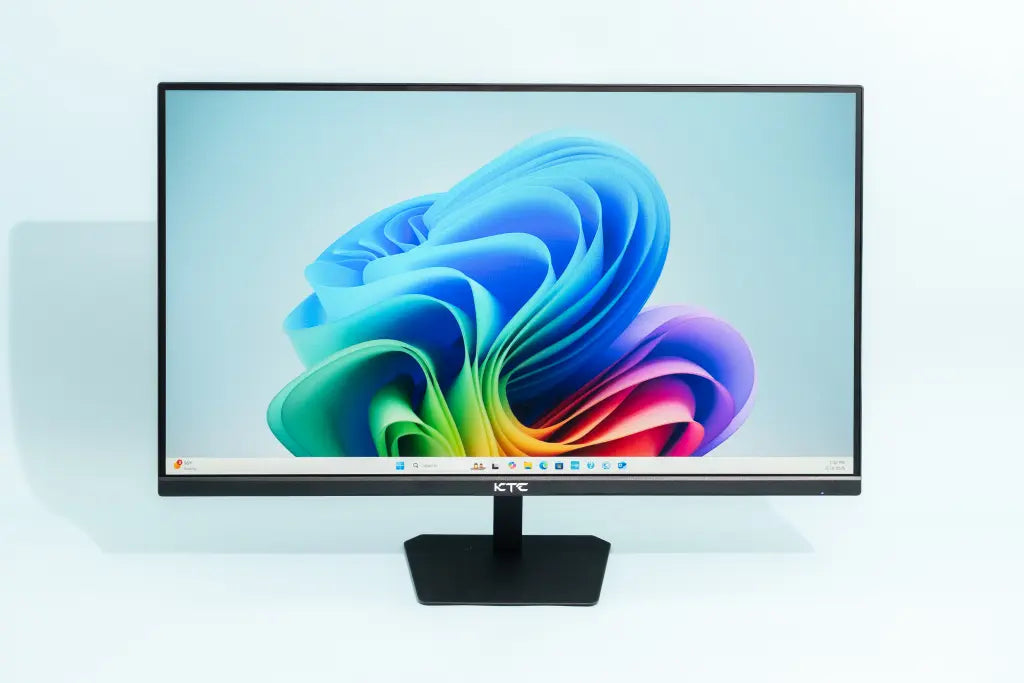
When selecting an IPS monitor, specifications should be determined based on the intended use. For professional design, models with 4K resolution and 99% sRGB/AdobeRGB color gamut coverage, such as ...
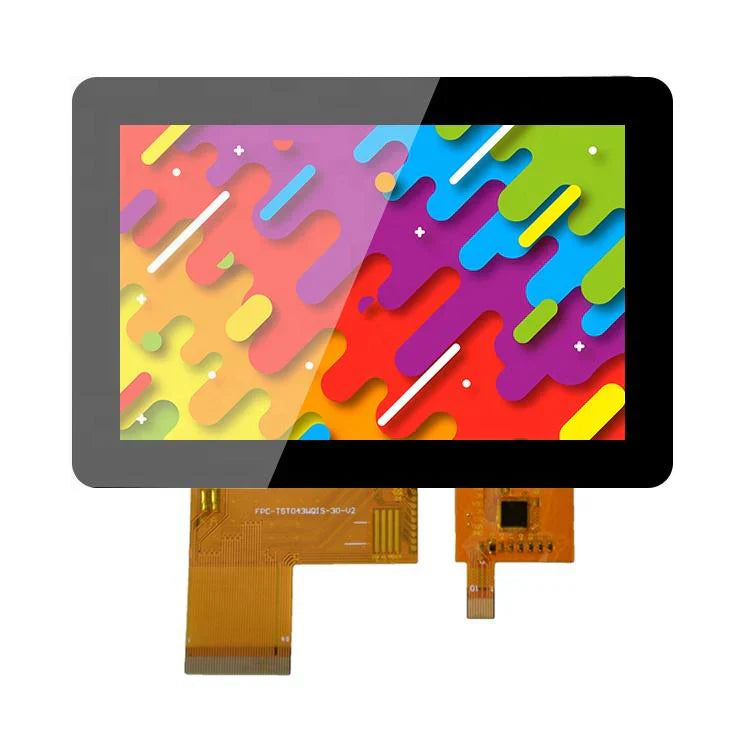
Custom LCD modules are tailored to your needs. The process starts with a requirement document detailing size, resolution, interface, and operating temperature. This allows for unique shapes, integr...
Laisser un commentaire
Ce site est protégé par hCaptcha, et la Politique de confidentialité et les Conditions de service de hCaptcha s’appliquent.