

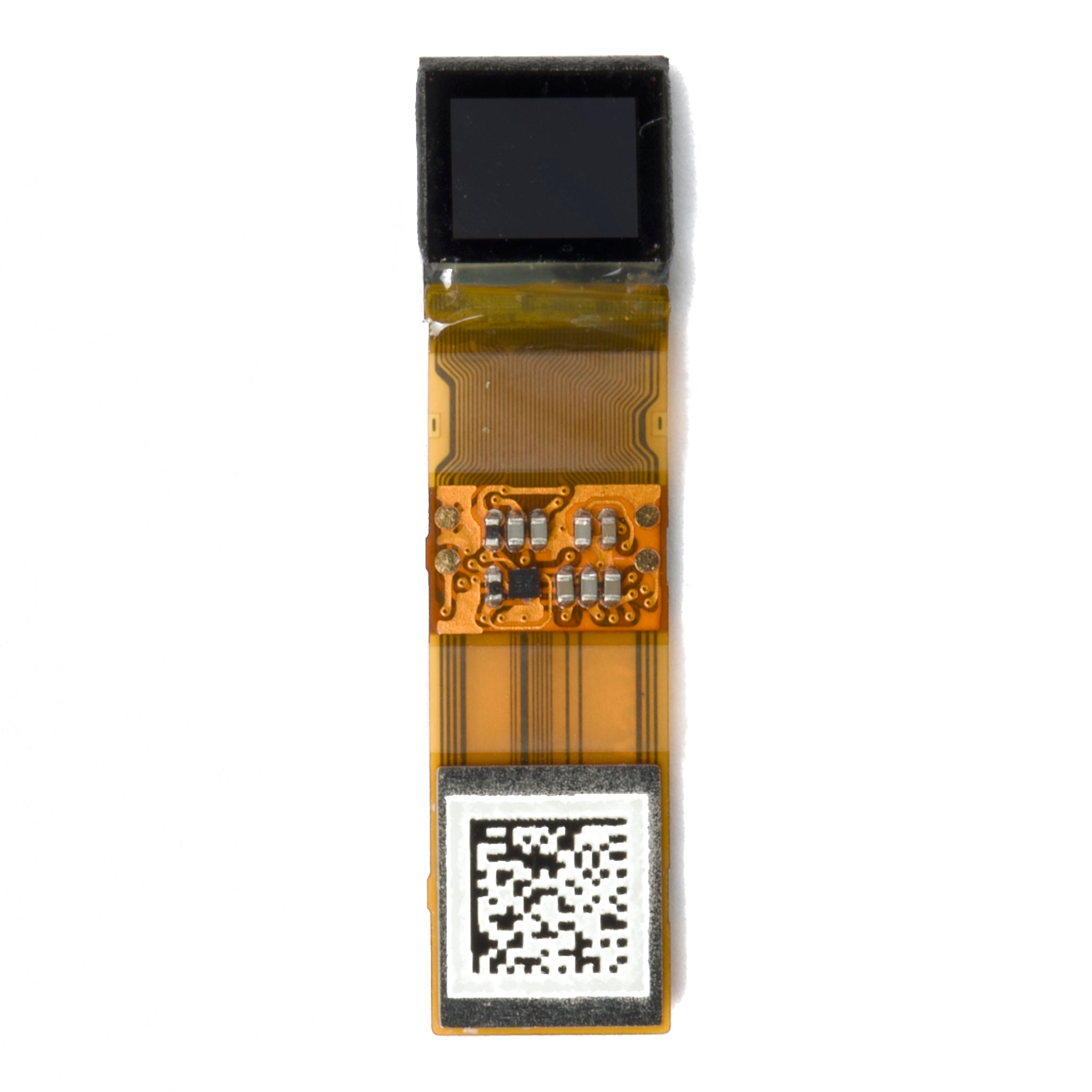
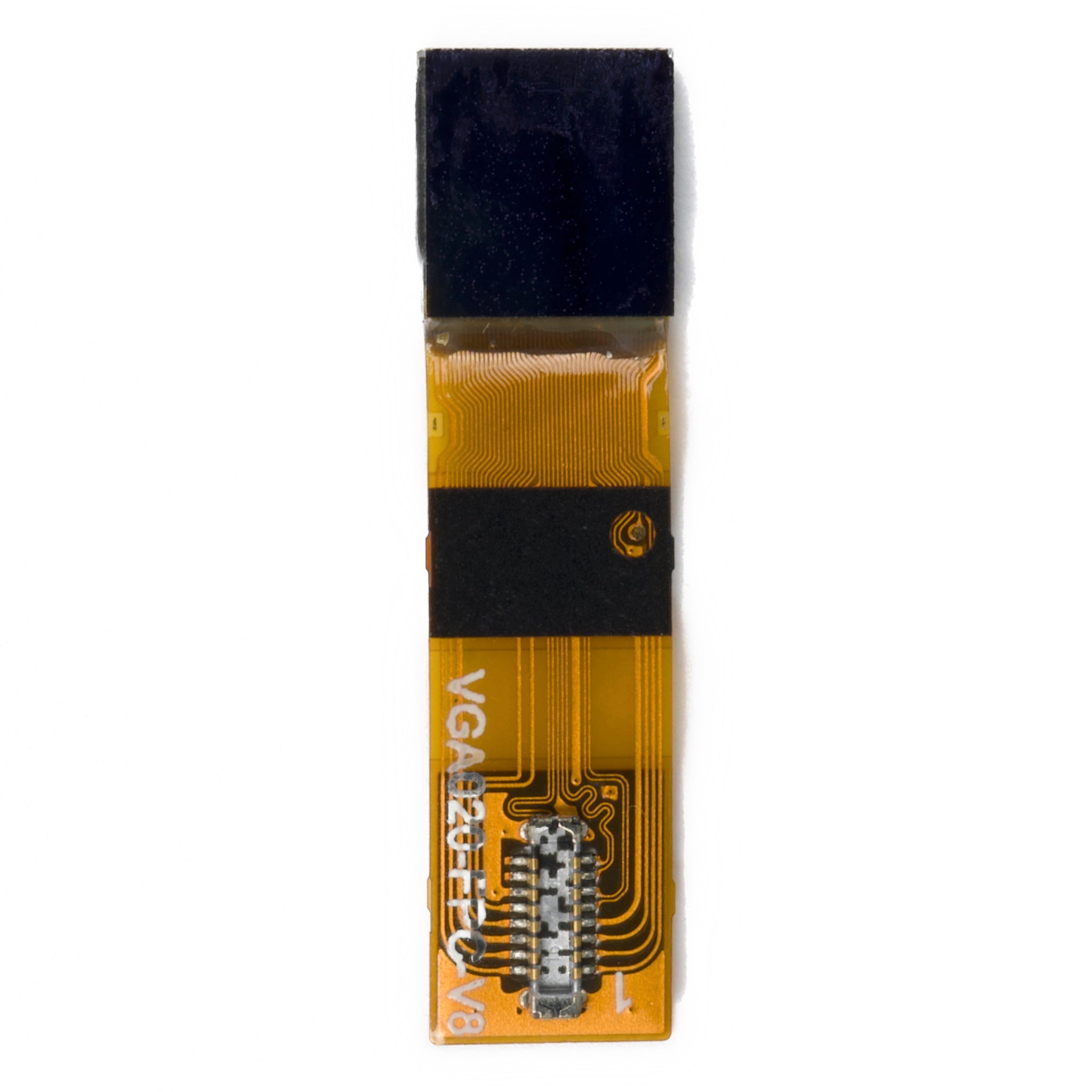
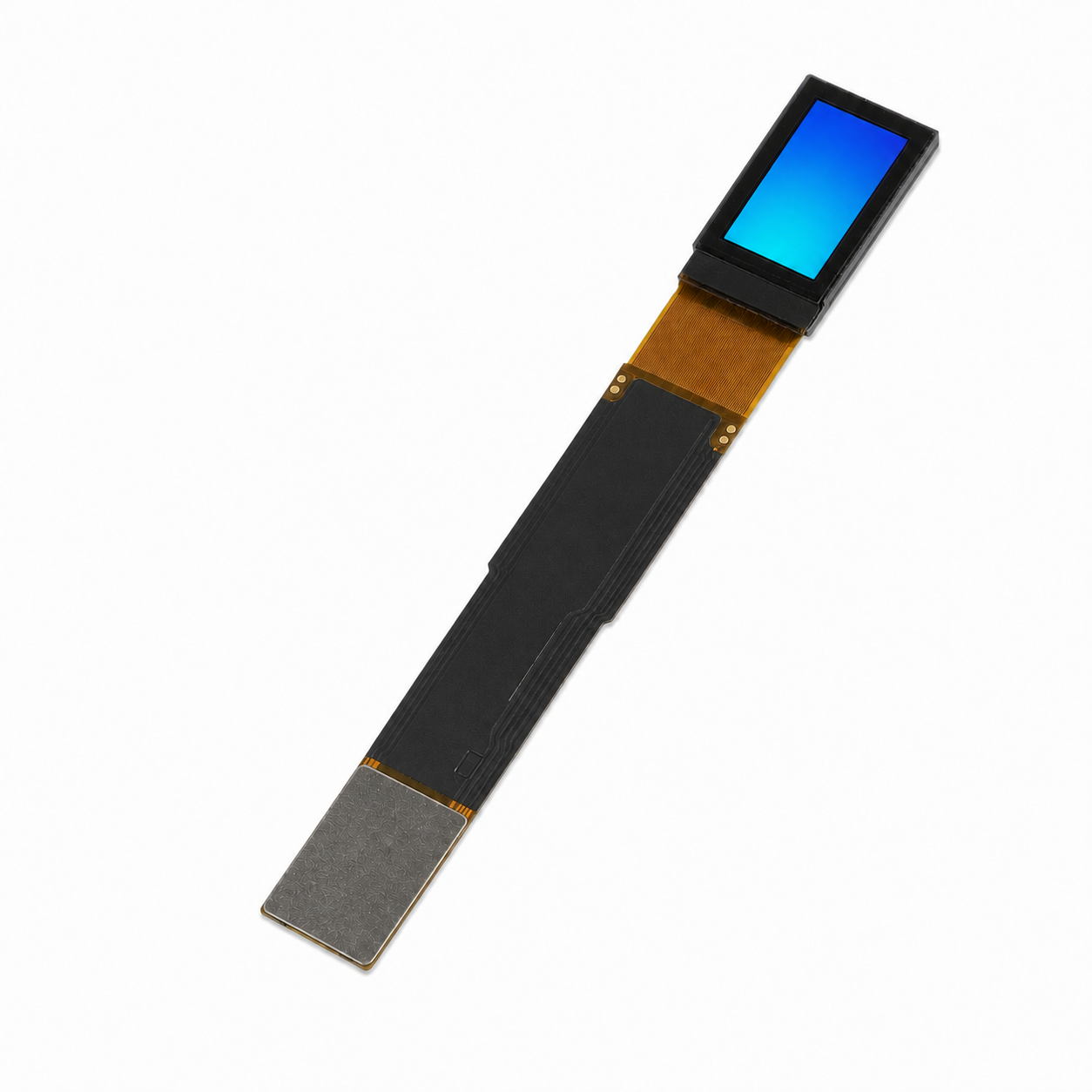
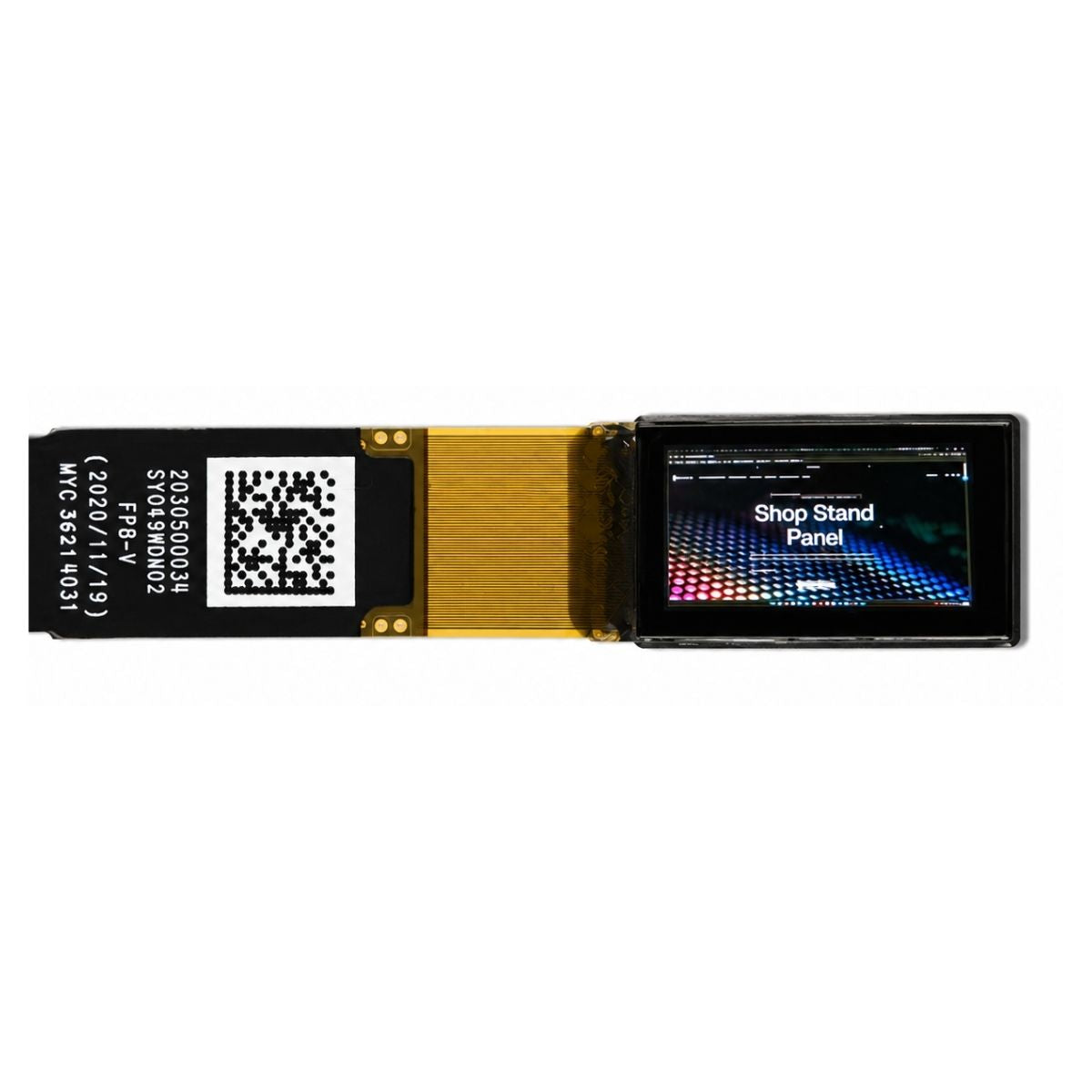


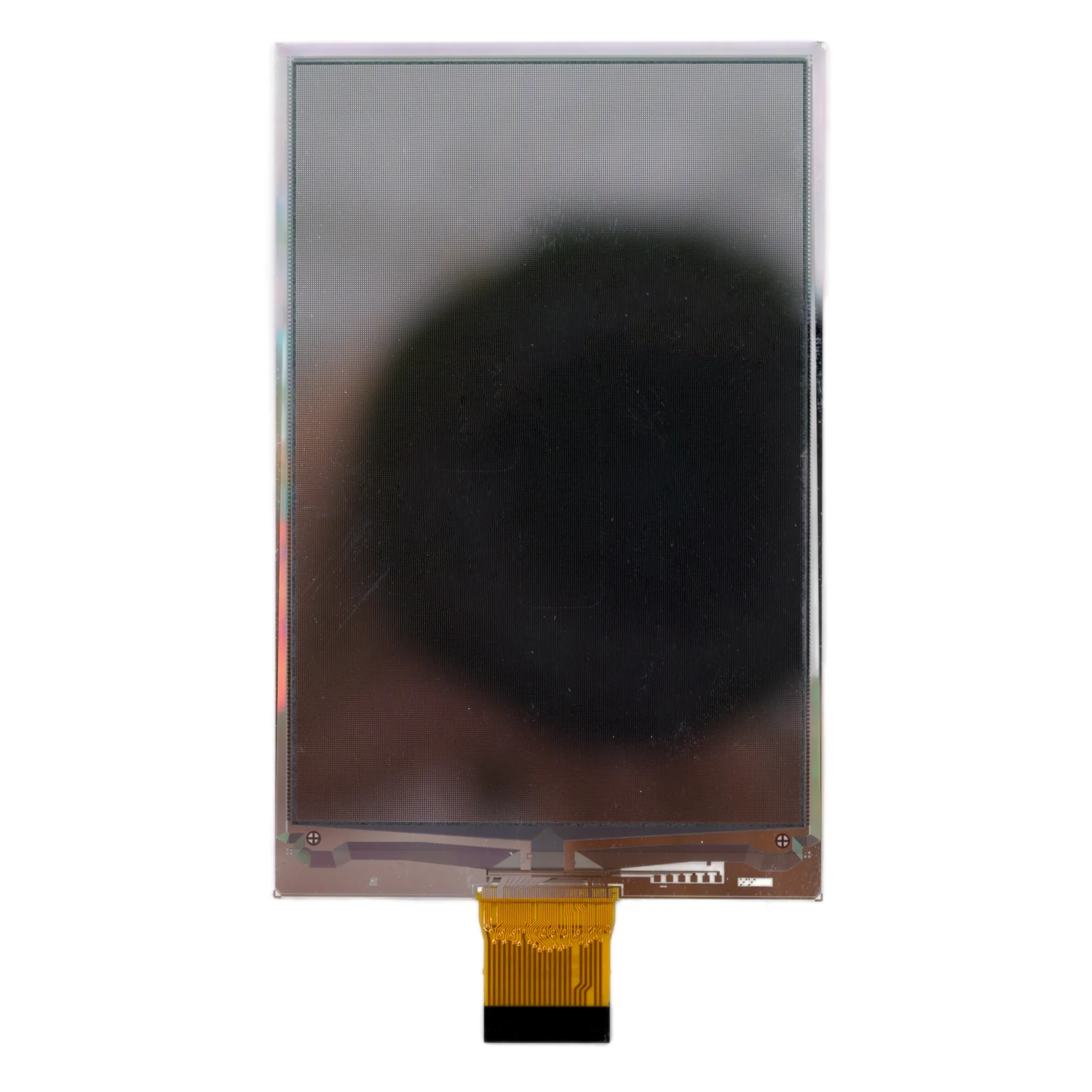
3.5" ePaper Display 240×360 - SPI
- 💹 Enjoy a 20% discount for orders over 500
- 📉 A 15% discount is available for orders ranging from 200 to 499
- 🎁 A 10% discount is available for orders ranging from 50 to 199
- 🎁 A 5% discount is available when ordering 10-49
Interested in customizing this product? Get in touch with us.
Order samples, immediate delivery.
Factory bulk lead time: 3 weeks.
3.5" ePaper Display 240×360 - SPI
- 💹 Enjoy a 20% discount for orders over 500
- 📉 A 15% discount is available for orders ranging from 200 to 499
- 🎁 A 10% discount is available for orders ranging from 50 to 199
- 🎁 A 5% discount is available when ordering 10-49
Resources & Downloads
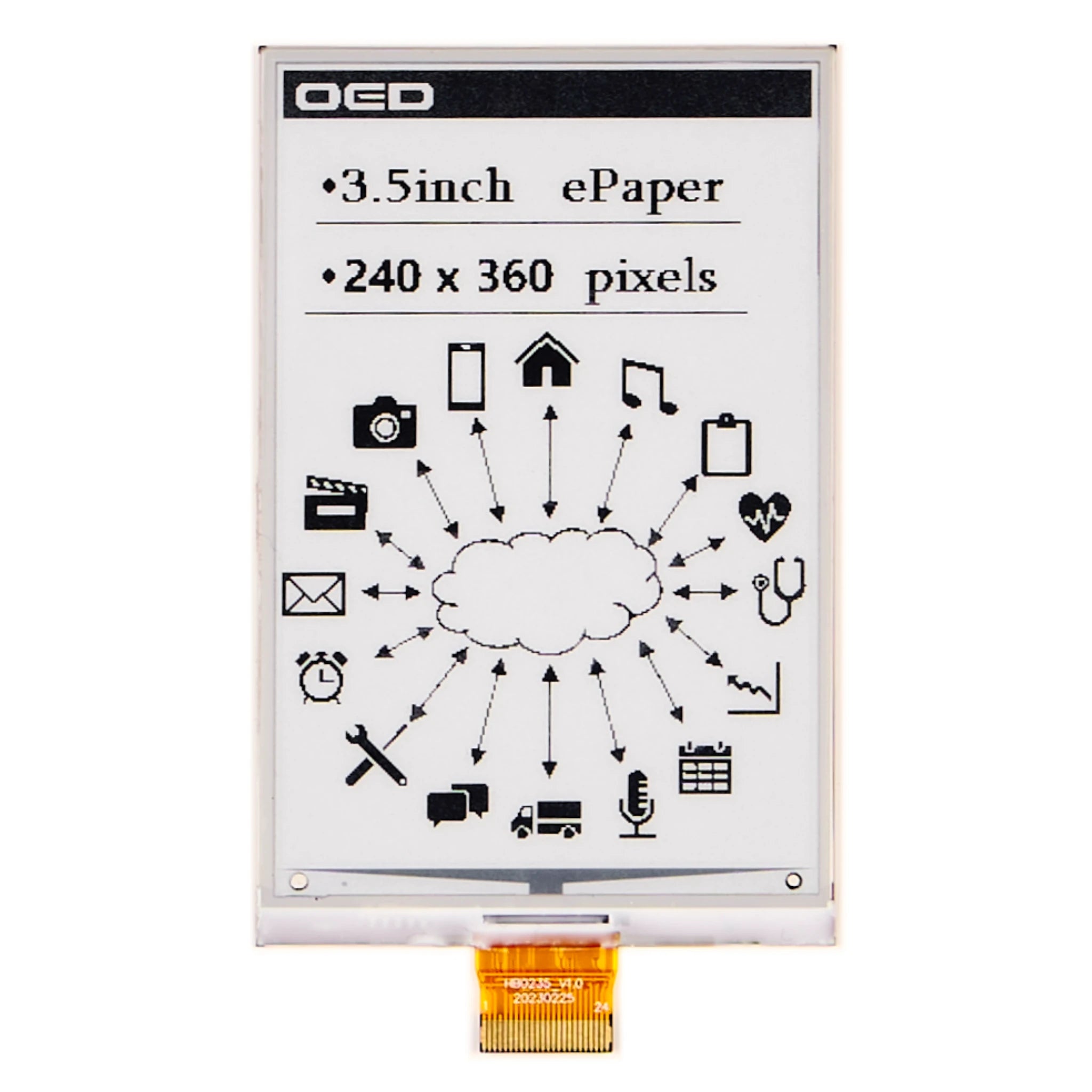
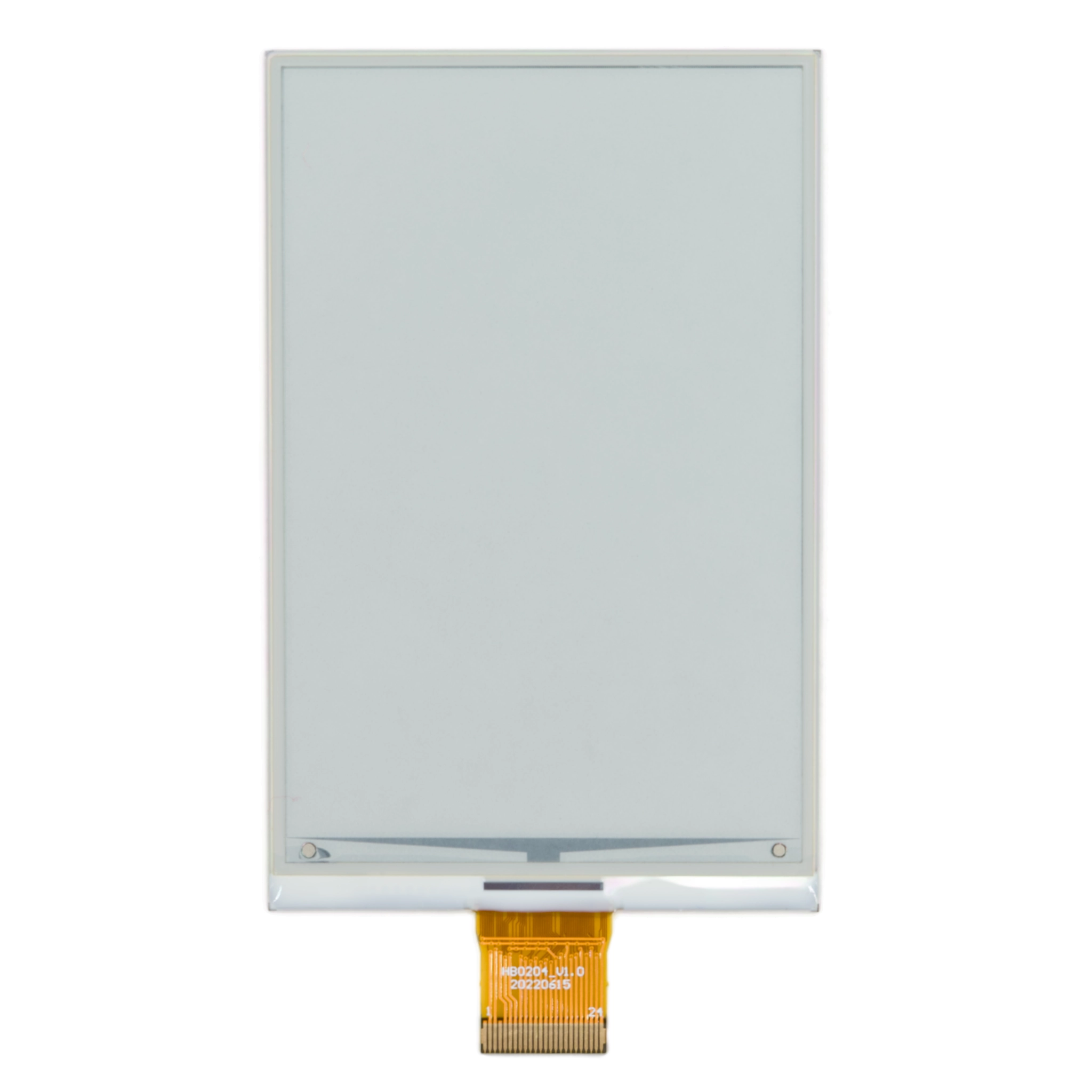
3.52-Inch E-Paper Display, 240×360, 3-Wire / 4-Wire SPI
DMAYE03501JNA is a 3.52-inch active-matrix electrophoretic display module with pure reflective and bi-stable display modes.
The published module specification includes on-chip display RAM, timing control, oscillator, DC-DC conversion, LUT and VCOM functions. The host interface can be configured for 4-wire SPI or 3-wire 9-bit SPI through the BS pin.

Verified Technical Specifications
The following values are taken from the supplied model specification. Conditions and qualifiers are retained where they affect product selection and integration.
| Parameter | Specification |
|---|---|
| Model | DMAYE03501JNA |
| Display Type | Active Matrix Electrophoretic Display (AM EPD) |
| Screen Size | 3.52 inch |
| Resolution | 240 (H)×360 (V) pixels |
| Active Area | 49.670×74.505 mm |
| Pixel Configuration | Square |
| Module Outline | 84.7×54.41×0.82 mm |
| Weight | 8.2 g |
| Display Mode | Pure reflective, bi-stable electrophoretic display |
| Orientation | Landscape and portrait modes are listed in the feature section |
| Host Interface | 4-wire SPI or 3-wire 9-bit SPI, selected by the BS pin |
| Serial Access | Write-only operation in the documented serial modes |
| Temperature-Sensor Interface | TSCL and TSDA provide an I2C master interface for an external digital temperature sensor |
| Display RAM | On-chip display RAM |
| Touch Panel | Touch-panel and touch-controller functions are not specified in datasheet V1.0.0. Confirm any touch requirement separately before ordering. |
| Datasheet Version | V1.0.0, July 1, 2025 |
Optical and Refresh Performance
Optical measurements are specified with illumination at 45 degrees and perpendicular detection unless otherwise stated. Refresh values require the waveform identified by the panel supplier.
Reflective Viewing, Defined Indoor Limit
The display relies on ambient light rather than an emissive backlight. The specification identifies indoor operation and an illuminance value of 2,000 lux. Final readability should be approved in the actual enclosure and lighting environment.
Electrical Characteristics and Low-Power Modes
Unless otherwise stated, the panel DC characteristics apply at VSS = 0 V, VDD = 3.0 V and 25°C. Typical panel power and current figures describe different test conditions and should not be treated as interchangeable values.
| Electrical Parameter | Published Value and Condition |
|---|---|
| Logic Supply Voltage | 2.8 V minimum, 3.0 V typical, 3.6 V maximum |
| Absolute Maximum VDD | -0.5 V to +4.0 V. Absolute maximum ratings are not normal operating conditions. |
| High-Level Input | VIH ≥ 0.8×VDD |
| Low-Level Input | VIL ≤ 0.2×VDD |
| High-Level Output | VOH ≥ 0.9×VDD at IOH = -100 µA |
| Low-Level Output | VOL ≤ 0.1×VDD at IOL = 100 µA |
| Typical Panel Power | 12 mW for the specified transition from a horizontal two-gray-scale pattern to a vertical two-gray-scale pattern |
| Typical Operating Current | 10 mA at VDD = 3.0 V |
| Sleep-Mode Current | 30 µA at VDD = 3.0 V, DC-DC off, no clock, no output load, RAM data retained |
| Deep-Sleep Current | 1 µA at VDD = 3.0 V, DC-DC off, no clock, no output load, RAM data not retained |
Power planning: The 12 mW panel-power value, 10 mA VDD operating-current value and sleep figures are published under different definitions. Measure the complete host board, power circuit and refresh duty cycle when calculating battery life.
SPI Interface and Pin Functions
The BS input selects the MCU serial mode. Pulling BS low selects 4-wire SPI. Pulling BS high selects 3-wire 9-bit SPI. Both serial modes are documented as write-only.
Host-Controlled Serial Interface
In 4-wire mode, D/C separates commands from display data. In 3-wire mode, the first bit of each 9-bit transfer is the D/C flag, followed by eight data bits.
The BUSYN output must be monitored. When BUSYN is high, commands should not interrupt waveform output, OTP programming or digital-temperature-sensor communication.
CSB
Active-low chip-select input. MCU communication is enabled only when CSB is low.
D/C
Command/data control in 4-wire SPI. High selects display data; low selects a command.
SCL / SDA
Serial clock and serial data input for the SPI connection.
RSTN
Active-low reset input. Follow the reset and initialization sequence in the model-specific datasheet.
BUSYN
Busy-state output used to prevent host commands during internal operations.
TSCL / TSDA
I2C clock and data signals for reading an external digital temperature sensor.
VDD / VSS / VDDD
Logic and chip supply, ground and core-logic supply. A capacitor is required between VDDD and VSS.
GDR / RESE
Gate-drive control and current-sense input for the power-control loop.
Drive-Voltage Pins
VDHR, VSH, VGH, VSL, VGL and VCOM are used by the panel drive-voltage network. Follow the application circuit exactly.
Connector confirmation: The supplied specification lists a 24-pin assignment but does not identify a mating-connector part number in the text. Confirm the FPC contact geometry, pitch, insertion direction and mating connector from the latest mechanical drawing before PCB release.
Mechanical Integration Details
The module contains fragile glass and plastic layers. The enclosure should support the display without bending, twisting or point loading, and the host assembly should avoid pressure on the active surface.
Orientation check: The active-area dimensions and outline dimensions are presented with different H/V ordering in the published table. Use the mechanical drawing, not text order alone, to set the PCB and enclosure orientation.
Surface protection: The protection sheet has no hard coating. Clean with a soft dry cloth, avoid chemical cleaners and do not press hard on the display surface.
Operating Limits and Reliability Evidence
Operating and storage ratings define normal environmental limits. Reliability tests are separate qualification-stress conditions and must not be interpreted as continuous-use ratings.
Published Environmental Ratings
Operation: 0°C to 35°C
Storage: -25°C to 60°C
Storage humidity: 30% to 60% RH
Illuminance: Indoor only, 2,000 lux listed
High-temperature operation: +50°C, 30% RH, 240 hours; IEC 60068-2-2Bp.
Low-temperature operation: 0°C, 240 hours; IEC 60068-2-2Ab.
High-temperature storage: +70°C, 23% RH, 240 hours; IEC 60068-2-2Bp.
Low-temperature storage: -25°C, 240 hours; IEC 60068-2-1Ab.
High-temperature / high-humidity operation: +40°C, 90% RH, 168 hours; IEC 60068-2-3CA.
High-temperature / high-humidity storage: +60°C, 80% RH, 240 hours; IEC 60068-2-3CA.
Thermal shock: -25°C for 30 minutes to +70°C for 30 minutes, 100 cycles; IEC 60068-2-14.
Packaged vibration: 1.04 G, 10 to 500 Hz, X/Y/Z, one hour per direction, fully packed for shipment.
Packaged drop: 122 cm onto concrete, one corner, three edges and six faces, fully packed for shipment.
Non-operating ESD: Machine model ±250 V, 0 Ω, 200 pF; IEC 62179 and IEC 62180 are referenced.
Acceptance statement: The reliability table states that electrical, mechanical and optical specifications should be satisfied at the end of the applicable test. These test conditions help customers review environmental tolerance before sample evaluation and product design.
Integration Checks Before Ordering
Review the following items before confirming the module for a PCB, enclosure or production bill of materials.
Documents to Confirm
1. Latest DMAYE03501JNA datasheet and mechanical drawing
2. Ordered model and sample label
3. Waveform and initialization sequence for the approved sample
4. Product-page summary for reference
Model identity: Verify DMAYE03501JNA on the quotation, purchase order, sample label and approval record.
Resolution: Verify the 240×360 pixel format against the latest approved datasheet and sample before production release.
Mechanical fit: Confirm outline, active area, FPC orientation, contact pitch, insertion direction and enclosure support from the drawing.
Power network: Follow the typical application circuit for GDR, RESE, VDDD, VCOM and the source/gate drive-voltage capacitors.
Firmware: Validate reset timing, BUSYN handling, SPI mode, write timing, orientation, refresh waveform and temperature compensation.
Optical approval: Inspect white state, black state, contrast, full-refresh flicker, partial refresh and indoor readability in the final product window.
Handling: Do not bend, twist, stack, disassemble or connect and disconnect the interface while the panel is operating.
Moisture control: Prevent condensation, frost and moisture penetration during storage, assembly and operation.
Application Considerations
The datasheet identifies electronic shelf label systems and portable electronic devices as intended application categories. Suitability depends on the required update rate, indoor lighting, temperature range, enclosure protection and available host interface.
Electronic Shelf Labels
Bi-stable image retention and reflective viewing can support labels that remain readable between updates. Validate refresh time, waveform behavior, operating illuminance and battery life in the complete ESL design.
Portable Embedded Devices
The thin 0.82 mm module and documented low-power modes can support compact products with intermittent display updates. Confirm mechanical protection, host voltage compatibility and the effect of update frequency on system power.
Common Questions Before Ordering
What is the display resolution?
The product feature section and mechanical specification table list a resolution of 240×360 pixels.
Does the display support partial refresh?
Yes. The optical table lists a typical partial-refresh time of 250 ms at 25°C and states that the specified partial-refresh process does not flicker. The approved waveform is required.
Is it suitable for outdoor sunlight?
The display is reflective, but the supplied electrical table specifies indoor operation and lists 2,000 lux. Outdoor sunlight performance is not confirmed by the supplied specification.
Can it connect to a microcontroller?
Yes, through the documented 4-wire SPI or 3-wire 9-bit SPI interface. The host must meet the VDD and logic-threshold requirements and must implement reset, BUSYN monitoring and the approved initialization sequence.
Is a touch panel included?
Touch-panel and touch-controller functions are not specified in datasheet V1.0.0. Confirm any touch requirement separately before ordering.
Does deep sleep retain the image and RAM data?
The electrophoretic image is bi-stable, but the deep-sleep-current condition is specified with RAM data not retained. The sleep-mode condition retains RAM data and is listed at 30 µA.
What certification information is published?
The certification table marks RoHS as available. CE, FCC and other certifications are not marked as available in the supplied datasheet. Request the applicable compliance document before using a certification claim.
Which document controls production release?
Use the latest model-specific datasheet, mechanical drawing and approved sample as the controlling references for design and production release.
Download Official Datasheet
Use the official DMAYE03501JNA specification to review the mechanical drawing, 24-pin assignment, electrical limits, SPI timing, optical measurements, reliability conditions, handling requirements and typical application circuit.
Use the latest approved datasheet, mechanical drawing and sample when completing PCB, enclosure and production approval.