

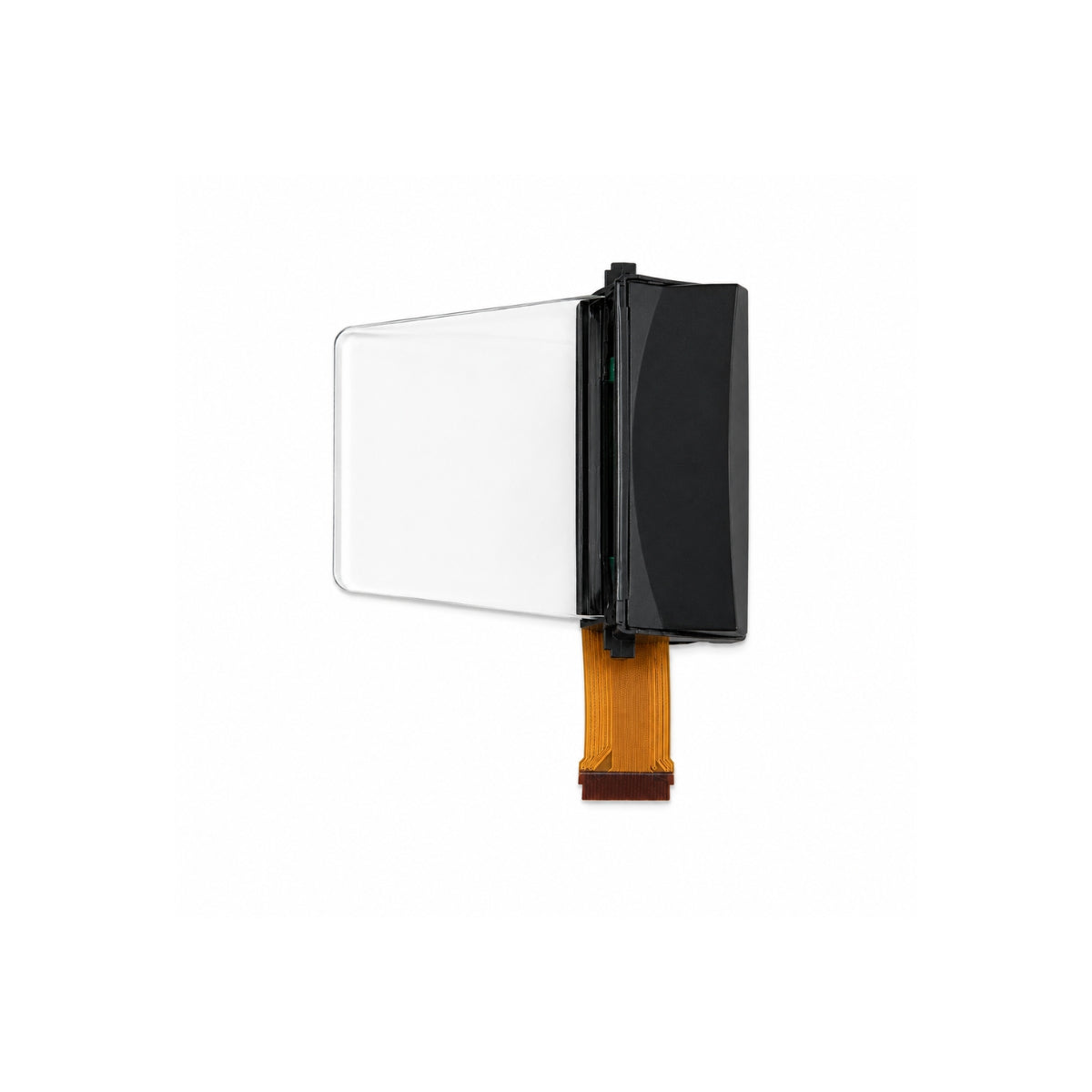
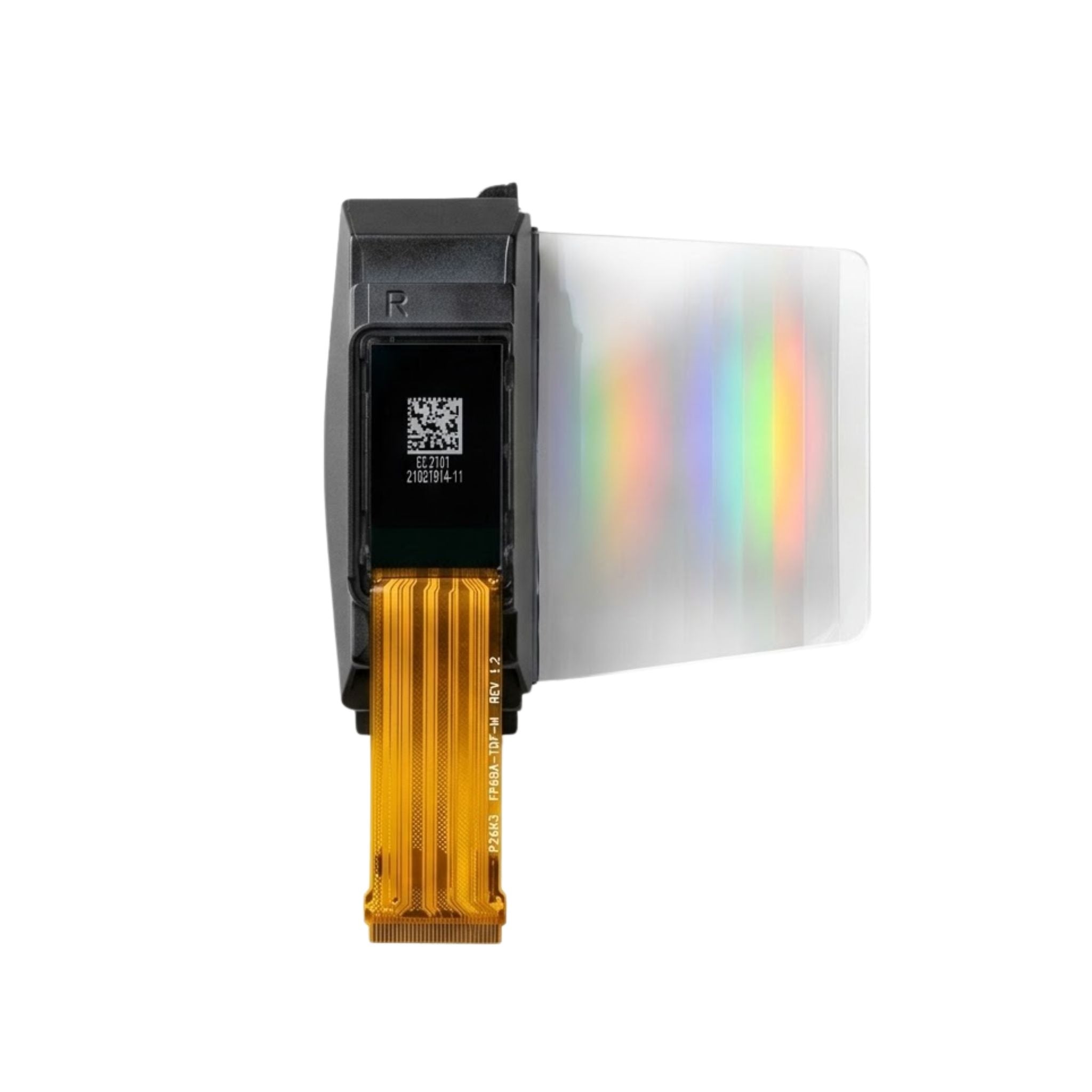


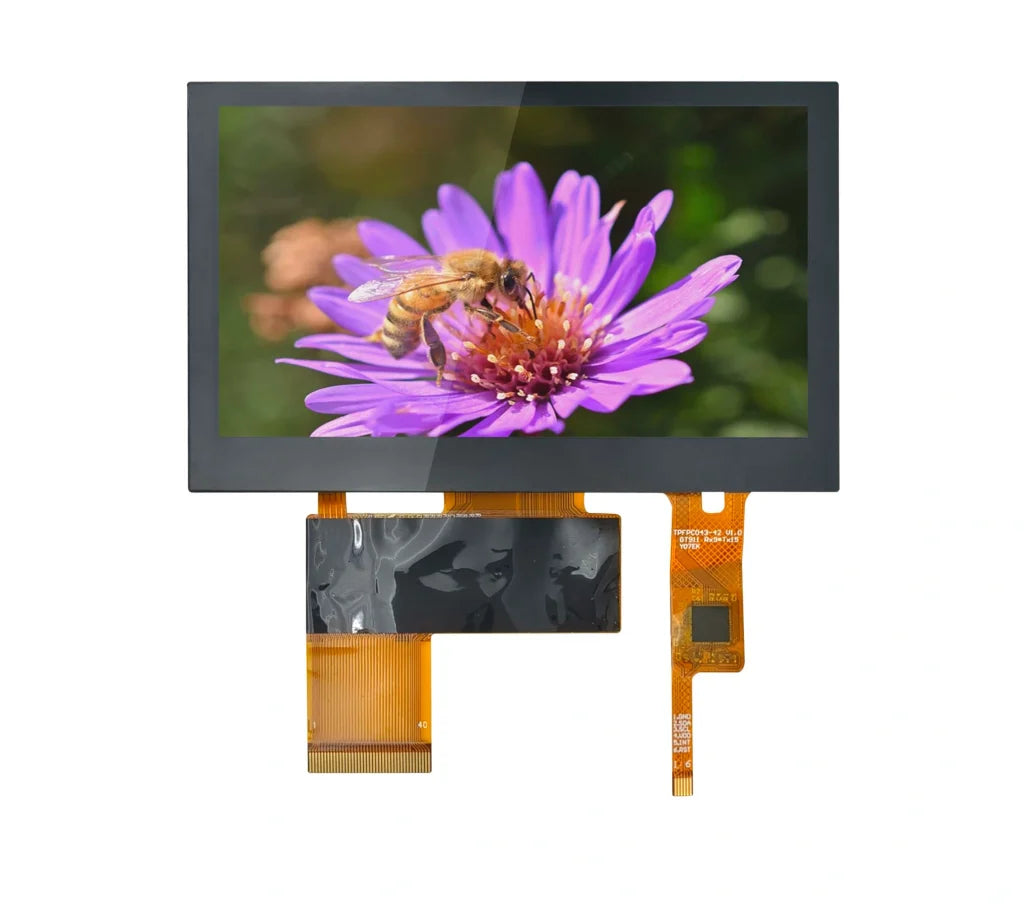
Custom OLED vs. Custom TFT Display | Contrast, Lifespan & Cost
The core advantage of custom OLED lies in image quality. Its self-emitting pixels can achieve infinite contrast ratio and more vivid colors, but the cost is typically 30%-50% higher than TFT of the same specification.
Its lifespan (approximately 15,000 hours) is a major weakness, being prone to burn-in, making it unsuitable for industrial applications requiring long-term display of static images.
Custom TFT, with its LED backlight system, offers a longer lifespan (over 50,000 hours) and achieves a better balance between cost and reliability, making it a pragmatic choice for scenarios requiring 7x24 operation like automotive and industrial control.
Contrast
OLED, leveraging its self-emitting pixel characteristic, enables independent switching of each pixel, achieving theoretically infinite contrast and pure black (brightness can be below 0.0005 nits).
In contrast, TFT-LCD relies on a backlight module; even with advanced local dimming technology, its black level remains a shade of gray, with contrast typically limited to the range of 1000:1 to 5000:1.
This is not just a numerical gap; it fundamentally determines the visual impact of HDR content, color saturation, and the clarity of details in dark scenes.
Definition and Technical Principles
Different standards exist for measuring contrast ratio:
-
Static Contrast Ratio (Native Contrast): Measured within the same frame, it reflects the inherent physical property of the display panel and best indicates hardware quality.
-
Dynamic Contrast Ratio: Achieved by algorithmically adjusting the brightness of the entire backlight or local dimming zones. The value is usually much higher than the static contrast, but has limited reference value as it is not measured at the same moment.
In professional fields, the ANSI standard using a checkerboard pattern test is often adopted, as it better reflects the real viewing experience.
The human eye is extremely sensitive to relative changes in brightness and darkness. High contrast means the image appears more transparent, colors look more saturated, and object outlines are sharper.
How is contrast ratio actually generated?
The way display technologies generate contrast fundamentally boils down to the ability to control "light." All differences stem from one core question: How to precisely control the light-on and light-off state of each pixel.
OLED:
The scientific name for OLED is "Organic Light-Emitting Diode." Its core technology lies in the "electroluminescence" effect.
-
Pixel-Level Light Control: Each sub-pixel (Red, Green, Blue) of an OLED display is composed of specific organic material layers. When an electric current passes through, these organic materials emit light directly. This means each pixel is an independent micro light source.
-
Physical Basis for Pure Black: Since the pixel is completely inactive in the black state, generating no light, the screen's brightness is limited only by ambient light reflection and minimal leakage from the circuit board. Professional measuring instruments can record black-level brightness below 0.0005 nits.
-
Contrast Calculation: Taking an OLED screen with a peak brightness of 1000 nits as an example, its contrast ratio is at least 1000 / 0.0005 = 2,000,000:1.
The pixel structure of OLED typically includes an anode, organic material layers (hole transport layer, emission layer, electron transport layer), and a cathode.
TFT-LCD:
What we commonly refer to as a TFT screen is technically TFT-LCD. The TFT (Thin-Film Transistor) itself does not emit light; it acts as a switch controlling the orientation state of the underlying LCD (Liquid Crystal) layer.
-
Backlight Module is the Foundation: A TFT-LCD screen must have a backlight module that is always on. Early versions used CCFL (Cold Cathode Fluorescent Lamps), but LEDs (Light Emitting Diodes) are now universally used as the light source.
-
The Light Valve Role of the Liquid Crystal Layer: Between the backlight module and the color filter lies the liquid crystal layer. Liquid crystal molecules, under the electric field generated by the TFTs, change their alignment direction.
-
Light Leakage is the Nemesis of Contrast: When displaying black, the electric field drives the liquid crystal molecules to an ideal position to block the backlight as much as possible. However, no liquid crystal material can achieve 100% light blocking.
Factors affecting the native contrast of TFT-LCD:
-
Liquid Crystal Type: VA (Vertical Alignment) panels typically have the highest contrast (static contrast can reach 3000:1 to 5000:1) because their molecules are aligned vertically, blocking light more effectively. IPS (In-Plane Switching) panels are known for wide viewing angles and color accuracy, but their native contrast is usually lower (1000:1 to 1500:1).
-
Backlight Design: Direct-lit backlights are easier to implement with local dimming compared to edge-lit backlights, thus improving dynamic contrast.
-
Manufacturing Process: The manufacturing precision, such as the thickness of the liquid crystal cell and the uniformity of spacers, affects the degree of light leakage.
Custom OLED
The core advantage of custom OLED stems from its physical structure. Unlike TFT-LCD which requires a backlight module, each pixel in an OLED emits its own light.
This self-emissive property is the foundation for achieving ultimate contrast.
When displaying black, the pixel can be completely turned off, achieving a pure black state with brightness below 0.0005 nits.
The customization process begins with substrate selection. Manufacturers can choose rigid glass substrates or flexible polyimide substrates based on product requirements.
The thickness of flexible OLEDs used in smartwatches can be less than 0.2 mm, with a bend radius reaching 3 mm.
Regarding pixel arrangement, besides the standard RGB stripe arrangement, VR devices might use RGB Pentile to enhance effective resolution, while TV products might opt for a WRGB structure (adding a white sub-pixel) to optimize peak brightness.
Material System Determines Display Performance
The choice of OLED materials directly affects screen lifespan and color performance.
Currently, phosphorescent materials are mainstream for red and green sub-pixels, with internal quantum efficiency exceeding 90%; blue still commonly uses fluorescent materials with an efficiency of about 25-30%.
High-end custom OLEDs employ more advanced material combinations:
-
TV products use doped transport layers to improve efficiency.
-
Mobile phone screens use optical compensation films to enhance viewing angles.
-
Automotive displays require high-temperature resistant materials to ensure stability in -40°C to 105°C environments.
Drive Scheme Affects Image Quality Precision
Drive methods for custom OLED are divided into Passive Matrix (PMOLED) and Active Matrix (AMOLED).
PMOLED has a simple structure and low cost but is only suitable for small-size, low-resolution displays.
AMOLED equips each pixel with an independent thin-film transistor and capacitor, enabling more precise brightness control.
In terms of brightness precision, professional-grade AMOLED can achieve 12-14bit grayscale control, resulting in smoother gradients.
Regarding refresh rates, gaming monitors can achieve adaptive refresh rates from 1-240Hz, and smartphones support dynamic switching from Always-On Display (1Hz) to smooth scrolling (120Hz).
The table below compares drive schemes for different application scenarios:
| Application Scenario | Recommended Drive Scheme | Pixel Density (PPI) | Typical Brightness (nits) | Special Considerations |
|---|---|---|---|---|
| Smartwatch | Flexible AMOLED | 350-500 | 800-1000 | Ultra-low power design, AOD mode optimization |
| VR Headset | High Refresh AMOLED | 800-1200 | 100-150 | Low persistence, reduced motion blur |
| Automotive Display | High Brightness AMOLED | 150-200 | 1000-1500 | High contrast for sunlight visibility |
| Industrial Control | Rigid AMOLED | 200-250 | 600-800 | Wide temperature operation, long lifespan requirement |
Encapsulation Technology Ensures Product Reliability
OLED devices are extremely sensitive to moisture and oxygen, requiring strict encapsulation. Rigid glass encapsulation can achieve Water Vapor Transmission Rates (WVTR) on the order of 10⁻⁶ g/m²/day, meeting most consumer electronics needs.
Flexible displays use thin-film encapsulation, with multi-layer inorganic/organic alternating structures controlling WVTR below 10⁻⁵ g/m²/day.
In durability tests, the lifespan of consumer-grade OLED screens, defined as the time for brightness to decay to 50% of its initial value, is typically required to exceed 30,000 hours.
High-end custom products can extend the lifespan to over 100,000 hours by optimizing material systems and driving algorithms.
Calibration and Color Management
Each screen undergoes strict optical calibration before leaving the factory:
-
Color accuracy ΔE can be controlled below 1.5.
-
Gamma curve error less than ±0.05.
-
White point deviation not exceeding ±0.005 (u'v' coordinates).
Professional-grade displays also load 3D LUTs (Look-Up Tables) for accurate mapping across different color spaces. Medical imaging display devices need to meet the DICOM standard to ensure accurate grayscale image reproduction.
Custom TFT-LCD
Technology Choices for the Backlight Module
The backlight module is the light source of a TFT-LCD, and its design directly determines the screen's brightness, uniformity, and contrast potential.
-
Edge-Lit vs. Direct-Lit: Edge-lit backlights place LED light bars on the sides of a light guide plate, which diffuses the light evenly across the screen. This method allows for very slim profiles, common in consumer TVs and monitors, but has weak local dimming capabilities. Direct-lit backlights arrange LEDs uniformly behind the liquid crystal layer. Although the module is thicker, it forms the basis for effective local dimming and is the preferred choice for high-end monitors and professional reference displays.
-
Global Dimming vs. Local Dimming: The most basic backlight control is global dimming, where the entire backlight brightens or dims together. Local dimming technology divides the backlight LEDs into multiple independently controlled zones. The number of zones is a key performance indicator: tens of zones are entry-level, offering limited contrast improvement; hundreds of zones can significantly improve contrast; systems using Mini-LED technology can have thousands or even tens of thousands of zones, achieving pixel-level precise light control and raising dynamic contrast to levels approaching OLED.
-
Mini-LED Technology: Mini-LEDs are LED chips sized between 100-300 micrometers. Their advantage lies in being able to integrate a much larger number of LED lights within the same backlight area, creating finer zones. A high-end Mini-LED TV backlight might contain over 20,000 Mini-LEDs and thousands of independent dimming zones, capable of achieving peak brightness exceeding 1000 nits and a dynamic contrast ratio of over a million to one.
Materials and Modes of the Liquid Crystal Layer
-
Liquid Crystal Modes: The mainstream IPS mode is known for its superior color consistency and 178-degree ultra-wide viewing angles, but its native contrast is typically lower. VA mode offers higher native contrast but relatively narrower viewing angles. TN mode has the fastest response time but the poorest color and viewing angle performance.
-
Response Time: The time it takes for liquid crystals to switch from one state to another is the response time. Gray-to-gray response time is particularly important as it affects the clarity of moving images. By using liquid crystal materials with higher dielectric anisotropy, optimizing cell gap, and driving voltage, response times have been reduced from the early 20-30 milliseconds to 1-2 milliseconds in today's high-end monitors, effectively reducing motion blur.
TFT Array and Color Filter
-
TFT Array: Amorphous Silicon (a-Si) technology is mature and low-cost, making it the choice for most consumer displays. Low-Temperature Polycrystalline Silicon (LTPS) technology has higher electron mobility, enabling smaller, faster transistors, which allows for the manufacture of higher-resolution screens, narrower bezels, and even integration of driver circuits onto the glass substrate.
-
Color Filter: Standard color filters are manufactured using the pigment dispersion method. To enhance the color gamut, "Quantum Dot" technology can be employed. Quantum dots are nanomaterials that emit very pure monochromatic light when excited by blue light. Using quantum dots as a photoluminescent layer can greatly expand the display's color gamut, easily covering over 95% of the DCI-P3 color space.
The table below compares TFT-LCD customization schemes for different application scenarios:
| Application Scenario | Backlight Solution | LC Mode | TFT Technology | Key Performance Target |
|---|---|---|---|---|
| High-End TV | Mini-LED, Thousands of Zones | VA (High Contrast) or IPS-Black (Enhanced IPS) | a-Si or LTPS | High HDR Brightness (>1500 nits), High Dynamic Contrast (>1,000,000:1) |
| Professional Photo Monitor | Direct-Lit LED, Hundreds to Thousands of Zones | IPS (Color Accuracy Priority) | LTPS | High Color Accuracy (ΔE < 1.5), Uniformity > 95%, Wide Color Gamut (>99% DCI-P3) |
| Automotive Center Console | High Brightness Edge-Lit / Direct-Lit LED | Wide-Temperature IPS | a-Si | High Brightness (>1000 nits) Anti-Glare, Wide Temperature Range (-40℃~105℃) |
| Industrial HMI | Standard LED Backlight, Global Dimming | TN (Cost Priority) or IPS | a-Si | Long Lifespan (>70,000 hours), High Reliability, Wide Viewing Angle |
The advantage of custom TFT-LCD lies in:
It is an extremely mature and flexible technology platform. Engineers can combine different backlight technologies, liquid crystal modes, TFT materials, and filter solutions to find the optimal balance point within a very wide performance-cost range for specific applications.
Whether it's a Mini-LED TV pursuing ultimate picture quality, an automotive display requiring extremely high reliability and brightness, or a home appliance panel that is extremely cost-sensitive, TFT-LCD can provide corresponding customized solutions.
Lifespan
The lifespan of an OLED display typically refers to the time it takes for its brightness to decay to 50% of its initial value, roughly between 10,000 and 50,000 hours (e.g., 3.5 to 17 years with 8 hours of daily use).
In contrast, the lifespan of a TFT-LCD depends on its LED backlight module, which can easily reach 50,000 to over 100,000 hours, with uniform degradation and almost no burn-in issues.
OLED Lifespan
The lifespan of an OLED display is a complex parameter defined jointly by materials science and electronic engineering.
It is not a simple point of failure, but a process of gradual performance degradation.
The speed of this process depends directly on the material formulation, drive circuit design, and the end-use environment.
1. The Root Cause of Aging:
The essence of an OLED pixel is an organic compound that self-emits light when driven by an electric current. These molecules gradually oxidize and degrade during the electroluminescence process, leading to reduced luminous efficiency.
The core challenge is that the red, green, and blue sub-pixels that constitute a pixel have different molecular structures and energy levels, so their chemical stability and degradation rates are inherently different.
-
Blue Pixels are the Weak Link: Blue light-emitting materials require a higher energy bandgap to produce short-wavelength blue light. This subjects them to a higher energy load, making their molecular structure more prone to fatigue and decomposition. Therefore, blue pixels typically degrade much faster than red or green pixels.
-
Quantifying the Difference: According to industry research and manufacturer data, under the same initial brightness, for a typical OLED panel, the lifespan of the blue material may be only one-third to one-half that of the red material.
This uneven degradation directly leads to two visible aging phenomena:
-
Luminance Decay: The overall screen brightness slowly decreases with cumulative usage time.
-
Color Shift: Due to the accelerated reduction of the blue component, the white displayed by the screen gradually shifts towards yellow-white, and the overall color balance is disrupted.
2. Measurement Standards:
The industry typically uses the "Luminance Half-Life" (L50) as the standard lifespan metric, i.e., the time required for brightness to drop from its initial value (e.g., 1000 nits) to 500 nits. However, for OLED, this is far from the whole picture.
-
Loss of Color Accuracy: Color may have deviated to an unacceptable degree even before the brightness decays to 50%. This is critical for fields requiring high professional color calibration (e.g., photography, video editing).
-
"Burn-in" – The Ultimate Manifestation of Local Aging: When certain areas of the screen display static or high-brightness images for extended periods, the pixels in these areas age faster than those in areas showing dynamic, dark content.
3. Factors Accelerating Aging
The degradation rate is not linear; it is significantly affected by several operational parameters.
-
Brightness is the Biggest Variable: According to the Arrhenius equation, a small increase in brightness (related to current density) exponentially accelerates material aging. Data shows that for every 100 nits increase in peak brightness, the expected lifespan may be shortened by 20% to 30%.
-
Thermal Effect: High-brightness operation generates more heat, and high temperatures further catalyze the oxidative degradation process of organic materials, creating a vicious cycle. Good thermal design is crucial for extending OLED lifespan.
-
The Content Itself: The Average Picture Level (APL) and static nature of the displayed content are key determinants of actual lifespan.
4. Mitigation Technologies and Limitations in the Industry
To address the lifespan challenge, manufacturers have developed various hardware and software technologies.
-
Pixel Shifting: Periodically shifting the entire displayed image by an amplitude barely perceptible to the human eye to avoid static pixel boundaries being "burned" into the screen.
-
Brightness Limiting and Average Picture Level Management: Automatically reducing the overall brightness when large areas of bright colors are detected to reduce total power consumption and thermal load.
-
Sub-pixel Arrangement Optimization: For example, some manufacturers use "RGB Delta" arrangements or increase the size of blue sub-pixels to compensate for their lower efficiency and shorter lifespan.
-
Advances in Materials Science: New generations of phosphorescent materials (especially for red and green) and Thermally Activated Delayed Fluorescence (TADF) materials are being developed to improve efficiency and lifespan.
5. Lifespan Expectations in Practical Application Scenarios
Discussing lifespan without context is meaningless. In typical consumer electronics applications:
-
Smartphones: Usage patterns are highly dynamic, with single static elements displayed for short periods. Under normal use, users typically do not encounter severe burn-in issues within the 3-4 year replacement cycle, but used devices may show noticeable color shift.
-
Televisions: Face a higher risk of burn-in, such as news channel logos or sports score tickers. However, thanks to the compensation algorithms mentioned above, with mixed content viewing, the lifespan of modern OLED TVs is sufficient to support over 5 years of normal use.
-
Commercial Displays and Public Information Screens: Any application involving long-term display of fixed UIs, menus, or logos should unconditionally choose a TFT-based solution, as burn-in is almost an inevitable outcome.
TFT Lifespan
1. Backlight Module:
-
LED Degradation Mechanism: Modern TFT screens all use LEDs as the backlight source. The light decay of LEDs mainly stems from two physical processes: the gradual increase of intrinsic defects in the chip material under electrical and thermal stress, leading to increased non-radiative recombination (heat instead of light); and the yellowing/degradation of packaging materials (like phosphor and silicone) under high temperature and blue light radiation, causing a decrease in light output efficiency.
-
Quantifying the Decay Curve: The light decay curve of high-quality LEDs is relatively gentle. Under ideal operating temperature, the time for their brightness to decay to 50% of the initial value (L70) can easily exceed 50,000 hours. Some LEDs targeted at industrial or commercial-grade displays have a rated L70 lifespan of 100,000 hours.
-
Key Influencing Factors: Drive current and junction temperature are the biggest lifespan killers. Following the "Arrhenius model," for every 10-15°C increase in junction temperature, the lifespan is approximately halved. Therefore, reducing the drive current from the standard 20mA to 18mA, while slightly reducing brightness, may more than double the lifespan.
2. Liquid Crystal Layer: Almost Negligible Aging
-
Stable Physical Characteristics: The alignment of liquid crystal molecules under an electric field is a physical process. As long as the material purity is adequate, its theoretical lifespan can reach decades. Its response speed may vary with temperature, but its basic "shutter" function does not fail over time.
-
Potential Failure Modes: Aging of the liquid crystal layer mainly stems from extreme conditions:
-
UV Exposure: Long-term exposure to strong ultraviolet light (e.g., direct outdoor sunlight) may degrade the liquid crystal material. This requires protection by adding UV filtering layers.
-
Seal Failure: If the edge seal of the screen degrades, allowing air or moisture to intrude, the liquid crystal can become contaminated, leading to display non-uniformity, spots, or line defects.
-
3. Polarizers and Color Filters: Slow Chemical Changes
-
Polarizer Aging: The core of a polarizer is an iodine-containing polyvinyl alcohol (PVA) film. Long-term exposure to high temperature and humidity can cause iodine ion migration, leading to hydrolysis or yellowing of the polarizer, manifesting as an overall yellowish tint or decreased transmittance of the screen. Industrial-grade displays use hydrolysis-resistant polarizers to cope with harsh environments.
-
Color Filter: Made from stable pigments or dyes, their chemical properties are very stable, with an extremely slow fading rate, and are usually not a primary concern throughout the screen's lifecycle.
4. Lifespan Performance and Maintenance in Practical Applications
-
Uniform Decay, No Burn-in Risk: Since the backlight is a single light source, its decay is global. Users will only perceive the screen gradually dimming over time, but will not experience the local color shift or image retention seen in OLED.
-
Maintenance Can Extend Effective Lifespan: For commercial scenarios, when the screen brightness becomes unacceptably low, the simplest maintenance method is to replace the backlight module, rather than the entire display.
-
Data Examples:
-
An LCD screen displaying flight information at an airport, typically designed for 7x24 operation. By optimizing heat dissipation to keep the junction temperature below 60°C, its brightness half-life might reach 70,000 hours (about 8 years). After 8 years, it might only be necessary to replace the backlight LED bars to restore most of the brightness.
-
In contrast, a home TV used 4-6 hours per day has a backlight lifespan sufficient to support over 15 years of use. The ultimate reason for replacement is often technological obsolescence rather than screen failure.
-
Technology Determines Lifespan
1. Fundamental Differences in Light Emission Principles
Each pixel in an OLED is an independent microscopic organic light source. When current passes through, the organic semiconductor material itself is excited to emit light. This process is a continuous "consumption" of the material.
-
Chemical Consumption in Electroluminescence: During the light emission process, the organic molecules are in an excited state, their chemical bonds are under stress, and they gradually undergo irreversible oxidation and degradation. This is similar to a slow, continuous "burning" process. Blue light requires higher energy, causing the blue light-emitting material to withstand greater stress, degrading at a rate significantly faster than red and green materials.
TFT-LCD adopts a "functionally separated" architecture. The liquid crystal layer is only responsible for controlling the passage of light; it does not emit light itself.
-
Physical Stability of the Light Valve Mechanism: The alignment of liquid crystal molecules is a purely physical process, like an extremely small shutter. As long as the material is pure, this "switching" action itself produces almost no wear. The task of emitting light is assigned to a dedicated backlight module. This division of labor allows the burden on each component to be optimized. The backlight LEDs responsible for emitting light can be independently designed and reinforced to pursue long life.
2. Material Stability Comparison
The organic materials used in OLEDs are inherently less chemically stable than the inorganic materials used in TFT-LCDs.
-
Vulnerability of Organic Molecules: Organic light-emitting materials are extremely sensitive to oxygen and moisture. Even with thin-film encapsulation technology, trace amounts of water and oxygen permeation will slowly corrode the emission layer. Additionally, the Joule heat generated when current passes through also accelerates the thermal aging of the material. Research shows that for every 8-10°C increase in panel operating temperature, the degradation rate of OLED materials approximately doubles.
-
Robustness of Inorganic Materials: The LED chips in TFT-LCD backlights are made of inorganic semiconductor materials like gallium arsenide and gallium nitride. These materials are extremely chemically stable, with resistance to high temperatures and oxidation far superior to organic materials. Their main lifespan limitation comes from the slow yellowing of packaging materials and slight migration of metal electrodes, processes that are very slow under normal operating conditions.
3. Degradation Patterns:
This is the most intuitive difference in the lifespan performance of the two technologies, entirely determined by their technical principles.
-
Localized Degradation in OLED: Because pixels work independently, each point on the screen has a different "work history." Areas that have displayed bright logos for a long time have pixels with much longer "service life" and more severe aging than areas displaying black backgrounds.
-
Global Degradation in TFT-LCD: The backlight module acts as a single light source, illuminating the entire screen. Even when displaying a small white window, the entire backlight system is operating. Therefore, the degradation of all areas is synchronous and uniform. Users will only observe the entire screen slowly and uniformly dimming, without localized scars.
4. Different Impact of Thermal Management on Lifespan
Heat is a primary accelerator of electronic component aging, but it affects OLED and TFT at different levels.
-
OLED's Thermal Sensitivity Lies at the Pixel Level: During high-brightness display, current density increases, and the organic emission layer itself becomes a heat source. Local high temperatures dramatically accelerate the chemical degradation of the pixel material at that point. Therefore, the goal of OLED thermal management is to remove heat from the pixel level as quickly as possible to prevent local overheating.
-
TFT-LCD's Thermal Sensitivity Lies in the Backlight LEDs: The liquid crystal layer itself generates very little heat. The main heat source comes from the backlight LEDs. The junction temperature of the LED is the decisive factor for its lifespan. Data shows that when the LED junction temperature is reduced from 85°C to 75°C, its expected lifespan can be approximately doubled.
5. Viewing Lifespan Differences from a Design Perspective
Engineers adopt completely different lifespan strategies when dealing with these two technologies.
-
Designing an OLED Product: Is Like Managing a "Consumable" Team. Requires using various strategies to balance the "workload" of pixels and prevent some pixels from "fatiguing" prematurely. This includes:
-
Pixel Shifting: Periodically fine-tuning the image position to avoid fixed pixels working long-term.
-
Dynamic Brightness Limiting: Automatically reducing overall brightness when large areas of bright images are detected to reduce the full-screen load.
-
Logo Detection Algorithms: Actively identifying and reducing the brightness of static logo areas.
-
-
Designing a TFT-LCD Product: Is Like Maintaining an "Infrastructure." The core is ensuring that the backlight, the "heart," beats stably for a long time. Strategies include:
-
Selecting Long-Life Grade LEDs: Prioritizing LED lamps with long L90 (time to 90% brightness) lifespan.
-
Optimizing Drive Current: Not over-pursuing peak brightness, but adopting a drive current that balances lifespan and brightness.
-
Strengthening Heat Dissipation Design: Using metal backplanes, thermal conductive pads, etc., to ensure the LED junction temperature remains low.
-
Cost
The initial cost of a custom TFT display is typically 30% to 50% lower than a comparable specification OLED, primarily due to mature supply chains and standardized components.
However, OLED, by eliminating the backlight module, can reduce the total screen thickness to under 1.5 mm and lower the overall system power consumption.
In dark interfaces, power consumption can be up to 40% lower than TFT, providing cost optimization space for battery selection in portable devices.
Engineers must weigh the initial BOM cost against long-term reliability costs, such as the development resources required for pixel-shifting algorithms to mitigate OLED's burn-in risk.
Initial Procurement Cost
1. How is the screen itself priced?
Taking a 5-inch HD resolution (720x1280) display as an example, in large-volume procurement (on the order of 10K units), the unit price might be between $18-28. This price includes several key components:
-
Glass substrate cost accounts for about 30%.
-
Backlight module (LEDs, light guide plate, brightness enhancement films) cost accounts for about 25%.
-
Driver IC and touch IC cost accounts for about 20%.
-
Polarizers, lamination process, and other material costs account for about 25%.
When the customer requires an increase in resolution to FHD (1080x1920), the cost increases by 15%-25% due to the need for more precise manufacturing processes and more expensive driver ICs.
2. How do customization requirements affect the price?
Each customization requirement adds cost to the base price:
-
Size Change: Changing from a standard 5-inch size to a non-standard 4.8-inch size requires new mold opening and production line adjustments, with an initial engineering fee (NRE) of approximately $15,000-$30,000.
-
Brightness Increase: Increasing standard 500 nits brightness to 1000 nits for outdoor use increases backlight cost by over 40%, as it requires higher-power LEDs and more complex thermal design.
-
Wide Temperature Operation: Requiring normal operation in -30°C to +85°C environments needs special liquid crystal materials and processes, increasing cost by 20%-30%.
-
Special Shape: Circular or irregular shapes increase material waste rate and processing difficulty, potentially doubling the cost.
3. Why is the starting price of OLED higher?
For the same 5-inch HD resolution OLED, the bulk unit price ranges from $35-60, about double that of TFT. The price difference mainly comes from:
Organic material costs are 3-5 times that of LCD materials.
The evaporation process during manufacturing requires precise deposition of organic materials onto the substrate in a vacuum, involving extremely high equipment investment and energy consumption.
Flexible OLEDs use polyimide substrates, which are much more expensive than glass substrates.
4. Purchase Quantity and Price Curve
The display industry has significant economies of scale. The following is a typical price ladder:
| Purchase Quantity | TFT Unit Price Reduction | OLED Unit Price Reduction |
|---|---|---|
| 1K | Base Price | Base Price |
| 10K | Decrease 15-25% | Decrease 10-20% |
| 100K | Decrease 30-40% | Decrease 25-35% |
For small batch purchases (below 1K), the unit price of OLED can be 2-3 times that of TFT. But when the purchase volume reaches over 100,000 units, this gap narrows to 1.5-2 times.
5. Impact of Driver IC Shortage on Cost
A common MIPI interface driver IC costs about $0.8-$1.2 during normal times but can rise to $3-$5 during shortages.
TFT screens can often use driver ICs from multiple suppliers, while OLED driver ICs are often deeply bound to the panel, with fewer alternative options, making them more susceptible to supply chain fluctuations.
6. Certification and Compliance Costs
If the product needs to enter specific markets, certification costs must be considered:
-
UL certification fee is about $5,000-$10,000.
-
CE certification fee is about $3,000-$8,000.
-
Medical or automotive grade certification (e.g., IATF 16949) adds $20,000-$50,000 in cost.
Hidden Costs
1. Structural Design Cost Differences
OLED screens, because they do not require a backlight module, are physically much simpler than TFT. This directly impacts the product's industrial design:
-
A smartphone using OLED can have a display module that is 0.6-0.8 mm thinner. This means the overall product can be thinner, or leave more space for the battery.
-
In wearable devices, every 0.1 mm reduction in thickness significantly impacts wearing comfort. Using OLED can reduce device thickness by about 1.2 mm.
-
Structural engineers need an additional 10-15 man-hours to design mounting brackets and heat dissipation layers for TFT, while OLED's simplified structure saves this design time.
2. Battery and Power Management System Costs
Power consumption differences have a chain effect on the design of the power system:
-
TFT screens need to continuously power the backlight. At maximum brightness, the backlight power consumption of a 5-inch TFT can reach 1.2-1.5W.
-
OLED screen power consumption is highly dependent on the displayed content. Power consumption may be higher than TFT when displaying a white image, but when displaying typical mixed content, the average power consumption is 30-40% lower than TFT.
This power difference translates directly into different battery capacity requirements. If a TFT device requires a 4000mAh battery to meet 8 hours of use, then using OLED might only require a 3000-3200mAh battery.
This not only saves $3-$5 in battery cost but also reduces device weight and volume.
3. Heat Dissipation Design Complexity
High-brightness TFT screens generate considerable heat. In enclosed device environments, heat dissipation becomes a necessary consideration:
Designing an active cooling system (like a micro fan or heat pipe) for a 5-inch TFT adds $1.5-$3 in cost, while passive heat sinks and graphene pads also add $0.5-$1.
OLED generates very little heat when displaying dark content and usually requires no special heat dissipation design.
4. Software Development Cost Differences
The two technologies have different demands on software resources:
-
TFT requires color consistency calibration: Each screen needs individual color tuning before leaving the factory. The software team needs to develop calibration tools and processes for this, requiring about 40-60 man-days of effort.
-
OLED requires anti-burn-in algorithms: To avoid image retention, algorithms like pixel shifting and dynamic refresh rate adjustment must be developed, estimated to require 80-120 man-days of development investment.
-
UI design adaptation cost: To leverage OLED advantages, a dedicated dark theme interface needs to be designed, requiring about 3-4 weeks of design work.
5. Production Assembly Efficiency Differences
During mass production, screen characteristics directly affect assembly efficiency and yield:
| Production Step | TFT Screen | OLED Screen |
|---|---|---|
| Lamination Precision Requirement | Higher (needs alignment with backlight) | Lower (self-emission simplifies alignment) |
| Fragility | Higher (backlight module makes it more fragile) | Lower (simpler structure, more robust) |
| Assembly Time | Standard Time | Reduced by 15-20% |
| Production Line Adjustment Frequency | Higher (different backlights require adjustments) | Lower (higher degree of standardization) |
6. Quality Assurance and Testing Costs
Different technologies have different quality inspection requirements:
-
TFT requires testing for backlight uniformity, light leakage, etc. Full inspection time is about 45-60 seconds per unit.
-
OLED requires testing for color uniformity, mura effect, etc. Full inspection time is about 60-75 seconds per unit, taking longer due to more inspection items.
-
Setting up an OLED aging test line requires investment in specialized burn-in test equipment, costing about $50,000-$80,000.
Maintenance Costs
1. Failure Rate and Mean Time Between Failures (MTBF)
There are significant differences in reliability data between different display technologies:
-
The MTBF of industrial-grade TFT displays is typically between 50,000 and 70,000 hours, equivalent to 5-8 years of continuous operation. The annual failure rate is about 1.5%-2.5%.
-
The organic materials in OLED displays degrade over time, with an MTBF of about 30,000-40,000 hours. In continuous high-brightness usage scenarios, the annual failure rate may reach 3%-4%.
-
According to industry data, TFT backlight module failure is the most common repair cause, accounting for about 40% of all TFT repair cases.
2. Complexity of On-Site Repair
When a display fails, the time and skill required for repair directly impact maintenance costs:
-
TFT screen repair usually requires replacing the entire display module. A skilled technician takes an average of 30-45 minutes to complete the replacement, including disassembling the housing, disconnecting connectors, and reassembling.
-
OLED screen repair, due to more precise connections and thinner encapsulation, takes an average of 45-60 minutes. Flexible OLED connections often use finer interfaces, increasing repair difficulty.
-
In highly integrated applications like automotive center consoles, replacing the display may require removing multiple related components first, further increasing labor costs.
3. Spare Parts Inventory and Management Costs
To ensure repair timeliness, service providers need to maintain an adequate inventory of spare parts:
According to service level agreement requirements, service providers typically need to stock spare parts equivalent to 5%-8% of annual sales volume.
For a display unit priced at $200, every thousand devices require $10,000-$16,000 in capital tied up in spare parts inventory.
4. Preventive Maintenance Requirements
Certain application scenarios require regular maintenance to ensure display quality:
-
TFT screens used in high-brightness environments are recommended to undergo backlight brightness calibration every 2-3 years to maintain consistent display performance.
-
OLED screens used to display static content need to run pixel refresh programs periodically, requiring on-site operation by technical support personnel or remote guidance.
-
Outdoor-installed displays require regular surface cleaning and seal performance checks. Each preventive maintenance session costs about $150-$300.
5. Software Support and Update Costs
Display technology affects long-term software support needs:
| Maintenance Item | TFT Screen | OLED Screen |
|---|---|---|
| Firmware Update Frequency | Every 12-18 months | Every 6-12 months |
| Color Management Updates | Required | Required more frequently |
| Burn-in Compensation Algorithm Updates | Not Required | Requires periodic optimization |
| Technical Support Hours/Year | Standard | Increase 20-30% |
6. Cost Allocation During Warranty Period
Manufacturers need to budget for failures during the warranty period:
-
Standard TFT displays typically come with a 24-36 month warranty. The manufacturer needs to set aside about 3%-5% of sales revenue as a warranty reserve.
-
Due to material characteristics, OLED warranties are typically 12-24 months, and the warranty reserve rate may reach 5%-8%.
-
In high-temperature or high-brightness application scenarios, OLED warranty costs may increase further.
Read more
Selecting a TFT module must closely align with specifications and interfaces. Resolution (e.g., 800x480) and brightness (starting at 500 nits) are fundamental; industrial scenarios require attentio...
IPS (In-Plane Switching) displays are widely recognized for their excellent color performance and viewing angles. Compared to VA or TN panels, their advantage is a wide 178-degree viewing angle, wi...
Leave a comment
This site is protected by hCaptcha and the hCaptcha Privacy Policy and Terms of Service apply.