

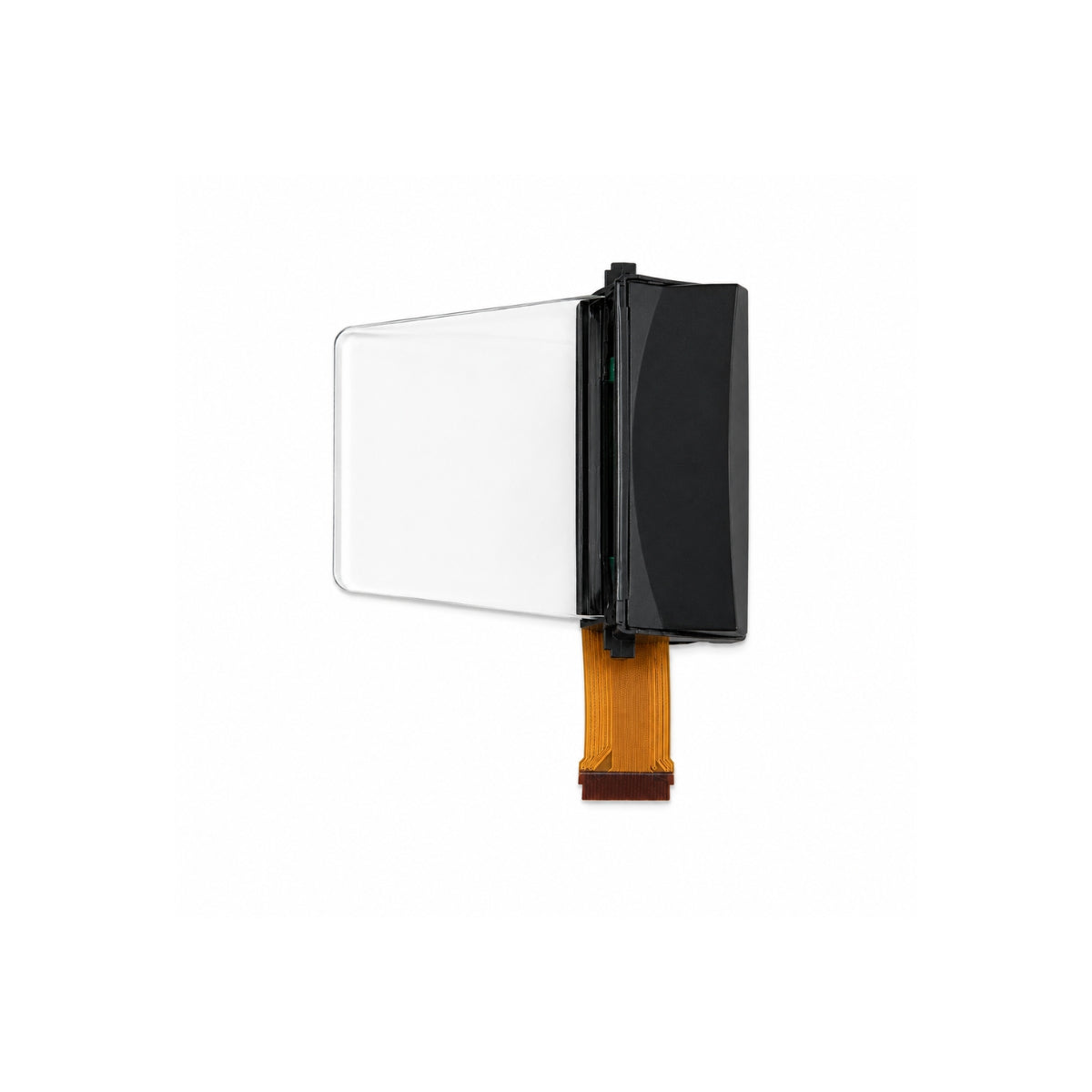
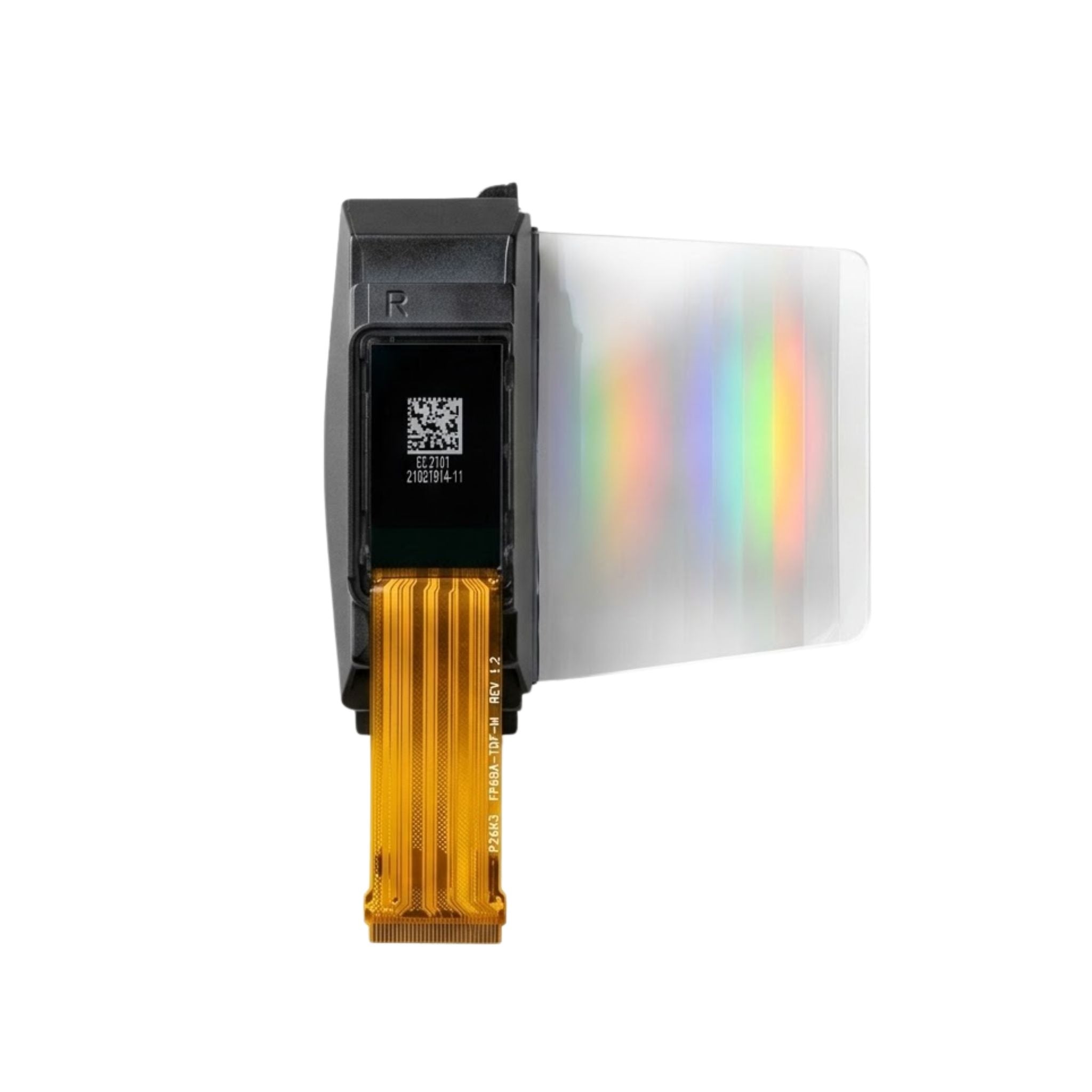


Flexible OLED Displays | Bendable Tech, Durability & Applications
Flexible OLED screens use a polyimide substrate instead of glass, with a thickness of only about 0.03 mm, yet they can withstand over 200,000 repeated folds, and the ultimate bending radius can be as small as 1 mm.
This highly durable bendable technology is currently widely used in foldable smartphones, smart wearable devices, and curved automotive center consoles, completely reshaping the physical form and interactive experience of consumer electronic products.
Bendable Tech
Flexible bendable panels replace traditional 0.5 mm rigid glass with a polyimide (PI) substrate that is less than 0.03 mm thick.
Taking the Samsung Galaxy Z Fold5 as an example, the panel is covered with 30-micron-thick Ultra-Thin Glass (UTG), supporting inward folding with a radius of curvature as low as 1.5 mm.
After removing the backlight module, the total screen thickness is controlled to within 1 mm. The terminal device has an unfolded display area of 7.6 inches and a physical body thickness of 13.4 mm when folded.
At a room temperature of 25°C, the mechanical hinge combined with the flexible panel can withstand 200,000 to 400,000 physical opening and closing cycles.
Surface Material Tactile Feel
The tactile feel of flexible displays is directly determined by 30-micron-thick Ultra-Thin Glass (UTG) or 50-micron-thick Colorless Polyimide (CPI). The UTG produced by Corning undergoes chemical strengthening treatment to increase the surface compressive stress to over 700 MPa. The friction coefficient during finger sliding is maintained between 0.1 and 0.15, which highly overlaps with the experience of traditional 0.5 mm silicate glass. In high-frequency interactions, the surface material needs to be paired with a 25-micron-thick shatterproof protective layer to ensure no physical deformation or optical fingerprint accumulation under an R1.5 bending radius.
Early flexible devices generally utilized Colorless Polyimide (CPI) films produced by Sumitomo Chemical. This high-molecular polymer typically has a thickness of 80 microns and contains a large number of internal imide ring structures, providing extremely high thermal stability and mechanical toughness.
The Young's modulus of CPI films falls within the 3-5 GPa range, and its physical performance leans toward a plastic texture. When users swipe the screen quickly, the resistance felt by their fingers is about 20% higher than on standard glass. Because the intermolecular gaps are relatively large, the surface hardness is only at a 3H level, and rigid objects will leave obvious permanent dents when scratching across it.
To optimize the plastic feel, manufacturers coat the CPI surface with a 10-micron-thick high-hardness nano-coating. This coating contains nano-scale silica particles, boosting light transmittance to over 90% and reducing static friction. However, after enduring 100,000 bends, the edges of this coating are prone to micro-level peeling.
| Tactile Indicators | Colorless Polyimide (CPI) | Ultra-Thin Flexible Glass (UTG) | Traditional Rigid Glass |
|---|---|---|---|
| Physical Thickness | 50-100 microns | 30-50 microns | 400-700 microns |
| Mohs Hardness | 2-3 H | 5-6 H | 9 H |
| Elastic Modulus | 3-7 GPa | 60-75 GPa | 70-85 GPa |
| Static Friction Coefficient | 0.25 | 0.12 | 0.10 |
The logic of material evolution has shifted to ultra-thin glass solutions provided by SCHOTT and Corning. The preparation of UTG involves a thinning process where the raw glass sheet is immersed in a specific acidic etching solution to thin it at a rate of 5 microns per minute. The thickness error of the final product must be controlled within ±2 microns to prevent uneven stress distribution leading to glass breakage during bending.
Because UTG is essentially still an inorganic non-metallic material, it retains the characteristic cool touch and extremely high flatness of glass. When fingers press against the screen, the 30-micron-thick UTG demonstrates extremely strong deformation resistance. Experimental data shows that under a pressure of 10 Newtons, its center displacement is reduced by more than 45% compared to CPI.
This increase in hardness directly improves the stylus interaction experience. The high-rigidity surface allows the stylus tip to apply higher pressure sensitivity levels, shortening the response latency to 2.8 milliseconds. When writing, users do not experience the sluggish "sinking" feeling produced on CPI surfaces, and the physical feedback is crisper and more direct.
- Multilayer Composite Packaging Structure:
-
-
Bottom layer: 100-micron-thick flexible substrate, absorbs vibrations.
-
Middle layer: 30-micron UTG body, provides physical protection and tactile feel.
-
Surface layer: 50-micron specially formulated PET or TPU protective film, prevents shattering fragments from flying.
-
Nano-coating: 50-nanometer-thick oleophobic layer, lowers surface energy, and reduces fingerprint residue.
-
The amount of oil residue on the glass surface directly affects the consistency of the sliding tactile feel. High-end flexible panels use vacuum evaporation to attach an oleophobic nano-coating to the outermost layer. This coating has a water contact angle greater than 115 degrees, and even after 5,000 cycles of steel wool abrasion testing, the contact angle remains above 100 degrees.
When fingers move across the screen, this coating reduces dynamic friction to an extremely low level. In warm and humid environments, skin oils will not adhere over large areas. This physical characteristic ensures that during long-distance gesture operations, fingers can glide at a constant speed without experiencing stuttering caused by sudden localized friction changes.
The reflectivity of the surface material also interferes with the user's sensory tactile perception. By applying an AR anti-reflection coating to the surface, the light reflectance drops from 5% to below 1.2%. The visual transparency reinforces the user's perception of the material's "thinness" and reduces the visual thickness created by inter-layer light refraction.
The physical performance of foldable screens at the hinge is another dimension for evaluating tactile feel. The waterdrop hinge design allows the screen to fold with a curvature of about 3.0 mm, reducing the tensile strain endured by the surface material. In the unfolded state, the tension distribution of the surface material is compensated for by an internal support plate.
The support plate is usually made of carbon fiber or high-strength titanium alloy. The physical support force of this underlying structure gives the surface material a "solid feel." Even though the UTG thickness is extremely thin, users will not feel any gaps beneath the panel while operating it. This tight physical adherence is a distinguishing feature of high-end flexible devices compared to cheaper alternatives.
For extreme environments, the thermal expansion coefficient of the surface material must be strictly matched. The thermal expansion coefficient of UTG is approximately 8.0 x 10^-6/K, which is close to the OLED emissive layer at the bottom. This consistency ensures that when the device moves from a 25°C room to a -20°C outdoor environment, the surface layer won't wrinkle or feel rough due to varying material shrinkage rates.
Currently, laboratories are testing multi-layer polymer heterogeneous solutions. This approach attempts to mix high-hardness polyimide with fluorinated materials. The resulting surface energy is extremely low, providing a Teflon-like smoothness. The elongation at break of this new material exceeds 15%, far higher than UTG, making free bending at larger angles a possibility for the future.
In impact resistance tests, this heterogeneous material can survive a 1.2-meter drop without cracking. Although its surface hardness is slightly lower than glass, through molecular chain cross-linking technology, its Mohs hardness has approached 4H. As synthesis technologies iterate, the surface tactile feel will increasingly approach an all-solid glass experience while maintaining durability.
Each generation of material upgrades is accompanied by improvements in production yield. From an initial 30.5% to currently over 85%, large-scale mass production has lowered the procurement cost of individual UTG sheets. The decline of this cost curve has prompted more mid-range devices to abandon cheap, plastic-feeling materials and popularize flexible solutions with a true glass feel.
Crease Morphology Comparison
After a flexible panel undergoes 200,000 physical folds, the polyimide (PI) substrate and Optically Clear Adhesive (OCA) layer will experience irreversible plastic deformation. Instrument measurements show that an unfolded screen surface retains a physical groove ranging from 50 to 150 microns in depth. The creep characteristics of polymer materials restrict the physical retention rate of deformation generally within a range of 3% to 5%.
The industry uses 3D Profilometers to quantify the physical features of screen creases. The equipment scans the screen surface along the X and Y axes, generating a micron-level topographic map that includes width and depth. Test samples must be kept static in a standard 25°C dust-free test chamber for 24 hours.
-
Valley depth (absolute depth difference, in microns)
-
Peak height (physical protrusion amounts on both sides, in microns)
-
Lateral impact width (physical affected range, in millimeters)
-
Surface reflectivity change (multi-angle measurement percentage)
Early devices generally utilized a U-shaped mechanical hinge structure. When closed, the screen forms an extremely small radius of curvature, with the physical bending radius (R-value) typically compressed to 1.5 mm. The compression of physical space requires the thickness tolerance of internal display components to be strictly controlled within ±5 microns.
Under a U-shaped bend of R1.5, the 30-micron-thick Ultra-Thin Glass (UTG) endures extremely high tensile stress. Empirical data from the Samsung Galaxy Z Fold3 shows that a deep trench about 2.5 mm wide forms in the center of its screen. The metal support plate at the bottom of the panel generates a fatigue displacement of 0.01 mm under alternating stress.
When light hits the 2.5-mm-wide U-shaped crease, high-contrast optical shadows are created due to the valley depth reaching 120 microns. When a user's line of sight deflects by a 15-degree angle, the peak brightness attenuation in the screen crease area exceeds 30%. The stronger the ambient light, the more obvious the vignetting effect caused by the surface optical path difference.
U-shaped structures cannot achieve complete planar bonding in the closed state. The two halves of the device form an angle of about 1.2 to 1.5 degrees, and the physical thickness difference between the thickest and thinnest points reaches 1.5 mm to 2 mm. External dust particles can easily enter the inner screen area through the 1.5 mm physical gap.
Engineers introduced a waterdrop-shaped mechanical structure to change the physical storage trajectory of the panel. A cylindrical physical space with a diameter of about 5.2 mm is reserved inside the hinge. High-precision Computer Numerical Control (CNC) machines polish the internal cavity walls to an Ra 0.8 micron roughness level.
When folded, the screen slides into the reserved cavity, forming a physical arc similar to a waterdrop. The inner folding radius expands from R1.5 to R3.0 or even R4.0, drastically reducing the static bending stress endured by the UTG layer and the underlying emitters.
-
Inner physical compressive stress drops by about 40%
-
Absolute crease depth is controlled within 50 microns
-
Crease lateral width increases to over 5 mm
-
Closed state achieves a 0.2 mm micro-gap
-
Overall physical thickness of the peripheral device is thinned by about 15%
The Google Pixel Fold utilizes a waterdrop hinge made of aerospace-grade high-strength aluminum alloy. A physical transmission system containing up to 65 interlocking micro metal parts evenly distributes the tension during screen folding and unfolding to the edge-fixing frames of both side panels.
After the waterdrop structure is unfolded, the physical shape of the crease transitions from narrow and deep to wide and shallow. The lateral impact width expands from 2.5 mm to about 6.5 mm, and the maximum vertical physical drop at its deepest point shrinks to under 45 microns. The slope changes between peaks and valleys become much gentler.
The reduced vertical drop changes the physical refraction path of surface light. Under a 500-nit screen backlight, the optical shadow edges created by the 6.5 mm wide shallow groove present a gradual transition, vastly decreasing the visual sense of dropping and abruptness.
Long-term high-frequency use alters the physical damping coefficients of parts inside the mechanical hinge. After 300,000 opening and closing tests, the physical torque of the hinge system containing Liquidmetal components will drop by about 8.5%.
This torque reduction means that when the screen is fully unfolded at 180 degrees, the underlying support plate cannot provide 100% of the initial physical tension. Physical test data for the Motorola Razr Plus indicates that post-test crease depth increases by about 15 microns, and the rebound time delays by 0.2 seconds.
The Optically Clear Adhesive (OCA) at the bottom of the panel experiences physical polymer creep as usage time extends. The 25-micron-thick OCA layer, after long-term compression, cannot fully rebound to its original thickness the instant the screen unfolds.
To combat OCA creep, LG Display developed a high-modulus acrylate pressure-sensitive adhesive. After continuous storage for 240 hours in an environmental chamber at 85°C high temperature and 85% relative humidity, the physical deformation rate of the new adhesive stays strictly below 2%.
-
High-modulus OCA (Optically Clear Adhesive) layer
-
Carbon fiber mesh physical support plate
-
SUS304 stainless steel metal skeleton
-
Micro non-Newtonian fluid buffer layer
The carbon fiber mesh support plate is attached directly beneath the OLED emissive substrate. The 0.1 mm thick carbon fiber layer, woven in a grid pattern, can conduct and disperse 7 Newtons of physical stress from localized pressing across the entire display panel within 2 milliseconds.
Twelve micro-springs on the stainless steel skeleton provide adaptive physical rebound force. When a user unfolds the screen rapidly at speeds over 30 cm/s, the spring group generates reverse physical damping at the final 0.5-degree angle, preventing over-stretching of the UTG protective layer.
Measuring physical data across different forms reveals the current engineering manufacturing limits. Completely eliminating the tens-of-microns of physical deformation that flexible polymers endure after bending exceeds the tensile limits of molecular chains in current materials science.
For the next five years, terminal devices will continue relying on waterdrop-shaped mechanical transmissions to weaken physical creases. By increasing the proportion of titanium alloy parts inside the hinges, the physical weight of internal mechanical structures will be further slashed by 20 to 35 grams.
Environmental Temperature Effects
OLED panels exhibit significant differences in physical performance under varying thermodynamic conditions. When the environment drops from a room temperature of 25°C to -20°C during a Minnesota winter, the Young's modulus of the polymer substrate spikes dramatically. Testing shows that the stiffness of polyimide (PI) film at -20°C is about 3.5 times higher than at 25°C. The physical pulling force required to bend the screen jumps from 0.8 Newtons to 2.9 Newtons.
The nonlinear spike in stiffness forces mechanical hinges and the Thin Film Encapsulation (TFE) layers to bear shear stresses several times greater. In extreme cold outdoor tests in Helsinki, Finland, when the device unfolds rapidly at 30 cm per second, the 30-micron-thick UTG surface easily hits its brittle fracture critical point. Corning laboratory data shows that glass impact resistance in sub-zero environments drops by about 18%.
Environmental chamber testing standards require flexible panels to complete 30,000 mechanical open-and-close cycles at an R1.5 radius continuously in a -20°C incubator, with the TFE inorganic layer showing no micro-cracks wider than 0.5 microns.
Extreme cold conditions similarly weaken the physical adhesion of Optically Clear Adhesive (OCA). When below 0°C, the movement of internal polymer segments within the 25-micron-thick OCA layer essentially freezes. The adhesive transitions from a highly elastic rubbery state to a glassy state, with its storage modulus G' surpassing 1000 kPa, making the folded areas of the screen prone to micron-level inter-layer delamination bubbles.
The mechanism by which high temperatures destroy multilayer composite structures is completely different. Under outdoor sun exposure in an Arizona summer reaching 45°C, mismatched Coefficients of Thermal Expansion (CTE) among internal panel components become prominent. The expansion rate of the PET protective film is about 20 ppm/°C, whereas the underlying inorganic emissive layer is only 3 ppm/°C.
-
When the ambient temperature reaches 50°C, OCA colloidal viscosity drops by 30%, creating physical risks of localized adhesive overflow.
-
After a 120-hour extreme bake at 65°C, the optical degradation rate of the luminescent organic materials increases sharply.
-
High temperatures thin the lubricating grease inside mechanical hinges, dropping torque damping by about 12%.
-
A thermal stress slip of 0.02 mm occurs between the metal support plate and the PI substrate.
Engineers counteract physical deformation by introducing heterogeneous materials with low thermal expansion coefficients. The volumetric change rate of new-generation titanium hinges between -30°C and 70°C is strictly kept within 0.005%. Display panel manufacturers precisely shave the thickness of alternating organic buffer layers within the TFE to 4.5 microns, thereby reducing overall thermal accumulation.
In a "Double 85" test (85°C and 85% relative humidity), qualified flexible OLED modules must maintain 240 hours with zero pixel failures, and full-screen brightness non-uniformity must be controlled within a 5% tolerance range.
The Power Management Integrated Circuit (PMIC) within the operating system intervenes in the screen's physical state in real time based on data from NTC thermistors. When sensors detect localized panel temperatures exceeding 42°C, the system forces peak brightness down from 1200 nits to 800 nits. The refresh rate is locked from 120Hz down to 60Hz, reducing the heat output of the light-emitting diodes.
The additional thermal load introduced by 45W fast-charging processes similarly tests the thermal dissipation physical architecture of flexible screens. Dual-battery cells in foldable devices are distributed on both sides of the hinge, and heat is rapidly conducted to the screen backplate through high-thermal-conductivity graphite sheets. The thermal conductivity of these graphite sheets is up to 1500 W/m·K, ensuring that heat does not form localized hotspots in the R3.0 bending zones.
In environments below -5°C, the device system triggers reverse physical protection mechanisms. Some models utilize minute battery currents to generate Joule heating in the metal grid beneath the panel. Before a user attempts to forcefully unfold the screen, the system raises the local temperature of the bending area to above 5°C within 3 seconds, restoring the physical flexibility of the polymer materials.
-
At -10°C, the motherboard outputs 0.5W of auxiliary electric power to micro-heating wires in the hinge area.
-
The UI interface prompts users to delay mechanical operations by 2 seconds when the screen is closed.
-
The viscosity of the non-Newtonian fluid inside the dampers is monitored and quantified in real-time by temperature sensors.
Frequent alternation between extreme heat and extreme cold accelerates the physical fatigue cycle of screen components. Thermal shock testing requires devices to undergo 100 rapid switching cycles between severe temperature differences of -40°C to 85°C. Each cycle involves dwelling for 30 minutes at extreme temperatures, followed by a drastic temperature jump of over 100°C completed within 5 minutes.
Test samples that have survived rigorous thermal shock cycles experience an optical degradation in the degree of polarization of the polarizer by about 0.8%. When light passes through a damaged polarizer, a slight Color Shift occurs. Measuring Δu'v' color deviation values on a white screen shows an increase from a factory 0.003 to around 0.007.
High-precision colorimeter records show that after 500 thermal shock cycles, the degradation rate of blue OLED pixels is about 11% higher than red pixels, shifting the screen's color temperature toward warmer tones by about 300K.
As the complex physical multilayer structure is pulled by temperature cycling, interfacial stress continuously accumulates at each layer. To delay interfacial fatigue, manufacturers spray a 2-nanometer-thick silane coupling agent between the PI substrate and the glass backplate. This chemical forms covalent bonds at the interface, rigidly boosting the peel strength from 4 N/cm to 7.5 N/cm.
Environmental compensation algorithms provided by Texas Instruments (TI) are burned into independent Display Driver ICs. Based on physical ambient temperature data stepped by 1 degree Celsius, the algorithm fine-tunes the Gamma Curve of every pixel 120 times per second. Amid extreme temperature fluctuations, the physical output error for visual brightness is strictly confined to within 2.5 nits.
Durability
In the eyes of consumers, the durability of flexible OLEDs is measured by three metrics: bending lifespan, scratch resistance, and protection ratings.
Mainstream panels support 200,000 to 400,000 mechanical folds at 25°C, translating to 5 to 10 years of use if folded 100 times a day.
The surface protective material has been upgraded from Polyimide (CPI) plastic with a Mohs hardness of 2 to Ultra-Thin Glass (UTG, approx. 30 microns thick) with a hardness of 5, capable of resisting the friction of coins in pockets.
Some models introduce internally potted sealing structures, offering IP48 dust and water resistance, surviving submersion in 1.5 meters of still water for 30 minutes without failure.
Daily Scratch Resistance
The Mohs hardness of human fingernails is roughly 2.5, copper coins in pockets reach a hardness of 3, and keys made of stainless steel typically fall between 4 and 4.5.
The primary component of fine dust suspended in the air and settling on screens is quartz sand, boasting a Mohs hardness of 7. Traditional candybar phone screens use aluminosilicate glass between 0.5 mm and 0.7 mm thick, with a factory Mohs hardness solidly above 6.
To achieve a 180-degree physical bend, the physical thickness of the surface protection material for flexible OLED panels is restricted to under 50 microns. Material manufacturing processes have made compromises on physical metrics between thickness and hardness.
Early flexible screen surfaces used Colorless Polyimide (CPI) film. CPI thickness is typically set at 50 microns, and its pencil hardness test only scores 2H, converting to a Mohs hardness between 2 and 3.
When a user's finger carrying fine sand grains slides across a CPI screen, tiny physical scratches about 0.01 mm deep are produced. In laboratory tests using a 0.1 mm probe with 500 grams of pressure applied, permanent, non-rebounding dents are left on the CPI surface.
Material suppliers subsequently introduced Ultra-Thin Flexible Glass (UTG) to the production lines. The raw UTG sheets provided by some manufacturers are merely 30 microns thick, but after chemical strengthening, their Mohs hardness jumps to around 5.
This thirty-micron-thick UTG fends off everyday friction from coins and keys, boosting the screen's anti-scratch index by approximately 1.5 times. Since UTG is extremely thin and susceptible to edge micro-cracking, manufacturers do not let users touch the pure glass surface directly.
| Cover Layer Material Name | Physical Thickness Quantification | Mohs Hardness Scale | Pencil Hardness Test | 500g Steel Wool Abrasion Test |
|---|---|---|---|---|
| Candybar Aluminosilicate Glass | 600 microns | 6.5 | 9H | Over 10,000 cycles, no scratches |
| CPI Polyimide Plastic | 50 microns | 2.5 | 2H | Obvious abrasions after 500 cycles |
| UTG Ultra-Thin Flexible Glass | 30 microns | 5.0 | 5H | Fine scratches after 5,000 cycles |
Above the UTG, factories use Optically Clear Adhesive (OCA) to laminate a 20-micron-thick polyester (PET) protective film. The thickness of the OCA glue is fixed at 25 microns; its role is to bond and absorb 60% of the downward mechanical stress generated when external objects strike.
The outermost PET protective film is coated with a Hard Coating resin layer that is 2 to 3 microns thick. After UV irradiation curing, this hardened layer pushes the outermost pencil hardness from the PET's native 3H up to 4H.
Manufacturing workshops use a Taber Abraser to calibrate data for this hardened resin. A test probe wrapped in #0000 industrial steel wool and bearing a 1 kg vertical weight performs mechanical reciprocating friction on the screen surface.
A PET protective film with a high-quality hardened layer can endure 5,000 reciprocating friction cycles with steel wool, keeping surface haze increase under 1%. Yet, once scratched by quartz sand exceeding a Mohs hardness of 5, this PET protective film will sustain irreversible scratches deeper than 0.02 mm.
Repair technicians use a heating platform to raise the surface temperature to 60°C, softening the 25-micron-thick OCA glue, enabling them to independently detach and replace the scratched PET film.
Oils and sweat secreted by the skin of user fingertips form smudges on the screen and increase surface frictional resistance. A rise in the surface friction coefficient requires fingers to exert greater shear force during swiping operations, escalating the physical risk of fine grit scratching the screen.
An anti-fingerprint (AF) oleophobic layer is deposited onto the outermost PET protective film via vacuum evaporation. The physical thickness of the oleophobic layer is between 10 and 20 nanometers; it is composed of fluorosilane compounds and has extremely low surface tension.
Laboratories measure the liquid-repellent capability of the oleophobic layer using a water contact angle goniometer. Dropping two microliters of purified water on a brand-new screen surface yields an angle between the water droplet edge and the screen surface of over 115 degrees, presenting a plump hemispherical bead.
After completing 3,000 back-and-forth wipes with a cleanroom wiper, qualified flexible screen oleophobic layer water contact angle data remains above 105 degrees. The low surface tension makes it difficult for dust and fine sand to adhere to the screen, allowing users to blow away 60% of micro-particles with air-blowing tools.
Certain panel models add a 5-micron-thick explosion-proof polyurethane (TPU) coating beneath the PET film. Left undisturbed at 25°C room temperature for 24 hours, this material achieves a 90% recovery rate for minute plastic deformation dents shallower than 0.005 mm.
The surface anti-scratch structure is comprised of 30-micron UTG, 25-micron OCA, 20-micron PET, and several microns of chemical coatings. The total thickness of the entire stack is about 80 microns, delivering a physical friction defense layer while maintaining a 1.5 mm bending curvature.
Screen Bending Lifespan
When a flexible OLED panel undergoes a 180-degree closure, the entire multi-layered stack experiences violent mechanical deformation on a physical level. The Thin Film Encapsulation (TFE) layer positioned outside the central bending axis endures mechanical tensile stress pulling outwards.
Conversely, the Low-Temperature Polycrystalline Oxide (LTPO) thin-film transistor backplane located inside the central axis suffers inward compressive stress. Engineers precisely calculate the position of the stress-neutral plane on the 50-micron-thick flexible substrate, placing the fragile organic light-emitting pixels in a zero-stress physical zone where tension and compression cancel each other out.
Panel manufacturing plants calibrate the finished products' mechanical fatigue limits using dynamic bending test machines. A mechanical arm opens and closes the test panel repeatedly along a set physical track at a fixed frequency of 30 to 60 times per minute.
The physical parameters of the test environment adhere to strict international industrial standards:
-
Room temperature set at a standard constant 25 degrees Celsius
-
Environmental relative humidity maintained at 50%
-
Testing equipment opening/closing angles range from 180 to 5 degrees
-
Internal radius of curvature in the closed state is 1.5 mm
-
Continuously executing 200,000 physical folding motions
After 200,000 room-temperature bending cycles, physical delamination occurs between the material layers of the screen. Optically Clear Adhesive (OCA) ranging from 25 to 50 microns thick bears the physical task of absorbing mechanical stress.
Experimental data reveals that flexible OCA with an elastic modulus between 0.05 and 0.1 Megapascals (MPa) can undergo 200% physical elongation when bent. The high elongation rate absorbs 90% of the slip displacement stress between layers, preventing hard friction between the UTG above and the polarizer below.
If the OCA's elastic recovery rate drops below 95%, the glue layer, having endured tens of thousands of squeezes, will develop micro-bubbles on the order of 0.01 mm. These bubbles alter light refraction, causing users to notice obvious reflective ripples or dark bands of brightness at the screen's crease.
Drops in external environmental temperatures alter the physical extensibility of polymer materials. When the test chamber temperature plummets to negative 20 degrees Celsius, the OCA glue's elastic modulus rises exponentially, and the material's physical properties shift from a highly elastic rubbery state to a brittle glassy state.
In extreme cold, the panel's tensile resistance plummets precipitously, and testing equipment passing standards are downgraded to 30,000 continuous bends. If forced to close at a speed of 1 per second at negative 20 degrees, the risk of micro-cracks forming on the surface UTG jumps roughly fourfold.
High temperature and high humidity environments likewise test the physical bonding stability of multilayer materials. Panels are placed in a 60-degree Celsius, 90% relative humidity environmental aging chamber for up to 240 hours.
After the constant-temperature aging test concludes, quality inspection probes scan multiple physical metrics:
-
Water vapor penetration depth at the TFE film along the screen's edge
-
Yellowness Index indicating OCA transparency degradation across layers
-
Brightness decay rate of organic light-emitting pixels when illuminated
-
Physical warping height of materials around the edges of the bending zone
The mechanical structure of the Hinge determines the exact numerical values of bending stress borne by the screen while closed. Early U-shaped hinges forced the panel to fold completely in half upon closing, shrinking the internal bend radius to under 1 mm and exerting immense localized compressive stress on the TFE and LTPO layers.
Waterdrop-shaped mechanical hinges free up an internal physical cavity about 5 mm wide and 3 mm deep for the panel when the device is closed. Guided by the mechanical structure, the panel forms a waterdrop-like physical arc with a radius of curvature of 2.5 to 3.0 mm inside the cavity.
By expanding the curvature radius from 1 mm to 3 mm, the numerical value of mechanical stress on the panel drops geometrically by about 60%. More than 100 micro metal cams and spring dampers inside the hinge guarantee that the panel receives uniform upward support forces throughout the 180-degree unfolding process.
Crease depth is a data metric quantifying the degree of physical deformation a panel suffers after long-term bending. After undergoing 200,000 opening/closing cycles, engineers use a 3D surface profilometer to conduct a micron-level topological scan of the central bending area.
In a brand-new state, surface flatness error is within 0.01 mm. For waterdrop hinge panels subjected to 200,000 mechanical fatigue tests, their central physical indentation Depth data is strictly suppressed below 0.15 mm.
The indentation physical Width typically spreads horizontally for 5 to 7 mm. When the screen is fully lit and reaches 400 nits of display brightness, a gentle 0.15 mm deep crease reduces visual light interference to human eyes by approximately 80%.
Crease physical data is influenced by the synergistic action of several mechanical components:
-
Thickness values and chemical strengthening processes of raw UTG glass
-
Mesh slitting density of the supporting metal plate beneath
-
The lateral tensile poundage exerted outwards by the hinge cams
-
The time discrepancy for releasing residual stress among internal organic material layers
The physical thickness of the metal backplate supporting the bottom of the panel is normally 150 microns. To accommodate a 3 mm radius waterdrop bend, high-precision laser cutters punch thousands of dense mesh slits barely 0.05 mm wide across the bending zone of the backplate.
These hollowed-out slits account for 40% to 50% of the total area of the metal plate in the bending zone. The grid structure eliminates the rigid physical resistance of the stainless steel material, allowing the 150-micron-thick baseplate to follow the 30-micron-thick UTG above it to complete 300,000 physical reciprocating motions without fracturing.
Applications
DSCC data shows that global foldable smartphone shipments reached 15.8 million units in 2023.
Panels replacing rigid glass substrates with polyimide films only 10 to 50 microns thick cut the weight of the device's display module by about 30%.
Users can now fold a 7.6-inch screen with an unfolded thickness of 5.5 mm to pocket it, or command a 65-inch television screen to roll up and retract into its base within 10 seconds.
Mobile Device Screens
The flexible OLED panels mass-produced by Samsung Display usually have a thickness between 10 and 50 microns. Compared to 0.5-mm-thick traditional rigid glass substrates, introducing PI materials reduces the overall physical weight of the screen module by approximately 30%. The panel possesses stronger deformation absorption capacity when subjected to external impacts.
The screen bears immensely high tensile and compressive stress at the fold. Engineers employ a waterdrop-style physical hinge design to alleviate internal panel stress. Taking the Google Pixel Fold as an example, the gap in the closed state is mechanically compressed to under 0.1 mm. The internal hinge houses over 180 micro metal components, supporting a repeated folding state with a bending radius (R-angle) as tight as 1.5 mm.
The panel surface is topped with a physical protective layer resisting fingerprint scratches and daily friction wear. Samsung introduced Ultra-Thin Flexible Glass (UTG) in its Z Fold and Z Flip series devices. The UTG layered above the emissive material is a mere 30 microns thick. Thanks to chemical strengthening immersion processes, it can withstand over 200,000 mechanical bends at room temperature without suffering micro-fractures.
Luminous efficiency and power consumption management are critical parameters in mobile device hardware engineering. The internal screen of the Motorola Razr Plus uses a 6.9-inch pOLED panel, with local peak brightness hitting 1400 nits. Integrated with an LTPO (Low-Temperature Polycrystalline Oxide) backplane, the screen refresh rate can automatically downclock between 1Hz and 165Hz depending on the displayed content, prolonging battery life.
From top to bottom, the panel's cross-section features a multi-layered structure of high-precision laminated films:
-
Protective Coating: 0.05 mm PET material, preventing fingerprint and oil buildup.
-
Flexible Glass (UTG): 30 microns thick, providing surface hardness resistance.
-
Polarizer: About 50 microns thick, cutting down ambient light reflectivity.
-
Touch Layer (Y-OCTA): Less than 10 microns thick, attached to the encapsulation layer.
-
Polyimide Substrate: Replaces silicate glass, delivering fundamental physical flexibility.
Industrial evolution in screen form factors has not stopped at half-fold designs. Motorola's Rizr rollable concept phone sports a 5-inch flexible pOLED display panel. A double-click on the physical side button prompts the flexible component at the bottom of the screen to slide up and unroll along rollers on the back. The entire mechanical extension process takes roughly 3 seconds, increasing the screen's physical area to 6.5 inches.
Wrist-worn wearables demand that screens closely contour the natural geometry of the human arm. The Apple Watch Ultra adopts a 1.92-inch LTPO OLED flexible display. The edge regions of the panel are processed using 3D thermal bending, meshing seamlessly with the exterior sapphire glass dial. Its peak brightness reaches 3000 nits, ensuring readable data even under direct, intense outdoor sunlight.
Flexible substrate materials allow panel edges to bend backward 180 degrees, hiding driver IC chips that would otherwise consume frontal area. Apple's LIPO (Low Injection Pressure Overmolding) process trims the watch's physical bezel width to 1.5 mm. The emissive display area pushes further toward the metal casing edges, yielding around 20% extra pixel interactive space for the OS interface.
Standard technical specs for wearable flexible screens are set as follows:
-
Curvature Radius: Typically ranging between 20 mm and 50 mm.
-
Pixel Density: Kept within a range of 326 ppi to 460 ppi.
-
Encapsulation Thickness: Thin Film Encapsulation (TFE) inorganic layer under 5 microns.
-
Refresh Regulation: Supports 1Hz low-frequency refresh during Always-On Display (AOD).
Panel R&D labs are testing next-generation flexible OLED materials boasting physical stretchability. LG Display has built a prototype testing screen underpinned by a special silicone polymer substrate. The internal light-emitting diode arrays are linked by S-shaped micro metal wires. When the screen experiences pulling forces on both ends, the wires extend like mechanical springs, unlocking a 20% diagonal physical extension over its original 12-inch footprint.
Head-mounted spatial computing devices are also importing flexible OLED semiconductor materials en masse. The Apple Vision Pro's binocular display modules run on custom Micro-OLED panels. 23 million RGB pixels are densely packed onto a silicon-based wafer no larger than a postage stamp. Single-eye resolution rockets past the 4K mark, and the panel refresh rate sits in the 90Hz to 100Hz band, quelling the visual motion sickness caused by lag during rapid head turns.
Traditional LCD vs. Flexible OLED
Traditional LCD panels require an LED backlight module around 2 to 5 mm thick installed at the bottom. Light traverses through a light guide plate, lower polarizer, and color filters before hitting the human eye. In contrast, flexible OLEDs utilize a polyimide film only 10 to 50 microns thick as a substrate, with each individual pixel emitting light autonomously when powered on.
The absence of a backlight layer and a rigid glass substrate keeps the total physical thickness of flexible OLED panels generally below 0.5 mm. Even with extreme thinning treatments, traditional LCD panel minimums struggle to breach the 2 mm physical boundary. In mobile hardware, a 6.7-inch LCD screen module weighs about 45 grams, whereas an identically sized flexible OLED module is around 30 grams.
The physics of these emissive mechanisms translate into an order-of-magnitude difference in contrast ratio metrics. When an LCD shows black imagery, the backlight module stays continuously lit, and the liquid crystal molecules cannot block 100% of the light. Screen edges commonly suffer light bleeding from 0.1 to 0.5 nits, resulting in typical contrast ratios bounded between 1000:1 and 3000:1.
When flexible OLEDs display pure black content, power to the corresponding pixels is severed entirely. Switched-off pixels bring the OLED panel's black luminance infinitely close to 0 nits. Thus, static contrast values skyrocket past 1,000,000:1, securing industry certifications like VESA DisplayHDR True Black.
Premium LCD panels coupled with quantum dot film tech can cover 95% of the DCI-P3 color gamut. LG Display's flexible OLED panels, unburdened by color filter light losses, can achieve 100% DCI-P3 gamut coverage.
Physical and Optical Parameter Comparison of Display Panels
| Parameter Dimension | Traditional LCD Panel | Flexible OLED Panel | Data Difference / Unit |
|---|---|---|---|
| Light-emitting Mechanism | Unified LED backlighting | Independent pixel self-emission | None |
| Average Module Thickness | 2.5 mm - 5.0 mm | 0.1 mm - 0.5 mm | Reduced by ~80% |
| Static Contrast Ratio | 1,000:1 - 3,000:1 | >1,000,000:1 | Over 300 times higher |
| Typical Response Time | 5 ms - 10 ms | 0.1 ms - 1 ms | Shortened by tens of times |
| Panel Form Factor Limit | Rigid flat or slight curve | Foldable at 1.5 mm radius | Flexible/Rigid |
Esports and high-framerate video playback levy millisecond-level demands on picture response times. The liquid crystal molecules in LCD panels physically twist under electric fields, a process typically consuming 5 to 10 milliseconds. The edges of fast-moving on-screen objects exhibit motion blur visible to the naked eye.
The electroluminescent reaction in flexible OLEDs takes place at a microscopic electronic tier, devoid of any mechanical twisting phase. The Gray-to-Gray (GtG) response time—switching a pixel from gray to white—is crushed to under 0.1 ms. Dell's AW3423DW monitor showcases a tested GtG response time of a mere 0.1 milliseconds.
Liquid crystal molecule alignment restrains the effective viewing angle of LCDs. Moving beyond a 30-degree offset from the dead-center axis causes light penetrating the films to refract awry. IPS LCD screens suffer an approximately 20% drop in color saturation and over 30% in brightness decay at a 45-degree angle.
Self-emissive qualities bless flexible OLEDs with a nearly 180-degree viewing envelope. Because organic luminescent materials rest on the panel's surface, light radiates outwards in all directions. Inspecting a Samsung device screen at a steep 75-degree angle yields a brightness decay capped below 5%, alongside a D65 standard white point color shift value of less than 0.02.
Power consumption disparities demonstrate non-linear characteristics tied to displayed content. Firing up an LCD monitor means the backlight tubes maintain a fixed brightness output, with power draw hanging steadily near maximum wattage. A 27-inch 4K LCD under typical workloads pulls around 35 watts.
Flexible OLED panels strictly ration power based on illuminated pixel count. In Dark Mode, pixels painting black backgrounds drift into unpowered sleep. Interfaces sporting 50% black content spare roughly 40% battery life compared to all-white GUIs. However, bombarding a full-screen pure white webpage forces millions of pixels to fire intensely, pushing power consumption past equivalently sized LCD units.
The physicochemical longevity of organic emissive materials constitutes the materials-science Achilles' heel for flexible panels. Blue OLED materials decay about 20% faster than their red and green counterparts. Static display of identical system icons for over 500 hours leaves localized pixels with permanent brightness degradation, inducing visual burn-in ghosts.
Inorganic LED backlights inside classic LCDs demand 50,000 hours of normal operation before dropping to 50% of initial brightness. Panel makers deploy pixel-shifting algorithms to buy OLED panels more life. LG panels imperceptibly nudge the entire frame by 1 to 2 physical pixels in randomized directions every few minutes.
Automatic Brightness Limiter (ABL) algorithms scrutinize white-light distribution ratios. If massive, static high-brightness white zones crop up, circuitry intervenes within 2 seconds, throttling full-screen peak brightness from 800 nits down below 150 nits. Undervolting decelerates organic material aging, delaying the onset of irreversible burn-in damage.
Large Size Displays
Large panel footprint areas are dozens of times the size of mobile devices, yet yields have climbed past 80% over the last three years. LG Display carves 65-inch panels from Gen 8.5 glass substrates. Stripped of the rigid glass, the base relies on a polyimide (PI) film support measuring under 1 mm thick. This liberates the entire screen panel from the physical shackles of traditional TV backplates.
The screen spools into an aluminum base unit wrapped around an axis with a 3 mm radius. Two micro-brushless motors inside deal out equalized tension; an unfurling ascent sequence burns 10 seconds. Material fatigue runs indicate the rollable structure endures 50,000 physical ascents and descents without pixel fractures or bright spots.
Personal computing hardware is witnessing crossover form factors. The Asus Zenbook 17 Fold houses a 17.3-inch, 4:3 ratio flexible OLED touch panel. Resolution runs at 2560x1920; fully flattened, caliper measurements log an 8.7 mm profile. Paired with a unibody magnesium alloy chassis, gross physical weight holds near 1.5 kilograms.
-
Desktop Mode: A rear kickstand props the 17.3-inch canvas upright, usually viewed from 60 cm away.
-
Laptop Mode: Folding 120 degrees along a central mechanical hinge partitions the lower half into a 12.5-inch viewing zone.
-
Durability Specs: The high-strength carbon fiber hinge survives industrial torture testing for 30,000 physical opens/closes sweeping 0 to 180 degrees.
Esports competitors demand strict physical parameters concerning viewing-distance discrepancies near screen borders. Corsair, alongside LG, rolled out the Xeneon Flex 45-inch flexible OLED monitor. Its flanks mount mechanical retractable handles. When users tug from both sides, the flat panel arches into an 800R radius curve inside 3 seconds, reeling screen edges inward roughly 8 cm closer to the eyes.
The panel blasts a 240Hz physical refresh rate. Inserting Micro Lens Array (MLA) tech bends and funnels each pixel's light, smashing peak brightness beyond 1000 nits. Gray-to-Gray (GtG) response dips to 0.03 milliseconds, erasing smearing artifacts trailing fast-moving imagery.
Commercial retail spaces are rolling out massive OLED screens mixing transparency and flexibility. A 55-inch transparent flexible OLED panel ditches the opaque backplate and lower polarizer. Pushing an optical transmittance of 38%, light slices through the screen with razor-thin losses. Boutiques laminate these to curved storefront glass windows, broadcasting dynamic 400-nit advertising assets.
-
Curved Splicing: Single film panels accommodate physical bends up to 1000R, draping cylindrical architectural pillars.
-
Seamless Bezels: The four-sided border encapsulation width is squeezed under 2 mm, supporting sprawling 4x4 matrix video walls.
-
Weight Data: A 55-inch solo panel tips scales near 6 kg, lightening load-bearing requirements for ceiling suspension rigs.
Aerospace manufacturers are validating the engineering viability of flexible displays inside cabin entertainment systems. Boeing 777X First Class conceptual suites inlay wrap-around curved OLED screens. 4K-resolution flexible panels hug the contoured aerodynamic partitions of seatbacks. Excising the bulky LCD backlight module lops nearly 40% off the physical weight per single display unit.
The manufacturing expenses of large-format flexible OLEDs correlate heavily with emissive material deposition workflows. Japan's JOLED developed inkjet printing techniques, displacing power-hungry Vacuum Thermal Evaporation (VTE). Pinpoint-accurate nozzles squirt 10-picoliter droplets of liquid emissive materials directly into designated pixel wells on the flexible substrate. Material physical utilization rates spike to 90%, fueling production lines spanning 10-inch to 65-inch canvases.
Generation 8.5 factories boast mother glass sizes of 2200 mm by 2500 mm. Inkjet rigs run in room-temperature, standard-pressure environments, skipping the costly alignment of Fine Metal Masks (FMM). Consequently, single-sheet manufacturing costs for a 65-inch panel shrink by approximately 15%.
Physical durability vetting concludes with oxygen and moisture barrier inspections prior to large panel shipment. Flexible panels endure 500-hour stints inside chambers cranked to 80 degrees Celsius and 85% relative humidity. Large-panel Thin Film Encapsulation (TFE) alternates stacked inorganic and organic strata; tallying under 10 microns total, it chokes Water Vapor Transmission Rates (WVTR) below a staggering 0.000001 grams per square meter per day.
Read more

If extreme cost-effectiveness and battery life are paramount, black and white LCD is the first choice. Its cost is usually only about 30% of that of a color screen, power consumption is as low as t...

E-paper is the preferred choice for battery-powered devices, with its static display power consumption as low as 0W, consuming power only during screen refreshes. If high-contrast luminescence is r...
Leave a comment
This site is protected by hCaptcha and the hCaptcha Privacy Policy and Terms of Service apply.