

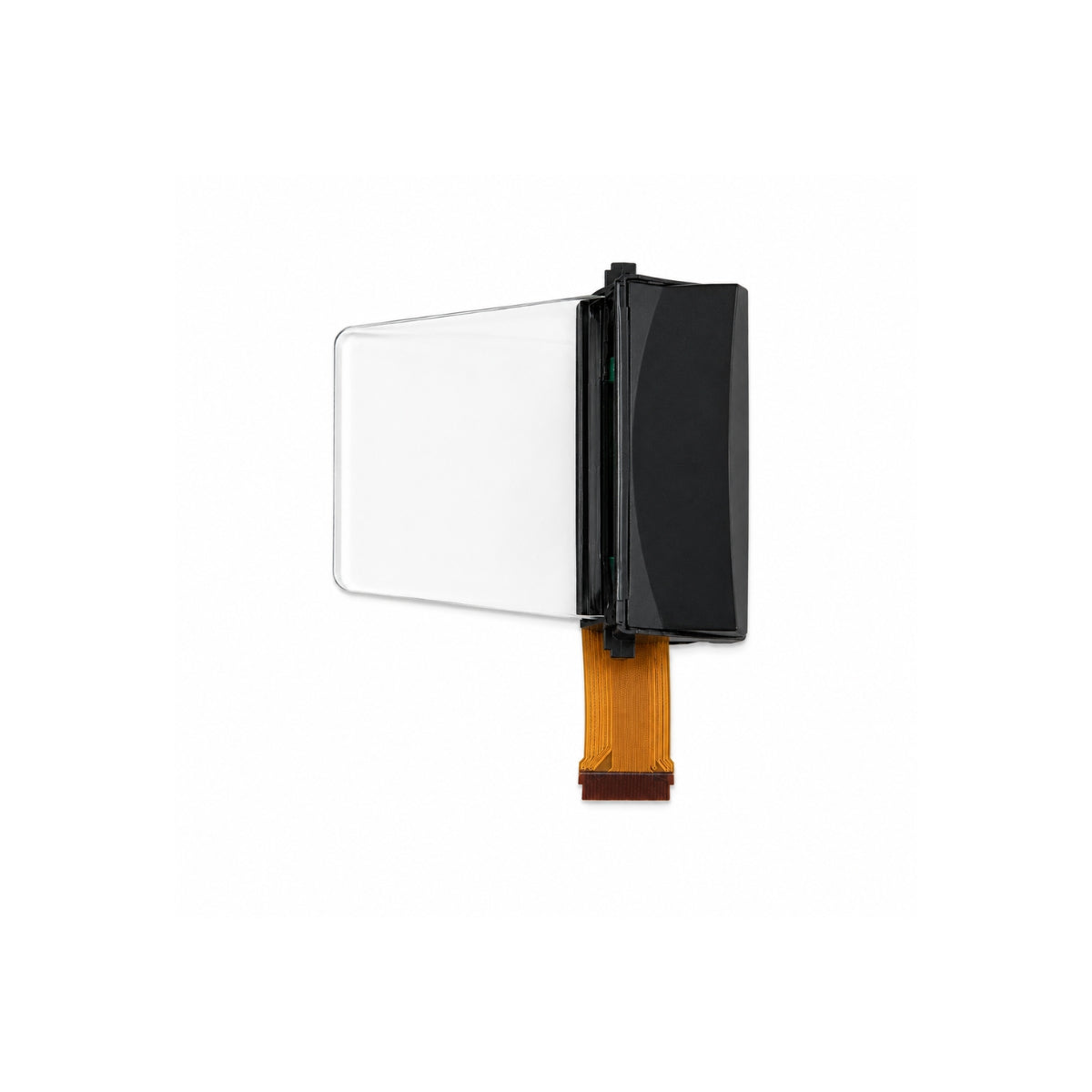
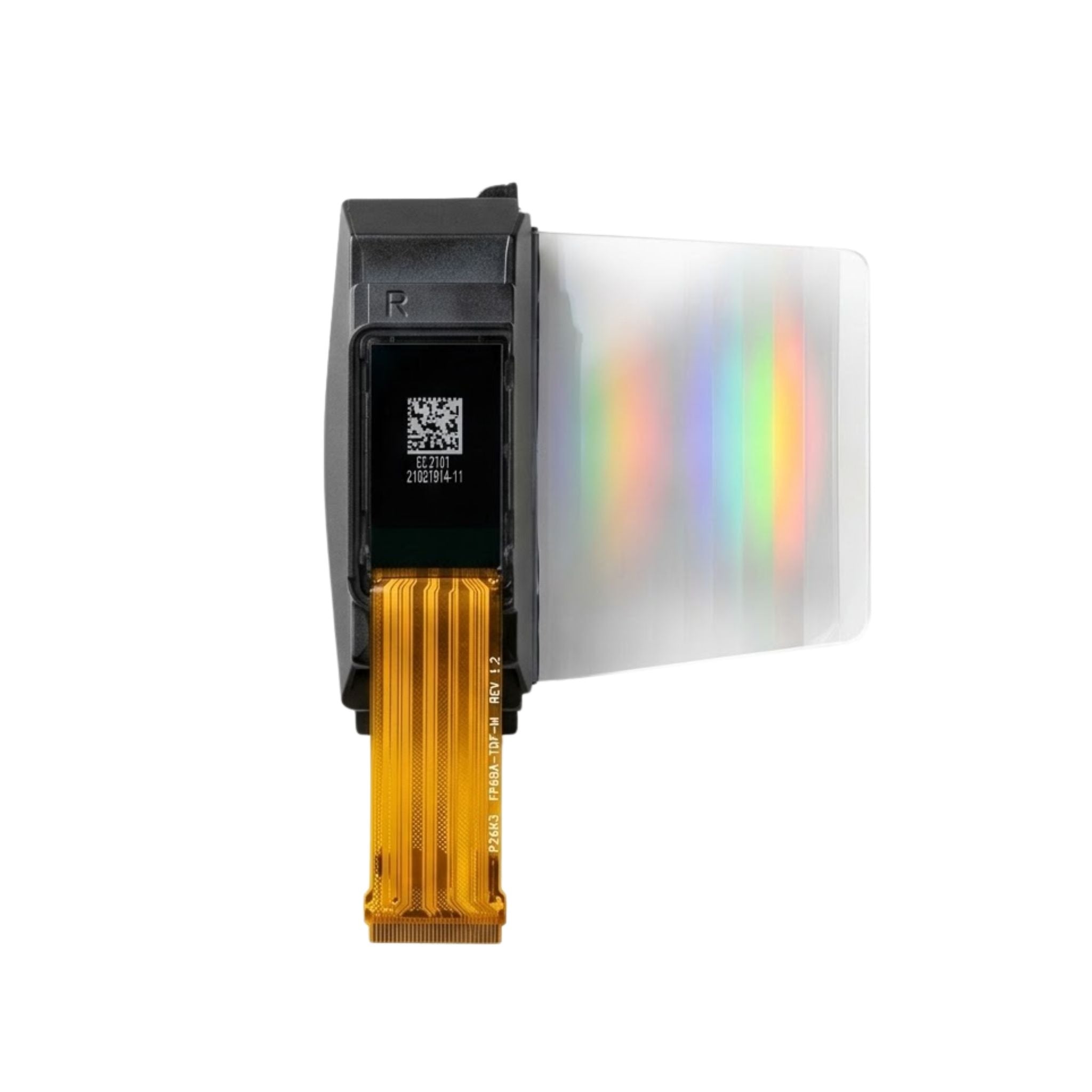


Graphic LCD vs Graphic OLED | Key Differences, Selection Guide
OLED holds an advantage in high-performance visual interaction with an ultra-high contrast ratio of >10,000:1 and an ultra-fast response time of <1ms, while LCD remains the preferred choice for industrial-grade applications pursuing long-term lifespan and reliability due to its superior physical stability in extreme wide-temperature environments and direct sunlight.
Key Differences
Graphic LCDs rely on LED backlighting, with contrast ratios typically between 20:1 and 50:1 and response times ranging from 50ms to 200ms.
In contrast, Graphic OLEDs achieve pixel-level control, with contrast ratios exceeding 10,000:1 and response times below 10 microseconds.
OLED module thickness is often less than 1.5mm, and current consumption is close to 0mA under all-black content, whereas LCD backlights must continuously consume between 20mA and 100mA regardless of the content.
Underlying Imaging Logic
On the back of the module, an array of 6 to 20 white LED chips produces the raw luminous flux, which, after being dispersed by a diffuser plate, forms a uniform surface light source.
Before entering the liquid crystal cell, light must pass through the first polarizer, which is composed of a stretched Polyvinyl Alcohol (PVA) film coated with iodine molecules.
It allows light waves with a specific electric field direction to pass, while approximately 50% to 55% of the light energy is absorbed or reflected at this stage.
The interior of the liquid crystal cell is filled with Twisted Nematic (TN) or Super Twisted Nematic (STN) molecules, whose long-axis alignment is controlled by the Polyimide (PI) alignment layer on the glass substrate.
In the absence of an electric field, the molecules exhibit a helical twist of 90 to 240 degrees from the top substrate to the bottom substrate.
As polarized light passes through the liquid crystal layer, the polarization plane of the light wave rotates along the twist direction of the molecules. After rotation, the light can smoothly pass through the second polarizer, and the screen appears transparent.
When the drive circuit applies an AC bias of 5V to 15V to the pixel electrodes, the dipole moments inside the liquid crystal molecules are pulled by the electric field force, causing the long axes of the molecules to align parallel to the electric field.
This change in alignment disrupts the original helical structure, preventing the light wave from undergoing the optical rotation effect, and the polarization direction remains unchanged.
Since the second polarizer is placed orthogonally to the first, the light is blocked inside. Because the extinction ratio of the polarizer cannot reach a perfect state, about 0.1% of residual light always leaks out, resulting in a black level that is not deep enough.
Graphic OLED utilizes a completely different carrier injection emission mode.
Its physical structure does not require a backlight, and the overall thickness is usually maintained between 1.0mm and 1.5mm.
An Indium Tin Oxide (ITO) anode is deposited on the bottom substrate, with a thickness of approximately 100 to 150 nanometers.
The anode is covered by a composite layer composed of various organic compounds, including the Hole Injection Layer (HIL), Hole Transport Layer (HTL), Emissive Layer (EML), and Electron Transport Layer (ETL).
The cathode uses low-work-function metals such as aluminum, magnesium, or silver, with a thickness of about 100 to 200 nanometers.
When an external DC voltage of 3.3V to 12V is applied, the anode generates holes and the cathode generates electrons. The charges migrate through the transport layers and meet in the emissive layer.
The combination of electrons and holes forms excitons in an excited state. As the excitons transition back to the ground state, energy is released outward in the form of photons.
Since every pixel is an independent light-emitting unit, the display signal can control the current switch.
When displaying an all-black image, the circuit cuts off the current supply to that pixel, the pixel no longer produces any visible photons, and the light leakage rate is zero.
OLED imaging does not require the mechanical rotation of liquid crystal molecules; the recombination and transition of carriers can be completed within microseconds, and its response speed is typically within 10 microseconds.
| Physical Composition and Performance Parameters | Graphic LCD (STN/FSTN Mode) | Graphic OLED (Small Molecule Evaporation Type) |
|---|---|---|
| Number of Layers | Contains 8 to 10 layers including polarizers, glass, liquid crystal, backlight, etc. | Contains 3 to 5 layers including anode, organic layers, cathode, etc. |
| Typical Module Thickness | 2.5mm to 6.0mm | 0.8mm to 1.5mm |
| Driving Voltage Range | 9V to 15V (Vop bias) | 2.8V to 12V (Logic and driving voltage) |
| Light Utilization Efficiency | Below 8% (Most energy is absorbed by polarizers and filters) | Close to 100% (Self-emissive with no filtration loss) |
| Quantized Contrast Value | 20:1 to 50:1 | 100,000:1 to 1,000,000:1 |
| Response Time Specification | 100ms to 250ms (Increases significantly as temperature drops) | Below 0.01ms (Minimally affected by temperature) |
| Beam Emission Angle | 45 degrees left/right (Contrast begins to attenuate significantly) | 85 degrees left/right (Color and brightness remain stable) |
Reflective LCDs place a reflective film behind the bottom polarizer. Ambient light passes through the liquid crystal cell, reflects off the reflective film, and passes through the liquid crystal layer again back to the observer's eye.
In this mode, the stronger the ambient light, the higher the contrast of the displayed content. For Transflective screens, both transmissive and reflective paths are combined.
The backlight is turned on for indoor use, while it is turned off outdoors to utilize sunlight for imaging.
Liquid crystal molecules in LCDs are sensitive to ambient temperature. When the temperature drops below -20 degrees Celsius, the viscosity index of the liquid crystal material increases by 10 to 50 times, making the rotation of the molecules extremely sluggish, leading to severe ghosting or even screen freezing.
Graphic OLED electrical characteristics manifest as a current-driven device.
Its brightness has a linear relationship with the current density flowing through the organic layer. For a monochrome OLED screen with a resolution of 128x64, when every pixel is fully turned on, the current density may reach 10 milliamps per square centimeter.
Due to the absence of physical limitations from liquid crystal molecules, it can maintain microsecond-level switching speeds even in extreme environments of -40 degrees Celsius.
OLED lifespan is limited by the electrochemical degradation of organic materials. The half-life of blue phosphorescent materials is typically lower than that of red and green.
As operating time increases, the conjugated structure of organic molecules is destroyed, leading to a decline in carrier recombination efficiency.
To maintain brightness consistency, driver chips usually integrate current compensation algorithms. The surface of the OLED module is covered with a circular polarizer layer, approximately 0.2mm thick.
| Environmental Adaptation and Lifetime Details | Graphic LCD Technical Features | Graphic OLED Technical Features |
|---|---|---|
| Low Temperature Characteristics (-20°C) | Response time extends to over 1000ms, causing lag | Response time remains around 0.01ms, ensuring smooth operation |
| High Temperature Characteristics (70°C) | Molecules may enter isotropic liquid state, image disappears | Organic materials accelerate aging, brightness half-life shortens |
| Readability in Strong Light | Relies on high-brightness backlight (>800nits) or reflective film | Relies on self-emissive brightness from high-current pixel driving |
| Mean Time Between Failures (MTBF) | 50,000 to 100,000 hours (Limited by backlight LEDs) | 15,000 to 30,000 hours (Limited by organic material decay) |
| Color Implementation | Filtering white backlight via RGB color filters | Direct emission of red, green, blue light using organic materials with different band gaps |
| Black Level Performance | Backlight leakage exists, black appears as dark gray | Pixels completely shut off, black level near 0 nits |
LCD display control adopts a Multiplexing scanning method.
Because liquid crystal molecules have an average electric field response characteristic, when driving a dot-matrix screen like 128x64, power is not continuously supplied to each pixel; instead, the row electrodes are scanned cyclically.
Under a 1/64 duty cycle, each pixel receives only 1/64 of the effective driving electric field during each frame period.
This causes the contrast to decrease as the number of scanning lines increases.
To compensate for this loss, STN technology increases the twist angle of the liquid crystal molecules (usually reaching 240 degrees), making the transmittance-vs-voltage curve steeper, thereby maintaining acceptable clarity during multi-line scanning.
FSTN adds an additional optical compensation film on the top layer to eliminate the chromatic dispersion generated by the liquid crystal layer, making the display effect closer to black and white.
Power Consumption Measurement
The current demand for the logic part (VDD) is extremely low, usually between 50 microamps and 1 milliamp, mainly used to drive the oscillators and charge pump circuits inside the Integrated Circuit (IC).
However, the backlight (LED) accounts for more than 90% of the entire module's total energy consumption. For a common 128x64 dot-matrix LCD module, the backlight array is usually composed of 1 to 4 white LEDs in series or parallel.
At standard brightness, each LED requires a constant current of 15mA to 20mA.
Since LCD is a passive display technology, the backlight beam must continuously penetrate the polarizers and the liquid crystal layer.
Therefore, whether the screen displays a single character or a full image, the current consumption of the backlight circuit remains at the set value and does not fluctuate with changes in display content.
This characteristic gives LCDs a certain energy efficiency advantage when displaying white backgrounds or high-brightness images because their power consumption ceiling is locked.
In a 0.96-inch or 1.3-inch monochrome OLED screen, the logic current (VDD) is about 200 microamps, while the panel drive current (VCC) fluctuates drastically with the display content.
When displaying an all-black screen, the drive transistors for the pixels are in a cutoff state, and the leakage current of the VCC line is only at the microamp level, with the whole machine's power consumption close to zero.
When the pixel ratio of the display content is 10% (such as a simple clock interface or a single line of text), the current is usually maintained between 2mA and 5mA.
Once the display content is switched to all-white (100% pixels lit), the current will soar to 30mA to 50mA or even higher.
This power consumption model requires that when designing user interfaces, a black-background-with-white-text scheme should be adopted as much as possible to maximize battery life.
- LCD Backlight Power Consumption: For a 2.4-inch graphic screen, a side-lit backlight module under 3.3V supply typically consumes 60mA. If 300 nits of brightness is required, the current may increase to 100mA.
- OLED Pixel Ratio Impact: In the same 3.3V environment, when OLED displays 20% area text, the current is about 8mA; when displaying 50% area graphics, the current rises to 22mA; in the full-bright state, it exceeds 45mA.
- Static Display Energy Consumption: LCD maintains a constant power consumption for static images, with the main overhead being the maintenance of the backlight; OLED's power consumption for maintaining static images depends on the brightness distribution of the image itself.
- Dimming Mechanism Comparison: LCD adjusts brightness by changing the Pulse Width Modulation (PWM) duty cycle of the backlight LEDs; lowering brightness significantly reduces power consumption. OLED dims by reducing the current density injected into each pixel; the decrease in power consumption is basically linear with the degree of brightness reduction.
For industrial instruments that need to display content continuously for 24 hours, Graphic LCDs equipped with reflective films can work without turning on the backlight. In this case, the total current consumption is below 1mA, which is an ultra-power-saving mode that OLED cannot reach.
In smart wearable devices, the screen is turned off most of the time, and only wakes up to display short notifications.
Since notification content usually occupies only 5% to 15% of the screen area, the average power consumption of OLED in such short-duration, low-pixel-ratio applications is far lower than the LCD solution, which must turn on the global backlight.
Experimental data shows that when displaying a UI interface with an average pixel ratio of 10%, OLED's power consumption is only one-quarter of that of a same-sized LCD (with the backlight on).
- Standby Mode Current: LCD logic current is 150 microamps, and total power consumption is minimal when the backlight is off; OLED enters a sleep mode under a software shutdown command, and the current is usually lower than 10 microamps.
- Impact of Refresh Rate on Power Consumption: Increasing the LCD refresh frequency (e.g., from 60Hz to 90Hz) increases the flipping frequency of logic circuits, leading to a small rise in VDD current; OLED power consumption is heavily affected by the refresh rate because each frame requires re-charging the pixel capacitors.
- Relationship Between Temperature and Current: In a high-temperature 60°C environment, the efficiency of LCD backlight LEDs decreases, requiring more current to generate the same brightness; the conductivity of OLED organic materials increases at high temperatures, and the driving voltage to maintain the same brightness will decrease slightly, but overall power increases due to efficiency losses.
- Voltage Conversion Loss: OLEDs usually require a charge pump or boost circuit to step up 3.3V to 9V or 12V for the panel. This DC-DC conversion process involves 15% to 25% energy loss.
For outdoor handheld terminals, Graphic LCD Transflective technology allows users to turn off the backlight completely under sunlight.
At this time, the power consumption of the display is only generated by the logic part of the controller, typically ranging from 0.5mW to 2mW.
In contrast, to maintain readability under strong light, OLED must push the drive current of each pixel to the limit.
To overcome sunlight reflection, OLEDs often need to produce over 500 nits of brightness, which can cause the panel current to momentarily exceed 80mA. Under high-load operation, the battery voltage will experience a significant drop due to the instantaneous discharge of large currents.
Therefore, when evaluating energy consumption, one cannot just look at the rated values in the datasheet; it must be calculated in combination with the dynamic current distribution adjusted by the ambient light sensor.
- Driver IC Power Distribution: LCD driver IC power consumption is about 0.5mW, while backlight power consumption is about 150mW to 300mW; OLED driver IC power consumption is about 1mW, while panel light-emitting power ranges from 10mW (dark UI) to 400mW (full-bright UI).
- Indirect Impact of Contrast on Energy Efficiency: Due to OLED's extremely high native contrast, users can often obtain a clear reading experience at lower absolute brightness settings, thereby saving about 20% of expected current in actual use.
- Internal Module Impedance Loss: The resistance of OLED's transparent anode is relatively high. When displaying a large area, the voltage drop of the current on the traces will convert energy into heat; the main current path for LCD is in the external backlight circuit, and the impedance of the internal liquid crystal layer is extremely high, generating almost no resistive heat.
In a 100-hour continuous display test (using a test image with a 50% pixel ratio), a same-brightness LCD module consumed a total energy of about 18,000 mAh, while the OLED module consumed about 22,000 mAh.
If the test image is changed to a concise menu with a 10% pixel ratio, the LCD's energy consumption remains near 18,000 mAh, while the OLED's energy consumption drops sharply to around 4,500 mAh.
However, the advantage of LCD lies in its predictability. Hardware engineers do not need to add extra large-capacity decoupling capacitors to cope with instantaneous current surges of more than 10 times when designing the power management system (LDO or DC-DC).
Response Speed Comparison
For a standard 128x64 industrial-grade FSTN display, at a room temperature of 25 degrees Celsius, the rise time is about 150 milliseconds and the fall time is about 200 milliseconds.
When the system refresh rate is set to 60Hz, the dwell time for each frame is 16.6 milliseconds.
Because the mechanical rotation speed of liquid crystal molecules is far slower than the frame update frequency, the previous frame's image has not been fully reset before the next frame begins to load, causing observers to see ghosting or motion blur on the screen.
Without requiring any mechanical movement of molecules, OLED pixel switching depends on the recombination speed of holes and electrons in the organic light-emitting layer.
The pixel response time of common monochrome OLED modules is usually below 10 microseconds.
At the same 60Hz refresh frequency, an OLED pixel can complete the switch from all-black to all-bright in less than one-thousandth of a frame period.
This response eliminates visual motion blur, making dynamic icons, sliding progress bars, or high-speed refreshing oscilloscope waveforms in UI interfaces look exceptionally sharp.
Even when quickly dragging a scroll bar, every stroke of the characters maintains a clear boundary without producing residual shadows.
- Rise/Fall Time Comparison: LCD typical values are 150ms to 300ms; OLED typical values are below 0.01ms.
- Maximum Ghosting-Free Refresh Rate: LCDs usually struggle to support smooth animation above 20Hz; the physical limit of OLED can support refresh frequencies exceeding 1000Hz.
- Grayscale Switching Latency: LCD switching times between different gray levels are inconsistent, leading to color shifts in dynamic images; the switching speed of each OLED pixel remains highly consistent.
- Driving Voltage Impact: Increasing the LCD driving voltage can shorten the twist time of liquid crystal molecules, but it increases power consumption and shortens lifespan; OLED speed is determined by the material itself and is minimally affected by voltage fluctuations.
- Physical Refresh Mechanism: LCD adopts a row-scanning charge storage mode, where the molecular response lags behind the electrode signal; OLED belongs to current-injection instantaneous luminescence, where the signal and light emission are almost synchronized.
"At 25 degrees Celsius, the viscosity of standard STN liquid crystals is about 20 centipoise. When the temperature drops to -20 degrees Celsius, the viscosity surges to over 400 centipoise, causing the response time to extend beyond 2000 milliseconds."
"The row strobe pulse width of an OLED driver chip is usually set to about 30 microseconds, which has already far exceeded the physical response limit of 1 microsecond for its pixel light-emitting units, ensuring the stability of the image at any refresh rate."
Liquid crystal material, as an anisotropic organic liquid, is extremely sensitive to temperature in terms of its viscosity coefficient.
When equipment works in extremely cold outdoor environments (such as -20°C to -40°C), the fluidity of liquid crystal molecules almost disappears, and the rearrangement of molecules becomes exceptionally sluggish.
In this case, the screen update of an LCD may take several seconds. After the user operates a button, the screen content will slowly fade in and out like a slideshow.
To alleviate this problem, industrial-grade LCDs often need extra heating patches or specialized wide-temperature liquid crystal materials, but this significantly increases hardware costs and system power consumption.
OLED devices, because they rely on carrier migration in solid thin films for imaging, are minimally affected by temperature changes.
In the extreme environment of -40°C, although the mobility of holes and electrons decreases, it can still maintain a microsecond-level response level.
This makes OLED the ideal choice for devices that need to display data in real-time in extremely low-temperature environments (such as outdoor handheld measuring instruments and vehicle monitoring meters).
Regardless of environmental changes, OLED can provide stable high-frame-rate visual feedback, without the risk of UI interaction experience collapse due to temperature drops as seen in LCDs.
In terms of dynamic contrast performance, the difference in response speed leads to a huge gap in the quality of black-and-white switching.
When an LCD displays fast-jumping numbers (such as a millisecond timer or a high-frequency pulse counter), because the pixels cannot switch back from a transparent state to a light-blocking state in time, the edges of the numbers blur into a gray shadow, making reading difficult.
OLED's ultra-high-speed switching characteristics ensure that every digit can completely extinguish old pixels and light up new pixels at the moment of transition, and the dynamic numbers displayed are always as clearly recognizable as static images.
This characteristic has high practical value in real-time heart rate curve displays on medical monitors or waveform capture on industrial oscilloscopes.
- Quantified Motion Blur: At a movement speed of 10 pixels/second, the blur width of an LCD can reach 3 to 5 pixels; at the same speed, the blur width of an OLED is close to 0 pixels.
- Cold Start Delay Test: LCD takes time from cold start to display a stable image due to initialization and molecular preheating; OLED can reach full rated brightness output within microseconds after power-on.
- Refresh Bandwidth Utilization: OLED's fast response allows the driver chip to use shorter row strobe cycles, thereby supporting higher multiplexing numbers without losing contrast; LCD must extend single-row strobe time when increasing scanning lines to ensure molecules have enough rotation margin.
- Visual Persistence Impact: The slow response of LCD exacerbates the visual persistence effect in the human eye. Watching scrolling text for a long time can easily lead to visual fatigue; OLED's pulse-type light emission characteristics are more in line with human eye perception of moving objects.
Extreme Environment Performance
In standard industrial specifications, the storage temperature of liquid crystal modules is usually set between -30°C and 80°C.
When the ambient temperature drops to -20°C, the viscosity coefficient of liquid crystal molecules surges from 20cp–30cp at room temperature to over 400cp.
This increase in physical resistance directly leads to the failure of the Twisted Nematic (TN) field effect. In oscilloscope measurements, the originally 150ms switching cycle extends to over 2000ms, causing severe contrast loss and image persistence during screen updates.
If the temperature drops further below the material's Pour Point, the liquid crystal will undergo local crystallization, causing permanent physical alignment destruction, leading to unrecoverable black spots or textures on the screen.
In contrast, Graphic OLED belongs to an all-solid-state structure. The migration of its holes and electrons mainly relies on quantum tunneling and hopping conduction. This sub-atomic level movement has extremely low dependence on thermal energy.
In an ultra-low temperature laboratory environment of -40°C, the turn-on time of OLED pixels still remains at the 10-microsecond level, and the emission efficiency attenuation after current injection is less than 5%.
This makes OLED show extremely strong dynamic stability in polar equipment or aviation instruments, without the need for additional Indium Tin Oxide (ITO) heating glass with power consumption as high as 2W to 5W, which LCD must have.
When the ambient temperature approaches 75°C or 80°C, liquid crystal molecules will transition from an ordered anisotropic arrangement to a completely disordered isotropic liquid state due to thermal energy overload.
At this time, the molecules lose their optical rotation ability, and the screen will instantly turn deep purple or all black, resulting in complete information loss.
Although functionality usually recovers after cooling, staying near the clearing point for a long time will age the sealing glue and produce bubbles.
According to the Arrhenius model, for every 10°C increase in ambient temperature, the chemical decay rate of organic light-emitting materials increases by about 1.8 times.
In a 70°C constant-temperature test, OLED's brightness half-life (T50) will drop from 30,000 hours at 25°C to around 5,000 hours.
Particularly for blue phosphorescent materials, their high-energy excited states are more likely to lead to the breaking of conjugated double bonds under thermal energy disturbance, thereby generating non-radiative recombination centers.
To slow down this attenuation, high-performance OLED modules usually integrate temperature-compensated current algorithms, using a built-in thermistor to monitor the panel temperature in real-time and automatically fine-tune the drive charge to maintain constant brightness.
| Environmental Stress Dimension | Graphic LCD Physical Response | Graphic OLED Physical Response | Data Indicators/Quantified Differences |
|---|---|---|---|
| Ultra-low Temp (-40°C) | Viscosity increases 20x, response time delayed to seconds | Electron mobility stable, response time stays at microseconds | LCD: >2500ms vs OLED: <0.01ms |
| High-temp Storage (85°C) | Image disappears past clearing point, seal failure likely | Thermal oxidation of organic layer, half-life shortened by 80% | LCD: Physical phase change vs OLED: Chemical degradation |
| Humidity Cycle (60°C/90%RH) | Polarizer wrinkles, backlight module grows mold | Cathode metal susceptible to water vapor electrochemical black spots | Permeation Rate: OLED requires <10e-6 g/m2/day |
| UV Exposure | Polarizer dyes fade, contrast drops by 30% | Organic chain breaks, permanent burn-in spots | Wavelength response: OLED decays rapidly <380nm |
| Low Pressure/Altitude | Internal tension may deform glass, affecting gap control | Solid encapsulation unaffected by pressure, heat dissipation drops | Altitude limit: LCD needs to consider Spacer stability |
Since LCD is passive, by applying a reflector or Transflector film with a specific refractive index behind the bottom polarizer, ambient light can pass through the liquid crystal layer and be reflected back as a second light source.
Under direct sunlight with illumination exceeding 50,000 Lux, this reflection mode can provide a contrast ratio of up to 10:1 without consuming any additional power.
Graphic OLED light emission is inherently active radiation of photons. Ambient light entering the screen will produce strong specular reflection on the metal cathode surface.
Even with a circular polarizer to absorb reflected light, the absorption rate can only reach 90% to 95%.
To reach readable levels outdoors, OLED must push peak brightness to over 600 nits.
This causes the panel's power consumption in strong light to instantly rise to 500mW–800mW, and the generated Joule heat further overlays ambient heat, accelerating thermal deactivation of organic materials.
Therefore, in scenarios like desert environments or open-air monitoring stations with high UV and high illumination, the long-term operational stability and readability of LCD are usually superior to OLED.
Key components of Graphic LCDs, such as the polarizer made of PVA film, are prone to absorbing moisture, leading to polarization failure; however, its core liquid crystal cell has good airtightness.
Graphic OLED organic layers have "zero tolerance" for water and oxygen molecules.
Once the permeation rate of the encapsulation layer exceeds 10 to the power of -6 grams per square meter per day, water reacts with the low-work-function aluminum cathode, forming visible expanding "Dark Spots."
To handle this, high-reliability OLED modules must use Thin Film Encapsulation (TFE) technology, combining multiple layers of inorganic silicon nitride and organic buffer layers deposited alternately. The total thickness is only 1 to 2 micrometers, but its water-oxygen barrier capability is extremely strong.
Although this high-density encapsulation improves environmental durability, it also increases yield costs during manufacturing, making the BOM cost of OLED in extreme environments usually 40% to 70% higher than same-sized wide-temperature LCDs.
- Ambient Light Utilization: LCD remains clear under 100,000 Lux via reflection; OLED relies on 800-nit high-current drive, but contrast drops below 3:1 under the same light.
- Vibration/Shock Resistance: LCD contains a ~5μm liquid crystal gap; strong extrusion causes uneven gaps and Newton's rings. OLED is a solid thin-film structure with higher mechanical endurance against physical shock and high-frequency vibration.
- Electromagnetic Compatibility (EMC): High-voltage converters for LCD backlights may generate EMI; OLED uses constant-current low-voltage driving with lower sensitivity to external fields, though driver chip leakage current increases over 15% at high temps.
- Altitude Adaptation: Above 10,000 meters, LCD air gap balance may be affected, causing color shifts; OLED has no gas or liquid space, and pressure changes have almost zero impact on its structure.
In actual project lifespan predictions, if a device needs to run 24 hours a day in a mine or high-temperature factory with an average temperature above 50°C, the MTBF of Graphic LCD can usually stabilize at 100,000 hours, with the main bottleneck being the backlight LED half-life.
For Graphic OLED under the same high-temperature high-load conditions, the effective lifespan may shorten to within 15,000 hours due to continuous thermal decay of organic molecules.
Selection Guide
LCD possesses stability over 50,000 hours, suitable for long-term operation.
OLED provides a viewing angle over 160 degrees and a 10,000:1 contrast ratio. Below 0°C, LCD response delay increases to 300ms, while OLED maintains 10μs.
If the lit pixel ratio is below 25%, OLED is more energy-efficient than LCD; if it exceeds 50%, LCD's 15mA constant backlight is more power-efficient.
Operating Temperature Performance
Graphic LCD relies on the physical rotation of liquid crystal molecules to control light passage, and liquid crystal itself is an intermediate state substance between solid and liquid whose viscosity is extremely sensitive to temperature.
Under standard 25°C conditions, the response time of a typical STN-type LCD is about 200ms to 300ms.
When the temperature drops to -20°C, the motion resistance of molecules increases exponentially, and the response time quickly extends to 1500ms or even 3000ms.
In contrast, Graphic OLED uses the principle of solid organic thin-film electroluminescence, which does not involve mechanical displacement of macro-molecules. The mobility of charge carriers is minimally affected by temperature drops.
In the extreme environment of -40°C, OLED can still maintain 10-microsecond response speeds, which is tens of thousands of times faster than LCD at low temperatures, ensuring instant updates of waveforms or real-time values in cold regions.
LCD optical performance experiences significant contrast drift with temperature fluctuations. The twist angle of liquid crystal is affected by the driving voltage Vop, and this optimal voltage value changes with temperature.
Usually, for every 1°C change, the optimal driving voltage needs adjustment by about 0.05V.
Without hardware-level temperature compensation, LCDs become black in high temperatures and suffer extremely low contrast and blurred content in low temperatures due to under-driving.
Industrial-grade Graphic LCD modules usually have a built-in thermistor to feed back ambient temperature in real-time and dynamically adjust the drive level via a bias voltage chip.
OLED is a self-emissive technology whose contrast is mainly determined by the on/off state of pixels, which is hardly interfered with by ambient temperature.
Within the range of -20°C to 70°C, OLED contrast remains stable at over 10,000:1, maintaining consistent visual effects without complex external compensation circuits.
At the high-temperature end, the challenges faced by the two technologies are completely different. LCD has a physical limit called the Clearing Point.
Once the heat from the environment or backlight makes the liquid crystal layer exceed 80°C or 90°C, the molecules lose their directional alignment and enter an isotropic liquid state.
At this point, regardless of the output signal, the screen will instantly turn black or translucent, completely losing display functionality.
This process is usually reversible (recovering after cooling), but frequent proximity to the clearing point accelerates polarizer deterioration. For OLED, the main threat of high temperature is chemical stability.
Organic light-emitting materials accelerate oxidation and decay at high temperatures. According to Arrhenius model calculations, for every 10°C increase in operating temperature, the OLED brightness half-life (T50) is roughly halved.
If a white OLED's lifespan is 15,000 hours at 25°C, its time to decay to half brightness might shorten to under 3,000 hours in a 60°C constant environment.
From a thermal dissipation perspective, the LCD backlight module is the main heat source.
To display clearly under 50°C direct sunlight outdoors, LCD usually needs 500 to 1000 nits of backlight brightness, which consumes large currents and generates heat, further pushing up internal temperatures.
OLED, when displaying dark UIs, has most pixels turned off and generates very little heat of its own, helping maintain lower junction temperatures.
However, under a full white background, OLED power consumption surges, and the Joule heat between the anode and cathode layers leads to local temperature rises, which can trigger pixel brightness non-uniformity or burn-in.
When designing outdoor charging piles or vehicle displays, the superposition of ambient thermal load and device self-heating must be considered.
| Temperature Indicator | Industrial Graphic LCD Specifications | Industrial Graphic OLED Specifications |
|---|---|---|
| Standard Working Range | -20°C to 70°C | -40°C to 85°C |
| -20°C Response Time | 1500ms to 2500ms | Within 10 microseconds |
| High-temp Failure Point | Above 80°C (Liquid crystal phase change) | Above 95°C (Permanent material damage) |
| Contrast Temp Drift | Significant, requires Vop compensation | Negligible |
| Suggested Storage Temp | -30°C to 80°C | -45°C to 90°C |
In actual application selection, if a product needs to run in environments like Nordic winters or high-altitude mapping, OLED is almost the only choice ensuring instant response.
For base station monitoring in tropical regions or dashboards continuously under direct sunlight, LCDs with wide-temperature liquid crystal materials and automatic voltage compensation algorithms provide a longer physical working life.
Although LCDs are sluggish at low temperatures, they do not undergo irreversible color shifts at continuous high temperatures like OLEDs.
Power Consumption Data Comparison
In a standard 128x64 2-inch monochrome LCD module, the logic part responsible for controlling pixel deflection maintains a very low typical current of 1mA to 2mA at a 3.3V working voltage.
The backlight system is the heavyweight in power consumption. To reach a visible 100-nit brightness in an indoor environment, the bottom LED array usually requires a constant current of 15mA to 30mA.
This power mode is characterized by static constancy; whether the screen shows a few status icons or dense parameter tables, as long as the backlight is on, the total current consumption is basically locked between 20mA and 40mA.
If backlight current is pushed above 60mA to improve readability in strong outdoor light, the thermal design and battery life will face huge pressure.
Graphic OLED energy consumption characteristics follow completely different linear laws; total power is directly physically related to the Pixel On Ratio (POR).
Each OLED pixel is an independent light-emitting unit. When displaying black, the pixel is completely off, and current consumption drops almost to zero.
In a 0.96-inch 128x64 OLED module, the driver IC itself consumes only about 150 microamps in static display mode.
When the screen displays simple 12-dot real-time clock data, the total lit area is usually below 5%, and the total current including emission can often be controlled within 3mA.
This performance makes OLED energy savings far exceed LCD in dark theme designs.
However, when POR increases to 50% or higher, the total current for OLED emission will quickly climb to 40mA or even 60mA, making its power consumption potentially worse than an LCD with a constant backlight.
In the voltage chain of power management, conversion efficiency also differs:
- OLEDs typically integrate a charge pump boost circuit internally to step up the 3.3V logic voltage to 7V to 12V. This internal conversion usually has 15% to 25% energy loss.
- LCD backlight LEDs are usually in series or parallel, powered by an external constant-current driver chip, with conversion efficiency usually maintained above 85%.
- In ultra-low power standby mode, LCDs can retain content display by turning off the backlight (in reflective mode with ambient light), reducing current consumption to the 50-microamp level.
- OLEDs completely cut power to the emissive layer in sleep mode, keeping only register data, with static current as low as under 10 microamps.
Different display colors also significantly change the OLED current load.
The efficiency of monochrome white OLEDs is usually slightly lower than yellow or green versions.
At the same 100-nit brightness level, lighting the same number of pixels, white OLED current consumption is typically about 20% higher than yellow.
This is because different materials have different band gaps, causing the ratio of driving voltage to light intensity to shift.
For Graphic LCDs, since color is achieved by backlight filters or color filter films, changing content color or backlight wavelength has almost no effect on total current, making LCDs more stable in balancing cost and power for multi-color mixed displays.
For different application logics, we can quantify power expenditures:
- In a smart wearable "Always-on Display" scenario, OLED lights only 1% of pixels, consuming less than one-tenth of the power of an LCD with the backlight on.
- In an industrial instrument "Full Screen Parameter List" scenario, if text coverage exceeds 40%, LCD with its fixed 20mA backlight is more battery-efficient in long-term operation.
- When the system enters a low-battery warning, OLED can linearly reduce current by lowering global brightness register values, whereas LCD backlight LEDs have a turn-on threshold voltage, limiting the room for current reduction.
At a 10MHz SPI communication rate, the digital interface of the driver IC generates additional dynamic current consumption.
For Graphic LCDs, this part of power is negligible due to low update frequencies (~60Hz).
But for high-resolution or frequently refreshing Graphic OLEDs, frequent data bus activity adds an extra 0.5mA to 1mA to the driver part current.
When evaluating total BOM power, one must consider not only the panel current but also the leakage current of external boost inductors and filter capacitors, especially in extreme temperatures where passive component efficiency changes affect final battery life data.
Visual Parameter Differences
Graphic LCD contrast is limited by the light-blocking efficiency of liquid crystal molecules. In the off state, gaps in physical arrangement prevent complete blocking of backlight photons, keeping black area brightness between 0.5 and 2 nits.
Graphic OLED pixels are independent organic diodes. When the drive circuit outputs a low-level signal, the current is completely cut, the emissive layer stops producing photons, and black background brightness can drop below 0.0005 nits.
This extremely low base brightness allows OLED contrast to be labeled as 10,000:1 or higher, while standard FSTN-type Graphic LCD contrast lingers between 50:1 and 100:1.
In a dark room, LCD black areas appear dark gray or have blue-purple light leakage, diluting the edge sharpness of foreground text, while OLED provides an almost absolute boundary between background and text.
LCD imaging depends on phase retardation of light through multiple polarizers and LC layers, meaning light is highly directional.
For a standard 128x64 LCD module, the viewing center is designed at the 6 o'clock or 12 o'clock direction.
When the observer deviates more than 40 degrees from the vertical axis, the optical phase difference shifts, leading to sharp contrast drops or grayscale inversion—where text becomes brighter than the background, causing misreading.
Graphic OLED uses an omnidirectional emission mechanism, where radiation from the organic film diffuses evenly across 180 degrees.
In tests, OLED contrast attenuation at 80 degrees off-axis is usually under 10%, with effective viewing angles stably reaching over 160 degrees horizontally and vertically.
LCD pixel flipping involves mechanical rotation of molecules, limited by ambient temperature and drive voltage waveforms.
At 25°C, LCD rise time is ~150ms and fall time is ~200ms.
If a UI includes fast-scrolling menus or real-time waveforms, LCDs produce obvious motion blur and ghosting, making perceived refresh rates much lower than electrical drive frequencies.
In comparison, OLED light emission is based on carrier recombination, with charge migration completed in the 10-microsecond range.
OLED visual response is about 20,000 times faster than LCD.
Even at -20°C, OLED maintains sharp dynamic edges, unlike LCDs which become unreadable due to increased viscosity.
- "In lab data, monochrome white OLED pixel brightness uniformity reaches over 90%, while side-lit LCDs often show a 20% brightness drop at the edges."
- "For digital pressure gauges needing high-frequency updates, a 10ms interface refresh is the physical bottom line for reading immediacy; OLED response margin far exceeds this."
- "When displaying small dot-matrix fonts, OLED's high aperture ratio effectively avoids inter-pixel crosstalk, with the physical duty cycle of text outlines closer to 100%."
Graphic LCDs have lower aperture ratios (effective light area vs. total pixel area) because they need to accommodate pixel electrodes and alignment films.
Under macro observation, LCD pixels have obvious black grids; this "screen-door effect" reduces the smoothness of fine graphics.
Graphic OLED pixel design is more compact. Without complex backlight paths, the emissive layer can be closer to the cover glass.
This reduces light loss from internal reflection and eliminates the visual parallax common in LCDs caused by glass thickness.
For 128x64 resolution at 0.96 inches, OLED pixel pitch can be compressed below 0.1mm, providing a stronger sense of visual density closer to print quality.
Color purity and wavelength distribution are also important in monochrome displays. LCD color depends on backlight LED wavelength and filter material.
Common blue-background white-text LCDs are actually blue backlight through the LC layer, often with a cyan shift and high color temperature fluctuation.
Graphic OLED emission color is determined by the energy level structure of the organic material, with a narrower wavelength distribution. For example, yellow OLED main wavelengths concentrate near 580nm, with high saturation and stronger penetration in smoke or dust.
Monochrome white OLED color temperature is stable between 6000K and 7000K, causing less visual fatigue over long periods than LCD backlights with high-frequency PWM dimming.
In ambient light adaptation, LCD has a unique compensation mechanism. Reflective or Transflective LCDs can use strong ambient light as a source.
Under 50,000 Lux direct sunlight, ambient light enters and reflects back; the stronger the ambient light, the clearer the display.
OLED is purely active. Strong light produces reflections on the surface, masking the OLED photons.
To see OLED content outdoors, circular polarizers are used to suppress 90% of reflection, but this also cuts OLED output brightness by half.
Thus, without external anti-glare treatment, OLED outdoor contrast drops from 10,000:1 to 5:1.
- Contrast Level: OLED's pure black background is 200x better than LCD's dark environment performance.
- Viewing Angle Limit: OLED maintains >80% contrast at 170 degrees; LCD color drifts after 60 degrees.
- Dynamic Clarity: OLED supports >100Hz refresh without ghosting; LCD physical limits are usually under 30Hz.
- Brightness Uniformity: Pixel-level emission in OLED avoids the "flashlight" edge leakage of LCD.
- Parallax Effect: OLED gap between reduction and emission layers is microns, eliminating double images from thick glass.
Visual design flexibility is also key. Since every OLED pixel can be dimmed independently, UI designers can use grayscale driving (16 to 256 levels) for smooth icon shadows and anti-aliasing.
Graphic LCDs struggle with multi-level grayscale due to LC rotation linearity limits, usually only switching between full on/off, limiting artistic expression.
In high-end audio or luxury instrument UIs, OLED's 8-bit grayscale precision allows simple dot-matrix graphics to have 3D depth, whereas LCDs appear flatter.
Physical Structure Specifications
A Graphic LCD module is a multi-layer stack: backlight frame, LED beads, Light Guide Plate (LGP), diffusers, reflective film, bottom polarizer, bottom glass substrate, LC layer, top glass, and top polarizer.
In a standard 128x64 2-inch LCD, this stack creates a thickness of 3.5mm to 6.0mm.
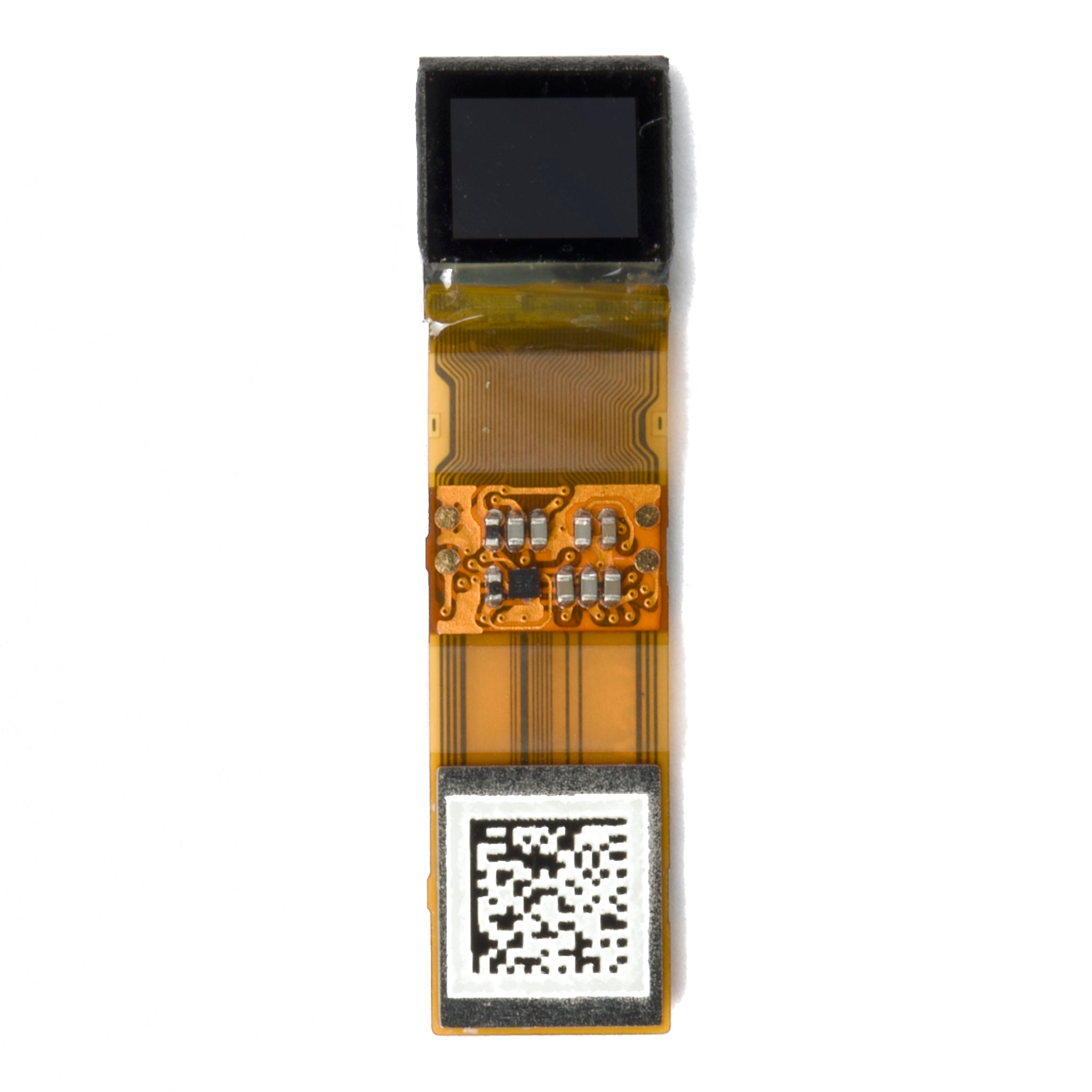
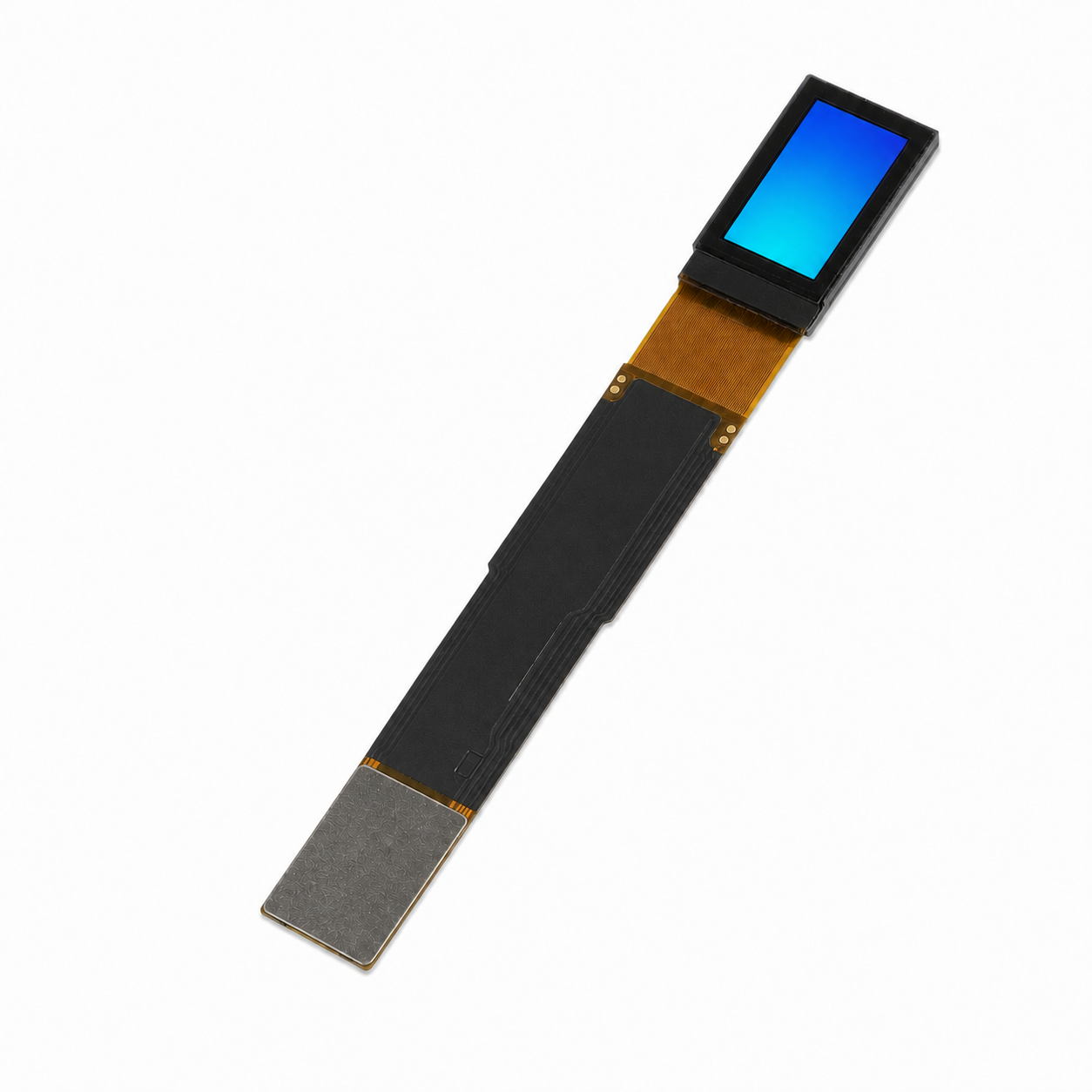
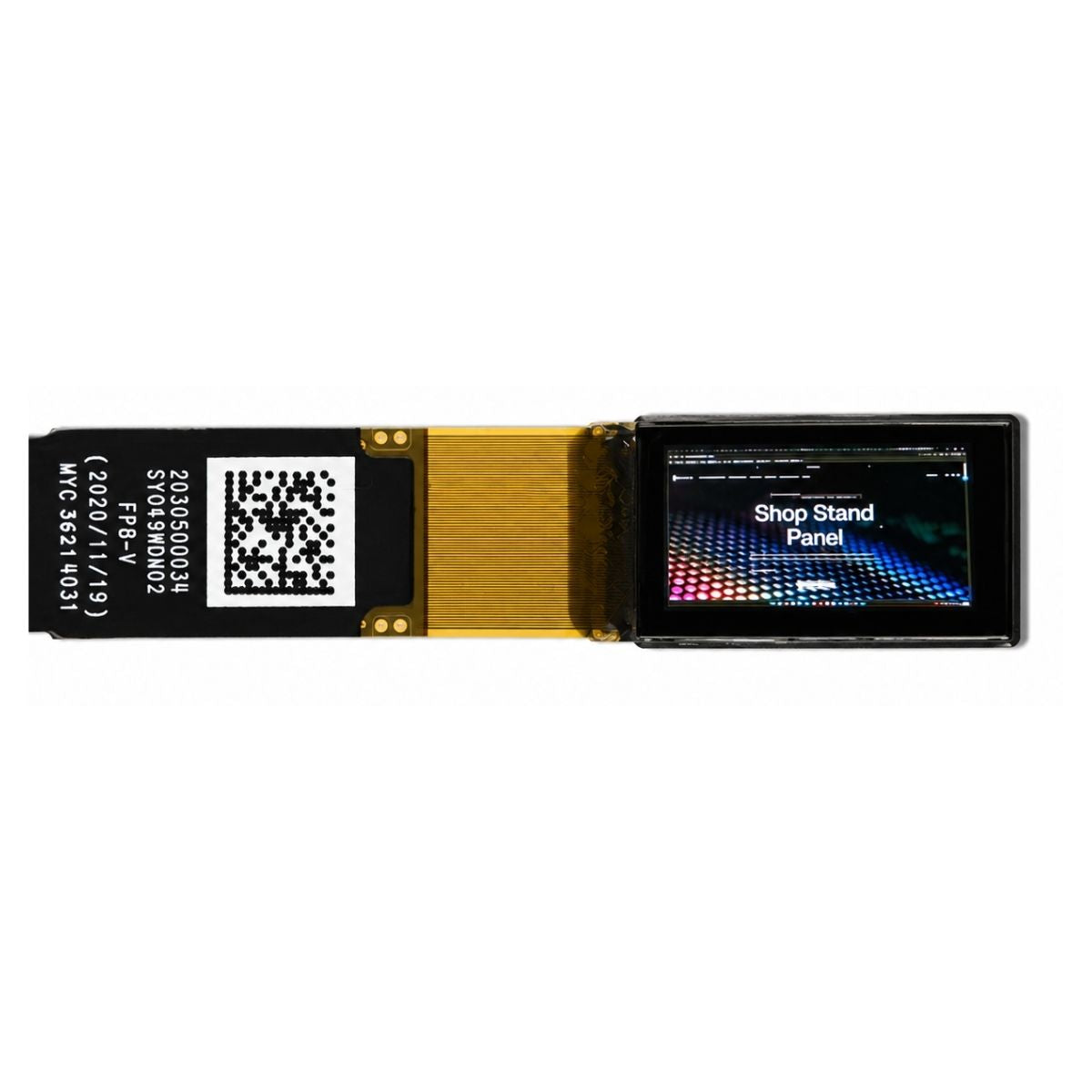
Graphic OLED is self-emissive, removing the bulky backlight and consisting only of glass or PI substrate, organic layers, and encapsulation cover.
At 2 inches, OLED thickness is easily controlled between 1.2mm and 1.5mm.
In ultra-thin handhelds or wearables, the 2mm saved by OLED is used for more battery or a smaller casing.
"In compact circuit design, display Z-axis height often determines the mold depth of the casing. LCD LGP thickness is usually no less than 1mm due to total internal reflection requirements, while OLED organic layers are micron-level."
To prevent backlight leakage and allow for LC filling and sealing at the edges, LCD bezel width usually needs 3mm to 5mm of non-display area.
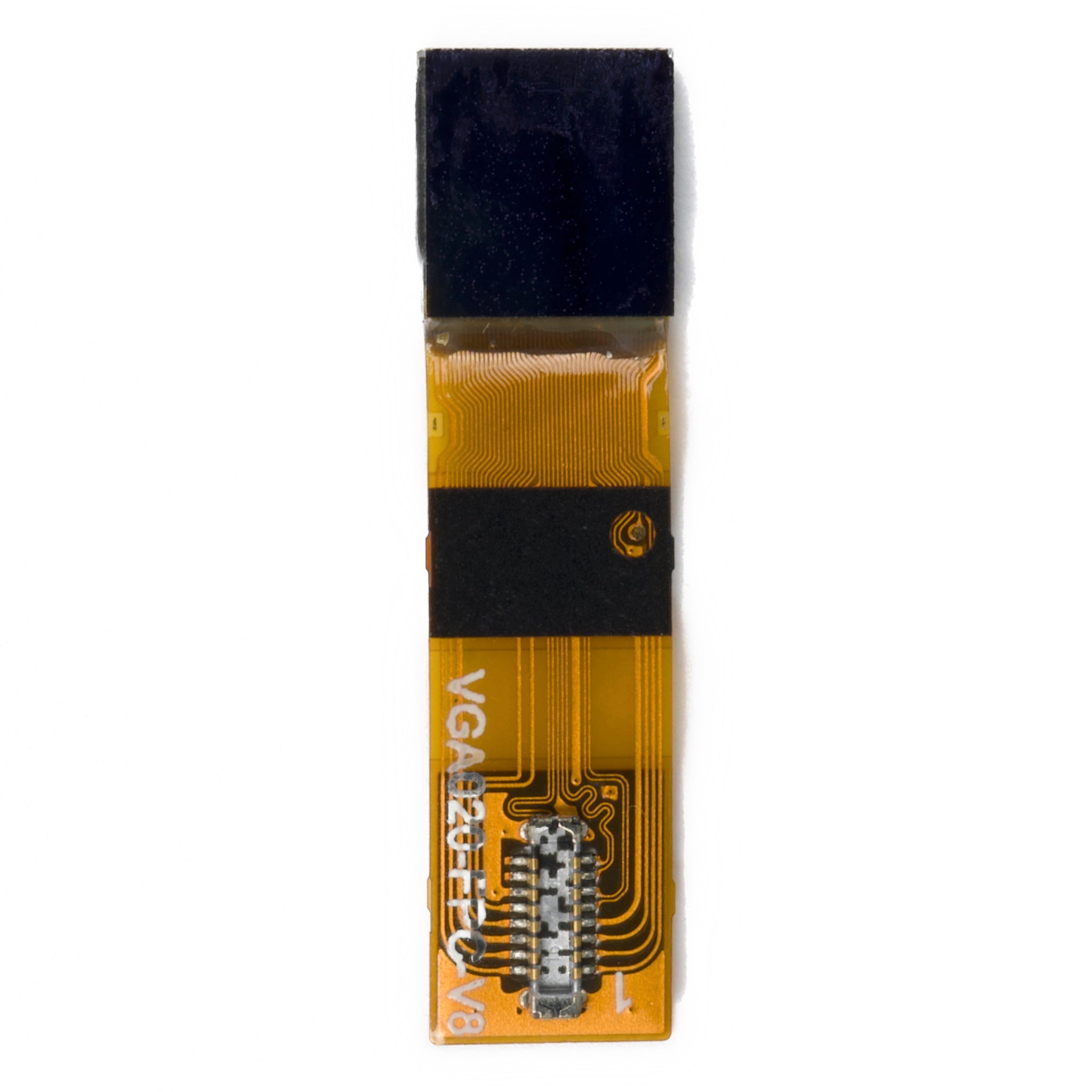
OLED uses Chip On Glass (COG) technology, bonding the driver chip to the glass extension and using an FPC folded backward, allowing bezels to shrink to 1.2mm to 2.0mm.
This allows OLEDs to provide a larger effective visual ratio in the same casing cutout.
LCD bezels are often fixed by a metal frame (Bezel) for strength, making LCDs much heavier.
A 1.3-inch 128x64 LCD module weighs ~8g to 12g, while an OLED module is typically 2g to 4g.
| Physical Parameter | Graphic LCD (Standard COG) | Graphic OLED (Standard COG) |
|---|---|---|
| Typical Thickness (Z-axis) | 2.5mm to 5.5mm | 1.0mm to 1.6mm |
| Mass per Square Inch | ~5.5g | ~1.8g |
| Bezel Width (L/R) | Above 2.5mm | 1.2mm to 2.0mm |
| Connector Type | Solder pins or FPC | Mostly FPC (foldable) |
| Mechanical Shock Resistance | Moderate (multi-layer shift) | High (solid stable structure) |
| Min. Bending Radius | Not bendable (hard glass) | Some support micro-arc encapsulation |
LCDs often have more pin definitions than OLEDs because the backlight needs independent pins (A, K) and current-limiting resistor pads.
LCD LGP frames usually have four support legs or positioning posts, requiring PCB holes or keep-out areas.
OLED backs are usually flat glass, bonded via double-sided tape.
FPC pin pitch in OLED is often 0.5mm for connectors, whereas cheap monochrome LCDs may still use 2.54mm headers.
This volume difference means LCD systems take up more vertical height in internal routing.
"Structural engineers must note that because LCDs contain liquid components, mechanical shocks over 50G may cause displacement bubbles between the polarizer and glass. OLED solid thin-film structures show better integrity in shock tests."
LCDs must maintain absolute LC cell gap consistency, requiring perfectly flat glass. Slight deformation causes rainbow patterns or black spots.
OLED organic materials are deposited via evaporation or printing. While most commercial OLEDs use hard glass, they can technically adapt to flexible materials like Polyimide for curved surfaces.
This physical flexibility gives OLEDs more industrial design space for curved instruments.
Aperture ratio also differs physically. LCD pixels need wide Black Matrix (BM) borders to hide electrodes and prevent interference, making pixels look like framed boxes under a microscope.
OLED emissive layers are directly above electrodes, allowing for extremely narrow pixel spacing.
At 128x64 resolution on a 0.96-inch module, OLED light-emitting point occupancy is significantly higher than LCD.
Because OLED lacks reflective films and backlights, the optical path is simple—light goes from the emissive layer through the cover glass.
LCD light passes through at least three materials with different thermal expansion coefficients. Extreme temp changes cause differential expansion, leading to "Newton's rings" that affect clarity.
OLED physical consistency is more stable under thermal expansion/contraction, with its dimension fluctuation rate less than one-third that of LCD.
In aerospace or precision machine UI design, this thermal-mechanical stability from structural simplicity is a vital reference for module lifespan.
Read more
COG (Chip-on-Glass) directly bonds the IC to the glass, thinning the module by more than 30% and refining the lead pitch to 40μm. Its streamlined structure reduces costs by approximately 20% and si...

Graphic OLED achieves a million-to-one contrast ratio and 10-microsecond response time through self-emittance, while its 1.2mm ultra-thin modules support 180-degree full-view precision display in m...
Leave a comment
This site is protected by hCaptcha and the hCaptcha Privacy Policy and Terms of Service apply.