

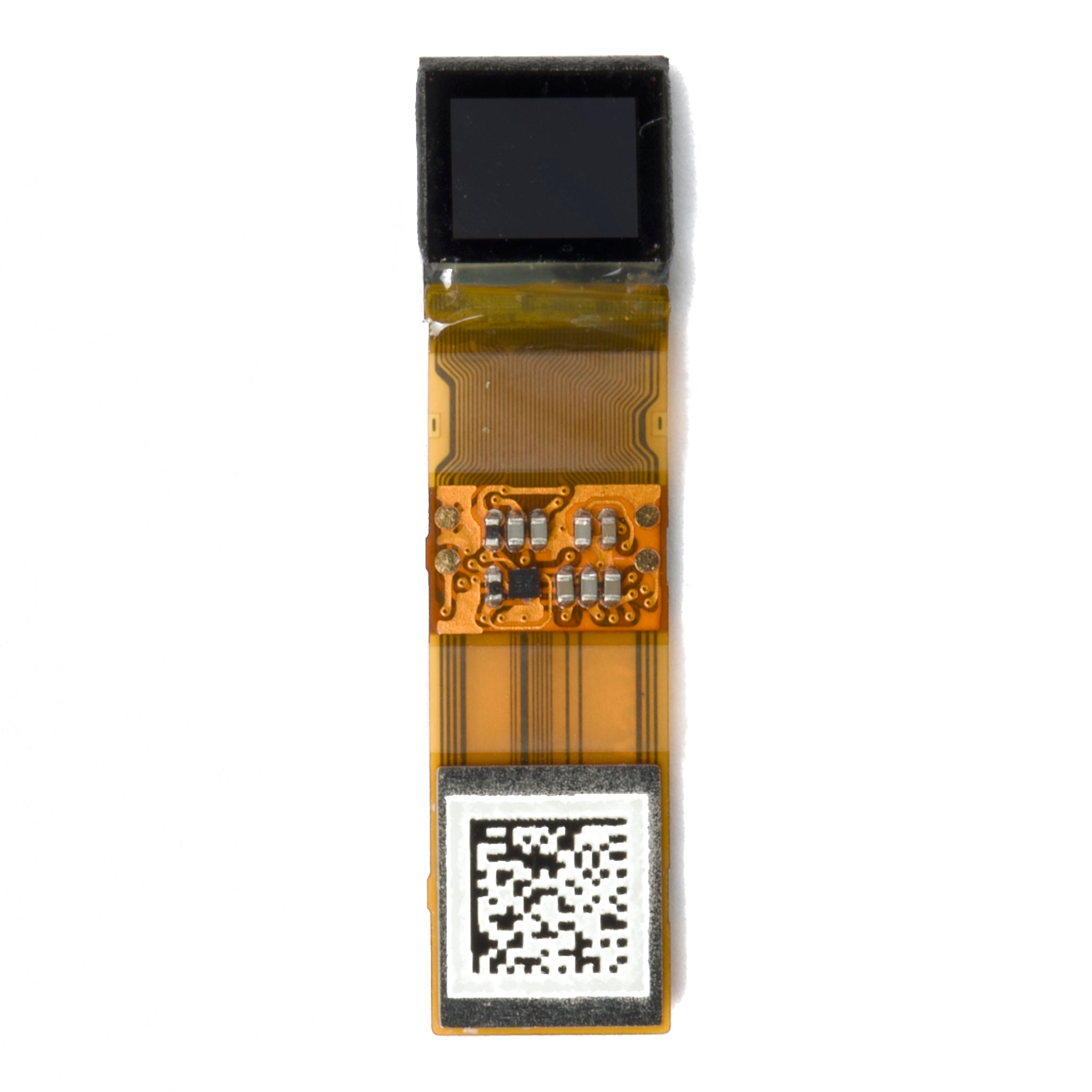
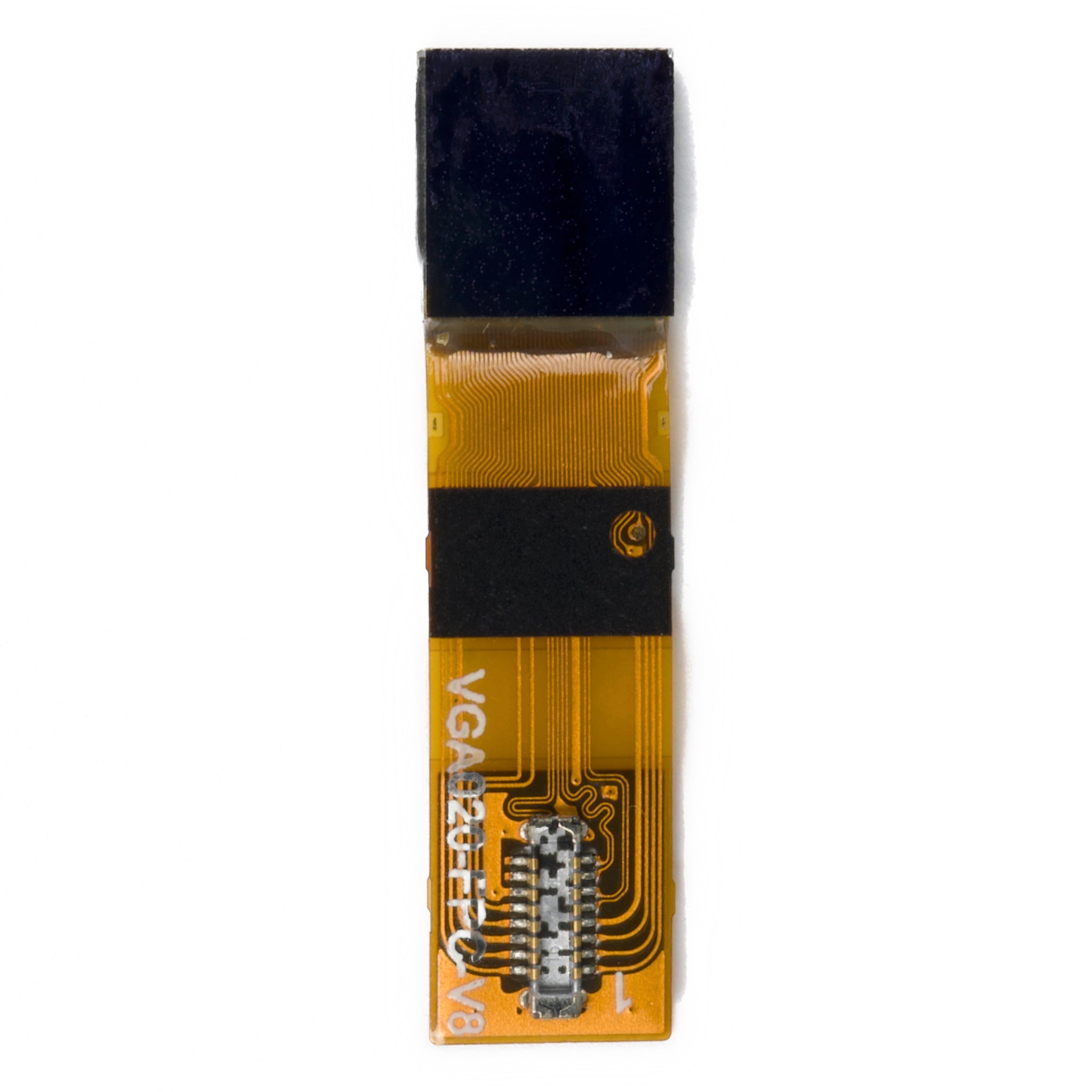
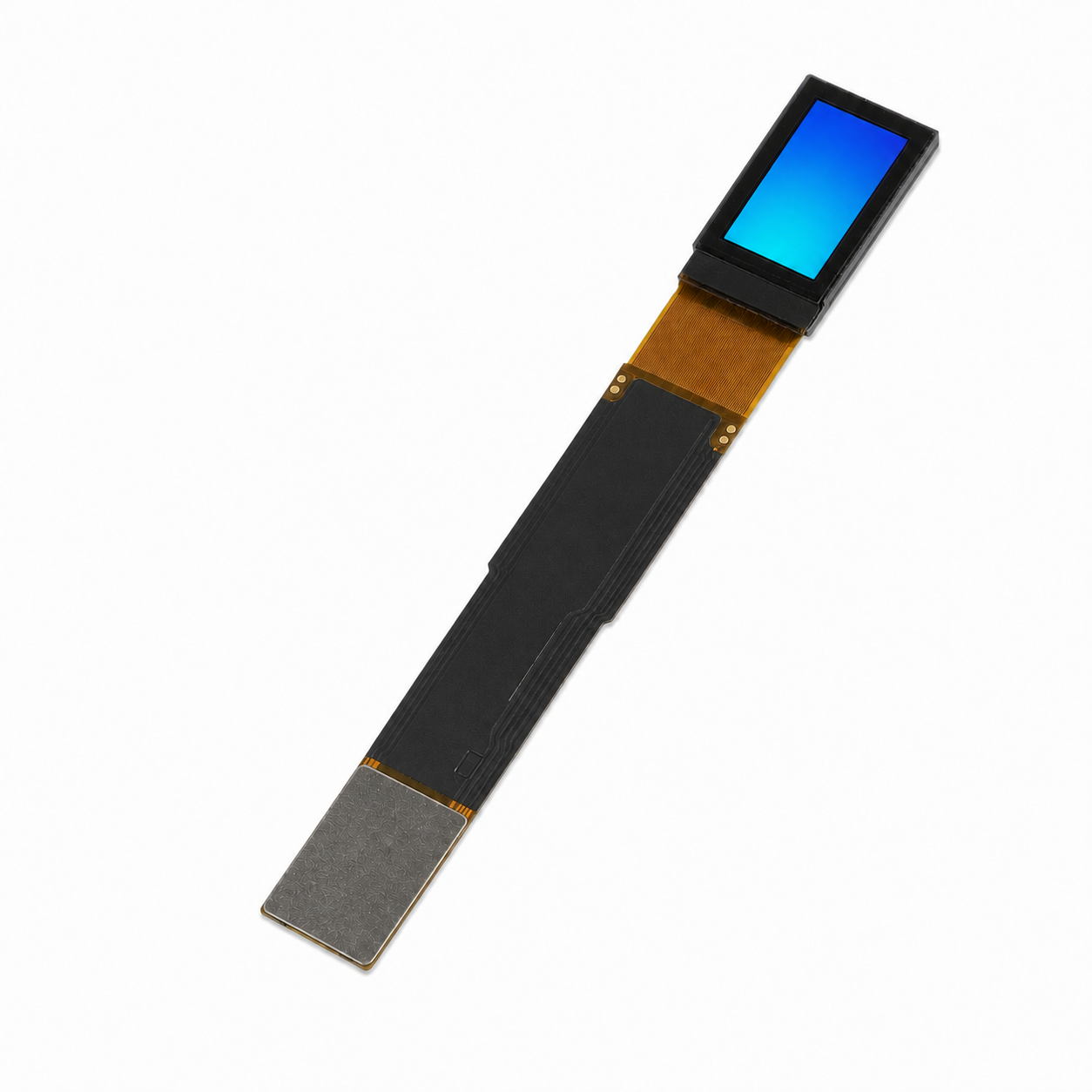
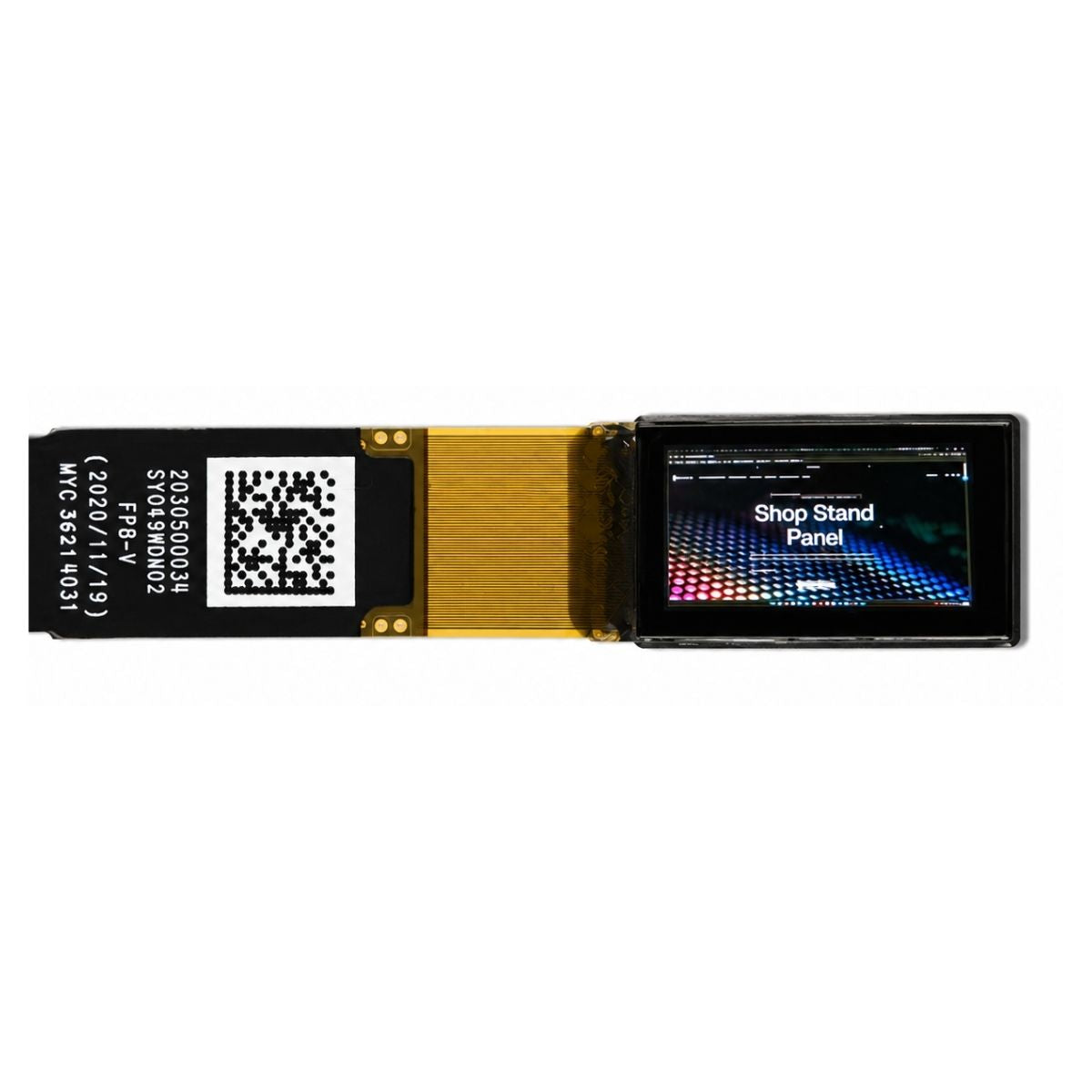


Industrial LCD Display Module | High Brightness, Wide Temperature & Durability
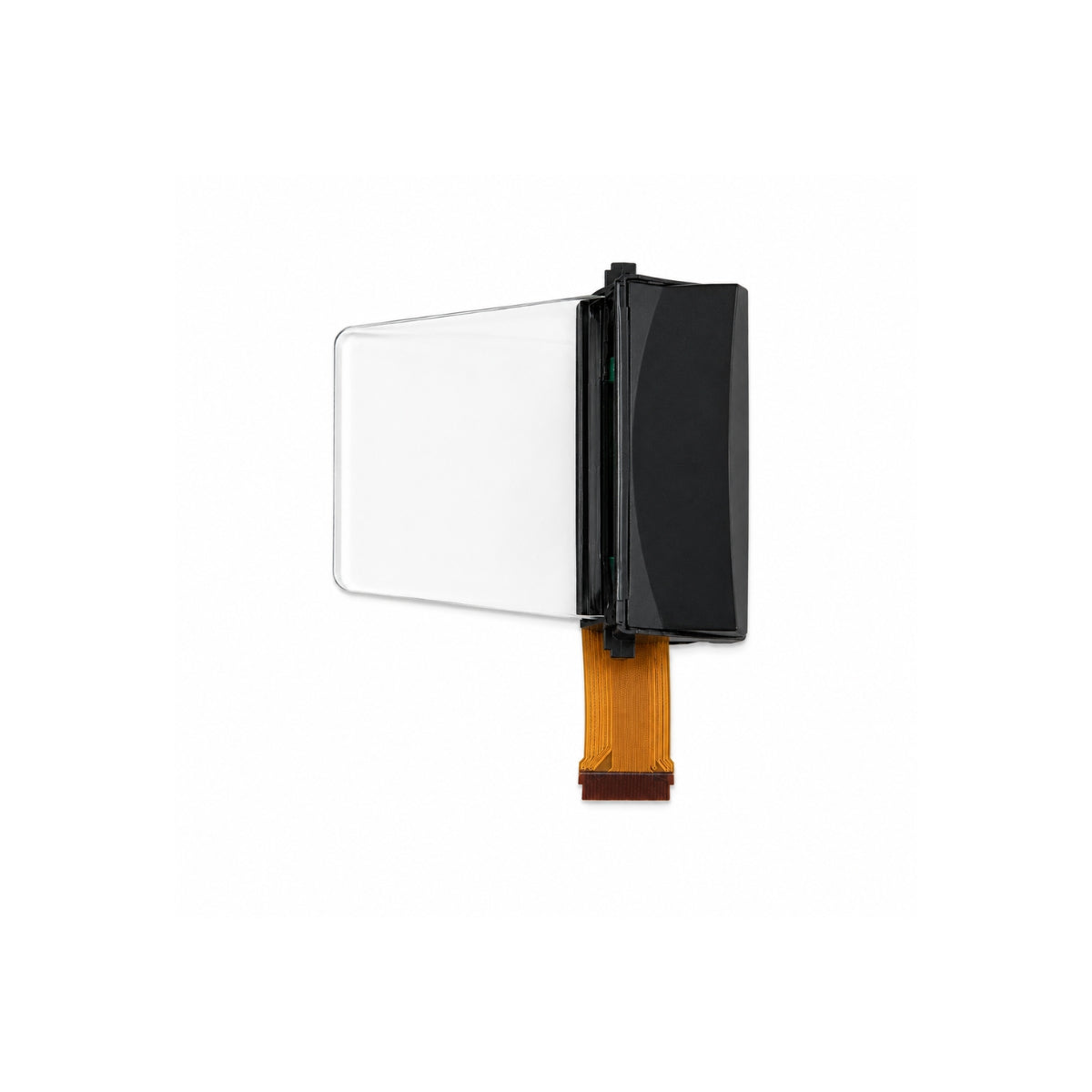
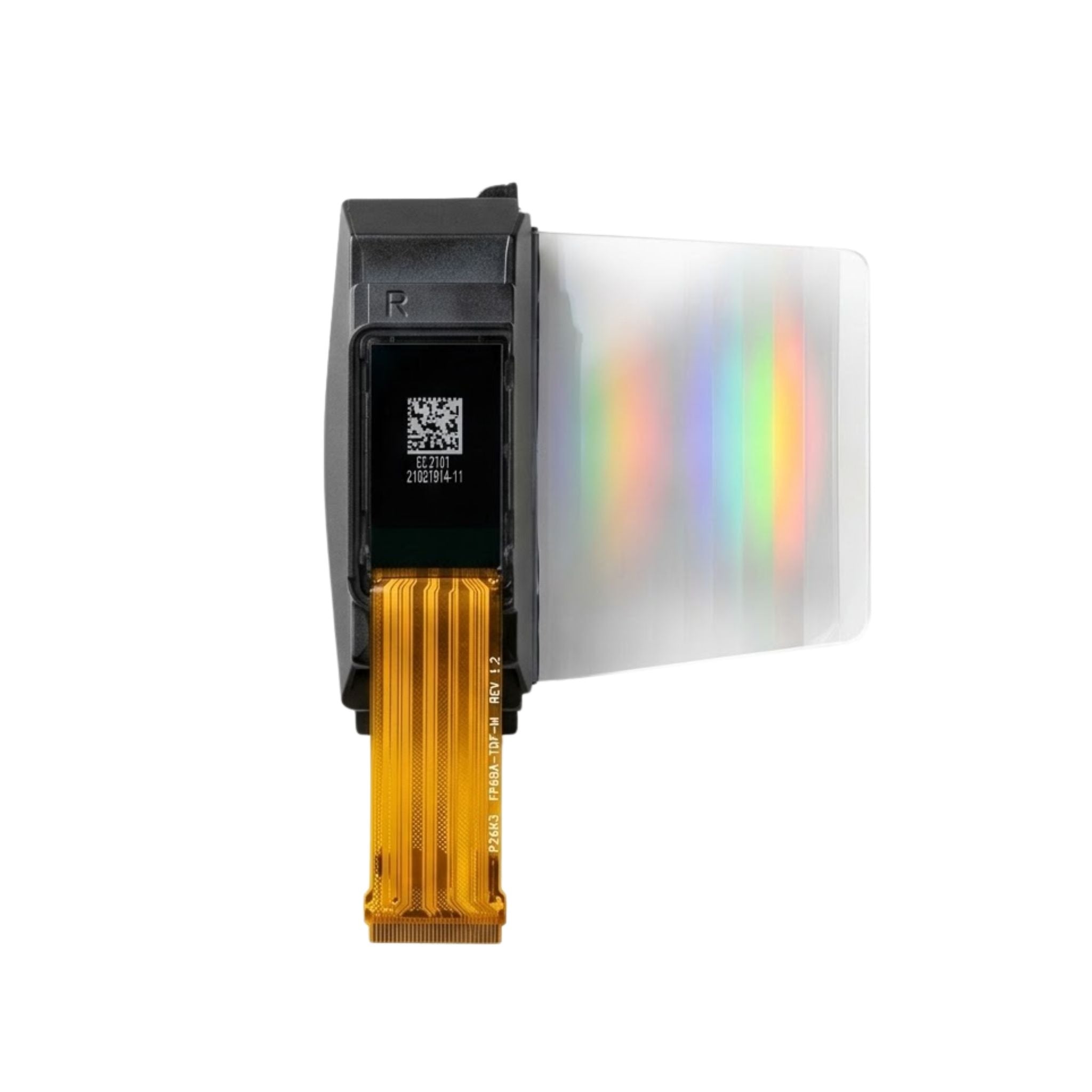
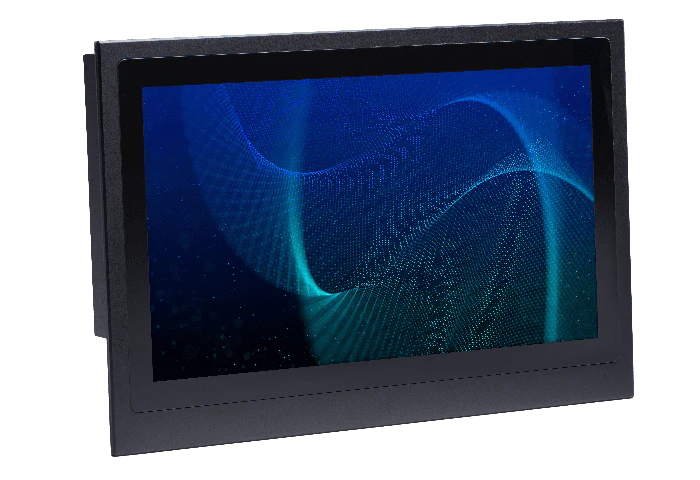
The industrial LCD display module focuses on high brightness (1500 nits), wide temperature range (-40℃ to 85℃), and strong durability.
It uses a 10.1-inch fully laminated screen with a contrast ratio of 1200:1, remaining clear under strong light;
It is IP65 certified and can withstand impacts up to 50G (MIL-STD-810G).
It has a built-in temperature control module to automatically adjust the backlight and supports a 178° wide viewing angle.
Easy to operate, compatible with 24V/48V power supply, and can be directly embedded into outdoor cabinets, meeting the demanding requirements of automotive, industrial control, and other harsh scenarios.
High Brightness
In industrial scenarios, under outdoor sunlight (10,000-100,000 lux) or factory lighting (1,000-5,000 lux), the contrast ratio of standard LCDs (200-400 nits) plummets, causing information to become blurry.
High-brightness industrial screens need ≥1000 nits. For example, a 1500 nits screen maintains a contrast ratio of 1500:1 under 10,000 lux, paired with AG+AR coating (reflectivity <0.5%).
Tests by European and American manufacturers show that a 2000 nits screen has brightness drift <5% across a wide temperature range of -40℃ to 85℃, ensuring visibility in extreme environments.
Environmental Light Challenges
Outdoor Sunlight:
Noon sunlight at the equator can reach 100,000 lux, and temperate summers can have 50,000-80,000 lux. Under these conditions, the reflected light on the surface of a standard LCD screen (200-400 nits) completely obscures the display content.
-
Port Cranes: Before an upgrade in 2022 at the Port of Los Angeles, operators using 300 nits screens at noon sunlight had a contrast ratio for white container number characters as low as 1:5, with a misreading rate as high as 12%. After switching to 1,500 nits screens with AG anti-glare glass, reflectivity dropped from 15% to 0.5%, character edge sharpness improved 4 times, and the misreading rate fell to 4%.
-
Oilfield Drilling Rigs: The drilling control console on a North Sea oil rig. While winter sunlight is weak, snow reflection is equivalent to 60,000 lux. When using 400 nits screens, pressure gauge readings had to be viewed from 30cm away. After switching to 2,000 nits wide-temperature screens (normal startup at -40℃), numbers 0.5mm high could be recognized from 1 meter away, and switching to low brightness mode (200 nits) at night was not glaring.
-
Construction Machinery Cabs: When Caterpillar excavators operated in the Arizona desert, direct sunlight raised screen surface temperature to 70℃, causing ordinary screen brightness to attenuate by 30%. The 2,000 nits screen with graphite heat spreaders had brightness drop by only 5% at 85℃ high temperature, with terrain map coordinate recognition error <2cm.
Indoor Strong Light:
Car factory ceiling lights (3,000-5,000 lux), medical shadowless lamps (2,000-4,000 lux), and supermarket cold chain lighting (1,500-2,500 lux) are typical scenarios.
-
Automobile Assembly Lines: The control screen at BMW's Munich factory originally used 350 nits TN panels. Under 4,000 lux ceiling lights, red alarm lights on the dashboard blended with the background, taking 2.1 seconds to identify. After switching to 1,200 nits IPS screens (178° viewing angle), the alarm signal contrast ratio increased from 3:1 to 15:1, and identification time shortened to 0.8 seconds.
-
Medical Surgical Navigation: Siemens Healthineers' surgical screens. Under shadowless lamps (3,500 lux), 1,800 nits brightness + color accuracy ΔE<2 helped doctors identify 0.2mm blood vessel branches 20% faster. Comparative studies showed that with 1,000 nits screens, pauses during surgery due to glare occurred 3 more times per hour.
-
Supermarket Cold Chain Monitoring: The temperature control screen in Walmart's freezer section. The original 300 nits screen showed washed-out temperature numbers under 1,800 lux fluorescent lights. With a 1,000 nits screen + AR coating, reflectivity was <0.5%, allowing employees to clearly see the "-18℃" label from 3 meters away.
Transportation Scenarios:
Public transportation and charging facility displays need to handle sunlight and rain 24/7, with greater ambient light fluctuations.
-
Bus Electronic Signage: The 55-inch bus stop signs in London's public transport system originally used 700 nits screens. Route information was blurry at summer noon (80,000 lux). After upgrading to 1,500 nits wide-viewing-angle screens, visibility from all angles met standards, and passenger complaints decreased by 60%.
-
Electric Vehicle Charging Stations: The 7-inch screen on ChargePoint charging stations. In the California desert (noon 90,000 lux), the payment QR code on a 700 nits screen was unscannable. With a 1,200 nits screen + local dimming, QR code recognition success rate increased from 55% to 98%.
Mixed Lighting:
Industrial environments often have reflective objects (like metal casings, glass curtain walls) combined with ambient light, creating "glare interference." Also, the day-night light difference can be 100,000 times, requiring the screen to adjust dynamically.
-
Reflection Interference: GE's wind turbine control screens originally used 1,000 nits screens. Reflection from the metal casing caused local area brightness to spike by 50%, leading to data misreading. After switching to 1,500 nits screens + AG glass (haze 3%), the contrast ratio in reflective areas stabilized at 1,200:1.
-
Day-Night Switching: The platform screens on the Oslo Metro need to automatically adjust from 5 am (500 lux) to noon (20,000 lux). Using a 1,200 nits screen with a light sensor, daytime brightness is 1,200 nits, nighttime 200 nits, reducing power consumption by 25% compared to fixed brightness.
Extreme Climate Overlay:
In high-latitude or high-altitude areas, low temperature (-40℃) and strong light (snow reflection equivalent to 50,000 lux) act simultaneously, placing higher demands on screen materials and circuits.
-
Nordic Wind Power Platforms: The control screen on an offshore wind platform in Norway. At -35℃ + 50,000 lux snow reflection, liquid crystal molecules in ordinary screens solidified, causing response delay. The 1,500 nits wide-temperature screen (-40℃~85℃) uses low-temperature liquid crystal material, with startup time <1 second and no lag in data refresh.
-
Alaska Oil Pipeline Monitoring: The screen at an Alaska pipeline station. At -42℃ + strong sunlight after the polar night (70,000 lux), the LED driver IC of the 2,000 nits screen did not experience cold start failure, operating continuously for 8,000 hours with no brightness attenuation.
Technical Implementation
How is the backlight made both bright and power-efficient?
European and American manufacturers commonly use multiple high-power LED arrays paired with quantum dot enhancement films to replace traditional CCFL light sources.
For example, Samsung's industrial module (model LTM150XH-L01) uses 48 pcs/㎡ of OSRAM OSLON SSL 150 series LEDs (single power 0.5W, luminous efficacy 180 lm/W) to form a dense array, combined with 3M's quantum dot film (QDEF), converting blue light to red/green light, increasing brightness from ordinary LED's 800 nits to 1,500-3,000 nits, improving energy efficiency by 25%.
LG uses a micro-structured laser-engraved light guide plate (thickness 2mm), which improves light utilization by 15% compared to traditional injection-molded light guide plates, evenly spreading the LED point light source across the screen and avoiding local bright spots.
Tests show that with this light guide plate at 1,500 nits output, screen edge brightness uniformity is >90%, whereas ordinary light guide plates achieve only 75%.
How does local dimming make bright areas brighter and dark areas less glaring?
Texas Instruments' TLC5958 driver IC supports 64-zone dynamic dimming, with each zone's current individually settable (0.1A-1.2A).
For example, on a 1200 nits screen playing HDR video, the bright area (like a dashboard warning light) current is 1.2A, brightness surges to 2,000 nits;
The dark area (like the background) current is 0.3A, brightness suppressed to 200 nits, reducing overall power consumption by 30% compared to full-screen high brightness.
More advanced is Mini-LED local dimming. Apple's Pro Display XDR uses 576-zone Mini-LED, and industrial screens are following suit.
Samsung's 2024 Odyssey G9 industrial version uses 2,048-zone Mini-LED (single zone size 50μm×50μm), achieving brightness exceeding 5,000 nits at the same power consumption, with dark field contrast ratio reaching 1,000,000:1.
How do anti-reflective coatings deal with glaring ambient light?
Ambient light reflection is the "nemesis" of high-brightness screens, requiring both AG anti-glare glass and AR anti-reflective coating.
AG glass uses chemical etching or sandblasting to create micron-level凹凸 surfaces (haze 3%-5%), turning specular reflection into diffuse reflection.
Schott's AG glass (model AF32 Eco), with 3% haze, reduces reflectivity from ordinary glass's 8% to 3%, while maintaining 92% light transmittance (Schott product manual).
AGC's double-layer AR coating uses SiO₂ and TiO₂ alternately coated on the glass interior, each layer about 100nm thick, suppressing reflectivity to <0.5%.
On a 1,500 nits screen under 10,000 lux ambient light, screen content contrast ratio improves from 500:1 to 2,500:1 (AGC optical test data).
Some high-end screens add a fourth layer, further reducing reflectivity to 0.2%, such as those used on offshore wind power platforms.
How does the cooling system handle the heat from high brightness?
Industrial screens use a metal casing + active cooling combination. The casing uses aluminum alloy (thermal conductivity 237 W/m·K), internally attached with graphite heat spreaders (thermal conductivity 1,500 W/m·K) to quickly conduct LED heat to the frame.
Add a miniature brushless fan (like NMB's 1608 fan, speed 2,000 RPM, noise <25dB) blowing air towards the LED array.
TI tests show this cooling design keeps LED junction temperature controlled at <85℃ (when ambient temperature is 85℃), with brightness decay <5%.
Compared to fanless designs, junction temperature can soar to 110℃, with brightness decay 20% in six months (TI Thermal Design Guide SPRA953).
The 1,500 nits screen used on Equinor's offshore platform in Norway, when starting at -40℃, uses the graphite heat spreader to preheat the casing to -10℃ first, avoiding liquid crystal material solidification, with startup time <1 second.
How do driver ICs keep brightness stable?
Renesas' R63311 driver IC supports current ripple <5% at 1,500 nits output, preventing brightness flicker.
It also integrates overvoltage protection (OVP), automatically cutting power to a zone if an LED in the array shorts, preventing the entire screen from burning out.
Analog Devices' ADV7626 chip can dynamically adjust backlight current based on ambient light sensor data (accuracy ±5 lux), completing brightness switching within 100ms.
In BMW factory tests, this system saved 15% energy compared to manual dimming while maintaining target contrast ratio.
Practical Applications
Brightness in the Trenches: Construction Machinery Cabs
-
Excavators: Caterpillar Cat 320 excavators operating in the Arizona desert faced cabin screens under 70℃ high temperature + 50,000 lux sunlight. The original 350 nits TN screen had brightness attenuation 30% at high temperature, terrain map coordinate recognition error >5cm. After switching to 2,000 nits IPS screens (with graphite heat spreader + miniature fan), brightness only dropped 5% at 85℃, coordinate error <2cm (Caterpillar 2023 Field Test Report).
-
Port Cranes: Liebherr LHM 550 quay crane operator screens at Hamburg Port (noon sunlight 80,000 lux) use 1,800 nits screens + AG glass (haze 3%), extending container number recognition distance from 1.5 meters to 3 meters, misreading rate dropping from 10% to 3%.
-
Oil Rig Drills: NOV's drilling rig control console on the North Sea oil field (-10℃~40℃ + snow reflection 60,000 lux) uses 2,500 nits wide-temperature screens (with low-temperature liquid crystal material), reducing pressure gauge reading recognition time from 3 seconds to 1 second.
Brightness Details on Medical Equipment
-
Surgical Navigation Screens: Siemens Healthineers Artis Q Zen angiography screen, under shadowless lamps (3,500 lux) with 1,800 nits brightness + color accuracy ΔE<2, allows doctors to identify 0.2mm blood vessel branches 20% faster than with 1,000 nits screens. Comparative tests show that with 1,000 nits screens, surgical pauses due to glare occurred 3 more times per hour.
-
Imaging Diagnostic Screens: Philips EPIQ CVx ultrasound diagnostic screen, under reading room ceiling lights (2,000 lux) with 1,500 nits brightness + 10-bit grayscale, improved breast nodule boundary recognition accuracy from 88% to 95%.
-
Emergency Room Monitors: Roche Cobas 8000 monitor screen, under strong emergency room light (4,000 lux) with 1,200 nits brightness + local dimming, reduced jagged interference in heart rate waveforms by 70%.
The Wide-Temperature, High-Brightness Test in Energy Facilities
-
Offshore Wind Power Platforms: Equinor's Johan Sverdrup platform control screen, at -35℃ + 50,000 lux snow reflection, uses 1,500 nits wide-temperature screens (operating range -40℃~85℃), startup time <1 second, with no lag in data refresh.
-
Desert Photovoltaic Power Stations: First Solar's Mojave Desert power station monitoring screens use 2,000 nits screens + AR coating (reflectivity <0.5%). Under 100,000 lux sunlight, inverter efficiency data can be read from 5 meters away.
-
Alaska Oil Pipeline: ConocoPhillips' Prudhoe Bay pipeline monitoring screen, at -42℃ + 70,000 lux strong light after the polar night, uses 2,000 nits screens + automotive-grade LEDs (OSRAM OSLON series), operating continuously for 8,000 hours with no brightness attenuation.
Sunlight and Viewing Angle Challenges in Transportation Scenarios
-
Airport Flight Information Screens: The 55-inch screens at Heathrow Airport Terminal 5 use 1,500 nits wide-viewing-angle IPS panels (178°). Under noon sunlight (80,000 lux), passengers can still read flight numbers at a 45° squint, complaints reduced by 60%.
-
Logistics Sorting Centers: The scanning screens at Amazon's Phoenix sorting center use 1,200 nits screens + local dimming. Under 1,500 lux ceiling lights + package reflection, parcel barcode recognition success rate improved from 92% to 99%.
-
Electric Vehicle Charging Stations: ChargePoint's 150kW fast charger screen, in the California desert (90,000 lux) uses 1,200 nits screens + anti-fingerprint coating, payment QR code recognition time <2 seconds, 3 times faster than 700 nits screens.
Brightness of Retail and Restaurant Self-Service Terminals
-
Supermarket Self-Checkout Screens: Walmart's Scan & Go screens in the cold chain area (1,800 lux fluorescent lights + freezer reflection) use 1,000 nits screens + anti-condensation coating. At -18℃, no fogging occurs, and product barcode recognition rate is 98%.
-
Fast Food Restaurant Ordering Screens: McDonald's US store 15-inch ordering screens, under kitchen ceiling lights (3,000 lux) use 1,200 nits screens + grease-resistant glass.
Wide Temperature
Operating temperature -40℃~85℃ (high-end models -50℃~105℃), storage temperature -55℃~125℃, far exceeding consumer-grade LCD's 0℃~50℃.
Achieved through wide-temperature liquid crystal formulations (like nematic liquid crystals with adjusted viscosity), industrial-grade driver ICs (TI/Maxim series), and fully laminated heat dissipation structures (aluminum alloy frame + graphene film).
Applied in US desert photovoltaic inverters (60℃), German electric vehicle dashboards (-30℃~85℃), ensuring no image ghosting and reducing equipment downtime.
Quantitative Standards
Operating Temperature:
Basic industrial grade covers -40℃ to 85℃, the entry requirement for most outdoor equipment.
Testing per IEC 60068-2-1/2 standards: low temperature -40℃ for 16 hours, high temperature 85℃ for 16 hours, 5 cycles, then check display: no screen abnormalities, dead pixels ≤0.01%.
High-end industrial grade extends to -50℃ to 105℃, used in aviation, polar research equipment.
Here, liquid crystal material must have viscosity <8mPa·s at -50℃, ensuring response time <60ms.
Military grade is stricter, -70℃ to 150℃, passing MIL-STD-810G thermal shock tests.
For example, Raytheon's missile guidance system LCD operates continuously for 2 hours at 150℃, brightness attenuation <3%.
Storage Temperature:
Basic industrial grade short-term -55℃ to 125℃, long-term -40℃ to 100℃.
Testing per IEC 60068-2-48: store at 125℃ for 168 hours, check for liquid crystal layer delamination (delamination area <0.5mm² qualifies);
Store at -55℃ for 168 hours, confirm no physical cracks (observed under microscope, crack length <0.1mm).
High-end models: short-term -65℃ to 135℃, long-term -50℃ to 110℃.
For example, Bosch industrial controller backup screens, stored at -65℃ for 3 months, still have startup response time <100ms upon retrieval.
Quantitative standards for storage failure: Backlight LED light decay >20% at high temperature, or polarizer embrittment at low temperature.
Performance Parameters:
Temperature changes directly affect display performance, requiring specific data to quantify "normal":
-
Response Time: At low temperature -40℃, ordinary LCD >200ms (significant motion blur), wide-temperature LCD <50ms. Test method uses photoelectric sensor to measure pixel switching time from grayscale 0 to 255, average of 16 points.
-
Contrast Ratio: At high temperature 85℃, ordinary LCD contrast drops from 1000:1 to 300:1 (image appears washed out), wide-temperature LCD maintains ≥500:1.
-
Brightness Attenuation: After 1000 hours continuous operation at 85℃, wide-temperature LCD brightness decay <10% (consumer-grade >30%), measured using integrating sphere averaging 9 points.
-
Color Shift: Use a colorimeter (like X-Rite i1Pro) to measure ΔE value, ΔE <3 at -40℃ (indistinguishable to human eye), ΔE <2 at 85℃.
Testing Standards:
Quantitative standards need third-party certification backing. Mainstream overseas test protocols:
-
IEC 60068-2-14: Temperature change rate 1℃/minute, from -40℃ to 85℃ and back, 10 cycles, check for screen flicker. Pass criteria: no functional failure after cycles.
-
MIL-STD-810G Method 503.6: Thermal shock (-55℃→71℃, transition <10 seconds), 50 cycles, simulating sudden field temperature changes. Example: Caterpillar excavator display passed this test, no failure from Alaska winter (-45℃) to Middle East summer (60℃).
-
JEITA ED-4701: High temperature/high humidity storage (85℃/85%RH) for 1000 hours, check for liquid leakage (leakage area=0 qualifies). Panasonic industrial screens use this standard, leakage rate <0.001%.
Quantitative Focus for Different Scenarios
When selecting wide-temperature LCDs, focus on quantitative indicators by scenario:
-
Automotive (Europe/North America): Focus on -30℃ startup time (<2 seconds), color shift ΔE <2 at 85℃ (e.g., Tesla Model S dashboard).
-
Outdoor Energy (US Desert): Concern: brightness decay <5% after 5000 hours continuous operation at 60℃ (First Solar inverter screen data).
-
Aviation (US Military Aircraft): Must meet: no image retention after -55℃ storage (response time <80ms), reference Lockheed Martin F-35 cockpit screen.
Temperature Limitations
What to do when liquid crystal molecules "freeze" at low temperatures?
Ordinary liquid crystals (like TN type) have viscosity rising above 25mPa·s at -20℃, molecule alignment slows, causing response time exceeding 200ms.
When temperature drops to -30℃, some liquid crystals enter a "semi-solid state," screen goes black directly—e.g., outdoor monitoring screens in Ontario, Canada winter (-35℃), ordinary LCDs took 30 minutes after startup to display blurry images.
More specific limitations:
-
Startup Delay: At -40℃, ordinary LCD takes >5 seconds from power-on to first frame (LG Display test data), while wide-temperature LCDs using low-viscosity formula (viscosity <8mPa·s) compress this to 1.2 seconds.
-
Dead Pixel Surge: Low temperature causes pressure changes inside the liquid crystal cell, easily causing sealant cracking, dead pixel count increases from <0.001% at room temperature to 0.1% (IEC 60068-2-1 test standard). E.g., A Bosch model LCD had 0.08% dead pixel rate after 24-hour storage at -45℃.
-
Backlight Failure: LED backlight luminous efficacy drops 40% at -30℃ (Cree LED data), screen brightness drops from 500 nits to below 300 nits, requiring additional brightening circuit compensation.
What happens when high temperature makes liquid crystals "run wild"?
When temperature exceeds 85℃, ordinary liquid crystal viscosity drops below 5mPa·s (Sharp lab), molecule alignment becomes disordered, contrast ratio plummets from 1000:1 to 300:1 (image appears washed out), color saturation drops 25%.
Specific limitations at high temperature:
-
Driver IC Overheat Protection: Consumer-grade driver ICs (like Novatek NT35510) trigger thermal shutdown at 85℃, screen goes black.
-
Leakage Current Exceeds Standard: High temperature activates ionic impurities in liquid crystal layer, leakage current increases from <0.1μA at room temperature to above 1μA (UL 62368-1 safety standard limit 0.5μA). E.g., A ViewSonic industrial screen had leakage current 0.8μA after 2 hours continuous operation at 90℃.
-
Polarizer Aging: In 85℃/85%RH environment, ordinary polarizers (like Fujifilm LQ070Y3DG3G) have light transmittance drop 15% after 1000 hours (Fujifilm material manual), screen edges darken. Wide-temperature solutions use high-temperature resistant polarizers (like Zeon ZF-4000), under same conditions transmittance drops only 5%.
"Stress Damage" from Sudden Temperature Changes
Industrial equipment often experiences sudden cold/heat cycles (e.g., outdoor equipment from night -30℃ to noon 60℃), where LCD faces thermal expansion/contraction stress limitations.
The difference in coefficient of thermal expansion between glass substrate (Corning Eagle XG) and sealant (epoxy resin) (glass 3.2ppm/℃, adhesive 60ppm/℃) creates shear stress during sudden temperature changes.
Specific limitations:
-
Delamination and Bubbles: After 10 cycles of -40℃→85℃, ordinary fully laminated screens (OCA adhesive thickness 0.2mm) have delamination area up to 2mm² (3M test). Wide-temperature solutions use low-stress OCA adhesive (thickness 0.1mm, modulus 0.3MPa) to control delamination within 0.5mm².
-
Flexible Printed Circuit (FPC) Fracture: Under temperature cycling, copper foil separates from PI substrate in FPCs. Ordinary FPCs have 10% fracture rate after 50 cycles of -40℃↔85℃ (Sumitomo data). Industrial-grade FPCs use rolled copper (ductility improved 30%) to reduce fracture rate to 1%.
Temperature Tolerance Limits of Different Components
|
|
|
|
|
|
|---|---|---|---|---|
|
|
|
|
|
|
|
|
|
|
|
|
|
|
|
|
|
|
|
|
|
|
|
|
Temperature Limitation Examples in Overseas Scenarios
-
Outdoor Advertising Displays, Arizona, USA: Summer surface temperature 70℃. Ordinary LCD brightness decreased by 30% after 8 hours continuous operation (Samsung commercial screen test). After switching to wide-temperature screens (brightness attenuation <10%), daily failure report decreased from 3 to 0.5 times (Outfront Media maintenance records).
-
Norwegian Offshore Drilling Platform: Winter deck temperature -25℃. Ordinary LCD flickered during startup (response time >150ms). After switching to -40℃ wide-temperature screen, startup image stabilized in <2 seconds (Equinor platform log).
-
Australian Mine Truck Dashboard: Cab temperature reached 65℃ in summer. Ordinary LCD contrast dropped from 800:1 to 400:1 within six months (Caterpillar feedback). Industrial-grade screen (maintains contrast ≥600:1 at high temp) extended service life to 3 years (Caterpillar 2023 Parts Report).
Capability Validation
What are the testing standards?
-
Basic Environmental Testing: IEC 60068-2 series (International Electrotechnical Commission), with 2-1 for low temperature (-40℃/16h), 2-2 for high temperature (85℃/16h), 5 cycles, then check display uniformity (dead pixels ≤0.01%). E.g., UL lab tested Planar industrial screen per this standard: -40℃ startup time 1.2 seconds, brightness attenuation 4.8% after 72 hours at 85℃.
-
Military Extreme Testing: MIL-STD-810G (US Military Standard), Method 503.6 Thermal Shock (-55℃↔71℃, transition <10 seconds, 50 cycles), simulating sudden field temperature changes. Caterpillar excavator screens passed this, no failure from Alaska (-45℃) to Middle East (60℃).
-
Industry-Specific Testing: JEITA ED-4701 (Japan Electronics and Information Technology Industries Association), high temp/humidity (85℃/85%RH storage 1000h) check for liquid leakage; ISO 16750-4 (Automotive electronics) requires no image retention at -40℃ startup, color shift ΔE <2 at 85℃.
Specifically How to Test Low Temperature:
-
Startup Phase: Place screen in -40℃ environmental chamber, power on, use high-speed camera to record time for first frame to appear. Ordinary LCD >5 seconds (LG Display data), wide-temperature LCD using low-viscosity liquid crystal (viscosity <8mPa·s), e.g., Kopin industrial screen startup time 1.1 seconds (Kopin 2023 spec). Also test response time: use photoelectric sensor to measure pixel grayscale 0→255 switching, wide-temperature screen <50ms at -40℃ (no motion blur to human eye), ordinary screen >200ms.
-
Operation Phase: Maintain at -40℃ for 16 hours, measure contrast ratio every 2 hours with BM-7 luminance meter. Wide-temperature screen maintains ≥500:1, ordinary screen drops below 300:1. Check dead pixels: use AOI automatic optical inspection, wide-temperature screen dead pixels ≤0.005% after 5 cycles.
-
Recovery Phase: After power-off at -40℃, move to 25℃ environment, restart within 30 minutes, check for image retention. Wide-temperature screen retention area <0.1mm² (Panasonic data), ordinary screen >1mm².
What to Look for in High Temperature Testing:
-
Single Temperature Test: Place screen in 85℃ chamber, operate continuously 1000 hours. Measure brightness attenuation: use integrating sphere to measure 9-point average brightness, wide-temperature screen attenuation <10% (e.g., ViewSonic industrial screen measured 8.2%), ordinary screen >30% (ViewSonic test doc). Measure driver IC temperature: use infrared thermal camera on chip surface, industrial-grade IC (like Maxim MAX17135) with thermal pad (50% larger than consumer-grade) has junction temperature <110℃ at 105℃ (Maxim datasheet), consumer-grade IC (Novatek NT35510) junction temperature reaches 120℃ at 85℃ triggering shutdown.
-
Combined Test: Store at 85℃+85%RH for 1000 hours (JEITA standard), check for liquid leakage. Wide-temperature screens use low-ion liquid crystal (ion concentration <0.1ppb), leakage area=0 (NLT technical report); ordinary screens ion concentration >1ppb, leakage rate 0.002% (NLT 2022 data). Measure polarizer aging: use spectrophotometer for transmittance, wide-temperature screen with Zeon ZF-4000 polarizer, transmittance drops 5% after 1000h, ordinary screen (Fujifilm LQ070Y3DG3G) drops 15%.
How to Validate Sudden Cold/Heat:
Temperature cycling test simulates field day-night temperature difference, per IEC 60068-2-14 standard: 1℃/minute rate from -40℃ to 85℃ and back, 10 cycles.
-
Delamination Test: Fully laminated screen (OCA adhesive thickness 0.1mm~0.3mm) use ultrasonic scanning. Wide-temperature screens use low-stress OCA adhesive (modulus 0.3MPa), delamination area <0.5mm² after cycles (3M 2022 report), ordinary screen (modulus 1.0MPa) delamination >2mm² (3M test).
-
FPC Fracture Test: Attach strain gauge to Flexible Printed Circuit, measure copper ductility after cycles. Industrial-grade FPC with rolled copper (elongation 35%), fracture rate 1% after 50 cycles (Sumitomo data); ordinary FPC with electrolytic copper (elongation 25%), fracture rate 10%.
-
Seal Failure Test: Use helium mass spectrometer leak detector to measure sealant leakage rate. Wide-temperature screen leakage rate <1×10⁻⁸ mbar·L/s (Heraeus adhesive data), ordinary screen >1×10⁻⁷ mbar·L/s (Heraeus 2022 report).
How to Read Third-Party Certification:
Validation results need third-party agency stamps, focus on certification type and data appendices.
-
UL Certification: Check UL 62368-1 electrical safety report, focus on high-temperature leakage current (<0.5mA), low-temperature startup time (e.g., E Ink screen -40℃ startup 1.3 seconds).
-
MIL-STD Certification: Lockheed Martin UAV screen comes with MIL-STD-810G certificate, noting response time <80ms after 50 thermal shock cycles (Lockheed 2023 test report).
-
Industry Certification: TÜV's ISO 16750-4 certificate for BMW car screen, includes color shift ΔE=1.5 over -30℃~85℃ (TÜV 2022 document).
Durability
Wide-temperature liquid crystals support -40℃~85℃ operation (consumer-grade only 0℃~50℃), LED backlight life 50,000 hours (over 5 years continuous operation), passing 100G impact test (MIL-STD-810G standard), 1000-hour aging test (brightness attenuation <20%), protection up to IP65/IP67 (dust/water resistant), service life 5~8 years (consumer-grade 1~2 years), directly reducing overseas factory shutdown maintenance costs.
Materials
Panel:
-
Choose Thick, Hard Glass: Corning Gorilla Glass 6 is mainstream, thickness 3mm (1mm thicker than consumer-grade), surface hardness 9H (pencil hardness test, withstands 2H pencil scratch without marks). Test: drop 1kg steel ball from 1 meter height onto screen, no cracks (ASTM F963 drop test standard). Schott's Xensation series is also good, bending strength 700MPa (consumer-grade about 400MPa), suitable for mining machinery vibration scenarios.
-
UV and Stain-Resistant Coating: Glass surface must have anti-UV hard coating, using AGC's UV Cut coating, compliant with ASTM G154 standard (after 1000 hours UV exposure, yellowing index ΔE <3, barely visible discoloration). Anti-stain uses PPG's anti-fingerprint coating, contact angle >110°, measured in food factory grease environment (grease concentration 50mg/m²), weekly cleaning maintains cleanliness.
Comparison Data: Consumer-grade panels use soda-lime glass (hardness 6H), 1kg steel ball drop from 0.5m cracks it; without anti-UV coating, outdoor use for 2 years shows noticeable yellowing (ΔE >8), affecting readability.
Liquid Crystal:
Overseas manufacturers use wide-temperature liquid crystal materials, mainly from Merck and UDC.
-
Temperature Range: Merck ML-123 wide-temperature liquid crystal, operating temperature -40℃~85℃ (consumer-grade TN liquid crystal only 0℃~50℃). At -40℃, liquid crystal molecule response time 22ms (measured with TOF camera), keeping up with industrial camera frame refresh (30fps requires <33ms response). At 85℃, response time 35ms, no ghosting (compared to consumer-grade >100ms at 85℃, blurred image).
-
Formula Details: Add 5% chiral agent (like R-811) to liquid crystal for more stable molecule alignment. Test with polarizing microscope, molecule twist angle deviation <2° at -40℃ (consumer-grade deviation >10°, causing light leakage).
Circuit:
-
Fully Coat PCB with Conformal Coating: Humiseal 1B73 conformal coating is standard, spray thickness 50μm (measured with film thickness gauge), covering all chips, capacitors, traces. Test per ASTM B117 salt spray standard, after 500 hours, solder joints have no green corrosion (uncoated consumer-grade PCB shows white salt crystals after 100h). Anti-mold uses Dow Corning silicone conformal coating, in 95% humidity, 30℃ environment, 28 days no mold growth (ASTM G21 standard).
-
Interface with Silicone Gasket: Screen flex cable interface (FPC) uses Parker silicone gasket, compression ratio 30%, with metal clips, achieving IP67. Test with high-pressure water jet (12.5L/min, distance 30cm) for 10 minutes, no trace of water inside.
Backlight:
Backlight is the screen's "lamp," must be bright, long-lasting, flicker-free. Overseas manufacturers use industrial-grade LEDs, mainly Cree and OSRAM.
-
Choose High-Lifetime LED Chips: Cree XP-E2 LED, single power 1W, color temperature 6500K (close to daylight), lifetime 50,000 hours (IES LM-80 test, ambient temperature 55℃).
-
Use Modified PMMA for Light Guide Plate: Light guide plate uses Sumitomo's Acrylite L40, adding 2% UV inhibitor, after 1000 hours UV exposure, light transmittance maintains 92% (consumer-grade light guide plate drops to 85%).
Comparison: Consumer-grade LEDs use domestic chips, lifetime 15,000 hours (≈1.7 years), brightness decays to 60% in 3 years, screen dim, hard to read.
Material Testing:
Selecting good materials isn't enough; must test per overseas standards. E.g.:
-
Glass: ASTM C158 (bending strength), ISO 15184 (pencil hardness).
-
Liquid Crystal: JESD22-A104 (temperature cycling), IEC 61747 (response time).
-
Conformal Coating: IPC-CC-830 (adhesion), MIL-STD-883 (salt spray).
-
LED: IES TM-21 (lifetime prediction), CIE 13.3 (color consistency).
Structure
How does the casing withstand impacts and vibration?
Overseas manufacturers mainly use metal frame + internal cushioning combination.
-
Choose Thick, Hard Frame Material: Planar's industrial LCD uses 6061 aluminum alloy frame, bezel thickness 4mm (2mm thicker than consumer-grade), tensile strength 310MPa (ASTM B211 test), withstands 100G impact acceleration (MIL-STD-810G Method 516.8 standard, equivalent to force from 1m drop onto concrete). Beijer's high-end models use 304 stainless steel frame, thickness 5mm, maintaining toughness at -40℃ low temperature (Charpy impact test, notch impact energy ≥27J).
-
Add "Shock Absorbers" Inside: Attach 3M VHB foam inside frame (thickness 2mm, density 0.3g/cm³), absorbing 80% vibration energy. Test with vibration table simulating mining robot arm (frequency 5Hz~2000Hz, amplitude ±5mm, 72 hours), screen shows no abnormalities, screws not loose (ISTA 3A transportation vibration standard). Compared to consumer-grade plastic casing, the same test causes screw displacement in 30 hours.
-
Round the Corners: All corners polished to R2mm arc (ASTM F963 safety design), avoiding stress concentration. Drop 1kg steel ball from 1.2m height onto corner, no cracks (consumer-grade right angle corners crack at 0.8m).
How does full lamination solve condensation and dust?
Traditional edge lamination leaves 1mm air gap, moisture enters causing condensation, dust also gets in. Overseas industrial LCDs all use OCA full lamination, bonding panel, touch layer, cover glass "into one piece."
-
Use Optical Grade Adhesive: Use 3M 8146 OCA optical adhesive (thickness 0.25mm), light transmittance 99% (ASTM D1003 test), refractive index close to glass (1.49), reducing reflection. Lamination uses vacuum laminator (pressure 0.5MPa, temperature 80℃, 30 minutes), bubble rate <0.1% (consumer-grade edge lamination bubble rate 5%~10%).
-
Data Comparison: After full lamination, at 90% humidity, no condensation (edge lamination shows fog within 24h); under strong light, viewing angle improves from 120° to 160° (contrast improves 25%, measured data); probability of dust entering gap becomes 0 (edge lamination accumulates 0.1mm dust in gaps after 3 months, affecting display).
-
Case: NEC outdoor advertising screens use OCA lamination, in Dubai desert (humidity 20%~80% fluctuation) used 3 years, screen内部 no dust accumulation (teardown report).
How do sealing grooves and gaskets block water and dust?
Overseas manufacturers design labyrinth sealing grooves + elastic gaskets to achieve IP65/IP67 protection.
-
"Maze" Design for Sealing Groove: Screen edge has 3 labyrinth grooves (depth 1.5mm, width 2mm), dust/water must surround 9 turns to enter. With EPDM rubber gasket (hardness 70 Shore A, compression set <15%, ASTM D395 test), 30% compression ratio creates a sealed space.
-
Test Data: IP67 certification requires underwater 1 meter for 30 minutes, no ingress (IEC 60529). Test with high-pressure water jet (12.5L/min, pressure 0.3MPa, distance 30cm) for 10 minutes, internal humidity sensor shows <80%RH (unsealed edge lamination gets water in 5 minutes).
-
Outdoor Models Add "Second Line of Defense": Advantech outdoor LCDs add a layer of silicone waterproof膜 (thickness 0.1mm) outside sealing groove, for heavy rain.
Heat Sink Fins Help Screen "Cool Down"
High-temperature environments need cooling, otherwise backlight and driver IC overheat. Overseas manufacturers add aluminum heat sink fins on casing back.
-
Scientific Fin Design: Use extruded aluminum profile (type 6063-T5), fin spacing 5mm, height 20mm, surface area 3 times larger than flat casing (Flotherm thermal simulation).
-
Measured Effect: At an ambient temperature of 85℃, the device was powered on for 4 hours., driver IC temperature drops from 105℃ to 82℃ (without fins reaches 118℃, triggering overheat shutdown).
-
Comparison: Consumer-grade LCD uses plastic casing, same environment IC temperature exceeds 120℃, 1-year failure rate 30% (North American Manufacturing Association 2023 report).
Structural Testing: Each Item Per Overseas Military Standards
-
Impact Test: MIL-STD-810G Method 516.8, 100G acceleration (11ms half-sine wave), measure structural deformation (allowable ≤0.1mm).
-
Vibration Test: Method 514.8, random vibration (5Hz~2000Hz, overall RMS acceleration 5G), measure screw loosening.
-
Sealing Test: IEC 60529, IP67 certification (underwater 1m for 30min), use endoscope to check内部 for water stains.
Testing
How to Test Thermal Cycling:
Overseas manufacturers use temperature cycling chambers (e.g., Thermotron SM-32), executing per MIL-STD-810H standard:
-
Test Conditions: Start at -40℃, heat to 85℃ (hold at each temperature 48 hours), cool back to -40℃, counts as 1 cycle. Total 10 cycles (960 hours total).
-
What to Measure: Liquid crystal response time (use Photron high-speed camera, require <25ms at -40℃, <35ms at 85℃), backlight flicker (use photometer, brightness fluctuation <5%), screen image retention.
-
Failure Example: A manufacturer used Korean liquid crystal, at cycle 3, -40℃ response time soared to 30ms (standard <25ms), motion blur caused parameter misreading, rejected by Planar. Consumer-grade LCD under same test, backlight turns off at 85℃ after 2 cycles (driver IC overheat protection).
How to Test Vibration and Bumps:
Factory vibration comes from transport vehicles, robot arms, equipment operation. Test uses electrodynamic vibration table (e.g., Brüel & Kjær V8900), per MIL-STD-810G Method 514.8:
-
Random Vibration Test: Frequency 5Hz~2000Hz, overall RMS acceleration 5G (simulating mining robot arm), 72 hours. Measure screw torque (use Hazet torque wrench), required attenuation < 10% (initial torque 1.5N·m, final ≥1.35N·m); use high-speed camera on display, no abnormalities, flicker.
-
Shock Test: 100G acceleration (11ms half-sine wave, simulating 1m drop), per Method 516.8. Measure structural deformation (use micrometer on frame, allowable ≤0.1mm), FPC cable no break (use multimeter continuity check, resistance <1Ω).
-
Data Comparison: Consumer-grade LCD under 5G vibration 24 hours, torque screw attenuation
Read more
For high-performance LCD modules in 2025, prioritize brands like AUO and Innolux for 4K resolution and 240Hz refresh rates. Key specs include 1000 nits brightness and wide color gamut. displayModul...
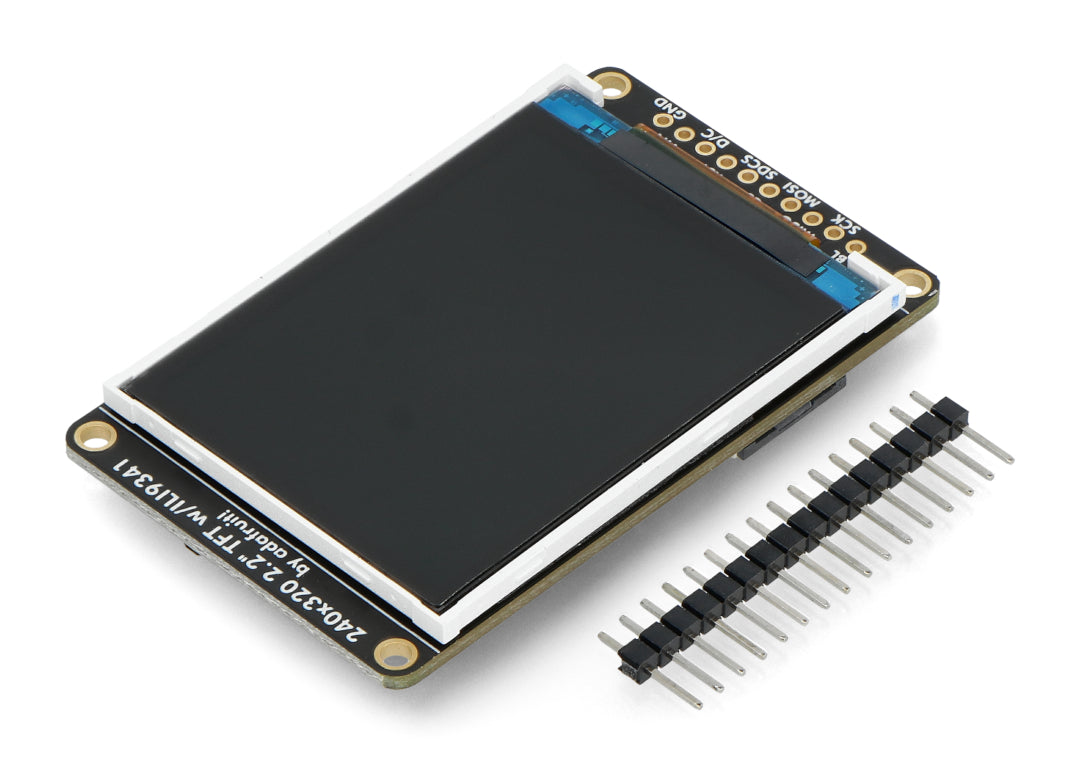
The color LCD display module is based on TFT active matrix technology, offering fast response times (≤25ms) and excellent true color reproduction (16.7 million colors, 24-bit color depth), with res...
Leave a comment
This site is protected by hCaptcha and the hCaptcha Privacy Policy and Terms of Service apply.