

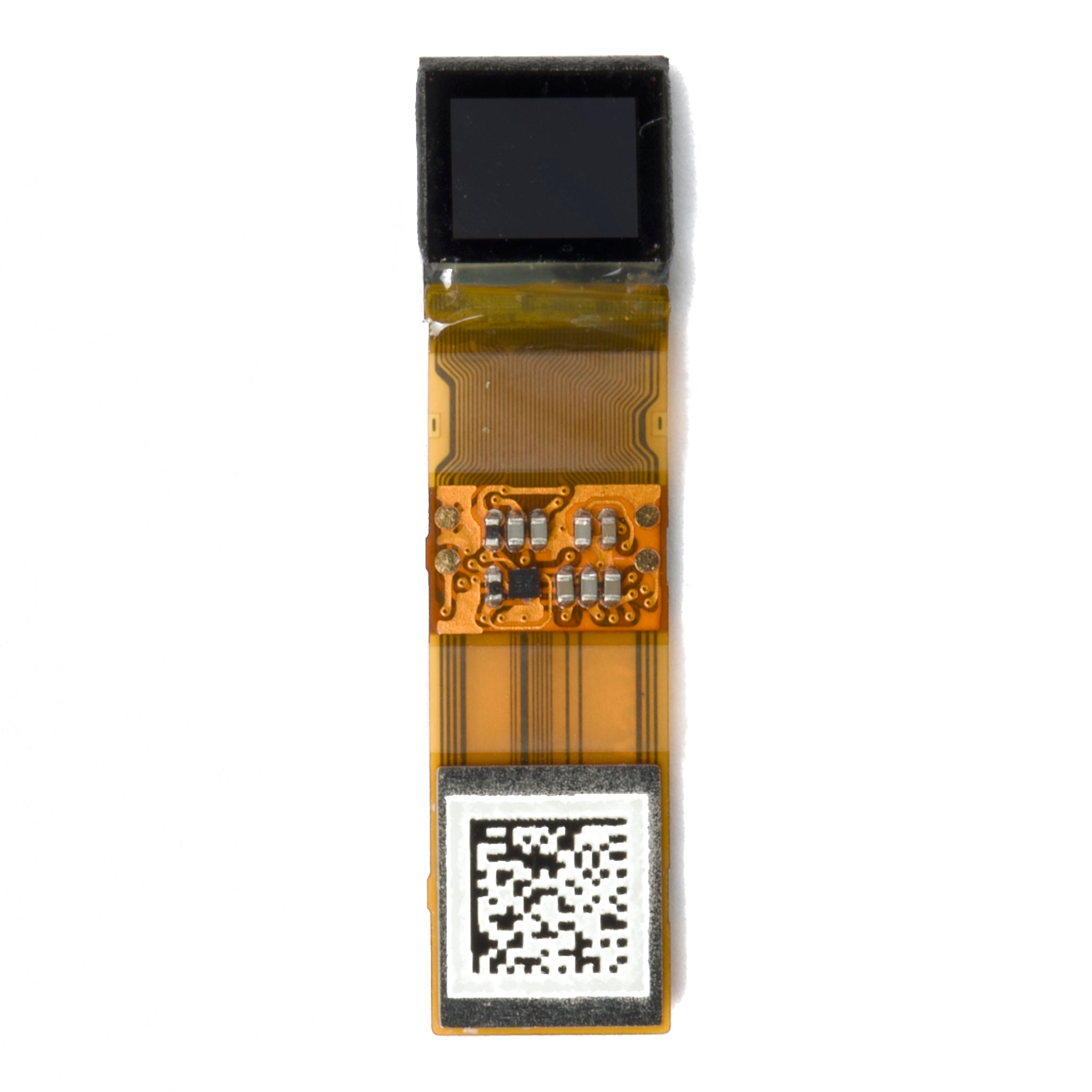
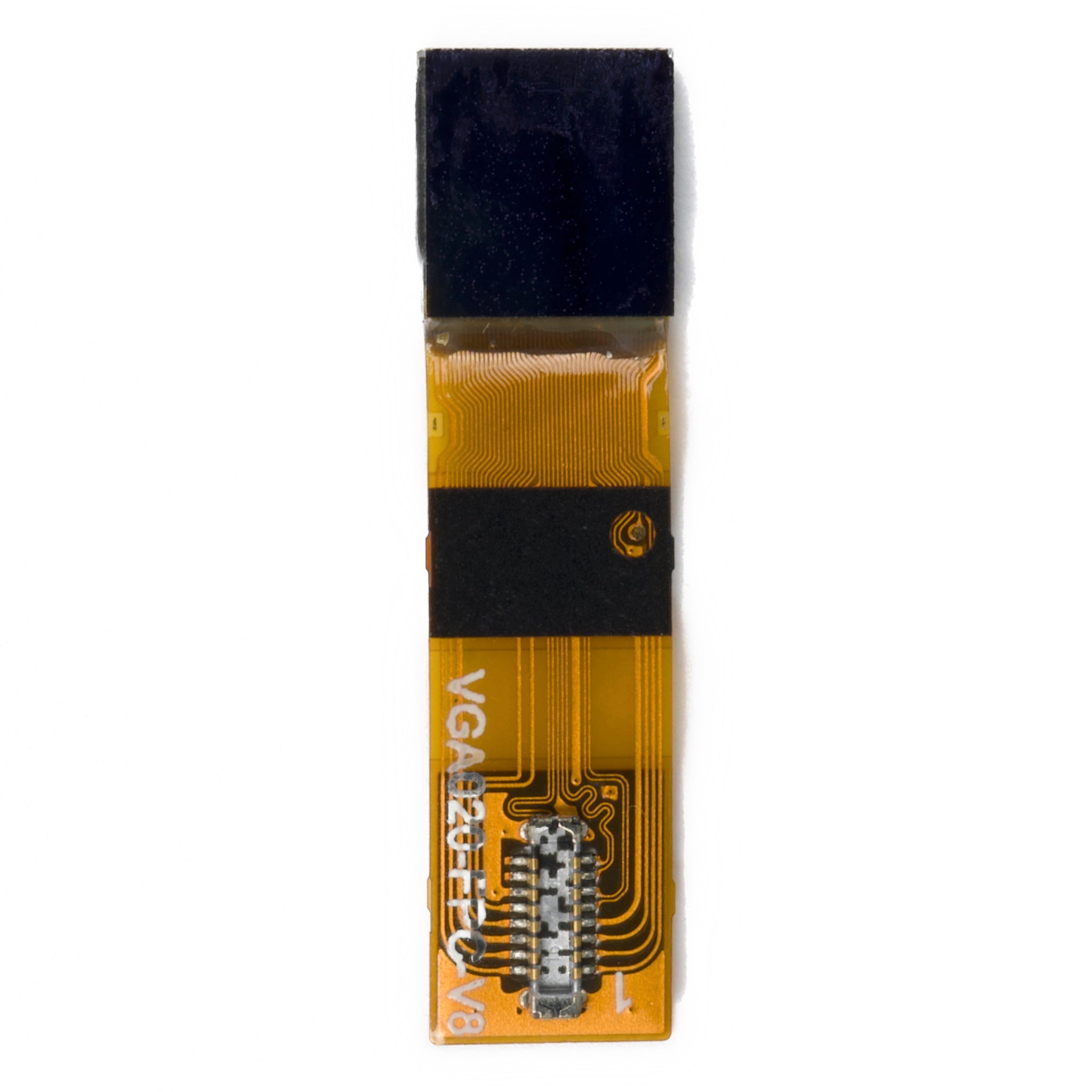
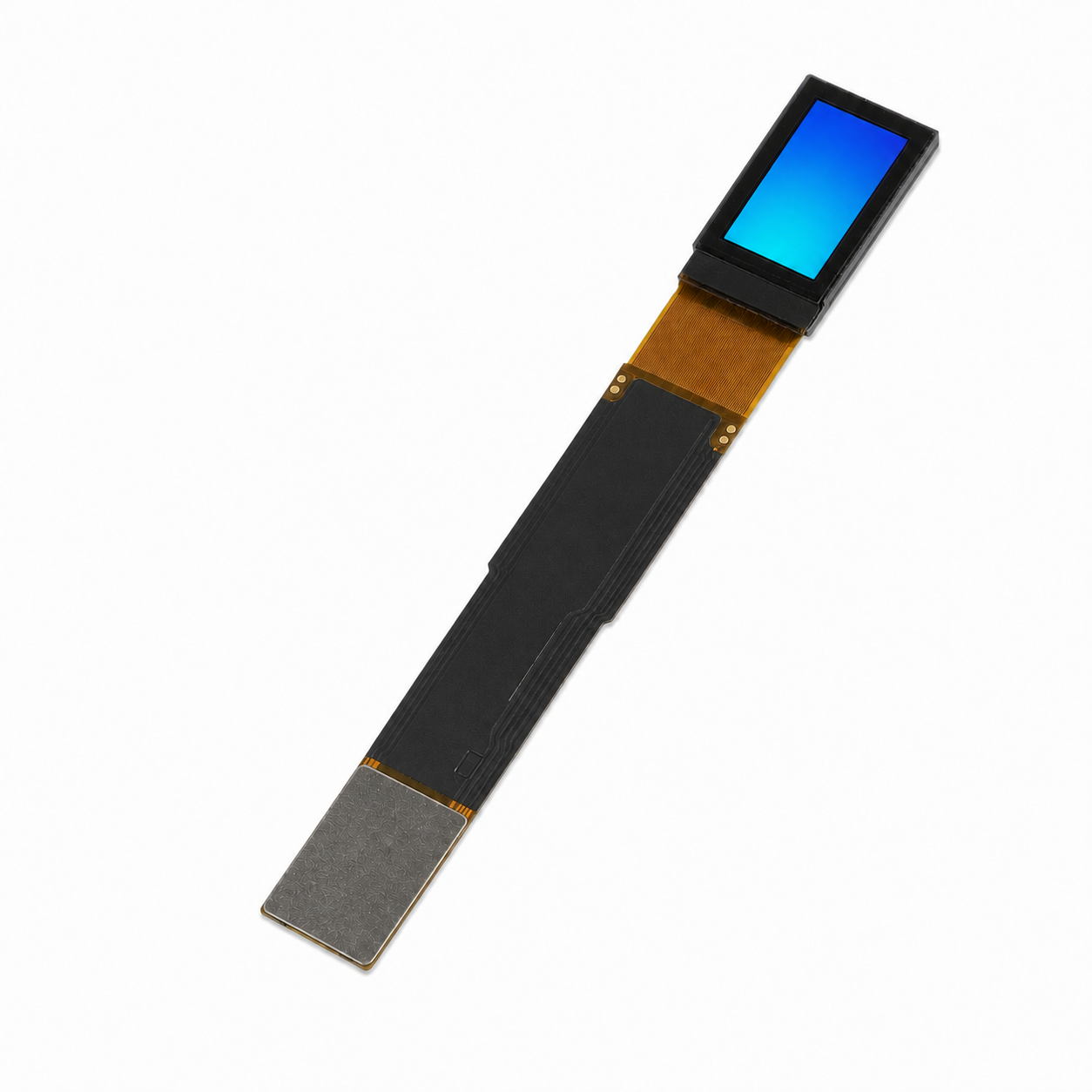
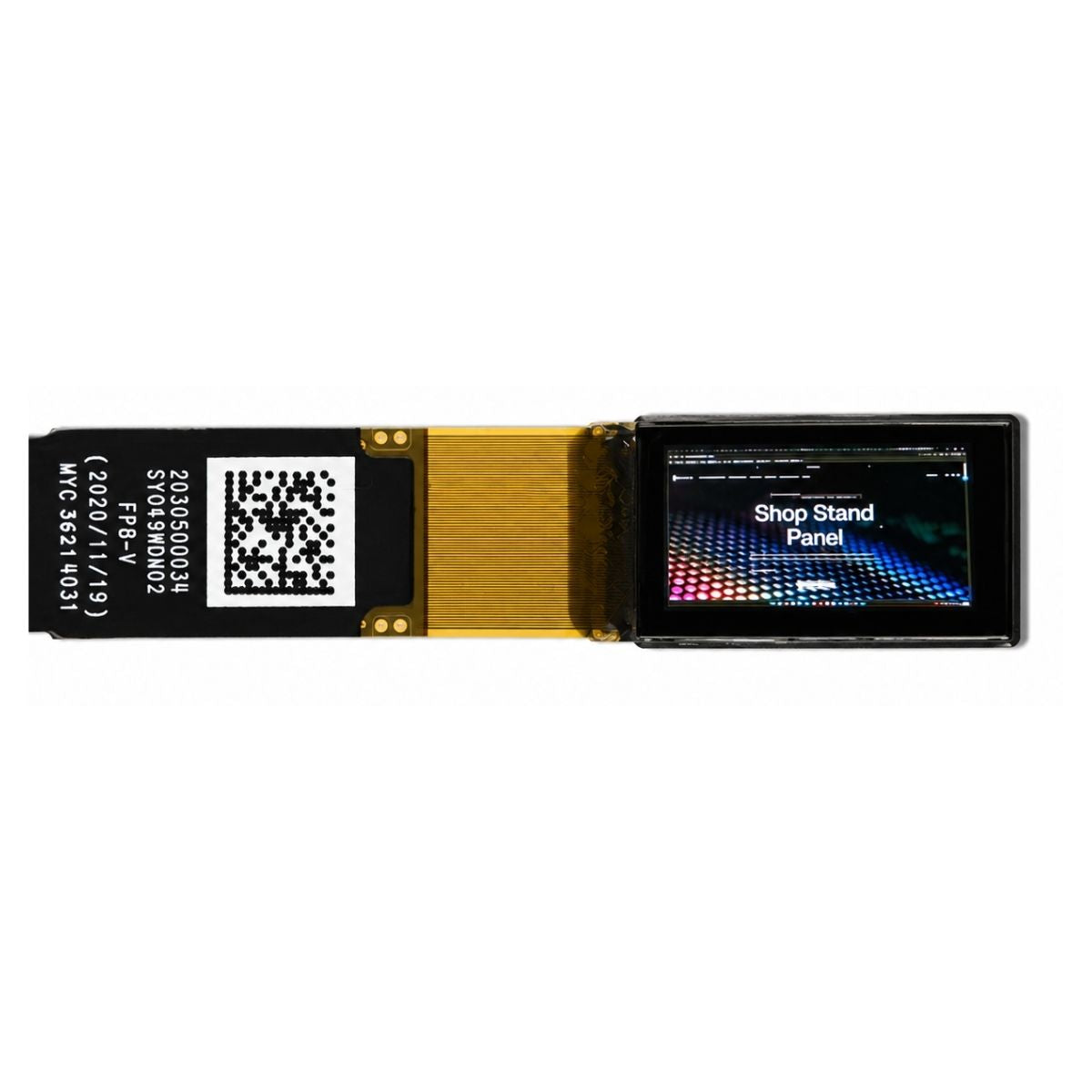
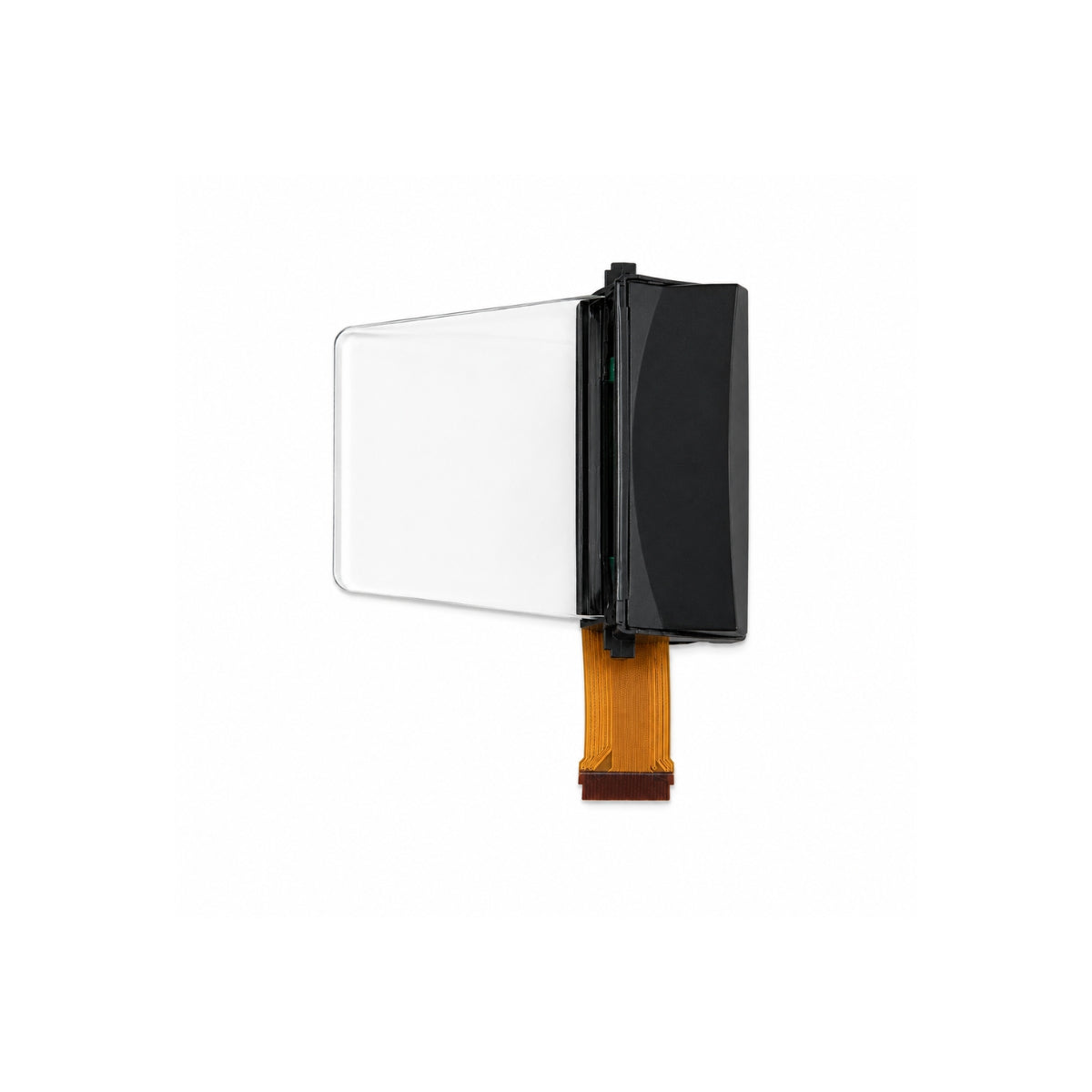
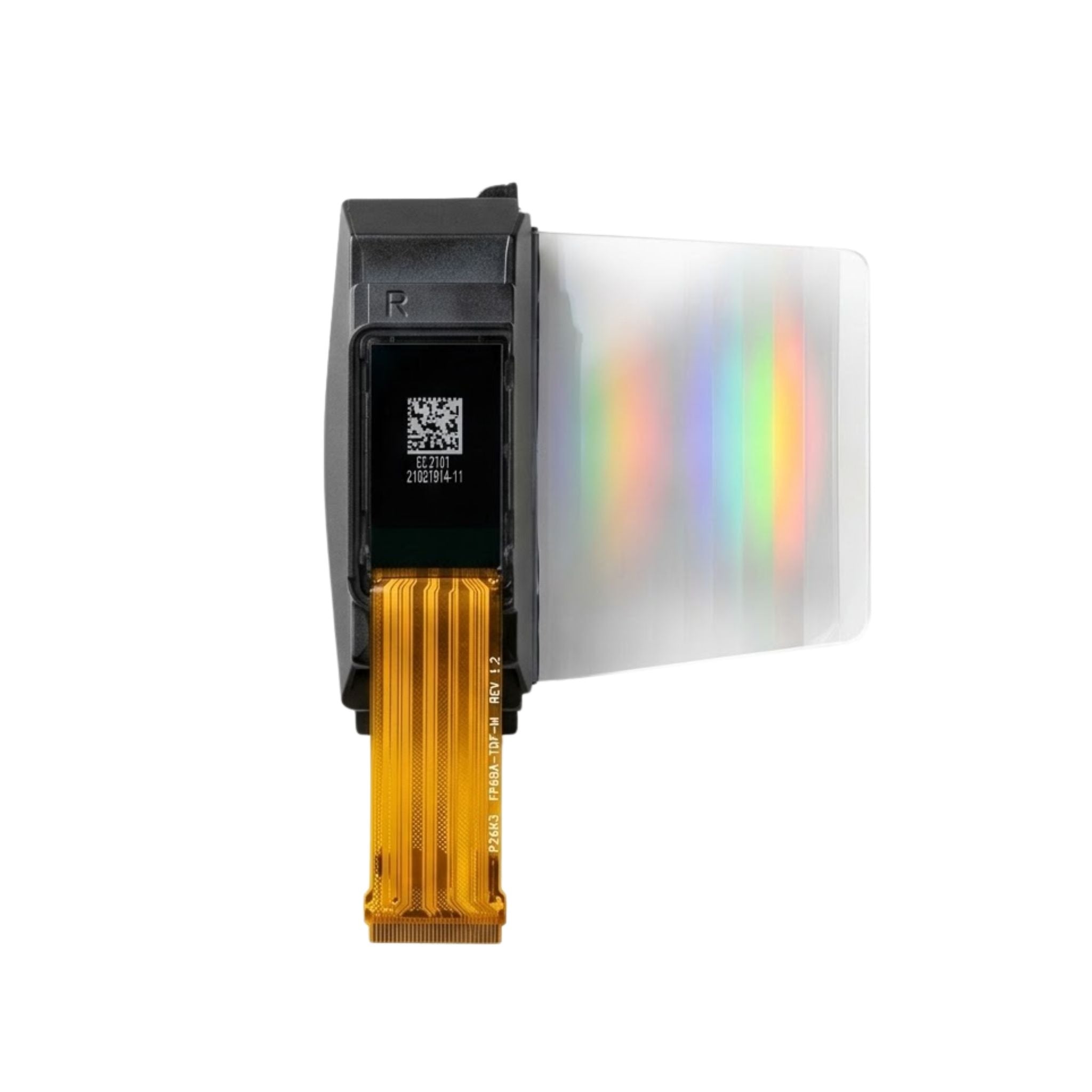


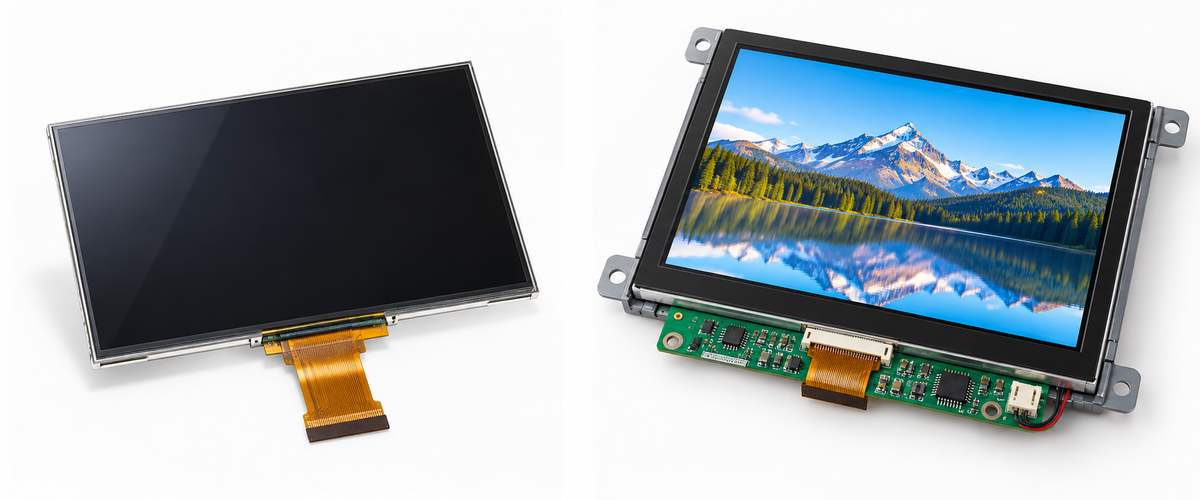
An LCD panel quote usually covers the basic display assembly. An LCD module can include quite a bit more: the backlight, driver IC, FPC, frame, touch hardware, cover glass, bonding, and sometimes controller electronics.
The awkward part is that suppliers do not always use “panel,” “cell,” “display,” and “module” in exactly the same way. IEC has standardized LCD terminology, but a quotation still needs to be checked against the actual part number, datasheet, drawing, and BOM.[1]
When two prices look very different, start with a simple question: what is actually in the box, and what still has to be added by your team?
LCD Panel vs LCD Module: What Is Usually Included?
| Item | LCD Panel | LCD Module |
|---|---|---|
| LCD cell / TFT structure | Usually included | Included |
| Polarizers | Usually included | Included |
| Display driver IC | Depends on construction | Commonly included |
| FPC | Depends | Commonly included |
| LED backlight | May be separate | Common on transmissive TFT modules |
| Backlight driver | Usually external | Depends on module |
| Mechanical frame | May be absent | Often included |
| Touch sensor | Usually separate | Optional |
| Touch controller | Usually separate | May be included |
| Cover glass | Usually separate | Optional/custom |
| Optical bonding | Separate process | Optional |
| Controller / adapter PCB | Usually separate | Depends on integration level |
| HDMI or other interface conversion | Usually separate | Separate unless specified |
Treat this table as a checklist, not a universal definition. Even displays with the same diagonal size can have completely different interfaces, resolutions, brightness levels, temperature ratings, and touch configurations. The TFT LCD range is a good example.
Comparing two LCD quotes?
Send both part numbers or BOMs together with the required resolution, interface, brightness, touch configuration, and quantity. It is much easier to compare prices once the missing hardware is separated out.
Compare Display ConfigurationsWhat Can Be Included in an LCD Panel Price?
A TFT LCD panel contains the image-forming structure: the TFT array, liquid crystal layer, color filter, polarizers, and related optical layers.
Resolution, luminance, contrast ratio, response time, and viewing characteristics are separate specifications. IEC 61747-4-1 defines essential ratings and characteristics for matrix colour LCD modules, so two displays really need to be compared by specification, not just by their diagonal size.[2]
Some panels also have driver ICs or an FPC attached. In other words, “panel” does not always mean bare glass.
Depending on the product, the quote may leave out:
- LED backlight;
- backlight driver;
- touch sensor;
- touch controller;
- cover glass;
- mechanical frame;
- controller or adapter PCB;
- custom FPC or cable;
- bonding;
- final assembly and testing.
If they are not included, those parts move into your own BOM, assembly process, and engineering workload.
What Does an LCD Module Add?
A TFT module normally integrates more of the display stack. A common module combines the TFT LCD, driver IC, FPC, LED backlight, and mechanical support.
More integrated versions may also include:
- resistive or capacitive touch;
- touch-controller electronics;
- custom cover glass;
- optical bonding;
- custom FPC and connector;
- adapter or controller hardware.
IEC optical measurement methods for transmissive LCD modules explicitly account for illumination from an integrated backlight when defining measurement conditions.[3]
DisplayModule's custom TFT LCD options cover FPC, connector, brightness, backlight, touch structure, cover lens, optical bonding, interface matching, and adapter-board integration. Those items should be broken out when a standard panel is being compared with a customized module.
Same Screen Size Does Not Mean the Same Display
Three 7-inch displays from the same supplier show the problem quite clearly:
| Display | Resolution | Brightness | Interface |
|---|---|---|---|
| DM-TFT70-320 | 800 × 480 | 450 cd/m² | RGB |
| DM-TFT700-504 | 1024 × 600 | 350 cd/m² typical | LVDS |
| DM-TFT700-511 | 800 × 480 | 1000 cd/m² | LVDS |
All three are 7-inch displays. That is where the similarity ends. Resolution, brightness, and interface are different.
The mechanical sizes are different as well. DM-TFT700-504 is listed at approximately 164.9 × 100 × 3.06 mm, while DM-TFT700-511 is listed at up to 169.8 × 109.7 × 8.9 mm.
So replacing a screen because both products happen to say “7-inch TFT” can leave you with a module that does not connect, does not fit, or both.
Resolution Changes More Than Image Sharpness
An 800 × 480 display contains:
384,000 pixels
A 1024 × 600 display contains:
614,400 pixels
That is roughly 60% more pixels.
A 1280 × 800 display contains:
1,024,000 pixels
At 24 bits per pixel, the raw data for one frame is approximately:
| Resolution | Pixels | Raw 24-bit Data per Frame |
|---|---|---|
| 800 × 480 | 384,000 | 1.15 MB |
| 1024 × 600 | 614,400 | 1.84 MB |
| 1280 × 800 | 1,024,000 | 3.07 MB |
These numbers describe uncompressed pixel data. They do not mean the LCD itself needs a framebuffer of that size.
They do show why resolution can affect costs elsewhere. More pixels can mean more interface bandwidth, more host-memory traffic, more rendering work, and in some cases a more capable processor.

Backlight Cost Is Not Just a Brightness Number
A transmissive TFT backlight can contain LEDs, a light guide, reflector, optical films, and mechanical support parts.
The 7-inch displays above range from 350 cd/m² to 1000 cd/m². That difference comes from the backlight and display design, not from the fact that all three screens are 7 inches.
The DM-TFT700-504, for example, specifies a 12.8 V LED backlight at 120 mA. Using those typical values:
12.8 V × 0.12 A ≈ 1.54 W
That is the approximate electrical input to the backlight at those values. It is not the total power consumption of the finished system.
Also check whether the backlight driver is part of the quote. A module can include the LEDs while the customer's PCB still has to provide current regulation.
Driver IC, Controller, and Adapter Board Are Different Parts
An LCD driver IC controls the display pixels. A timing controller handles timing where the display architecture requires one. A graphics controller may provide framebuffer or graphics functions. An adapter board converts one host interface into an interface the LCD can accept.
For example:
HDMI → adapter board → LVDS display
is not the same architecture as:
MCU → SPI → TFT module
If one display accepts the processor's native output and another needs an adapter board, the adapter belongs in the second display's cost.
The Interface Can Move Cost Outside the LCD
Common embedded-display interfaces include SPI, MCU parallel, RGB, LVDS, MIPI DSI, and eDP.
MIPI defines DSI as a high-speed serial interface between the host processor and display module. Its stated characteristics include high performance, low power, low EMI, and reduced pin count.[4]
VESA's Embedded DisplayPort specification is designed for internal display connections and supports higher-resolution links through the eDP architecture.[5]
Match the interface to the MCU, MPU, SoC, or graphics hardware before comparing prices.
If interface conversion is needed, the extra cost can include:
- adapter board;
- additional connectors or cable;
- extra PCB space;
- power circuitry;
- integration and validation work.
DisplayModule's adapter-board options are separate from the LCD itself, which makes that cost easier to see instead of burying it inside the display comparison.
Already picked the MCU, MPU, or SoC?
Send the processor, available display output, target resolution, and screen size. That quickly shows whether the LCD can connect directly or needs conversion hardware.
Check Interface CompatibilityTouch, Bonding, and Cover Glass Have Their Own Cost
An LCD-only screen, a resistive-touch screen, and a capacitive-touch screen do not use the same BOM.
Projected capacitive touch may add:
- touch sensor;
- touch-controller IC;
- FPC;
- cover lens;
- bonding;
- additional mechanical tolerances.
The 2.8-inch 240 × 320 TFT with capacitive touch, for example, is a different hardware package from an LCD-only TFT of the same diagonal size.
Bonding changes the cost again. Air bonding leaves an air gap between the LCD and front structure. Optical bonding fills that gap with transparent adhesive. That adds material, alignment work, cleanliness control, processing time, and yield considerations.
So a quotation that simply says “LCD + capacitive touch” still leaves a few questions open. Is the cover lens included? The touch controller? Optical bonding?
Cover-glass pricing can also change with:
- outside dimensions;
- glass thickness;
- holes and cutouts;
- rounded corners;
- printed borders;
- logos;
- sensor or camera windows;
- surface treatment;
- strengthening requirements.
If the LCD, touch panel, cover glass, and bonding are customized separately, price them separately too.
A Cheaper Display Is Useless if It Cannot Handle the Environment
The DM-TFT700-504 is specified for operation from -20°C to +70°C. The DM-TFT700-511 is specified from -30°C to +80°C.
Those are actual product specifications. Calling both products “industrial” does not make their temperature ratings interchangeable.
IEC LCD test standards cover electrical and optical measurements along with climatic, mechanical, and endurance testing.[6]
If your equipment really has to operate at -30°C, a screen rated only to -20°C is not a cheaper alternative. It is the wrong specification.
Mechanical compatibility needs the same level of attention. Compare:
- overall width and height;
- thickness;
- active-area position;
- viewing area;
- FPC length and direction;
- connector position;
- mounting points.
Even if the active area looks right, a thicker module or a connector on the wrong side can force changes to the PCB, enclosure, bezel, cable, or front lens.
MOQ, NRE, and Volume Pricing Change the Real Cost
The unit price is only one commercial number.
Also check:
- sample quantity;
- minimum order quantity;
- pilot quantity;
- production price breaks;
- tooling;
- NRE;
- lead time;
- expected supply period.
Compare suppliers at the same quantity. A sample price from one supplier and a 10,000-piece price from another are not a fair comparison.
For customized parts, spread the one-time NRE across the expected production volume:
NRE per Unit = Total NRE ÷ Expected Production Volume
Then calculate:
Effective Unit Cost = Production Unit Price + NRE per Unit
MOQ matters too. A low unit price can still mean spending more cash and carrying more inventory than the project actually needs.
Assembly and Rework Cost Money Too
With a panel-level design, your own factory may end up assembling the LCD, touch sensor, FPC, frame, cover glass, adhesive, and controller hardware.
That work can involve:
- assembly fixtures;
- alignment;
- cleaning;
- dust control;
- electrical inspection;
- touch testing;
- rework;
- final validation.
A preassembled module can move some of those operations back to the display supplier.
If you already have production data, use the real labor time, yield, and rework rate. Comparing material price alone gives a distorted result when one design creates several extra assembly steps.
When Does a Panel-Level Design Make Sense?
A panel-level design is easier to justify when:
- the host display architecture already exists;
- your team can handle the backlight, controller, FPC, and mechanical design internally;
- the product needs a very specific optical or mechanical stack;
- production volume is high enough for BOM savings to recover NRE and engineering work.
Use the actual annual quantity and expected product lifetime when calculating that break-even point.
When Does an LCD Module Make Sense?
A module becomes attractive when it already includes hardware that your product would otherwise need you to design and assemble.
That is especially useful when a panel-level alternative would require new:
- backlight circuitry;
- FPC development;
- touch integration;
- interface conversion;
- mechanical assembly;
- firmware bring-up;
- validation work.
Put a cost against the actual engineering and production work on both sides. The lowest LCD price is not automatically the lowest project cost.
An LCD Module Is Not a Complete HMI
An LCD module can still rely entirely on an external processor for graphics and application logic.
A complete HMI may also contain:
- CPU;
- RAM;
- storage;
- graphics processing;
- application software;
- communication interfaces;
- power circuitry;
- enclosure.
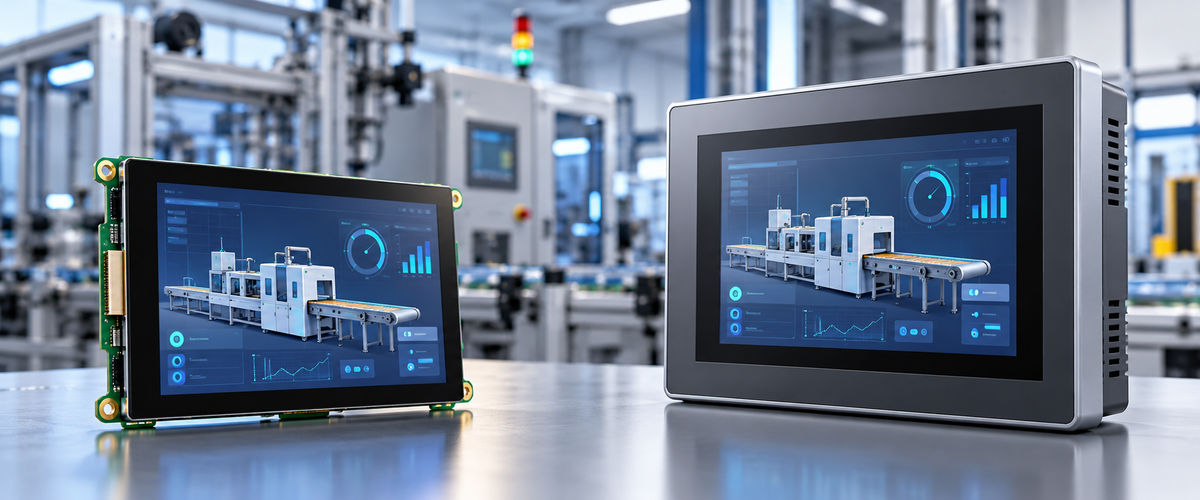
That is why a 7-inch HMI panel and a 7-inch TFT module should not be treated as two versions of the same product.
Normalize the Datasheets Before Comparing Quotes
The DisplayModule selection guide lists size, resolution, luminance, interface, controller IC, and other parameters across different models. Use the same fields when you normalize quotations from different suppliers.
| Category | Compare |
|---|---|
| Optical | Size, active area, resolution, luminance, contrast, viewing characteristics, display mode |
| Electrical | Supply voltage, I/O voltage, interface, driver IC, backlight voltage/current, power requirements |
| Mechanical | Outline size, thickness, active-area position, FPC, connector, mounting geometry |
| Touch | Touch type, controller, interface, cover glass, bonding |
| Environmental | Operating temperature, storage temperature, application-specific reliability requirements |
| Commercial | MOQ, quantity breaks, NRE, tooling, lead time, supply period |
If one of those major fields is different, find out why before calling the two prices comparable.
What to Put in an LCD RFQ
“Please quote a 7-inch LCD” leaves too much open.
Provide:
- screen size;
- required resolution;
- minimum brightness;
- host interface;
- touch requirement;
- cover-glass requirement;
- operating-temperature requirement;
- mechanical drawing or size limits;
- sample quantity;
- expected production quantity;
- expected project lifetime.
Ask the supplier to show separately, where applicable:
- LCD;
- backlight;
- touch sensor;
- touch controller;
- cover glass;
- bonding;
- custom FPC;
- adapter/controller board;
- tooling;
- NRE.
Already have a drawing or an existing LCD part number?
Send it with the interface, brightness, touch configuration, operating range, and expected quantity. The quote can then separate standard replacement options from the custom work the project actually needs.
Send Display Requirements10 Questions to Ask Before Accepting an LCD Quote
- What exact parts are included in this part number?
- Is the complete LED backlight included?
- Does the customer PCB need a separate backlight driver?
- Which display driver IC and host interface are used?
- Is an adapter or controller board required?
- Are the touch sensor and touch controller included?
- Are cover glass and bonding included?
- What operating and storage temperature ranges are specified?
- Which NRE or tooling charges are separate?
- What are the MOQ, sample price, and production price breaks?
If the product will stay in production for several years, ask how the supplier handles component revisions, substitutions, and end-of-life changes too. A seemingly small display revision can affect PCB routing, FPC design, firmware, cover glass, or enclosure dimensions.
LCD Panel vs LCD Module: Which Costs Less?
The panel normally has the lower direct part price. The module can still be cheaper at system level when it already includes hardware, assembly, and integration work that the panel leaves to your team.
Compare these two totals:
Panel Cost = Panel + Missing Hardware + Integration + Testing + NRE Allocation
Module Cost = Module + Remaining Hardware + Integration + Testing + NRE Allocation
Use the same performance requirements, order quantity, and commercial terms for both.
Final Answer
An LCD panel quote normally covers fewer integrated parts. An LCD module may also include the backlight, FPC, frame, touch system, cover glass, bonding, or controller electronics.
Before deciding which quote is cheaper, line up the resolution, brightness, interface, temperature range, mechanics, touch structure, MOQ, and NRE.
Total Unit Cost = Quoted Display Price + Missing Parts + Assembly + Testing + NRE ÷ Production Volume
Until those numbers are on the same basis, the cheaper quote is just the cheaper quote. It is not necessarily the cheaper finished display system.
Frequently Asked Questions
Does an LCD module always include a backlight?
No. Many transmissive TFT modules include an LED backlight, but the BOM decides what is actually included. The LEDs may be part of the module while the backlight driver still sits on the customer's PCB.
Does an LCD module include a controller board?
Not necessarily. A module may contain the display driver IC and still rely on the host processor to generate image data. HDMI, USB, or other interface-conversion hardware is separate unless the product specification says otherwise.
Is touch included in the LCD module price?
Only when it is listed. Confirm the touch sensor, touch-controller IC, cover glass, FPC, and bonding separately. “Capacitive touch” by itself does not define the complete front-stack BOM.
Why can two LCDs with the same screen size have different prices?
They may use different resolutions, brightness levels, interfaces, temperature ratings, viewing characteristics, touch structures, dimensions, backlight designs, controller requirements, and levels of assembly. The datasheet and BOM explain the price much better than the diagonal size.
Hinterlasse einen Kommentar
Diese Website ist durch hCaptcha geschützt und es gelten die allgemeinen Geschäftsbedingungen und Datenschutzbestimmungen von hCaptcha.