



IPS Display Module for Industrial Use | Durability & Wide Temp Range
An industrial IPS module earns its rating at the extremes printed in its datasheet, not at room temperature. Five figures decide whether it will survive a plant floor: the operating range with the resulting brightness and response, the storage range, the cold-start behaviour, the sealing applied to the finished assembly, and the mounting method that survives vibration. Ask for those five in writing and the durability claim becomes checkable.
One range is not enough
Datasheets often print a single figure and leave the reader to guess what it covers. Three ranges usually exist, and they are not interchangeable.
The operating range is the ambient band in which the module meets its optical and electrical specification. The storage range is wider and says nothing about performance, only about survival. Cold-start is narrower still, because a panel that works at low temperature once running may not produce an image from a standing start.
Ask which of the three a published number refers to, and ask what happens to brightness inside it. Many modules derate luminance at the top of the range, either deliberately through thermal foldback or simply because LED efficacy falls as junction temperature rises.
What cold does to a liquid crystal
Liquid crystal viscosity rises sharply as temperature falls, and response time follows viscosity[2]. A panel that switches cleanly at room temperature can produce visible ghosting on a scrolling menu at minus twenty degrees, even though it is technically inside its operating range.
The usual countermeasures are a heater film bonded to the cell or a resistive element around the backlight, plus a driver setting that waits for the panel to reach a working temperature before accepting an image. Both add power and both need a control loop, so ask how the heater is triggered and how much current it draws at the coldest specified point.
Contrast also shifts. At the cold end the liquid crystal's birefringence rises, which moves the cell away from the retardation its optical design was optimised for, and at the hot end it falls for the same reason in reverse. The result is a contrast curve that peaks somewhere near the middle of the range rather than staying flat. A module claiming identical optical performance across a wide band deserves a question about how that was measured.
Sealing is a property of the assembly
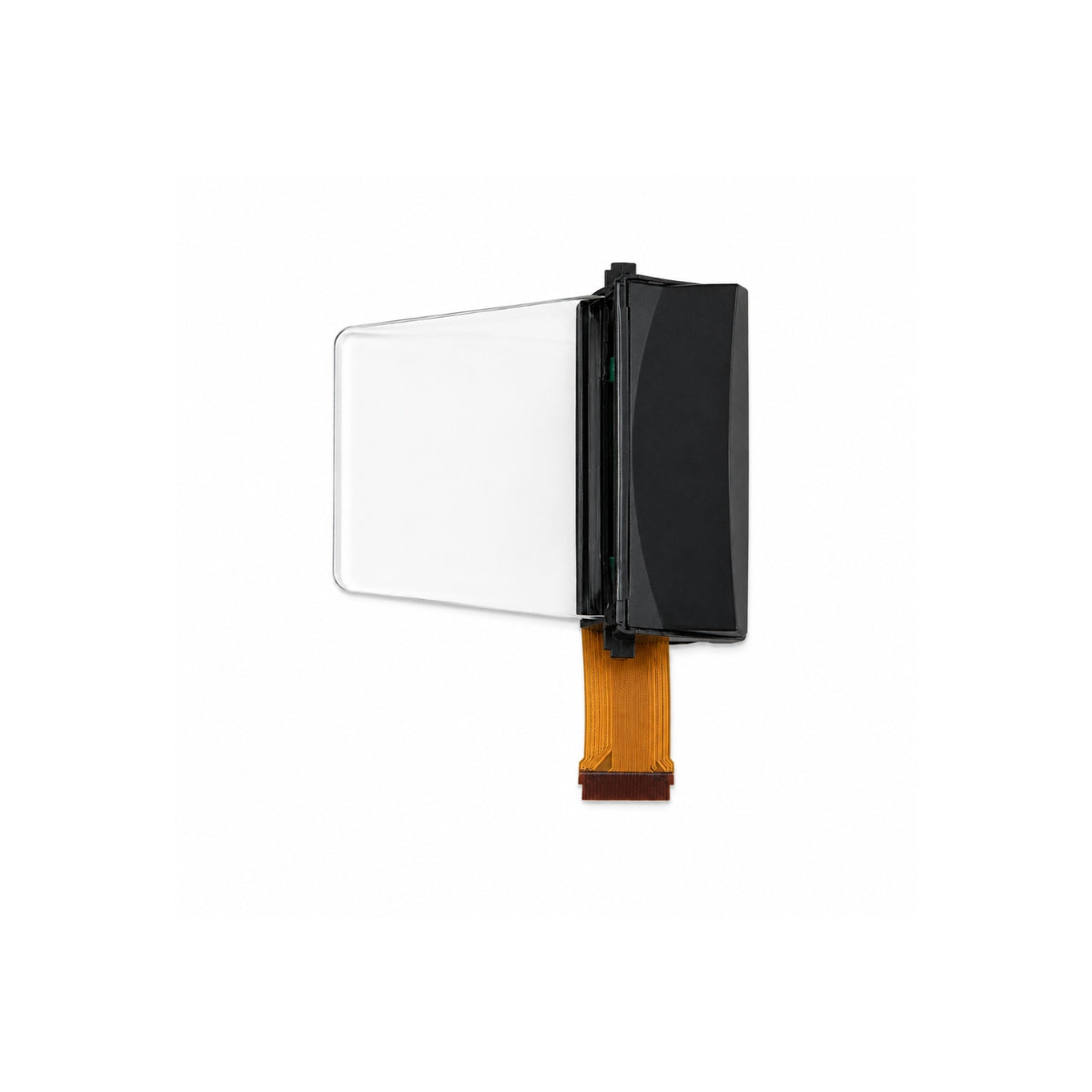
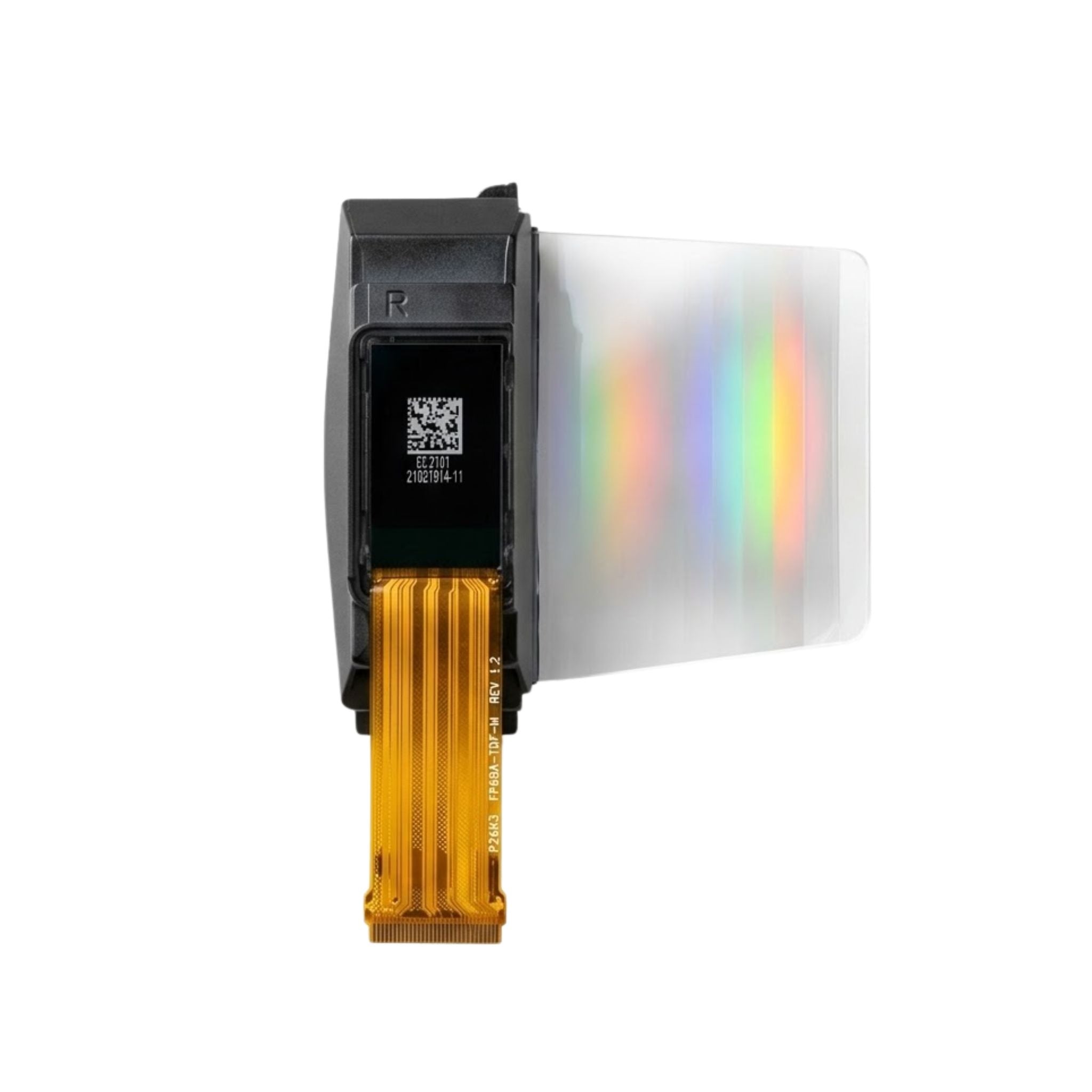
An ingress protection rating describes an enclosure, not a bare panel. A glass sandwich with a flex tail attached has open edges, an exposed connector and no gasket, so an IP number quoted for the panel alone tells the designer little.
What can be rated is the finished front assembly: panel, bezel, gasket, window and cable entry. That means the mechanical engineer has to close the path that water and dust would take, and the display supplier has to guarantee the panel's own edge seal and the bond between glass and frame.
Condensation is the harder problem. A sealed enclosure cycling between cold nights and warm days pulls moisture to the coldest surface, often the inside of the window. Options include a desiccant, a breathable membrane that equalises pressure without admitting water, and a heater holding the window above the dew point. Each belongs in the mechanical specification rather than the display specification.
Mechanical design that survives vibration
Vibration damage rarely starts at the glass. It starts at the joints: the flex tail where it leaves the panel, the connector where the tail meets the board, and the mounting bosses that tie the module to the chassis.
Three measures do most of the work. A flex tail with a strain-relief bend and an adhesive anchor stops the conductor traces from fatiguing at the panel edge. A connector with a locking latch, or a tail that is soldered rather than plugged, removes a fretting interface. Mounting points spread around the perimeter, rather than clustered on one edge, stop the frame from rocking and loading the corners.
Glass choice matters too. Chemically strengthened glass resists impact and scratches far better than annealed glass of the same thickness, but it stores more surface stress, so the way it is clamped becomes important. A hard clamp point on strengthened glass is a crack waiting for a thermal cycle.

Optical bonding versus an air gap
An air gap between the panel and the front window is cheap and serviceable, but it creates two extra optical interfaces. Each reflects ambient light, which lowers the perceived contrast in a bright room, and each can fog when the enclosure cycles through the dew point.
Optical bonding fills that gap with a transparent adhesive. Internal reflections drop, sunlight readability improves, and the panel is mechanically supported across its whole area rather than at the edges. The costs are rework difficulty and a thermal expansion mismatch between adhesive, glass and panel that has to be absorbed somewhere.
For an outdoor instrument, bonding often pays for itself in readability alone; for a unit serviced in the field, an air gap may be the better trade.
Standards worth naming in the purchase order
| Property | Standard | What it establishes |
|---|---|---|
| Cold | IEC 60068-2-1 | Operation and storage at low ambient |
| Dry heat | IEC 60068-2-2 | Operation and storage at high ambient |
| Temperature cycling | IEC 60068-2-14 | Survival of repeated transitions, including solder joints |
| Damp heat, steady | IEC 60068-2-78 | Long exposure to high humidity |
| Damp heat, cyclic | IEC 60068-2-30 | Condensation cycling |
| Vibration | IEC 60068-2-6 | Sinusoidal sweep behaviour |
| Shock | IEC 60068-2-27 | Pulse tolerance |
| Ingress | IEC 60529 | IP rating of the finished enclosure |
| Salt spray | ASTM B117 | Corrosion resistance of frame and fasteners |
| Optical measurement | ISO 9241-307 | How luminance, contrast and uniformity are reported[1] |
Naming a standard is not the same as passing it. Ask for the test report, the sample size and the pass criterion, and check that the criterion matches your application.
Lifetime claims need a definition
A figure in the tens of thousands of hours usually refers to the backlight reaching a fraction of its initial output, most often seventy per cent, at a stated drive current and ambient temperature. It is not a promise that the panel will be usable for that long in your enclosure.
Three things shorten the real number. Running the backlight above its rated current shortens it sharply. Running the module at the top of its temperature range shortens it, because LED lifetime falls as junction temperature rises. Cycling power repeatedly stresses the driver and the inrush path rather than the emitters.
For an industrial product, ask for the derating curve rather than the headline figure, and ask what happens to the warranty if the module runs continuously at maximum brightness inside a sealed box.
Supply continuity is part of durability
A module that lasts ten years in the field is no use if it stops being available in year three. Industrial buyers should ask for a product change notification process, an end-of-life notice period, and a commitment on spare units held for the warranty term.
Panel lines change more often than the products built around them, and a drop-in replacement often differs in timing, connector or bezel dimensions. A notification clause is cheaper than a redesign.
A checklist for the specification
- Operating, storage and cold-start ranges stated separately, with brightness at both ends.
- Response time measured at the coldest specified temperature.
- Heater type, trigger point and current draw.
- IP rating stated for the assembled front, not the panel.
- Vibration and shock levels with the axis count and duration.
- Bonding method, and whether the panel is field-serviceable.
- Backlight derating curve and the lifetime criterion.
- Change notification and end-of-life terms.
Modules built around these requirements are collected under industrial displays, and the wider range of panel formats appears under IPS display modules.
Durability is not a single rating. It is the match between the module's specified envelope and the envelope your product will actually see, documented on both sides. Get that match in writing and the wide temperature range stops being a claim and becomes an engineering input.
References
- ISO 9241-307:2008 — Ergonomics of human-system interaction — Part 307: Analysis and compliance test methods for electronic visual displays. International Organization for Standardization. https://www.iso.org/standard/40102.html
- Hilsum, C. (2010). Flat-panel electronic displays: a triumph of physics, chemistry and engineering. Philosophical Transactions of the Royal Society A, 368(1914), 1027–1082. https://doi.org/10.1098/rsta.2009.0247
Read more

Advanced IPS technologies elevate visual experiences through Mini-LED backlighting , a hallmark of modern display innovation that employs 2,304 local.
They shine in low power use, with typical operation at just 0.5W and standby dropping below 0.1W , greatly extending battery life. Their slim form factor.
Leave a comment
This site is protected by hCaptcha and the hCaptcha Privacy Policy and Terms of Service apply.