



PMOLED vs AMOLED | Key Distinctions, Advantages & Applications
AMOLED utilizes TFT to independently drive pixels, achieving a contrast ratio exceeding 100,000:1 and dominating the market for displays larger than 5 inches.
Compared to PMOLED, which is limited to within 3 inches, its energy consumption is reduced by approximately 30%.
Key Distinctions
PMOLED adopts a capacitor-less row-by-row scanning method, which causes the pixel emission time to be limited by the number of scanning lines (duty cycle).
This causes its voltage requirements to increase sharply as resolution improves; therefore, screen sizes are typically restricted to within 3 inches, and PPI is difficult to push beyond 150.
In contrast, AMOLED integrates a TFT backplane and storage capacitors under each pixel, achieving continuous emission rather than pulsed flickering.
This architecture can easily support 4K/8K resolutions, and in large-screen full-color display modes, its energy efficiency is improved by 30% to 50% compared to the former.
Comparison of Driving Methods
How Pixels Light Up
PMOLED consists of two conductive layers: one is horizontal scanning lines (cathodes), and the other is vertical data lines (anodes), with organic light-emitting material sandwiched between them.
- Control Logic: The driver chip is not directly connected to every pixel but to rows and columns. To light up the pixel at row 5, column 10, the chip must simultaneously activate the 5th cathode and the 10th anode.
- Physical Connection: The pixel itself is "passive," containing no switching or storage elements other than the light-emitting material. Once the voltage is removed, the pixel immediately turns off.
Each AMOLED pixel is an independent miniature circuit system. In addition to the light-emitting material, a backplane composed of Thin-Film Transistors (TFT) is stacked beneath the pixel layer.
- Control Logic: Data signals do not directly drive the pixel to emit light; instead, they are sent to the TFT gate beneath the pixel. This TFT acts as an analog switch, controlling the amount of current flowing to the OLED material.
- Physical Connection: Each pixel contains at least two transistors and one capacitor (2T1C structure), while complex circuits may even have seven transistors (7T1C) to compensate for brightness non-uniformity.
Flicker vs. Constant Light
These two technologies work completely differently in the time dimension, which in engineering terms is the difference in "Duty Cycle."
PMOLED: Instantaneous High Brightness
Assume a screen has 100 rows of pixels (N=100). At any given moment, only one row is lit, while the other 99 rows are off.
The driver must light up each row in sequence at an extremely high speed (usually 60Hz or higher).
- Emission Time: Each pixel emits light for only 1/100 of the time in each frame.
- Brightness Requirement: If you need the screen to display an average brightness of 100 nits, the instantaneous brightness of the pixel during that 1/100th of a second must reach 10,000 nits (100 x 100).
- Consequences: This high-intensity pulse current significantly shortens the lifespan of OLED materials, and driving voltages are usually as high as 15V to 20V.
AMOLED: Continuous Emission
When the scan line passes over a row, the TFT opens, and the data voltage is written into the storage capacitor.
After the scan line moves away, the TFT closes, but the charge stored in the capacitor maintains the TFT gate voltage, allowing the driving current to flow continuously through the OLED pixel.
- Emission Time: The pixel emits light 100% of the time until the next frame signal arrives.
- Brightness Requirement: To display 100 nits of brightness, the pixel only needs to emit light at an intensity of 100 nits.
- Consequences: Current density is low, material aging is slow, and the driving voltage is usually just the turn-on voltage of the OLED material itself (about 3V to 5V) plus the voltage drop of the TFT.
Signal Interference (Crosstalk)
As resolution increases, the number and length of wires on the screen increase, and parasitic resistance and capacitance (RC delay) begin to affect display quality.
-
PMOLED Crosstalk Issues: Since all pixels share the same set of long strip-shaped anodes and cathodes, when a high current flows through a row, it creates a voltage drop across the wires. This can cause adjacent pixels that shouldn't be lit to glow slightly, or cause pixels that should be bright to be insufficiently dim.
- Limitation: To avoid image blurring, it is difficult for PMOLED scanning lines to exceed 200 rows.
- AMOLED Isolation Advantage: The TFT backplane isolates each pixel from the data lines. Once the voltage is written to the capacitor, the pixel is independent of fluctuations on the data line. This eliminates crosstalk issues, allowing AMOLED to easily achieve 2160 rows (4K resolution) or more without signal interference.
Backplane Circuit Construction
The performance of AMOLED depends heavily on the underlying TFT (Thin-Film Transistor) material, a component that PMOLED does not need to consider at all.
| TFT Technology | Electron Mobility (cm2/Vs) | Characteristics | Application Scenarios |
|---|---|---|---|
| a-Si (Amorphous Silicon) | < 1 | Electrons move too slowly; driving current is insufficient to light OLED | Rarely used for AMOLED |
| LTPS (Low-Temperature Polysilicon) | > 100 | Electrons move extremely fast, providing high current; bezels can be made extremely narrow | High-end smartphones |
| Oxide (Metal Oxide) | 10 - 50 | Extremely low leakage current; supports Variable Refresh Rate (LTPO) | Tablets, Laptops |
PMOLED does not require such a backplane; it only needs a simple ITO (Indium Tin Oxide) glass substrate for etching.
This also explains why PMOLED modules are thinner than AMOLED (lacking a transistor layer), yet after overall packaging, they do not appear compact due to the need for thicker bezels to route wiring.
Size and Resolution
Wire Length and Resistance
The size bottleneck of PMOLED first comes from the physical properties of the conductive materials.
Transparent electrodes on PMOLED screens usually use Indium Tin Oxide (ITO).
Although it is conductive, at a microscopic scale, it still has non-negligible resistance (typically 10 to 30 ohms/square).
- Voltage Drop (IR Drop): The wider the screen is made, the longer the horizontal scan lines (cathodes) become, and the total resistance increases accordingly. When the driving current is input from one end and flows to the other, the voltage gradually drops due to resistance.
- Brightness Inconsistency: This voltage drop causes pixels at one end of the screen to have a higher voltage and pixels at the other end to have a lower voltage.
- Size Ceiling: To keep this brightness gradient within a range imperceptible to the human eye, the panel width of PMOLED is difficult to push beyond 3 inches.
Scanning Limitations
The resolution limitation stems primarily from the relationship between the PMOLED "row-by-row scanning" mechanism and time.
Imagine you need to scan every single row on the screen within 1/60th of a second (16.6 milliseconds).
- Low Resolution Scenario: If the screen has only 64 rows (like a 128x64 resolution), the emission time allocated to each row is approximately 260 microseconds. This is ample time for an LED.
- High Resolution Scenario: If you want to achieve 1080p (1080 rows), the time allocated to each row will be compressed to about 15 microseconds.
- Voltage Breakdown Risk: To make the pixels emit enough light within 15 microseconds for the human eye to perceive normal brightness through persistence of vision, you need to apply an extremely high instantaneous voltage.
- Hard Boundary: Consequently, the vertical resolution of PMOLED is typically locked within 128 or 160 rows, with a rare few reaching 256 rows, though this is a laboratory limit and cannot be commercially mass-produced.
Pixel Arrangement
In terms of pixel density (PPI), the two technologies face distinct manufacturing process challenges.
PMOLED's Aperture Ratio Pain Point:
PMOLED pixels are formed by the intersection of cathode and anode strips. To prevent short circuits between two adjacent wires, a safety gap must be left between them.
- As PPI increases (pixels get smaller), the area of the pixel itself shrinks, but the safety gap cannot be reduced indefinitely.
- The result is a sharp increase in the proportion of "non-emissive areas," leading to a dramatic drop in the Aperture Ratio.
AMOLED's Stacking Advantage:
AMOLED uses a TFT backplane, allowing the circuitry to be placed beneath the pixels (top-emission structure) or by minimizing transistor area.
- Fine Metal Mask (FMM): When manufacturing small-to-medium AMOLEDs, manufacturers use FMM to evaporate organic materials. Current process precision can easily achieve 400 PPI to 550 PPI.
- Sub-pixel Arrangement: AMOLED manufacturers developed Diamond Pixel or Pentile arrangements, further enhancing the visual perception of resolution by sharing sub-pixels, something the simple PMOLED grid structure cannot achieve.
Manufacturing Large Screens
AMOLED's ability to break size limits comes from its "active" nature, allowing it to leverage existing LCD production line equipment for upgrades.
- Scalability of Photolithography: The manufacturing of AMOLED TFT backplanes is similar to semiconductor processes, using lithography machines to etch circuits onto glass substrates. Current Gen 8.5 or Gen 10.5 lines use massive glass substrates (e.g., 3m x 3m), which can yield 6 pieces of 55-inch panels from a single sheet of glass or produce ultra-large TV panels directly.
- Signal Compensation Technology: To address the long-wire resistance issues associated with large sizes, AMOLED Driver ICs (DDIC) introduce external and internal compensation circuits. These can detect changes in the threshold voltage of every single pixel TFT and automatically adjust the input signal.
Differences in Power Consumption
Who is the Real Energy Hog?
PMOLED's Pulse Loss:
Due to row-by-row scanning, PMOLED must inject massive currents within microseconds to excite pixels to ultra-high instantaneous brightness.
- Non-linear Efficiency Drop: The luminous efficiency of OLED materials is not linear. When current density increases 10-fold, brightness might only increase 8-fold, with the remaining 20% of energy turning into waste heat.
- Resistive Heat Loss: The wire resistance in the circuit is fixed. According to Joule's Law (Heat = Current² x Resistance), when the current increases 10-fold, the heat loss on the lines increases 100-fold.
AMOLED's Constant Current Advantage:
The AMOLED TFT circuit allows pixels to function like a tap, maintaining a steady, thin stream.
- Optimal Operating Zone: It uses very small and constant currents, allowing the OLED material to always operate in the "low current density zone" where luminous efficiency is highest.
- Low Transmission Loss: Because the current is small, voltage drop and heat loss on the lines are negligible. At the same average brightness, AMOLED's system-level photoelectric conversion efficiency is typically 30% to 50% higher than PMOLED.
Content Type is Crucial
The type of content displayed (APL, Average Picture Level) directly determines which is more power-efficient.
Scenario 1: Pure Text and Icons (APL < 10%)
This is PMOLED's home turf.
- If the screen is white text on a black background, lighting only 5% to 10% of pixels (e.g., time display on a fitness band), PMOLED power consumption is extremely low.
- The reason is that unlit rows and columns are completely powered off, and the small number of lit pixels does not require the high overhead of full-screen scanning driver circuits. At this point, consumption may be as low as 10mW - 20mW.
- In contrast, even when displaying black, AMOLED's complex TFT backplane circuit still has tiny static leakage currents, and the Driver IC (DDIC) has a higher base standby power, likely around 30mW.
Scenario 2: Full-screen Images or Video (APL > 40%)
Once a large area of pixels is lit, PMOLED's efficiency curve collapses.
- When displaying a full-color photo (APL approx. 40% - 50%), all PMOLED scan lines are under high load. To maintain 200 nits of brightness, total screen power may soar to 300mW - 500mW or higher.
- In the same scenario, due to its efficient driving method, AMOLED power might only stay between 150mW - 250mW.
- Full White Screen (APL 100%): The gap widens further. PMOLED can hardly maintain full-white high brightness without severe overheating, while AMOLED continues to operate stably.
The Cost of High vs. Low Voltage
PMOLED High-Voltage Driving:
To overcome the massive current demand in short timeframes and the voltage drop from line resistance, PMOLED usually requires a Boost Converter to provide high voltage.
- Typical Voltage: PMOLED driver chips usually need an input of 12V to 20V to drive the OLED panel.
- Conversion Efficiency Loss: Battery voltage is typically 3.7V. In the process of boosting 3.7V to 15V, the Power Management IC (PMIC) itself loses 10% to 15% of the energy.
AMOLED Low-Voltage Operation:
AMOLED pixels are in a sustained "on" state; the driving voltage depends mainly on the turn-on voltage of the OLED material plus the threshold voltage of the TFT.
- Typical Voltage: Positive power supply (ELVDD) is usually only 4.6V, and negative power supply (ELVSS) is around -2.5V.
- Direct Battery Supply: This voltage level is very close to the native voltage of a lithium battery, resulting in extremely high power conversion efficiency, usually reaching 90% - 95%, significantly reducing waste during power conversion.
Standby and Always-On Display
- PMOLED Partial Refresh: It can scan only the rows that are lit, skipping black rows entirely. This mechanism is very flexible, making its power consumption almost negligible for extremely low information density displays.
- AMOLED Variable Refresh Rate (LTPO): Modern AMOLEDs introduce LTPO technology, which can reduce the refresh rate from 60Hz down to 1Hz.
Advantages
PMOLED eliminates the Thin-Film Transistor (TFT) backplane, using orthogonal grid control instead.
This makes its manufacturing cost 20% to 30% lower than a same-sized AMOLED, making it the economical choice for small-screen devices under 3 inches.
In contrast, AMOLED utilizes capacitors to store signals, allowing it to independently maintain the brightness of each pixel.
This breaks the brightness attenuation limits PMOLED faces after 128 scan lines.
This allows AMOLED to easily achieve 4K resolution and an ultra-high contrast ratio of 100,000:1.
Simultaneously, when displaying pure black content, its power consumption is only about 60% of traditional LCDs, making it the mainstream solution for large-sized and high-performance devices.
Low Manufacturing Cost of PMOLED
Elimination of Backplane Circuitry
The biggest watershed in cost between PMOLED and AMOLED is whether a TFT (Thin-Film Transistor) backplane is required.
AMOLED panels typically require LTPS (Low-Temperature Polysilicon) or Oxide backplanes to control the switching of each pixel.
Manufacturing an LTPS backplane is extremely complex:
- Number of Photolithography Masks: LTPS processes usually require 5 to 9 photolithography mask steps. Each step includes cleaning, coating, exposure, development, etching, and stripping. Each additional mask step lengthens the production cycle and exponentially increases the risk of defects.
- Process Costs: Lithography and etching machines are the most expensive equipment in semiconductor manufacturing. Equipment depreciation allocated to each panel constitutes a high fixed cost.
By comparison, PMOLED does not require a TFT backplane. It uses a simple Anode (ITO) and Cathode (Metal) intersection structure.
Its manufacturing process usually requires only 3 to 4 mask steps to complete the electrode patterns.
Simple Structure
The light-emitting principle of PMOLED is "line scanning," relying on voltage pulses to light up rows sequentially.
While this driving method limits resolution (usually not exceeding 128 rows), it also saves on expensive backend processing.
Omission of Laser Annealing
When manufacturing the LTPS backplane for AMOLED, an ELA (Excimer Laser Annealing) device must be used to convert amorphous silicon into polysilicon to improve electron mobility.
A single ELA machine typically costs tens of millions of dollars, and maintenance costs are extremely high (short laser tube lifespan).
PMOLED does not require transistors, and naturally does not require this expensive laser annealing step, significantly lowering the investment threshold for PMOLED production lines.
Many PMOLED manufacturers can even produce using modified equipment from older-generation LCD production lines.
Inexpensive Driver Chips
The cost of a display module includes not just the panel itself, but also the Driver IC. This cost difference is often overlooked but represents a high percentage in small-sized screens.
- AMOLED Driver IC: Due to the threshold voltage (Vth) drift and hysteresis phenomena in TFTs, AMOLED driver chips must include complex compensation circuits and frame buffers (RAM) to ensure brightness and color uniformity.
- PMOLED Driver IC: These are simple current-type drivers that do not need to handle complex pixel compensation algorithms. While PMOLED requires higher driving voltages of 15V to 20V (requiring high-voltage processes), the logic control part is very simple and the chip area is small.
In common specifications like 0.96 inches, a PMOLED driver IC often costs less than half the price of an AMOLED driver IC.
Extremely High Production Yield
In an AMOLED panel, if even one out of millions of transistors on the backplane shorts or opens, it can cause a bright or dark spot, and the entire panel is judged as a defect.
This extreme sensitivity to microscopic defects often leads to low yields during the ramp-up phase of new production lines.
PMOLED has a much higher fault tolerance:
- Large Scale Structure: PMOLED pixel sizes and electrode spacing are relatively large, so tiny dust or particles are less likely to cause fatal short circuits.
- Easier Repair: For certain open-circuit defects, PMOLED can even be salvaged through simple laser repair, whereas repairing a TFT array in AMOLED is almost impossible.
- Maturity: PMOLED technology has been developed for over 20 years. The comprehensive yield of mature production lines is usually stable at above 95%, with almost no extra waste costs caused by yield fluctuations.
| Cost Component Factors | PMOLED (Passive Matrix) | AMOLED (Active Matrix) |
|---|---|---|
| Backplane Process | No backplane needed (Simple ITO etching) | Complex TFT backplane (LTPS/Oxide) |
| Mask Quantity | Fewer (3-4 steps) | More (5-9 steps) |
| Primary Equipment | Evaporation machine, packaging machine | Evaporation, ELA, Ion implanter |
| Dust Sensitivity | Lower | Extremely high |
| Driver Chip | Simple logic, high-voltage process | Complex logic, requires compensation |
Lower Packaging Requirements
Organic OLED materials are extremely sensitive to water and oxygen; once in contact with moisture, they blacken and fail. Thus, encapsulation is vital.
- AMOLED: To achieve flexible or ultra-thin characteristics, modern AMOLEDs typically use TFE (Thin Film Encapsulation) technology. This requires alternating deposition of inorganic and organic layers in a vacuum, which is time-consuming and requires expensive equipment.
- PMOLED: Since it is mainly used for rigid small screens, PMOLED mostly uses mature cover glass + UV curing glue or Metal Can + desiccant packaging methods.
Exquisite Image Quality of AMOLED
Independent Control of Every Pixel
PMOLED is like a group of people taking turns using one flashlight. The more people there are (higher resolution), the shorter the time each person gets with the flashlight, making it appear dimmer.
AMOLED is completely different. Beneath each of its pixels is an independent Thin-Film Transistor (TFT) switch and a Storage Capacitor.
- Continuous Emission: When the scan signal passes a row, the TFT opens and writes voltage to the capacitor. Even after the scan line moves on, the charge in the capacitor keeps the TFT open, allowing the pixel to emit light continuously until the next frame signal arrives.
- Duty Cycle Near 100%: Each pixel emits light for almost the entire frame period.
- Zero Interference: Because each pixel has its own "gatekeeper" (transistor), there is no current crosstalk between adjacent pixels. On PMOLED, if a high-brightness white square is displayed, the surrounding black area often glows slightly (light leakage); on AMOLED, what should be bright is bright, and what should be black is purely black.
This mechanism allows AMOLED to easily scale to 4K (3840x2160) or even 8K resolutions, with pixel densities (PPI) easily exceeding 500 PPI, making individual pixels invisible to the human eye at normal viewing distances.
True Blacks and Infinite Contrast
LCD screens have a backlight unit that stays on; even when displaying black, it relies on liquid crystal molecules to block the light.
However, liquid crystal molecules cannot block 100% of the light; there is always leakage, so LCD blacks are actually "dark grey," with brightness typically between 0.1 nits and 0.5 nits.
AMOLED is a self-emissive technology. When black needs to be displayed, the driving current to the pixel is completely cut off, and the organic material stops working.
- 0 Nits Black: At this point, the brightness is truly zero—even measuring instruments cannot detect light.
- Contrast Calculation: Contrast = Brightness of brightest point / Brightness of darkest point. Since the denominator is 0, AMOLED's theoretical contrast is infinite. In engineering tests, to avoid mathematical insignificance, it is usually rated at 100,000:1 or 1,000,000:1.
This characteristic makes AMOLED particularly suitable for HDR (High Dynamic Range) content.
Overflowing Colors
Color performance is measured by two indicators: Color Gamut and Color Accuracy.
- High Material Purity: The organic light-emitting materials (Red, Green, Blue sub-pixels) used in AMOLED emit very narrow and pure spectra. For example, red material emits light at very concentrated wavelengths without mixing in too much orange or purple.
- Gamut Coverage: The standard sRGB (common internet color standard) is far too easy for AMOLED. Modern AMOLED panels are usually standardized to DCI-P3 or even Adobe RGB. High-end panels can cover over 110% of the NTSC gamut. In comparison, ordinary LCDs usually only cover 70% to 90%.
- Color Saturation: When displaying vivid flowers, neon lights, or animation, AMOLED colors appear very full and vibrant, sometimes even "eye-pleasing." While early AMOLEDs were overly vivid, current Driver ICs support color management to map wide gamuts back to sRGB, achieving both vibrancy and accuracy.
Consistent Color from Any Angle
Viewing Angle is a critical indicator of image stability.
- LCD Issues: The liquid crystal layer acts like a Venetian blind; light is directional. When you view an LCD screen from the side, brightness drops rapidly and colors shift (e.g., red turning pink or yellow).
- AMOLED Advantage: Because the pixels emit light directly from the surface (Lambertian Emitter), light scatters uniformly in all directions.
Eye Protection Even at Low Brightness
Traditional PMOLED or LCD screens often use PWM (Pulse Width Modulation) dimming when lowering brightness—flickering quickly to make the eyes think it's "darker." Low-frequency PWM (e.g., 240Hz) can cause eye fatigue.
High-end AMOLED panels introduce DC dimming or high-frequency PWM dimming (e.g., 1920Hz or 2160Hz).
- Micro-current Control: AMOLED can precisely control the tiny current flowing through pixels to achieve low brightness, rather than relying solely on flickering.
- Color Maintenance at Low Brightness: Many screens lose color accuracy (Gamma curve drift) at low brightness. With independent capacitor control for each pixel, AMOLED maintains relatively accurate grayscale transitions even at extremely low brightness (e.g., 2 nits), without obvious color banding.
Applications
Restricted by its passive driving architecture, PMOLED is typically used only for display scenarios under 3 inches, with resolutions mostly limited to within 128x128 pixels.
It occupies the entry-level Fitbit tracker, industrial instrumentation, and white goods status panel markets due to its low manufacturing cost.
Conversely, AMOLED leverages TFT backplane technology to achieve independent pixel control, supporting high pixel densities of over 400 PPI.
This has made it a standard feature for flagship phones like the Samsung Galaxy and iPhone.
Its microsecond response speed is also the physical foundation for eliminating motion sickness in VR headsets like Meta Quest.
PMOLED
Trade-offs in Fitness Bands
In the entry-level fitness tracker market, cost control is prioritized over image quality. Early Fitbit models or certain Garmin Vivosmart series adopted PMOLED.
- Monochrome Display Advantage: These devices usually don't need color. When manufacturing monochrome (white, blue, or yellow) screens, PMOLED doesn't need color filters, resulting in low brightness loss.
- Battery Logic: Fitness bands show a black background most of the time, only lighting up time or step digits. PMOLED only consumes power for those lit pixels, making its consumption far lower than an LCD which requires a constant backlight.
- Outdoor Readability: Although overall brightness is lower than AMOLED, PMOLED provides over 1000:1 contrast when displaying high-contrast white text, making it clearer for checking the time in bright sunlight than budget reflective LCDs.
Industrial Instrumentation
PMOLED is the preferred solution in server rooms, factory automation controllers, or portable measurement tools.
The need here isn't watching videos, but reading data quickly from various angles.
- 1U Server Racks: In the standard 1.75 inch (1U) height of a server panel, space is extremely restricted. A 0.91 inch or 0.96 inch bar-shaped PMOLED (typically 128x32 resolution) fits perfectly into the front panel to display IP addresses, CPU temperatures, or error codes.
- Wide Viewing Angle: Engineers checking equipment are often not looking directly at the screen. PMOLED's self-emissive nature gives it a viewing angle near 175 degrees, staying clear from the side without the color shifting or washing out seen in TN-LCDs.
- Wide Temperature Operation: Industrial environments have high temperature variances. LCD liquid crystals become viscous and slow (or fail) below -20°C. PMOLED uses solid organic materials and works normally from -40°C to 85°C, with response speeds unaffected by cold.
Standard for Audio Equipment
For audiophile-grade portable Digital Audio Players (DAP) or portable DAC/Amps, the screen must not generate electromagnetic interference.
- Silent Operation Advantage: PMOLED has a simple structure without high-frequency backlight boost circuits, generating much less electromagnetic noise (EMI) than LCDs with complex backlight systems. This is vital for equipment pursuing pure sound quality.
- Main Parameter Display: On these devices, the screen only needs to show sampling rates (e.g., 44.1kHz / DSD512), input sources (USB / Optical), and volume. A 1.3 inch PMOLED is sufficient, and the pure black background blends perfectly with black metal chassis, avoiding the "leaking light" grey box common in LCDs.
Medical Pulse Oximeters
PMOLED almost monopolizes the mid-to-high-end market for fingertip pulse oximeters.
- Waveform Refreshing: Oximeters need to display real-time pulse waveforms (Plethysmogram). PMOLED response times are in the microsecond (μs) range, smoothly depicting every detail of heartbeat fluctuations without ghosting.
- Dual-Color Zoning: To reduce costs while distinguishing data, these screens often use "area dual-color" processes. For example, the top 16 pixels of the screen might be coated with yellow phosphor for warnings, while the bottom uses blue phosphor for values.
Interface Simplicity
From an electronic engineering perspective, PMOLED is widely used in IoT gadgets because its interface is extremely simple.
- Common Driver ICs: Most 0.96 inch PMOLED modules on the market use SSD1306 or SH1106 universal driver chips.
- Low Pin Count: Through I2C, only 2 signal wires (SDA, SCL) plus power are needed to drive the screen. This is very friendly to 8-bit or 32-bit Microcontrollers (MCU) with limited pins. By contrast, driving a color LCD usually requires 8 to 16 parallel data lines or high-speed SPI, consuming significant system resources.
AMOLED
Finer Mobile Displays
Smartphones are the single largest market for AMOLED production. Competition here revolves entirely around Pixel Density (PPI) and color management.
- Pixel Arrangement Secrets: To extend the life of blue pixels (which have the shortest lifespan), AMOLED panels usually use Diamond Pentile arrangements instead of standard RGB. There are twice as many green sub-pixels because the human eye is most sensitive to green. This arrangement makes 1080p or 1440p screens smooth even under a microscope, eliminating jagged edges.
- Adaptive Refresh Rate: High-end AMOLED panels introduce LTPO (Low-Temperature Polycrystalline Oxide) backplane technology. This allows the refresh rate to dynamically adjust between 1Hz and 120Hz. When reading a static article, the screen refreshes only once per second, drastically reducing Driver IC power; once the user scrolls or plays a game, it jumps to 120Hz for smoothness.
- Under-Display Optical Fingerprint: Because AMOLED structures are thin and have gaps between pixels, light can pass through. This allows optical fingerprint sensors to be placed under the screen, unlocking the phone by illuminating the finger and receiving reflected light through the gaps between pixels.
VR Anti-Dizziness
In VR headsets (like Meta Quest or PlayStation VR), screen performance determines whether a user feels nauseous. There is no room for compromise here.
- Low Persistence Display: Ordinary LCDs have "afterglow," where pixels take milliseconds to turn off, causing smearing when the head turns quickly. AMOLED pixel response times are under 1 millisecond (even as low as 0.1ms). Combined with "Low Persistence" mode, pixels are only lit for a fraction of each frame (e.g., 2ms) and then go black, using persistence of vision to construct the image.
- High Refresh Threshold: To maintain immersion, VR requires at least 90Hz or even 144Hz. AMOLED's TFT switching speed is fast enough to feed these high frame rate demands without the screen tearing seen in PMOLED due to slow scanning speeds.
The Bendability of Foldable Screens
AMOLED is currently the only technology capable of mass-producing foldable screens. This is not just because it lacks a backlight, but because of a total revolution in substrate materials.
- Plastic Replacing Glass: Traditional screens use rigid glass. Flexible AMOLED deposits light-emitting materials on Polyimide (PI) plastic film. This material is applied as a liquid and cures into a flexible film like a photo negative.
- Thin Film Encapsulation (TFE): OLED materials are terrified of water and oxygen. Rigid screens use glass covers, but flexible screens must use TFE. This composite layer is only a few microns thick but can withstand over 200,000 180-degree folds without cracking.
- Application Forms: This led to "book-style" foldable phones like the Galaxy Z Fold and "clamshell" phones like the Z Flip.
Purest Blacks in TV
In the large-screen TV sector, AMOLED (often called WOLED or QD-OLED in large sizes) provides a depth of image that traditional LCDs cannot match.
- Infinite Contrast: Even when displaying black, LCD backlights are still on, leaking through the liquid crystals and making black look dark grey. AMOLED turns pixels off completely for 0 nits.
- No Viewing Angle Dead Zones: In a living room, viewers sit in different spots. AMOLED's self-emissive structure lacks the light-collimating effect of liquid crystal layers. Whether viewed from 30 or 60 degrees, color and brightness barely degrade, ensuring a consistent experience for the whole family.
All-Day Smartwatches
While bands use PMOLED, high-end watches like the Apple Watch or Galaxy Watch, which run complex OSs, must use AMOLED.
- Always-On Display (AOD): Users want watches to show the time constantly. AMOLED uses LTPO to drop the refresh rate to 1Hz and only lights up the few pixels forming the hands and markers, with the rest of the black area consuming zero power. This allows watches to last over 18 hours even with the screen always on.
- Outdoor Brightness: High-end watches are often used in direct sunlight. AMOLED panels can be driven with instantaneous high current to boost local peak brightness to 1000 nits or even 2000 nits, ensuring maps and data are clear under the noon sun.
Read more

PMOLED utilizes an orthogonal matrix of anodes and cathodes, employing a progressive scanning method to instantaneously activate pixels with a 1/N duty cycle. During operation, a voltage of approxi...
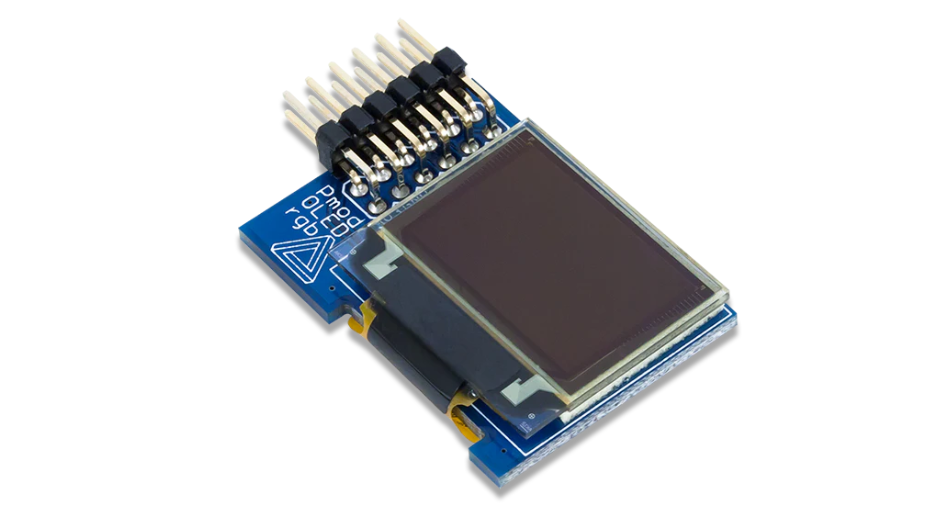
It is recommended to purchase modules under 3 inches with a resolution of 128×64. Use 4-pin I2C when I/O is limited, and select SPI for high-speed requirements. Make sure to confirm that brightness...
Leave a comment
This site is protected by hCaptcha and the hCaptcha Privacy Policy and Terms of Service apply.