



Round AMOLED Display Supplier | Smart Watch, Touch Panel, Custom Cover Glass
Pick a round AMOLED supplier on three things the panel datasheet leaves out: how the circular edge is laid out, how the touch sensor and cover glass are bonded to it, and whether the supplier can hold tolerances through assembly. The circle is a layout and mechanical problem rather than a different display technology, and most field complaints about round watch displays come from that stack.
The circle behind the pixels
An AMOLED pixel array is a rectilinear matrix on a thin-film transistor backplane. A round active area is produced by layout, edge masking and black matrix design around the perimeter, together with the mechanical outline of the glass.
The perimeter is where the compromises sit. Pixels near the boundary are partly covered by the black border, so their effective shape and area differ from pixels at the centre, and a dark watch face makes any ring of uneven brightness easy to see.
Specify edge behaviour rather than centre performance: luminance at a stated radius against centre luminance, mura criteria, the pixel defect rule at the rim, and how the outermost rows are masked. A module that passes a centre-only uniformity check can still show a visible ring on a black background.

Fit, lamination and sealing
Screen fit is a tolerance chain that runs from the case through the module thickness, the adhesive, the gasket compression and the cover glass outline. Fixing one nominal gap without summing those tolerances is how watches end up with an uneven border or a gasket that falls short of its designed compression.
Full lamination bonds panel, sensor and cover glass into a single stack. It removes the air gap and the two reflections at its boundaries, improves contrast under ambient light, and makes touch feel direct because there is no compliant layer under the finger. How much it gains depends on the cover glass reflectance, the adhesive index and the coating design, so ask for a measured comparison of the two stacks rather than a general claim.
Water resistance belongs to the assembled product. A display supplier can hold outline tolerance, control edge quality and supply surfaces that bond reliably, but the rating is earned by the case, the gasket and the bond line together. Over-compressing the gasket hastens its fatigue; under-compressing it leaks.
Readability outdoors
A self-emissive panel has no backlight to overpower, but sunlight still lands on the cover glass. Reflected ambient light sets the black level, so what the wearer sees is emitted luminance plus reflected luminance, over reflected luminance.
Peak brightness needs its conditions: test pattern, average picture level, panel temperature and how long the level is sustained. A watch face that is mostly black can reach a high peak on a small lit area, then fall back when a bright face is displayed, because the driver and the panel are protecting themselves thermally.
Anti-reflective coating, low-reflectance glass and full lamination each reduce the reflected term, and reflectance should be quoted with wavelength range and incidence angle, as display metrology standards require for luminance and contrast values that are meant to be comparable[1].
Television specifications do not transfer to a watch. High dynamic range certification and local dimming language describe a different product; luminance, colour gamut, white point, gamma, viewing angle and behaviour at high average picture level are what a round watch panel is actually judged on.
Touch in a small circle
On-cell and in-cell sensor structures remove a separate touch layer and save thickness, at the price of tighter coupling between display drive and sense electrodes. Add-on sensors are thicker but simpler to source and to tune, and they let the touch controller be changed late in the programme.
The active area is small, so the icons are small, so edge linearity and false-touch rejection matter more than they do on a phone. Test the rim and the corners, test with the charger connected, and test at the brightness and refresh rate the product ships with, because display drive can raise the noise floor enough to shift the reported coordinate.
Wet and gloved fingers are the two conditions that generate returns. A water film changes the capacitance pattern, and controllers suppress it with algorithms that trade sensitivity for stability. Gloves attenuate the signal and need a different threshold. Validate against the target glove material and a defined water condition instead of a general accuracy figure.
Surface coating belongs in the same discussion. Anti-fingerprint treatment reduces oil pickup and friction, but durability after rubbing, cleaning and sweat exposure is the number that matters, not the initial contact angle measured on a fresh sample.
Response and standby
Organic emitters switch far faster than liquid crystal, and the effect is less about video on a watch than about how a transition feels. Judge response together with the driver IC and the animation timing in the operating system, since a fast panel behind a slow pipeline still feels slow.
A standby watch face is the strongest argument for AMOLED in a watch: unlit pixels draw almost nothing, so a low-refresh face can stay visible. The saving is not a fixed proportion. It depends on lit area, brightness, refresh rate, ambient-light strategy, driver design and what the face actually shows, so ask for a measurement taken on your own face design at your own brightness.
Variable refresh backplanes help by dropping frame rate for static content, but the power benefit still follows the same variables, and the switching behaviour of the backplane at very low rates deserves its own test.
Cover glass choices
Flat, 2.5D and 3D describe the edge profile. A polished 2.5D edge is the mature default; 3D glass gives a more continuous surface but demands tighter control of forming accuracy, coating uniformity and assembly tolerance, and it costs yield while the process settles.
Chemical strengthening raises impact and scratch resistance by holding the surface in compression. Its benefit depends on the glass, the ion-exchange process, the compressive stress achieved, the depth of that layer and the edge quality, so ask for strengthening data rather than the word hardened.
Sapphire resists scratching better than glass and costs more, weighs more and reflects differently. It still takes coatings, so it should not be described as needing none. Anti-glare treatment suppresses mirror-like highlights at the cost of slight haze, which is a real trade on a small bright screen.
What to confirm before sampling
Put the numbers on one sheet with the supplier: active area diameter, resolution, outline, module thickness, FPC direction and connector, touch structure and controller, cover glass material and coating stack, operating and storage temperature, and the reliability tests that will be run against them.
Add the commercial items on the same sheet — sample lead time, cosmetic criteria, pixel defect rule, change notification and end-of-life policy. A supplier willing to sign that list behaves differently from one quoting a unit price, because it has accepted that the edge, the bond line and the seal are part of the specification.
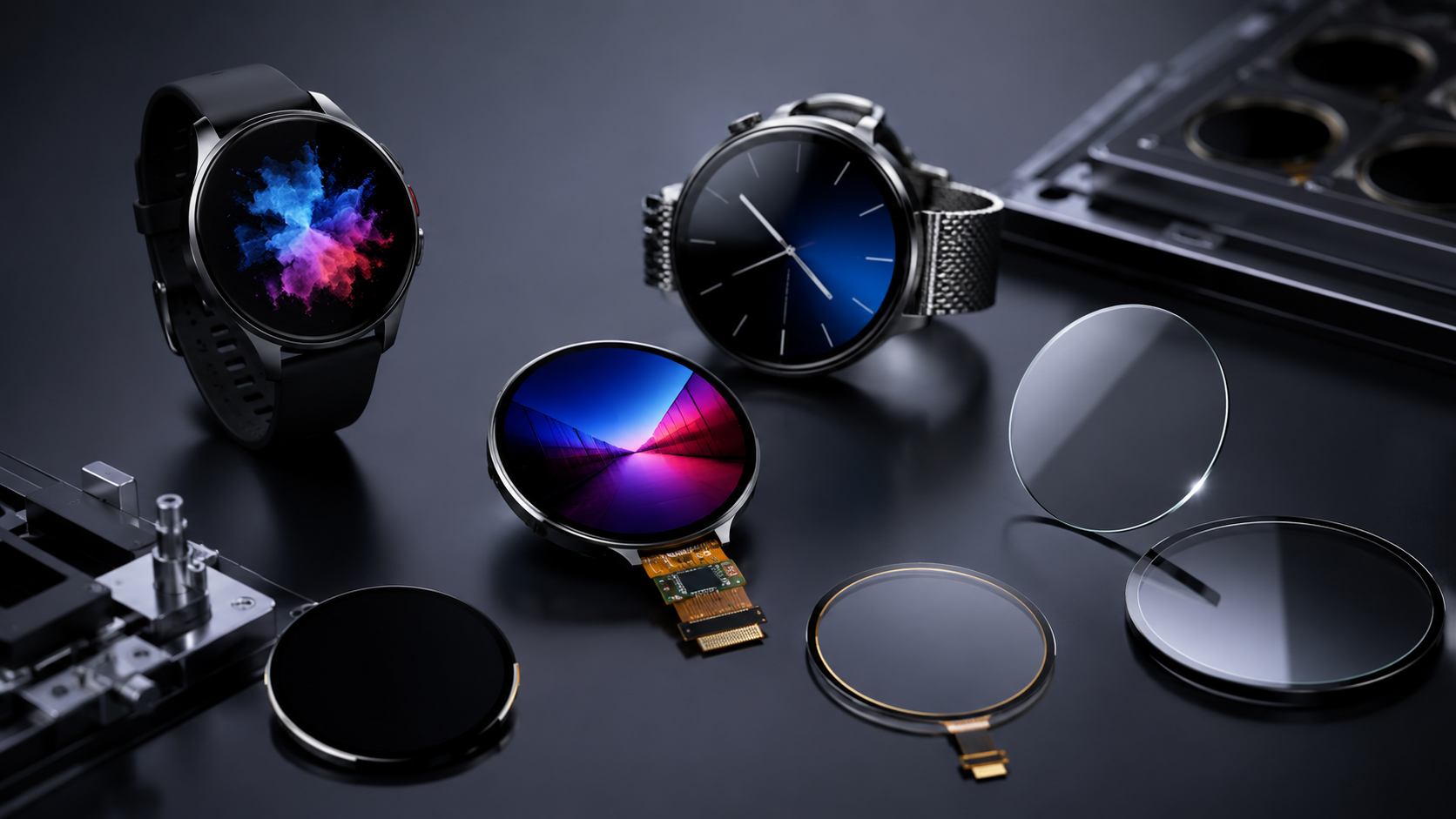
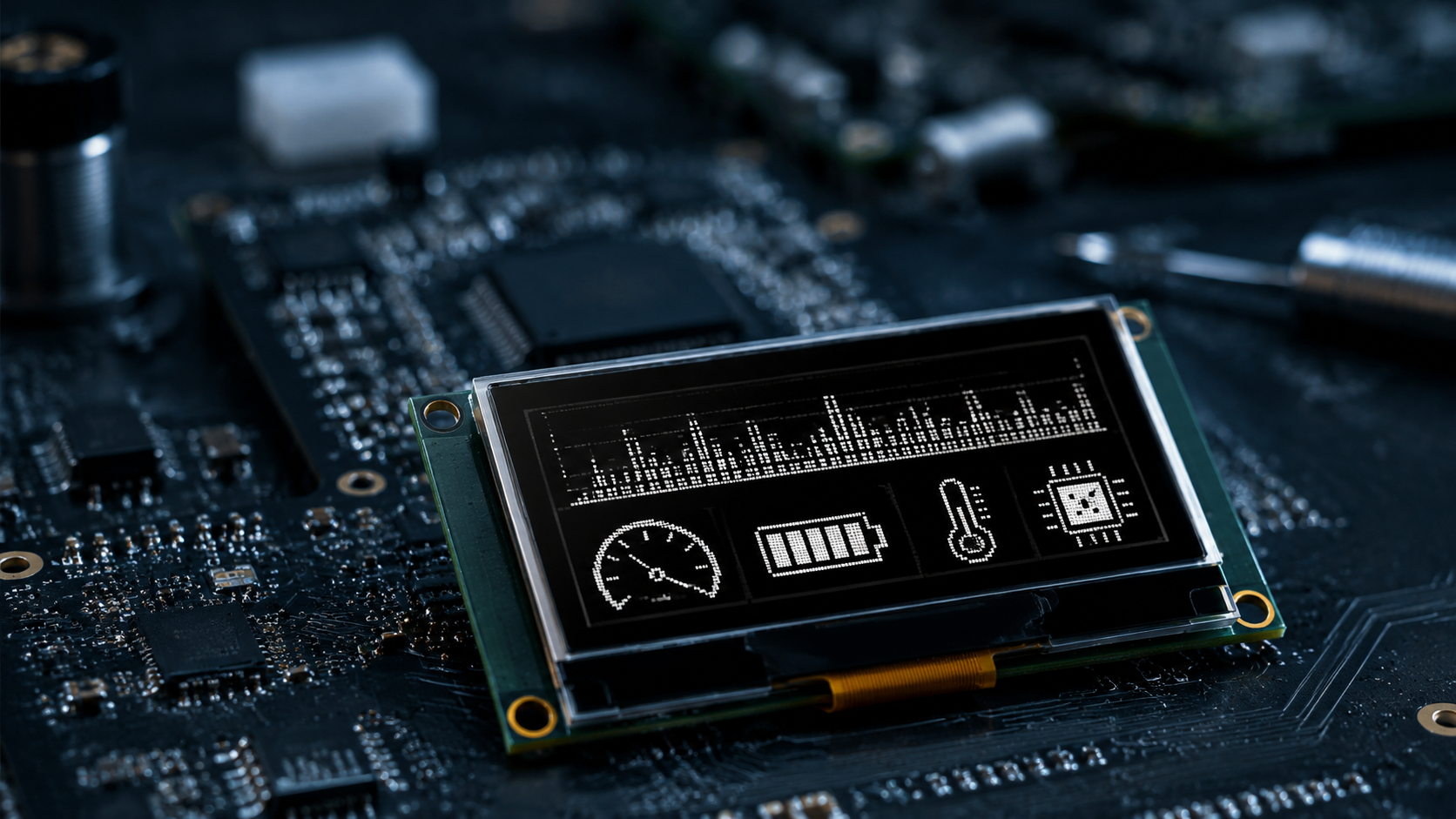
For a circular face, the round screen range and the wider AMOLED range show the formats that are available with bonded touch and cover glass; where emissive contrast is not required, an OLED module of the same outline is worth comparing on cost.
A round AMOLED is bought as a stack, not as a panel. Settle the edge layout, the lamination, the sealing strategy and the reflectance first, and the price conversation becomes a comparison of like with like.
References
- ISO 9241-307:2008 — Ergonomics of human-system interaction — Part 307: Analysis and compliance test methods for electronic visual displays. International Organization for Standardization. https://www.iso.org/standard/40102.html
Read more
Sony launched the ECX350F micro OLED display microdisplay module, compressing pixel pitch to 5.1 micrometers while delivering an unprecedented peak.
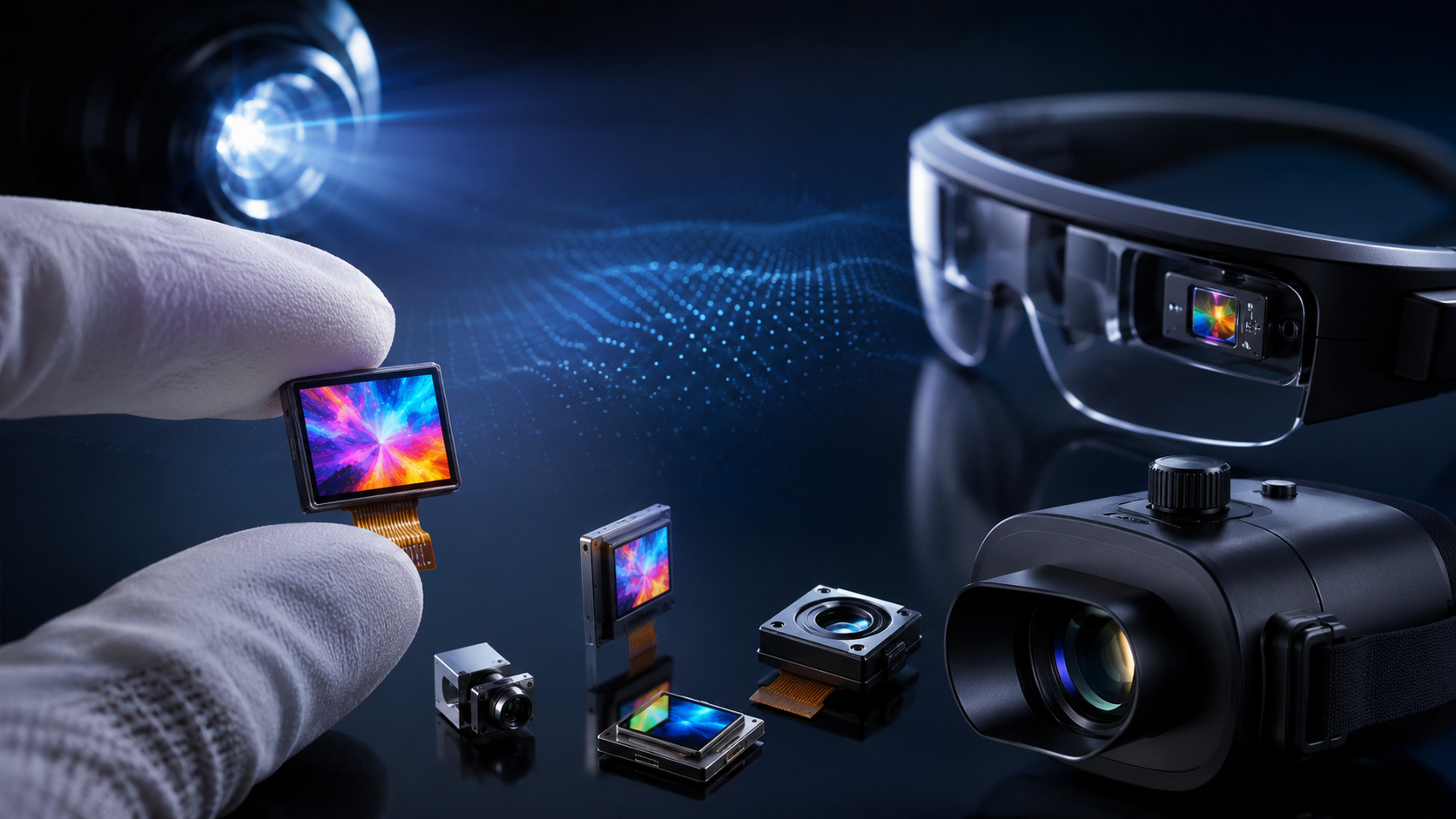
The rapid development of smart glasses, AR headsets, MR devices, and other near-eye optical products is reshaping the microdisplay market. OLEDOS, also.
Leave a comment
This site is protected by hCaptcha and the hCaptcha Privacy Policy and Terms of Service apply.