


PMOLED Displays for Embedded Systems | Low Power, Monochrome Graphics, Custom Module Manufacturer
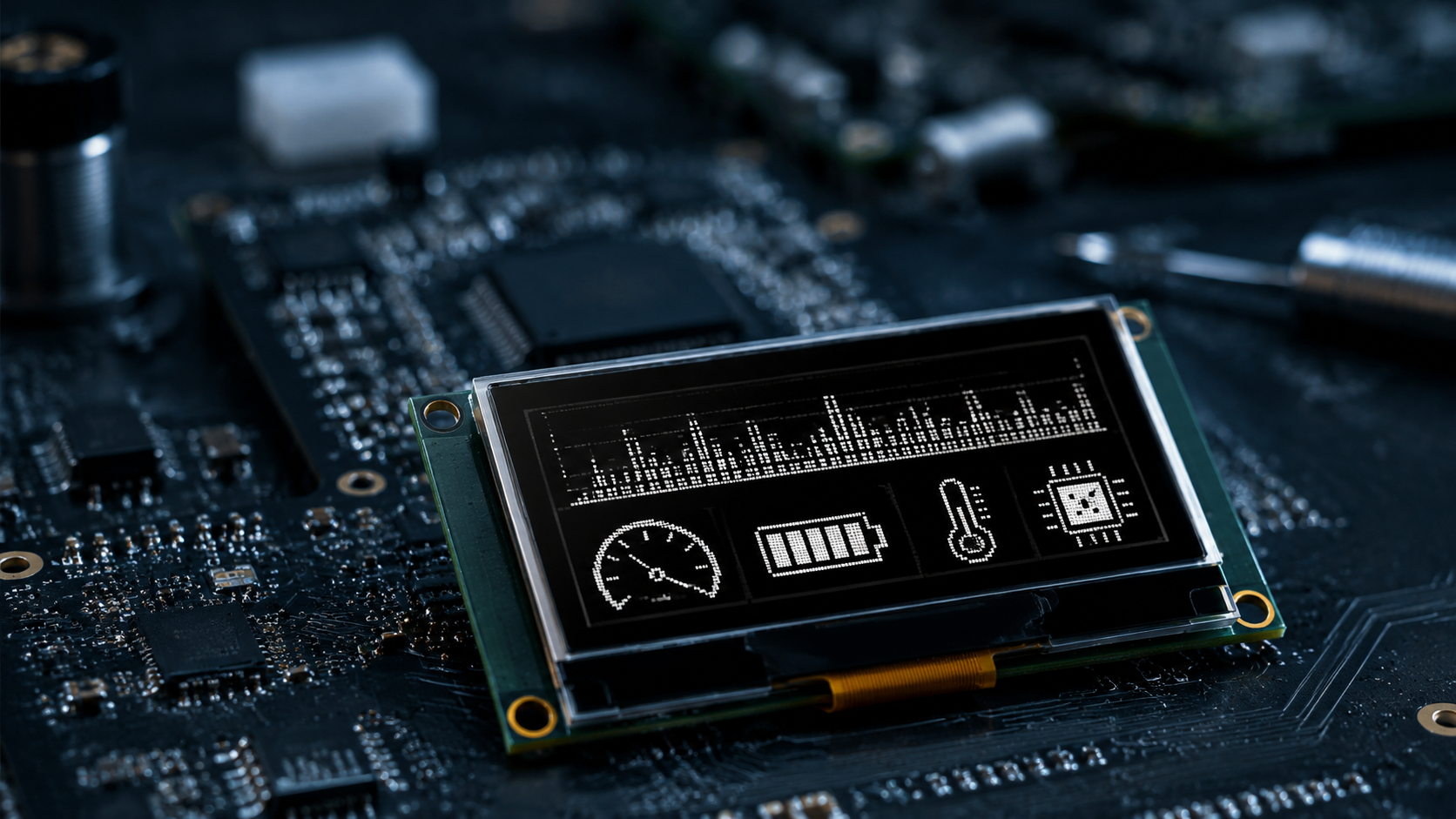
Choose a PMOLED module when the interface is small, mostly dark and rarely redrawn. A passive matrix OLED needs no backlight, switches quickly and holds true black, which suits handheld instruments, meters, status panels and battery-powered sensors. The limits are size, drive duty and operating life, so select a supplier on the controller, the FPC and the glass rather than on the panel alone.
How a passive matrix drives
A PMOLED has no pixel transistor. Column drivers supply current, row drivers scan one row at a time, and a pixel emits only during its own row's turn. With N rows scanned per frame, each row is energised for roughly one Nth of the frame, so peak current has to rise if average brightness is to stay constant.
That duty cycle sets the practical ceiling. Brightness per row falls as the row count climbs, adjacent columns interact when peak current rises, and the organic stack ages faster at high current density. Character and small graphic panels keep the multiplex modest for exactly this reason.
Beyond a certain area and resolution the current needed for a legible image becomes impractical, and active matrix takes over. Passive matrix stays competitive in the small, low-count, largely static segment where its simpler backplane and lower tooling cost still count.
Estimating the power budget
Average supply current is close to the sum, over lit pixels, of peak pixel current multiplied by the fraction of the frame during which that pixel is addressed. In a first approximation that is the number of lit pixels times peak current divided by the row count.
Two consequences follow. First, consumption tracks lit area almost linearly, so a screen showing a few digits on black draws a small fraction of what the same panel draws on a white splash screen. Second, dimming by reducing peak current is more efficient than dimming by shortening the on-time further, because the driver and the boost converter lose a fixed share at each pulse.
Ask for the peak current at the brightness you need, not only the average, and check what the on-module charge pump can deliver. Many small modules integrate the boost, and that pump sets the maximum brightness long before the organic stack does.
Controller, interface and memory
Most small PMOLED modules carry a controller with a frame buffer, a font table, a charge pump and a selectable interface. SPI is common where speed matters and pin count does not; I2C is common where the host has two spare pins and the update rate is low.
The bandwidth question has an answer that depends on all three variables. A 128×64 monochrome frame is 1,024 bytes, and refreshing it 30 times a second needs about 30 kB/s. A few megahertz of SPI carries that comfortably, while a 400 kHz I2C bus is already near its practical limit at the same rate, before register overhead. State frame size, refresh rate and bus clock together, and the comparison becomes meaningful.
Because the frame buffer lives on the module, the host only sends changed bytes. That is what makes a small microcontroller viable: the display holds the image while the MCU sleeps.
Size and legibility limits
Production passive matrix panels are small, typically a few inches diagonal or less, and the glass outline grows faster than the active area once the row and column fan-out is counted. Character height, stroke width and the font stored in the controller determine how the panel reads at arm's length.
For fixed text, a character OLED module with a legible font ROM is often a better fit than a graphic panel driven with a scaled bitmap, because the strokes stay uniform. For bars, icons and mixed layouts, a graphic panel gives the freedom and costs more firmware work.

Life and image sticking
OLED luminance falls as charge passes through the stack, and the blue emitter usually ages first. Pixels that are lit more than their neighbours therefore dim faster, and a static bright logo becomes a visible ghost after long service.
The countermeasures are ordinary design work rather than exotic materials. Keep large areas dark, avoid pure white backgrounds, dim when the user is not looking, shift static elements by a few pixels, and time out the display instead of leaving a fixed screen on. Where the product must show the same layout for years, ask for the luminance half-life at the actual drive current and operating temperature, since both accelerate decay.
Readability in ambient light
An OLED emits nothing when off, so dark-room contrast is very high and largely irrelevant outdoors. What matters is reflected ambient light, which sets a floor under the black state.
Using the diffuse-reflector estimate, 500 lx on a stack with five percent reflectance produces about 8 cd/m² of reflected luminance. Against a lit area driven to 80 cd/m² the ratio is roughly 11:1, which reads well. Move the same panel to 10,000 lx and the pedestal rises to about 159 cd/m², the ratio falls below 2:1, and small glyphs stop resolving.
That is why a circular polarizer or a bonded anti-reflective cover earns its cost on outdoor instruments, and why a reflectance figure is only comparable when it arrives with its measurement geometry and wavelength range, as display metrology standards require for contrast claims[1].
Custom module work
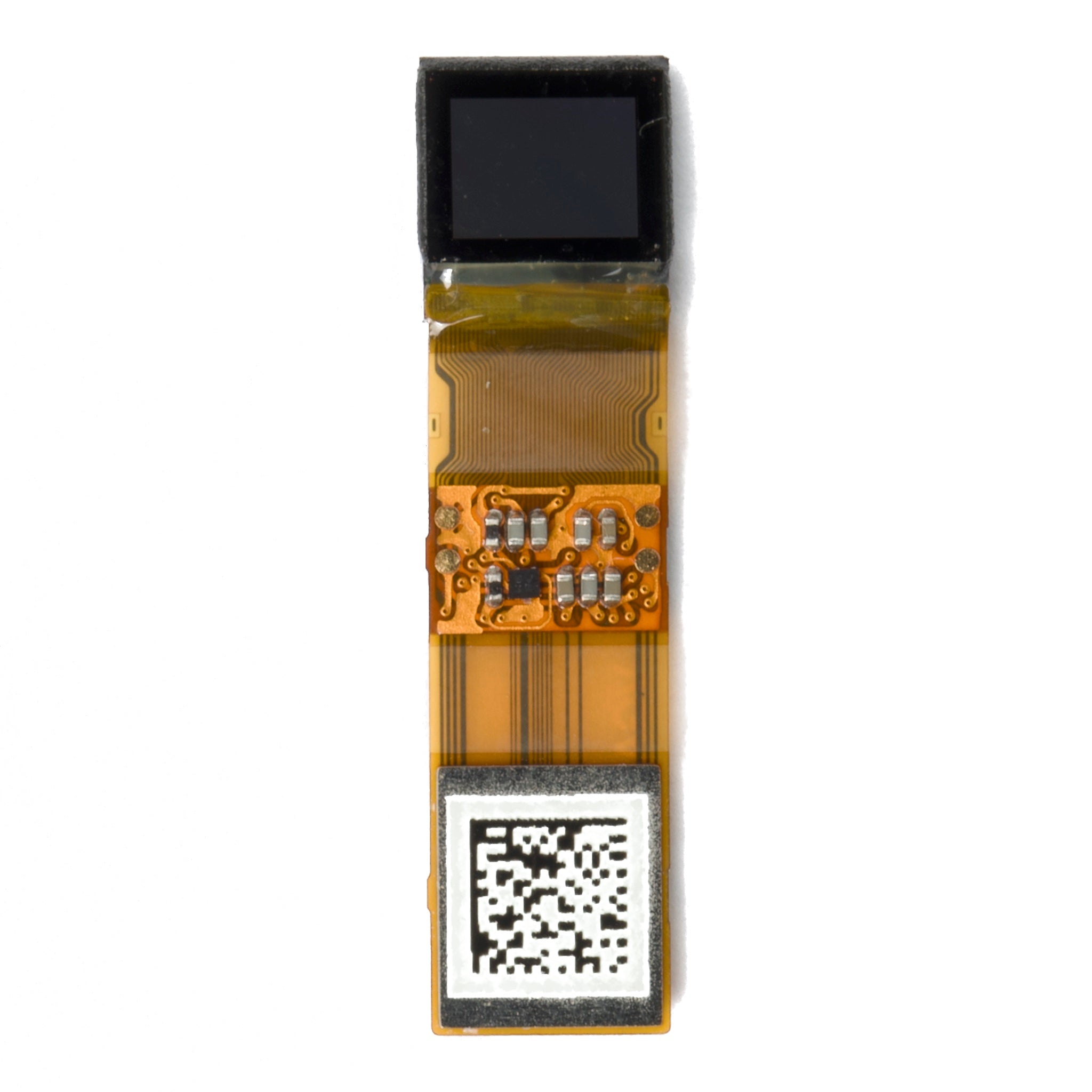
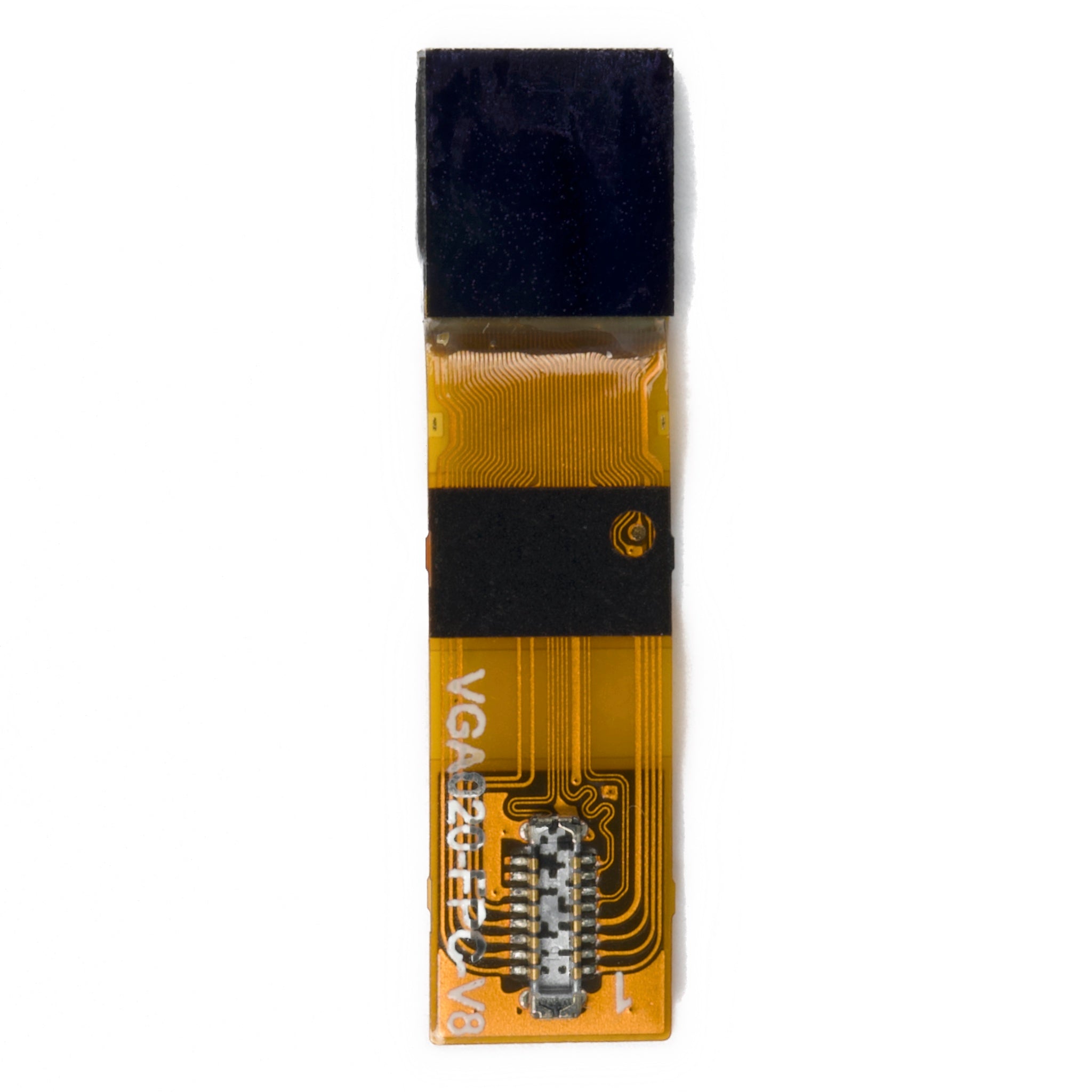
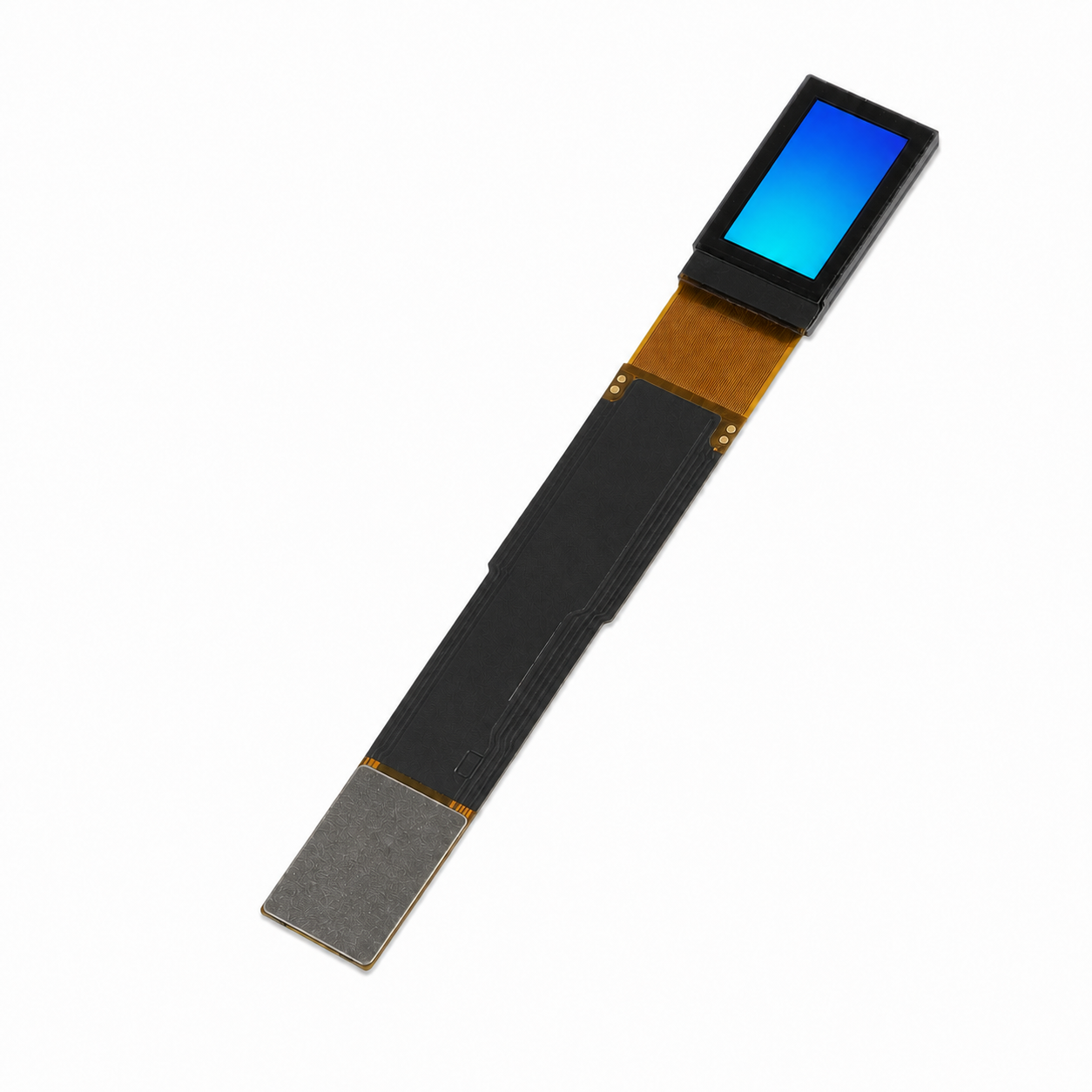
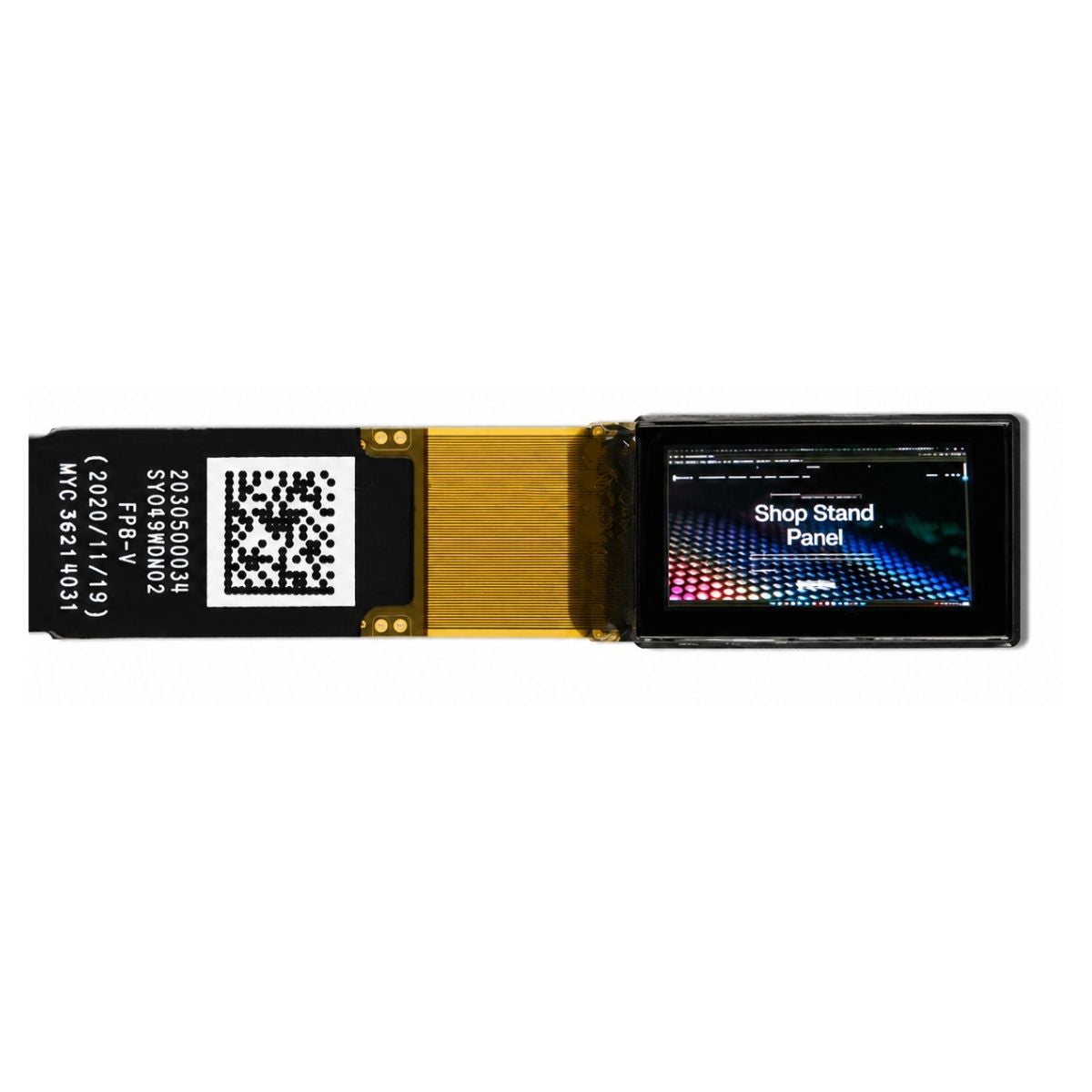
Customisation on a PMOLED is mostly mechanical and electrical rather than at the wafer level. FPC length, bend radius and connector type decide how the module sits in the housing; the glass outline and black border printing decide how it looks behind the window; the cover glass, its coating and the bonding method decide how it survives.
For instruments that see humidity or cleaning fluids, ask about conformal coating and about the seal between cover glass and module, since moisture ingress shortens life faster than ordinary use. For cold equipment, confirm the operating range of the controller as well as the panel, because the driver often reaches its limit first.
Supply the supplier with the ID drawing, the stack-up, the connector footprint and the firmware interface you intend to use. A module house that asks for all four before quoting is easier to work with than one that quotes from a catalogue page.
Supplier questions
Ask who owns the glass and who writes the controller firmware, because glove, dimming and gamma behaviour all live in that firmware. Ask for the initialisation sequence, the font tool and the sample lot consistency data, not just a datasheet.
Then ask about change notification, end-of-life notice and minimum order, since a passive matrix panel can disappear from a catalogue while the product it sits in is still selling. A supplier who answers those three questions plainly is usually the one who will still answer the phone two years later.
For a fixed-format product the natural starting point is a character OLED display; where the layout changes with machine state, a graphic OLED module does the job; and where a whole family of sizes is involved, the wider PMOLED range is the place to compare.
Passive matrix OLED suits embedded interfaces that are small, dark and slow to change. Fix the duty cycle and the lit area early, budget peak current rather than average, specify reflectance for the brightest place the product will be used, and the rest is mechanical detail.
References
- ISO 9241-307:2008 — Ergonomics of human-system interaction — Part 307: Analysis and compliance test methods for electronic visual displays. International Organization for Standardization. https://www.iso.org/standard/40102.html
Read more
According to the IHS Markit Industrial Display Market Report, the compound annual growth rate (CAGR) for industrial TFT LCD modules operating in extreme.
Round AMOLED displays are widely used in smart watches and wearable devices, especially products that follow a traditional watch-style design. Compared.
Leave a comment
This site is protected by hCaptcha and the hCaptcha Privacy Policy and Terms of Service apply.