



TFT LCD Technology Explained | Working Principle & Types
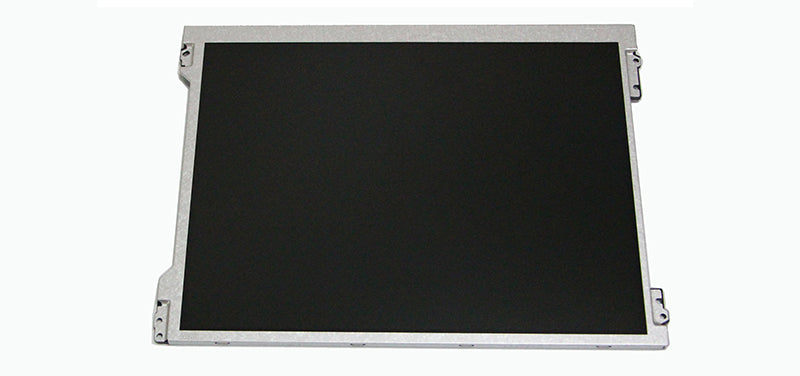
TFT LCD technology employs a thin-film transistor array to precisely control liquid crystal molecules, featuring a typical 5-8ms response time as backlight passes through aligned crystals and color filters to create images; common types include TN (fast 1-2ms for gaming), IPS (178° wide viewing angle for design), and VA (high contrast), each tailored to specific display needs.
TFT LCD Basics
A TFT LCD uses a thin-film transistor array to control each pixel, dominating 85% of the 2023 flat-panel display market with 1.2 billion units shipped. Typical smartphone screens have 400-600 PPI, 0.5-1.5mm thickness, and consume 0.5-2W.
TFT LCD (Thin-Film Transistor Liquid Crystal Display) is an active-matrix technology where TFT arrays act as individual switches for millions of pixels, enabling precise image control. In 2023, it held 85% of the global flat-panel display market, with 1.2 billion units shipped.
TFT LCD relies on layered components working together:
-
TFT Array: Glass substrate with millions of transistors (e.g., 1080p screen has 2.07 million TFTs), each linked to a pixel electrode.
-
Color Filter Array: RGB filters (red/green/blue) over sub-pixels, covering 33% of the area (typical transmittance 25-35%).
-
Liquid Crystal Layer: 2-5μm thick, containing rod-shaped molecules that twist when voltage is applied.
-
Backlight Unit (BLU): LED-based (white or edge-lit), emitting 300-1000 nits brightness; power draw 1-5W for a 15.6-inch laptop.
-
Polarizers: Two sheets (input/output) aligned perpendicularly to filter light direction.
|
Parameter |
Typical Range |
Example Use Case |
|---|---|---|
|
Pixel Density (PPI) |
50-600 |
TV (50-150), Phone (400-600) |
|
Response Time |
5-12ms (TN:5-8ms, IPS:8-12ms) |
Gaming (TN preferred) |
|
Contrast Ratio |
500:1 (TN) to 3000:1 (VA) |
Media (VA for deep blacks) |
|
Viewing Angle |
170/160° (TN) to 178/178° (IPS) |
Office (IPS for collaboration) |
Power efficiency is key: TFT LCD consumes 70% less energy than CRTs. A 27-inch 4K monitor uses ~30W vs. 100W for CRT. Lifespan averages 50,000 hours (8h/day use = 17 years), with backlight degradation starting after 30,000 hours (brightness drops 20%).
In 2023, 60% of smartphones used TFT LCD (vs. 40% OLED), 55% of laptops, and 30% of TVs. Cost-wise, a 6.5-inch TFT LCD costs 15-20—making it dominant in budget phones ($100-300 range).
Its 85% market share (2023) reflects reliability for everyday devices, from smartwatches (1.3-inch, 326 PPI) to 85-inch TVs (120 PPI).
Pixel Control Mechanism
TFT LCD pixel control uses a thin-film transistor (TFT) per pixel as a switch, with 2.07 million transistors in a 1080p screen. Voltage (0-5V) adjusts liquid crystal alignment, enabling 16.7 million colors at 60Hz refresh, consuming 0.5-2W for phone screens.
A 1080p screen (1920x1080) contains 2,073,600 pixels, each with one TFT—totaling over 2 million transistors on a glass substrate. These TFTs are 2-5μm in size, spaced 10-20μm apart, forming a dense array that enables pixel-level accuracy.
Each TFT acts like a gate: when a video signal arrives, the TFT opens to apply voltage to the pixel electrode. The voltage (typically 0-5V) changes the alignment of rod-shaped liquid crystal molecules between two electrodes. At 0V, molecules twist 90°, blocking most light (10% transmittance); at 5V, they align vertically, allowing 90% light pass. This voltage-driven alignment directly controls how much light reaches the viewer.
Key Parameters in Control
-
Transistor density: 200-500 TFTs per mm² (e.g., 400 PPI phone screen has 400,000 TFTs/cm²).
-
Response time: 5-12ms (TN panels 5-8ms, IPS 8-12ms), matching 60-120Hz refresh rates.
-
Color depth: 8 bits per sub-pixel (RGB), totaling 24 bits (16.7 million colors).
-
Voltage precision: ±0.1V tolerance to maintain consistent gray levels (256 steps per sub-pixel).
|
Resolution |
Total Pixels |
TFT Count |
TFT Size (μm) |
Pixel Pitch (μm) |
Example Device |
|---|---|---|---|---|---|
|
720p |
921,600 |
921,600 |
3 |
80 |
Budget tablet |
|
1080p |
2,073,600 |
2,073,600 |
2.5 |
50 |
Mid-range laptop |
|
4K UHD |
8,294,400 |
8,294,400 |
2 |
30 |
55-inch 4K TV |
Signal Flow Step-by-Step
-
Video processor sends data to the TFT driver IC (e.g., 1.2Gbps for 4K@60Hz).
-
Driver applies voltage to TFT gates, opening switches for active pixels.
-
Pixel electrodes receive voltage (0-5V), aligning liquid crystals.
-
Backlight (300-1000 nits) passes through polarizers, liquid crystals, and RGB filters.
-
Twisted crystals bend light; aligned crystals let light pass—creating brightness/color per pixel.
Power use scales with resolution: a 6.5-inch 1080p phone screen draws 0.8-1.2W, while a 15.6-inch 4K laptop screen uses 3-5W. Lifespan of TFTs is 50,000 hours (17 years at 8h/day), with voltage drift causing <5% brightness loss over 30,000 hours.
This mechanism allows TFT LCDs to deliver sharp images in 85% of 2023 flat-panel devices, from 1.3-inch smartwatches (326 PPI, 1.2 million TFTs) to 85-inch TVs (120 PPI, 10.4 million TFTs).

Essential Parts Breakdown
A TFT LCD has 5 main parts: TFT array (2M+ transistors in 1080p), color filters (33% coverage), 2-5μm liquid crystal layer, LED backlight (300-1000 nits, 1-5W), and polarizers (40-45% transmittance). These layers stack to make 85% of 2023 flat panels.
A 1080p screen (1920x1080) has 2,073,600 TFTs, each 2-5μm in size, spaced 10-20μm apart (density 200-500 TFTs/mm²). Made of amorphous silicon (a-Si) or low-temperature polycrystalline silicon (LTPS), LTPS offers 2x higher electron mobility (1-10 cm²/Vs vs. 0.5-1 cm²/Vs for a-Si), enabling faster response. TFTs account for 20-25% of panel material cost.
It covers 33% of the panel area, with typical transmittance 25-35%. Each filter is 1-2μm thick; green filters are most efficient (peak transmittance 40%) due to human eye sensitivity. A 6.5-inch phone screen has 24 million sub-pixels (8M per color), costing $1-2 per panel.
Sandwiched between two glass plates, this layer is 2-5μm thick (thinner than a human hair, 50-100μm). It contains rod-shaped LC molecules (e.g., TN-type: 5-10μm length) that twist 90° at 0V (blocking light) and align vertically at 5V (passing light). Voltage control (0-5V, ±0.1V precision) adjusts twist angle for 256 gray levels per sub-pixel.
Brightness ranges 300-1000 nits (TVs up to 2000 nits), power draw 1-5W for 15.6-inch laptops, 3-8W for 27-inch monitors. LED lifespan is 30,000-50,000 hours (brightness drops 20% after 30k hours). Cost: $3-7 per BLU for mid-size panels.
Each has 40-45% transmittance, 0.1-0.2mm thickness.Degradation starts after 20,000 hours (transmittance drops 15%).
A 4K panel (3840x2160) has 8.29M TFTs, 24.88M sub-pixels, and requires 8.29M voltage signals per frame (60Hz = 497M signals/sec).
Lifespan of all parts averages 50,000 hours (17 years at 8h/day use). Panel yield (functional units per production run) is 85-95%, with defects often in TFT arrays (5-10% defect rate). This breakdown shows why TFT LCDs balance cost ($8-12 for 6.5-inch) and performance for 85% of 2023 devices.
Common TFT LCD Variants
TN, IPS, and VA dominate TFT LCD variants, holding 30%, 45%, 25% of 2023 market share respectively. TN offers 1-5ms response (gaming), IPS 178° viewing (design), VA 3000:1 contrast (media), with costs $8-15 per 6.5-inch panel.
These Common TFT LCD Variants—Twisted Nematic (TN), In-Plane Switching (IPS), and Vertical Alignment (VA)—differ in liquid crystal orientation, delivering distinct tradeoffs in speed, viewing angles, and contrast.
TN panels twist liquid crystal molecules 90° between electrodes. This simple design prioritizes speed: response time is 1-5ms (fastest among variants), ideal for 60-240Hz gaming. However, viewing angles are limited to 170° horizontal/160° vertical, with colors shifting at off-angles. Contrast ratio averages 500:1 (lowest), but cost is lowest at $8-10 for a 6.5-inch panel. In 2023, TN held 30% of the TFT LCD market, mainly in gaming laptops (e.g., 144Hz models) and budget monitors. Power draw is 0.5-1.5W for phone screens, similar to other variants.
This boosts viewing angles to 178° horizontal/178° vertical (minimal color shift) and improves color accuracy (8-bit per sub-pixel, 16.7M colors). Response time is slower at 8-12ms, limiting use in high-speed gaming.
Contrast ratio is 1000:1 (mid-range). Cost is higher at $12-15 for 6.5-inch panels. IPS dominated 45% of 2023 market share, popular in smartphones (85% of mid-range phones), laptops (office/design use), and tablets. A 27-inch IPS monitor uses 3-5W, with 50,000-hour lifespan.
VA panels align liquid crystals vertically at 0V, twisting only when voltage is applied. This creates the highest contrast ratio (3000:1, some up to 5000:1) for deep blacks. Viewing angles match IPS at 178°/178°, but response time is 8-15ms (slower than TN).
Cost is $10-13 for 6.5-inch panels. VA held 25% of 2023 market share, primarily in large TVs (55-85 inches) and media displays. A 65-inch VA TV uses 80-120W, with backlight brightness 500-1000 nits.
|
Variant |
Response Time |
Viewing Angle (H/V) |
Contrast Ratio |
Typical Cost (6.5-inch) |
2023 Market Share |
Primary Use Case |
|---|---|---|---|---|---|---|
|
TN |
1-5ms |
170°/160° |
500:1 |
$8-10 |
30% |
Gaming laptops, budget monitors |
|
IPS |
8-12ms |
178°/178° |
1000:1 |
$12-15 |
45% |
Smartphones, office laptops |
|
VA |
8-15ms |
178°/178° |
3000:1 |
$10-13 |
25% |
Large TVs, media displays |
TN sacrifices viewing angles/contrast for speed (1-5ms response enables 240Hz gaming). IPS balances angles/color for general use (45% market share reflects versatility).
VA maximizes contrast for media (3000:1 ratio enhances dark scenes in movies). Yield rates vary: TN 90-95%, IPS 85-90%, VA 88-92%, affecting production costs.
Lifespan is similar across variants (50,000 hours average), with backlight degradation starting after 30,000 hours (20% brightness drop).
These variants let manufacturers tailor TFT LCDs to device needs—from 2000 4K TVs (VA).
Type Feature Comparison
TN, IPS, and VA TFT LCD types differ clearly: TN has 1-5ms response (fastest), IPS 178° viewing (best angles), VA 3000:1 contrast (deep blacks). Costs range $8-15 for 6.5-inch panels, with 2023 shares 30% (TN), 45% (IPS), 25% (VA), suiting gaming, design, media use.
TN panels twist liquid crystals 90° with minimal voltage change, enabling 1-5ms response—fast enough for 240Hz gaming (e.g., 144Hz laptop screens). IPS and VA require more complex molecular shifts, resulting in 8-15ms response, limiting them to 60-120Hz use. A 240Hz TN monitor refreshes 4x faster than a 60Hz IPS, reducing motion blur in fast games.
IPS panels align liquid crystals horizontally, maintaining color accuracy at 178° H/178° V (off-angle shift <5%). TN panels twist crystals vertically, causing 20-30% color shift at 30° off-axis—unsuitable for group viewing. An IPS phone screen looks consistent to 4 people; a TN screen distorts for 2.
VA panels align crystals vertically at 0V, blocking 95% of light (3000:1 contrast). IPS lets 90% pass (1000:1), TN 80% (500:1). A 65-inch VA TV shows deeper blacks in dark movie scenes than a 65-inch IPS (3000:1 vs. 1000:1).
TN uses simpler amorphous silicon TFTs (12-15), and VA falls in between (150, IPS 190 (2023 prices). Mass production favors TN (90-95% yield) over IPS (85-90% yield).
All use 0.5-2W for phone screens, 3-5W for 27-inch monitors. VA TVs (65-inch) draw 80-120W. Lifespan averages 50,000 hours (17 years at 8h/day), with backlight brightness dropping 20% after 30,000 hours. IPS has slightly better color stability over time (5% less fade vs. TN).
-
Gaming: Pick TN (1-5ms response, 180).
-
Design/Office: Pick IPS (178° angles, accurate color). Example: 15.6-inch IPS laptop ($800).
-
Media/TV: Pick VA (3000:1 contrast, deep blacks). Example: 65-inch VA TV ($700).
Read more
Choose Micro OLEDs for VR: 0.9" panels deliver 50°+ FOV, sub-10μs gray-scale response (system latency <20ms to reduce dizziness), and >1M:1 contrast. Validate via optical simulation and timin...
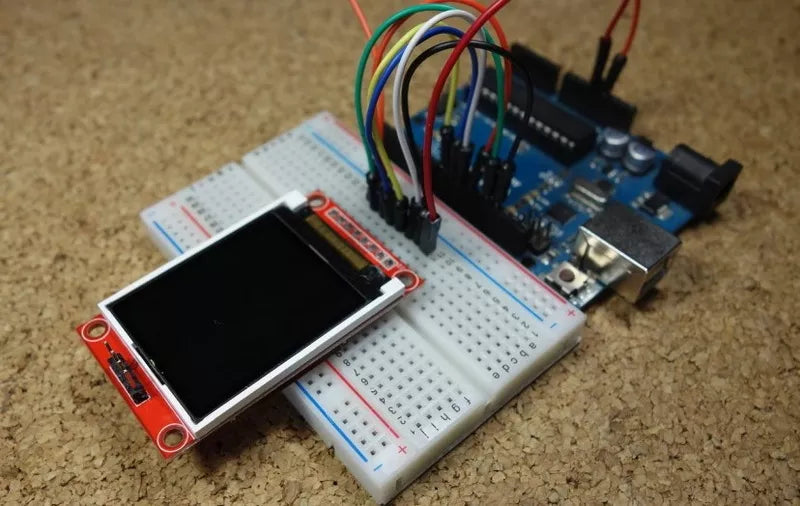
When selecting a TFT LCD, start with size: 24-27 inches suits most desktops for immersive tasks, while 15-17 inches fits portables. Brightness is key—aim for 250-350 nits indoors to ease eye strain...
Leave a comment
This site is protected by hCaptcha and the hCaptcha Privacy Policy and Terms of Service apply.