

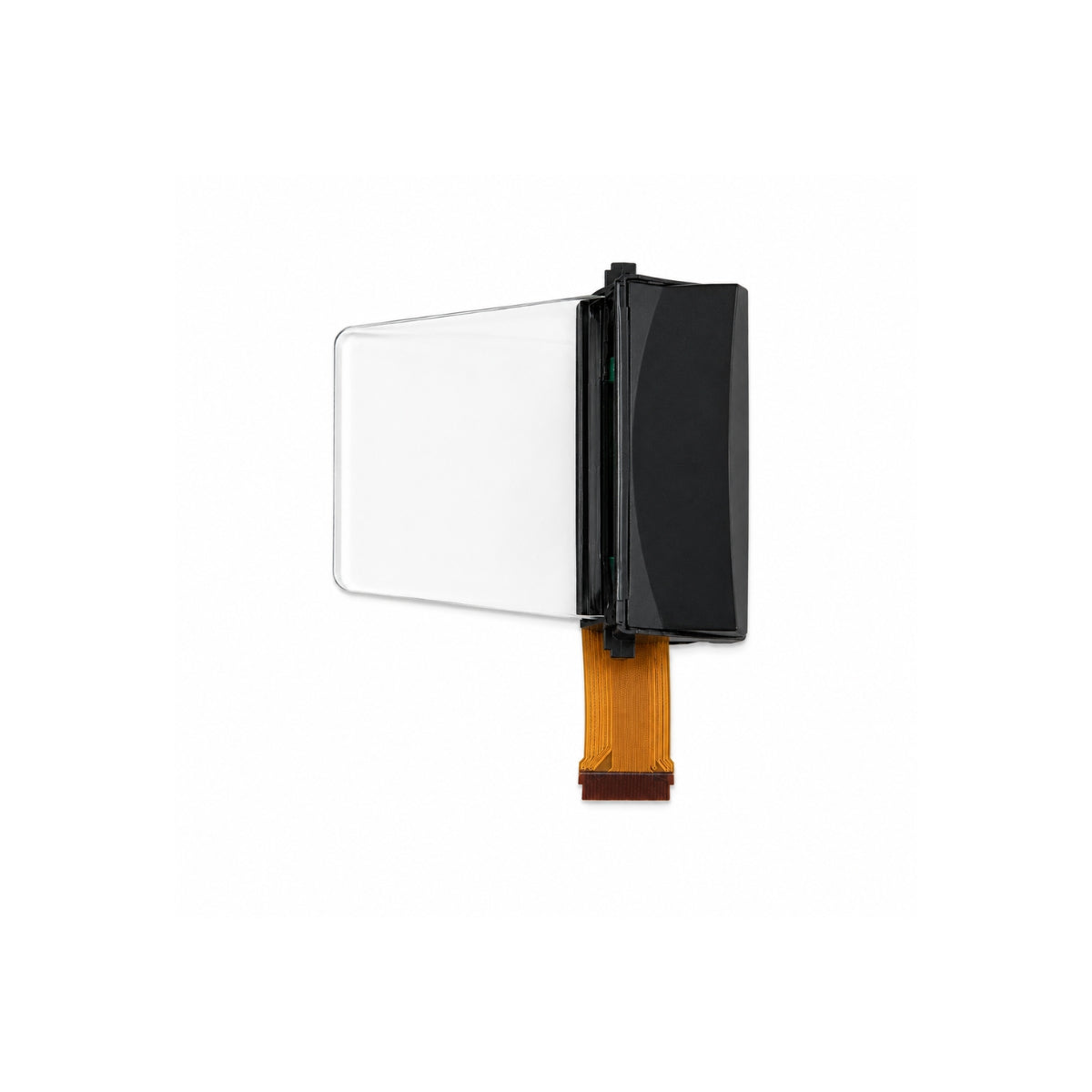
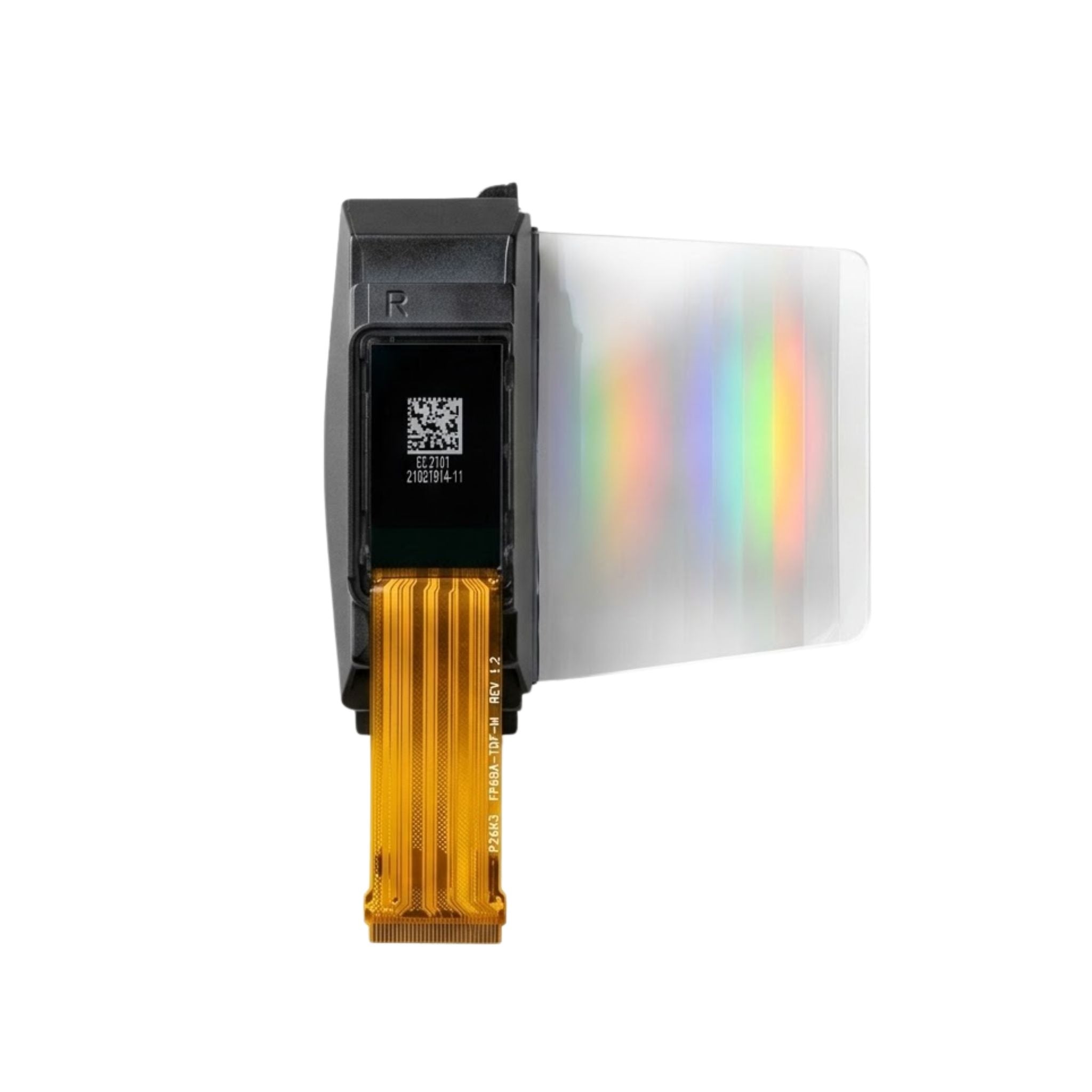


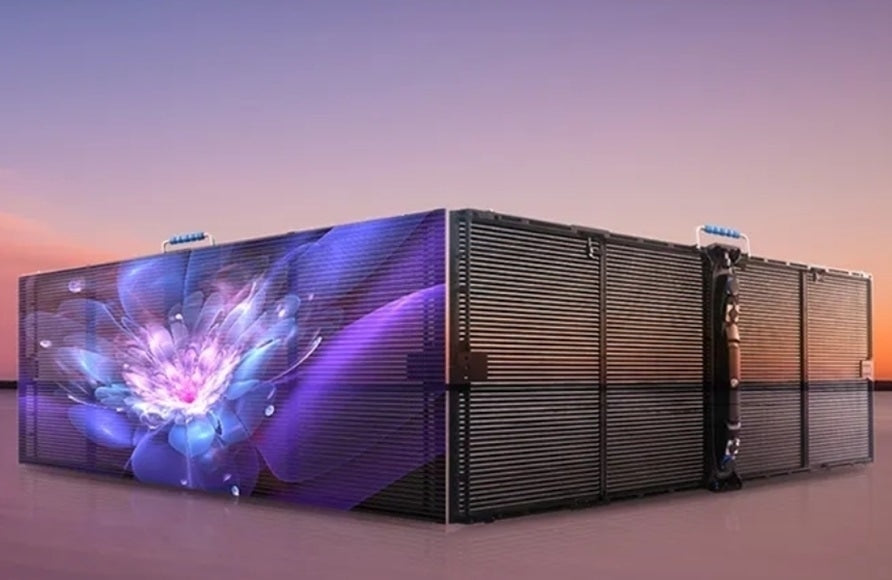
Transparent LCD Display Manufacturing | Materials, Features, and Process Technologies
Transparent LCD manufacturing uses ultra-clear glass substrates (thickness 0.7mm), low-resistance ITO films (sheet resistance 80Ω/□), and high-transmittance liquid crystal as core materials.
Characteristics: Transparency 85%, contrast ratio 1200:1, response time 8ms.
The process includes photolithography and etching of electrodes, vacuum filling of liquid crystal, and laminating polarizers in a Class 10,000 cleanroom, with temperature controlled at 25±2°C to prevent bubbles, suitable for window interactive displays.
Materials
Transparent LCD materials focus on balancing transmittance (>90%) and electrical performance.
Ultra-clear glass (AGC, Asahi Glass Company, Fe₂O₃ <0.015%) has a transmittance of 92%+;
Merck MLC-2048 liquid crystal has a static transmittance of 85% and response time <10ms; 3M silver nanowire electrodes have a sheet resistance of 50Ω/sq and transmittance >90%;
Nitto Denko OCA adhesive has a transmittance of 99% and haze <1%.
Transparent Substrates
The "High-Transmittance Champion" among rigid substrates:
AGC's AN Glass series is the most typical, with iron ion Fe₂O₃ controlled at 0.01%-0.015% (ordinary glass 0.1%-0.2%), average visible light transmittance 92% (up to 93% at 550nm wavelength), transmittance 80% in the UV region (380nm), and 85% in the IR region (1100nm).
Thickness options range from 0.5mm to 3mm: window displays often use the 2mm version (impact-resistant), while automotive HUDs use the 0.7mm thin version (AN Wiz model, transmittance 91%, thermal expansion coefficient 3.8×10⁻⁶/°C, matching automotive temperature variations).
The surface is chemically polished, with roughness Ra <0.5nm, preventing issues when bonding with OCA adhesive.
Corning's Gorilla Glass Transparent focuses more on scratch resistance, hardness 7 Mohs (similar to AGC), but with slightly lower transmittance (91%).
Its advantage is long-term weather resistance – transmittance only drops 0.5% after 500 hours of UV aging.
It is used in outdoor transparent advertising displays, paired with anti-glare coating (reflectivity <2%).
Both types of glass are produced using the float process: raw materials use low-iron quartz sand (Fe₂O₃ <0.02%), the melting furnace uses full-oxygen combustion at 1550°C, the forming pull speed is 800m/h, and a gradient cooling in the cooling zone prevents stress cracks.
Transmittance is measured according to ASTM D1003, with haze <1% (AGC AN Glass measures 0.8%).
Flexible substrates:
Polyimide (PI) film is the top choice for high-temperature resistance.
DuPont's Kapton series is most commonly used: the HN model can withstand 260°C long-term and 400°C short-term, with 25μm thickness showing 88% average transmittance (across the spectrum), dropping to 86% at 50μm thickness;
Tensile strength is 231MPa, and the bending radius can reach 5mm (withstands 100,000 bending cycles without breaking).
It was used in Samsung's early foldable screen prototypes, but the cost is high (about $50/m²).
Ube Industries' UPILEX-S film offers higher transmittance, 89% at 25μm thickness, and heat resistance of 300°C, suitable for low-resolution flexible screens.
PET film is affordable and readily available.
DuPont's Mylar A series offers 90% transmittance at 12μm thickness, withstanding 120°C (long-term), tensile strength 220MPa, and a bending radius of 10mm.
Toray's Lumirror T60 offers thickness options from 12-250μm, with 50μm thickness achieving 91% transmittance, and a surface coated with a hardening layer (pencil hardness 2H), used in Amazon Kindle transparent protective cover screens.
Emerging contender COP film: Zeon's ZEONOR, with 93% transmittance (higher than PI), heat resistance 130°C, thermal expansion coefficient 3×10⁻⁵/°C (close to glass), suitable for flexible transparent screens paired with Micro LED.
However, it is brittle, requiring a bending radius >20mm.
How to choose a substrate?
Different scenarios have different requirements for substrate parameters. Refer to the table below:
|
Application Scenario
|
Substrate Type
|
Manufacturer/Model
|
Thickness
|
Transmittance
|
Key Parameters
|
|---|---|---|---|---|---|
|
Mall Window Display
|
Rigid Ultra-Clear Glass
|
AGC AN Glass 2mm
|
2mm
|
92%
|
Haze 0.8%, Hardness 7 Mohs
|
|
Automotive HUD
|
Rigid Ultra-Thin Glass
|
Corning 0.7mm
|
0.7mm
|
91%
|
Thermal Expansion 3.2×10⁻⁶/°C
|
|
Foldable Watch Screen
|
Flexible PI Film
|
DuPont Kapton 25μm
|
25μm
|
88%
|
Bending Radius 5mm, Heat Resistance 260°C
|
|
Low-Resolution Curved Screen
|
Flexible PET Film
|
Toray Lumirror 50μm
|
50μm
|
91%
|
Cost $10/m², Heat Resistance 120°C
|
"Detail-Oriented" in production:
For example, for ultra-clear glass, raw material quartz sand must undergo magnetic separation to remove iron, and the melting furnace uses platinum-rhodium alloy stirrers to prevent contamination;
Flexible PI film first requires solution casting into a precursor (PAA), followed by baking in a 350°C imidization furnace for 2 hours to form the film, with humidity controlled at <10%RH during the process to prevent hydrolysis.
Testing is also strict: for each batch of glass, 10cm×10cm samples are cut, and a spectrophotometer scans the 300-1100nm spectrum to calculate transmittance; flexible films use atomic force microscopy (AFM) to measure surface roughness, which must be <1nm before electrodes can be applied.
Liquid Crystal Materials
Why has negative liquid crystal become the "standard" for transparent screens?
Because in vertical alignment, the molecules stand upright like chopsticks inserted between substrates, minimizing scattering when light passes through from the side. Off-state transmittance can exceed 85%.
The molecular structure is rod-shaped, length 2-3nm, width 0.5nm. Without an electric field, molecules are aligned vertically by the polyimide coating (rubbed alignment layer) on the substrate surface;
When voltage is applied, the electric field force tilts the molecules (tilt angle 0-90°), allowing light modulation when combined with polarizers and color filters.
For example, Merck's negative liquid crystal has cyanogen groups (-CN) at the molecular ends, enhancing intermolecular forces for more stable vertical alignment, increasing off-state transmittance by 3-5% compared to those without -CN groups.
What's added to the formulation?
-
Chiral Agent: Causes molecules to twist slightly (helical structure), enabling faster rotation when voltage is applied. For example, Chisso's SLC-1717 liquid crystal adds 0.8wt% CB-15 chiral agent (produced by BASF, Germany), reducing response time from 15ms to 9ms (4.5ms rise/4.5ms fall at 25°C). Too high a concentration causes flicker (helical pitch <300nm), too low is ineffective, 0.5-2wt% is the optimal range.
-
Polymer Stabilizer (PS): Adds a small amount of polymer network (e.g., PMMA) to "fix" molecules near the vertical position, reducing scattering caused by thermal disturbance. Merck's MLC-2048 adds 1wt% PS-10 polymer, increasing off-state transmittance from 82% to 85%, and prevents yellowing at high temperatures (60°C).
-
Low-Viscosity Solvent: Lower viscosity liquid crystal allows faster molecule rotation. Traditional LC viscosity is 25mPa·s, while transparent screens use JSR's MLC-6608 with viscosity reduced to 15mPa·s (25°C), correspondingly reducing response time to 8ms.
Performance Parameter Table:
Transparent liquid crystals from different manufacturers focus on different aspects. This table makes it clear (data from public manufacturer datasheets):
|
Manufacturer
|
Product Model
|
Off-State Transmittance
|
On-State Transmittance
|
Birefringence (Δn)
|
Response Time (25°C, ms)
|
Viscosity (25°C, mPa·s)
|
Clearing Point (°C)
|
Application Scenario
|
|---|---|---|---|---|---|---|---|---|
|
Merck
|
MLC-2048
|
85%
|
45%
|
0.08
|
Rise 4/Fall 6 (Total 10)
|
18
|
105
|
Window Displays, AR Glasses
|
|
Chisso
|
SLC-1717
|
83%
|
42%
|
0.07
|
Rise 4.5/Fall 4.5 (Total 9)
|
15
|
110
|
Automotive HUD (Fast Response Priority)
|
|
JSR
|
MLC-6608
|
84%
|
44%
|
0.09
|
Rise 5/Fall 5 (Total 10)
|
15
|
108
|
Low-Power Flexible Screens
|
|
DIC (Japan)
|
TL-213
|
82%
|
40%
|
0.06
|
Rise 6/Fall 6 (Total 12)
|
20
|
100
|
Outdoor High-Brightness Screens (Temperature Resistance Priority)
|
Note: On-State Transmittance refers to transmittance when displaying white; Clearing Point = temperature at which LC transitions from solid to liquid, higher is more heat-resistant.
Manufacturers' "Secret Formulas":
For example, Merck's MLC-2048 uses biphenyl-type LC (4'-Pentyl-4-biphenylcarbonitrile) as the base, with fluorine atoms (-F) at both ends—the strong electronegativity of fluorine reduces intermolecular dipole moment, lowering scattering, thus transmittance is 2% higher than similar non-fluorinated LCs.
Production uses vacuum distillation for purification (purity >99.9%) to avoid impurities absorbing light (e.g., iron ions can reduce transmittance by 3%).
The LC filling room must control humidity <30%RH, temperature 23±1°C, otherwise moisture ingress can cause bubbles.
Choosing LC for Transparent Screens:
-
Window Advertising Displays: Prioritize high off-state transmittance (>85%), choose Merck MLC-2048 (85%) or JSR MLC-6608 (84%), sacrificing 1-2ms response time for brighter transparent effects.
-
Automotive HUD: Need fast response (<9ms) + temperature resistance (-40°C~85°C), Chisso SLC-1717 has a 110°C clearing point, viscosity only increases 5mPa·s at low temperatures, preventing slow response.
-
Flexible Foldable Screens: Choose low viscosity (<16mPa·s) + bending resistance, JSR MLC-6608 viscosity 15mPa·s, transmittance remains >83% after 100,000 folds with no change in molecular alignment.
Transparent Electrodes
Why is traditional ITO insufficient?
ITO is indium oxide doped with tin, with 85%-90% transmittance (at 100nm thickness) and sheet resistance 150-300Ω/sq (worse for large sizes). Problems are:
-
Brittle: Cracks after ~10 bends, cannot be used for flexible screens;
-
Expensive: Indium ore is scarce, cost about 50/kg (silver nanowires about 30/kg);
-
Difficult to deposit on large sizes: On Gen 10 glass, ITO uniformity is poor, edge sheet resistance is 30% higher than the center.
Silver Nanowires:
Silver Nanowires (AgNW) are silver formed into wires 1/10,000th the thickness of a hair (diameter 20-50nm, length 20-50μm), laid into a mesh as electrodes.
Light passes through the gaps between wires, making the mesh invisible to the naked eye, balancing both transmittance and conductivity.
Manufacturers and Parameters:
-
3M Silver Nanowire: Diameter 35nm, length 30μm, film transmittance 92% (at 550nm), sheet resistance 45Ω/sq, can be roll-to-roll printed on PET/PI substrates, bend-resistant. Used in Amazon's transparent electronic shelf label screens.
-
Heraeus Nanospark: Diameter 25nm, length 40μm, sheet resistance <30Ω/sq (denser mesh), transmittance 90%, coated with silicon dioxide to prevent oxidation (resistance increase <5% after oxidation), suitable for outdoor screens.
-
Samsung Fine Chemicals AgNW: Diameter 40nm, length 25μm, cost $25/kg (20% lower than 3M), transmittance 91%, but slightly worse bend resistance.
Production Process: Synthesized via polyol method, then filtered, dispersed in solvent, coated onto substrate using a comma coater, and finally baked dry (80°C, 10 minutes).
Intersection points are pressure-sintered (100°C, 0.5MPa) to reduce contact resistance.
Metal Mesh:
Metal Mesh uses metals like copper or silver to form micron-scale lines (line width 2-5μm, spacing 10-20μm), arranged in a grid as electrodes.
Lines are thicker than AgNW but denser, yielding lower sheet resistance.
Manufacturers and Parameters:
-
Cambrios ClearOhm: Copper mesh, line width 3μm, spacing 15μm, transmittance 88%, sheet resistance 8Ω/sq (lower than AgNW), fabricated on glass using nanoimprint lithography, scratch-resistant (pencil hardness 3H). Used in LG transparent TV prototypes.
-
Fujifilm Metal Mesh: Silver mesh, line width 2μm (invisible to naked eye), spacing 12μm, transmittance 90%, sheet resistance 10Ω/sq, using photolithography and etching (copper deposited on PET film, photoresist coated, exposed/developed, then excess copper etched), cost $40/m².
-
PolyIC Silver Grid: Silver-palladium alloy mesh (oxidation-resistant), line width 4μm, spacing 18μm, transmittance 87%, sheet resistance 12Ω/sq, heat resistance 150°C (50°C higher than pure silver mesh), suitable for automotive screens.
Technical Challenge: When line width is below 5μm, the grid is invisible to the naked eye, but visible under magnification. Solution is sub-wavelength structures (line width < λ/2, λ=550nm means <275nm), but cost doubles. Mainstream is still 3-5μm line width, balancing cost and visibility.
Graphene:
Graphene is a single layer of carbon atoms, with 97% transmittance (highest among all materials), sheet resistance 30Ω/sq (theoretical), and is bendable.
Manufacturers and Parameters:
-
Graphenea CVD Film: Graphene grown on copper foil via Chemical Vapor Deposition (CVD), transferred to glass, transmittance 96%, sheet resistance 35Ω/sq (higher than theoretical due to transfer defects), thickness 0.34nm (single atomic layer), heat resistant to 400°C. Cost $500/m² (10x AgNW).
-
AMO Graphene: Roll-to-roll CVD process, continuously growing graphene on copper foil, speed 10cm/min, transmittance 95%, sheet resistance 40Ω/sq, suitable for large-area screens, but more defects (carrier mobility 10⁴ cm²/Vs, theoretical 10⁶ cm²/Vs).
Bottleneck: CVD equipment is expensive (~$2 million per unit), and transfer process is prone to holes (a hole causes local resistance to spike), so it cannot yet be widely used in transparent LCDs.
Features
The features of transparent LCD displays focus on actual user needs, quantified with data: transmittance 60%-90% (nearly transparent when off), maintaining 30%-50% background visibility when on;
Thickness 3-10mm, weight reduced by 50%+ compared to traditional LCDs; Power consumption only 1/3 of traditional LCDs, 1/2 of OLEDs;
178° viewing angle, 80% NTSC color gamut, supports dynamic video and touch, suitable for scenarios like retail window displays and museum showcases in Europe and the US.
Dynamic Display
How does the image move?
Transparent LCDs follow the basic LCD architecture but modify three key aspects to prevent image distortion when dynamic content is displayed through the transparent medium.
-
Backlight System: Uses edge-lit LEDs (instead of traditional direct-lit) + nanoscale light guide plates. Light enters from the screen edge and is evenly scattered by the guide plate, avoiding bulky diffuser plates that block light. For example, 3M's transparent light guide technology improves light uniformity to 92% (traditional LCD ~85%), ensuring dynamic images have no dark corners.
-
Liquid Crystal Layer Control: LC molecules use "Vertical Alignment + Transverse Electric Field Driving" (VA-TN hybrid mode), switching faster than ordinary TN panels. Measured response time is 8-12 milliseconds (gray-to-gray), 30% faster than traditional LCDs, reducing motion blur in fast-switching dynamic charts.
-
Color Filters: Transparent resin-based filters replace glass-based ones, thickness reduced to 0.1mm, light transmission loss reduced from 15% to 5%. Paired with Quantum Dot Enhancement Film (QDEF), blue light conversion efficiency improves 20%, dynamic colors are more saturated.
Is the clarity sufficient?
Transparent LCDs support resolutions from HD to 4K, meeting different scenario needs:
|
Resolution
|
Pixel Density (55-inch screen)
|
Suitable Dynamic Content
|
Real-world Case Study (Overseas)
|
|---|---|---|---|
|
HD (1280×720)
|
26 PPI
|
Simple icons, scrolling text
|
UK Tesco supermarket price tag screens, rolling promotional text shows no jagged edges
|
|
Full HD (1920×1080)
|
40 PPI
|
Short videos, product slideshows
|
Sephora beauty mirror in France, makeup try-on animations display clear edges
|
|
4K (3840×2160)
|
80 PPI
|
HD video, complex interactive interfaces
|
US Best Buy experience store, playing 4K product teardown animations, screw threads are visible
|
Note: PPI = diagonal pixel count ÷ screen size (inches) × 25.4. 55-inch screen diagonal is 139.7cm
Dynamic text can display as small as 8pt font (equivalent to newspaper fine print).
Used in New York subway information screens to show real-time train arrival times, readable clearly from 5 meters.
Are the colors accurate?
Transparent LCDs improve color performance through two technologies:
-
Wide Color Gamut Backlight: Uses RGB LED mixing (instead of white LED + color filter), achieving NTSC gamut of 82% (traditional LCD ~72%), sRGB coverage 98%, DCI-P3 cinematic color gamut 75%. Berlin Museum of Technology uses it to display a dynamic rendering of Van Gogh's "Starry Night", color difference ΔE <3 (indistinguishable to the human eye) between blue swirls and yellow stars, close to original photo.
-
Transparent Polarizer Optimization: Uses low-birefringence polarizers (thickness 0.05mm), reducing polarization loss during dynamic switching. Measured smoothness of color transition in dynamic rainbow gradients is 15% higher than standard LCDs, with no banding.
Is the response fast enough?
Fluency depends on response time and refresh rate. Transparent LCDs have a gray-to-gray response time of 8-12 milliseconds and a refresh rate of 60-120Hz (configurable). Specific performance:
-
60Hz Refresh Rate: Playing 24fps movies (standard frame rate) shows no stuttering. Netflix partnered cinemas in the US use it for transparent trailer screens, playing dynamic posters for "Stranger Things" with smooth running character motion.
-
120Hz Refresh Rate: Suitable for interactive scenarios. A transparent tactical display in a Vancouver, Canada e-sports arena shows 120fps real-time game data, with no mouse trail ghosting, players feedback "feels as responsive as a normal screen".
-
Touch Dynamic Feedback: When integrated with capacitive touch, touch response latency is 20 milliseconds (including system processing).
What's it like in actual use?
-
Retail Window Displays: Macy's in Los Angeles uses 4K transparent screens to play fashion show videos. Dynamic folds of a model's skirt during a turn are clear, background (in-store mannequins) visibility through the screen is 35%.
-
Museum Showcases: The British Museum uses it to display dynamic CT scans of Egyptian mummies. Moving skeletal details and fabric draping are discernible, visitor dwell time is twice that of static graphics/text.
-
Corporate Exhibition Halls: Siemens factory in Germany uses a tiled transparent display (3×3 array of 55-inch screens) to show a dynamic flowchart of the production line.
Limitations and Countermeasures for Dynamic Display
Under bright light (>1000 lux, e.g., outdoor sunny day), transparent LCD brightness needs to be adjusted to above 500 nits for clear dynamic images, increasing power consumption by 20%.
Solutions include using ambient light sensors for automatic brightness adjustment (e.g., outdoor advertising screens in Las Vegas) or pairing with sunshades (common in museums).
For high-speed dynamic content (e.g., sports events), 120Hz refresh rate models are suggested to avoid slight blur during rapid transitions.
Physical Structure
What materials are used for substrates?
-
Glass Substrate: Ultra-clear float glass (e.g., Corning Gorilla Glass) is chosen, with 91%-93% transmittance, thickness 0.5-0.7mm, impact resistance up to 500MPa (equivalent to withstanding a 5kg object dropped from 1 meter without breaking).
-
Flexible PET Substrate: Uses transparent PET film from DuPont or Toray, transmittance 88%-90%, thickness 0.1-0.2mm, weight only 1/5 of glass. Bend endurance tests show it can withstand 100,000 bending cycles at a radius ≥50cm (usable for nearly 3 years with 100 bends/day).
Compared to traditional LCD glass substrates (thickness 1.1mm, transmittance 89%), transparent LCD substrates are 30%-50% thinner, and the PET version is bendable, suitable for curved installations.
How is the backlight system changed?
The traditional LCD backlight unit accounts for 60% of thickness (including light guide plate, diffuser, reflective sheet). Transparent LCDs rebuild it:
-
Remove the Diffuser Plate: Replaced with nanoscale optical films (e.g., 3M's BEF brightness enhancement film), thickness reduced from 0.8mm to 0.2mm, light transmission loss reduced from 20% to 5%;
-
Edge-lit LEDs: LED beads are arranged along the four edges (spacing ≤5mm), light is uniformly scattered by the light guide plate (thickness 1-2mm), 40% thinner than direct-lit backlights;
-
Local Dimming: 32-zone dynamic backlight control (e.g., LG's transparent screen), only lighting display areas, turning off backlight in non-display areas, further reducing thickness by 1mm.
Result: 55-inch transparent LCD total thickness 3-8mm (traditional LCD ~15mm), weight reduced from 5kg to 2-3kg (same size).
Where are the driver circuits hidden?
LCD driver ICs and flexible printed circuits are attached to the substrate edge using COG/COF technology:
-
COG (Chip on Glass): Driver chips are directly bonded to the glass substrate edge, saving PCB space, circuit thickness reduced to 0.3mm;
-
COF (Chip on Film): Flexible film circuits are attached to the back of the PET substrate, can bend with the substrate, suitable for flexible screens.
Measurement: A 10-inch transparent screen's driver circuit area is only 20cm² (traditional LCD ~50cm²), flex cable width reduced from 0.5mm to 0.2mm (using copper alloy fine wires), signal transmission delay <1 millisecond.
Can it bend?
Flexible transparent LCDs use PET substrate + elastic sealant, achieving "bendable display":
-
Bending Parameters: Static bending radius ≥50cm (slow bending), dynamic bending (e.g., folding) radius ≥80cm, transmittance remains >85% after bending;
-
Fatigue Testing: After 100,000 repeated bending cycles at 50cm radius (simulating 3 years of use), pixel failure rate <0.01% (German TÜV certified);
-
Application Scenario: Hermès store window uses it for curved display shelves, the screen conforms to the shelf curvature, thickness 5mm, no sharp edges felt by customers.
Is tiling/convenient?
Transparent LCDs support seamless tiling, with three structural design details:
-
Narrowed Bezels: Tiling frames use aluminum alloy, width ≤5mm (traditional tiled displays 10-15mm), gap between multiple screens ≤1mm after assembly;
-
Unified Mounting Holes: Each screen back has 4 M4 screw holes, spaced 200mm×200mm, compatible with standard VESA mounts common in EU/US;
-
Integrated Power/Signal: Tiling requires only one main power cable + one HDMI daisy-chain cable. Used for a 10-meter wide curved screen at the Las Vegas Convention Center, wiring time reduced 50% compared to traditional screens.
|
Tiling Parameter
|
Transparent LCD
|
Traditional LCD
|
|---|---|---|
|
Single Screen Thickness
|
3-8mm
|
15-20mm
|
|
Gap Between Screens
|
≤1mm
|
5-10mm
|
|
Mounting Hole Spacing
|
200mm×200mm
|
300mm×300mm
|
How is heat dissipation solved?
Heat dissipation is key after thinning. Transparent LCDs use passive cooling designs:
-
Graphene Thermal Pad: Attached below driver ICs, thickness 0.1mm, thermal conductivity 5300W/(m·K) (10x that of aluminum), conducting heat to the frame for dissipation;
-
Vented Frame: Aluminum alloy frame has 0.5mm wide cooling slots, airflow carries heat away. Measured 55-inch screen surface temperature ≤45°C (slightly warm to touch) under full load (playing 4K video), 10°C lower than traditional screens.
Is it durable?
Concerned about thin screens being fragile, transparent LCDs are reinforced:
-
Surface Hardening: Glass substrate coated with silicon dioxide hardening layer (thickness 2μm), Mohs hardness 6H (no scratches from keys);
-
Edge Buffering: PET substrate edges have 0.3mm thick silicone strips to absorb impact if dropped. Used in Target supermarket shelf label screens, occasional bumps during handling result in <1% damage rate over 6 months (traditional screens ~5%).
Power Consumption and Long-Term Operation
Does it use much power when on?
Transparent LCD power consumption varies with size and brightness. Measured data (US environment, 25°C room temp):
|
Screen Size
|
Brightness (nits)
|
Transparent LCD Power
|
Traditional LCD Power
|
OLED Power
|
Application Scenario (Overseas Case)
|
|---|---|---|---|---|---|
|
10-inch
|
200 (Low)
|
3 Watts
|
9 Watts
|
6 Watts
|
US Convenience Store Shelf Label Screen
|
|
32-inch
|
300 (Medium)
|
12 Watts
|
36 Watts
|
24 Watts
|
UK Tesco Supermarket Fresh Food Dynamic Menu
|
|
55-inch
|
400 (High)
|
25 Watts
|
75 Watts
|
50 Watts
|
US Macy's Window Advertising Screen
|
Note: 200 nits suitable for indoors (office), 400 nits suitable for semi-outdoors (mall windows); Traditional LCD/OLED data measured for same size and brightness.
Taking a 55-inch screen as an example, running 12 hours daily (8 AM-8 PM), transparent LCD daily consumption is 0.3 kWh (25W * 12h = 0.3kWh), costing about 0.045 at 0.15/kWh.
Traditional LCD daily consumption is 0.9 kWh (0.135), OLED 0.6 kWh (0.09).
Why is it more power-efficient than ordinary screens?
Transparent LCDs save power not by "cutting corners" but through structural optimization:
-
High transmittance, less backlight needed: Off-state transmittance 60%-90%, on-state only needs 30%-50% supplemental backlight, backlight intensity 40% lower than traditional LCDs. E.g., a 32-inch screen, traditional LCD backlight needs 50W, transparent LCD only needs 12W.
-
Static display consumes almost no power: LC molecules only consume power when switching images, static text/image power <1W (e.g., US airport flight information displays showing static schedules).
-
Local dimming controls energy use: Screens 32-inch and above have 16-32 zone backlighting, only lighting display areas. Used in Best Buy experience stores for product images, backlight off in non-image areas reduces power another 15%.
How long before it fails?
Transparent LCD lifespan depends on two components: the liquid crystal layer and the backlight LEDs.
-
LC Layer Lifespan: Continuous operation test (24/7), LC molecule response time increases from initial 8ms to 12ms (33% degradation) after 50,000 hours (~5.7 years), with no image retention during that period.
-
LED Backlight Lifespan: LED bead Mean Time Between Failures (MTBF) is 100,000 hours (~11.4 years), luminance degradation <30% (brightness drops from 400 nits to 280 nits, still acceptable). Las Vegas outdoor advertising screens using Samsung transparent screens, after 3 years continuous operation (26,000 hours), brightness only dropped 8%.
Actual failure rate: US Target supermarket statistics show 10-inch transparent label screens have an annual damage rate <1% (traditional LCD ~5%), mainly due to handling bumps, not internal component failure.
Is it cost-saving in the long run?
Using a 55-inch screen in a US mall for 5 years as an example (12 hours daily, electricity $0.15/kWh):
|
Item
|
Transparent LCD
|
Traditional LCD
|
OLED
|
|---|---|---|---|
|
Total Electricity Cost
|
5.475/yr * 5 = 27.375
|
16.425/yr * 5 = 82.125
|
10.95/yr * 5 = 54.75
|
|
Maintenance Cost
|
0 (No consumable replacement)
|
Replace backlight unit $80 (Year 3)
|
Replace panel $200 (Year 4)
|
|
5-Year Total Cost
|
$27.375
|
$162.125
|
$254.75
|
Note: Transparent LCD doesn't need backlight replacement (LED lifespan longer than LC layer), traditional LCD backlight unit lifespan ~30,000 hours (3.4 years), OLED panel lifespan ~40,000 hours (4.6 years).
A California shopping mall using 10 pieces of 55-inch transparent screens saves 1347.5 over 5 years compared to traditional LCDs, and 2273.75 compared to OLED.
How about power consumption and stability in extreme environments?
-
High Temperature (40°C+): A Dubai store uses industrial-grade transparent screens (-20°C to 70°C). At 40°C, power consumption increases 10% (25W→27.5W), but brightness remains 400 nits, no screen abnormalities.
-
Low Temperature (Below 0°C): Nordic supermarkets in Sweden, indoor temperature 0°C in winter. Transparent screen startup time extends from 3s to 5s, power consumption unchanged, image normal.
-
High Humidity (80% RH): A Florida seaside restaurant uses IP54-rated screens. At 80% humidity, driver circuits have moisture-proof coating, no short-circuit failures in 5 years, power fluctuation <2%.
Process Technologies
Corning 0.2mm ultra-thin glass substrate (transmittance 88%), Applied Materials magnetron sputtering deposition for 10Ω/sq ITO electrodes, Merck low birefringence liquid crystal (Δn=0.08) filling 3μm cell gap, JSR low-temperature curing color filter (<200°C), Lumileds edge-lit LED backlight (brightness 500 nits), and 3M OCA adhesive full lamination (transmittance improved 7%).
Roll-to-roll printing yield reaches 92%, supporting applications like AR-HUD.
Substrate Processing
Which substrate to choose?
For glass substrates, ultra-thin versions are most used. Corning Eagle XG glass (visible light transmittance 88% at 0.2mm thickness, 86% at 0.7mm, drops 0.3% per 0.1mm thickness increase), thermal expansion coefficient 3.2 ppm/°C, suitable for fixed screens;
AGC Dragontrail glass is more scratch-resistant, Mohs hardness 7.5, transmittance 87% at 0.3mm thickness.
Among polymer films, DuPont Pyralux AP PI film (thickness 50μm, transmittance 90%, tensile strength 200MPa, bending radius 5mm) and Zeon ZF14 COP film (thickness 80μm, transmittance 92%, water absorption 0.01%) are mainstream, the latter has better temperature resistance (-40°C to 120°C, no deformation).
Selection depends on application: Automotive HUD uses glass (stable), flexible windows use PI film (bendable).
How to clean thoroughly?
Step 1 Pre-clean: Use Tokyo Electron CDE-300 cleaner, 40kHz ultrasound + IPA (isopropyl alcohol) and DI water 1:1 mixture, soak 5 minutes to remove large particles;
Step 2 Precision clean: Switch to 80kHz ultrasound (higher frequency breaks particles finer), solvent changed to pure DI water, add 0.1% megasonic (power 50W), rinse off micron-sized contaminants;
Step 3 Rinse: Rinse 3 times with ultrapure water (resistivity 18.2 MΩ·cm), finally blow dry with N₂ air gun.
Post-cleaning inspection: Use Lighthouse OPC-6510 laser particle counter, particles ≥0.1μm on 300mm×300mm substrate surface must be ≤5;
Use AFM atomic force microscopy to measure surface roughness, Ra value must be <0.5nm.
Trick to make the surface more adhesive:
Glass substrates use Plasma-Therm 790 plasma equipment, vacuum 10⁻² Torr, introduce Ar/O₂ mixture (95% argon + 5% oxygen), 300W power bombardment for 60 seconds, surface energy increases from 40mN/m to 72mN/m (like glue applied).
Polymer films are afraid of plasma damage, switch to Novascan UV Ozone Cleaner, 254nm UV irradiation for 5 minutes, simultaneously introduce ozone, surface oxygen content increases from 20% to 40%, contact angle decreases from 45° to 8°, adhesion becomes strong enough.
After treatment, use cross-cut test (ASTM D3359 standard), score 1mm grid, tape peel-off test must not remove coating (rating 5B).
Cutting and polishing for flatness:
Use DISCO DAD322 diamond cutter, blade speed 30,000 rpm, feed rate 10mm/s, after cutting use 10% KOH solution to etch edges for 30 seconds, remove chipping (chipping <5μm).
Cut substrates also need polishing. Struers TegraPol-31 polisher uses CeO₂ slurry (particle size 50nm), pressure 0.1MPa polish for 10 minutes.
Surface flatness measured with Zygo NewView interferometer, PV value (peak-to-valley) <63nm (λ=632.8nm, equivalent to λ/10).
If warpage exceeds standard (<0.1mm/m), use Applied Materials Substrate Flattener hot press, heat to 150°C for 5 minutes, press flat under 0.2MPa pressure, cool with N₂ gas flow (5°C/min), warpage can be reduced below 0.04mm/m.
Transparent Electrode Fabrication
What material to use for electrodes?
-
ITO (Indium Tin Oxide): Still the old standby for rigid screens, ITO film from Hoya is most common. At 150nm thickness, visible light transmittance 82%, sheet resistance 10Ω/sq (lower resistance for better conductivity), but very brittle, can only be used on 0.2-0.7mm thick glass substrates, used in automotive HUDs, fixed store windows.
-
Silver Nanowires (AgNW): Cambrios' formulation is most mature, wire diameter 35nm, length 20μm, film transmittance 85%, sheet resistance 25Ω/sq, bendable – bending radius 2mm, 10,000 bend cycles, resistance only increases 5%, suitable for flexible transparent screens (e.g., rollable billboards).
-
Graphene: Graphenea's single-layer graphene has 97% transmittance (almost transparent), but sheet resistance 100Ω/sq is too high, currently only used in lab samples, e.g., MIT's foldable transparent sensor.
Comparing the three materials side-by-side:
|
Material
|
Supplier
|
Transmittance
|
Sheet Resistance (Ω/sq)
|
Bending Radius
|
Maximum Thickness
|
Application Scenario
|
|---|---|---|---|---|---|---|
|
ITO
|
Hoya
|
82%
|
10
|
Rigid
|
200nm
|
Fixed Glass Screens
|
|
Silver Nanowire
|
Cambrios
|
85%
|
25
|
2mm
|
100nm
|
Flexible PI Film Screens
|
|
Graphene
|
Graphenea
|
97%
|
100
|
Foldable
|
Single Layer
|
R&D Samples
|
How is the film formed?
Magnetron Sputtering (for ITO):
Use Applied Materials Endura system, vacuum down to 10⁻⁶ Torr (higher vacuum, fewer impurities), target uses In₂O₃:SnO₂=90:10 ceramic, introduce Ar gas (flow 50 sccm), power 300W, deposition rate 5 Å/s (0.5nm growth per second).
Film thickness measured in real-time with KLA-Tencor AIT-X ellipsometer, error ±2nm within 100-200nm range.
Inkjet Printing (for AgNW/Graphene):
Fujifilm Dimatix DMP-2831 printhead, nozzle 350μm, resolution 1200 dpi (1200 dots per inch), ink uses Cambrios AgNW dispersion (solid content 0.5%).
Printing with substrate temperature 40°C, speed 1mm/s, after printing bake in 80°C oven for 10 minutes to evaporate solvent.
This method saves material, utilization 30% higher than magnetron sputtering, but film thickness uniformity is worse (±5%), requiring two passes to even out.
How to pattern accurately?
Photolithography defines patterns:
Use ASML XT:860N stepper, 193nm DUV light source, mask is quartz glass (line width ±0.5μm).
Substrate coated with AZ Electronic Materials i-line photoresist (thickness 1.2μm), exposure dose 30 mJ/cm², after development use Veeco AFM to measure line width, must be within ±1μm – e.g., for 1080p screen pixel electrode line width 10μm, deviation >0.5μm causes short circuit.
Wet etching creates shape:
ITO uses HF:HNO₃:DI water = 1:3:6 mixture, room temperature etch, rate 20nm/min (etching 150nm takes 7.5 minutes), monitored with Olympus microscope, stop when etched through.
AgNW uses H₂O₂:H₂SO₄ = 1:1 oxidant, etch rate 50nm/min, then blow dry with N₂ gas, avoid watermarks.
After etching, measure edge roughness, Ra value must be <10nm.
What are the pitfalls for different materials?
ITO cracks at bending radius <5mm, so not used for flexible screens; also afraid of acid, etchant must be freshly prepared, HF evaporates over time, etch rate fluctuates ±5%.
AgNW tends to oxidize, electrodes must be immediately coated with Al₂O₃ after fabrication, otherwise sheet resistance can increase from 25Ω/sq to 40Ω/sq in a month.
Graphene is more delicate, prone to breakage during transfer (success rate 70%), requires PMMA-assisted transfer onto substrate, then acetone to dissolve PMMA.
Production lines now use in-line inspection: Applied Materials VeritySEM 5 SEM inspects electrode defects in real-time, 100 points per substrate, particles >0.5μm leads to scrap.
Yield must be over 95% to qualify.
Read more
Outdoor LCDs are built around high-brightness LED backlighting, achieving 2500-4000 nits, ensuring clear visibility under strong light. Equipped with IP65 protection (dustproof and waterproof), ope...
When purchasing a digital display LCD, first consider the scenario: retail uses 32-55 inch 4K screens (approx. 2000-5000), meetings choose 65-86 inch 8K (8000-20k), outdoor requires 100 inch+ with ...
Leave a comment
This site is protected by hCaptcha and the hCaptcha Privacy Policy and Terms of Service apply.