
Four-wire operation
SCL and SDA carry SPI clock and data. D/C distinguishes commands from pixel data, CS selects the device and RES resets the display. Keep these assignments consistent across the connector, driver and board schematic.


Popular Products
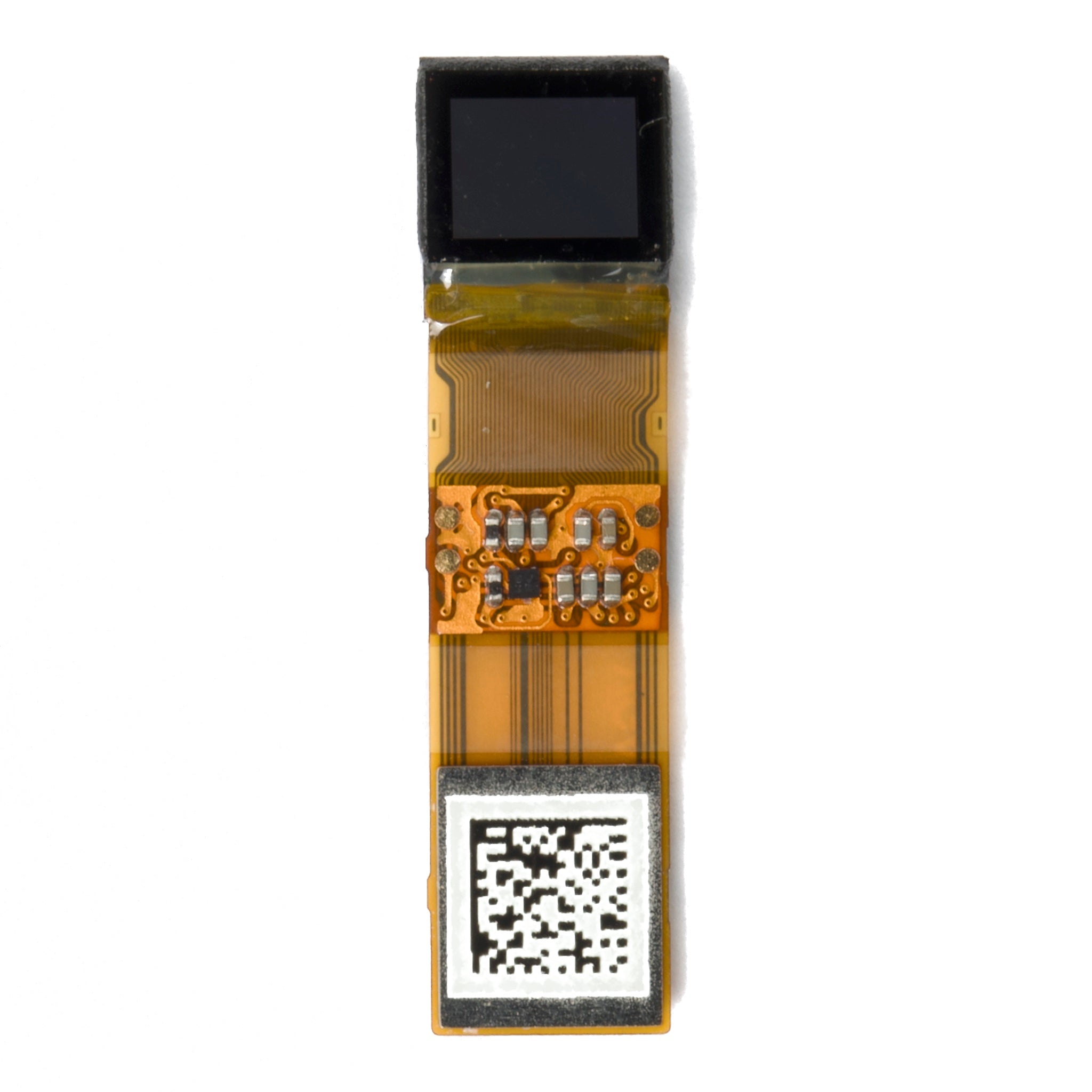
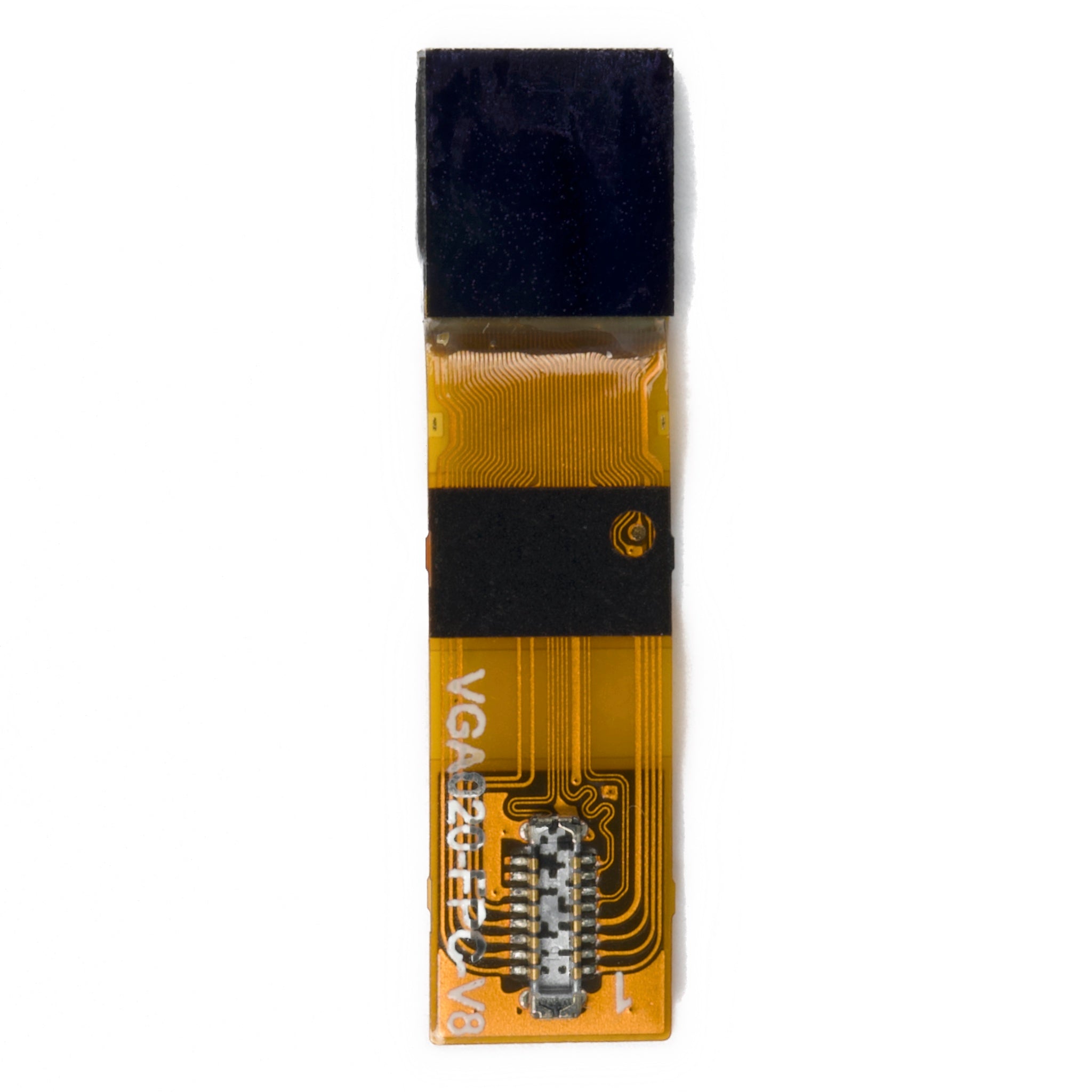
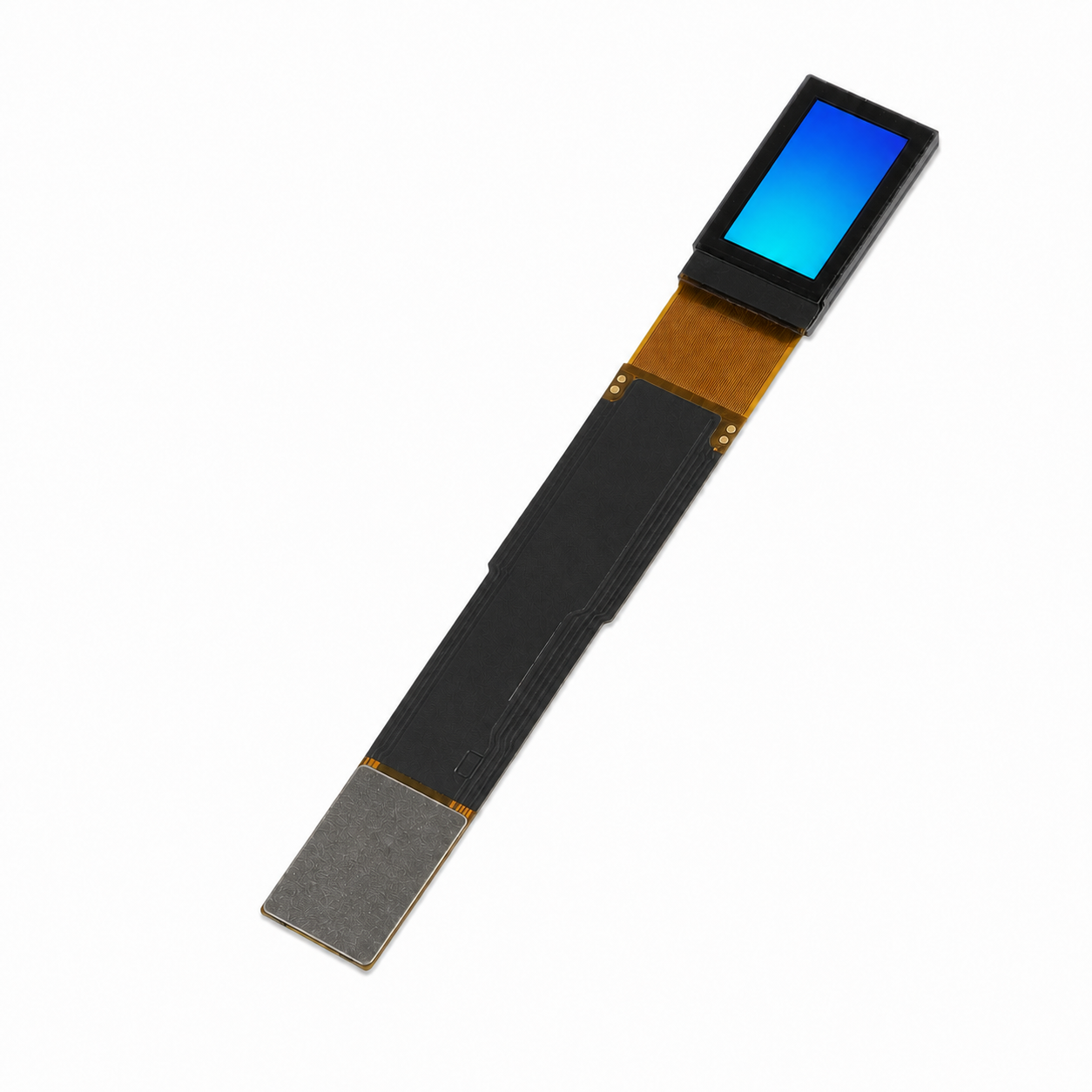
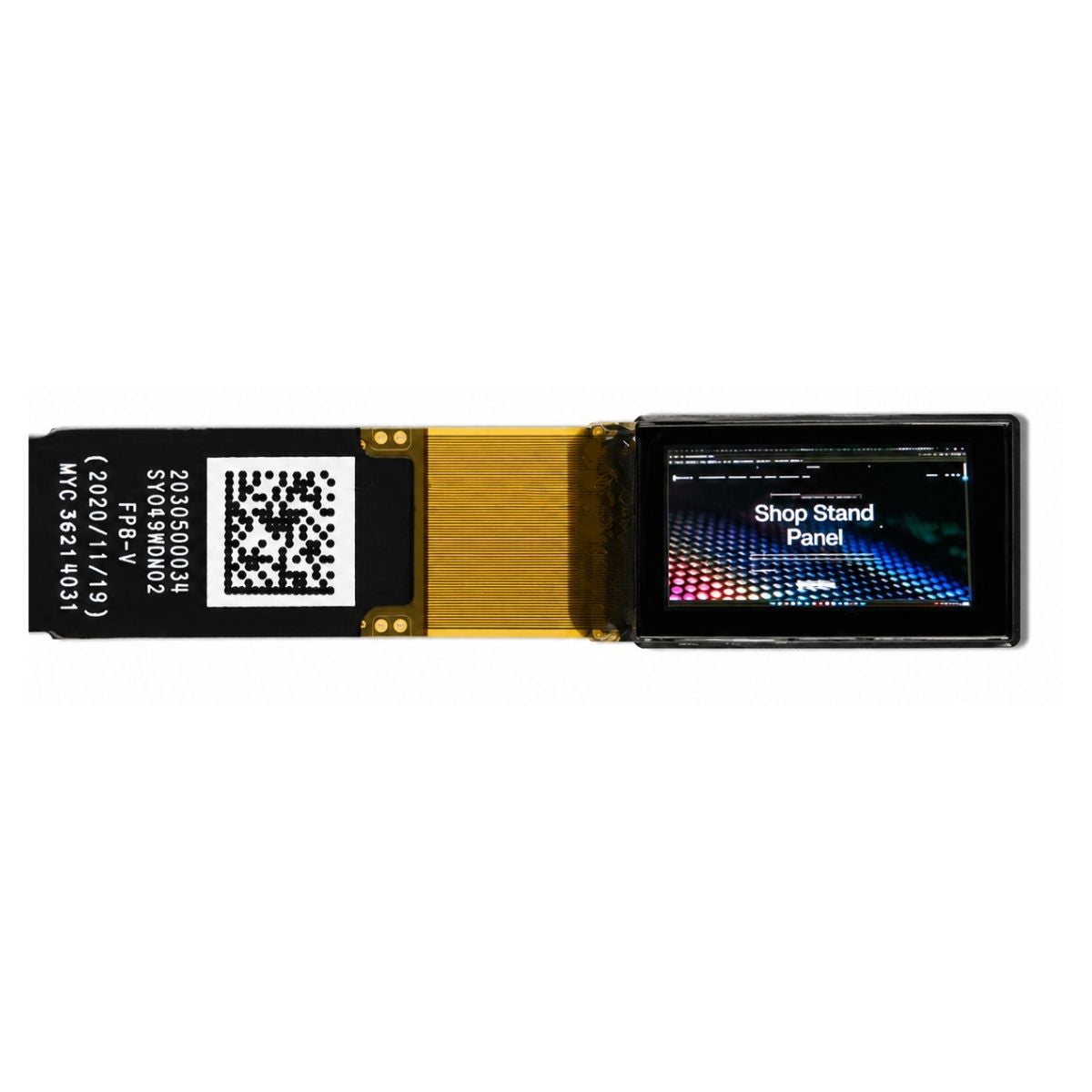
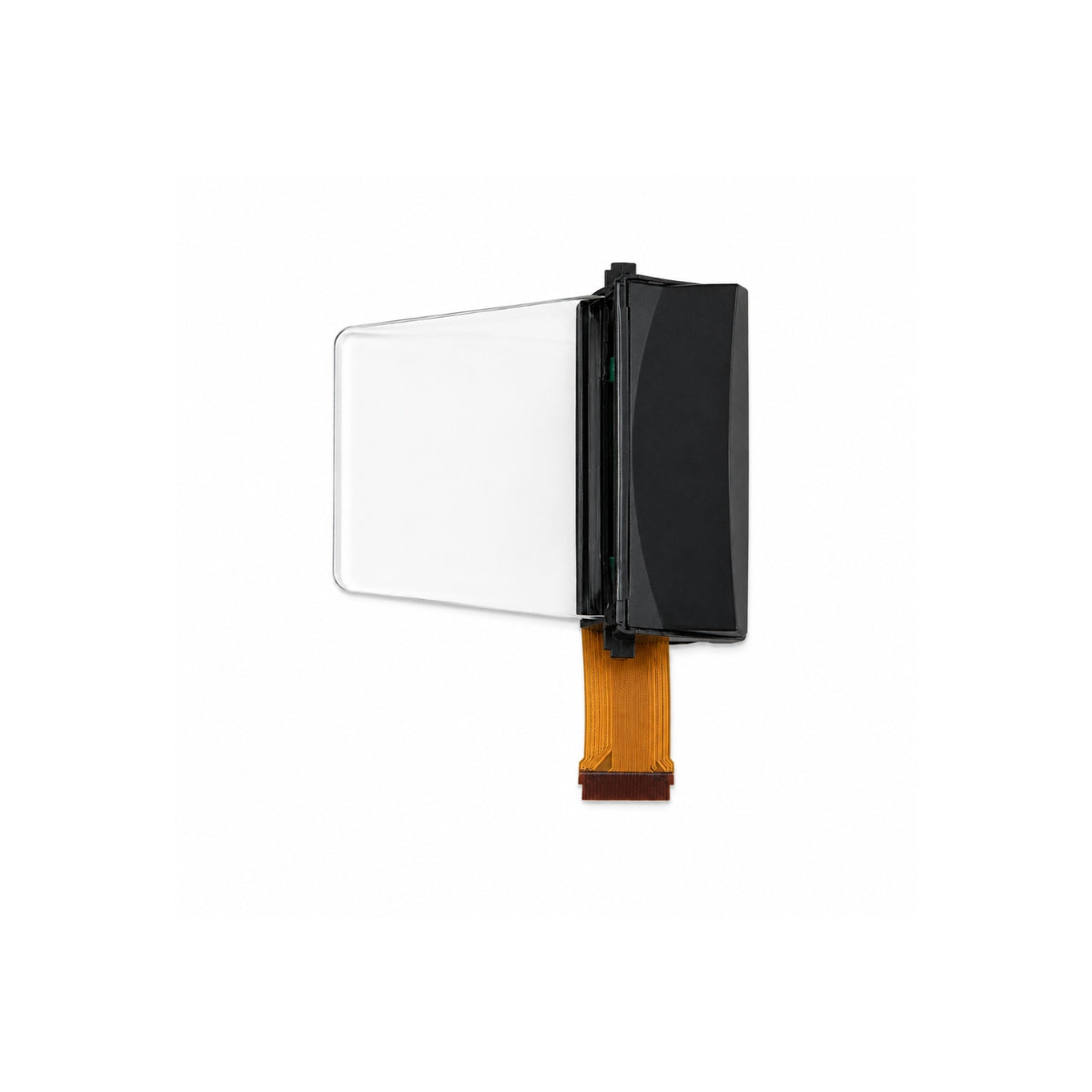
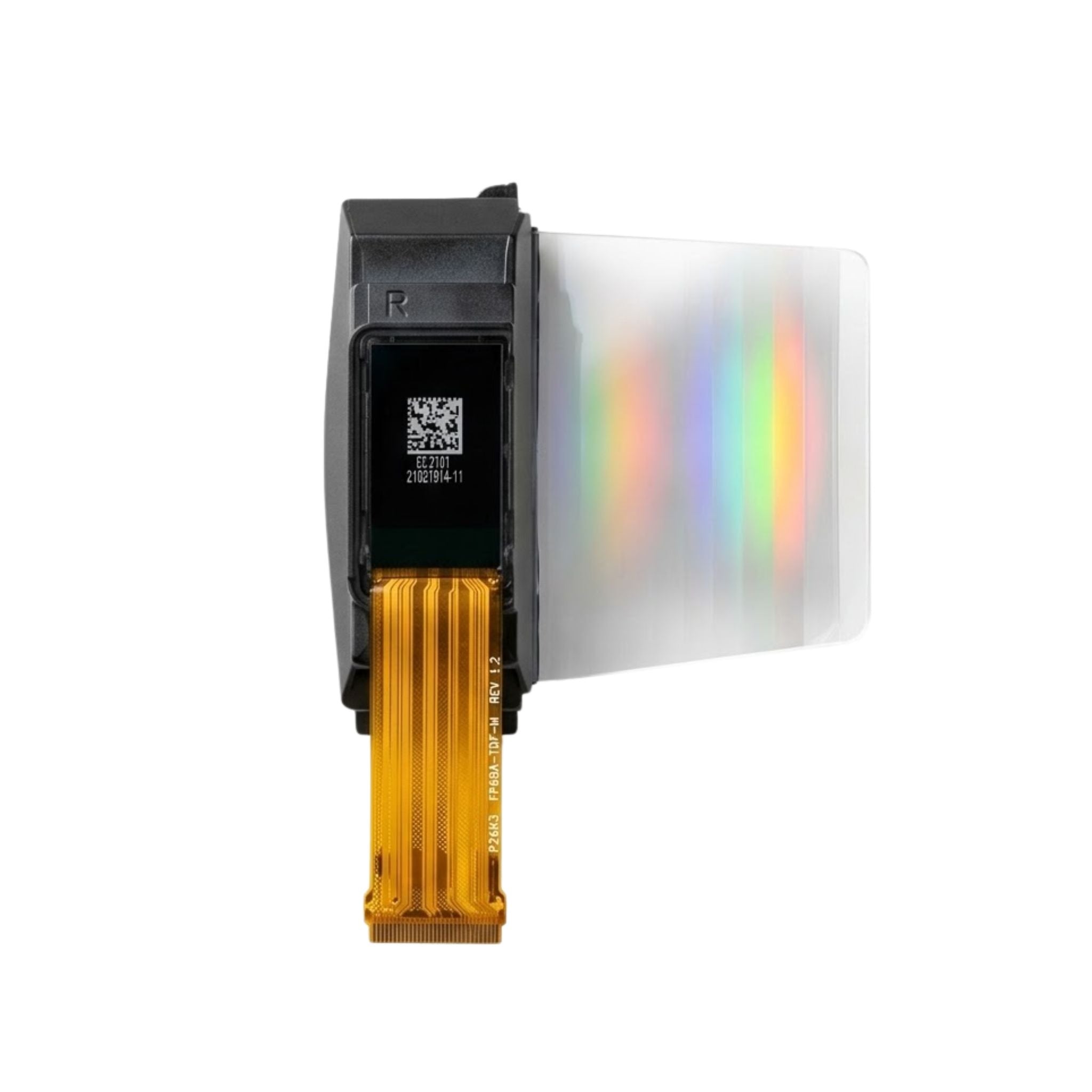


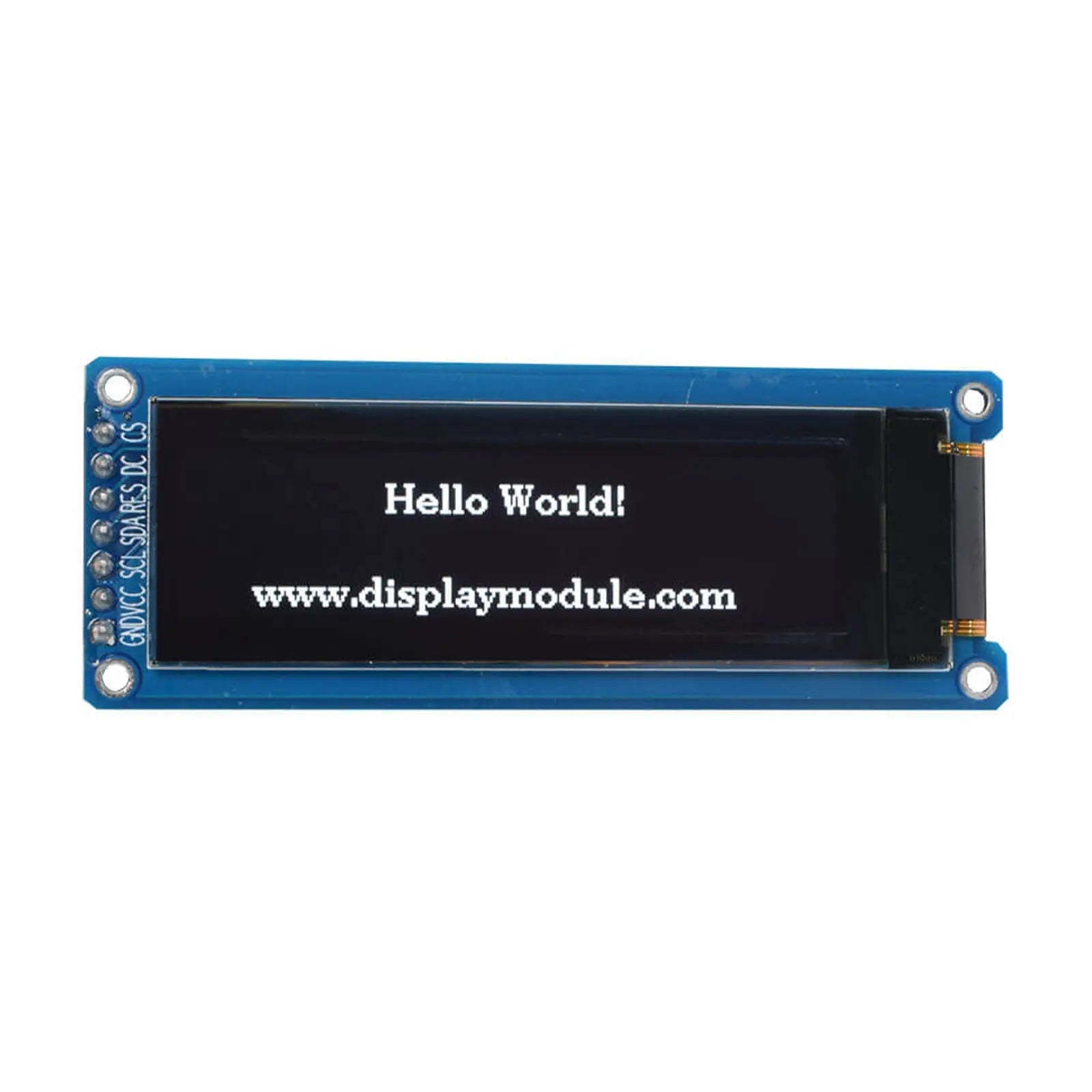
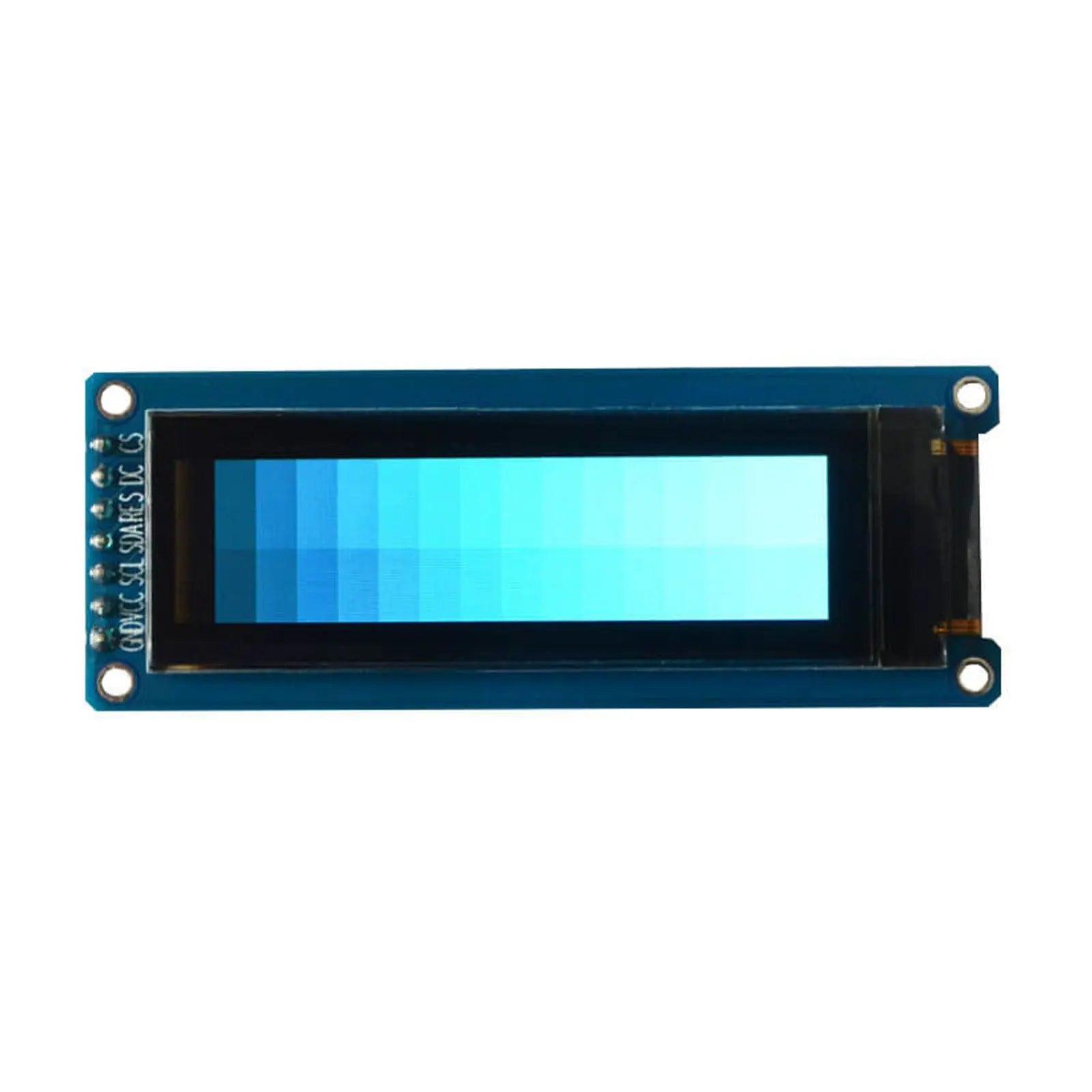
2.08" OLED Graphic Display 256x64 Monochrome - SPI
 Click to enlarge
DM-OLED208-638
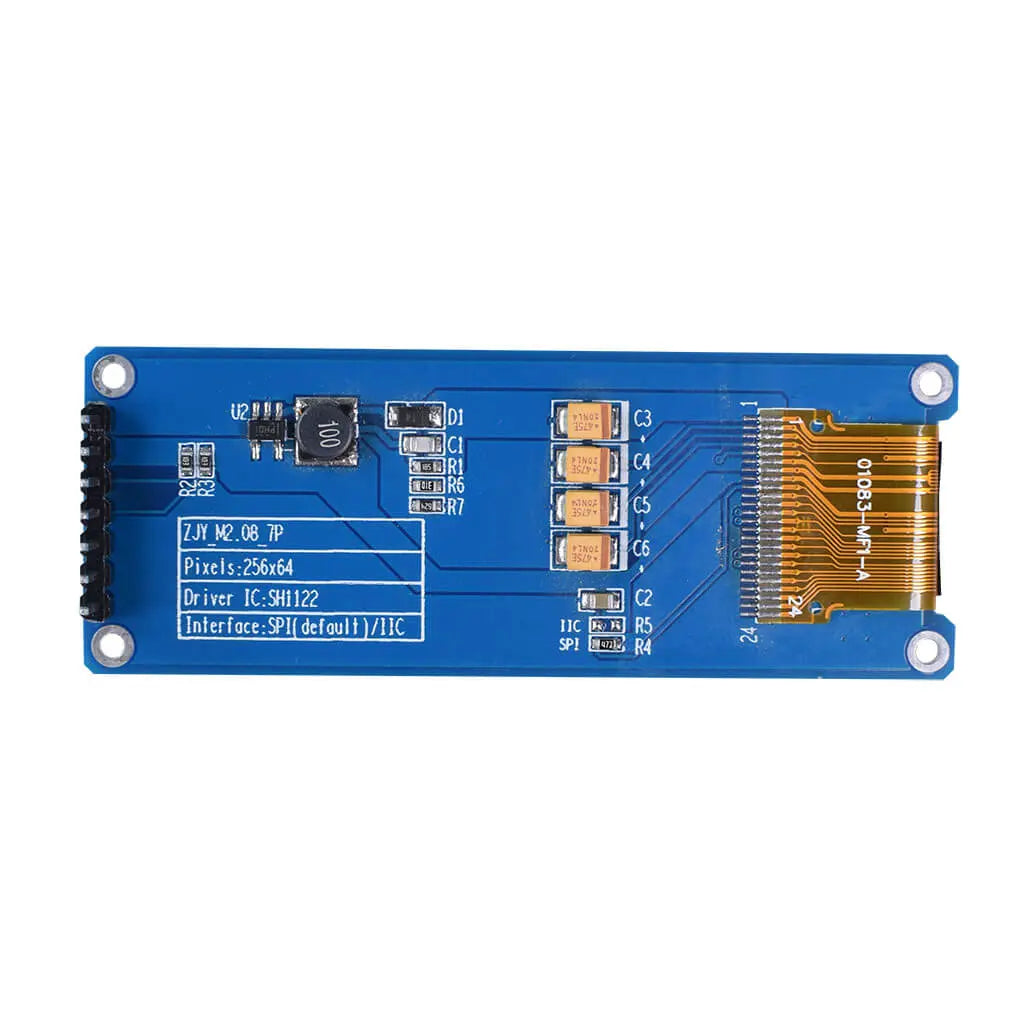
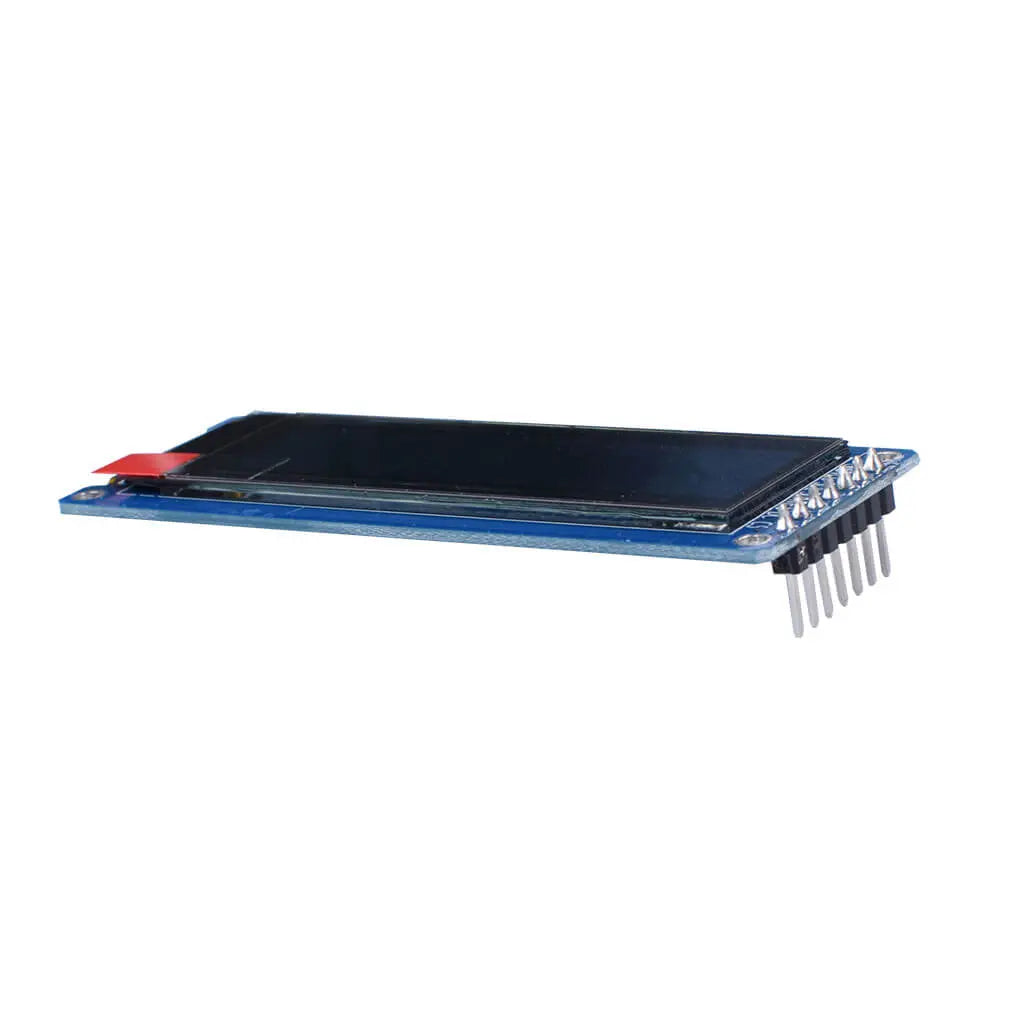
DM-OLED208-638 presents a wide 256 × 64 monochrome image with 16 grayscale levels and an SH1122 controller. The standard assembled module uses a seven-pin four-wire SPI connection and a 51.18 × 12.78 mm active area.
The long, shallow format suits horizontal values, trends and status strips where a narrow viewing window is useful. Select the listed color and hardware option before freezing the carrier: catalog alternatives should be checked against their own assembly documents.
| Parameter | Specification |
|---|---|
| Product model | DM-OLED208-638 |
| Display | 2.08-inch passive-matrix OLED |
| Active area | 51.18 × 12.78 mm |
| Module outline | 72.50 × 27.24 mm |
| Header | GND, VCC, SCL, SDA, RES, D/C, CS |
| VCC reference | 3.3 V at module header |
| Electrical-table supply | 2.6 V minimum / 3.3 V typical / 3.5 V maximum |
| Panel VPP | 11.5–12.5 V; 12 V typical |
| Luminance reference | 80 cd/m² minimum / 100 cd/m² typical |
| Operating / storage limits | −40 to +70°C / −40 to +85°C |
SCL and SDA carry SPI clock and data. D/C distinguishes commands from pixel data, CS selects the device and RES resets the display. Keep these assignments consistent across the connector, driver and board schematic.
Sixteen grayscale levels describe image intensity within one monochrome emission color. Configure SH1122 pixel packing and address mapping for 256 × 64, then verify the left and right edges with a bounded test pattern.
Place the long active rectangle from the dimensioned module drawing. Leave the extra board area available for support and connector access, and check flex bends and component clearance before reducing the enclosure depth.
Review the selected assembly’s full outline, connector positions and tolerances before releasing the enclosure. Include the host connection and component clearances in the mechanical review.
The 51.18 × 12.78 mm active area has a four-to-one width-to-height ratio. Budget label length, digit width and vertical spacing before choosing fonts. A wide pixel matrix can support trends, but physical character height still limits readability.
The 72.50 × 27.24 mm outline is larger than the image. Reserve space for the board, header and flex path using the module drawing. Keep the viewing opening separate from the full assembly envelope.
The module header identifies 3.3 V input. The approximately 12 V VPP specification is a separate OLED display-drive rail. Use the supplied circuit and sequence when integrating the board or designing a carrier.
The module and SH1122 documents define connection and command requirements. Use the SH1122 command reference to configure the actual controller and matrix, then verify grayscale and reset behavior on hardware.
It is a monochrome OLED with 16 grayscale levels. Physical color options are not software-selectable RGB colors.
The assembled module is configured for four-wire SPI by default. I²C requires changing the board resistors as documented: R4 fitted and R5 not connected for SPI; R5 fitted and R4 not connected for I²C. This is a hardware configuration change, not a firmware-only switch.
No. The header is identified as 3.3 V; VPP is the separate 11.5–12.5 V OLED display-drive reference.
The module PDF gives 51.18 mm active width and 12.78 mm active height. The board outline is 72.50 × 27.24 mm.
No. Those values are the pixel dimensions. The module identifies 16 grayscale levels for each monochrome pixel.
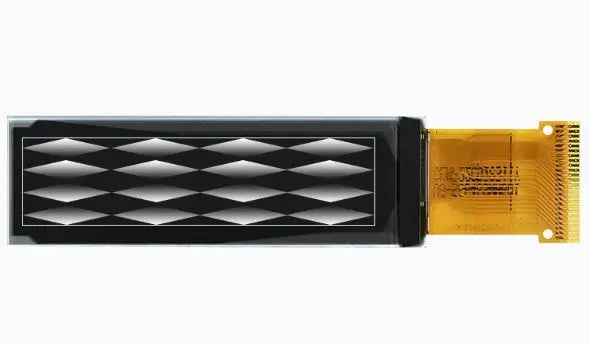
DMZJO0208W5NB is the bare panel used in the DM-OLED208-638 module. Use the panel sections of the module datasheet for its pinout and power requirements; the assembled module’s seven-pin header and board dimensions do not apply to the bare panel.
DisplayModule provides documentation and engineering assistance for display integration. When discussing DM-OLED208-638, include the selected variant, host interface, supply circuit and enclosure requirements.
Use technical support for connection or documentation questions. Include the model, circuit details and the behavior you observe so the relevant hardware and software paths can be reviewed.
For sample planning, volume requirements or proposed modifications, request a quote with the required quantity and assembly. Confirm the model-specific schedule and customization feasibility with the team.
Use the DM-OLED208-638 module datasheet for dimensions, connection details and product-specific electrical and optical limits. The related resources below support controller configuration and integration.