

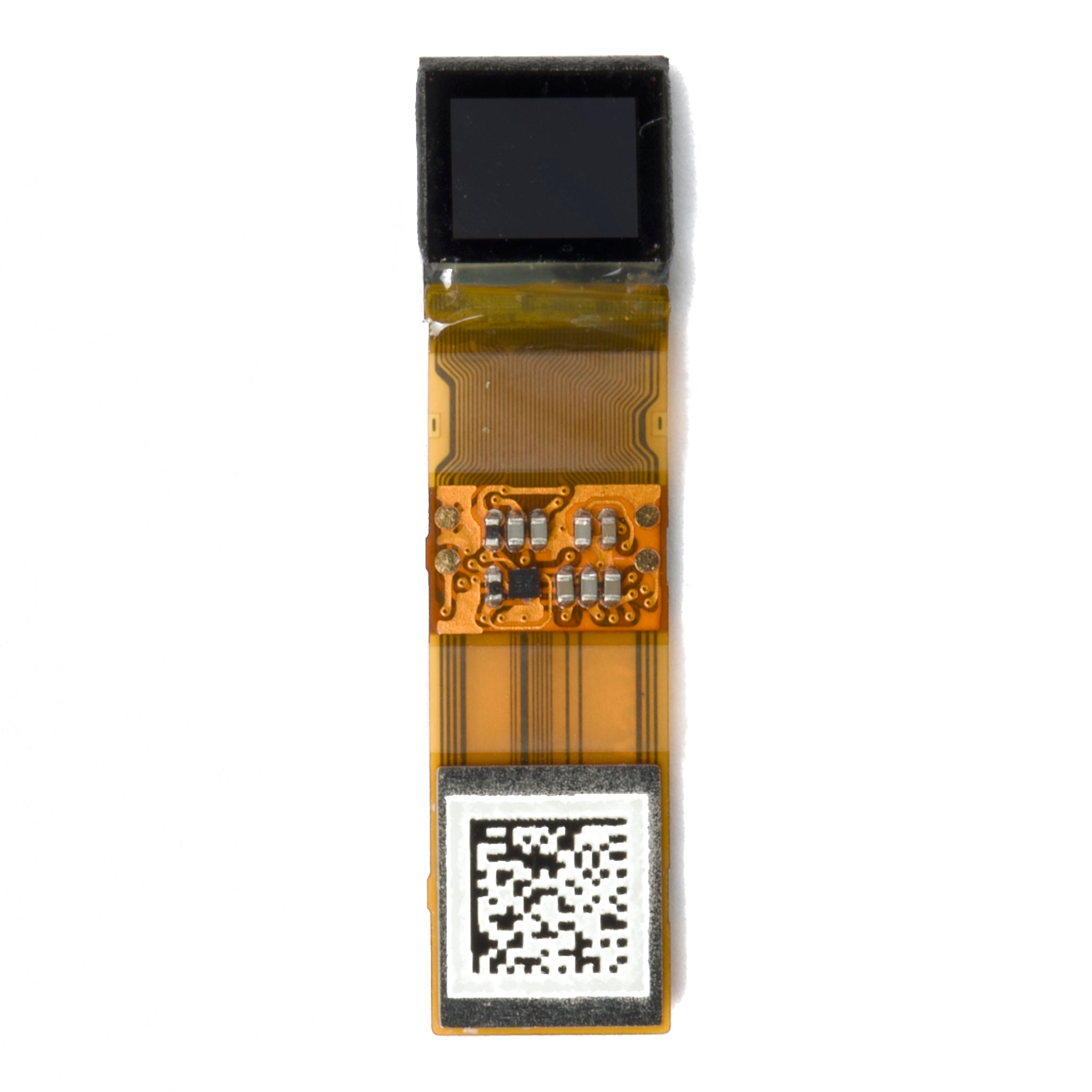
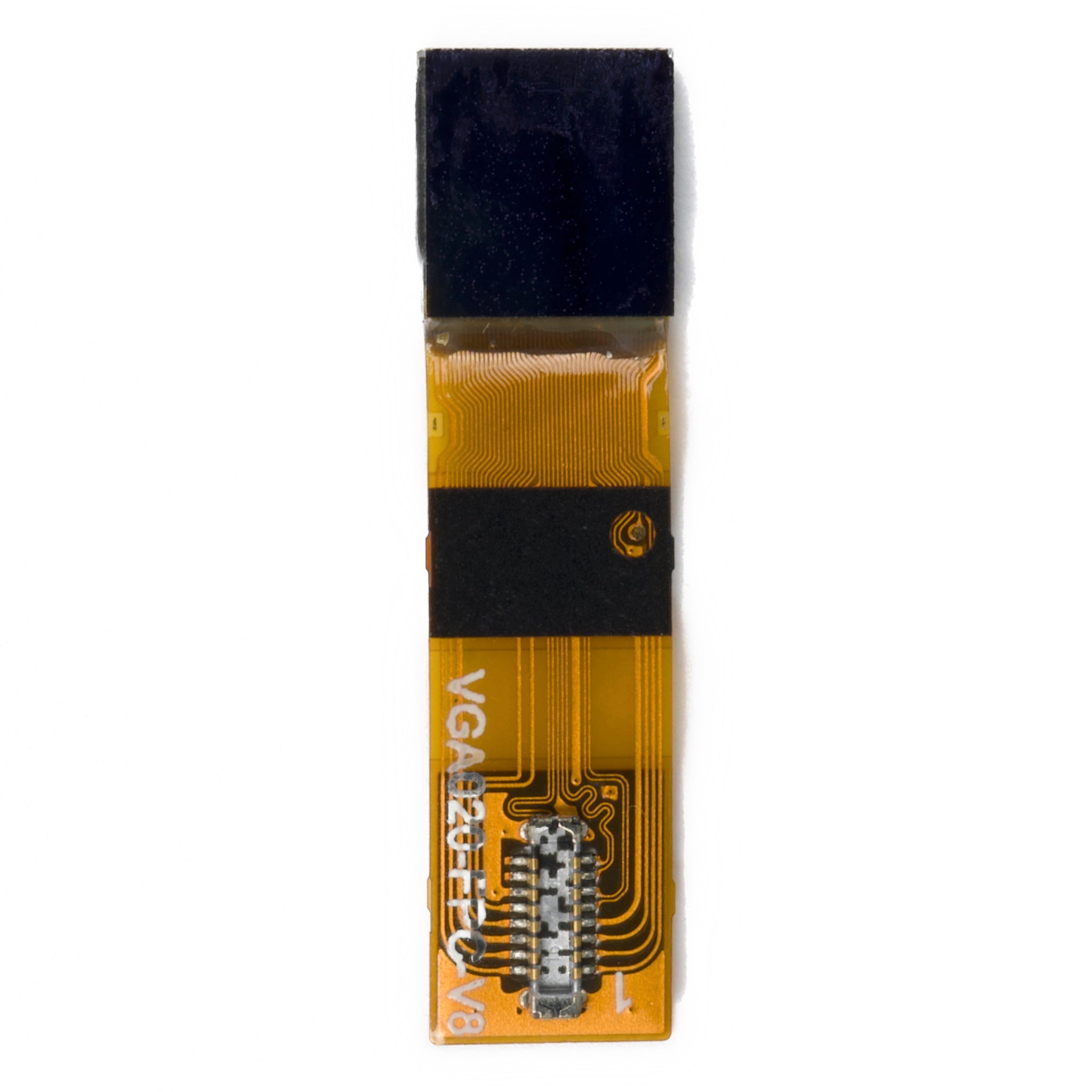
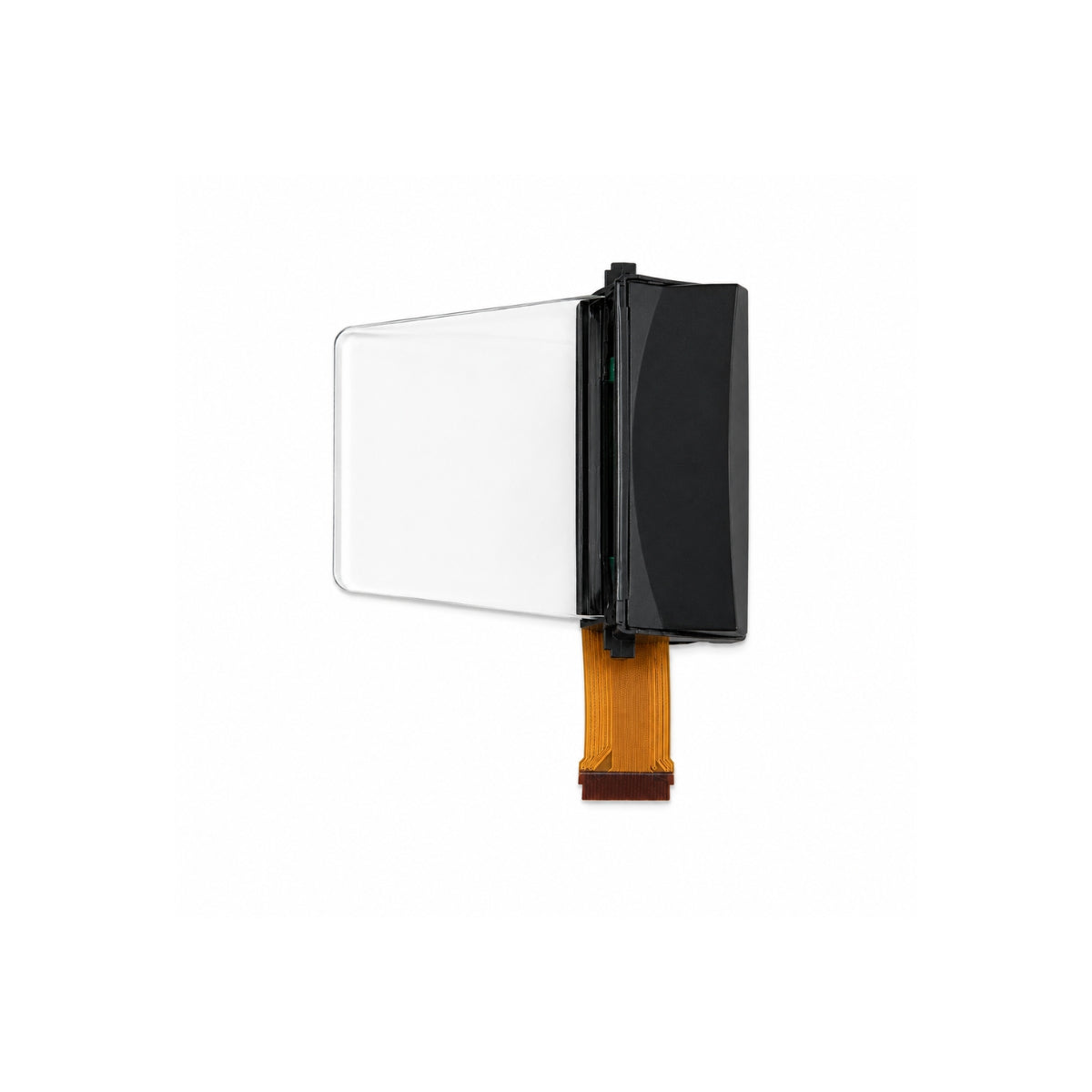
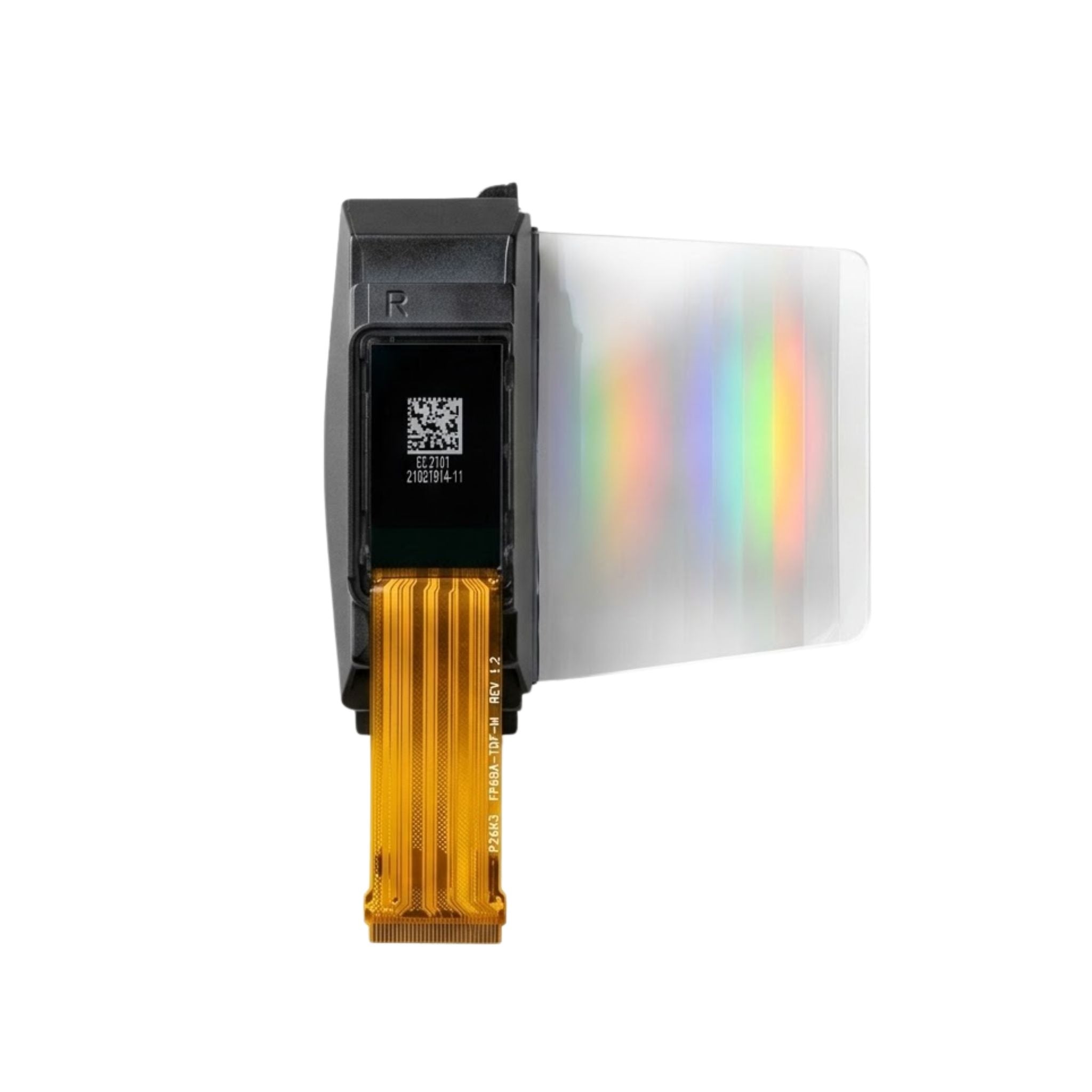


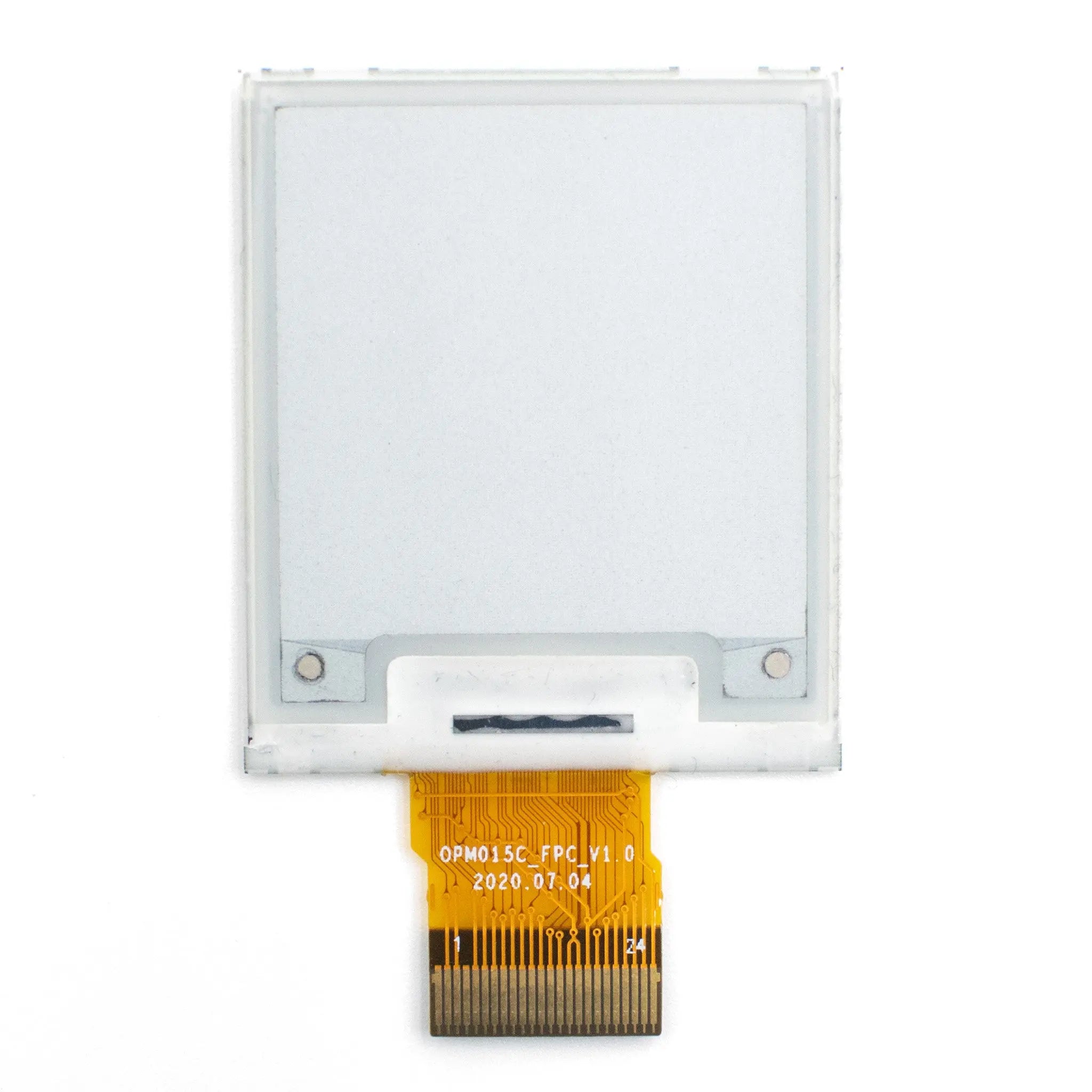
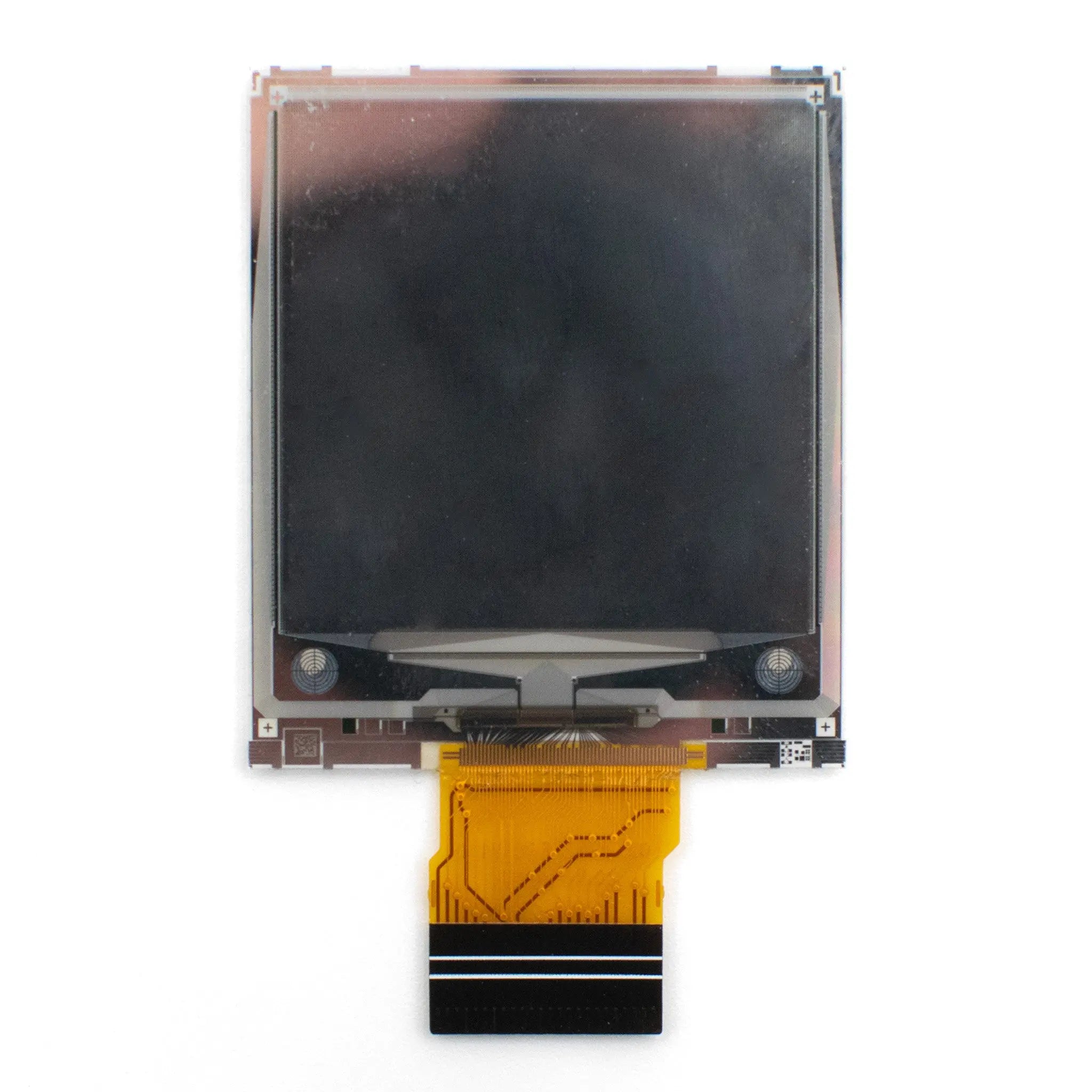
1.54" ePaper 200x200 - IIC/SPI
- 💹 Enjoy a 20% discount for orders over 500
- 📉 A 15% discount is available for orders ranging from 200 to 499
- 🎁 A 10% discount is available for orders ranging from 50 to 199
- 🎁 A 5% discount is available when ordering 10-49
Interested in customizing this product? Get in touch with us.
Order samples, immediate delivery.
Factory bulk lead time: 3 weeks.
1.54" ePaper 200x200 - IIC/SPI
- 💹 Enjoy a 20% discount for orders over 500
- 📉 A 15% discount is available for orders ranging from 200 to 499
- 🎁 A 10% discount is available for orders ranging from 50 to 199
- 🎁 A 5% discount is available when ordering 10-49
Resources & Downloads
1.54-inch 200×200 ePaper Display Module
DMAYE0154S1NA is a square active matrix electrophoretic display with a 200×200 pixel array, a 27.0×27.0 mm active area and 2-bit full-display capability.
The pure reflective, bi-stable panel retains displayed content without continuous screen refreshing. Display data is written through selectable 4-wire or 3-wire SPI, while separate TSCL and TSDA signals provide an I2C master interface for reading an external digital temperature sensor.
SKU: DMAYE0154S1NA
Interface note: The display panel supports 4-wire or 3-wire SPI for MCU communication. TSCL and TSDA are reserved for communication with an external digital temperature sensor and are not the display image-data interface.

Verified Technical Specifications
The values below are taken from the DMAYE0154S1NA product specification, version V1.0.0 dated March 8, 2025. Use the official datasheet and mechanical drawing when completing the PCB, enclosure and firmware design.
| Parameter | Specification |
|---|---|
| Display Type | Active Matrix Electrophoretic Display (AM EPD) |
| Screen Size | 1.54 inch |
| Resolution | 200×200 pixels |
| Pixel Pitch | 135×135 µm |
| Active Area | 27.0×27.0 mm |
| Module Size | 31.80×37.32×0.82 mm |
| Weight | 2.1 g |
| Interface | 4-wire or 3-wire SPI for display control; I2C master signals for an external digital temperature sensor |
| Supply Voltage | 2.4 to 3.6 V, 3.0 V typical |
| Operating Temperature | 0°C to +50°C |
| White Reflectance | 45% minimum, 48% typical |
| Contrast Ratio | 20:1 minimum, 25:1 typical |
SPI Interface and FPC Signals
The module uses a 24-contact FPC tail with a 0.5 mm contact pitch. The host circuit must follow the pin assignment, external component values and power connections shown in the official reference peripheral circuit.
Selectable Serial Display Control
In 4-wire SPI mode, the interface uses SCL, SDA, CSB and D/C. In 3-wire SPI mode, the D/C value is included as the first bit of each 9-bit serial transfer and the D/C pin is not used.
Serial communication supports write operations only. Monitor BUSYN and do not send commands while this output is high.
Power and Refresh Characteristics
Electrical and refresh values are specified at VSS = 0 V, VDD = 3.0 V and 25°C unless another condition is stated. The listed electrical and optical characteristics require the controller and waveform specified for the panel.
Panel Power
12 mW typical and 30 mW maximum during the grayscale pattern-transition test defined in the datasheet.
Operating Current
4.0 mA typical and 10 mA maximum at VDD = 3.0 V.
Sleep Modes
Sleep current is 20 µA typical with RAM retained. Deep-sleep current is 1 µA typical without RAM retention, and deep-sleep panel power is 3 µW typical.
Refresh Time
At 25°C, full refresh is 500 ms minimum and 750 ms typical. Partial refresh is 250 ms typical.
The datasheet states that full refresh causes the screen to flicker several times, while partial refresh does not flicker. The waveform specified for the panel is required.
Operating and Handling Conditions
The published limits and handling guidance below should be considered during enclosure design, assembly, storage and end-product validation.
Published Environmental Limits
Mechanical protection: Do not bend, twist or apply pressure to the glass-based panel.
Connection: Do not connect or disconnect the interface while the panel is operating.
Moisture control: Prevent condensation, frost and moisture penetration during use and storage.
Exposure: Do not leave an unprotected panel under high temperature, high humidity, sunlight or fluorescent light for long periods.
Surface cleaning: Use a soft, dry cloth without chemicals and avoid pressing hard on the protection film.
Storage packaging: Keep unused panels in the original packaging and do not stack the modules.
Published Reliability Test Conditions
The product specification lists the following qualification test conditions. These are test conditions, not normal operating or storage limits.
Application Direction
Reflective Display for Low-Update Content
The datasheet identifies portable electronic devices and electronic shelf label systems as application directions. Final suitability depends on the required interface, refresh behavior, illumination and temperature range.
Electronic Shelf Labels
Square price, product-information or status layouts for indoor electronic shelf label systems.
Portable Electronic Devices
Compact devices that can use a reflective 200×200 display within the published electrical and environmental limits.
Bi-Stable Information Interfaces
Indoor interfaces that display static information and update less frequently than conventional video displays.
Common Questions Before Ordering
Can display images be sent through I2C?
No. Display image data is written through 4-wire or 3-wire SPI. TSCL and TSDA provide an I2C master interface for reading an external digital temperature sensor.
Does the display need continuous power to retain a static image?
The bi-stable electrophoretic panel retains a completed image without continuous refreshing. Controller sleep behavior and total system power still depend on the host circuit and firmware.
What refresh performance is specified?
At 25°C with the required waveform, full refresh is 500 ms minimum and 750 ms typical. Partial refresh is 250 ms typical.
Is this panel specified for outdoor use?
No outdoor rating is provided. The datasheet specifies indoor operation with illuminance up to 2000 lux and an operating temperature range of 0°C to +50°C.
Is a temperature sensor built into the panel?
The specification provides TSCL and TSDA signals for communication with an external digital temperature sensor. It does not identify a built-in temperature sensor.
What should be checked before design release?
Review the 24-contact FPC footprint, SPI mode, supply and logic levels, BUSYN behavior, reset timing, peripheral circuit, waveform, mechanical drawing and intended environmental conditions.
Download Official Datasheet
Review the official DMAYE0154S1NA specification for the complete pin definition, electrical limits, interface timing, mechanical drawing, optical performance, reference peripheral circuit and handling requirements.
Download Official Datasheet