

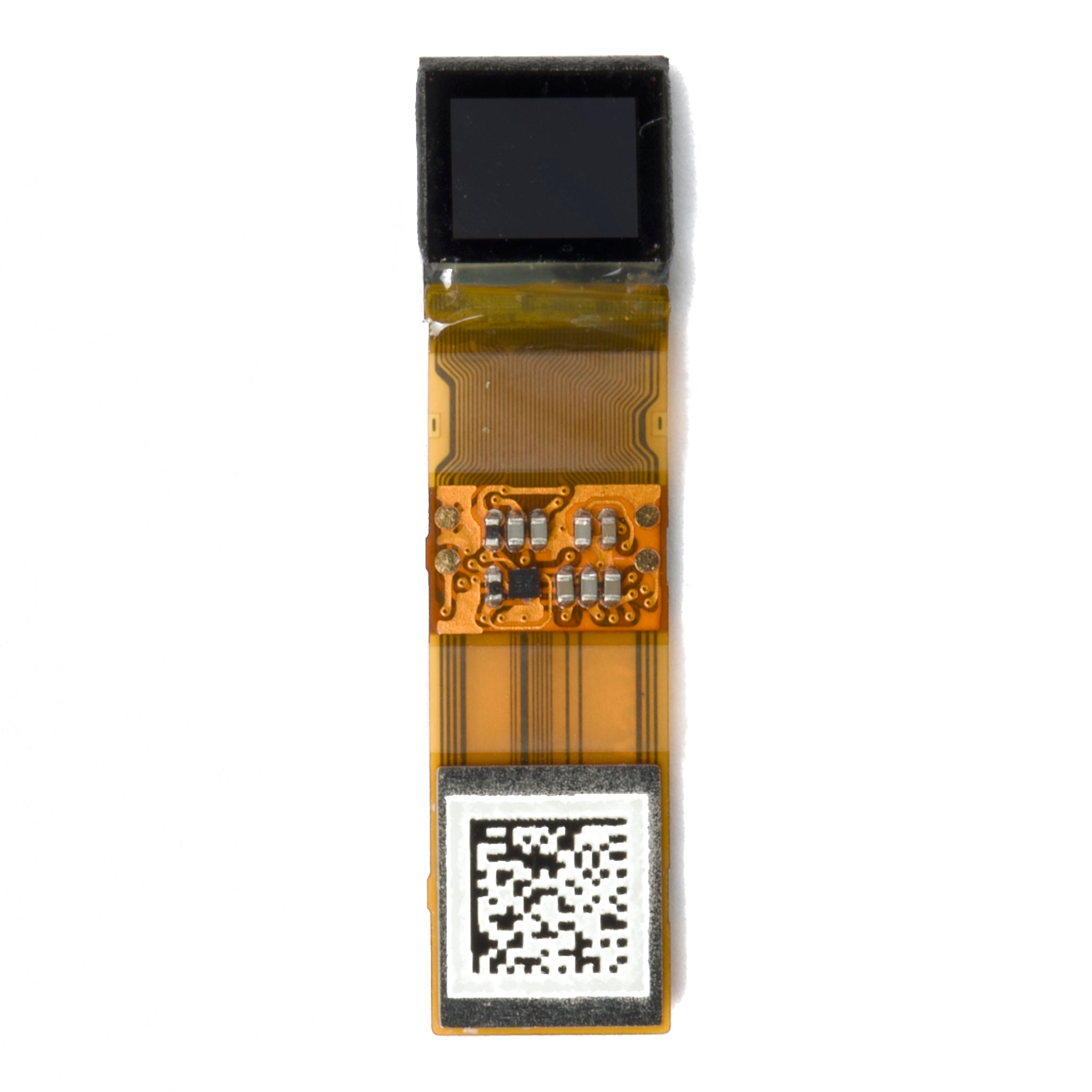
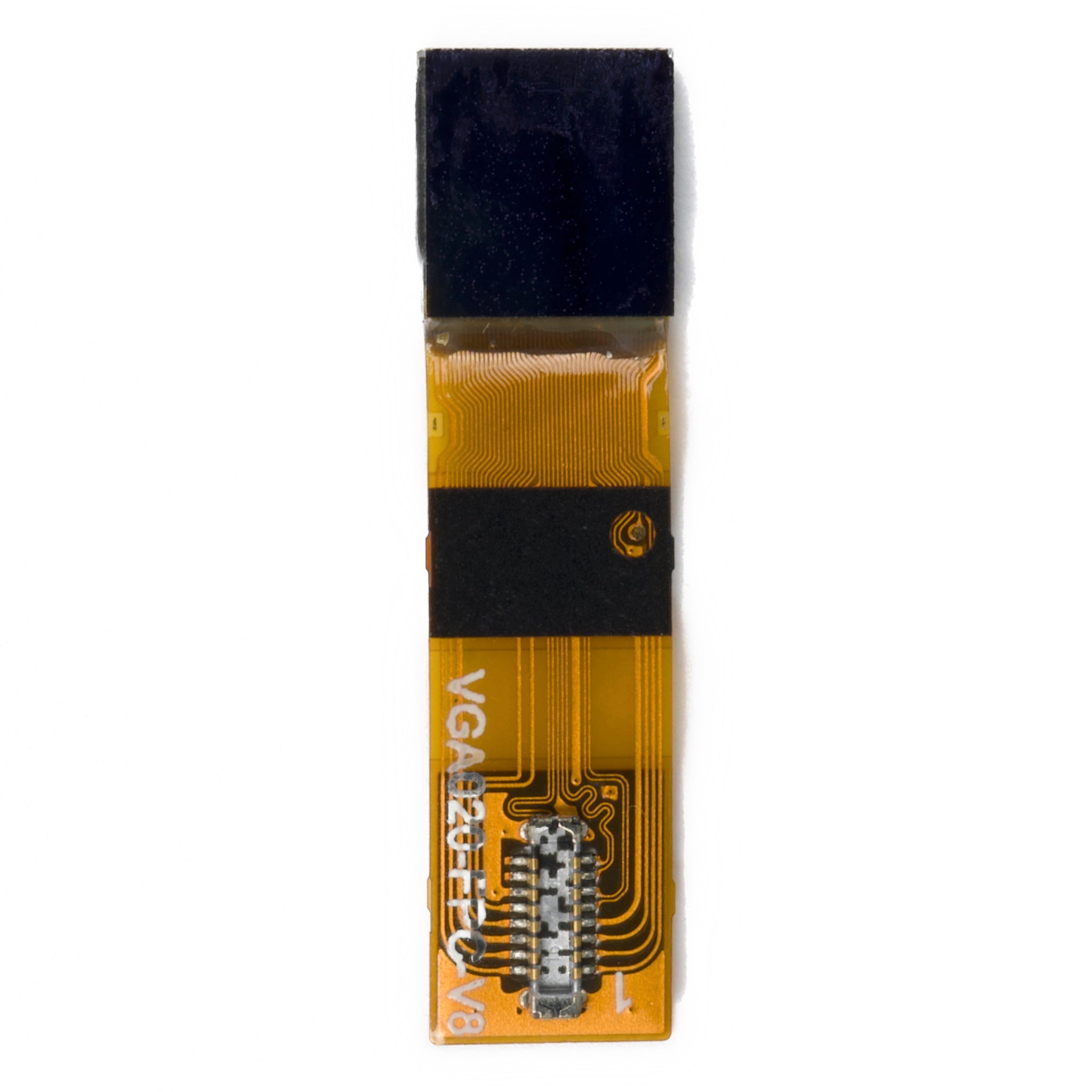
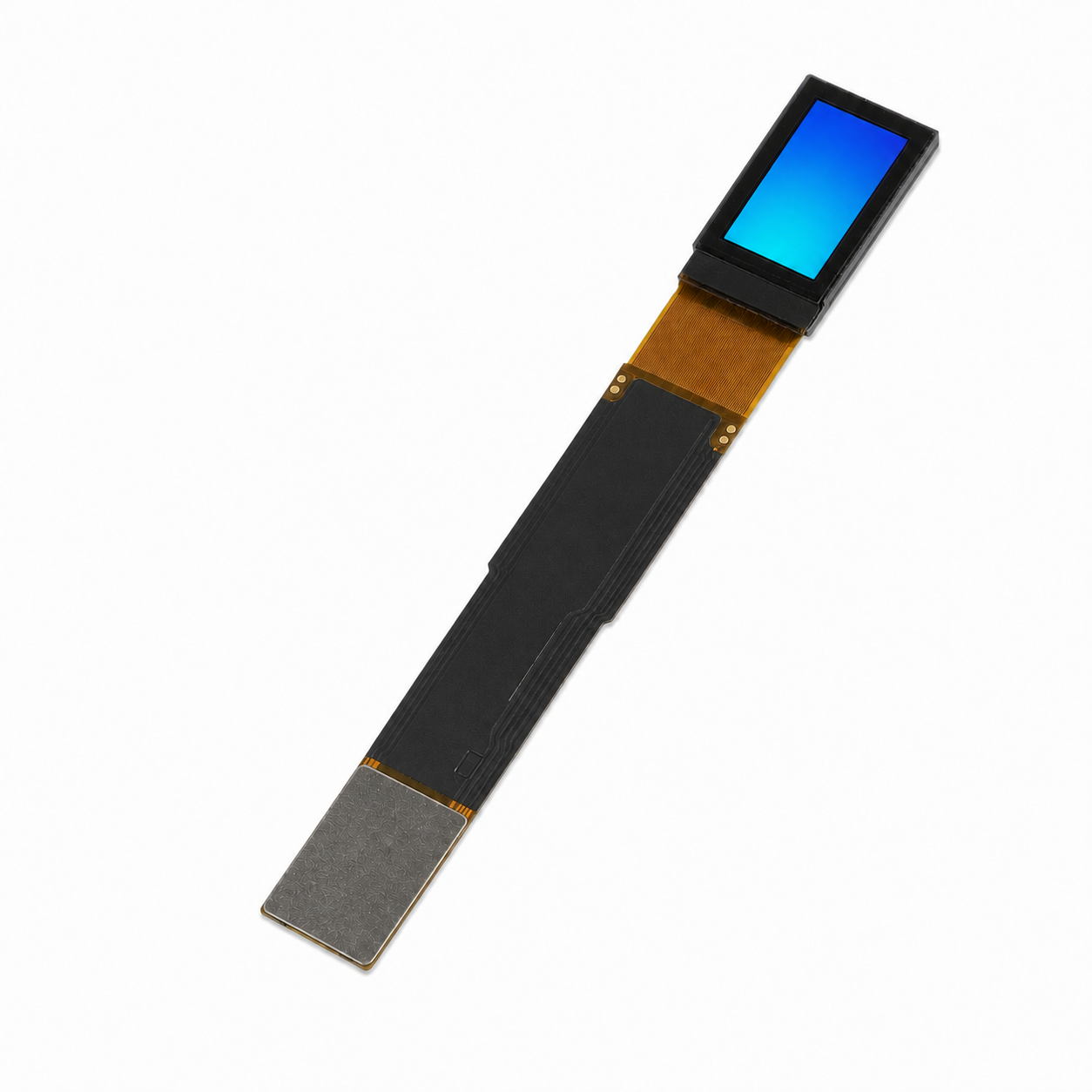
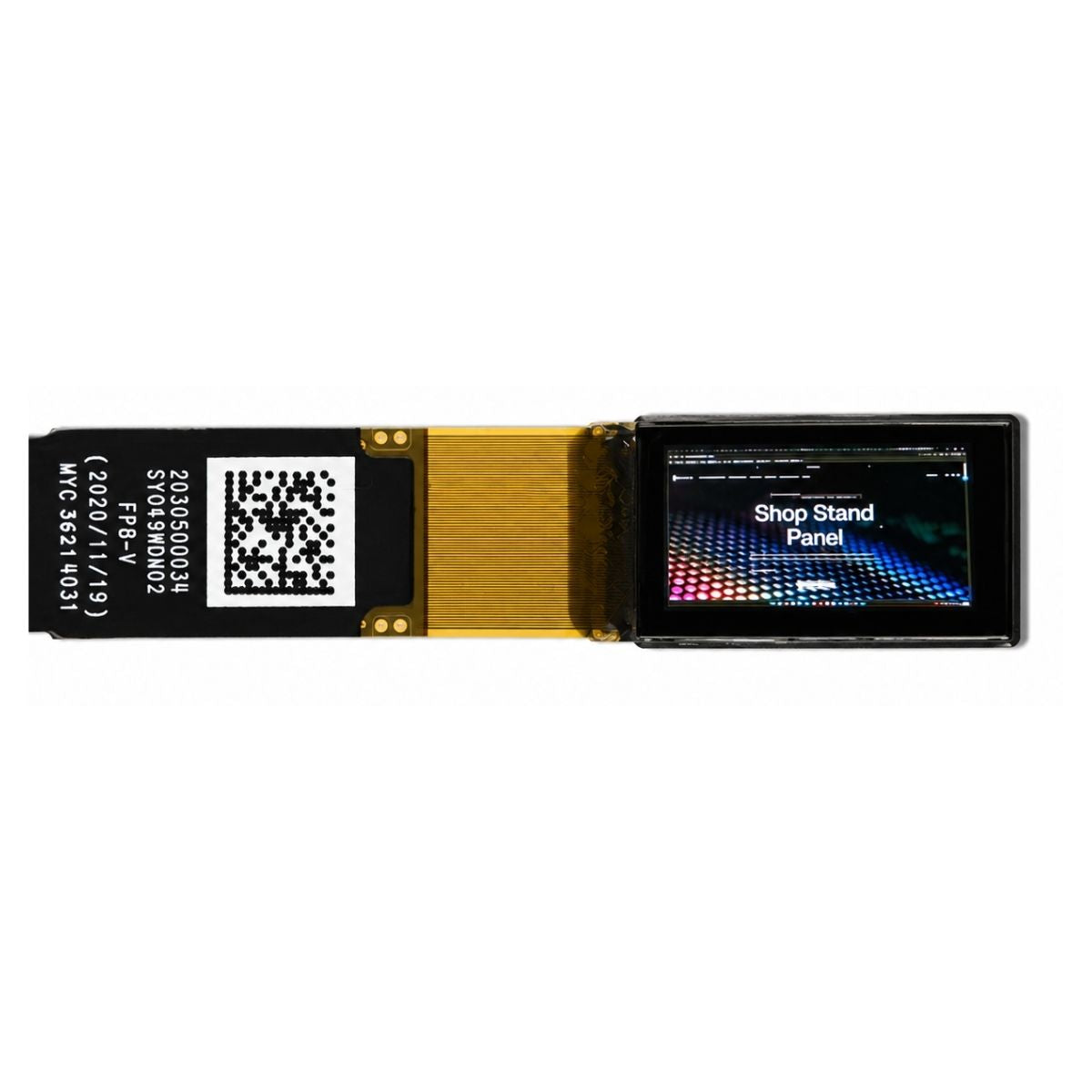


Yes, unless your product never gets read below 400 lux. Reading performance tracks ambient illuminance and display luminance[1], and a reflective module draws its image from the first alone. At ρ = 0.30, a 400 lux room gives 38.2 nits while a 300-nit backlight still holds 300.
400 lux is the usability floor. The read-quality crossover lands at 3,142 lux. Solve E = L × π ÷ ρ and a reflective panel matches a 300-nit backlight there. Under it the backlight wins, over it the reflector wins on no extra watts.
Positive-mode reflective drops to 4.8 nits at 50 lux. On the backlit side the ceiling is 23,562 lux, where 4% front-surface reflection alone matches a 300-nit backlight.
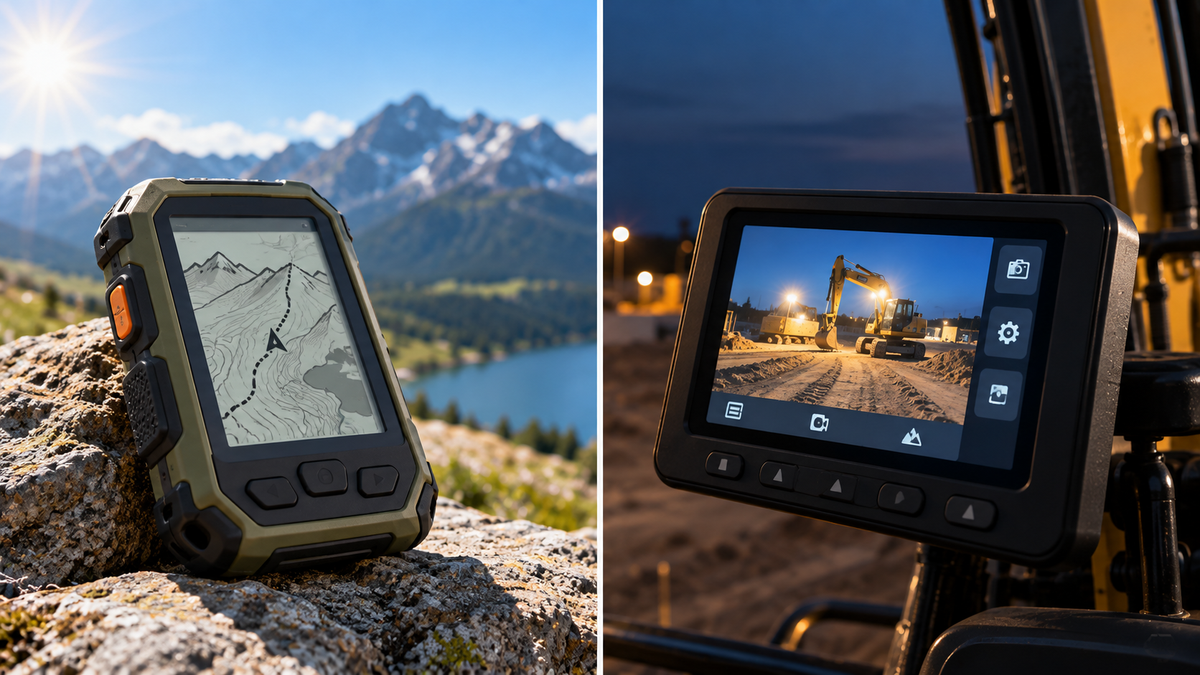
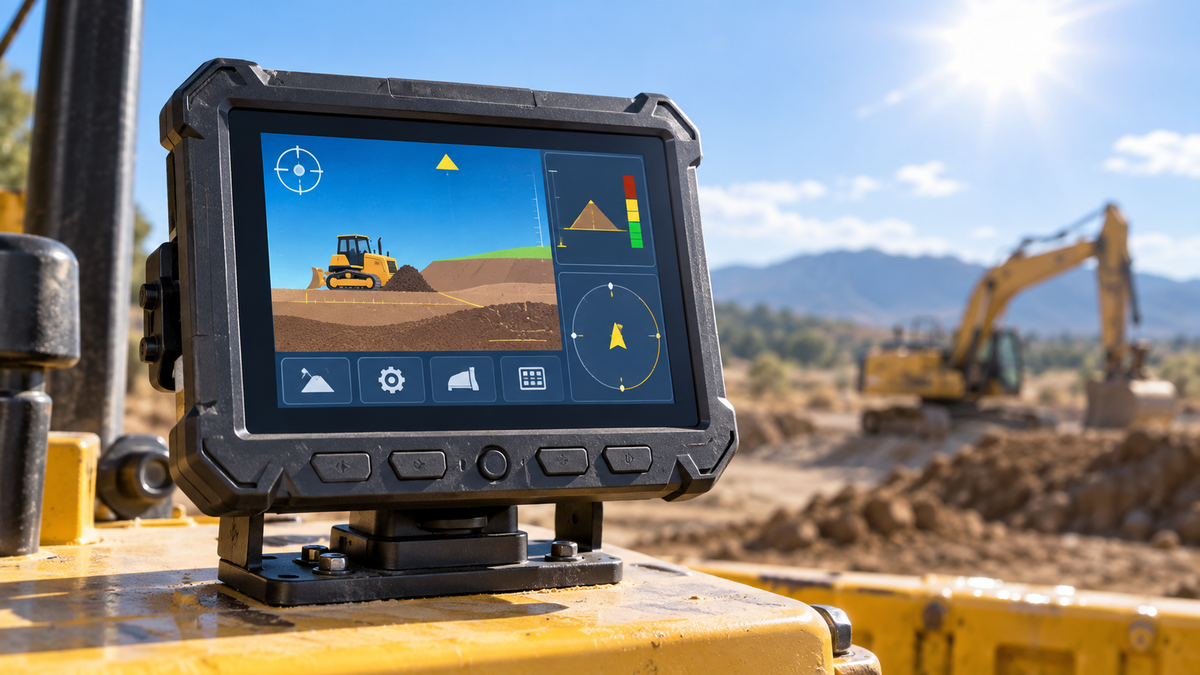
Dark room, backlight. Direct sun, reflection. Between 400 and 3,142 lux, a transflective stack covers it.

Where the light comes from
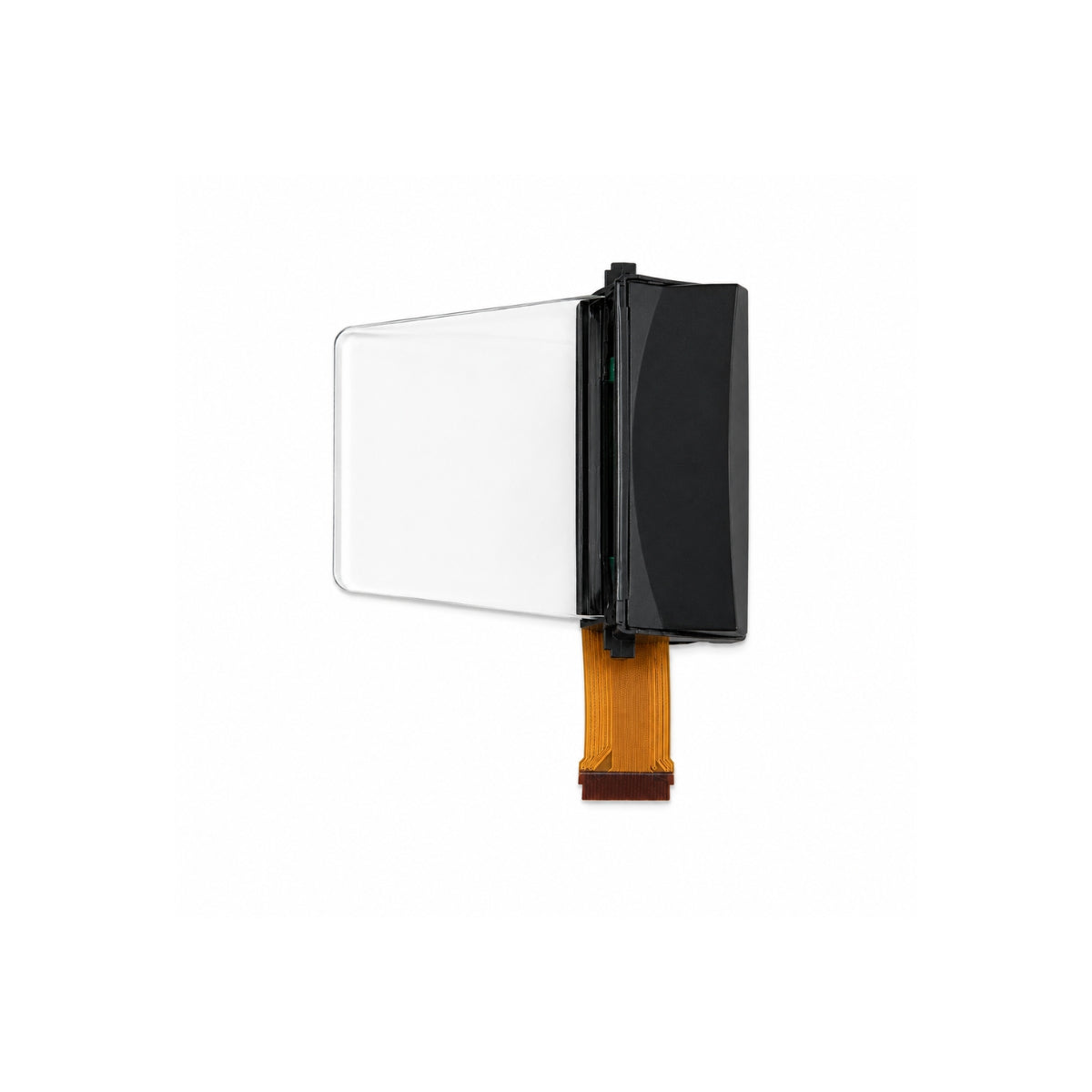
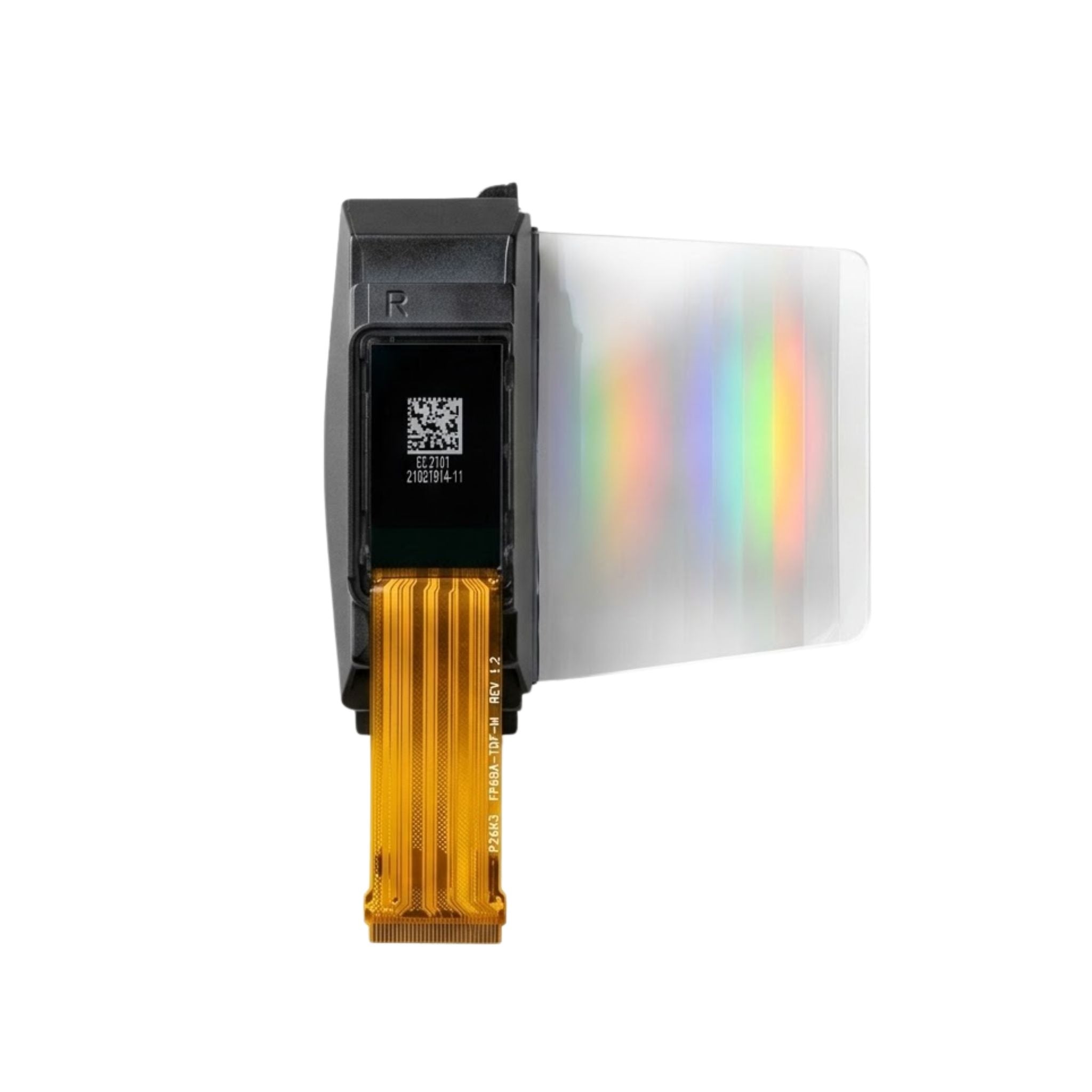
A module can push light through the liquid crystal in 3 ways. Reflective puts 1 reflector film behind the cell. Ambient light enters the front, bounces back and crosses the liquid crystal 2 times on 0 mA of backlight current.
Transmissive runs on the LED backlight behind the panel, so light crosses once. There's no reflector to fall back on. Ambient light becomes glare off the 4% front-surface reflection and eats contrast.
Transflective stacks 1 semi-reflective layer that both reflects and transmits. The split runs 50/50 or 60/40, within a ±5% manufacturing tolerance.
| Item | Reflective | Transmissive | Transflective |
|---|---|---|---|
| Light source | Ambient only | Backlight only | Either, switchable |
| Polarizer setup | Reflective | Transmissive | Transflective |
| Backlight current | 0 mA | 3.5 V / 72 mA typical | 0 to 72 mA by ambient |
| Readable in the dark | Barely, 4.8 nits at 50 lux | Yes | Yes, backlight takes over |
| Readable in strong light | Best | Glare drowns the backlight | Good |
| Module thickness | Thinnest | Adds 1 to 3 mm | In between |
Reflectance sets the ceiling
Pushing ρ from 0.30 to 0.50 buys only 67% more brightness and costs a pricier reflector stack. A single film gets a monochrome module to ρ = 0.30 for about $0.1.
A colour filter passes roughly 33% per pass, so ambient light crosses twice and 10.9% survives. That's an 89% loss.
Polarity and polarizer are separate choices
Positive and negative modes differ over which of 2 states reads dark, while reflectors differ over whether they reflect, transmit or split. Cross the two axes and 6 combinations come out.
Peer-reviewed work puts the positive-mode advantage on display luminance itself. Buchner et al. ran 2 polarities under matched conditions in Ergonomics[2]. The gain traced to the luminance gap between a light and a dark background.
ISO 9241-303:2011 lists image polarity among its generic requirements for electronic visual displays, independent of the technology underneath[3].
One illuminance figure settles most designs
7 illuminance bands cover most projects, including the 500 lux office level that ISO/CIE 8995-1:2025 sets[4]. Reflective brightness follows L = E × 0.30 ÷ 3.1416, with the backlight held at 300 nits.
| Scene | Illuminance | Reflective output | Verdict |
|---|---|---|---|
| Indoor at night | 50 lux | 4.8 nits | Backlight required |
| Corridors, warehouses | 400 lux | 38.2 nits | Backlight still on |
| Office, ISO/CIE 8995-1:2025 sets 500 lux | 500 lux | 47.7 nits | Dim, consider transflective |
| Crossover | 3,142 lux | 300 nits | Even |
| Overcast | 1,000 lux | 95.5 nits | Reflective works |
| Full daylight | 10,000 lux | 955 nits | Reflective pulls ahead |
| Direct sun | 100,000 lux | 9,549 nits | Reflective dominates |
The crossover sits at 3,142 lux
Solving E = L × π ÷ ρ with L = 300 and ρ = 0.30 returns 3,142 lux.
Glare held at 20% of the signal needs L ≥ E × 0.04 ÷ (3.1416 × 0.2). At 10,000 lux that's 636 nits; at 20,000 lux, 1,273 nits.
Below 400 lux the reflective panel gives up
At the same 400 lux the backlit panel holds its level. The reflective one falls to 38.2 nits, a 7.8× gap. A better reflector won't close that. Hospital corridors, server rooms and night rounds all sit under the band.
At 50 lux the reflective module is down to 4.8 nits, 62.5× under the backlight. A reflective design assumes the product stays out of rooms below 50 lux, where it can't hold a readable image.
What you pay for losing the backlight
Contrast falls hardest in the dark
A monochrome reflective module lists 3:1 contrast. An FSTN with a compensation film reaches 10:1. In Michelson modulation depth, M = (3 − 1) ÷ (3 + 1) = 50%, and 10:1 lands at 81.8%. The 3:1 label doesn't track that.
With background lightness L* above 65 to 70, a contrast near 5 reads fine; at L* = 50 you'll need 6 to 7[5]. By the CIE lightness formula[6], ρ = 0.30 corresponds to L* = 61.6, just under that range.
300:1 and 800:1 sit at 99.34% and 99.75% modulation depth, a 0.41 point gap. Moving from 3:1 to 10:1 spans 31.82 points, about 78× wider.
Viewing angle and response time are set in the glass
Viewing limits run top 20°, bottom 40°, left and right 30°, best at 6:00. Glass orientation sets them and the backlight changes nothing.
A monochrome COG module lists 300 ms typical and 400 ms maximum, rise plus fall at 25 °C[7]. That's 10 to 60× slower than the usual 5 to 30 ms.
Power and runtime
Logic on a 128×64 monochrome module runs 3.3 V / 0.60 mA, or 1.98 mW. The backlight runs 3.5 V / 72 mA, or 252 mW. It's 99.2% of module power, leaving 0.78% for logic and drive.
- Backlight at full: 3.5 V × 0.072 A = 0.252 W, or 6.05 Wh over 24 hours.
- Logic alone: 3.3 V × 0.0006 A = 0.00198 W, or 0.0475 Wh over 24 hours.
- Divide the two and the backlight burns 127× the daily energy of the logic.
| Mode | Module power | Runtime |
|---|---|---|
| Backlight always on | 0.252 W | 14.7 hours |
| Transflective, backlight at 30% by day | 0.0756 W | 48.9 hours |
| Backlight off | 0.00198 W | About 78 days |
At 3.6 V × 100 mA = 0.36 W the daily draw hits 8.64 Wh. A 1,000 mAh cell is gone in 10.3 hours. Vendor tables put overdriven life at 30,000 hours, 40% under the rating.
Temperature and life
Operating temperature spans −20 °C to +70 °C, a 90 K range. Storage spans −30 °C to +80 °C. Automotive work follows ISO 16750-4:2023 climatic load classes[8]. The range reaches −40 °C to +85 °C, or 125 K, and commercial modules don't get there. On the environmental side the module passes 60 °C at 90% RH for 96 hours[9].
At rated conditions an LED backlight runs 50,000 hours at 160 to 180 lm/W and 1 to 3 mm thick. CCFL manages 20,000 to 30,000 hours at 60 to 80 lm/W, 5 to 8 mm thick. Starting one takes a 600 to 1,000 V inverter.
At 8 hours a day, LED lasts 17.1 years and CCFL 6.8 to 10.3. RoHS 2011/65/EU caps mercury[10], CCFL left the supply chain, and LED passed 90% penetration in 2023.
Vibration testing runs 10 to 55 Hz at 15 mm fixed amplitude, 16 minutes per axis and 48 minutes across 3 axes[11]. These specs don't change with the backlight.
Stack height and price ladder
The 3.07 inch module measures 89.7 × 49.8 mm. Viewing area is 69.5 mm, active area 63.97 mm, bezel about 10.1 mm per side. The FPC carries 30 positions on 0.5 mm pitch, and dropping the backlight removes 1 to 3 mm of stack.
Unit price is $24.90. Volume breaks run 5% at 10 to 49, 10% at 50 to 199, 15% at 200 to 499 and 20% above 500. At the top tier a unit lands at $19.92. Samples ship immediately and bulk lead time is 3 weeks.
That $0.1 reflector film is 0.4% of unit price, and an FSTN compensation film adds $1.5 for 6.0%. Together they come to 6.4%.
Cases where the backlight is not optional
- Ambient light falls below 400 lux: night rounds, inside cabinets, the rear cabin of an ambulance.
- Colour is on the spec sheet, because reflective filters cut ambient light twice and pass 10.9%.
- Negative mode is on the spec sheet. A dark background kills reflected light, so 72 mA of always-on backlight has to carry it.
- Appearance consistency matters. Reflective output swings nearly 2,000× between 50 and 100,000 lux.
Spec checklist
Run these 5 items before you release the drawing.
- Write the lowest ambient illuminance into the spec sheet, not just the scenario description.
- Set target contrast in strong light at 5 or above, then work back to the reflectance you need.
- Size the backlight current limit for 72 mA typical and 100 mA maximum, not an average with headroom.
- Check the mounting tilt against top 20°, bottom 40° and 30° to each side.
- Fold the 15% price band into the BOM once volume passes 200.
Common questions
Can a reflective module take a front light
Yes, at about 1 mm of added thickness and 1 more light guide. It suits outdoor instruments that only get read in the dark now and then, like a handheld meter.
Is transflective the same as positive mode
No. Transflective describes the polarizer and positive describes polarity, so they're 2 independent choices. A transflective module can still run negative mode, though it loses brightness faster in low light.
How much does dropping the backlight save
Pull the LED, light guide and driver. It's 10% to 20% less on a monochrome module, magnitude only, or $2.49 to $4.98 per unit. Across 10,000 pieces that reaches $24,900 to $49,800.
Can a colour product drop the backlight
Only down the e-paper path. Colour reflective LCD gamut runs 30% to 40% of sRGB. A standard transmissive TFT runs 90% to 100%, close to a 3.3× spread.
Conclusion
Below 400 lux the backlight is mandatory, and reflective won't carry it.
Once you're past 3,142 lux the backlight can go, and the cost moves to glare. At 100,000 lux, 4% reflection stacks 1,273 nits on a 300-nit signal, 4.2× the signal itself.
In between, take transflective and run the backlight at 30% during the day. Daily draw falls from 6.05 Wh to 1.81 Wh. A 1,000 mAh cell goes from 14.7 hours to 48.9. That 3.3× gap is the same as swapping a 1,000 mAh cell for a 3,300 mAh one.
Three numbers are enough: send us your lowest ambient illuminance, the module outline and the contrast you need in strong light, and you get back a light-path recommendation with the power budget and an outline drawing for review.
댓글 남기기
이 사이트는 hCaptcha에 의해 보호되며, hCaptcha의 개인 정보 보호 정책 과 서비스 약관 이 적용됩니다.